Cost to Replace a Steep-Pitch Roof
Oh, that steep-pitch roof! If you've ever looked up at your home and thought, "Wow, that looks like a mountain," you're probably already bracing yourself for the cost of a roof replacement. It's not just the height that's intimidating; it's the nagging feeling that every contractor is going to see that pitch and immediately tack on a significant "steep roof" premium. You're right to think that way – replacing a roof with a high pitch comes with its own unique set of challenges and, yes, often a higher price tag. This guide is here to break down exactly why that is, what factors contribute to the increased cost, and how you can navigate the process without feeling completely overwhelmed.
Understanding What Makes a Roof "Steep"
Before we dive into the nitty-gritty of costs, let's clarify what we mean by a "steep" roof. It's not just about looking tall; it's a specific measurement that impacts everything from safety to installation techniques.
Defining Roof Pitch and Slope
Roof pitch is essentially a measure of how steep your roof is. It’s expressed as a ratio, typically written as "X-in-12" (e.g., 6/12, 8/12, 12/12). This ratio means that for every 12 inches your roof extends horizontally (the "run"), it rises "X" inches vertically (the "rise").
- Low-Slope Roofs: These are typically 2/12 or less. They usually require specialized roofing materials like modified bitumen or TPO, not standard asphalt shingles.
- Standard-Pitch Roofs: Most residential asphalt shingle roofs fall into the 4/12 to 6/12 range. These pitches are comfortable for roofers to walk on and work with standard safety equipment.
- Steep-Pitch Roofs: Once you hit a 7/12 pitch or higher, you're generally considered to have a steep roof. A 7/12 means the roof rises 7 inches for every 12 inches of horizontal run. The higher that first number goes, the steeper the roof. A 12/12 pitch, for example, is a 45-degree angle, often seen on A-frame homes or specific architectural styles. This is where things start to get significantly more challenging and, consequently, more expensive.
It's important to know your roof's pitch because it's one of the first things a roofing contractor will assess. You might hear terms like "walkable" versus "non-walkable" which relate directly to this pitch, even for pitches that are technically walkable, a steep pitch significantly slows down work. You can learn more about how pitch affects pricing in our article, "Roof Replacement Cost by Pitch".
How Steepness Impacts Roofing Work
The moment a roofer looks at a steep roof, their mind immediately goes to safety, logistics, and additional labor. Imagine trying to work on a ladder all day, but the ladder is your entire roof.
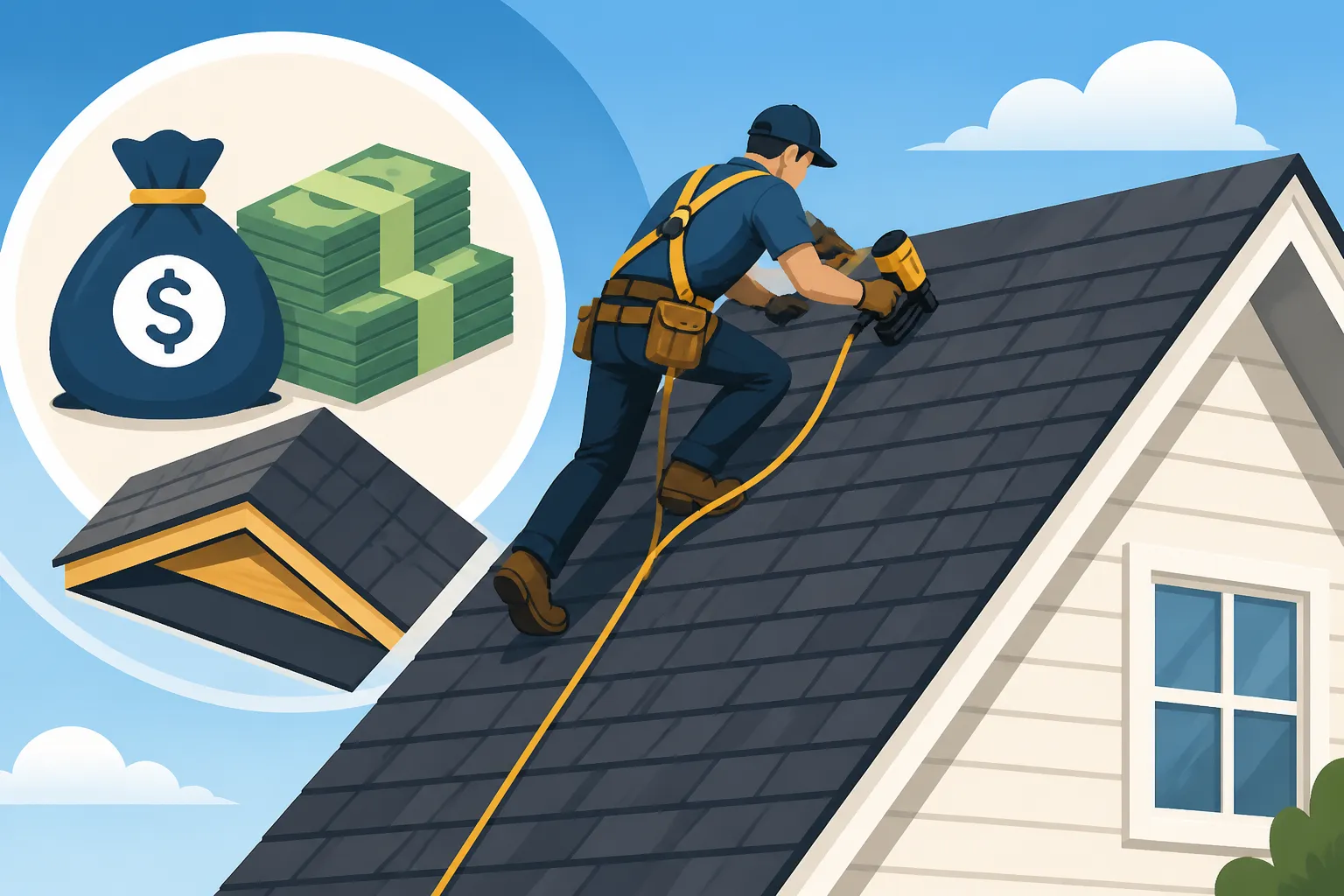
First and foremost, safety becomes paramount. On a standard pitch, a roofer can often walk comfortably. On a steep pitch, every step is a deliberate effort to maintain balance. This means constant use of safety harnesses, ropes, and specialized fall protection systems. The ground crew also needs to be extra vigilant about falling debris, as materials can slide down a steep roof with surprising speed and force.
Material handling is another huge factor. Bundles of shingles, tools, and waste debris don't stay put on a steep slope. Everything needs to be secured, tethered, or carefully hoisted and lowered. This slows down the entire process considerably. For example, moving a pallet of shingles onto a 5/12 pitch might involve a simple hoist and a few crew members. Doing the same on a 10/12 pitch could require scaffolding, a more powerful crane, and a larger team to ensure safety and efficiency. This directly translates to increased time and resources needed for the project.
Why Steep Roofs Cost More to Replace
Now that we understand what a steep roof is, let's talk about the cold, hard truth: these roofs will cost more to replace. This isn't just roofers trying to get more money; it's a direct reflection of the added risks, specialized equipment, and intensive labor involved.
Increased Labor and Safety Measures
The primary driver of higher costs for a steep-pitch roof replacement is labor. When comparing "Roofing Material Cost vs Labor Cost", you'll find labor costs often represent a significant portion of the total project. On a steep roof, this percentage only grows.
- More Roofers, More Time: A steep roof often requires a larger crew or, at the very least, more hours for the same size crew. The work is physically more demanding, requires more breaks, and simply takes longer per square foot because of the constant need for caution and adherence to safety protocols. What might take a crew a day on a standard pitch could easily stretch into two or more days on a steep one. This directly impacts "How Much Roofers Charge Per Hour".
- Enhanced Safety Equipment: Standard fall protection might involve toe boards and basic harnesses. For a steep roof, contractors often need extensive scaffolding systems, roof jacks, advanced anchor points, and multiple safety lines. These aren't cheap to rent or own, and the time it takes to set up and dismantle them adds to the labor hours. A responsible contractor will never skimp on safety, and those costs are necessarily passed on to the homeowner.
- Increased Insurance Premiums: Roofing is already one of the most dangerous professions. Working on a steep roof significantly amplifies that risk, leading to higher workers' compensation and liability insurance premiums for roofing companies. These overhead costs are factored into every quote they provide.
Specialized Equipment and Material Handling
Beyond standard roofing tools, a steep roof replacement demands specialized equipment to move materials efficiently and safely.
- Hoists and Cranes: Forget hand-tossing bundles of shingles up to the roof. On a steep pitch, heavy materials must be carefully hoisted. For particularly tall or inaccessible steep roofs, a crane might be necessary to lift shingles, underlayment, and other components directly onto the roof, or to remove heavy debris. Crane rentals can add hundreds, if not thousands, of dollars to a project.
- Debris Management: Getting old shingles and nails off a steep roof and into a dumpster is a delicate dance. Everything wants to slide off, potentially damaging landscaping, windows, or even people below. Contractors will often set up elaborate ground tarps, wooden barricades, and sometimes even specialized debris chutes to manage this. This extra setup and meticulous cleanup add to the time and labor involved.
- Tool Tethering: Even small tools, if dropped from a steep roof, can be dangerous. Roofers often tether their tools to their harnesses or use tool belts with secure compartments. This seemingly minor detail adds tiny increments of time to every task, which collectively adds up over a multi-day project.
Longer Project Timelines
It’s simple math: more difficult work equals more time. A job that takes three days on a moderate pitch might take five or six days on a steep pitch.
- Slower Installation Pace: Every shingle needs to be laid precisely, and on a steep slope, this requires more careful maneuvering and often a slower pace to ensure proper alignment and nailing. The installer might need to adjust their footing, reposition their harness, or secure materials more frequently.
- Weather Dependency: Steep roofs are more susceptible to weather delays. High winds can make working conditions extremely hazardous, and even light rain can make the surface incredibly slippery and unsafe. This means more potential for downtime or rescheduled work, which can sometimes impact a contractor's schedule and indirectly affect costs if crews need to be reallocated.
- Cleanup and Inspection: The meticulousness required for cleanup is magnified on a steep roof. Every nail and scrap of shingle must be accounted for. Inspections, both by the homeowner and any local building code officials, also take longer as they need to assess the quality and safety of the installation under more challenging conditions.
Average Cost Breakdown for a Steep-Pitch Asphalt Roof Replacement
So, how much are we actually talking about? While giving an exact number without seeing your specific roof is impossible, we can break down the components and give you a general idea of the premiums involved. Remember, these are averages, and local market conditions (like in "Asphalt Roof Replacement Cost in California" versus "Asphalt Roof Replacement Cost in Ohio") will always play a role.
Material Costs
For asphalt shingles, the base material cost isn't usually affected by the roof's pitch itself. A bundle of architectural shingles costs the same whether it's going on a 4/12 or a 10/12 roof. However, there might be subtle increases due to:
- Waste Factor: Due to the complexities of cutting and fitting shingles on steeper, more intricate roofs, there might be a slightly higher waste factor built into the material order.
- Premium Shingles: Homeowners with steep roofs sometimes opt for higher-end architectural or designer shingles because their roof is a prominent visual feature. While not directly related to pitch, this choice can increase material costs significantly. For example, "Architectural Shingle Roof Cost" is typically higher than basic 3-tab.
- Additional Underlayment/Ice & Water Shield: Some building codes or contractor recommendations for steep pitches might suggest more extensive use of ice and water shield in vulnerable areas, or a higher quality synthetic underlayment, adding slightly to material costs.
Overall, expect material costs for a steep asphalt roof to be comparable to a standard pitch, assuming you choose the same shingle type. The bulk of the additional expense comes in labor.
Labor Costs
This is where the real difference comes in. The labor premium for a steep-pitch roof can range from 15% to 50% or even more on top of what you'd pay for a standard-pitch roof.
For example, if the labor component for a 2,000 sq ft roof with a standard pitch might be $5,000 to $8,000, that same roof with an 8/12 or 10/12 pitch could see labor costs jump to $7,500 to $12,000+. This range depends heavily on the exact pitch, complexity (dormers, valleys), and regional labor rates.
Think about it like this: a typical "Cost to Replace a Roof on a 2,000 Sq Ft House" might run you $10,000 to $18,000 for a standard asphalt shingle roof. For a steep-pitch roof of the same size, you could be looking at the higher end of that range, or even $15,000 to $25,000+. It's a significant jump, but it's essential for the safety of the crew and the quality of the installation.
Additional Costs
Beyond materials and direct labor, several other factors contribute to the final price for a steep roof.
- Permits: Most roof replacements require a permit, regardless of pitch. The cost of a roofing permit can vary by location. However, for a steep roof, the building inspector might be more rigorous in checking safety setups, which isn't a direct cost increase but can add to potential delays if protocols aren't met. Our article, "Roofing Permits Explained", delves into this further.
- Disposal Fees: Tearing off old shingles and disposing of them is part of almost every roof replacement. For steep roofs, the process of getting the old materials into the dumpster can be more labor-intensive, sometimes requiring larger dumpsters or more time to fill them safely, which can slightly increase disposal costs.
- Contingencies and Unexpected Repairs: Steep roofs, especially older ones, can hide underlying issues that are only revealed during the tear-off. Rotted decking, damaged fascia, or inadequate ventilation might be harder to spot during a preliminary inspection and can add unexpected costs. A good contractor will include a contingency in their estimate or clearly outline how they handle such discoveries. You should always be aware of "Hidden Costs in a Roof Replacement".
Factors Influencing Your Steep Roof Replacement Quote
While the steepness of your roof is a major cost driver, it's not the only factor. Several other elements will influence the final quote you receive.
Roof Size and Complexity
Even on a steep roof, a simple gable roof (two flat sides meeting at a ridge) will be less expensive than one with multiple dormers, complex valleys, skylights, or chimneys.
- Footprint vs. Actual Roof Area: A 2,000 sq ft house with a steep pitch will have a much larger actual roof surface area than a 2,000 sq ft house with a low pitch. Roofers measure in "squares" (1 square = 100 sq ft of roof area). A steeper pitch means more squares to cover for the same house footprint, which naturally increases material and labor costs.
- Architectural Features: Every valley, dormer, chimney, or skylight requires careful cutting, flashing, and sealing. On a steep roof, these complex areas become even more time-consuming and labor-intensive. Proper flashing around these penetrations is crucial for preventing leaks and requires skilled craftsmanship. A roof with many such features will see its cost increase significantly.
Shingle Type and Quality
The type of asphalt shingle you choose can drastically impact your overall project cost, regardless of pitch.
- 3-Tab Shingles: These are the most basic and least expensive. While suitable for many homes, they offer less durability and a flatter appearance. You might want to consider "3-Tab Shingle Roof Cost" if budget is your absolute top priority.
- Architectural (Dimensional) Shingles: These are thicker, more durable, and offer a more aesthetically pleasing, textured look. They are very popular for their balance of cost, performance, and appearance. Brands like GAF Timberline HDZ or Owens Corning Duration are well-known in this category. For many steep roofs, architectural shingles complement the prominent visual aspect of the roof.
- Designer (Luxury) Shingles: These are the premium option, mimicking the look of slate or cedar shakes at a fraction of the cost. They are the heaviest and most durable asphalt shingles but also the most expensive. If your steep roof is a major architectural statement, you might consider this investment.
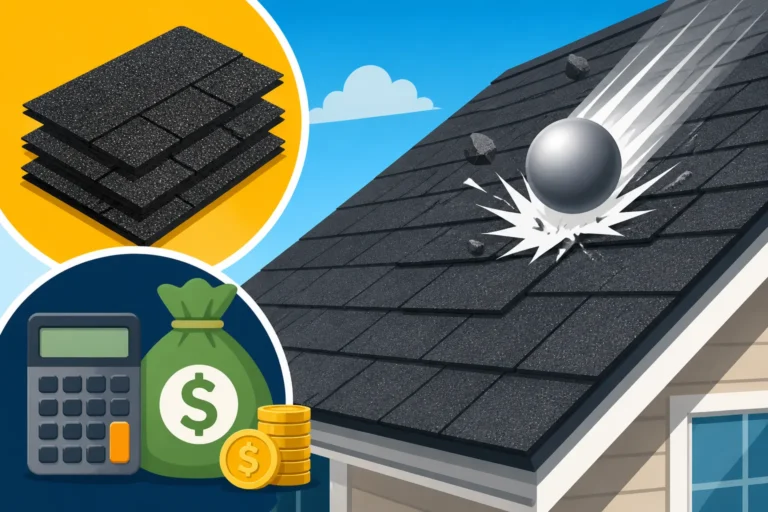
- Specialty Shingles: This includes options like impact-resistant (Class 4) shingles, which are excellent for hail-prone areas, or cool-roof shingles designed to reflect solar heat. These come with a higher price tag but can offer benefits like insurance discounts or energy savings.
The choice of shingle will affect both material cost and, in some cases, labor, as heavier or more complex shingles can take slightly longer to install.
Geographic Location and Local Labor Rates
Where you live makes a big difference in roofing costs. Labor rates, material availability, and local building codes vary significantly from state to state and even city to city.
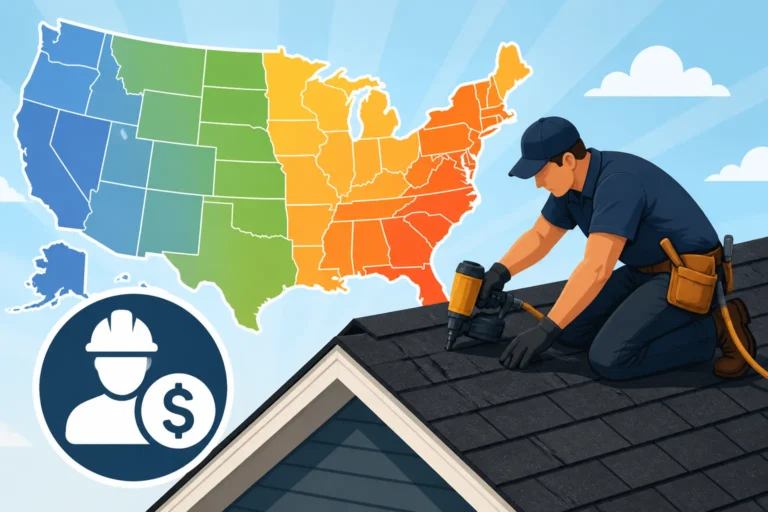
- Regional Differences: For instance, a roof replacement in a high-cost-of-living area like Boston, Massachusetts, or certain parts of California will naturally be more expensive than in a more rural area of Ohio or Tennessee. This applies to steep roofs as well – the premium will be added to an already higher base labor rate.
- Demand: In regions with frequent severe weather (hail, high winds), demand for roofers can spike, driving up prices temporarily. Areas with stricter building codes, particularly those requiring enhanced wind resistance or ice dam protection, can also see higher costs due to the need for specific materials and installation techniques.
- Contractor Availability: In some areas, finding contractors experienced and equipped for very steep roofs might be more challenging, potentially limiting competition and leading to higher bids. This is where resources like Modernize can be incredibly helpful in connecting you with vetted local professionals who specialize in such projects.
Smart Strategies to Manage Steep-Pitch Roof Replacement Costs
Replacing a steep-pitch roof is a significant investment, but there are smart ways to approach it to ensure you get quality work without breaking the bank.
Getting Multiple Bids and Detailed Estimates
This is perhaps the single most important step you can take. Never settle for just one quote, especially for a complex project like a steep-pitch roof.
- Compare Apples to Apples: Get at least three to five estimates from reputable, licensed, and insured roofing contractors. Make sure each estimate is detailed and specifies the type of shingles, underlayment, flashing, ventilation, and any additional components. It should also clearly itemize labor costs, safety measures, and disposal. Don't be afraid to ask for a breakdown of the "steep roof premium." For guidance, check out "How to Get Roofing Quotes and Compare Them".
- Ask the Right Questions: When contractors come for an inspection, ask them specifically about their experience with steep roofs, what safety protocols they use, and what specialized equipment they plan to deploy. This helps you gauge their expertise and commitment to safety. You can ask about their "Roofing Warranty: Workmanship vs Manufacturer" too.
- Don't Go for the Absolute Cheapest: While comparing prices is crucial, remember the adage, "you get what you pay for." An unusually low bid for a steep roof should be a red flag. It might indicate a lack of proper insurance, corners being cut on safety, or substandard materials. When you're dealing with a steep roof, the risks are too high to compromise on quality and safety. Sometimes, the lowest bid is the riskiest.
Finding a good contractor is key, and services that connect you with local, qualified professionals, like Modernize, can streamline this process, ensuring you get quotes from experienced teams.
Considering Long-Term Value
While upfront cost is a concern, think about the long-term benefits of your investment. A new roof, especially one on a steep pitch that's properly installed, adds significant value to your home.
- Durability and Warranty: Investing in quality architectural shingles and a comprehensive roofing system (including proper underlayment, ventilation, and flashing) can mean your roof lasts 25-50 years. A strong manufacturer warranty, particularly a full system warranty offered by certified installers (e.g., GAF Master Elite, Owens Corning Platinum Preferred), can provide peace of mind. Our post "Is an Asphalt Shingle Roof Worth the Money" delves into the long-term value.
- Energy Efficiency: Proper attic ventilation, especially on a steep roof where heat can easily get trapped, is vital. Upgrading your ventilation system during a replacement can improve your home's energy efficiency and potentially lower utility bills. If you're concerned about heat gain, explore cool-roof shingles which reflect more sunlight.
- Curb Appeal: A steep roof is a prominent feature of your home's exterior. Choosing attractive, high-quality shingles can dramatically boost your home's curb appeal and resale value.
Exploring Financing and Insurance Options
The sticker shock of a steep-pitch roof replacement can be real, but you have options to make it more manageable.
- Homeowners Insurance: If your roof damage is due to a sudden, unexpected event like a severe storm (hail, high winds), your homeowners insurance might cover a significant portion of the replacement cost. Be sure to document the damage thoroughly and understand your policy's specifics, including deductible and depreciation. For more information, read "Does Insurance Cover Roof Replacement".
- Roof Financing: Many roofing companies offer financing plans, sometimes with competitive interest rates or even 0% APR for a limited period. This can help spread the cost over several months or years.
- Home Equity Loans/Lines of Credit: If you have equity in your home, a home equity loan or HELOC can be a good option for financing a major home improvement like a roof replacement, often with tax-deductible interest.
- Government Programs: Check for local or state programs offering grants or low-interest loans for home improvements, especially if they are energy-efficient upgrades.
Understanding your financial options is crucial to budgeting for a new roof. Our article, "Roof Financing Options Explained", offers a deeper dive into these possibilities.
| Factor | Standard Pitch (4/12 – 6/12) | Steep Pitch (7/12 and up) | Cost Premium Difference |
|---|---|---|---|
| Labor Safety | Standard harnesses, toe boards | Advanced harnesses, extensive scaffolding, more anchor points | 15-50%+ on labor |
| Material Handling | Manual lifting, ladder hoists often sufficient | Specialized hoists, potentially crane rental, secured material storage | 5-20%+ on logistics |
| Project Timeline | Generally faster, fewer weather delays | Slower pace, more susceptible to wind/rain delays | 20-75%+ in days |
| Crew Size/Intensity | Standard crew, moderate physical demand | Larger crew or extended hours, high physical demand | 15-50%+ |
| Debris Removal | Relatively straightforward | More challenging, controlled chutes, extensive ground protection | 5-15%+ |
| Insurance/Overhead | Standard premiums | Higher workers' comp/liability premiums | Indirectly higher |
| Overall Cost Impact | Base cost of materials + standard labor | Base cost + significant labor and safety premium | Average 25-75%+ |
Please keep in mind that these percentages are estimates and the "overall cost impact" percentage refers to the increase compared to a standard-pitch roof replacement of the same size and material, not the full price.
Disclaimer
Please remember that the information provided in this article is intended for general informational purposes only and does not constitute professional advice. Roofing costs can vary dramatically based on location, contractor, materials chosen, specific roof characteristics, and market conditions. Always consult with multiple qualified, licensed, and insured roofing professionals for accurate estimates tailored to your specific project. It's also wise to check local building codes and permitting requirements in your area.