Does Insurance Cover Roof Replacement
That moment you realize something is wrong with your roof – maybe you see a shingle flapping in the wind, a mysterious dark stain on your ceiling, or hear unusual dripping during a rainstorm – can send a wave of panic. Beyond the immediate concern for your home's safety, the biggest worry for most homeowners is, of course, the cost. A full roof replacement is a significant investment, and the question that immediately leaps to mind is: "Does my homeowners insurance cover this?" It's a complex topic with a lot of nuances, and frankly, understanding your policy can feel like deciphering ancient scrolls. This guide is here to demystify the process, explain what's typically covered (and what isn't) when it comes to asphalt roof replacement, and help you navigate the often-confusing world of insurance claims.
Understanding Your Homeowners Insurance Policy
Before you even think about filing a claim, it's absolutely crucial to grasp the basics of your specific homeowners insurance policy. No two policies are exactly alike, and what one covers, another might not. Knowing the ins and outs can save you a world of frustration and give you realistic expectations about what kind of financial assistance you might receive for a new asphalt roof.
Perils Covered vs. Exclusions
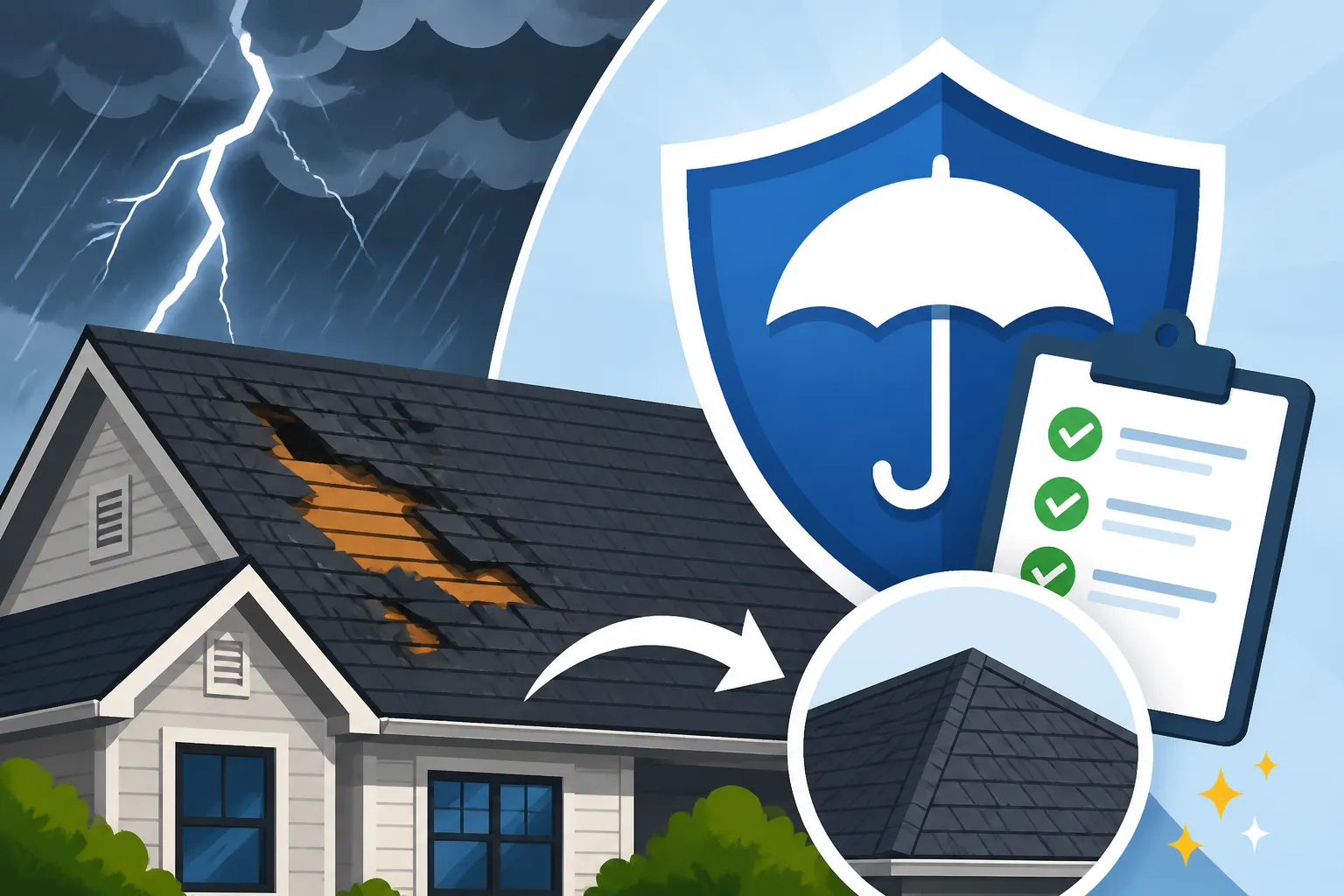
Homeowners insurance policies are designed to protect you from sudden, accidental damage caused by specific "perils." Think of perils as the events or hazards that your policy agrees to cover. When it comes to your roof, the most common perils include things like fire, lightning, hail, wind, and the impact from falling objects like trees. If a severe thunderstorm rips through your neighborhood, tearing off a significant portion of your asphalt shingles, that's typically a covered peril. Similarly, if a fire starts in your attic and damages the roof structure, your policy is usually there to help.
However, and this is a big "however," insurance policies also come with a list of exclusions. These are the things your policy explicitly states it will not cover. The most common exclusions for roofs revolve around neglect, wear and tear, and gradual deterioration. Your insurance company isn't in the business of maintenance. If your asphalt roof is simply old, has reached the end of its lifespan (which for many asphalt shingles is 20-25 years, though some premium ones like GAF Timberline UHDZ or Owens Corning Duration can last longer), and is failing due to age, that's generally not a covered event. Likewise, if a small leak goes unnoticed for months, leading to extensive rot, mold, or mildew, the insurance company might deny the claim, arguing that it was a preventable issue stemming from neglect rather than a sudden, accidental peril. Flood damage and earthquake damage are almost always excluded and require separate policies, so don't expect your standard homeowners insurance to cover your roof if it's damaged by those events.
Actual Cash Value (ACV) vs. Replacement Cost Value (RCV)
This is perhaps one of the most critical distinctions to understand in your policy, as it directly impacts how much money you'll receive for a covered roof replacement. It's often where homeowners get caught off guard, expecting one thing and getting another.
-
Actual Cash Value (ACV): An ACV policy pays out the depreciated value of your roof at the time of the loss. Think of it like this: your 15-year-old asphalt roof, even if it was top-of-the-line when installed, is not worth the same as a brand-new roof today. The insurance company will calculate its current value, taking into account its age, condition, and expected lifespan, and then pay you that amount, minus your deductible. This means you will almost certainly have a significant out-of-pocket expense to cover the difference between the depreciated value and the actual cost of a new roof. This can be a tough pill to swallow, especially when you're already dealing with the stress of roof damage.
-
Replacement Cost Value (RCV): An RCV policy is generally more favorable for homeowners because it covers the cost of replacing your damaged roof with new materials of similar kind and quality, without deduction for depreciation. Typically, with an RCV policy, the insurance company will first pay you the ACV portion of the claim. Once the repair or replacement work is completed and you submit proof (like invoices), they will then release the remaining depreciation amount, bringing your total payout closer to the full cost of the new roof, minus your deductible. This makes budgeting for a new roof much more predictable, as your out-of-pocket costs are limited to your deductible and any upgrades you choose.
It's vital to check your policy declarations page to see if your roof is covered by ACV or RCV. Many policies, especially on older homes, default to ACV for roofs due to their susceptibility to weather and wear. You can often upgrade to RCV coverage, though it usually comes with a higher premium. Understanding the difference between Actual Cash Value vs Replacement Cost Roof Claims is crucial before you ever file.
Deductibles and Payout Limits
Just like with car insurance, your homeowners insurance policy will have a deductible, which is the amount of money you are responsible for paying out of pocket before your insurance coverage kicks in. For roof claims, especially those related to wind or hail, many policies have a separate, higher deductible. This might be a percentage of your home's insured value (e.g., 1% or 2%) rather than a flat dollar amount. For example, if your home is insured for $300,000 and you have a 1% wind/hail deductible, you'd be responsible for the first $3,000 of the claim before your insurance pays anything. This can be a substantial sum, so it's important to be aware of it.
Beyond the deductible, your policy also has payout limits. This is the maximum amount your insurance company will pay for a covered loss. For roof replacement, this limit is often tied to the dwelling coverage portion of your policy. While it's rare for a standard asphalt roof replacement to exceed the total dwelling coverage limit, it's something to keep in mind, especially if you have an extremely large or complex roof, or if other parts of your home were also damaged in the same event. These limits are important factors when considering the overall How Much Does an Asphalt Shingle Roof Cost or even the Asphalt Roof Replacement Cost: Complete Breakdown.
Common Scenarios for Insurance-Covered Roof Replacement
It's easy to feel overwhelmed by all the policy jargon, but let's talk about the real-world situations where your insurance policy is most likely to step up and help you get that new asphalt roof. These are the "perils" we discussed earlier, the sudden and unexpected events that no amount of maintenance could truly prevent.
Sudden and Accidental Storm Damage
This is by far the most frequent reason homeowners file insurance claims for roof replacement, especially in regions prone to severe weather.
-
Wind Damage: High winds are a notorious culprit for asphalt roof damage. When strong gusts sweep across your roof, they can lift, crease, or even tear off shingles, especially if the sealant strips have degraded over time. You might see missing shingles scattered across your yard, or areas where shingles are visibly lifted and flapping. Even if shingles aren't completely gone, severe wind can weaken their adhesion, making them vulnerable to future storms and leaks. Insurance companies generally cover roof replacement or repair stemming from sudden, significant wind damage. Documenting the damage quickly with photos and videos is crucial. A roofing contractor, like those you can find through services such as Modernize, can often provide an initial assessment to help identify Signs of Roof Wind Damage.
-
Hail Damage: Hailstorms, particularly those with larger hailstones, can wreak havoc on an asphalt roof. The impact of hail can bruise or crack shingles, dislodge the protective granules, and compromise the integrity of the shingle's fiberglass mat. While small hail might seem harmless, repeated impacts can accelerate wear and significantly shorten the lifespan of your roof. Granule loss, in particular, exposes the asphalt to direct UV radiation, leading to faster deterioration. What's tricky about hail damage is that it's not always immediately obvious from the ground. It often requires a professional roof inspection to detect subtle bruising or impact marks. If a professional inspection reveals widespread hail damage that compromises the roof's protective capabilities, insurance typically covers the necessary replacement. Learn more about Signs of Roof Hail Damage to know what to look for.
Fire, Vandalism, or Other Catastrophic Events
While hopefully less common in your lifetime as a homeowner, these events typically fall squarely within covered perils, assuming they are sudden and accidental.
-
Fire Damage: If a fire erupts in your home, even if it starts internally (e.g., an electrical fire in the attic), the resulting damage to your roof structure and shingles is almost always covered by your homeowners insurance. This includes direct burning, smoke damage that compromises materials, and damage from firefighters working to extinguish the blaze. In these devastating situations, your insurance policy is designed to help you rebuild.
-
Vandalism: While not as common for entire roof replacements, if your roof suffers significant damage due to vandalism – for instance, if someone intentionally damages shingles or creates holes – your policy will likely cover the repairs or replacement needed to restore your roof.
-
Impact from Falling Objects: Imagine a massive tree branch snapping during a storm and crashing onto your roof, or even a vehicle accidentally careening into your home and damaging the roofline. These "impact" events are usually considered sudden and accidental perils, and your insurance policy should cover the damage, including the cost of removing the debris and replacing the damaged sections or the entire roof if necessary.
Manufacturing Defects (Indirectly Covered)
This is a bit of a gray area, as direct manufacturing defects are typically covered by the shingle manufacturer's warranty, not your insurance. However, there are scenarios where a manufacturing defect could indirectly lead to an insurance claim.
For example, if a widespread manufacturing defect causes your asphalt shingles to prematurely crack and fail, leading to sudden and significant water intrusion that damages your home's interior (e.g., ceilings, walls, flooring), your homeowners insurance might cover the interior water damage and the removal of the old defective roof. However, the cost of the new shingles themselves might still be primarily the responsibility of the manufacturer under their warranty. The challenge here is proving the defect and coordinating between your insurance company and the shingle manufacturer. It can be a lengthy process, often involving independent adjusters and roofing experts to determine the root cause of the failure. This is why understanding your Roofing Warranties: Manufacturer vs Workmanship is so important.
When Insurance Typically Doesn't Cover Your Roof
It's just as important, if not more so, to understand when your insurance company is likely to deny a claim for roof replacement. Knowing these exclusions can help you manage expectations and, more importantly, take proactive steps to prevent uninsurable damage.
Wear and Tear and Age-Related Deterioration
This is the number one reason insurance claims for roof replacement are denied, and it's a hard truth for many homeowners. Your insurance policy is not a preventative maintenance fund or a warranty against aging. Asphalt roofs, like all building materials, have a finite lifespan.
Over time, exposure to sun, rain, snow, and temperature fluctuations will cause asphalt shingles to naturally degrade. You'll see signs like granule loss, curling, cracking, and brittleness. When an adjuster comes out and determines that the primary cause of your roof's failure is simply old age and gradual wear and tear, your claim will almost certainly be denied. It’s a bitter pill to swallow, especially when you feel like the damage just happened, but from the insurer's perspective, this is a predictable, non-accidental event that falls under homeowner responsibility. This is why it's wise to start thinking about a replacement as your roof approaches its typical lifespan, which for standard 3-tab shingles is around 15-20 years, and for architectural shingles is 20-30 years. Keeping an eye on Roof Age: When to Start Planning Replacement can prevent this kind of painful surprise.
Neglect and Lack of Maintenance
Insurance companies expect homeowners to take reasonable steps to maintain their property and prevent minor issues from escalating into major ones. If you neglect your roof, your insurance company can deny a claim, arguing that the damage was preventable.
For instance, if you have a small, slow leak that goes unaddressed for months, leading to extensive rot in your roof decking or structural damage in your attic, your claim might be denied. The insurance company might state that while the initial leak could have been a covered event, your failure to address it promptly led to exacerbated damage, which they won't cover. Similarly, if your gutters are constantly clogged, causing water to back up and seep under your shingles, leading to fascia or soffit rot, that's often seen as a maintenance issue. Keeping your roof clean of debris, ensuring proper drainage, and addressing minor repairs quickly can make a big difference in whether a future claim is approved. Simple Roof Maintenance to Avoid Replacement can go a long way.
Improper Installation or Poor Workmanship
This is another unfortunate scenario where your insurance policy typically won't help you. If your asphalt roof fails prematurely due to shoddy workmanship or improper installation by a previous contractor, your homeowners insurance will likely deny the claim. Why? Because the damage wasn't caused by a sudden, accidental peril, but rather by a defect in the initial construction.
In this situation, your recourse would generally be against the original roofing contractor (if they're still in business and their warranty is still valid) or possibly the manufacturer if the installation didn't meet their specifications. This highlights the critical importance of choosing a reputable, licensed, and insured roofing contractor in the first place. Always vet your contractors thoroughly, check their credentials, and ensure they provide a solid workmanship warranty. Using platforms like Modernize to find vetted professionals can help minimize this risk.
Navigating the Insurance Claim Process for Roof Replacement
Okay, so you've assessed your roof, you've reviewed your policy, and you believe you have a legitimate claim. Now comes the often-daunting task of actually filing and navigating the insurance claim process. It can feel like a maze, but breaking it down into steps makes it much more manageable.
First Steps After Discovering Damage
The moment you realize your roof is compromised, especially after a storm, your immediate actions can significantly impact the success of your claim.
First, prioritize safety. If there are exposed electrical wires or structural instability, stay clear and call emergency services. Once safe, document everything. Take extensive photos and videos of the damage from different angles. Capture missing shingles, hail impacts, fallen trees, and any interior leaks or water damage. The more evidence you have, the stronger your case. Date-stamped photos are gold. This thorough documentation is key to How to Document Roof Damage for Insurance.
Second, prevent further damage. If there's an active leak, you need to stop it as best you can. This might involve placing buckets to catch water or, more effectively, temporarily tarping the damaged area. You can often find emergency roof tarping services, or if you're comfortable, you can do it yourself carefully. Just remember, these are temporary fixes to mitigate damage, not permanent repairs. Do not undertake major repairs before your insurance adjuster has had a chance to inspect the damage, unless it's absolutely necessary to prevent severe secondary damage. Keep all receipts for any temporary repairs you make.
Finally, contact your insurance company immediately. Don't delay. The sooner you report the damage, the better. Be prepared to provide them with the date of the loss, a description of the damage, and your initial documentation. They will assign you a claim number and an adjuster.
Getting Your Roof Inspected and an Estimate
Once you've filed your claim, your insurance company will send out a claims adjuster to inspect the damage. This person's job is to assess the extent of the damage, determine if it's covered under your policy, and estimate the cost of repairs or replacement.
It is highly recommended that you also get your own independent inspection and detailed estimate from a reputable local roofing contractor. A good contractor is experienced in dealing with insurance claims and can often identify subtle damage that an adjuster might miss (especially with hail damage, which can be hard to spot for an untrained eye). They can also provide a comprehensive estimate that details all the necessary work, materials, and code upgrades, which can then be compared to the adjuster's report. When seeking multiple bids, tools like Modernize can streamline the process of connecting you with qualified, local roofers who understand the insurance process. Having your contractor present during the adjuster's visit can also be beneficial, allowing them to point out specific issues and discuss the scope of work directly. Learning How to Read and Compare Roofing Estimates will be invaluable here.
Understanding the Adjuster's Report and Settlement Offer
After the adjuster's visit, you'll receive a detailed report and a settlement offer from your insurance company. This report will outline the adjuster's findings, the estimated cost of repairs or replacement (often broken down by materials and labor), and how your deductible and depreciation (if it's an ACV policy) have been applied.
Carefully review this report. Compare the adjuster's assessment with your contractor's estimate. Are there discrepancies in the scope of work, the materials included, or the estimated costs? It's common for there to be differences. For example, an adjuster might only approve repairing a section, while your contractor knows that given the widespread damage and age, a full Asphalt Roof Replacement Cost: Complete Breakdown is warranted. Don't be afraid to ask questions. If you have an RCV policy, remember that the initial payout will likely be the ACV, with the depreciation held back until the work is completed.
What to Do If Your Claim is Denied or Underpaid
It can be incredibly frustrating if your claim is denied or if the settlement offer is significantly lower than what your contractor estimates. But don't despair; you have options.
First, don't accept the denial or low offer at face value. Request a detailed explanation in writing for the denial. Then, gather any additional evidence or expert opinions (from your roofer) that support your claim. This might include photos, drone footage, specific details from your contractor's inspection report, or even historical weather data for your area.
You can then appeal the decision with your insurance company. Present your additional evidence and explain why you believe the initial assessment was incorrect. Many homeowners find success in getting an underpaid claim supplemented when their contractor provides a detailed estimate that aligns with current market rates and local building codes. If you need to upgrade to Impact-Resistant Shingle Cost or address Steep Roof Cost Premium, your contractor can help you make that case.
If you're still not getting anywhere, you might consider hiring a public adjuster. A public adjuster is an independent professional who works solely for you, the homeowner, to negotiate with your insurance company. They understand the intricacies of policies and claims and can be very effective in securing a fair settlement. This, of course, comes at a cost, as they usually take a percentage of the final settlement. Another option is to consult with an attorney specializing in insurance claims.
Key Considerations for Your Roof Replacement Claim
Beyond the general process, there are a few other critical aspects to keep in mind that can impact your insurance coverage and the overall experience of replacing your asphalt roof.
Code Upgrades and Local Regulations
Building codes are constantly evolving, especially concerning roof construction, ventilation, and wind resistance. If your current roof was installed decades ago, it might not meet today's stricter building codes. When you replace your roof, you are legally required to bring it up to current code. This can include things like adding more robust underlayment, updating ventilation systems, or ensuring specific nailing patterns for increased wind resistance.
Many homeowners are surprised to find that their standard policy might not automatically cover these code upgrade costs. However, some policies include an "Ordinance or Law" endorsement that provides coverage for the additional expenses incurred to comply with updated building codes during a covered repair or replacement. It's crucial to check your policy for this specific coverage, as these upgrades can add significant costs to your project. Your roofing contractor should be well-versed in local building codes and can help identify what upgrades are necessary and whether they might be covered. For instance, in areas prone to hurricanes, stricter codes might require specific High-Wind Nailing Cost Premium or Ice and Water Shield Explained which may not have been required when your original roof was installed.
Choosing the Right Roofing Contractor
The contractor you choose for your asphalt roof replacement is perhaps the most important decision you'll make after filing your claim. A good contractor can be your strongest ally in navigating the insurance process, while a bad one can turn an already stressful situation into a nightmare.
Look for a contractor who is:
- Licensed and Insured: This is non-negotiable. Verify their licensing with your state or local board and ask for proof of liability and workers' compensation insurance. This protects you if there's an accident on your property. Licensed and Insured Roofers: Why It Matters cannot be overstated.
- Experienced with Insurance Claims: A contractor who regularly works with insurance companies knows the language, the documentation required, and how to advocate for you. They can help ensure all covered damage is included in the scope of work.
- Local and Reputable: Be wary of "storm chasers" who appear after a major weather event, often from out of state. Local contractors have a vested interest in their community and a reputation to uphold. Check online reviews (Google, BBB), ask for references, and look at their portfolio. Use services like Modernize to find vetted, local roofing professionals.
- Transparent and Communicative: They should provide a clear, detailed estimate, explain the process, and communicate regularly throughout the project. Ask them about their approach to dealing with supplements if the insurance company's initial payout is low. Questions to ask include those found in Questions to Ask a Roofing Contractor Before Hiring.
Supplements and Negotiations
It's very common for the insurance company's initial settlement offer to be lower than your contractor's comprehensive estimate. This doesn't necessarily mean the insurance company is trying to shortchange you; it often means their adjuster's scope of work was less detailed or didn't account for every component or current material costs.
This is where "supplements" come into play. A reputable roofing contractor will work with your insurance company to submit a supplement request. This is essentially an itemized list of additional costs that were missed in the initial assessment but are necessary to properly complete the roof replacement according to code and industry standards. This could include items like additional roof decking replacement, unforeseen rotted wood, upgraded ventilation, or increased material costs since the initial estimate. Your contractor will typically provide photos and documentation to justify these additional costs. This negotiation process is normal, and a good contractor will handle it directly with your insurance adjuster on your behalf.
| Feature | Actual Cash Value (ACV) | Replacement Cost Value (RCV) |
|---|---|---|
| Payout Basis | Depreciated value of the roof at the time of loss | Cost to replace with new materials of similar quality |
| Age Factor | Significant deduction for age and wear & tear | No deduction for age or depreciation |
| Initial Payout | Typically the full ACV amount, minus deductible | Often an initial payout of ACV, with remaining depreciation held |
| Second Payout | None (unless additional damage found, still ACV-based) | Remaining depreciation paid after work is complete & verified |
| Out-of-Pocket | Deductible + difference between ACV and new roof cost | Primarily the deductible (plus any upgrades) |
| Premium Cost | Generally lower | Generally higher |
| Common Use | Older roofs, standard policies without RCV endorsement | Newer roofs, upgraded policies |
| Homeowner Burden | Higher financial burden for full replacement | Lower financial burden, more predictable cost |
Final Thoughts on Your Asphalt Roofing Insurance Claim
Dealing with roof damage and the prospect of a full replacement is undoubtedly stressful. The financial implications alone can be overwhelming, and grappling with insurance policies can add another layer of complexity. But remember, your homeowners insurance is there for a reason: to provide financial protection against unexpected perils.
By understanding the nuances of your policy—especially whether it's ACV or RCV, what perils it covers, and its exclusions—you can approach the process with confidence. Documenting damage thoroughly, acting quickly to mitigate further issues, and partnering with an experienced, reputable roofing contractor are your strongest assets in securing a fair settlement. While you might still face some out-of-pocket costs (like your deductible or any desired upgrades), knowing the process and having the right team on your side can make all the difference in getting your home's asphalt roof restored to its full protective glory. Is an Asphalt Shingle Roof Worth the Money? Absolutely, and your insurance helps protect that investment.
Disclaimer
Please note that this article provides general information and guidance regarding homeowners insurance and roof replacement claims. Insurance policies vary widely, and coverage depends on your specific policy terms, conditions, deductibles, and local regulations. Always consult your individual insurance policy documents or speak directly with your insurance provider or a qualified legal professional for advice tailored to your situation.