How Attic Insulation Affects Your Roof
It's a common misconception that your roof works in isolation, battling the elements all on its own. The truth is, your entire home system, from the foundation to the peak of your roof, is interconnected. One of the most overlooked, yet profoundly impactful, relationships is between your attic insulation and the long-term health and performance of your asphalt roof. This guide will walk you through exactly how that connection works and what you can do to ensure your insulation is protecting, not harming, your most critical home defense.
The Critical Relationship Between Your Attic and Your Roof
Many homeowners think of their roof as just the shingles and whatever's underneath, but it's much more complex than that. Your roof is part of a larger system, and a key player in that system is your attic. The conditions within your attic directly influence the lifespan and effectiveness of your asphalt shingles above. Ignoring this vital link can lead to costly problems that could have been easily avoided.
Understanding the "Roof System"
Think of your roof as the top layer of a carefully designed building envelope. Beneath those tough asphalt shingles, you have underlayment, decking, and then, the attic space. This attic isn't just dead space; it's a dynamic zone where temperature and moisture interact in ways that can either protect or destroy your roof. A healthy roof system relies on a delicate balance of insulation and ventilation to manage these environmental factors. When one piece, like insulation, isn't performing correctly, the entire system can suffer. Understanding the basic Roof Anatomy: Parts of an Asphalt Shingle Roof is the first step to truly grasping how these components work together.
The Silent Battle: Heat and Moisture
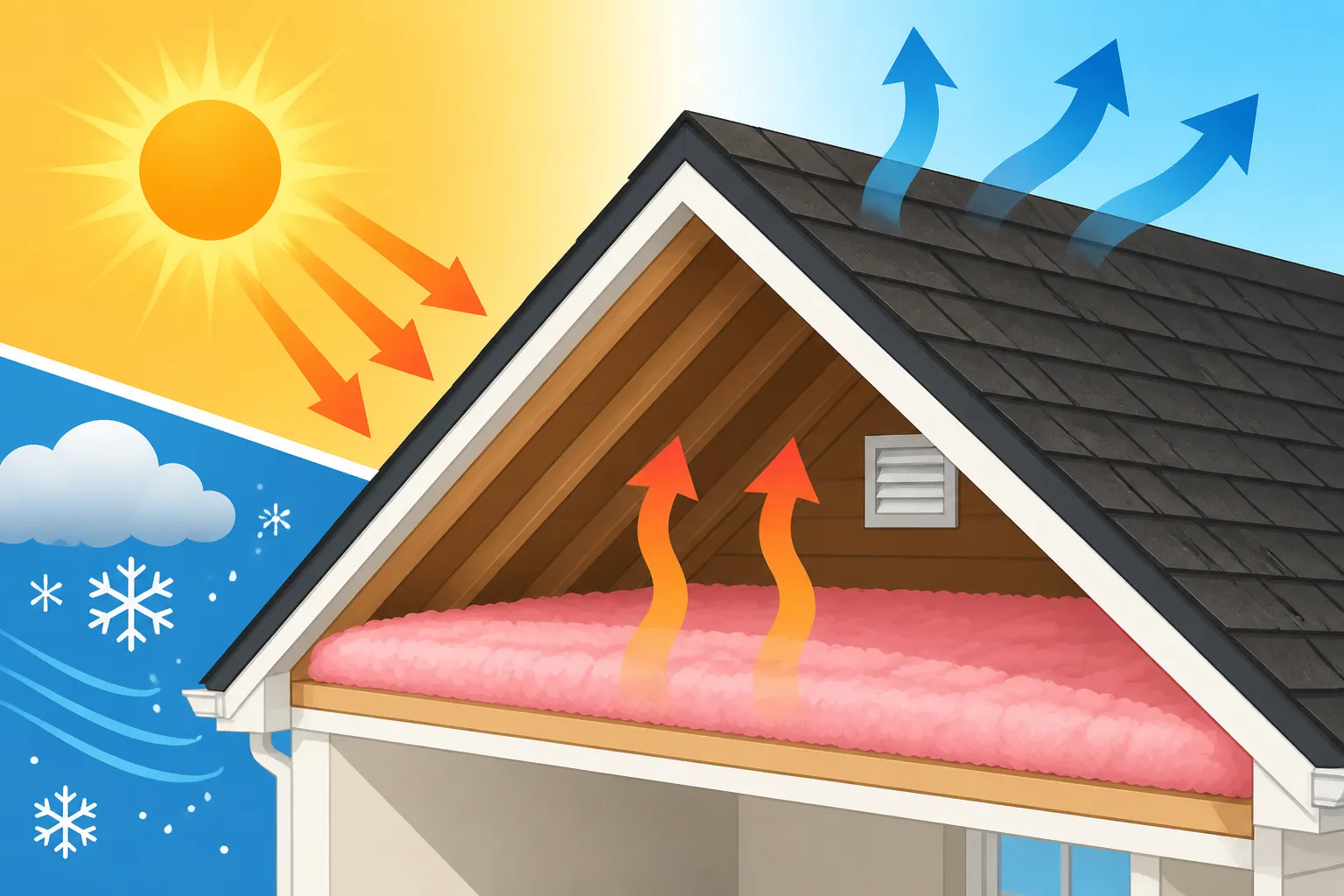
Within your attic, two silent enemies are constantly at work: heat and moisture. In the winter, heat from your living space naturally rises and attempts to escape into the attic. If your insulation is inadequate, too much of this heat leaks into the attic. In the summer, the sun beats down on your roof, transferring immense heat to the attic space. Without proper ventilation to exhaust this heat, the attic can become an oven.
Moisture, on the other hand, comes from various sources – leaky roofs, plumbing leaks, even everyday activities like showering and cooking, with moisture vapor migrating from your living space into the attic. If this moisture gets trapped and condenses, it creates a breeding ground for mold and mildew, and can lead to structural damage over time. The primary role of attic insulation, along with adequate attic ventilation, is to control this dance of heat and moisture, preventing it from negatively impacting your roof structure and shingles.
How Poor Insulation Harms Your Asphalt Roof
It's easy to assume that if your house feels warm in winter and cool in summer, your insulation is fine. But problems can be brewing in your attic that directly impact your roof, even if you don't immediately feel the effects inside your living areas. Inadequate or improperly installed attic insulation is a leading cause of premature roof failure and other structural issues.
The Menace of Ice Dams
One of the most immediate and visible signs of poor attic insulation, especially in colder climates, is the formation of ice dams. Here’s how it works: in winter, if your attic isn't properly insulated, heat from your home rises and warms the underside of your roof deck. This heat melts snow on the upper parts of your roof. As this melted snow water runs down the roof slope, it reaches the colder eaves that extend beyond the exterior walls. Since the eaves aren't warmed by escaping attic heat, the water refreezes there, creating a ridge of ice—an ice dam.
These ice dams are far more than just pretty icicles. They prevent additional melting snow and ice from draining off the roof. This trapped water then backs up, sometimes forcing its way under your asphalt shingles, soaking your roof decking, insulation, and even your ceilings and walls. The result can be costly water damage, rot, and ruined insulation. Addressing Ice Dam Damage: Repair Options often starts with improving insulation and ventilation.
Premature Shingle Deterioration
Beyond ice dams, poor insulation can significantly shorten the lifespan of your asphalt roof. Asphalt shingles are designed to handle a certain amount of thermal stress, but extreme temperatures can accelerate their degradation.
- Excessive Heat: In the summer, if your attic is poorly insulated and poorly ventilated, it can become incredibly hot, sometimes reaching temperatures over 150°F. This intense heat radiates back up into the underside of your roof deck and shingles. This constant baking accelerates the breakdown of the asphalt binder in the shingles, causing them to dry out, become brittle, crack, and lose their protective granules much faster than they should. Granule loss is a significant indicator of an aging roof, and excessive granule loss can lead to your roof needing replacement long before its expected lifespan. This also speaks to What Makes Shingles Fail Early.
- Thermal Cycling: The constant fluctuation between extreme heat and freezing cold, day after day, season after season, puts immense stress on shingles. Poor insulation exacerbates this cycle, making the temperature swings more severe for the roof materials. This contributes to cracking, curling, and delamination of shingles, leading to leaks and ultimately, a shortened roof life.
Mold, Mildew, and Rot: Beyond the Roof
The problems don't stop at the shingles. When moisture gets trapped in an attic due to a lack of proper insulation or ventilation (or both), it can condense on cooler surfaces like the roof decking and rafters. This trapped moisture, combined with warmth, creates an ideal environment for mold and mildew growth. Not only is this a health hazard for your family, but it can also lead to the rot of wooden structural components like trusses, rafters, and the roof decking itself.
Imagine paying for an entire Asphalt Roof Replacement Cost: Complete Breakdown only to discover that your roof decking is rotted from years of moisture issues, adding significant unexpected costs to the project. This is a common scenario for homes with inadequate attic insulation and poor ventilation, as the compromised wood needs to be replaced before new shingles can be installed. This scenario makes it clear that the consequences of neglecting your attic insulation can extend far beyond simple comfort or energy bills.
The Benefits of Proper Attic Insulation for Your Roof
It might seem counterintuitive to think that what's inside your attic could be so critical to the longevity of what's outside it, but the connection is undeniable. Investing in proper attic insulation isn't just about making your home more comfortable; it's a direct investment in the health and lifespan of your asphalt roof.
Extending Roof Lifespan and Performance
The most direct benefit of good attic insulation for your roof is the extension of its functional life. By effectively regulating the temperature in your attic, you mitigate the extreme thermal stresses that lead to premature shingle degradation.
- Stable Temperatures: With proper insulation, less heat escapes from your living space into the attic in winter, and less solar heat radiates down from the roof into the attic in summer. This creates a more stable, moderate temperature within the attic space. When the attic temperatures are kept closer to the outside ambient temperature (especially in a properly ventilated attic), your shingles aren't subjected to the constant, harsh temperature swings that cause them to crack, curl, and lose granules prematurely.
- Reduced Moisture Buildup: Good insulation, coupled with effective attic ventilation, helps prevent moisture from condensing on the underside of your roof deck. By keeping the attic drier, you drastically reduce the risk of mold, mildew, and wood rot that can compromise the structural integrity of your roof. This means your roof decking stays strong, providing a solid foundation for your shingles for years to come. Ultimately, this directly impacts How Long an Asphalt Roof Lasts.
Energy Efficiency and Comfort
While the primary focus here is on the roof, it's impossible to discuss attic insulation without touching on its broader benefits for your home. These benefits, in turn, contribute to a healthier environment for your roof.
- Lower Energy Bills: Adequate attic insulation acts as a thermal barrier, preventing heat from escaping your home in the winter and entering in the summer. This significantly reduces the workload on your HVAC system, leading to lower heating and cooling costs. Homeowners often see a substantial return on investment through energy savings alone. In fact, improving your insulation can have a strong Roof Replacement ROI Explained.
- Enhanced Indoor Comfort: With a well-insulated attic, your home's indoor temperatures will be more consistent and comfortable year-round. No more feeling drafts in winter or hot spots near the ceiling in summer. This consistent internal environment also reduces the temptation to over-cool or over-heat your home, which can sometimes exacerbate attic temperature issues. Many homeowners, often with help from services like Modernize, seek to improve their home's overall energy efficiency, and attic insulation is always a top recommendation.
Steps to Ensure Your Attic Insulation Supports Your Roof
So, you're convinced that attic insulation is crucial for your asphalt roof. But where do you start? It's not just about throwing a bunch of insulation up there; it's about creating a balanced system. Taking a systematic approach will ensure you get the most benefit for your roof and your home.
Assessing Your Current Insulation
Before you do anything else, you need to understand what you already have. This isn't just about looking at the depth; it's about checking the type, condition, and coverage.
- Visual Inspection: Safely enter your attic (wear appropriate safety gear and watch your step!). What do you see? Is the insulation uniformly distributed? Are there bare spots or areas where it looks compressed or damaged? What type of insulation is it (fiberglass batts, blown-in cellulose, mineral wool)?
- Measure Depth and R-Value: Insulation effectiveness is measured by its R-value, which indicates its resistance to heat flow. The recommended R-value varies by climate zone. For example, in many parts of the Midwest, R-38 to R-60 is recommended for attics. You can often find the R-value printed on batt insulation or estimated based on the depth of blown-in insulation. A good rule of thumb is that if your insulation is below the top of your floor joists (typically 8-10 inches), you likely need more.
- Check for Damage: Look for signs of moisture, mold, pests, or compression. Wet or compressed insulation loses its R-value significantly and needs to be replaced, not just topped up.
- Professional Assessment: If you're unsure, consider hiring a home energy auditor or a reputable roofing contractor specializing in roofing systems. They can perform a comprehensive assessment, often using thermal imaging, to pinpoint areas of heat loss and offer precise recommendations. Tools and services from platforms like Modernize can help you connect with qualified professionals in your area for such assessments.
Sealing Air Leaks
This step is often overlooked, but it's just as important, if not more important, than adding more insulation. Insulation works by trapping air to resist heat flow, but if warm, moist air is constantly leaking into your attic from your living space, that insulation won't be as effective. These air leaks are the primary cause of heat loss in winter and moisture accumulation in the attic.
- Common Leak Sources: Look for gaps around recessed lighting fixtures (especially older, non-IC rated cans), plumbing vents, electrical wires, attic hatches, chimney chases, and where walls meet the attic floor. Even small cracks in the drywall or around ceiling fixtures can contribute to significant air leakage.
- Sealing Materials: Use caulk for small gaps (under 1/4 inch) and expanding foam for larger ones. Weatherstripping and a latch kit can seal your attic hatch effectively.
- The Difference It Makes: Sealing these air leaks before adding insulation ensures that the insulation can do its job properly. It prevents the escape of conditioned air, keeping your home more comfortable, reducing energy bills, and most importantly, preventing moisture-laden air from condensing on your cold roof deck and causing problems like ice dams and mold.
Choosing the Right Insulation Type
Once you've assessed your current situation and sealed air leaks, you'll need to decide on the best type of insulation to add or replace. Each type has its pros and cons, and the best choice depends on your attic's specific layout, your budget, and your climate.
| Insulation Type | R-Value Per Inch | Common Installation Method | Pros | Cons |
|---|---|---|---|---|
| Fiberglass Batts | 2.9 – 3.8 | DIY or Professional | Readily available, affordable, fire-resistant | Can be itchy, gaps can reduce effectiveness, requires cutting |
| Blown-in Fiberglass | 2.2 – 2.9 | Professional | Fills irregular spaces well, good for topping off existing | Requires special equipment, can settle over time |
| Blown-in Cellulose | 3.2 – 3.7 | Professional | Made from recycled paper, excellent at filling voids, good sound dampening | Can absorb moisture, fire retardants can be corrosive |
| Mineral Wool (Rock Wool) | 3.3 – 4.2 | DIY or Professional | Excellent fire resistance, good sound barrier, moisture-resistant | More expensive than fiberglass, heavier |
| Spray Foam (Open/Closed Cell) | 3.5 – 7.0 (Closed) | Professional | High R-value, excellent air sealer, prevents moisture intrusion | Most expensive, requires professional installation, permanent |
For most existing attics, topping up with blown-in cellulose or fiberglass is a popular and cost-effective option. If you're doing a full renovation or dealing with significant air leakage, spray foam can be an excellent (though pricier) solution as it insulates and air-seals simultaneously. Remember, the goal is to achieve the recommended R-value for your climate zone.
Don't Forget Ventilation
Insulation and ventilation are like two sides of the same coin when it comes to attic and roof health. You can have the best insulation in the world, but without proper airflow, you'll still face problems. This is an essential aspect of How Roof Ventilation Works.
- Why it Matters: Attic ventilation allows hot, moist air to escape from your attic, especially during summer, preventing heat buildup that bakes your shingles. In winter, it helps remove moisture that has migrated into the attic, preventing condensation and reducing the risk of ice dam formation. It essentially helps keep the attic air temperature closer to the outside air temperature.
- Key Components: A well-designed attic ventilation system typically includes both intake vents (like soffit vents) and exhaust vents (like ridge vents, box vents, or turbine vents). The balance between these is crucial. If you have plenty of exhaust but insufficient intake, you can pull air from undesirable places within the home.
- Professional Guidance: This is another area where a professional roofing contractor or energy auditor can provide invaluable advice. They can assess your current ventilation system (or lack thereof) and recommend upgrades, such as adding a Cost of Ridge Vent Installation or ensuring your soffit vents aren't blocked by insulation. Many certified contractors found through platforms like Modernize understand the full scope of the roof system and can offer integrated solutions.
By understanding the intimate relationship between your attic insulation and your asphalt roof, you're empowered to make informed decisions that will protect your investment, save you money on energy bills, and ensure a comfortable, healthy home for years to come. Remember, a happy attic makes for a happy roof!
Disclaimer
Please note that the information provided in this article is intended for general guidance and informational purposes only. While we strive to offer accurate and up-to-date advice on asphalt roofing and related topics, local building codes, climate conditions, and individual home circumstances can vary significantly. Always consult with a qualified, licensed, and insured roofing professional or home energy auditor before undertaking any major roofing or insulation project. They can provide tailored advice and ensure compliance with all relevant safety standards and regulations in your specific area.