Algae-Resistant Shingles: How They Work
It's frustrating to look up at your roof and see those ugly, dark streaks creeping across your beautiful shingles. You invest so much in your home's appearance, and then nature decides to draw all over your roof with what looks like a giant, dirty crayon. These aren't just cosmetic issues; they can hint at deeper problems and certainly drag down your home's curb appeal. This guide is here to explain exactly what those dark streaks are, why they appear, and how algae-resistant shingles work to keep your roof looking pristine and protected for years to come.
The Pesky Problem of Algae on Your Roof
Many homeowners mistakenly believe those dark stains on their roof are dirt, mildew, or even just regular aging. But more often than not, you're dealing with an unwelcome guest: algae. Specifically, it's a type of blue-green algae called Gloeocapsa magma, and it absolutely loves to make itself at home on asphalt shingles. Understanding this little organism is the first step in appreciating why algae-resistant shingles are such a game-changer.
What Are Those Black Streaks Anyway?
Let's clear the air: those aren't just shadows or grime. That distinct black, green, or even brownish discoloration you see on many roofs, particularly on the northern or shaded sides, is almost always Gloeocapsa magma. This isn't just any common algae; it's a hardy cyanobacterium that thrives in moist environments. It feeds on the limestone filler that's often used in the manufacturing process of traditional asphalt shingles, making your roof a veritable buffet.
Think about it: the warm, humid climate in places like Florida or the Pacific Northwest provides the perfect breeding ground for this algae. It's especially noticeable after a rain, when the roof holds moisture, allowing the algae to really flourish and spread. While it might look like a simple stain, it's actually a living organism growing on your roof, forming colonies that create those tell-tale dark streaks and patches. Over time, these colonies can become quite extensive, covering large sections of your roof and becoming an undeniable eyesore that makes your home look older and less well-maintained than it truly is.
Why Algae is More Than Just an Eyesore
Beyond the obvious aesthetic hit, algae growth on your roof can lead to a host of other issues that impact your home's integrity and value. It's not just about appearances; this unwelcome guest can have real consequences for your roof system.
Firstly, those dark streaks absorb more sunlight. This might not seem like a big deal, but it means your roof gets hotter, transferring more heat into your attic and, consequently, into your living space. This extra heat can make your air conditioning system work harder, driving up your energy bills, especially during those scorching summer months. You might not directly attribute a higher utility bill to your roof's appearance, but the science is clear: a darker roof absorbs more heat.
Secondly, and perhaps more critically for the long-term health of your roof, algae retains moisture. This prolonged dampness can accelerate the degradation of your asphalt shingles. It can encourage the growth of moss and lichen, which physically lift shingle granules and edges, creating prime opportunities for water penetration. This can lead to granular loss, which is a major sign of a failing roof, leaving the asphalt base exposed to UV rays and further damage. Ultimately, unchecked algae can contribute to your shingles failing prematurely, shortening the overall lifespan of your roof. Nobody wants to face a full roof replacement sooner than necessary, and understanding the role algae plays in accelerating that process is crucial. If you're wondering how long your roof should last, take a look at our guide on How Long Does an Asphalt Roof Last.
Finally, the impact on your home's curb appeal and resale value cannot be overstated. Imagine pulling up to a house with dark, streaky stains covering its roof – it immediately gives an impression of neglect, even if the rest of the house is perfectly maintained. Potential buyers might see it as a sign of underlying problems, leading them to either pass on your home or demand significant price reductions to account for a perceived necessary roof cleaning or replacement. Even if you're not planning to sell, coming home to a clean, vibrant roof simply feels better.
The Science Behind Algae-Resistant Shingles
It's clear that algae is a problem, but what's the solution? Enter algae-resistant shingles, specifically engineered to combat this tenacious foe. The secret lies in a clever integration of materials that make your roof an inhospitable environment for Gloeocapsa magma.
How Copper Granules Become Your Roof's Best Friend
The core technology behind most algae-resistant shingles is the incorporation of copper granules. It sounds simple, but it's incredibly effective. During the shingle manufacturing process, specific ceramic-coated granules are infused with copper particles. These aren't just any copper bits; they're strategically placed and designed to release copper ions over time.
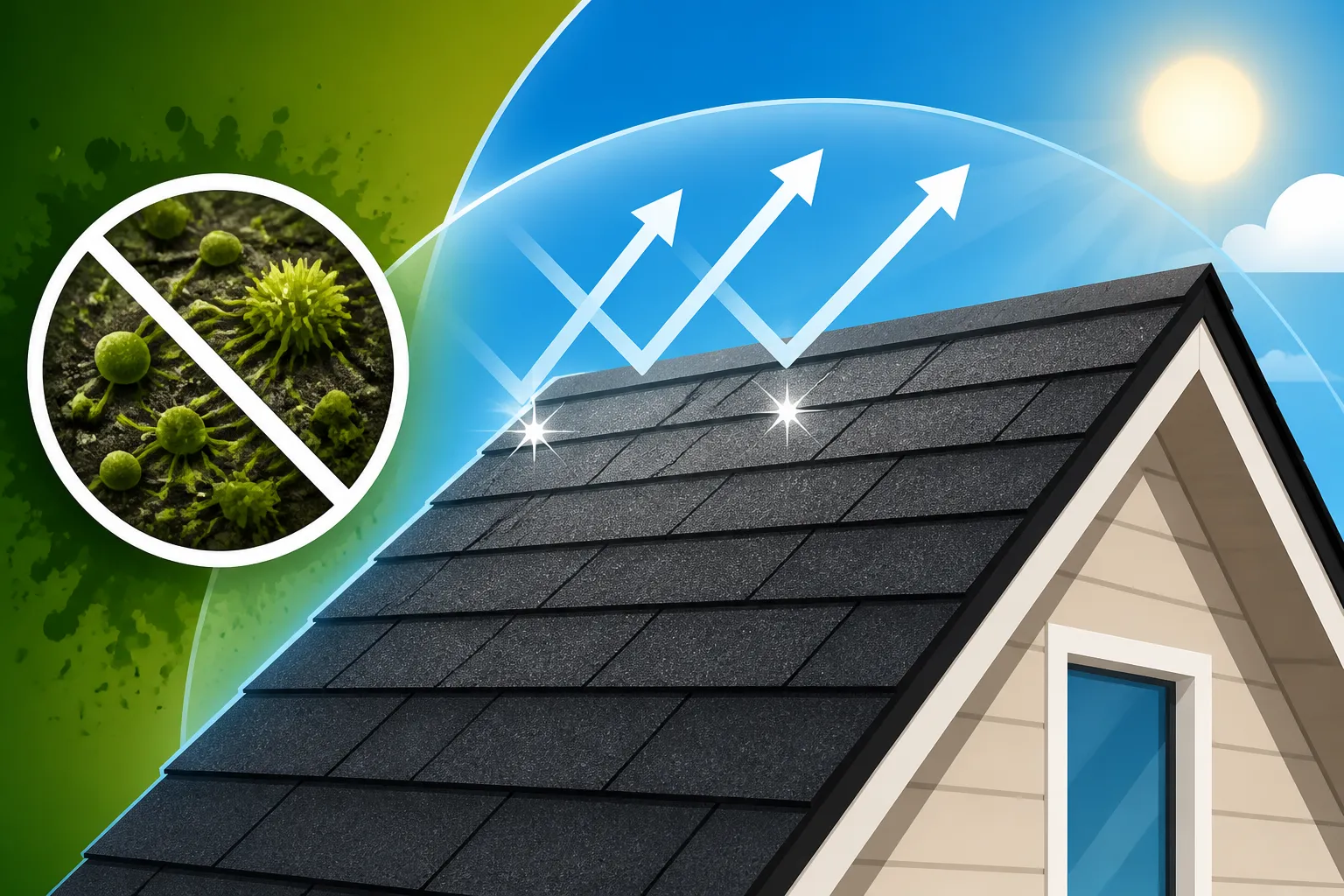
When rain falls on your roof, it washes over these copper-infused granules. The water reacts with the copper, causing it to oxidize slightly and release tiny amounts of copper ions. These ions are then carried down the roof slope with the rainwater. As this copper-rich water flows across the shingles, it creates an environment that is toxic to algae. Copper is a natural algaecide; it disrupts the algae's cellular functions, effectively preventing it from taking root, growing, and spreading. It’s like creating an invisible, algae-repelling shield across your roof's surface. This slow-release mechanism ensures that the protective barrier remains active for many years, continuously guarding against those unsightly black streaks. This proactive approach saves homeowners from the constant battle of power washing or chemical treatments that can be damaging to standard shingles.
The Role of Specialty Blends and Coatings
While copper granules are the star of the show, many leading shingle manufacturers don't stop there. They often combine this proven technology with other innovations to enhance algae resistance and overall shingle performance. For instance, some companies might use a proprietary blend of specially coated ceramic granules that further inhibit organic growth. These could include granules with a higher reflective index, which keep the roof cooler and drier, making it less appealing for algae to colonize. Cooler, drier surfaces are naturally less hospitable to moisture-loving algae.
Some advanced shingles feature a "time-release" element for their copper granules, ensuring a consistent dispersion of algae-fighting agents throughout the shingle's lifespan, rather than a rapid depletion. This carefully engineered distribution helps to maintain the effectiveness of the algae resistance for decades. Furthermore, the overall design and quality of the asphalt shingle itself play a role. A well-constructed shingle with durable, properly embedded granules is better equipped to resist environmental factors, including algae, in the long run. When considering an upgrade, it's worth exploring the full "roofing system" approach that many brands, like GAF or Owens Corning, promote, as components like underlayment and ventilation also contribute to the roof's longevity and cleanliness.
Types of Algae-Resistant Technologies
When you're looking at algae-resistant shingles, you'll find that while the core principle remains similar, different manufacturers have their own proprietary methods and brand names for their anti-algae solutions. It's important to understand these distinctions, as they can influence performance and warranty coverage.
Copper Granule Infusion
The most common and effective method for algae resistance in asphalt shingles involves integrating copper into the ceramic granules that cover the shingle surface. This isn't just a haphazard scattering; it's a carefully engineered process. For example, brands like GAF utilize their "StainGuard" technology, which embeds specially treated copper granules into their shingles, particularly in their popular Timberline series. These granules are strategically blended with standard granules, so the copper is distributed across the roof surface. Similarly, Owens Corning offers "StreakGuard" protection, also relying on the power of copper granules to inhibit algae growth. CertainTeed’s "StreakFighter" technology follows a similar approach, utilizing copper-infused granules to release those essential algaecidal ions whenever it rains.
The key to their success is the slow, continuous release of copper. This means that with every rain shower, your roof essentially cleanses itself, preventing the algae from ever getting a foothold. It's a low-maintenance solution that actively works to keep your roof looking new. The percentage and distribution of copper granules can vary between manufacturers and shingle lines, which can sometimes impact the duration and effectiveness of the algae resistance warranty. When talking to a roofing contractor, ask them about the specific technologies used by the brands they carry, whether it's GAF, Owens Corning, or CertainTeed, to ensure you're getting the best protection for your investment. Modernize can be a great resource for connecting with local contractors who are familiar with these different systems.
Broader Algae-Resistant Systems
While the shingles themselves are the primary line of defense, a truly effective algae-resistant strategy often involves looking at your entire roofing system. Algae thrives in moisture, so anything that reduces prolonged dampness on your roof can contribute to a cleaner, healthier surface. This is where proper roof ventilation comes into play.
A well-ventilated attic helps to regulate the temperature and humidity levels in the space directly below your roof deck. If your attic is constantly hot and humid, that moisture can transfer to the underside of your roof deck and, to some extent, impact the shingles above. Proper airflow, often facilitated by a combination of soffit and ridge vents, helps to exhaust hot, moist air, keeping the roof deck cooler and drier. This, in turn, can slow down the conditions favorable for algae growth. You can learn more about How Roof Ventilation Works to see how critical this component is to overall roof health.
Furthermore, consider the surrounding environment. Overhanging tree branches can create excessive shade and drop organic debris that traps moisture on the roof, fostering algae growth. Trimming back these branches can expose your roof to more sunlight, helping it to dry out faster after rain, thus naturally discouraging algae. While the copper granules in algae-resistant shingles are highly effective, integrating them with good roofing practices and thoughtful landscaping creates a formidable defense against those unsightly black streaks. It’s about creating a holistic environment where algae struggles to thrive, allowing your shingles to perform at their best for their full intended lifespan.
| Manufacturer | Algae Resistance Technology Name | Primary Mechanism | Typical Warranty Period for Algae Resistance |
|---|---|---|---|
| GAF | StainGuard® / StainGuard Plus™ | Copper Granules | 10-25 Years (varies by shingle line) |
| Owens Corning | StreakGuard™ | Copper Granules | 10-20 Years (varies by shingle line) |
| CertainTeed | StreakFighter® | Copper Granules | 15 Years |
| IKO | ArmourZone® (part of system) | Copper Granules | 10 Years |
| Atlas | Scotchgard™ Protector | Copper Granules | Lifetime |
Note: Warranty periods can vary significantly by specific shingle product line and whether a full roofing system is installed. Always consult the manufacturer's current warranty details.
Benefits of Choosing Algae-Resistant Shingles
Investing in algae-resistant shingles offers a compelling list of advantages that go beyond just aesthetics. It’s an investment in your home’s longevity, appearance, and value.
Preserving Your Home's Curb Appeal and Value
Let's face it, a clean, vibrant roof dramatically enhances your home's curb appeal. Those dark, streaky stains from algae can make an otherwise well-maintained home look neglected, significantly detracting from its visual appeal. Algae-resistant shingles prevent these streaks from forming in the first place, ensuring your roof looks as good as new for a much longer period. Imagine pulling into your driveway and seeing a roof that consistently looks fresh and well-kept – it's a source of pride, and it immediately sets a positive tone for your home.
When it comes time to sell, curb appeal is paramount. A stained roof is a major red flag for potential buyers, often leading them to believe the roof is older or more damaged than it actually is. This perception can lead to lower offers or even deter buyers completely. By maintaining a clean roof with algae-resistant shingles, you avoid these pitfalls, helping your home stand out in the market. It demonstrates attention to detail and proactive maintenance, which can translate into a higher sale price and a quicker sale. In essence, algae-resistant shingles are a smart investment in your property's value, offering excellent Roof Replacement ROI Explained.
Extending Your Roof's Lifespan and Maintaining Performance
Beyond the visual benefits, algae-resistant shingles actively contribute to the longevity and performance of your entire roofing system. As we discussed, algae doesn't just sit on the surface; it retains moisture, which can accelerate the breakdown of your shingles. This constant dampness can lead to premature granule loss, exposing the underlying asphalt to damaging UV rays and increasing the risk of cracking or blistering.
By inhibiting algae growth, these shingles mitigate one of the key factors that can shorten your roof's life. Preventing the build-up of organic matter also reduces the likelihood of moss and lichen establishing themselves, which can physically lift and damage shingles over time. When shingles maintain their granule integrity and remain free from moisture-trapping organisms, they are better able to protect your home from the elements, handle thermal expansion and contraction, and resist wind uplift. This means you won't be dealing with potential leaks or needing repairs as frequently, ultimately extending the time before you need to consider a full roof replacement. Protecting your roof from premature degradation means you get the full value and lifespan out of your asphalt shingles, keeping your home safe and dry for decades.
What to Consider When Installing Algae-Resistant Shingles
Deciding to go with algae-resistant shingles is a fantastic choice, but like any major home improvement, there are a few things you'll want to keep in mind before you jump in. It's about making an informed decision that will truly benefit your home in the long run.
Understanding Warranties and Maintenance
One of the most important aspects to consider with algae-resistant shingles is the warranty. Most major shingle manufacturers, like GAF, Owens Corning, and CertainTeed, offer specific warranties against algae staining, which is distinct from their general product or workmanship warranties. These algae warranties typically range from 10 to 25 years, depending on the specific shingle line and the comprehensive roofing system installed. It's crucial to understand what these warranties cover (usually the cost of cleaning or replacing affected shingles, not damage caused by the algae itself) and any conditions for them to remain valid. Always ask your roofing contractor to walk you through the specifics of the manufacturer's warranty, and remember to register your warranty after installation. For more details on this, check out our guide on Manufacturer Warranty Registration.
The good news is that algae-resistant shingles generally require very little maintenance specifically for algae. The copper granules do the heavy lifting. However, general roof maintenance, like keeping gutters clean and trimming overhanging tree branches, will still go a long way in ensuring your roof lasts its full potential. While these shingles resist algae, they don't prevent moss or lichen growth, which are different organisms that thrive in similar damp, shaded conditions. So, occasional checks for other organic growth and debris are still a good idea. The goal is to maximize your investment by staying proactive with overall roof care, even with advanced shingle technology.
Cost Versus Long-Term Savings
It's true that algae-resistant shingles often come with a slightly higher upfront cost compared to their standard counterparts. This premium reflects the added technology – those special copper granules and the manufacturing process to integrate them effectively. The cost difference usually isn't astronomical, often adding an extra $5 to $15 per roofing square, which can translate to a few hundred to over a thousand dollars for an entire roof, depending on its size and complexity. For example, if the average roof replacement cost is already in the thousands, this premium is often a small percentage of the total.
However, it's essential to view this as an investment rather than just an expense. The long-term savings can quickly outweigh that initial premium. First, you save on the recurring cost and hassle of professional roof cleaning, which can be expensive and, if done improperly (e.g., with high-pressure washing), can actually damage your shingles and void warranties. These cleanings might be needed every few years, and those costs add up over the lifespan of a roof. Second, by preventing algae-related degradation, you're potentially extending the life of your roof, delaying the significant expense of a full replacement. Third, a clean, attractive roof contributes positively to your home's energy efficiency by reflecting more sunlight, potentially lowering your cooling costs.
Finally, in some regions or with certain insurance providers, having algae-resistant (or sometimes also impact-resistant) shingles can even qualify you for a small discount on your homeowner's insurance premiums, as they're seen as a more durable and lower-risk roofing material. This is definitely worth exploring with your insurance agent. When you factor in these savings and benefits, the slightly higher initial cost for algae-resistant shingles often proves to be a very wise financial decision for homeowners. It’s about understanding the big picture and calculating the true Cost to Replace a Roof by House Size over its entire lifespan.
Frequently Asked Questions About Algae-Resistant Shingles
Homeowners often have similar questions when considering algae-resistant shingles. Let's tackle some of the most common ones to help you feel completely confident in your choices.
Do They Work Everywhere?
Algae-resistant shingles are designed to work effectively in a wide range of climates, but their performance can be most appreciated in regions prone to high humidity and frequent rainfall. Think coastal areas, the Southeast, or the Pacific Northwest in the United States, where the conditions for Gloeocapsa magma are ideal. In these environments, standard shingles can develop unsightly streaks within just a few years. Algae-resistant shingles truly shine here, preventing the problem before it even starts.
Even in drier climates, occasional periods of dampness or shaded areas of your roof can still foster algae growth. So, while the visual impact might be less immediate, the protective benefits of algae-resistant shingles are still valuable. The effectiveness primarily comes down to the presence and consistent release of copper ions whenever the roof gets wet, which is a universal mechanism. Regardless of where you live, if you want to avoid those black streaks and maintain your roof's aesthetic appeal, these shingles are a strong choice. It’s also important to ensure proper roof ventilation in all climates, as this can greatly enhance overall roof performance and dryness.
How Long Does the Algae Resistance Last?
This is a great question, and it's where understanding warranties becomes crucial. The algae-resistant properties of these shingles are designed to last for a significant portion of the shingle's overall lifespan, typically backed by a specific manufacturer's warranty ranging from 10 to 25 years. This longevity is achieved because the copper granules are embedded directly into the shingle and release ions gradually over time with rainfall. It's not a surface coating that will wear off quickly.
The exact duration of effectiveness can depend on several factors: the specific shingle product line you choose (some premium lines might have a higher concentration of copper or a more advanced release mechanism), the environmental conditions (very heavy rainfall might lead to a slightly faster depletion of copper, though this is usually accounted for), and the quality of the installation. A properly installed roof ensures all components work as intended, safeguarding the long-term performance.
Even after the official warranty period for algae resistance expires, the shingles may continue to offer some level of protection, as not all the copper granules would have completely leached out. However, manufacturers stand behind their stated warranty periods as a guarantee. When you're comparing different options and looking at how to choose a roofing contractor, always inquire about the specific algae resistance warranty that comes with the shingles they recommend. This will give you a clear expectation of how long your roof will remain streak-free. Ultimately, the goal is for the algae resistance to last for the majority of the roof's expected service life, which, for architectural asphalt shingles, can be anywhere from 25 to 50 years. Knowing How a Roof Replacement Works: The Full Process will also give you a better understanding of what elements contribute to the overall lifespan.
Disclaimer
Please remember that this article is intended for informational purposes only and does not constitute professional advice. Roofing projects can be complex and should always be undertaken with the guidance of a qualified and licensed roofing contractor. Always consult local building codes and regulations before starting any roofing work.