Asphalt Roof Replacement Cost: Complete Breakdown
Let’s face it, needing a new roof is rarely on anyone’s "fun things to spend money on" list. It often feels like a sudden, massive expense that pops up without warning, leaving homeowners scrambling to understand what it all entails. The process can be intimidating, from deciphering confusing estimates to worrying about hidden costs. This comprehensive guide is designed to demystify the asphalt roof replacement cost, breaking down every component so you can approach your project with confidence, clarity, and a realistic budget.
Understanding the True Cost of an Asphalt Roof Replacement
When that old roof starts showing its age – maybe you've spotted some curling shingles, a bit too much granule loss in the gutters, or even an unwelcome drip in the attic – the first question on everyone's mind is always, "How much is this actually going to cost me?" It's more than just the price of the shingles themselves; a full roof replacement is a complex project with several layers of expenses. Understanding these various components upfront is crucial for budgeting and avoiding sticker shock later on.
Beyond the Sticker Price: What's Included?
Many homeowners make the mistake of only considering the cost of the shingles when thinking about a roof replacement. However, that's just one piece of a much larger puzzle. A proper, high-quality asphalt roof replacement involves a full system, and each component adds to the overall expense. This includes everything from the initial tear-off of old materials to the final cleanup, and often, even some preparatory work you might not have considered.
For instance, imagine you're a homeowner in Atlanta, Georgia. You get an initial quote from a roofer that seems incredibly low compared to others. You're ecstatic, thinking you've found a great deal! But upon closer inspection, you realize the quote only covers the installation of new shingles and doesn't include the critical step of tearing off your old roof. This means additional labor and disposal fees would be added later, completely changing the final price tag. This scenario is far too common and highlights why understanding what's truly included in an estimate is paramount. A comprehensive estimate should cover materials, labor for tear-off and installation, proper underlayment, flashing, ventilation, permits, and waste disposal.
Average Cost Ranges: What to Expect
It's tough to give an exact number for an asphalt roof replacement without knowing the specifics of your home, but we can talk averages. Nationally, most homeowners can expect to pay anywhere from $7,000 to $25,000 for a complete asphalt roof replacement. This wide range exists because there are so many variables at play. For example, the size of your house and the complexity of its roof design will heavily influence the final price. A small, single-story ranch home will naturally cost significantly less than a large, multi-story home with numerous valleys, dormers, and a steep pitch.
These average costs also fluctuate quite a bit depending on where you live. For instance, if you're a homeowner in a high-cost-of-living area like Southern California or the Northeast, your roofing project will likely fall on the higher end of that national average. Conversely, in regions with lower labor and material costs, such as parts of the Midwest or the South, you might see prices closer to the lower end. To get a better grasp of what to expect for your specific situation, it’s helpful to understand that factors like your home's square footage play a huge role. For a deeper dive into how house size impacts your budget, take a look at our guide on Cost to Replace a Roof by House Size. Understanding these regional differences can help you set more realistic expectations when you start collecting bids.
Key Factors Influencing Asphalt Roof Replacement Costs
The price you pay for a new asphalt roof isn't pulled out of thin air; it's a careful calculation based on several significant factors. Understanding these elements can empower you to make informed decisions, potentially saving you money or ensuring you get the best value for your investment. From the type of shingle you choose to the specific characteristics of your home, each detail plays a role in the overall expense.
Shingle Type and Quality
Perhaps the most visible and often discussed cost factor is the type and quality of asphalt shingles you select. There's a wide spectrum, each offering different aesthetics, durability, and price points. The three main categories you'll generally encounter are 3-tab, architectural (also known as dimensional), and designer (or luxury) shingles.
Three-tab shingles are typically the most budget-friendly option. They're flat, single-layer shingles that offer a classic look but are generally less durable and have a shorter lifespan than their counterparts. Moving up, architectural shingles are the most popular choice for many homeowners today. They are thicker, multi-layered, and designed to mimic the appearance of wood shakes or natural slate, providing a more robust and aesthetically pleasing roof. They also offer better wind resistance and a longer warranty. For a detailed comparison of these two popular options, check out our article on 3-Tab vs Architectural Shingle Cost Compared. Finally, designer shingles are at the top tier, offering unique shapes, colors, and textures, along with enhanced performance features like superior wind resistance and impact resistance, often at a premium price.
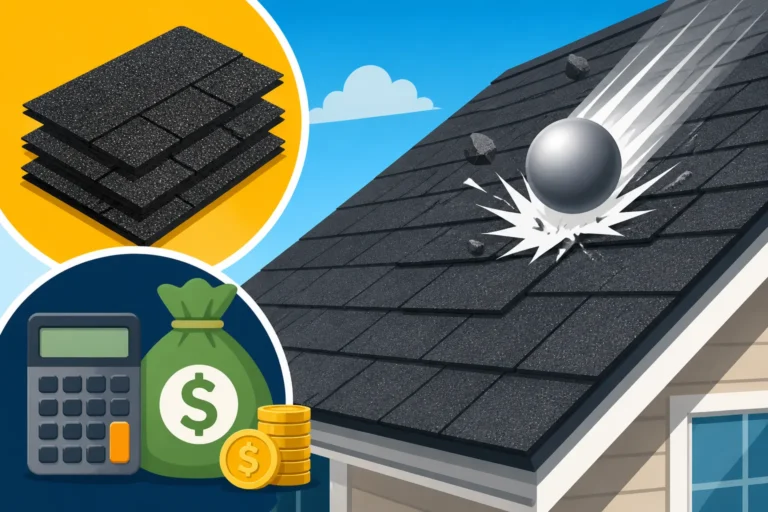
Beyond these basic types, you can also opt for specialized shingles that offer enhanced performance. For instance, if you live in an area prone to severe weather, you might consider impact-resistant shingles. These Class 4 rated shingles are designed to withstand hail and can even qualify you for insurance discounts in some states. Similarly, cool-roof shingles are engineered with reflective granules that help deflect sunlight, reducing heat absorption and potentially lowering your home's cooling costs. For homeowners in hail-prone regions like Dallas, Texas, choosing a Class 4 impact-resistant shingle might be a smart long-term investment, even if it has a higher upfront cost. To learn more about these specialized options, our guide on Impact-Resistant Shingle Cost provides valuable insights.
Roof Size and Complexity
The physical characteristics of your roof are another major determinant of cost. It's not just about how many "squares" of roofing material are needed; the shape and features of your roof dramatically affect the labor involved and, consequently, the price. Think about it: a simple, low-pitched roof on a rectangular home is much easier and faster to work on than a sprawling, multi-level roof with numerous angles, peaks, and valleys.
The overall square footage is the baseline. Roofing contractors measure roofs in "squares," where one square equals 100 square feet. So, a 2,000 square foot roof would be 20 squares. However, the complexity factor quickly adds to that base cost. A steep roof pitch, for example, requires more safety equipment, more time for installers to move around, and often more specialized techniques, all of which contribute to a higher labor cost. We have a dedicated resource that breaks down the specifics of Roof Replacement Cost by Pitch. Features like multiple valleys (where two roof planes meet), dormers, skylights, chimneys, and vents all create interruptions in the roof plane, requiring meticulous cutting, flashing, and sealing, which are labor-intensive tasks.
Consider the difference between replacing the roof on a modest ranch-style home in New Orleans, Louisiana, versus a multi-story Victorian house with turrets and intricate roof lines. The ranch home might be a straightforward job, completed in a day or two. The Victorian, on the other hand, could take several days, require extensive scaffolding, and involve highly skilled craftsmanship for all those complex angles and protrusions. Each additional valley or dormer adds significantly to the complexity and thus the cost. If your home has an intricate design with many valleys, you'll find our article on Cost of a Roof with Multiple Valleys particularly insightful.
Labor Rates and Regional Differences
While material costs are somewhat standardized across different regions, labor rates can vary wildly, often influenced by the local economy, cost of living, and the supply and demand for skilled roofing professionals. This means that getting an asphalt roof replacement in one state could be significantly more expensive than in another, even for the exact same materials and roof specifications.
For example, homeowners in bustling metropolitan areas like California or New York often face higher labor costs due to the higher cost of living and increased business operating expenses in those regions. A roofer's hourly rate in San Diego or Manhattan will naturally be higher than in a more rural area of Ohio or Tennessee. This is a crucial distinction that can dramatically impact your total project cost. For a deeper understanding of these geographical price variations, check out our guide on Asphalt Roof Replacement Cost by State. It's not just about the state average either; even within a state, labor costs can differ between major cities and smaller towns.
These regional labor rate differences are a significant reason why you might see such a wide range in estimates from different contractors or even from online cost calculators. It’s also why understanding how much roofers charge per hour is helpful. In some areas, fierce competition among contractors might drive prices down, while in others, a shortage of skilled labor could push them higher. When you're gathering quotes, especially if you're comparing bids, always consider the impact of local labor costs. To get a granular look at how professionals charge for their time, our article on How Much Roofers Charge Per Hour is a must-read.
The Detailed Breakdown of Roofing Components
Getting a new roof is more than just slapping on some shingles. It’s an intricate process involving multiple layers and components, each playing a vital role in protecting your home. Understanding these individual pieces and their associated costs can help you appreciate the full scope of the project and ensure you’re getting a quality installation that will last for decades.
Material Costs: Shingles, Underlayment, and Accessories
The lion's share of your material budget will, of course, go towards the shingles themselves. As we discussed, whether you choose economical 3-tab, popular architectural, or premium designer shingles will set your base material cost. But beyond the visible top layer, there's a whole system underneath that's critical for your roof's integrity and longevity.
First up is the underlayment, a crucial barrier installed directly over your roof decking. Traditionally, felt paper was used, but modern synthetic underlayments are now common, offering superior tear resistance, water protection, and often longer warranties. These materials vary in cost, but the investment in a high-quality underlayment is almost always worth it for the added protection it provides against moisture intrusion. Particularly in colder climates or areas prone to heavy rain, an ice and water shield is also installed at eaves, valleys, and around penetrations. This self-adhering membrane offers an extra layer of waterproofing against ice dams and wind-driven rain, and it's often a building code requirement in many northern states, such as Minnesota or New York. Our guide on Synthetic vs Felt Underlayment Cost dives deeper into these options.
Then there are the essential accessories that complete the roofing system. Drip edge, installed along the perimeter of your roof, directs water away from your fascia and prevents water damage to the edge of your roof decking. Various types of flashing – metal pieces installed around chimneys, skylights, vent pipes, and wall intersections – are non-negotiable for preventing leaks in these vulnerable areas. Ridge caps, specialized shingles that cover the peaks of your roof, and starter strips, which ensure a watertight seal at the eaves, also contribute to the material cost. Finally, proper roof ventilation, often involving ridge vents or other attic exhaust systems, is essential for prolonging your roof's life and improving your home's energy efficiency. While seemingly minor individually, these components add up, and skimping on them can lead to costly problems down the line. To fully grasp the importance and cost of these protective elements, consider exploring our article on the Cost of New Flashing and Drip Edge.
Labor Costs: Tear-Off, Installation, and Cleanup
The labor component of your roof replacement can sometimes equal or even exceed the cost of materials, especially for complex roofs. This isn't just about nailing down shingles; it encompasses a wide range of skilled tasks that ensure your new roof is installed correctly and safely.
The first major labor task is the tear-off. This involves carefully removing all existing shingles, underlayment, and any other roofing components down to the bare roof decking. It's dirty, physically demanding work, and the cost can increase if your home has multiple layers of old roofing that need to be removed. What exactly happens during this stage? Our guide on What Happens During a Roof Tear-Off explains the entire process. Once the old roof is off, the crew inspects the roof decking for any damage, such as rot or structural issues, which would necessitate repairs and additional labor. Then, the process of installing the new roofing system begins: laying down the underlayment, applying the ice and water shield, installing drip edge and flashing, and finally, meticulously installing the new shingles according to manufacturer specifications and local building codes.
Beyond the actual installation, professional roofing crews also factor in the cost of setup and cleanup. This includes transporting all materials to and from the site, setting up safety equipment, protecting your landscaping, and, crucially, thoroughly cleaning up all debris, including stray nails, old shingles, and packaging. A good contractor will leave your property cleaner than they found it. All these steps require skilled personnel, specialized equipment, and a significant time commitment, which is reflected in the overall labor cost. The labor involved in a complete asphalt roof replacement is considerable, and it's an investment in the longevity and performance of your new roof.
Hidden and Additional Costs to Anticipate
While a good roofing estimate should be as comprehensive as possible, sometimes unexpected issues arise during a roof replacement. These "hidden" costs aren't necessarily tricks by the contractor, but rather unforeseen circumstances or necessary upgrades that weren't obvious during the initial visual inspection. Being aware of these potential extras can help you build a more realistic contingency fund into your budget.
Permits, Inspections, and Disposal Fees
One of the most commonly overlooked expenses by homeowners is the cost associated with local permits and inspections. Nearly every municipality requires a permit for a full roof replacement to ensure the work complies with current building codes and safety standards. The cost of these permits varies significantly by location, from a few hundred dollars to sometimes over a thousand, depending on your city or county. In Phoenix, Arizona, for example, obtaining a roofing permit involves not just a fee but also adherence to specific energy efficiency codes, which might subtly influence material choices or ventilation requirements.
The permit process typically involves an application, a fee, and then a series of inspections during and after the project to ensure everything is done to code. While your contractor should handle securing the permit, the cost is ultimately passed on to you. Failing to obtain a permit can lead to fines, delays, and even problems when selling your home in the future. To get a detailed understanding of the permit process and its associated costs, our article on Roofing Permit Cost and Process is a great resource.
Another non-negotiable cost is the disposal of your old roofing materials. When your contractor performs a tear-off, all those old shingles, felt paper, and nails have to go somewhere. This involves renting a dumpster and paying for landfill fees or recycling costs. The amount you pay for disposal depends on the size of your roof, the number of existing layers, and local waste management fees. On average, homeowners can expect to pay a few hundred to over a thousand dollars for proper disposal. This isn't just about convenience; responsible disposal is essential for environmental reasons and to keep your property clean. For a more in-depth look at this specific expense, read our piece on the Cost of Roof Tear-Off and Disposal.
Unexpected Repairs and Upgrades
Even with a thorough initial inspection, some issues only become apparent once the old roof is completely removed. The most common culprit here is damaged roof decking. The plywood or OSB sheathing that forms the structural base of your roof can suffer from water damage, rot, or even pest infestations over time. If a contractor discovers compromised decking after the tear-off, it must be replaced before new roofing materials can be installed. This can add significantly to your costs, as it involves both new material and additional labor.
Consider a homeowner in suburban Denver, Colorado. They thought their roof looked fine from the outside, but after tear-off, the crew discovered several areas of widespread rot near the eaves and around a skylight. This necessitated replacing multiple sheets of plywood, which added an unexpected $1,500 to their total project. While it was an unforeseen expense, skipping the repair would have meant installing a new roof on a failing foundation, leading to premature roof failure. To learn more about this potential cost, our guide on Roof Decking Replacement Cost provides a complete overview.
Beyond decking, contractors might also recommend other upgrades or repairs that were not part of the initial estimate. This could include repairing a leaky chimney, replacing old or damaged gutters, or improving attic ventilation if the existing system is inadequate. While these might seem like "extra" expenses, addressing them during a roof replacement often makes sense. For instance, upgrading your roof ventilation can extend the life of your new shingles by preventing heat and moisture buildup in the attic, potentially saving you money on energy bills and future repairs. Our article on Cost of Roof Ventilation Upgrades offers detailed information on this topic. It's wise to set aside a contingency fund, usually 10-15% of your estimated cost, to cover these kinds of unexpected but often necessary adjustments.
Navigating Estimates and Choosing the Right Contractor
The roofing industry, like any home improvement sector, has its fair share of excellent professionals and less-than-reputable outfits. As a homeowner, sifting through quotes and trying to make the best decision can feel overwhelming. It's not just about finding the cheapest price; it's about finding the best value, quality workmanship, and a contractor you can trust.
How to Read and Compare Roofing Estimates
Receiving multiple estimates is always a smart first step, but just getting them isn't enough – you need to know how to properly interpret and compare them. It's tempting to simply look at the bottom line, but that's where many homeowners make mistakes. A truly valuable estimate will be detailed, breaking down costs for materials, labor, permits, disposal, and any other specific components.
For example, imagine a homeowner in Seattle, Washington, gets three bids. Bid A is the lowest but is very vague, just listing "roof replacement" and a total price. Bid B is mid-range and itemizes materials, labor, and disposal. Bid C is the highest but includes a premium architectural shingle, enhanced underlayment, and a comprehensive manufacturer warranty. If the homeowner only looks at the totals, Bid A seems best. However, Bid A might not include tear-off, or it could be using inferior materials. You need to ensure each estimate specifies the shingle brand and type (e.g., GAF Timberline HDZ or Owens Corning Duration), the type of underlayment, the scope of flashing work, and whether cleanup and disposal are included. Always ask for clarification on any line item you don't understand. Our detailed guide on How to Read and Compare Roofing Estimates offers excellent strategies for this.
Moreover, pay attention to payment schedules and warranties. A reputable contractor will rarely ask for a large upfront deposit (more than 10-20% is a red flag) and will provide clear details on both workmanship and manufacturer warranties. Look for consistency in material specifications across bids, and if one bid is drastically lower or higher than the others, ask probing questions to understand why. It's also a great idea to leverage platforms like Modernize, which can help you connect with vetted local contractors, streamlining the process of getting multiple, comparable bids.
The Importance of a Reputable Contractor
Choosing the right roofing contractor is arguably the most critical decision you'll make in the entire roof replacement process. A quality contractor ensures proper installation, adheres to safety standards, and provides reliable warranties, protecting your investment for years to come. Conversely, a poor choice can lead to shoddy workmanship, premature roof failure, and endless headaches.
First and foremost, always ensure your contractor is licensed and insured. Licensing ensures they meet minimum professional standards, while comprehensive insurance (general liability and workers' compensation) protects you from liability if an accident occurs on your property. This is non-negotiable. Don't be afraid to ask for proof of insurance and verify it with the provider. For a deep dive into why this matters so much, our article on Licensed and Insured Roofers: Why It Matters is essential reading. Beyond licenses, look for contractors with manufacturer certifications, such as GAF Master Elite, Owens Corning Platinum Preferred, or CertainTeed SELECT ShingleMaster. These certifications mean the contractor has met rigorous standards set by the shingle manufacturers, indicating a higher level of expertise and often allowing them to offer extended, non-prorated warranties that wouldn't be available otherwise.
Consider a family in Houston, Texas, who needed a new roof after a severe storm. They chose a Modernize-vetted contractor who was GAF Master Elite certified. This meant not only did they get a high-quality installation, but they also qualified for GAF's Golden Pledge® Warranty, covering both materials and the contractor's workmanship for an extended period. This level of protection offers invaluable peace of mind. Always check online reviews on platforms like Google, Yelp, and the Better Business Bureau. Ask for local references and drive by some of their completed projects if possible. A reputable contractor will be transparent, communicate clearly, and stand behind their work. Finding a great roofer can feel daunting, but learning How to Choose a Roofing Contractor will set you on the right path.
Financing Your Asphalt Roof Replacement
The cost of a new asphalt roof is a significant investment, and for many homeowners, coming up with the cash upfront isn't always feasible. Fortunately, there are several financing options available that can help make your roof replacement more manageable, allowing you to protect your home without draining your savings.
Payment Options and Strategies
When you're facing a large expense like a roof replacement, knowing your payment options can significantly reduce stress. The most straightforward approach, if your budget allows, is to pay with cash. This avoids interest charges and allows you to negotiate more directly with contractors, potentially securing a slightly better price. However, if cash isn't readily available, there are many other avenues to explore.
One popular option is a home equity loan or a home equity line of credit (HELOC). These allow you to borrow against the equity you've built in your home, often at competitive interest rates, as your home serves as collateral. The interest paid on these loans for home improvements can sometimes even be tax-deductible. A homeowner in Denver, Colorado, for example, might find a HELOC to be an ideal solution, allowing them to draw funds as needed for the roofing project and other home upgrades, leveraging their home's increased value. Personal loans are another option, though they typically come with higher interest rates than home equity products because they are unsecured.
Many roofing contractors also offer their own financing plans, often through partnerships with third-party lenders. These can include options like 0% APR for a limited period or extended payment terms. While convenient, always scrutinize the terms and interest rates, as they can vary widely. It’s always smart to compare contractor financing with what your bank or credit union might offer. To fully understand the landscape of how you can pay for your new roof, explore our guide on Roof Financing Options Explained. Evaluating all these strategies ensures you choose the payment method that best fits your financial situation.
Insurance Claims and Maximizing Coverage
If your need for a new roof stems from unforeseen events like severe weather – hail, strong winds, or a fallen tree – your homeowners insurance policy might cover a substantial portion of the cost. This is often the case for sudden and accidental damage, rather than damage from gradual wear and tear or neglect. Understanding your policy and the claims process is vital to maximizing your coverage.
The first step after storm damage is to document everything thoroughly with photos and videos, then contact your insurance provider immediately. They will send an adjuster to assess the damage and determine if it meets your policy's criteria for replacement or repair. It's highly recommended to have your chosen roofing contractor present during the adjuster's visit, as they can provide a detailed assessment from a roofing expert's perspective and ensure all damage is identified. A homeowner in Oklahoma City, a region frequently hit by hailstorms, learned this lesson firsthand. Their contractor helped point out subtle hail damage that the adjuster initially missed, leading to a more comprehensive payout.
Navigating insurance claims can be complex, with terms like "Actual Cash Value" (ACV) and "Replacement Cost Value" (RCV) affecting your payout. RCV policies generally pay for the full cost of replacing your roof with new materials of similar kind and quality, while ACV policies will factor in depreciation for the age of your old roof, paying out less. Knowing which type of policy you have is crucial. Remember that you'll still be responsible for your deductible, and sometimes, even with a claim, there might be gaps in coverage. However, for qualifying damage, homeowners insurance can be a huge financial relief. Our article, Does Insurance Cover Roof Replacement, offers a complete breakdown of what's typically covered and how to navigate the process.
Asphalt Shingle Types: A Cost Comparison Table
To give you a clearer picture of how different asphalt shingle types stack up in terms of cost and common uses, here's a helpful table. Keep in mind these are average installed costs per square (100 square feet) and can fluctuate based on your location, contractor, and specific roof characteristics.
| Shingle Type | Average Cost Per Square (Installed) | Typical Lifespan (Years) | Key Characteristics | Best For |
|---|---|---|---|---|
| 3-Tab Shingles | $200 – $350 | 15-25 | Flat, single-layer, uniform appearance, basic wind resistance. | Budget-conscious homeowners, rental properties, sheds, or garages. |
| Architectural Shingles | $350 – $600 | 25-40 | Dimensional, multi-layered, mimics wood shakes/slate, enhanced durability, better wind resistance, wide color selection. | Most homeowners seeking a balance of aesthetics, durability, and value for their primary residence. |
| Designer (Luxury) Shingles | $600 – $1,000+ | 30-50+ | Thickest, heaviest, highly customized designs, superior aesthetics, premium features (e.g., impact, algae resistance). | High-end homes, custom builds, specific architectural styles, homeowners prioritizing aesthetics and long-term performance. |
| Impact-Resistant Shingles | $450 – $800+ | 30-50+ | Class 4 hail resistance rating, often architectural or designer style, may offer insurance discounts. | Homes in hail-prone regions, homeowners seeking maximum durability and potential insurance savings. |
| Cool-Roof Shingles | $400 – $750+ | 25-40+ | Reflective granules reduce heat absorption, can lower attic temperatures and energy bills. | Homes in hot climates, homeowners focused on energy efficiency, areas with specific cool-roof mandates. |
Disclaimer
Please remember that the information provided in this guide is for general informational purposes only and should not be considered professional financial, legal, or construction advice. Roofing costs and regulations vary significantly by location, materials, and contractor. Always consult with multiple licensed and insured roofing professionals for accurate estimates tailored to your specific project and local building codes. Ensure all contractors provide written estimates and contracts.