Roof Pitch and Slope Explained
One of the trickiest parts about diving into a roofing project, whether it's a repair or a full replacement, is grappling with all the technical terms thrown around. If you’ve ever felt a bit lost when a contractor starts talking about "pitch" or "slope," you're definitely not alone. It can feel like you need a crash course in geometry just to understand your roof! This comprehensive guide is here to demystify roof pitch and slope, explaining what they are, why they matter for your home's integrity and aesthetics, and how they directly impact your asphalt roofing system.
Unpacking Roof Pitch and Slope: What’s the Difference?
When you hear roofers or contractors tossing around terms like "pitch" and "slope," it's easy to assume they're talking about the exact same thing. While these terms are often used interchangeably in casual conversation, there's a subtle but important distinction in the roofing world. Understanding this difference is key to accurately describing your roof and making informed decisions about its maintenance or replacement.
Defining Roof Pitch
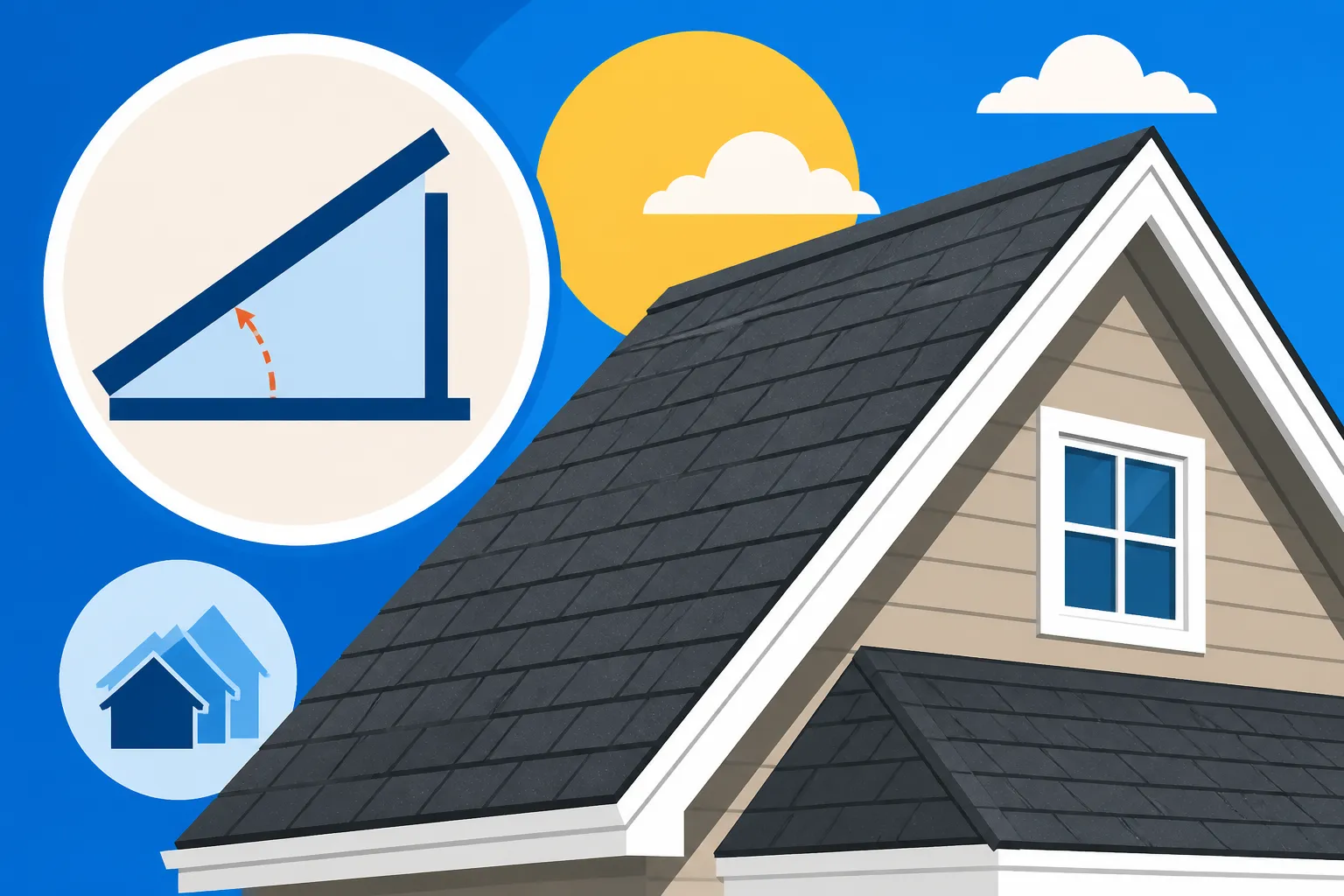
In essence, roof pitch refers to the steepness of your roof. It’s a numerical representation of how much your roof rises vertically for every 12 inches it runs horizontally. You'll usually see it expressed as a fraction, like 4/12 or 7/12. The first number, the "rise," tells you how many inches the roof goes up, and the second number, the "run," is almost always 12 inches, representing the horizontal distance. So, a 4/12 pitch means the roof rises 4 inches for every 12 inches it extends horizontally.
This fractional notation is the most common way to describe pitch in North America, and it's what most roofing professionals, especially those specializing in asphalt roofing, will use. It's a precise measurement that helps determine everything from the type of shingles that can be used to the complexity of the installation. For example, a low-slope roof might be 2/12, while a very steep roof could be 12/12 or even higher, resembling a ski slope!
Understanding Roof Slope
While "pitch" focuses on the rise-over-run ratio, "slope" is a broader term that simply describes the angle or incline of the roof's surface. Think of it as the visual representation of how steep or flat a roof appears. You might hear someone say, "That roof has a gentle slope," referring to a low-pitch roof, or "Wow, that's a steep slope!" for a high-pitch roof. Sometimes, slope is also expressed as a percentage or in degrees, especially in engineering or architectural contexts, but for homeowners dealing with asphalt shingles, the fractional pitch is far more relevant.
So, while they are closely related, "pitch" gives you the exact numerical measurement crucial for roofing materials and installation, whereas "slope" is a more general description of the roof's incline. Knowing both helps you understand the overall design and functional aspects of your roof. This understanding is particularly important when you're getting estimates and comparing services, helping you to accurately How to Read and Compare Roofing Estimates.
Why Roof Pitch and Slope Are Crucial for Your Home
You might think roof pitch is just about aesthetics, but its impact stretches far beyond curb appeal. The angle of your roof, whether it's a gentle slope or a dramatic peak, plays a significant role in its functionality, longevity, and even the cost and complexity of a new roof. Ignoring this vital aspect can lead to unexpected issues down the road, making a small problem a much larger headache.
Drainage and Weather Resistance
One of the most critical functions of any roof is to shed water effectively. This is where pitch truly shines. A properly sloped roof uses gravity to its advantage, guiding rainwater and melted snow away from your home and into your gutters. Without an adequate pitch, water can pool on the roof surface, leading to a host of problems.
For asphalt shingles, a certain minimum pitch is absolutely essential for proper drainage. If the pitch is too low, water won't run off quickly enough. This standing water can seep under the shingles, especially during heavy rains or when strong winds push water uphill. Over time, this constant moisture exposure can lead to accelerated shingle deterioration, mold and mildew growth, and even severe leaks that compromise your roof decking and attic space. A roof with an insufficient pitch is simply not designed to effectively handle the elements that asphalt shingles are meant to deflect. It’s a bit like trying to use an umbrella upside down; it just doesn't work as intended.
Aesthetic Impact and Architectural Style
Beyond pure function, roof pitch profoundly influences your home's overall aesthetic and architectural style. The pitch can dramatically change the perceived height, mass, and character of a house. For instance, a low-slope roof often lends itself to modern, minimalist designs, creating a sleek, understated profile. Think of mid-century ranch homes or contemporary builds, where the roof almost blends into the horizon.
On the other hand, steeper pitches are characteristic of traditional architectural styles like Victorian, Colonial, or Tudor homes. These dramatic angles create a sense of grandeur and historical charm, often featuring prominent gables and dormers that stand out against the sky. The pitch dictates the amount of visible roof surface, which can become a canvas for intricate shingle patterns or unique color combinations. When considering a Roof Replacement and Home Value, the aesthetic harmony of the roof pitch with the home's style is often a significant factor. Even if you're only considering a simple asphalt shingle roof, the choice of shingle color and style will interact with the pitch to define your home's personality.
Cost and Installation Complexity
It's no secret that a roof replacement can be a significant investment, and roof pitch is a major determinant of the overall How Much Does an Asphalt Shingle Roof Cost. The steeper your roof, the more complex and time-consuming the installation process becomes, which directly translates to higher labor costs.
Installing shingles on a low-slope roof (say, 2/12 to 4/12) is generally safer and faster because workers can walk on it more easily. However, once you get into moderate to steep pitches (4/12 and above), gravity starts to become a real challenge. Roofers need specialized safety equipment like harnesses, ropes, and toe boards to prevent falls. The work pace slows down considerably as shingles have to be carried up and maneuvered carefully to maintain straight lines and proper alignment. Cutting and fitting shingles around dormers, chimneys, and valleys on a steep roof also requires greater precision and skill, increasing the overall labor hours. This is why you'll often see a Steep Roof Cost Premium applied to bids for very high-pitched roofs. Moreover, special considerations might be needed for the type of underlayment, as some low-slope applications require additional protection like ice and water shield over the entire surface, not just eaves and valleys. These factors all contribute to the overall Asphalt Roof Labor Cost Explained, making a seemingly simple shingle installation a much more involved project on a steeper roof.
How to Determine Your Roof's Pitch and Slope
Knowing your roof's pitch isn't just for contractors; it's empowering knowledge for you as a homeowner. Whether you’re planning a project, troubleshooting a leak, or simply curious, measuring your roof’s pitch is a valuable skill. However, safety should always be your top priority. Climbing onto a roof can be dangerous, especially on steeper slopes or in adverse weather conditions.
Safety First: Precautions for Measuring Pitch
Before you even think about stepping onto your roof, take a moment to assess the risks. If your roof is visibly steep, wet, icy, covered in moss, or if you're uncomfortable with heights, it’s best to leave this task to a professional. A fall from a roof can result in serious injury or worse.
If you decide to proceed, make sure you have the right gear. A sturdy extension ladder, securely placed on level ground, is non-negotiable. Wear non-slip shoes with good traction. Avoid working alone; have someone spot you on the ground who can hold the ladder steady and call for help if needed. Use safety ropes or a harness if you have them and know how to use them properly, especially on pitches above 4/12. Always choose a calm, dry day with no wind. For steeper roofs, consider using binoculars from the ground or a drone to get a visual assessment without direct contact. Remember, your safety is worth more than any measurement. If there's any doubt, a qualified roofing contractor can easily and safely measure your roof's pitch during an inspection or estimate. They do this all the time and have the proper equipment and training.
The Traditional Rise Over Run Method
The most common and accurate way to measure roof pitch involves the "rise over run" method. You'll need a 2-foot (24-inch) level and a measuring tape.
Here’s how to do it:
- Gain Safe Access: Carefully and safely get onto your roof.
- Locate a Flat Spot: Find a clear, flat area of the roof, away from any obstructions like vents or chimneys.
- Place the Level: Lay the 2-foot level horizontally on the roof surface, making sure it’s parallel to the fascia board.
- Measure the Rise: From the 12-inch mark on your level (halfway along the 24-inch level, representing a 1-foot horizontal "run"), measure vertically straight down to the roof surface. The number of inches you measure is your "rise."
- Record the Pitch: If, for example, you measured 5 inches, your roof pitch is 5/12. If it was 7 inches, it's 7/12.
This method gives you the precise fractional pitch that roofing contractors use. It directly illustrates how much the roof rises for every 12 inches of horizontal travel. This information is critical for calculating materials and determining the appropriate installation techniques. Many roofers also use sophisticated tools or satellite imaging to perform a Satellite Roof Measurement Explained, which can provide highly accurate pitch measurements without anyone ever setting foot on your roof.
Digital Tools and Apps for Pitch Measurement
In today's tech-savvy world, there are several digital tools and smartphone apps that can help you estimate your roof's pitch, often without even climbing on the roof. While these might not be as precise as the physical rise-over-run method, they can offer a good general idea.
- Smartphone Inclinometers/Level Apps: Many smartphones have built-in inclinometers. By placing your phone flat on a ladder rung (making sure the ladder matches the roof's angle) or even carefully on a small, accessible eave, you can get a reading in degrees or a rise-over-run format. Some apps are specifically designed for roof pitch measurement, using the phone's accelerometer and gyroscope.
- Online Calculators: Websites like Modernize often provide roof pitch calculators where you can input certain measurements (like horizontal distance and vertical height if you can get them from the ground) and it will calculate the pitch for you. Some tools can even use aerial imagery to estimate the pitch, though these are typically used by professionals.
While convenient, always remember that these digital tools are best for estimation. For crucial decisions like ordering materials or finalizing a roofing contract, always rely on measurements confirmed by a professional.
Exploring Common Roof Pitches and Their Characteristics
Roof pitches aren't just random numbers; they fall into categories that dictate functionality, aesthetics, and even the types of roofing materials that can be safely and effectively installed. Each range of pitch has its own set of advantages and challenges.
Low-Slope Roofs (2/12 to 4/12 Pitch)
When we talk about low-slope roofs, we're generally referring to pitches between 2/12 and 4/12. These roofs appear relatively flat, though they always have some slope for drainage. Anything below 2/12 is typically considered a "flat roof" and requires specialized roofing systems like EPDM, TPO, or modified bitumen, as standard asphalt shingles are not suitable for such minimal inclines.
Characteristics:
- Appearance: Modern, minimalist, and often less visually dominant on the home's exterior. They can give a house a broader, more expansive feel.
- Drainage: Requires careful attention to drainage. While they do shed water, the runoff is slower. This makes them more susceptible to standing water, debris accumulation, and potential leaks if not installed perfectly with appropriate underlayment.
- Accessibility: Generally easier and safer to walk on, making maintenance and repairs more manageable.
- Material Compatibility: Standard asphalt shingles have limitations here. For pitches between 2/12 and 4/12, manufacturers often require a double layer of felt or synthetic underlayment, or even a full application of self-adhering ice and water shield beneath the shingles to provide extra protection against water infiltration due to slower drainage. This can impact the overall Synthetic vs Felt Underlayment Cost. Without these extra measures, the warranty might be voided.
Moderate-Slope Roofs (4/12 to 7/12 Pitch)
This is perhaps the most common range for residential roofs, especially those featuring asphalt shingles. Pitches from 4/12 to 7/12 strike a balance between effective drainage, walkability, and aesthetic appeal for many home styles.
Characteristics:
- Appearance: Versatile and widely used, complementing a vast array of architectural styles, from traditional two-story homes to contemporary designs. They offer a good amount of visible roof surface without being overly dramatic.
- Drainage: Excellent for shedding water and snow. The steeper angle allows for quick runoff, minimizing the risk of standing water and related issues. This is the ideal range for the optimal performance of asphalt shingles.
- Accessibility: Still generally walkable for experienced roofers, though safety precautions like toe boards become more common at the higher end of this range.
- Material Compatibility: Perfectly suited for standard asphalt shingles, including 3-tab, architectural, and designer styles. Most manufacturers' warranties are designed around roofs within this pitch range. You'll also find that many common ventilation solutions, like Cost of Ridge Vent Installation, are highly effective on these roof types.
Steep-Slope Roofs (7/12 Pitch and Higher)
Steep-slope roofs, typically 7/12 pitch or greater, are dramatic and eye-catching. You'll often see these on Victorian, Tudor, or chalet-style homes, where the roof itself is a prominent architectural feature.
Characteristics:
- Appearance: Visually striking, creating tall, imposing structures with a strong design presence. They often feature prominent gables and dormers, adding intricate details to the roofline.
- Drainage: Exceptional at shedding water, snow, and debris, minimizing accumulation and virtually eliminating standing water issues. However, heavy snow can still present challenges if it slides off in large, sudden sheets, potentially damaging landscaping or creating hazards below.
- Accessibility: Extremely challenging and often dangerous to work on. Roofers require extensive safety gear, scaffolding, and specialized techniques, leading to increased labor time and costs. This is where the Steep Roof Cost Premium truly comes into play.
- Material Compatibility: Asphalt shingles perform very well in terms of water shedding, but installation requires extra care. Nailing patterns might be adjusted for enhanced wind resistance, and specialized hip and ridge cap shingles are often used to maintain aesthetic continuity. The cost to install specific shingles, like those from CertainTeed, GAF, or Owens Corning, can vary significantly depending on the roof's pitch. For example, a GAF Timberline HDZ Roof Cost Installed might be notably higher on a 10/12 pitch compared to a 5/12 pitch, purely due to labor intensity.
Knowing these categories helps homeowners understand why certain materials are recommended, why some jobs cost more, and what to expect in terms of maintenance and performance for their specific roof type.
The Role of Pitch in Asphalt Shingle Performance and Installation
For asphalt shingles, roof pitch isn't just a suggestion; it's a fundamental requirement for the material to perform as intended and for manufacturer warranties to remain valid. Ignoring pitch requirements can lead to premature roof failure and costly repairs, completely negating the protective benefits your new asphalt roof is supposed to provide.
Minimum Pitch Requirements for Asphalt Shingles
Every asphalt shingle manufacturer, whether it's GAF, Owens Corning, or CertainTeed, specifies a minimum roof pitch for their products. Generally, most standard asphalt shingles require a minimum pitch of 4/12 (four inches of rise for every twelve inches of run). This 4/12 threshold is critical because it ensures that water can drain off the roof surface quickly enough, preventing it from backing up under the shingles.
What happens if your roof has a lower pitch, say 3/12, but you still want asphalt shingles? It's not always impossible, but it requires special installation techniques and modifications to the roofing system to ensure proper water shedding. For pitches between 2/12 and 4/12, the industry standard and most manufacturer guidelines mandate enhanced underlayment protection. This usually means installing a double layer of felt or synthetic underlayment, or a full application of ice and water shield over the entire roof deck, before the shingles are laid. This extra layer creates a secondary waterproofing barrier, protecting the roof deck even if water manages to get past the shingles. Without these crucial steps, even the best How Asphalt Shingles Are Installed: Step by Step methods won't guarantee performance on a low-slope roof, and your warranty will almost certainly be voided. Always check with your contractor and the shingle manufacturer's specifications for low-slope applications.
Impact on Water Shedding and Wind Resistance
The pitch of your roof directly influences how effectively it sheds water and resists wind uplift. On a steeper roof, gravity pulls water down and off the roof quickly, reducing the chance for water to seep under shingles. This natural advantage means less stress on the shingle's seal and less opportunity for water damage.
Conversely, on low-slope roofs (even those between 2/12 and 4/12 with enhanced underlayment), water drains more slowly. This slower drainage means water remains on the shingle surface longer, increasing the hydrostatic pressure against the shingle seals, especially in heavy downpours. Wind-driven rain becomes a much greater threat on lower pitches, as strong winds can force water uphill or under shingle edges that aren't perfectly sealed. Therefore, the seal-down strips on asphalt shingles, which activate with the sun's heat, are even more critical on lower pitches.
Wind resistance is also significantly affected. While shingles have How Wind Ratings Work for Shingles, a steeper pitch can sometimes offer a slight advantage in certain wind conditions, as the wind may flow over the roof more smoothly. However, extremely steep roofs can also be vulnerable if wind gets under an edge, creating significant uplift. Proper nailing patterns and shingle adhesion are paramount regardless of pitch, but on steeper roofs, roofers might opt for a "high-wind nailing" pattern with more fasteners per shingle to enhance security, especially in hurricane-prone or high-wind areas. This means your roofer might use 6 nails per shingle instead of the standard 4, adding an extra layer of protection.
Installation Challenges and Specific Considerations
Installing asphalt shingles on different pitches presents varying degrees of challenge, which naturally impacts the How Long a Roof Replacement Takes and the overall quality of the job.
- Low-Slope Challenges (2/12 – 4/12): Beyond the enhanced underlayment, working on low-slope roofs generally means easier access for roofers. However, precision is still critical. Shingles must be laid perfectly straight and flat, with meticulous attention to sealing, to prevent any potential pathways for water. Debris buildup is also more common on low slopes, so regular cleaning is important.
- Moderate-Slope Considerations (4/12 – 7/12): This is the sweet spot for asphalt shingle installation. While safety measures are still taken, roofers can work efficiently. The angle provides good leverage for nailing and less strain on their bodies compared to steeper roofs. This is often where you'll find the most straightforward and cost-effective installations.
- Steep-Slope Hurdles (7/12+): This is where the real work begins. Safety is the paramount concern. Roofers must use extensive safety equipment, including roof jacks, toe boards, safety harnesses, and often scaffolding. Walking on these roofs is difficult, if not impossible, so workers rely on foot holds and careful positioning. This significantly slows down the installation process. Each shingle must be carried up, carefully positioned, and nailed with precision while maintaining a secure footing. Materials can also be harder to stage and transport up the roof. This translates directly to higher labor costs and often a longer project timeline. Companies like Modernize connect homeowners with experienced roofing professionals who are accustomed to handling roofs of all pitches, ensuring they have the necessary safety equipment and expertise.
It's clear that roof pitch isn't just a number; it dictates the very essence of how your asphalt shingle roof functions and how it needs to be installed to provide lasting protection for your home.
Navigating the Nuances: Code Requirements and Future Considerations
Understanding roof pitch is not just about choosing shingles or aesthetics; it also intertwines with local building codes, insurance, and the long-term maintenance of your asphalt roofing system. For homeowners, being aware of these nuances can save headaches and money down the line.
Local Building Codes and Minimum Pitch
Building codes are put in place to ensure public safety and the structural integrity of homes. When it comes to roofing, these codes often include specific requirements related to roof pitch, especially for asphalt shingles. Most local building codes align with manufacturer recommendations, mandating a minimum 4/12 pitch for standard asphalt shingle installations. However, if your roof has a lower pitch (between 2/12 and 4/12), local codes will almost certainly require the installation of additional underlayment, typically a double layer of felt or a full coverage of ice and water shield. This is a critical step, as failing to adhere to these code requirements can lead to failed inspections, difficulties selling your home, or even issues with insurance claims if a problem arises.
Before any roofing project, your contractor should pull the necessary Roofing Permits Explained. During this process, they will consult the local building department to ensure compliance with all relevant codes, including those for pitch, underlayment, and ventilation. For example, in regions prone to heavy snow or ice, codes might require ice and water shield to extend further up the roofline, regardless of pitch, to prevent ice dam formation. Your contractor should be knowledgeable about these specific requirements in your area, whether you live in Texas or a colder climate like Minnesota.
Maintenance, Ventilation, and Longevity
The pitch of your roof also plays a role in how you maintain it and how effectively your ventilation system works, both of which are crucial for the longevity of your asphalt roof.
- Maintenance: While steep roofs shed debris well, they can be challenging and dangerous to access for routine cleaning or inspections. Low-slope roofs, while easier to walk on, can accumulate more leaves, twigs, and other debris that can impede drainage and promote moss or algae growth. Regular cleaning, though often requiring professional help for steeper roofs, is vital regardless of pitch.
- Ventilation: Proper attic ventilation is paramount for any roof. It helps regulate attic temperature, preventing heat buildup in summer that can prematurely age shingles, and minimizing moisture accumulation in winter that can lead to mold and rot. The effectiveness of certain ventilation systems, like continuous ridge vents, can be enhanced by a sufficient roof pitch, as it creates a natural convection current to draw hot, moist air out. However, even on low-slope roofs, carefully designed ventilation systems using soffit vents and specific exhaust vents can still be highly effective. Understanding How Roof Ventilation Works is key to maximizing your roof's lifespan, irrespective of its pitch.
- Longevity: Ultimately, a roof installed correctly on the appropriate pitch, with proper ventilation and regular maintenance, will last longer. Ignoring pitch requirements, skimping on underlayment on low-slope roofs, or neglecting ventilation will invariably shorten the lifespan of even the highest quality asphalt shingles. Investing in a robust system tailored to your roof's specific pitch is an investment in your home's long-term health. When working with professionals, always ask about how your roof's pitch influences the recommended materials and installation methods to ensure you're getting the best long-term performance.
Future Considerations and Resale Value
When you're thinking about a new roof, especially one involving a different pitch than what's currently there (which would be a major structural renovation), it’s smart to consider future implications, including resale value.
While changing your roof's pitch is a massive undertaking that goes beyond a standard roof replacement and requires extensive architectural and structural changes, understanding your existing pitch is still crucial for future planning. A properly installed roof that adheres to all codes and manufacturer guidelines will always add value to your home. If your current roof pitch is suitable for asphalt shingles and the installation is done professionally, it enhances your home's curb appeal and protects your investment.
Potential buyers will appreciate a well-maintained, code-compliant roof. If a roof has a low pitch that required special underlayment, having documentation of that proper installation can reassure future buyers. Conversely, a roof that shows signs of water damage due to an inadequate pitch for its shingle type will deter buyers and significantly reduce your home's value. Working with a reputable roofing contractor found through services like Modernize ensures that your roof is installed to the highest standards, preserving your home's value and giving you peace of mind for years to come. They can also explain how factors like your roof's pitch influence its Roof Replacement ROI Explained.
Comparing Pitch and Shingle Types
To bring all this information together, let's look at how common asphalt shingle types typically fare across different roof pitches. This table provides a general overview, but always remember to consult specific manufacturer guidelines and a qualified roofing professional for tailored advice.
| Roof Pitch Range | Common Term | Characteristics & Drainage | Typical Shingle Types | Special Considerations for Asphalt Shingles |
|---|---|---|---|---|
| Less than 2/12 | Flat Roof | Very slow drainage, prone to standing water. Requires specialized systems. | Not suitable for asphalt shingles. | Requires membrane roofing (e.g., TPO, EPDM, Modified Bitumen). |
| 2/12 to 4/12 | Low-Slope | Slow drainage, higher risk of standing water and wind-driven rain. | Architectural, 3-Tab | Requires full coverage of Ice & Water Shield or double layer of felt/synthetic underlayment. Strict adherence to manufacturer specifications. |
| 4/12 to 7/12 | Moderate-Slope | Excellent drainage, rapid water shedding. Ideal for most shingle types. | 3-Tab, Architectural, Designer, Impact-Resistant | Standard installation practices generally apply. Optimal performance and warranty coverage. |
| 7/12 and higher | Steep-Slope | Exceptional drainage, minimal standing water risk. Very prominent visually. | Architectural, Designer, Luxury | Increased labor costs due to safety equipment and complexity. May require high-wind nailing patterns. Easier for snow to shed. |
This table clearly illustrates why understanding your roof's pitch is so fundamental to selecting the right asphalt shingles and ensuring a long-lasting, problem-free roof. Whether you're considering 3-Tab vs Architectural Shingle Cost Compared or exploring Designer Shingle Roof Cost, pitch will be a guiding factor in the overall project.
Disclaimer
Please remember that this article provides general information and guidance regarding roof pitch and slope for asphalt roofing. Building codes, material specifications, and installation best practices can vary significantly based on your specific location, local regulations, and the individual products chosen. Always consult with a qualified, licensed, and insured roofing professional in your area for personalized advice, accurate estimates, and to ensure full compliance with all applicable codes and manufacturer warranties. Do not attempt complex roof work yourself unless you are fully qualified and equipped to do so safely.