Roof Depreciation and Insurance
Dealing with a damaged roof is stressful enough without having to decipher confusing insurance policies and understand terms like "depreciation." It often feels like you're fighting an uphill battle just to get what you believe you're owed for repairs or a full replacement. This guide is here to walk you through the ins and outs of roof depreciation, how it affects your insurance claim, and what you can do to navigate the process effectively, helping you feel more confident and prepared.
Understanding Roof Depreciation
The concept of depreciation can be a real head-scratcher when you're facing a significant expense like a roof replacement. It's essentially how insurance companies determine the "actual cash value" of your roof, which can significantly impact your payout. Let's break down what depreciation really means in the context of your home's most vital protective layer.
What is Roof Depreciation?
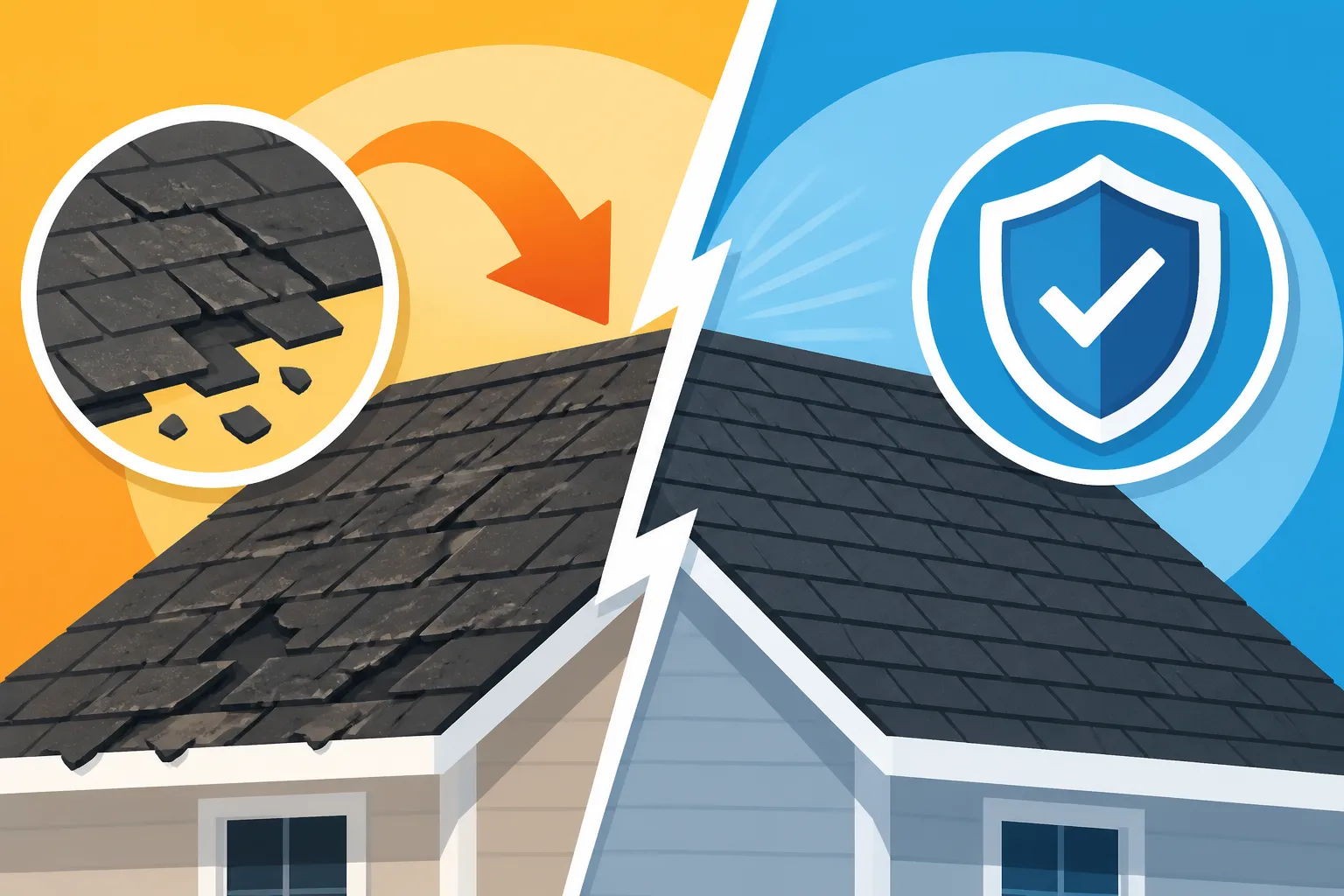
Simply put, depreciation is the decrease in value of an asset over time due to wear and tear, age, or obsolescence. For your roof, it means that as each year passes and your shingles brave more storms, sun, and hail, their value in the eyes of an insurance company goes down. This isn't about the replacement cost of a brand-new roof today, but rather the current value of your existing roof in its present condition.
Most homeowners policies deal with two main types of valuation when it comes to covering losses: Actual Cash Value (ACV) and Replacement Cost Value (RCV). An ACV policy will pay you the depreciated value of your roof, meaning they'll subtract the estimated depreciation from the cost of a new roof. For instance, if your 15-year-old roof would cost $20,000 to replace new, but is considered 50% depreciated, an ACV policy would only pay you $10,000 upfront, minus your deductible. This can be a harsh reality for many homeowners who expect a full payout.
On the other hand, an RCV policy, which many homeowners strive for, initially pays out the ACV amount, but then allows you to recover the depreciation amount once the roof repairs or replacement are complete. This "depreciation holdback" is crucial to understand, as it means you'll typically receive two checks: one for the ACV, and a second one to cover the held-back depreciation once the work is done and proven. This ensures you eventually receive the full cost of a new roof, up to your policy limits.
Factors Affecting Depreciation
Insurance companies don't just pull a number out of thin air when calculating depreciation. They look at several concrete factors to assess how much your roof has aged and worn. Understanding these can give you a better idea of what to expect before you even file a claim.
The age of your roof is arguably the biggest factor. An asphalt shingle roof, for instance, typically has a lifespan of 20 to 30 years, depending on the type of shingle and maintenance. If your roof is nearing the end of its projected lifespan, say it's 20 years old, it will naturally have a much higher depreciation percentage than a 5-year-old roof. This is why it's so important to know How Long an Asphalt Roof Last and when to start thinking about a Roof Age: When to Start Planning Replacement. Different roofing materials also depreciate at different rates; a metal roof might depreciate slower than a 3-tab asphalt shingle roof, for example, due to its longer expected lifespan.
Beyond age and material, the maintenance history of your roof plays a significant role. A roof that has been regularly cleaned, inspected, and repaired will likely show less wear than one that has been neglected. Climate is another huge player. A roof in Arizona, constantly baking in the sun, might depreciate differently than one in Michigan, which experiences harsh winters, heavy snow loads, and freeze-thaw cycles. Areas prone to severe weather events, like hurricane zones in Florida or hail-prone states like Colorado or Texas, can see roofs depreciate faster due to repeated stress, even if they're relatively new. The presence of moss, algae, or visible damage from past storms can all contribute to a higher depreciation assessment.
How Insurance Companies Calculate Depreciation
It might seem like a mysterious process, but insurance companies use pretty standardized methods to calculate roof depreciation. While the specifics can vary slightly between carriers, the core principles remain the same.
Generally, they use formulas that consider the estimated useful life of a roof versus its actual age. For example, if an asphalt shingle roof has an expected lifespan of 25 years and your current roof is 15 years old, it's 60% through its life. They might then apply a depreciation percentage based on this, adjusting for its condition. They also use specialized software, often employing aerial imagery and sophisticated algorithms, to get a preliminary assessment of your roof's age, size, and condition even before an adjuster steps on your property. This initial calculation helps them set reserves for your claim and gives them a baseline for their in-person inspection.
During the actual inspection, the insurance adjuster will physically examine the roof, looking for signs of wear and tear, manufacturing defects, storm damage, and overall condition. They'll note things like granule loss, curling or cracking shingles, and any previous repairs. All these observations are fed into their system, along with the roof's dimensions and the local costs for materials and labor. This data helps them determine the Average Roof Replacement Cost This Year in your area and then apply their specific depreciation schedule. It’s a complex calculation aimed at determining the "true" value of your roof just before the damage occurred, not what it costs to replace it new. This is why having detailed documentation of your roof's history and any maintenance performed can be invaluable in potentially mitigating a high depreciation assessment.
| Factor | Impact on Depreciation | Notes |
|---|---|---|
| Roof Age | High | Older roofs depreciate faster; typically 20-30 year lifespan for asphalt shingles |
| Material Type | Moderate | 3-tab shingles depreciate faster than architectural or designer shingles. Metal/tile last longer. |
| Maintenance History | Lowers Depreciation | Regular cleaning, inspections, and repairs can slow down depreciation. |
| Climate & Exposure | High | Harsh weather (hail, wind, intense sun, snow) accelerates wear and tear. |
| Previous Damage | High | Unrepaired damage, poor repairs can indicate lower value. |
| Installation Quality | Moderate | Poor installation can lead to premature failure and faster depreciation. |
Navigating Your Homeowners Insurance Policy
Understanding your homeowners insurance policy is like reading a legal document written in another language – it's often dense, full of jargon, and seemingly designed to confuse rather than clarify. But when it comes to your roof, knowing the specifics of your coverage can make all the difference between a smooth claims process and a frustrating battle.
Replacement Cost Value (RCV) vs. Actual Cash Value (ACV) Policies
This is perhaps the most critical distinction you need to grasp in your policy, as it directly dictates how much money you’ll ultimately receive for a damaged roof.
An Actual Cash Value (ACV) policy will pay you the depreciated value of your roof at the time of loss. Imagine your roof is 15 years old and the adjuster determines it has depreciated by 40%. If the cost to replace it with a new one is $25,000, your insurance company will pay you $15,000 ($25,000 – 40% depreciation), minus your deductible. This means you, the homeowner, are responsible for covering the $10,000 difference in depreciation, plus your deductible, out of pocket. For many, this can be a significant and unexpected financial burden, especially when facing a complete roof overhaul. If your policy is ACV, it's crucial to be aware of this limitation and budget accordingly for potential future roof expenses.
In contrast, a Replacement Cost Value (RCV) policy offers much more comprehensive coverage for your roof. With an RCV policy, the insurance company agrees to pay the full cost to repair or replace your roof with new materials of similar kind and quality, without deduction for depreciation. However, this often works in two stages. First, they'll send you an initial payment based on the ACV (depreciated value). Then, once you've completed the repairs or replacement, submitted proof of payment to the contractor, and shown that the work is done, they will release the "depreciation holdback" – that second check that covers the depreciated amount. So, if that same $25,000 roof with 40% depreciation is under an RCV policy, you'd get $15,000 initially. After the work is finished and verified, they'd release the remaining $10,000. This ensures you're not left out of pocket for the depreciation. Most homeowners prefer RCV policies for this very reason, as it provides a clearer path to a full roof replacement without massive personal expense.
Deductibles and Depreciation Holdback
Beyond the ACV vs. RCV distinction, two other terms are crucial for understanding your financial responsibility: your deductible and the depreciation holdback.
Your deductible is the amount of money you are responsible for paying out of pocket before your insurance coverage kicks in. For example, if your deductible is $1,000 and your ACV payout is $15,000, the insurance company will send you a check for $14,000. This is a standard part of any insurance claim. However, many homeowners are surprised to find they have a separate, often higher, deductible for wind and hail damage, which are common culprits for roof damage. This "storm deductible" could be a percentage of your home's insured value, perhaps 1% or 2%. On a $300,000 home, a 1% deductible is $3,000 – a significantly larger sum than a flat $1,000. It's vital to check your policy for these specific deductibles.
The depreciation holdback is directly related to RCV policies. As mentioned, with an RCV policy, the insurance company initially pays out the Actual Cash Value of your damaged roof. The difference between this initial ACV payment and the total Replacement Cost Value is what’s held back. This amount is only released to you after you have paid for and completed the repairs or replacement. The purpose of this holdback is to ensure that the work is actually done. It prevents someone from claiming a damaged roof, taking the full RCV payout, and then not performing the repairs, essentially pocketing the "depreciation" and leaving their home vulnerable. Recovering this depreciation is often a key step in the claim process, and your contractor will play a role by providing invoices and proof of completion. Understanding this staged payment process is crucial to managing your finances during a roof replacement.
Understanding Your Policy Declarations Page
Your policy declarations page is like the cheat sheet for your entire homeowners insurance policy. It's usually the first few pages and summarizes the most important aspects of your coverage. While the full policy document contains all the nitty-gritty details, the declarations page provides a quick overview of what you're covered for, and just as importantly, what you're not.
When it comes to your roof, here's what you absolutely must look for:
- Coverage Type (ACV vs. RCV): This will usually be explicitly stated, often under "Dwelling Coverage" or a separate line item for "Roof Surface Coverage." It might say "Replacement Cost" or "Actual Cash Value." If it's silent on the roof, the default for dwelling coverage often applies, but it's best to confirm.
- Deductibles: Look for your standard deductible and, critically, any separate wind/hail deductibles. These are often expressed as a percentage.
- Coverage Limits: This is the maximum amount your policy will pay for repairs or replacement. Ensure this limit is sufficient to rebuild your home, including a new roof, especially if construction costs have increased in your area.
- Exclusions and Endorsements: The declarations page might list specific exclusions or endorsements that modify your standard coverage. For example, if you're in a high-risk area for a specific type of damage, there might be a clause limiting coverage for that peril or requiring a specific type of roof.
If you're unsure about any of these terms or how they apply to your roof, don't hesitate to call your insurance agent. They are there to explain your policy in plain language. Taking the time to review this page now, before a disaster strikes, can save you immense headache and financial strain down the road. It helps you understand exactly what to expect when you need to Does Insurance Cover Roof Replacement and file a claim.
The Roof Insurance Claim Process with Depreciation in Mind
Filing an insurance claim for roof damage can feel like a daunting journey, especially when you're already stressed about the damage itself. Knowing the steps, particularly how depreciation factors in, can help you navigate the process with greater ease and confidence.
Initial Claim Filing and Inspection
The moment you discover significant roof damage, whether it's from a severe hailstorm, strong winds, or a persistent leak, the first step is to document everything and then contact your insurance company. Don't delay! Most policies require you to report damage promptly.
When you call to file your claim, be ready to provide your policy number, the date of the incident, and a brief description of the damage. Take clear, well-lit photos and videos of the damaged areas of your roof, both from the ground and from any accessible vantage points (if it's safe to do so). Include shots of the interior if there are leaks. This visual evidence will be invaluable. You can learn more about assessing damage in a Roof Damage Assessment: A Homeowner's Guide. Your insurance company will then assign an adjuster to your case. The adjuster will contact you to schedule an on-site inspection of your roof. During this inspection, they'll meticulously examine the damage, measure your roof, and take their own photos. They'll also assess the overall condition of your roof, which is where depreciation really comes into play. They'll look at the age, material, and maintenance history, using this information to determine the Actual Cash Value (ACV) of your roof. It's a good idea to be present during this inspection and, if possible, have your chosen roofing contractor there as well. A reputable contractor can point out damage that might be overlooked and discuss the scope of work with the adjuster, ensuring nothing is missed. This initial inspection is critical as it forms the basis for their damage estimate and your first payout.
Receiving the First Payout
After the adjuster completes their inspection and submits their report, the insurance company will typically send you an initial payment. This payment is almost always based on the Actual Cash Value (ACV) of your damaged roof, regardless of whether you have an ACV or RCV policy.
The ACV check will reflect the cost to repair or replace your roof, minus the depreciation and your policy deductible. For example, if the total estimated cost for your roof replacement is $28,000, and the adjuster determined your 18-year-old roof had depreciated by $12,000, and your deductible is $1,000, your first check would be for $15,000 ($28,000 – $12,000 depreciation – $1,000 deductible). This initial payout is crucial for beginning the repair or replacement process. It's important to remember that if you have an RCV policy, the difference between this ACV payment and the full replacement cost is the "depreciation holdback." This amount is not lost forever; it's simply held by the insurer until you complete the work. This stage can be confusing, so ensure you understand the breakdown of the figures provided by your insurer. Compare their estimate with the bids you receive from contractors. You can learn How to Read and Compare Roofing Estimates to ensure fair pricing.
Recovering the Depreciation
This is the part where having an RCV policy truly pays off. Once you've completed the roof repairs or replacement using a licensed and insured roofing contractor, you can submit documentation to your insurance company to recover the depreciation holdback.
To get that second check, you'll need to provide proof that the work has been done and paid for. This typically includes:
- The final invoice from your roofing contractor: This document should clearly detail the scope of work performed, the materials used, and the total cost. It needs to reflect the actual cost of replacing your roof, which should align with or exceed the full replacement cost value estimated by the insurer.
- Proof of payment: Copies of checks or bank statements showing that you paid the contractor. Some insurers might require proof of payment in full, while others might release the depreciation once a certain percentage of the cost is paid.
Once your insurance company receives and reviews these documents, they will then release the depreciation holdback amount. This second payment ensures that you are ultimately reimbursed for the full Replacement Cost Value of your new roof, less your deductible. It's vital to choose a reputable contractor who understands this process and can provide you with the necessary paperwork in a timely manner. This final step is often where homeowners breathe a sigh of relief, realizing they won't be shouldering the burden of depreciation after all. For a detailed guide on initiating this whole process, check out How to File a Roof Insurance Claim.
Common Challenges and How to Overcome Them
Even with a solid understanding of depreciation and your policy, the road to a successful roof insurance claim isn't always smooth. Homeowners frequently encounter roadblocks, from outright denials to disagreements over valuations. Knowing these common challenges and having strategies to address them can save you a lot of grief.
Denied Claims and Low Offers
One of the most frustrating experiences is having your roof claim denied or receiving an offer that feels laughably low compared to what a new roof actually costs. There are several reasons why this might happen, and understanding them is the first step to fighting back.
A common reason for denial is that the adjuster determines the damage is due to "wear and tear" or "lack of maintenance" rather than a covered peril like wind or hail. If your roof is very old, say 25 years and past its expected lifespan, an insurer might argue the damage was inevitable. Another frequent issue is that the damage isn't severe enough to meet their threshold for replacement; they might offer to pay for minor repairs instead of a full roof. Sometimes, a claim might be denied if the damage existed before your current policy began, or if you waited too long to report it. An example could be noticing a few curled shingles, ignoring them, and then a year later, a small windstorm exacerbates the issue, making it harder to prove the wind was the sole cause.
If your claim is denied or the offer is too low, don't give up!
- Request a detailed explanation in writing: This is crucial. You need to know why they denied or underpaid your claim.
- Gather more evidence: Get a thorough inspection and detailed estimate from a trusted, independent roofing contractor. They might find damage the adjuster missed or argue that existing damage was caused by the covered peril, not merely "wear and tear." For instance, a contractor might identify hail damage that wasn't immediately obvious to the untrained eye.
- Submit a formal appeal: Your insurance company has an appeals process. Write a detailed letter, referencing your policy, providing your contractor's findings, and any other supporting documentation. Sometimes, a second adjuster might be assigned to re-evaluate.
- Consider a public adjuster: If you're still hitting a wall, a public adjuster works for you, not the insurance company. They specialize in negotiating claims and can be very effective, though they charge a percentage of your payout.
If you find yourself in this situation, this guide on Roof Insurance Claim Denied: What to Do can provide more in-depth strategies.
Disagreements Over Depreciation Calculations
It's common for homeowners to disagree with the depreciation amount an insurance company assigns to their roof. You might feel your roof was in better shape than the adjuster indicated, or that the useful life assigned to it is unfairly short. This often happens because the insurer uses a generic lifespan, while you know your roof has been meticulously maintained.
For example, an insurer might use a 20-year lifespan for architectural shingles, while your specific product might have a 30-year warranty from the manufacturer, like certain Owens Corning Duration or GAF Timberline HDZ shingles. If your roof is only 15 years old, a 20-year lifespan implies 75% depreciation, while a 30-year lifespan suggests only 50% depreciation – a huge difference in payout.
To challenge a depreciation calculation:
- Provide documentation: Dig up any records you have. Receipts for maintenance, previous repair invoices, warranty information from the shingle manufacturer (especially if it indicates a longer lifespan), and even photos of your roof from past years showing its condition can be powerful evidence.
- Get a second professional opinion: Have a different reputable roofing contractor assess your roof's remaining useful life and overall condition. Their expert opinion, backed by years of experience, can carry weight.
- Utilize the appraisal clause: Many policies contain an "appraisal clause." This allows both you and the insurance company to hire independent appraisers (typically contractors or adjusters) to assess the loss. If they can't agree, an umpire is brought in, and their decision is usually binding. This can be a more formal and effective way to dispute valuation.
- Escalate within the company: If your initial appeal to the claims department doesn't work, ask to speak with a supervisor or manager. Persistence and clear communication, backed by documentation, are key.
Navigating Multiple Layers of Shingles or Outdated Codes
Sometimes, the challenge isn't just depreciation, but the unique circumstances of your older roof that collide with modern building codes. Many older homes might have two layers of shingles, a practice that is now often prohibited by current building codes due to weight concerns and proper installation requirements.
If your damaged roof has two layers, your insurance might only calculate the replacement cost for a single layer, or they might factor in the additional cost of removing both layers but then deprecate the entire structure. The challenge arises because current building codes in many areas, like those in effect across most of Texas or Florida, mandate a full tear-off if more than one layer exists, and certainly if the roof decking is compromised. This "code upgrade" often increases the cost significantly, and unless your policy explicitly includes "code upgrade" or "ordinance or law" coverage, your insurer might not fully cover these additional expenses.
Similarly, older homes might have outdated ventilation systems or require other structural improvements to meet current building codes. For instance, if your roof decking is original to a 1970s home and is now found to be compromised and needing replacement during a claim, the new decking must meet current standards. Again, without specific code upgrade coverage, you could be on the hook for the difference. Always check if your policy includes "ordinance or law" coverage, which is specifically designed to cover the increased costs of repairing or rebuilding to current codes. If you're dealing with a very old roof, it's worth asking your contractor about the implications of Roof Decking Replacement Cost and how it might impact your insurance claim. These clauses are critical to ensuring you don't face unexpected out-of-pocket expenses when your older roof gets a forced modern upgrade.
Strategizing for Future Roof Protection and Claims
While you can't stop time or entirely prevent natural disasters, you can certainly take proactive steps to protect your roof and improve your position if you ever need to file another insurance claim. Being strategic about maintenance, upgrades, and knowing when to seek professional help can save you considerable money and stress down the line.
Regular Maintenance and Documentation
One of the best defenses against rapid depreciation and contentious insurance claims is diligent roof maintenance and meticulous record-keeping. Think of it like taking care of your car – regular oil changes and service keep it running longer and fetch a better price if you sell it.
Schedule professional roof inspections at least once every two to three years, or after any significant storm, even if there's no visible damage. These inspections can catch minor issues like loose shingles, damaged flashing, or early signs of granule loss before they escalate into major problems. For example, if you live in Georgia, where spring storms are common, a post-storm inspection could identify hidden wind damage. Keep your gutters clean to prevent water from backing up and damaging fascia or the roof edge. Trim back tree branches that overhang your roof to prevent debris accumulation and scratching, which can wear down shingles prematurely.
Just as important as the maintenance itself is documenting it. Keep a digital file with:
- Original roof installation date and details: Including the type of shingles, manufacturer, and warranty information.
- Invoices for all inspections and repairs: Note the date, the work performed, and the cost.
- Photos of your roof: Take pictures every few years to document its condition. This provides a visual timeline that can counteract an adjuster's claim of "pre-existing damage" or excessive wear and tear.
This comprehensive record can serve as powerful evidence when negotiating with your insurance company, proving that you've actively maintained your roof and helping to mitigate depreciation claims. It shows a clear history that the roof was in good condition prior to the incident, making it harder for the insurer to argue negligence.
Upgrading Your Roof for Better Coverage
When it's time for a new roof, either because of damage or simply age, consider upgrading your materials to potentially improve future insurance coverage and even lower your premiums. This isn't just about aesthetics; it's about resilience and longevity.
Many insurance companies offer discounts or better coverage terms for roofs that are more resistant to common perils in your area. For instance, if you live in a hail-prone state like Colorado, installing Impact-Resistant Shingle Cost (Class 4 shingles) can make a significant difference. These shingles are designed to withstand larger hail stones and often come with longer warranties. Some insurers might offer a reduced deductible or a discount on your premium for installing a Class 4 roof. Similarly, in areas prone to high winds, like coastal regions, selecting shingles with a higher wind resistance rating (e.g., 130 mph) and ensuring the contractor uses specific high-wind nailing patterns can be beneficial.
Beyond protection, some upgrades offer energy efficiency. "Cool roof" shingles, for example, are designed to reflect more sunlight and absorb less heat, which can reduce your home's cooling costs. While not directly tied to damage claims, this demonstrates a commitment to a durable and efficient home. When you're talking to prospective contractors, ask them about shingles like GAF Timberline HDZ or Owens Corning Duration, which are known for their enhanced features. Always discuss potential upgrades with your insurance agent before installation to understand what benefits, if any, they offer in terms of premiums or coverage. The upfront investment in a more durable roof can often pay dividends through increased longevity, fewer repairs, and better insurance terms over its lifespan.
When to Consult a Public Adjuster or Attorney
While you can handle many claim disputes yourself, there comes a point when professional intervention becomes necessary. Knowing when to escalate your efforts can be crucial for protecting your interests, especially if your claim is substantial or the insurer is being particularly difficult.
A public adjuster is an independent insurance professional who works exclusively for you, the policyholder, not the insurance company. They are licensed and experienced in property damage assessment and claim negotiation. If your claim has been denied, significantly underpaid, or you're simply overwhelmed by the complexity, a public adjuster can take over the entire process. They will conduct their own assessment, gather documentation, prepare estimates, and negotiate directly with your insurance company on your behalf. They work on a contingency fee basis, meaning they only get paid a percentage of your final settlement. This can be a great option if the insurance company is digging its heels in on depreciation or denying legitimate claims. Before hiring one, ask about their fees, track record, and references.
An attorney specializing in insurance law is another option, usually considered for more severe disputes, policy violations, or when legal action might be necessary. This might be the case if your claim has been denied unjustly, the insurer is acting in bad faith, or if the amount in dispute is very large. An attorney can interpret complex policy language, advise you on your legal rights, and represent you in court if negotiations fail. While this is often a last resort due to costs, for significant losses, it can be the most effective way to ensure you receive a fair settlement. Always consult with a few different professionals, discuss their fees, and get a clear understanding of their strategy before committing. For further reading, check out How to Choose a Roofing Contractor and Questions to Ask a Roofing Contractor Before Hiring to ensure you're working with the right people from the start.
Disclaimer
Please remember that this article provides general information and guidance. Insurance policies, building codes, and regulations vary significantly by state, locality, and individual policy terms. It is essential to consult your specific insurance policy, speak with your insurance agent, and consult with local roofing professionals to understand your coverage and obligations fully. We are not licensed insurance professionals or attorneys, and this content should not be considered legal or financial advice.