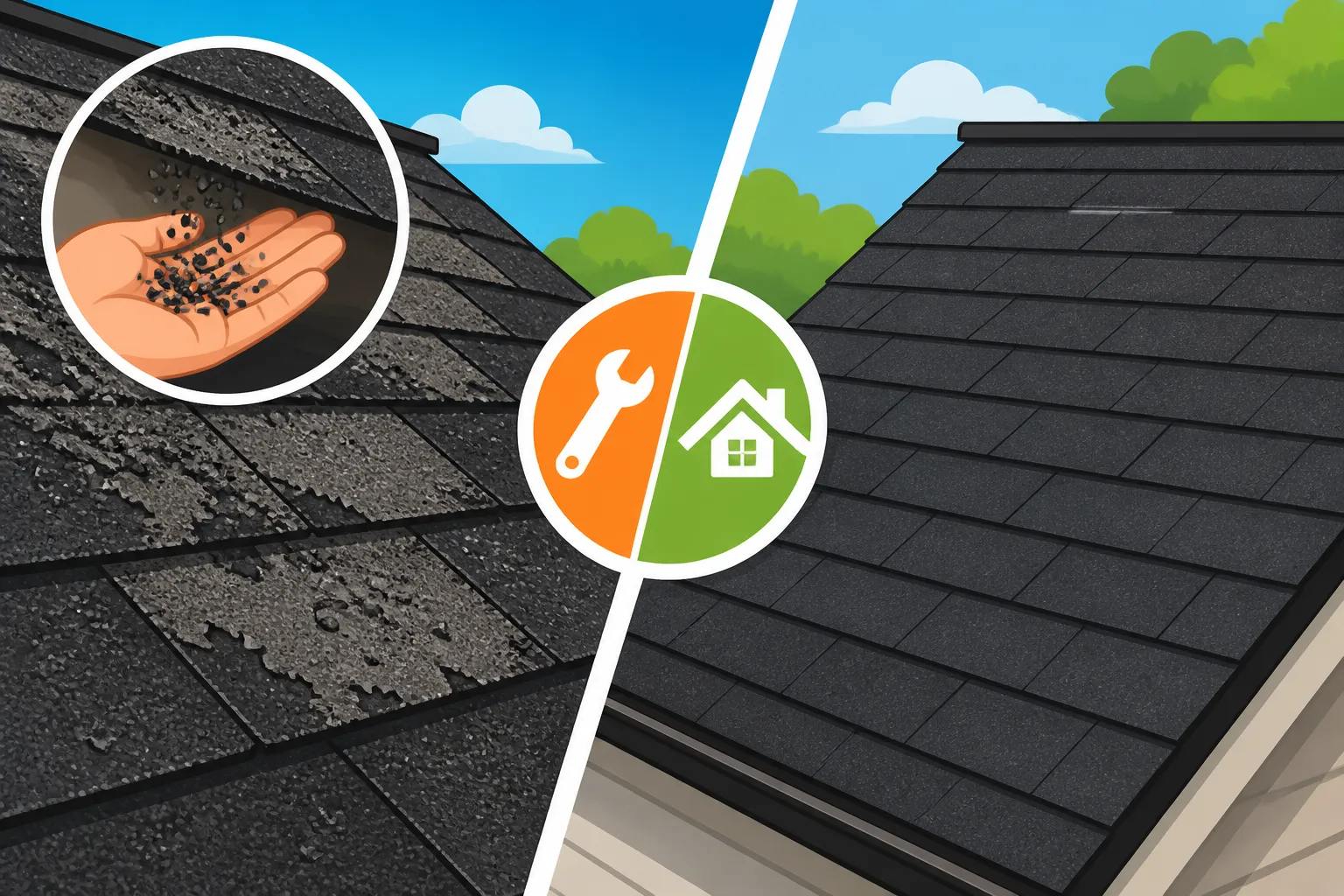
Granule Loss: Repair or Replace
It’s a sight no homeowner wants to see: those gritty, sand-like bits accumulating in your gutters or washing off your roof after a heavy rain. This is granule loss, and it’s a genuine worry because those tiny granules are a big part of what protects your asphalt shingles. This guide is here to demystify granule loss, help you understand its severity, and walk you through the crucial decision of whether it’s time for a simple repair or a full-blown roof replacement.
What Are Roof Granules and Why Do They Matter?
Before we dive into the nitty-gritty of why they're disappearing, let's talk about what these little granules actually are. Asphalt shingles aren't just solid asphalt; they're topped with a layer of ceramic-coated mineral granules. Think of them as the roof's armor, its sunscreen, and even its fashion statement.
These granules serve several vital purposes:
- UV Protection: This is perhaps their most critical job. Just like your skin, asphalt is susceptible to damage from the sun's ultraviolet (UV) rays. Granules act as a protective shield, reflecting sunlight and preventing the asphalt from drying out, cracking, and deteriorating prematurely. Without them, your shingles become brittle and age rapidly.
- Fire Resistance: Many shingles achieve their fire-resistance ratings, in part, thanks to these granules. They can help slow the spread of fire across the roof surface.
- Color and Aesthetics: Granules are what give your roof its color and texture. From classic grays and browns to more vibrant hues, the granules dictate your home's curb appeal. They can even be designed to mimic the look of more expensive materials like slate or wood shakes, as seen in many architectural shingles.
- Algae Resistance: Some shingles come with special copper-infused granules that deter algae growth, preventing those unsightly black streaks that can plague roofs in humid climates.
- Impact Resistance: For areas prone to hail, certain high-performance shingles, often known as Class 4 shingles, feature specialized granules and a robust asphalt mat designed to withstand significant impact. You can learn more about how these work in our guide on Impact-Resistant Shingles: How They Work.
So, when you see these granules shedding, it’s not just a minor aesthetic issue; it’s a sign that your roof’s primary defenses might be weakening.
Common Causes of Granule Loss
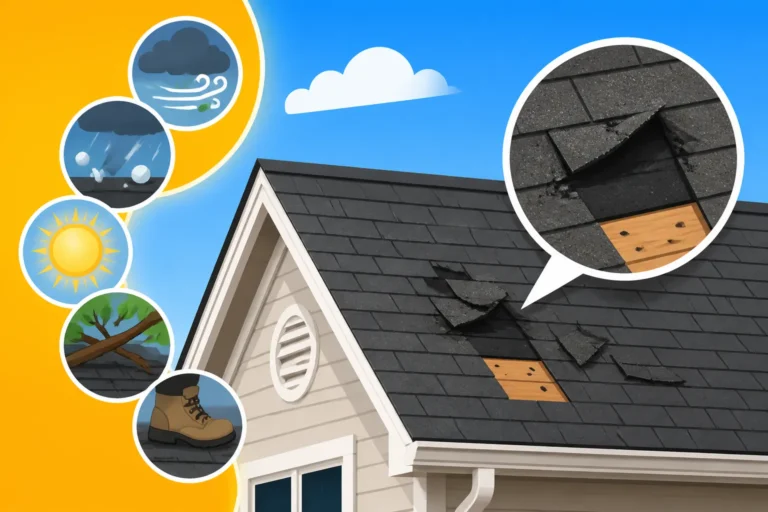
Granule loss isn't always a uniform problem, and understanding its cause is the first step in deciding what to do. There are several reasons why your roof might be shedding its protective layer:
Normal Wear and Initial Shedding
It’s completely normal to see a small amount of granule loss, especially on a new roof. During manufacturing and installation, some loose granules don't fully adhere to the asphalt mat. These will wash off during the first few rains, and it’s usually nothing to worry about. Think of it like a new rug shedding a bit of fuzz. Similarly, as a roof ages naturally, the bond between the granules and the asphalt weakens, leading to gradual, consistent shedding over time. This is a sign of normal wear and tear and indicates your roof is approaching the end of its lifespan.
Storm Damage: Hail and Wind
This is often the most dramatic and concerning cause of granule loss.
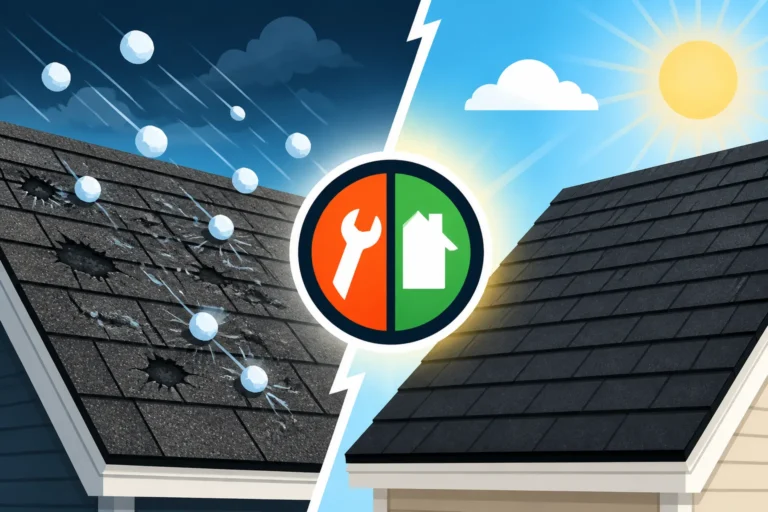
- Hail Damage: Hailstones, even small ones, can strike shingles with considerable force, dislodging granules. After a hailstorm, you might notice dimples or pockmarks on the shingles where granules have been knocked off, exposing the black asphalt underneath. The severity of granule loss from hail varies greatly depending on the size and density of the hail, as well as the age and condition of your shingles.
- Wind Damage: High winds can lift and flex shingles, especially if they aren't properly sealed or if the adhesive strips have deteriorated. This flexing can break the bond between the granules and the asphalt, causing them to flake off. In extreme cases, strong winds can even rip off entire shingles, leading to significant exposure of the roof deck. Our guide on Signs of Roof Wind Damage can help you identify other indicators.
If you suspect storm damage, getting a professional inspection quickly is crucial, as insurance claims often have time limits.
Aging and Weathering
This is the slow, inevitable march of time for your roof. As asphalt shingles are exposed to years of sun, rain, heat, and cold, the asphalt oils that hold the granules in place dry out and harden. This makes the shingles brittle and the granules less securely bonded. Over time, the granules will naturally start to detach, leaving bald spots. This is a primary indicator that your roof is aging gracefully, but also rapidly approaching the point where replacement is unavoidable. Most asphalt shingles have a lifespan of 20-30 years, and granule loss becomes more prevalent in the latter half of this period. Our article on How Long Does an Asphalt Roof Last delves deeper into this.
Foot Traffic or Physical Damage
Walking on your roof, especially in hot weather when shingles are softer, can easily dislodge granules. If you've had satellite dish installers, chimney sweeps, or even enthusiastic DIY cleaners on your roof, you might find trails of granule loss in their wake. Similarly, tree branches scraping against the roof can abrade shingles, stripping them of granules over time. Even harsh cleaning methods, like pressure washing, can severely damage shingles and cause excessive granule loss.
Algae, Moss, and Fungi Growth
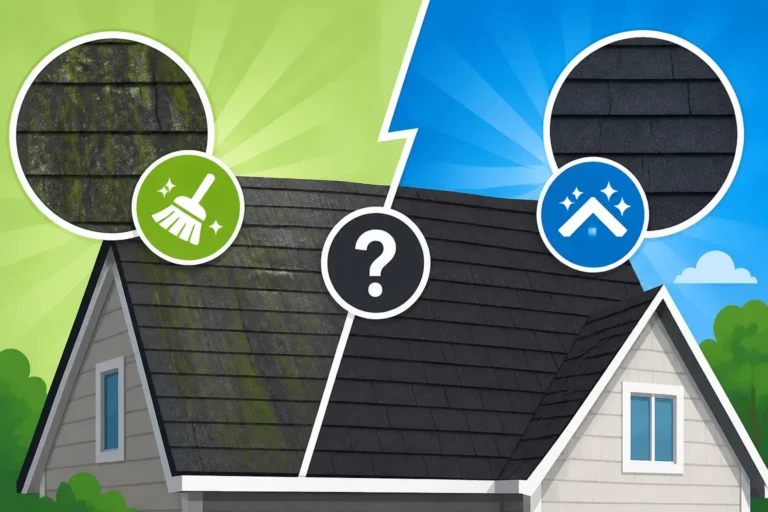
While algae primarily causes cosmetic black streaks, severe moss and lichen growth can actually lift and curl shingles, trapping moisture underneath. As moss is removed (either naturally or manually), it can pull granules along with it, leaving vulnerable spots. The presence of significant organic growth can be a contributing factor to granule loss and overall shingle deterioration.
Is Granule Loss a Sign You Need a New Roof?
This is the million-dollar question for many homeowners. Seeing those granules can be alarming, but it doesn't automatically mean you need a full replacement. It's about context and severity.
Assessing the Severity of Granule Loss
To figure out whether you're looking at a minor issue or a major headache, you need to play detective.
- Quantity: Is it a small handful in your gutter after a year, or are you consistently filling buckets? A little shedding is normal, but a lot is a red flag.
- Location: Is the loss concentrated in one area (e.g., under a specific tree branch, on one side of the roof after a storm) or is it widespread across multiple slopes? Isolated loss is often repairable, while widespread loss points to a systemic issue.
- Shingle Age: How old is your roof? If it's a newer roof (say, under 10 years old), significant granule loss is more concerning and might point to a defect or severe storm damage. If your roof is pushing 20-25 years, granule loss is often just one of many Signs You Need a New Roof.
- Visible Bald Spots: Are you seeing actual dark, exposed asphalt areas? This is crucial. The asphalt underneath the granules is highly susceptible to UV damage. Once exposed, it will dry out, crack, and become brittle much faster, leading to leaks. These bald spots are often referred to as "blistering shingles" or "pockmarks" if caused by hail.
- Other Damage Indicators: Are there other signs of roof distress accompanying the granule loss? Are the shingles curling, cracking, or buckling? Do you see signs of leaks in your attic? The combination of granule loss with these issues strongly suggests a replacement is necessary.
When Minor Granule Loss Might Not Require Replacement
- Brand New Roof: As mentioned, new shingles often shed a few loose granules initially. This is usually nothing to worry about and stops after a few weeks.
- Minor, Isolated Rubbing: If a single tree branch has been scraping against one small section, causing localized granule loss, a repair (trimming the branch and perhaps patching that area) might suffice.
- Edge Wear: Sometimes the edges of shingles, particularly on older roofs, might show minor granule loss from normal weathering or slight friction. If the bulk of the shingle is still well-covered, and there are no leaks, this might not be an immediate replacement trigger.
When Granule Loss Signals a Bigger Problem
- Widespread Bald Spots: If you have large areas where the dark asphalt is exposed across multiple slopes of your roof, its protective qualities are severely compromised. This roof is nearing the end of its life, if not already there, and is vulnerable to leaks.
- Post-Storm Impact: If significant granule loss appears suddenly after a severe storm (especially hail), your roof has likely sustained damage that may qualify for an insurance claim. Even if leaks aren't immediately visible, the exposed asphalt will deteriorate quickly.
- Advanced Age: If your asphalt roof is 20-25 years old or more, widespread granule loss is a clear indicator that it has served its purpose and needs replacement. At this point, repairs are usually a temporary band-aid and a waste of money.
- Combined with Other Deterioration: If you're seeing granule loss alongside severely curling, cracked, brittle, or missing shingles, or if you've had recurring leaks, the roof's integrity is shot. This is a clear signal for a full replacement. Our guide on Roof Damage Assessment: A Homeowner's Guide can help you comprehensively evaluate your roof's condition.
The impact of excessive granule loss on your roof's integrity is significant. It's like your car losing its paint – the underlying metal (asphalt mat) is now exposed to the elements, leading to rust (degradation). The longer the asphalt is exposed to UV rays, the faster it will break down, leading to cracking, splitting, and ultimately, leaks into your home.
Repairing vs. Replacing a Roof with Granule Loss
The decision between repair and replacement hinges on a few critical factors: the extent of the damage, the age of your roof, your budget, and how long you plan to stay in your home.
When Roof Repair Might Be an Option
Roof repair can be a sensible solution for granule loss under specific circumstances.
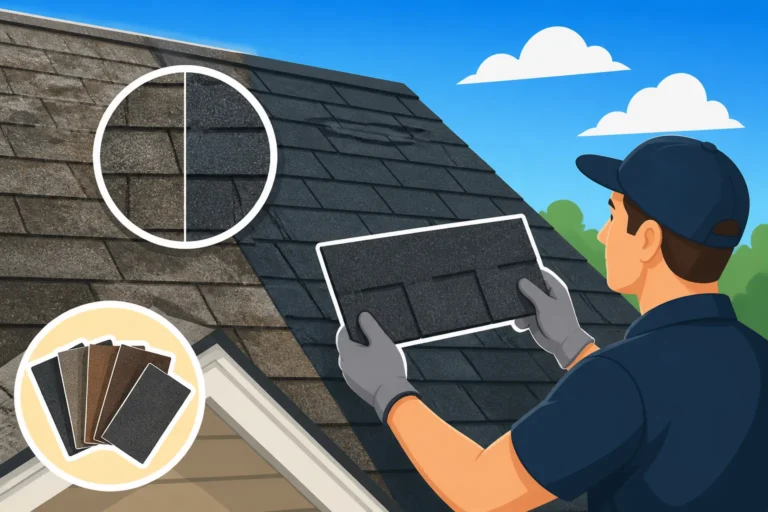
- Localized Damage: If the granule loss is confined to a small, isolated area due to a single event, like a fallen branch or a specific impact, a repair might be feasible. A qualified roofing contractor might be able to remove and replace a few damaged shingles. This works best when you can find matching shingles, which can be challenging if your roof is older and the shingle color has faded.
- Newer Roof: For roofs that are relatively new (e.g., 5-10 years old) and experience a sudden, isolated area of granule loss due to a specific event (like a small hail storm affecting only one section), a targeted repair could extend the roof's life without the cost of a full replacement.
- Budget Constraints: Sometimes, a full replacement just isn't in the budget right now. If the granule loss is minor and not yet causing leaks, a temporary repair might buy you some time to save for a full replacement. However, be realistic about how much time this buys you.
It's important to remember that repairing granule loss isn't always about replacing just the missing granules; it usually involves replacing the entire damaged shingle(s). If you're considering a repair, always get an inspection to determine the true extent of the damage.
When Roof Replacement is the Best Course of Action
More often than not, significant granule loss, especially on an older roof, points towards the need for a full replacement.
- Widespread Granule Loss: If granules are coming off across multiple slopes, creating numerous bald spots, the entire roof system's UV protection is compromised. At this point, patching individual shingles won't solve the underlying issue of widespread deterioration. Trying to repair a roof with widespread granule loss is often like trying to patch a leaky sieve – you fix one spot, and another appears.
- Aging Roof: Once an asphalt roof reaches its typical lifespan (generally 20-25 years for 3-tab shingles, and 25-30+ for architectural shingles), extensive granule loss is a natural sign of aging. Continuing to repair such a roof will likely lead to a cycle of endless and increasingly expensive patch jobs, often proving to be a waste of money. In these cases, it's often more cost-effective in the long run to invest in a new roof. Our guide on Roof Replacement ROI Explained can help illustrate the value.
- Combined with Other Deterioration: Granule loss rarely occurs in a vacuum. If you also see curling, cracking, splitting, missing shingles, or consistent leaks, your roof has reached a critical point. These are all definitive Signs You Need a New Roof, and a replacement is no longer optional.
- Structural Damage: If the granule loss is severe enough to expose the underlying roof decking, or if accompanied by soft spots or water stains in your attic, there might be underlying rot or structural damage that only a full tear-off and replacement can address. Addressing Roof Decking Replacement Cost would be part of this process.
- Insurance Coverage for Storm Damage: If your granule loss is clearly due to a recent hail or wind storm, your homeowner's insurance policy might cover a significant portion, or even the entire cost, of a roof replacement. It’s crucial to file a claim promptly and have a qualified contractor provide an assessment. Learn more about the process in our article on Does Insurance Cover Roof Replacement.
Here’s a simple table to help you weigh the options:
| Feature | Minor Granule Loss (Repair Candidate) | Severe Granule Loss (Replacement Candidate) |
|---|---|---|
| Extent of Loss | Small, isolated areas; occasional granules in gutters. | Widespread across multiple slopes; gutters consistently full. |
| Visible Bald Spots | None or very small, non-critical spots. | Numerous, significant bald spots exposing dark asphalt. |
| Roof Age | Relatively new (under 10-15 years). | Old (20+ years for 3-tab, 25+ years for architectural). |
| Cause | Isolated impact, initial manufacturing shedding, minor wear. | Severe weather (hail/wind), advanced aging, widespread degradation. |
| Other Shingle Issues | None or minimal (no curling, cracking, buckling). | Extensive curling, cracking, blistering, missing shingles, leaks. |
| Underlying Damage | No visible damage to underlayment or decking. | Potential water damage, soft spots, or rot on decking. |
| Recommended Action | Targeted shingle repair, regular monitoring. | Full roof replacement is highly recommended. |
Ultimately, the best way to make this decision is to get a professional evaluation. Reputable contractors will inspect your roof, assess the granule loss, consider the roof's age and overall condition, and provide an honest recommendation, along with a detailed estimate. You can use platforms like Modernize to connect with local, vetted roofing professionals who can help you understand your options and get multiple quotes. For a better idea of what a new roof might cost, check out Average Roof Replacement Cost This Year.
Protecting Your Roof from Future Granule Loss
Once you've addressed your current granule loss situation, whether through repair or replacement, it's wise to think about how to protect your roof moving forward. Prevention and proper maintenance are key to maximizing your roof's lifespan and the effectiveness of those crucial granules.
Regular Inspections and Maintenance
One of the easiest ways to catch granule loss early, or prevent it entirely, is through consistent vigilance.
- Annual Visual Inspections: Twice a year, ideally in spring and fall, take a look at your roof from the ground with a pair of binoculars. Look for signs of missing granules, bald spots, curling or cracked shingles, and any debris. Check your gutters for excessive granule accumulation. If you're comfortable, and have the right safety gear, a ladder inspection can provide a closer look, but if you're unsure, always call a professional.
- Gutter Cleaning: Keep your gutters free of leaves and debris. Clogged gutters can cause water to back up, leading to ice dams in colder climates, which can damage shingles and dislodge granules. Regular cleaning also helps you monitor the amount of granule shedding.
- Trim Overhanging Branches: Trees are beautiful, but their branches can be a roof's worst enemy. Branches rubbing against shingles during windy conditions will continuously abrade them, stripping away granules. Keep branches trimmed back at least 6-10 feet from your roof surface to prevent this damage.
- Professional Inspections: Even if you do your own visual checks, having a professional roofer inspect your roof every 3-5 years (or after any major storm) is highly recommended. They have the expertise to spot subtle issues you might miss and can identify potential problems before they become costly repairs. When looking for a pro, our guide on How to Choose a Roofing Contractor is a great resource.
Ensuring Proper Ventilation
Believe it or not, your attic's ventilation plays a huge role in preserving your shingles and their granules.
- Temperature Regulation: A well-ventilated attic helps regulate the temperature of your roof deck. When an attic gets excessively hot, that heat transfers to the underside of your shingles, cooking the asphalt from below. This accelerated heat exposure dries out the asphalt oils, making the shingles brittle and causing the granules to detach prematurely. Proper ventilation helps keep the roof deck cooler, extending shingle life. Our article on How Roof Ventilation Works explains this in detail.
- Moisture Control: Adequate ventilation also prevents moisture buildup in the attic, which can lead to mold, mildew, and ultimately, damage to your roof decking and structural components. A healthy attic environment contributes to a healthier roof overall.
- Types of Vents: Ensure you have a balanced ventilation system, typically involving soffit vents (intake) and ridge vents or box vents (exhaust). This creates a continuous airflow that expels hot, moist air.
Choosing Quality Materials and Installation
The foundation of a long-lasting, granule-retaining roof begins with the quality of its components and the skill of its installers.
- High-Quality Shingles: When it's time for a replacement, invest in quality shingles from reputable manufacturers like GAF, Owens Corning, or CertainTeed. These brands often offer shingles with advanced granule adhesion technology, better asphalt formulations, and sometimes even algae-resistant features. Look for shingles with strong wind resistance ratings and, if you're in a hail-prone area, consider Class 4 impact-resistant shingles.
- Certified Contractors: The best shingles in the world won't perform if they're installed incorrectly. Always hire a licensed, insured, and reputable roofing contractor. Many shingle manufacturers offer certification programs for contractors (e.g., GAF Master Elite, Owens Corning Platinum Preferred). Hiring a certified contractor often means you'll qualify for enhanced manufacturer warranties, which can provide additional peace of mind regarding granule loss and other defects. Platforms like Modernize can help you find certified and highly-rated roofing professionals in your area, making it easier to compare options and secure the best team for your home.
- Proper Installation Techniques: This includes using the correct nailing patterns, appropriate underlayment (like synthetic vs felt underlayment), and properly installed flashing around chimneys, vents, and valleys. Correct installation minimizes shingle movement, provides a secure base for the granules, and prevents premature failure. The right installation means your roof will hold onto its granules much longer, preserving its protective capabilities. You might be surprised at how much difference proper installation makes; our guide on How to Get Roofing Quotes and Compare Them emphasizes asking about installation practices.
By taking these proactive steps, you can significantly extend the life of your asphalt roof and keep those vital granules right where they belong – protecting your home.
Disclaimer
Please note that this article provides general information and recommendations. Every roof and home situation is unique. It is always advisable to consult with a qualified and licensed roofing professional for a thorough inspection and personalized advice regarding your specific granule loss concerns and roofing needs.