Moss Growth: Repair or Replace
That creeping green stuff on your roof isn't just an eyesore; it's a living organism that can quietly, relentlessly damage your asphalt shingles, leading to bigger, more expensive problems down the line. Homeowners often panic, wondering if they're looking at a simple cleaning job or a full-blown roof replacement. This guide will help you understand what's really happening up there, assess the severity of moss growth, and make an informed decision on whether to repair or replace your asphalt roof.
Understanding Moss Growth on Asphalt Roofs
Moss isn't just an innocent plant; it's a persistent invader that thrives on conditions often found on residential roofs. When you see those green patches, it’s a clear sign that your roof has the perfect environment for these unwanted guests. Understanding what moss is and why it appears can help you tackle the problem effectively.
What Moss Really Is and Why It Loves Your Roof
Mosses are non-vascular plants, meaning they don't have true roots, stems, or leaves like most plants. Instead, they attach themselves to surfaces using tiny rhizoids, which are hair-like structures that grip, rather than penetrate. They absorb water and nutrients directly from the air and rain. Your asphalt roof, with its granular surface, actually provides a surprisingly hospitable environment. The granules, especially older or damaged ones, offer a slightly porous texture that moss can easily latch onto.
Furthermore, moss thrives in damp, shady conditions. If your home is surrounded by mature trees that cast shade for a significant portion of the day, or if you live in a naturally humid climate, your roof becomes an ideal habitat. The north side of a roof, which rarely sees direct sunlight, is often the first place moss will appear. This constant dampness, combined with the microscopic organic debris that settles on shingles, provides everything moss needs to flourish. It’s like a tiny, self-sustaining ecosystem right above your head.
Common Causes and Contributing Factors to Moss Growth
Several factors contribute to moss making a home on your roof. The primary culprits are moisture retention and lack of sunlight. If water doesn't drain quickly or evaporate due to shade, moss will seize the opportunity. This is why roofs in the Pacific Northwest, with its consistent rainfall and often tree-lined properties, are particularly prone to moss. Similarly, homeowners in the humid Northeast or regions with frequent fog often battle this issue.
Beyond climate, the immediate environment plays a huge role. Overhanging tree branches are a major contributor, not only by creating shade but also by shedding leaves, twigs, and other organic matter that can accumulate on the roof. This debris acts like a sponge, holding moisture against the shingles even longer and providing a food source for moss. Poor attic ventilation can also indirectly contribute by keeping the roof decking cooler and potentially encouraging condensation, which adds to the dampness. Even the roof's pitch can be a factor; lower-slope roofs tend to retain water longer than steeply pitched ones, making them more susceptible.
The Damage Moss Inflicts on Your Shingles
While moss might seem harmless at first glance, its long-term presence can be incredibly destructive to your asphalt shingles. The most significant damage comes from its ability to hold moisture against the roof surface. Asphalt shingles are designed to shed water, but moss acts like a living sponge, preventing the roof from drying out completely. This constant dampness can lead to several problems.
First, the trapped moisture causes the asphalt granules, which are the protective layer on your shingles, to loosen and detach prematurely. These granules are vital for reflecting UV rays and protecting the underlying asphalt. Once they're gone, the asphalt is exposed to the elements, accelerating its degradation. You might start noticing more granules in your gutters or around your downspouts – a clear sign of accelerated aging. To learn more about this, check out our guide on Granule Loss: Should You Worry.
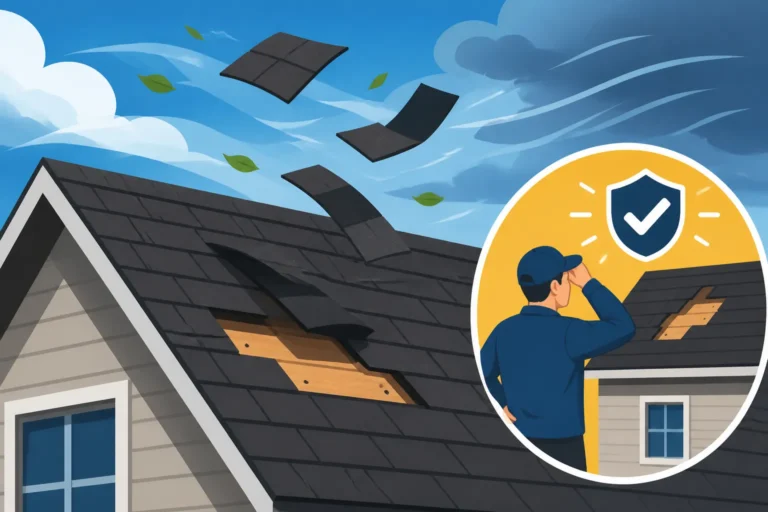
Second, as moss colonies grow, their rhizoids can work their way underneath the edges of the shingles. This lifting creates small gaps, making your roof vulnerable to wind uplift and further water penetration. Rainwater can then seep into these gaps, reaching the underlayment and potentially the roof decking itself, leading to rot and leaks in your attic. This can significantly shorten the overall lifespan of your roof, turning what might have been a 25-year roof into one that needs replacing in 15 or 20 years.
Diagnosing the Severity: When Can You Repair?
Spotting moss on your roof can be alarming, but it doesn't automatically mean you need an entire roof overhaul. The key is to accurately assess the extent and depth of the moss growth. Many times, if caught early, moss can be managed with targeted repairs and cleaning, saving you the significant cost and disruption of a full replacement.
Early Signs and Superficial Moss
When moss first begins to appear, it often presents as small, fuzzy green patches, typically on the north-facing slopes or in shaded areas of your roof. At this stage, the moss is usually superficial, clinging to the surface granules without having deeply embedded itself or caused widespread structural lifting of the shingles. You might see a thin, almost powdery layer of green, or small, isolated clumps that haven't spread extensively.
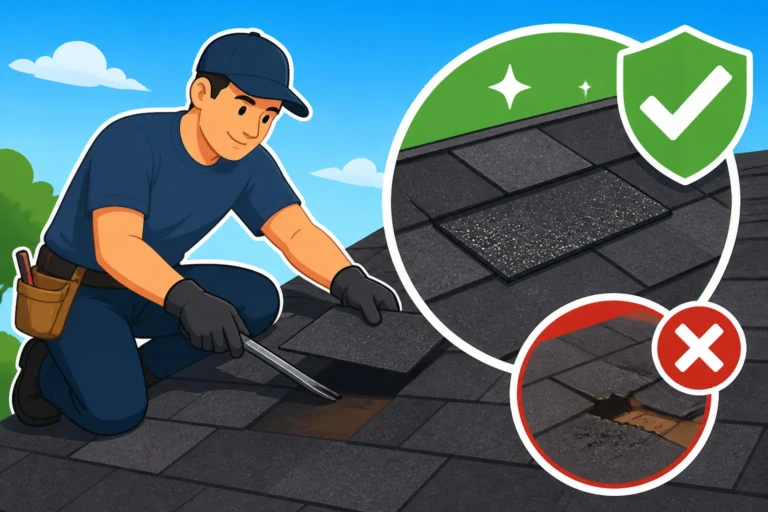
An important indicator that moss is superficial is if the shingles underneath still appear relatively intact when the moss is gently brushed away (though avoid doing this dry, as it can dislodge granules). If the granules are still mostly present, and there are no obvious signs of curling, cracking, or softening of the shingle material, then you're likely in the repairable phase. This is the ideal time to act, as early intervention can prevent the moss from causing more significant, permanent damage. Regular roof inspections, perhaps once a year, are crucial for catching these early signs. Our article, Roof Damage Assessment: A Homeowner's Guide, can give you more tips on what to look for.
Effective DIY and Professional Cleaning Methods
If your moss growth is superficial, cleaning is usually the first line of defense. However, it's critical to use the right methods to avoid damaging your shingles further. Never use a high-pressure washer on an asphalt roof. The intense spray can blast off granules, force water under shingles, and drastically shorten your roof's life.
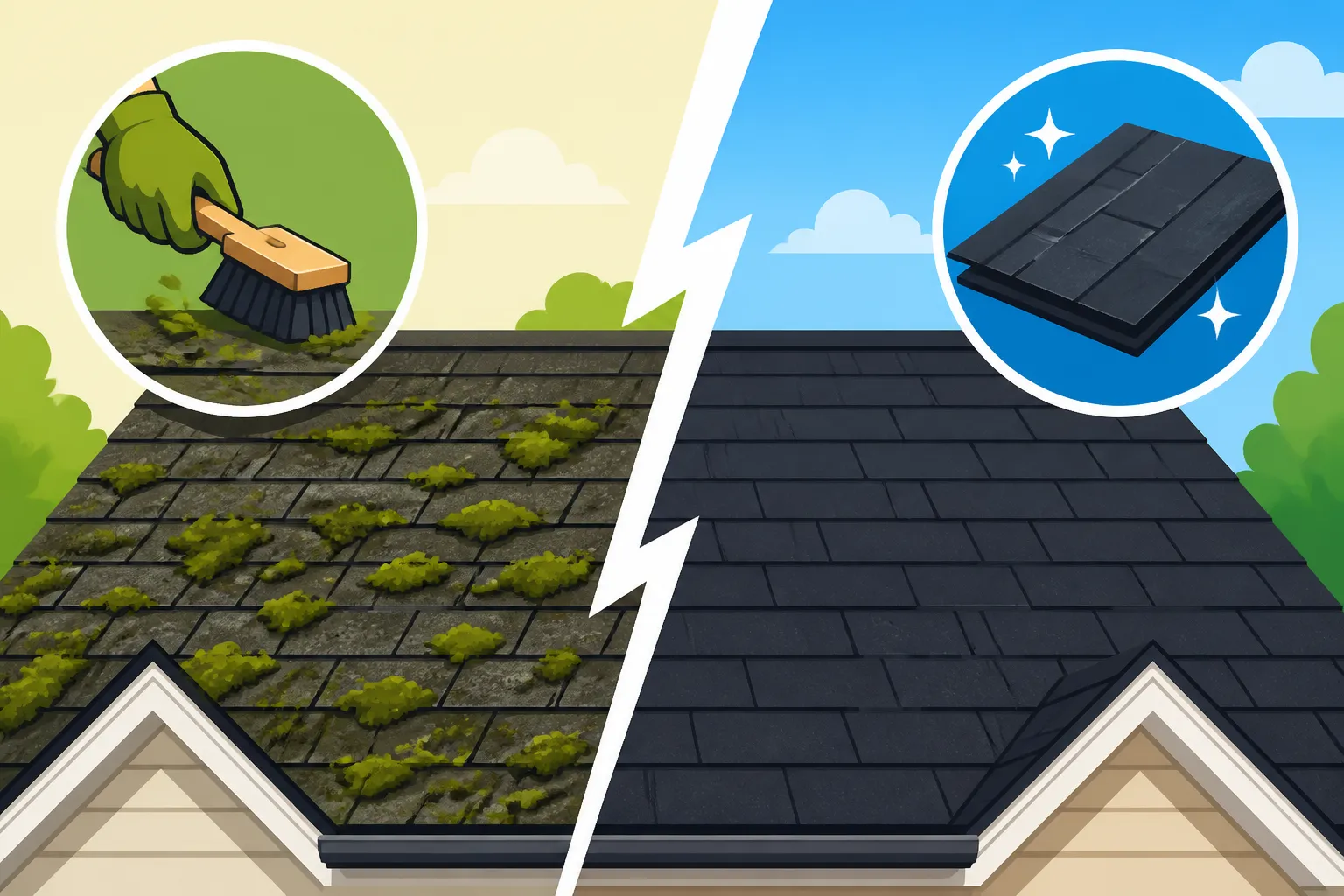
For DIY cleaning, a gentle approach is best. Products containing oxygen bleach (like Wet & Forget or similar commercial roof cleaners) are effective and safer than chlorine bleach, which can be harsh on asphalt and surrounding vegetation. These products are typically mixed with water and applied with a garden sprayer, then left to work over time, with rain washing away the dead moss. For stubborn spots, a soft-bristle brush (like a deck brush) attached to an extension pole can be used very gently to loosen moss, always brushing downwards in the direction of the shingle overlap. Another popular method involves zinc or copper strips, which release ions that are toxic to moss and algae when it rains. These strips are installed near the ridge, allowing the runoff to treat the roof below. For larger or steeper roofs, or if you're uncomfortable on a ladder, hiring a professional roof cleaning service is a smart move. They use specialized low-pressure washing equipment and eco-friendly solutions to safely clean your roof without causing damage. When looking for a pro, platforms like Modernize can help you connect with experienced local contractors who understand these delicate cleaning processes.
Preventing Future Moss Re-Growth
Cleaning your roof is a great start, but prevention is key to keeping moss away for good. The goal is to reduce moisture and increase sunlight. Start by regularly trimming any overhanging tree branches that shade your roof. This not only lets in more sunlight but also reduces the amount of organic debris that lands on your shingles, which, as we discussed, acts as a food source and moisture retainer for moss.
Improving your attic's ventilation can also help keep the roof deck cooler and drier, discouraging moisture accumulation. A well-ventilated attic works by drawing in cooler air from soffit vents and expelling warmer, moist air through ridge vents or other exhaust vents. Our guide, How Roof Ventilation Works, delves deeper into this topic. If you live in a perpetually damp or shaded area, installing zinc or copper strips along the roof ridge is a highly effective long-term preventative measure. As rain washes over these strips, metallic ions are released, creating an environment inhospitable to moss and algae growth on the shingles below. You'll often see this recommended by contractors from reputable companies found through services like Modernize. Regularly clearing gutters and downspouts is also vital, as clogged gutters can cause water to back up and sit on the edge of the roof, exacerbating moisture issues.
When Replacement Becomes Necessary
While superficial moss can often be cleaned and managed, there comes a point where the damage is too extensive, too deep-seated, or has progressed too far for simple repairs to be a cost-effective or long-lasting solution. Recognizing these critical signs is crucial for protecting your home.
Advanced Moss Infestation and Structural Damage
When moss has been allowed to flourish unchecked for years, it can transition from a surface issue to a structural threat. Large, thick mats of moss indicate a long-standing problem. These dense growths don't just sit on the shingles; their rhizoids intertwine and embed themselves into the shingle material. This prolonged attachment, coupled with the constant moisture they retain, can lead to severe degradation of the shingles.
The most concerning aspect of advanced moss infestation is the potential for underlying structural damage. The trapped moisture can seep past the compromised shingle layer, saturating the roofing felt (underlayment) and eventually reaching the wooden roof decking beneath. Once the decking starts to rot, you're looking at a much more serious and costly repair. Rotting decking compromises the structural integrity of your roof and can create unsafe conditions for anyone walking on it. You might notice sagging in certain sections of your roof, or even water stains on your attic ceiling – clear indicators that the problem has moved beyond the shingles themselves. At this stage, spot repairs become inadequate, as the entire roofing system in that area is likely compromised.
Signs Your Roof is Beyond Simple Repair
If you're observing specific, widespread signs of deterioration alongside significant moss growth, it's a strong indication that your roof may need replacing rather than just a good cleaning.
Look for widespread shingle damage directly beneath and around the moss. This includes:
- Curling and Cupping: Shingle edges lifting or bending upwards (curling) or the center rising while edges remain flat (cupping) suggests severe moisture absorption and drying cycles, often exacerbated by moss.
- Cracked Shingles: Deep cracks, especially those that expose the fiberglass mat underneath, show that the shingle material has lost its flexibility and protective qualities.
- Extensive Granule Loss: While some granule loss is normal, widespread, significant loss in mossy areas means the protective layer is gone, exposing the asphalt to UV rays and accelerating decay. This is a common consequence of moss holding moisture and loosening granules.
- Soft Spots on the Roof: If you or a professional inspector notice soft or spongy spots when walking on the roof, it's a major red flag for rotted roof decking underneath. This is a severe structural issue that necessitates replacement.
- Visible Leaks: Any signs of water intrusion in your attic or ceilings are immediate indicators that the roofing system has failed. Moss-induced damage often contributes to these leaks. Our article Signs You Need a New Roof explores these indicators in more detail.
If these issues are pervasive across multiple sections of your roof, the problem isn't just cosmetic; it's functional, and spot repairs will likely only offer a temporary band-aid solution.
Considering a Full Roof Replacement
Sometimes, the accumulation of smaller damages, all stemming from persistent moss, points toward the inevitable conclusion: a full roof replacement is the most practical and cost-effective solution in the long run. If your roof is already old – say, approaching or exceeding its expected lifespan of 20-25 years for typical asphalt shingles, as discussed in How Long Does an Asphalt Roof Last – and also heavily moss-covered, the financial return on extensive repairs diminishes rapidly.
You'll need to consider the cumulative cost of ongoing cleaning, shingle replacements, and potential decking repairs versus the investment in a new roof. Often, what starts as a small repair can snowball as more underlying issues are uncovered. A professional roofing contractor can help you make this critical decision. They can provide an honest assessment of your roof's condition, outlining the pros and cons of repair versus replacement, along with detailed estimates for both scenarios. This is where getting multiple quotes from reputable contractors, perhaps found through a service like Modernize, becomes invaluable. A new roof not only resolves all current moss-related issues but also offers enhanced protection, often comes with a strong manufacturer's warranty (see Roofing Warranty: Workmanship vs Manufacturer), and can even improve your home's energy efficiency and curb appeal.
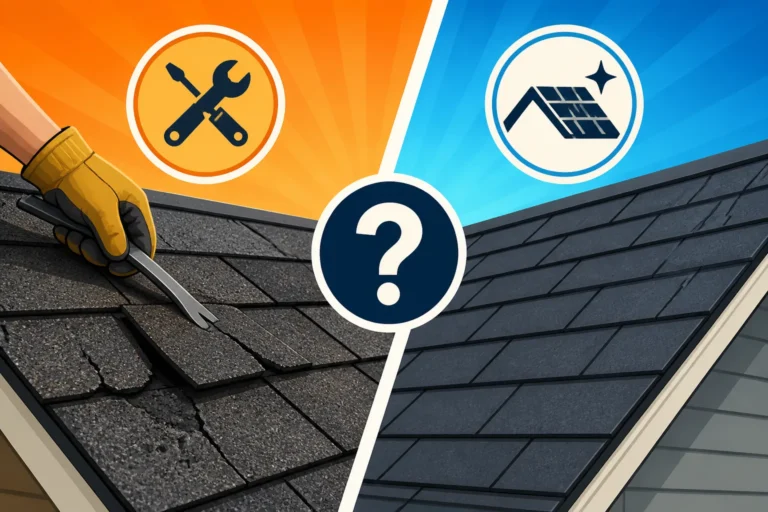
Weighing Your Options: Repair vs. Replace
Deciding between repairing moss damage and undertaking a full roof replacement is a big decision with significant financial implications. It's not just about the immediate cost, but also about the long-term health and protection of your home.
The Cost-Benefit Analysis
When facing significant moss growth, a clear cost-benefit analysis is essential. For minor, superficial moss, cleaning costs might range from a few hundred dollars for DIY solutions to $500-$1,500 for professional cleaning, especially if your roof is large or steep. This is a relatively low investment that can significantly extend your roof's life if done correctly and followed by preventative measures. The benefit here is retaining your existing roof for more years.
However, if moss has caused widespread shingle damage, granule loss, or worse, compromised your underlayment and decking, individual repairs can quickly add up. Replacing a few sections of damaged shingles might cost $300-$1,000, but if you need significant decking replacement or multiple leak repairs, you could easily spend several thousand dollars. The challenge is that these repairs don't address the underlying age or overall condition of the entire roof. You might fix one spot only for another to fail shortly after. In such cases, a full roof replacement, while a larger upfront investment (which could be anywhere from $8,000 to $25,000+ depending on your home's size and materials, as explored in How Much Does an Asphalt Shingle Roof Cost), offers a brand-new, comprehensive solution with a fresh warranty and decades of worry-free performance. The long-term benefit of replacement often outweighs the repeated costs and stress of continuous, escalating repairs on an aging, compromised roof.
Getting Professional Opinions and Estimates
You don't have to make this tough decision alone. The best course of action is to solicit professional opinions from several qualified roofing contractors. A reputable roofer will conduct a thorough inspection, not just of the mossy areas, but of your entire roofing system, including the attic. They'll look for signs of rot, water damage, compromised flashing, and overall shingle integrity. They should be able to clearly explain their findings, show you photographic evidence of damage, and present you with options for both repair and replacement, complete with detailed estimates.
Don't settle for the first quote you receive. We always recommend getting at least three different estimates. This allows you to compare not just prices, but also the scope of work, material recommendations, and warranty offerings. Be sure to ask Questions to Ask a Roofing Contractor Before Hiring to ensure you're working with a legitimate and experienced professional. Services like Modernize can be incredibly useful for connecting with several pre-vetted local contractors, simplifying the process of getting multiple, competitive bids without endless searching. A good contractor will explain the process, whether it's a careful tear-off and disposal (see Cost of Roof Tear-Off and Disposal) or a simpler repair.
Long-Term Solutions and Roof Upgrades
If you do decide on a full roof replacement due to extensive moss damage, this is a fantastic opportunity to implement long-term solutions that make your new roof more resilient to future moss growth and other environmental challenges. Consider upgrading to shingles that offer enhanced resistance to algae and moss. Many manufacturers, such as GAF, Owens Corning, and CertainTeed, offer shingles with copper-infused granules that inhibit biological growth for decades.
This is also the perfect time to address any existing ventilation issues in your attic. Upgrading to a more efficient ridge vent system or ensuring proper soffit intake can significantly improve airflow, reduce moisture buildup, and help keep your roof deck drier. Additionally, ensure proper flashing around chimneys, vents, and valleys is installed correctly to prevent water intrusion. By investing in these upgrades during a replacement, you're not just getting a new roof; you're getting a significantly improved and more durable roofing system that actively combats the conditions moss loves. Thinking about your roof as a complete system, rather than just shingles, will provide the best long-term value.
Repair vs. Replace for Moss-Affected Roofs
To help visualize the decision-making process, here's a quick comparison of when to lean towards repair versus replacement for moss issues:
| Factor | Lean Towards Repair (Cleaning/Spot Fixes) | Lean Towards Replacement |
|---|---|---|
| Moss Severity | Small, isolated patches; superficial growth; early stages | Thick, widespread mats; deep-rooted; covering large areas |
| Shingle Condition | Granules mostly intact; no curling/cracking; firm to touch | Significant granule loss; widespread curling, cracking, blistering; soft/brittle shingles |
| Underlying Damage | No visible leaks; attic dry; decking firm | Visible leaks; water stains in attic; spongy/rotted decking |
| Roof Age | Relatively young (less than 15-20 years) | Nearing or exceeding typical lifespan (20-30+ years) |
| Cost Implications | Cleaning or minor shingle replacement is a cost-effective fix | Cumulative repair costs approach or exceed 50% of replacement cost |
| Desired Outcome | Extend current roof life; quick fix for aesthetic or minor issue | Long-term solution; fresh start; enhanced protection & warranty |
Disclaimer
Please remember that the information provided in this article is for general guidance only. Every roof is unique, and the severity of moss growth and underlying damage can vary greatly. Always consult with a qualified and licensed roofing professional for a thorough inspection and personalized recommendations for your specific situation. They can provide accurate assessments and ensure any work performed adheres to local building codes and safety standards.