How Roof Age Affects Insurance
It’s a common scenario: you’ve lived in your home for years, the roof has done its job admirably, but now you're starting to wonder, "Is my insurance company going to cover my roof if something major happens?" The simple truth is, the age of your roof plays a significant, often frustrating, role in how your homeowners insurance policy works, from the type of coverage you get to whether a claim is even approved. This guide will walk you through how insurers view aging roofs, what kind of payouts you can expect, and what steps you can take to protect your home and your wallet.
The Inevitable Link Between Your Roof's Age and Insurance Coverage
Let's face it, nothing lasts forever, and that includes your asphalt roof. While a well-maintained asphalt shingle roof can last anywhere from 15 to 30 years, depending on the shingle type, climate, and installation quality, insurance companies start looking at your roof differently as it approaches its golden years. This isn't just arbitrary; it's rooted in the increased risk they perceive. An older roof is inherently more vulnerable to the elements, meaning a higher chance of a claim.
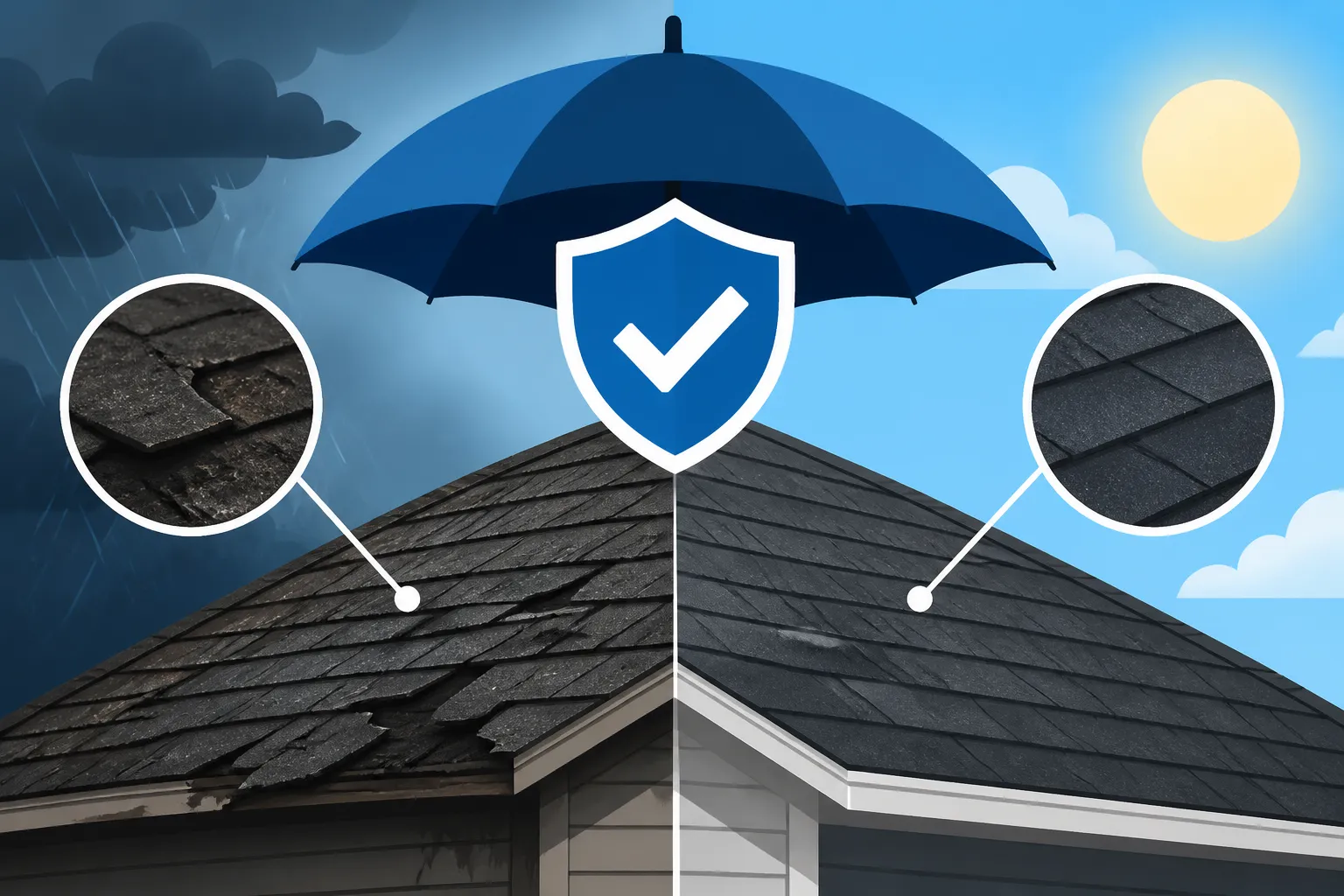
Think about it from an insurer's perspective: a brand-new roof is robust, its shingles are still flexible, seals are strong, and it's designed to withstand typical weather events. As years pass, those shingles bake in the sun, endure freezing temperatures, get pelted by rain and hail, and are buffeted by wind. This relentless exposure leads to natural wear and tear – granules start to shed, shingles might curl or crack, and the underlying protective layers can degrade. All of these factors make the roof more susceptible to damage from even minor storms, and definitely from major ones. This heightened risk means that some insurance companies may become hesitant to offer certain types of coverage or may even decline to insure homes with roofs deemed too old. They might impose stricter conditions, require more frequent inspections, or offer policies with less favorable terms than they would for a newer roof. This can leave homeowners in a tough spot, especially if they haven't planned for a potential Roof Replacement Cost: Complete Breakdown in the near future.
Decoding Insurance Payouts: ACV vs. RCV and How Age Fits In
One of the biggest distinctions you'll encounter when dealing with insurance claims for an aging roof is the difference between Actual Cash Value (ACV) and Replacement Cost Value (RCV) policies. Understanding these two terms is absolutely critical, as they dictate how much money you'll actually receive if your roof is damaged. Many homeowners assume their policy will pay for a brand-new roof, but that's often not the case once a roof gets past a certain age threshold.
Understanding Actual Cash Value ACV Policies
An Actual Cash Value (ACV) policy pays you the depreciated value of your roof at the time of the loss. In simpler terms, your insurance company will determine the current value of your roof, taking into account its age, wear and tear, and overall condition, and then subtract your deductible. They're essentially paying you what your old roof was worth right before it was damaged, not the cost of replacing it with new materials.
For example, if you have a 20-year-old asphalt roof that typically lasts 25 years, and it's severely damaged by a hailstorm, an ACV policy would factor in that 20 years of depreciation. Let's say a new roof would cost $20,000 today. The insurance company might calculate that your 20-year-old roof has already lost 80% of its value. So, they would pay out a fraction of that $20,000, minus your deductible. This means you, the homeowner, are responsible for covering a significant portion of the cost to replace it with a new one. This can be a huge financial burden that many people aren't prepared for. It's a key reason why many homeowners with older roofs find themselves struggling to afford a full replacement after a storm.
Understanding Replacement Cost Value RCV Policies
Replacement Cost Value (RCV) policies are generally more favorable to homeowners because they cover the cost of replacing your damaged roof with a new one of similar quality, without factoring in depreciation. This sounds like the ideal scenario, and it often is, but there are nuances. Most RCV policies pay out in two stages. First, they'll often pay you the Actual Cash Value (ACV) of the damage. Once you complete the repairs or replacement and submit proof, they'll release the remaining depreciation amount. This "depreciation holdback" ensures the work is actually done.
However, even with RCV policies, there's a catch for older roofs. Many insurers have age limits for RCV coverage. For instance, a policy might offer RCV coverage for roofs up to 10 or 15 years old. Once your roof crosses that threshold, the policy might automatically revert to ACV coverage, or the insurer might offer RCV with a significantly higher premium or a higher deductible for roof claims. It's crucial to review your policy documents carefully or speak with your agent to understand these age limitations. You might think you have full replacement coverage, only to find out after a storm that your 18-year-old roof now falls under ACV terms. This transition from RCV to ACV can be a major wake-up call for homeowners who haven't been keeping track of their roof's age and their policy specifics.
Here's a quick comparison of how age impacts these two types of policies:
| Roof Age Range | Typical ACV Coverage | Typical RCV Coverage (if available) |
|---|---|---|
| New (0-5 years) | Full coverage based on current market value, less deductible. | Full replacement cost, less deductible. Most favorable. |
| Mid-Life (6-15 years) | Depreciated value, significant out-of-pocket costs likely. | Often full replacement cost, though some insurers may start imposing limits or higher deductibles. |
| Older (16-20+ years) | Highly depreciated value, very high out-of-pocket costs. May be difficult to get coverage at all. | Increasingly rare, or comes with significant caveats, higher premiums, or high deductibles. Many policies convert to ACV. |
Beyond Just Years: Other Factors Affecting Your Roof Insurance
While the age of your roof is a primary concern for insurers, it's certainly not the only factor they consider when assessing risk and determining your premiums or claim payouts. A number of other elements play a critical role, influencing whether you can even get coverage, how much you pay, and what kind of reimbursement you'll receive after a loss.
Roof Condition and Materials Matter More Than You Think
Two roofs of the exact same age can be treated very differently by an insurance company if their conditions vary wildly. A 15-year-old roof that has been meticulously maintained, with regular inspections and prompt repairs, will be viewed more favorably than a 10-year-old roof that shows obvious signs of neglect, such as missing shingles, significant granule loss, or widespread moss and algae growth. Insurers often require a roof inspection, especially for older homes, before issuing a new policy or renewing an existing one. If they find existing damage or poor maintenance, they might deny coverage or require you to make repairs first. It's crucial to perform a Roof Damage Assessment: A Homeowner's Guide periodically to stay on top of issues.
Furthermore, the type of roofing material makes a difference. While asphalt shingles are the most common and generally well-regarded, specific types can influence premiums. For example, some insurance companies offer discounts for roofs made with "impact-resistant" or Class 4 shingles, especially in hail-prone areas. These tougher shingles, like those from Owens Corning or CertainTeed, are designed to withstand significant hail impacts and can reduce the likelihood of a claim. Even the installation quality is considered; if your roof was installed by a certified contractor and comes with a strong manufacturer warranty, it may be seen as less risky.
Local Climate and Storm History Play a Huge Role
Where you live dramatically impacts how insurers assess your roof. If your home is in a region frequently hit by severe weather events – think the "hail alley" states like Colorado, Texas, or Oklahoma, or hurricane-prone areas along the Gulf Coast and Eastern Seaboard – your roof will face higher scrutiny, regardless of its age. Insurers in these regions are constantly adjusting their underwriting guidelines based on historical data and projected climate risks. A roof that might be insurable in a mild climate could be deemed uninsurable or require specialized, more expensive coverage in a storm-ridden area, even if it's relatively new.
For example, homeowners in Florida might find that after a certain age, their roof automatically gets converted to an ACV policy for wind damage, or they might be required to upgrade to more robust roofing materials to maintain coverage. In hail-prone states, insurers might offer better terms for Impact-Resistant Shingle Cost installations, understanding that this investment reduces their long-term risk. This regional variation means that what's acceptable for a roof in, say, Portland, Oregon, might be completely different from what's required in Dallas, Texas.
Your Personal Claims History and Previous Roof Issues
Finally, your individual claims history and any past issues with your roof will certainly factor into an insurer's decision. If you've filed multiple claims for roof damage in recent years, even if they were legitimate, an insurer might see you as a higher risk. They might increase your premiums, deny renewal, or offer a policy with a higher deductible specifically for roof-related claims. Similarly, if your roof has a history of repairs due to poor installation or recurring leaks, that information can be red-flagged.
This is why proper maintenance and understanding What Voids a Shingle Warranty are so important. Preventing minor issues from escalating into major claims can help keep your insurance record clean. Even if a prior claim was covered, the sheer act of filing can sometimes work against you in the long run. Insurers look for stability and predictability, and a history of repeated roof claims, especially for an older roof, signals the opposite.
Proactive Steps for Homeowners with an Older Roof
Finding yourself with an aging roof can feel like a ticking time bomb, especially when you consider insurance implications. But don't despair! There are definite, proactive steps you can take to mitigate risks, maintain coverage, and potentially even extend the life of your roof. Planning ahead is key when your roof starts showing Signs You Need a New Roof.
Regular Inspections and Diligent Maintenance
This is arguably the most important step you can take. Don't wait for a leak in your living room to realize your roof needs attention. Schedule regular professional roof inspections, ideally once every 1-2 years, especially if your roof is over 10 years old. A qualified roofing contractor can spot minor issues like loose shingles, damaged flashing, or early signs of granule loss before they become costly problems. They can also provide a detailed report on your roof's condition, which can be invaluable when dealing with your insurance company. For example, if an insurer requires an inspection for renewal, having a professional report confirming your roof's good condition for its age can make all the difference.
Beyond inspections, diligent maintenance is crucial. Keep your gutters clean to prevent water backups, trim overhanging tree branches to prevent debris accumulation and storm damage, and address any minor repairs immediately. Even small issues like a few missing shingles can quickly escalate into widespread water damage, leading to a much larger and more complex insurance claim. Being able to show your insurance company a history of proactive maintenance proves you're a responsible homeowner, which can sometimes work in your favor. Knowing How Long Does an Asphalt Roof Last can help you set a timeline for these inspections.
Shopping Around and Reviewing Your Policy Annually
Never assume your current insurance provider is offering you the best rates or the most comprehensive coverage for your aging roof. Insurance markets are dynamic, and what was a good policy five years ago might not be the best fit today, especially as your roof gets older. It’s wise to shop around and get quotes from multiple insurers at least once every few years, or particularly when your current policy is up for renewal. Be upfront about your roof's age and condition, and ask specific questions about their ACV/RCV policies for roofs in your age bracket.
When you call, ask questions like: "At what age does my roof's coverage shift from RCV to ACV?" or "Do you offer any discounts for roofs that have been recently inspected or for certain shingle types?" Review your current policy thoroughly each year. Understand your deductible, the specifics of your roof coverage, and any exclusions. If you discover that your policy has shifted to ACV, you can then make an informed decision about whether to seek a different policy, knowing that your out-of-pocket costs for a potential claim could be substantial. This proactive approach helps you find the Best Time of Year for Cheap Roofing opportunities and compare providers to ensure you're getting the most out of your insurance.
Considering a Roof Upgrade or Full Replacement
Ultimately, the most effective way to secure the best insurance coverage and protect your home is to address the root cause of the problem: an aging roof. If your roof is nearing the end of its projected lifespan (typically 20-25 years for standard asphalt shingles), it might be time to start planning for a full replacement. While a new roof is a significant investment, it often comes with substantial benefits, including better insurance terms, lower premiums, and superior protection for your home. You can often explore Roof Financing Options Explained to make the cost more manageable.
When you install a new roof, especially one with enhanced features like Class 4 impact-resistant shingles or GAF's Timberline HDZ, many insurers will view your home as a much lower risk. You'll likely qualify for RCV coverage again, and potentially even receive discounts on your premiums. This isn't just about insurance; a new roof boosts your home's curb appeal, energy efficiency, and overall value. While it might seem daunting to How to Budget for a New Roof, the long-term savings in maintenance, reduced energy costs, and peace of mind from knowing your home is well-protected often outweigh the upfront expense. It’s always a good idea to weigh the option to Does Insurance Cover Roof Replacement if your existing roof has suffered extensive damage, as a new roof will undoubtedly offer better coverage moving forward. When you're ready, knowing How to Choose a Roofing Contractor and Questions to Ask a Roofing Contractor Before Hiring are essential steps to ensure a quality installation.
By taking these steps, you can proactively manage the impact of your roof's age on your home insurance, ensuring your home remains protected and your finances secure. Remember, understanding your policy and maintaining your roof is a continuous process, not a one-time check.
Disclaimer
This article is for general informational purposes only and does not constitute professional advice. Laws, prices and regulations vary by location and change over time. Consult a qualified professional for guidance on your specific situation.