What Voids a Manufacturer Roof Warranty
It's an incredibly frustrating feeling to discover something’s gone wrong with your roof, especially when you think you’re covered by a manufacturer’s warranty, only to find out a technicality has voided it. Many homeowners are caught off guard, believing their brand-new shingles come with an ironclad guarantee, only to learn that certain actions—or inactions—can completely nullify their coverage. This guide will walk you through the common pitfalls and often-overlooked details that can void your asphalt shingle manufacturer’s warranty, empowering you to protect your investment and avoid costly out-of-pocket repairs.
Understanding the Foundation of Your Manufacturer's Warranty
Before diving into what can void your warranty, it’s essential to grasp what a manufacturer’s warranty actually is and what it promises. It’s not a blanket protection for everything that ever happens to your roof; rather, it’s a specific agreement between you and the shingle manufacturer.
What a Manufacturer's Warranty Covers
At its core, a manufacturer's warranty primarily covers defects in the materials themselves. This means if a shingle fails prematurely due to a flaw in its manufacturing process – perhaps it delaminates, cracks, or loses granules at an unusually rapid rate without external cause – the manufacturer should cover it. This is typically distinct from damage caused by external forces like severe weather, improper installation, or lack of maintenance.
Most manufacturer warranties for asphalt shingles typically range from 20 to 50 years, often with a "non-prorated" period for the first 5-10 years. During the non-prorated period, if a defect occurs, the manufacturer covers 100% of the replacement material cost, and sometimes even labor. After this initial period, the warranty usually becomes "prorated," meaning the coverage decreases over time as the shingles age, leaving you responsible for a larger portion of the costs. This distinction is crucial, as a 50-year warranty doesn't mean you'll get a full roof replacement on year 40 if a defect appears. It's often helpful to understand How Shingle Warranties Work in detail.
Distinguishing Manufacturer vs. Workmanship Warranties
This is one of the biggest points of confusion for homeowners. A manufacturer's warranty is from the company that made the shingles (e.g., GAF, Owens Corning, CertainTeed). It guarantees the quality of their product. A workmanship warranty, on the other hand, is provided by the contractor who installed your roof. This warranty covers the quality of the installation itself – ensuring that the shingles were put on correctly, nailed properly, and sealed according to best practices and local building codes.
It's vital to recognize that these are separate entities. If your roof leaks because a flashing was installed incorrectly, that’s a workmanship issue and would fall under your contractor's warranty. If your shingles are falling apart because of a manufacturing defect, that's a manufacturer's warranty issue. Many of the factors that void a manufacturer’s warranty relate directly to improper installation, highlighting why choosing a reputable and certified contractor is paramount. You can learn more about the differences in Roofing Warranty: Workmanship vs Manufacturer.
Common Actions That Can Void Your Warranty
Now, let's get into the nitty-gritty of what many homeowners accidentally do, or fail to do, that can jeopardize their warranty coverage. These are the details that often lead to denied claims.
Improper Installation and Non-Certified Contractors
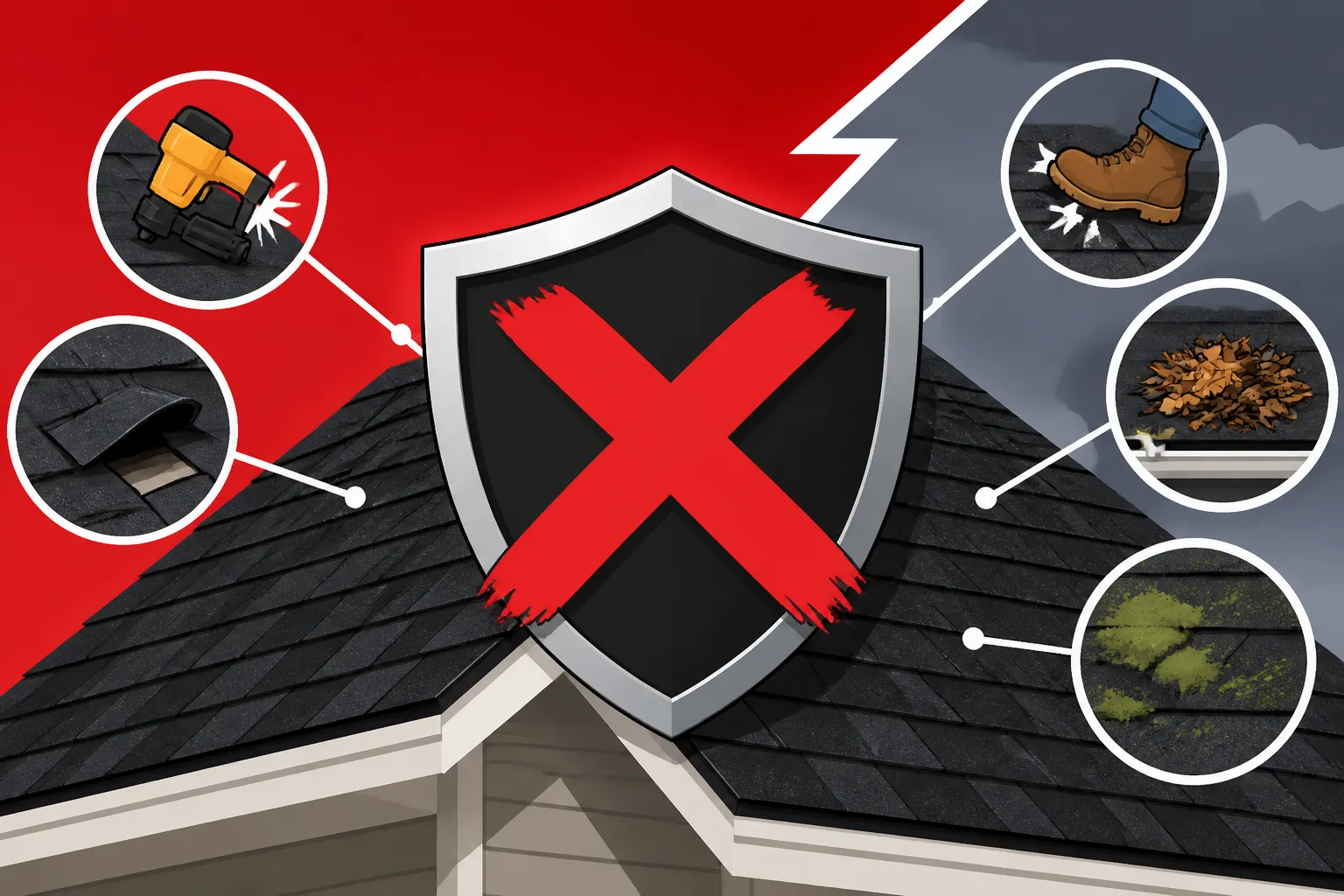
This is arguably the most common and significant cause of warranty voidance. Manufacturers design their shingles to be installed according to very specific guidelines. If a contractor deviates from these guidelines, even slightly, it can compromise the performance of the entire roof system. This includes everything from the nailing pattern and shingle overlap to the type of underlayment and flashing used.
Many leading shingle manufacturers offer extended warranties, but these often require that your roof be installed by a "certified" or "preferred" contractor who has undergone specific training and meets stringent standards. For example, GAF has its Master Elite Contractors, and Owens Corning has its Platinum Preferred Contractors. If your roof isn't installed by such a certified professional, or if the installation doesn't strictly adhere to the manufacturer's specifications, your standard limited warranty could be significantly reduced or even voided. This is why when considering How to Choose a Roofing Contractor, their certification status is critical.
A manufacturer might argue that premature failure wasn't due to a defect in their product, but rather due to installation errors. Imagine a scenario where shingles are nailed too high or with too few nails. In a strong wind, they might lift and blow off. The manufacturer would rightly say their product didn't fail; the installation did. This is a common situation where your manufacturer's warranty wouldn't apply, leaving you to rely solely on your contractor's workmanship warranty (if they provided one and are still in business).
Mixing Shingle Brands or Types
Most asphalt shingle manufacturers design their roofing components to work together as a complete system. This "full roofing system" approach includes not just the shingles, but also starter strips, hip and ridge cap shingles, underlayment, and even attic ventilation. Reputable brands like CertainTeed, Malarkey, and Atlas emphasize using their proprietary system components for optimal performance and warranty coverage.
If you or your contractor decide to mix and match components—using one brand's shingles with another brand's underlayment, for instance, or substituting generic starter strips—you could be unknowingly voiding your warranty. The manufacturer's warranty is often contingent on the entire roof system being comprised of their approved products. They can argue that using components from different manufacturers compromises the integrity and performance of their product. This means that while trying to save a few dollars by mixing brands might seem smart in the short term, it could cost you dearly if a claim arises years down the line. It's best to ensure How a Complete Roof System Qualifies for Warranty is followed to the letter.
Inadequate Ventilation
Proper attic ventilation is not just about comfort; it's absolutely crucial for the longevity of your roof and, consequently, your manufacturer's warranty. Many homeowners overlook this, but poor ventilation leads to extreme heat buildup in the attic during summer and moisture accumulation during winter.
Excessive heat can literally "cook" your shingles from below, accelerating the loss of granules, causing them to crack prematurely, and drastically shortening their lifespan. This kind of damage is not a material defect; it’s an environmental condition caused by poor ventilation. Similarly, moisture buildup can lead to mold, mildew, and even rot in your roof decking, which again, the shingle manufacturer isn't responsible for.
If a manufacturer inspects a roof with premature shingle failure and finds inadequate attic ventilation, they can (and often will) deny a warranty claim. They'll argue that their product failed due to conditions outside their control and against their recommended installation environment. This is why understanding How Roof Ventilation Works and ensuring your attic is properly vented is so important for maintaining your warranty.
Alterations or Additions to the Roof
Thinking about adding solar panels, a new skylight, or even a satellite dish? Be extremely cautious. Any alteration or addition to your roof structure or surface, if not done correctly, can easily void parts of your manufacturer's warranty, if not the entire thing.
The installation of solar panels is a prime example. These often require drilling directly into the roof decking and flashing around the mounts. If the work isn't performed by professionals experienced in roofing and adhering to both the shingle manufacturer's and solar panel manufacturer's guidelines, it can lead to leaks, shingle damage, or compromised structural integrity. The shingle manufacturer will almost certainly deny a claim for a leak or shingle damage in the vicinity of poorly installed solar panels or skylights, as the damage wasn't due to their product's defect but rather the invasive alteration.
Always consult with your shingle manufacturer's warranty details and use certified professionals for any roof modifications.
Neglecting Maintenance and Repairs
Your roof, much like your car, needs regular maintenance to perform optimally and last its full intended lifespan. Ignoring minor issues can lead to major problems that ultimately void your warranty. Small leaks, a few missing shingles, or areas with significant granule loss might seem insignificant at first. However, if left unaddressed, these can escalate.
For instance, a small leak can lead to rotted roof decking, compromised structural integrity, and widespread moisture damage. Missing shingles expose the underlayment and decking to direct sunlight and rain, accelerating wear and tear on the surrounding shingles. A manufacturer might argue that if a defect appears in an area where maintenance was clearly neglected, the damage wasn't solely due to a material defect but exacerbated by homeowner inaction. While manufacturer warranties typically don't cover general wear and tear, they expect you to perform reasonable maintenance. This ties into why a regular Roof Damage Assessment: A Homeowner's Guide is a smart practice.
Walking on the Roof Unnecessarily
While modern asphalt shingles are designed to be walked on during installation and for occasional maintenance, excessive or careless foot traffic can cause damage. Shingles have a protective layer of granules that shield the asphalt from UV rays. Scuffing these granules off by walking on them too frequently, especially in hot weather when shingles are softer, can prematurely expose the asphalt, leading to accelerated aging and granule loss.
Manufacturers might not cover granule loss or damage that they can attribute to excessive foot traffic. Always avoid walking on your roof unless absolutely necessary, and if you must, do so carefully, preferably on a cooler day, and wear soft-soled shoes. If you need to access your roof for any reason, consider hiring a professional who knows how to navigate it safely without causing damage.
Environmental Factors and Acts of Nature
While some manufacturer warranties offer protection against certain environmental damages, how you respond to these events can also impact your coverage.
Damage from Severe Weather Events
This is a tricky one. Most standard manufacturer warranties do not cover damage caused by "acts of God" or severe weather events like hail, hurricanes, tornadoes, or extreme wind beyond a certain rating. This type of damage is typically covered by your homeowners insurance. However, extended warranties or specific "wind-resistant" shingle lines (like those from Owens Corning or GAF that offer enhanced wind ratings) might offer some protection against blow-offs up to a certain wind speed.
The caveat here is often related to timely repairs. If your roof sustains damage from a storm, and you neglect to have it inspected and repaired promptly, and then a separate manufacturing defect arises in the damaged area (or the damage worsens), the manufacturer could argue that your inaction contributed to the problem, potentially voiding the warranty for that section. For example, if a branch falls on your roof, causing minor damage, and you wait months to fix it, leading to a major leak, the manufacturer won't cover the water damage in your home or the subsequent deterioration of the shingles in that area.
Unapproved Cleaning Methods or Treatments
It's tempting to want a pristine, clean roof, especially if moss or algae are starting to appear. However, using unapproved cleaning methods or harsh chemicals can do more harm than good and can void your warranty.
Pressure washing, for instance, can strip away granules, compromise the shingle’s sealant, and even force water underneath the shingles, leading to leaks and accelerated deterioration. Harsh chemical cleaners can also degrade the asphalt and granules. Always refer to your shingle manufacturer's recommendations for cleaning. Typically, gentle methods like a 50/50 mix of bleach and water applied with a soft brush or low-pressure sprayer, followed by a rinse, are recommended for algae. Many modern shingles from brands like Atlas and CertainTeed come with algae-resistant granules, which can mitigate this issue.
Growing Moss or Algae Without Treatment
While some newer shingles offer algae resistance, older shingles or those in humid, shaded environments are prone to moss and algae growth. While the presence of moss or algae itself might not immediately void a warranty, if left unchecked, it can cause significant damage. Moss can lift shingles, allowing water to penetrate, and its root-like structures can degrade the shingle surface. Algae, while less structurally damaging, can indicate excessive moisture retention on the roof, which contributes to faster degradation of the shingles over time.
If a manufacturer can demonstrate that the premature failure of shingles was directly caused or significantly exacerbated by long-term, unchecked moss or algae growth, they might have grounds to deny a claim. Regular, gentle cleaning and addressing underlying moisture issues are crucial for maintaining warranty coverage and extending your roof's life.
The Role of Homeowner Actions and Documentation
Your actions as a homeowner, beyond what happens on the roof itself, also play a critical role in keeping your warranty valid. Good record-keeping and understanding the fine print are your best defenses.
Failure to Register the Warranty
This is a simple but frequently overlooked step. Many manufacturer warranties, especially extended or enhanced warranties, require homeowners to register their roof within a specific timeframe after installation (e.g., 30, 60, or 90 days). If you don't register the warranty, the manufacturer might argue that you haven't fulfilled your part of the agreement, potentially limiting your coverage to a basic, much shorter warranty, or even voiding it entirely.
Always ask your contractor about warranty registration and ensure it's completed, whether they do it for you or you submit the forms yourself. Keep copies of all registration confirmations. Don't let your investment go unprotected because of a simple administrative oversight. For more information, check out How Roofing Warranties Are Registered.
Lack of Proof of Purchase or Installation
In the unfortunate event that you need to make a warranty claim, the manufacturer will require proof. This includes:
- Proof of Purchase: Original invoices for the shingles and other roofing components.
- Proof of Installation: Documentation from the roofing contractor, including dates of installation, the specific products used, and proof of their certification if an enhanced warranty applies.
- Proof of Ownership: Current property deeds, especially if the warranty is transferable (which is another thing to clarify – not all are).
Without proper documentation, it can be extremely difficult to prove your claim to the manufacturer, leading to a denial. Always keep a meticulously organized file of all your roofing documents, including the contract, invoices, warranty certificates, and any photos taken during or after installation.
DIY Repairs or Unprofessional Modifications
While a homeowner might be handy, performing roof repairs yourself without proper training, tools, or knowledge of roofing best practices and manufacturer guidelines is a huge risk to your warranty. DIY repairs, even seemingly minor ones, can inadvertently cause more damage than they fix.
For example, improperly replacing a few missing shingles might lead to incorrect nailing, water channels, or damage to surrounding shingles. Using incompatible sealants or repair materials can react negatively with the asphalt, causing deterioration. If a manufacturer inspects your roof and finds evidence of DIY or unprofessional repairs, and a subsequent issue arises in that area, they can easily deny your claim, stating that their product was compromised by unauthorized work. It’s always best to call a qualified, licensed roofer for any repairs, no matter how small. They understand the nuances of asphalt roofing and how to maintain the integrity of your warranty.
Summary of Common Warranty Voiders
To make it easier to digest, here's a table summarizing common actions that can void your manufacturer's roof warranty and how to steer clear of them:
| Action/Factor | How It Voids Warranty | How to Prevent It |
|---|---|---|
| Improper Installation | Deviations from manufacturer guidelines, non-certified installer, incorrect nailing. | Hire a certified, reputable contractor (How to Choose a Roofing Contractor). Ensure they follow manufacturer specifications strictly. |
| Mixing Components | Using different brands for shingles, underlayment, flashing, etc. | Insist on a complete roofing system from a single manufacturer for all components. |
| Inadequate Ventilation | Heat/moisture buildup in attic "cooks" shingles or causes premature degradation. | Ensure proper attic ventilation meets building codes and manufacturer recommendations (How Roof Ventilation Works). |
| Roof Alterations | Poorly installed solar panels, skylights, antennas that damage shingles or structure. | Use experienced professionals for any roof alterations. Verify their work aligns with roofing best practices and manufacturer guidelines. |
| Neglecting Maintenance | Ignoring minor leaks, missing shingles, or other damage leading to further deterioration. | Conduct regular roof inspections (Roof Inspection: What They Check) and promptly address any needed repairs with a qualified roofer. |
| Excessive Foot Traffic | Scuffing off granules, damaging shingles prematurely. | Avoid unnecessary roof access. If necessary, use professionals or exercise extreme caution, especially in hot weather. |
| Unapproved Cleaning | Pressure washing, harsh chemicals stripping granules or degrading asphalt. | Use manufacturer-recommended gentle cleaning methods for moss/algae. Avoid high-pressure washing. |
| Failure to Register | Not submitting warranty registration within the specified timeframe. | Register your warranty immediately after installation or ensure your contractor does it for you. Keep all documentation. |
| Lack of Documentation | Inability to prove purchase, installation, or ownership. | Keep meticulous records: contract, invoices, warranty certificates, photos. |
| DIY Repairs | Unprofessional modifications causing further damage or compromising product integrity. | Always hire a licensed, experienced roofing professional for any repairs or modifications. Avoid attempting DIY roof repairs. |
Maintaining your manufacturer’s roof warranty requires diligence, careful choices, and understanding the fine print. By being informed about these common pitfalls, you can ensure your asphalt roof remains covered for years to come and protect your significant home investment.
Disclaimer
Please remember that this article provides general information and should not be considered legal or professional advice. Always consult with a qualified roofing contractor and review your specific manufacturer's warranty documentation for precise details pertaining to your roof. Building codes and warranty terms can vary by location and manufacturer.