How Shingles Are Rated for Fire
It's a genuine worry for many homeowners: what happens if a fire threatens my home, especially when it comes to the roof? Whether it's a nearby house fire, wind-blown embers from a wildfire, or even an internal electrical issue, your roof's ability to resist fire is a critical, yet often overlooked, aspect of home safety. This guide aims to demystify how asphalt shingles are rated for fire, helping you understand the classifications, the rigorous testing involved, and what it all truly means for protecting your home and family.
The Critical Importance of Roof Fire Ratings
When you’re looking at new asphalt shingles, it's easy to get caught up in the aesthetics – the color, the profile, how it will look from the curb. But beneath that visual appeal lies a crucial safety feature: its fire rating. Many homeowners don't realize that their roof isn't just a shield against rain and sun; it's a vital component in your home's defense against fire, dictating how well it can resist ignition and the spread of flames from external sources.
The A, B, C Classification System for Roof Assemblies
When you see a fire rating on a shingle package or an estimate, it's not just a random letter; it represents a specific, tested level of performance against external fire exposure. This classification system, primarily developed and certified by organizations like Underwriters Laboratories (UL), uses letters A, B, and C to designate a roofing assembly's effectiveness.
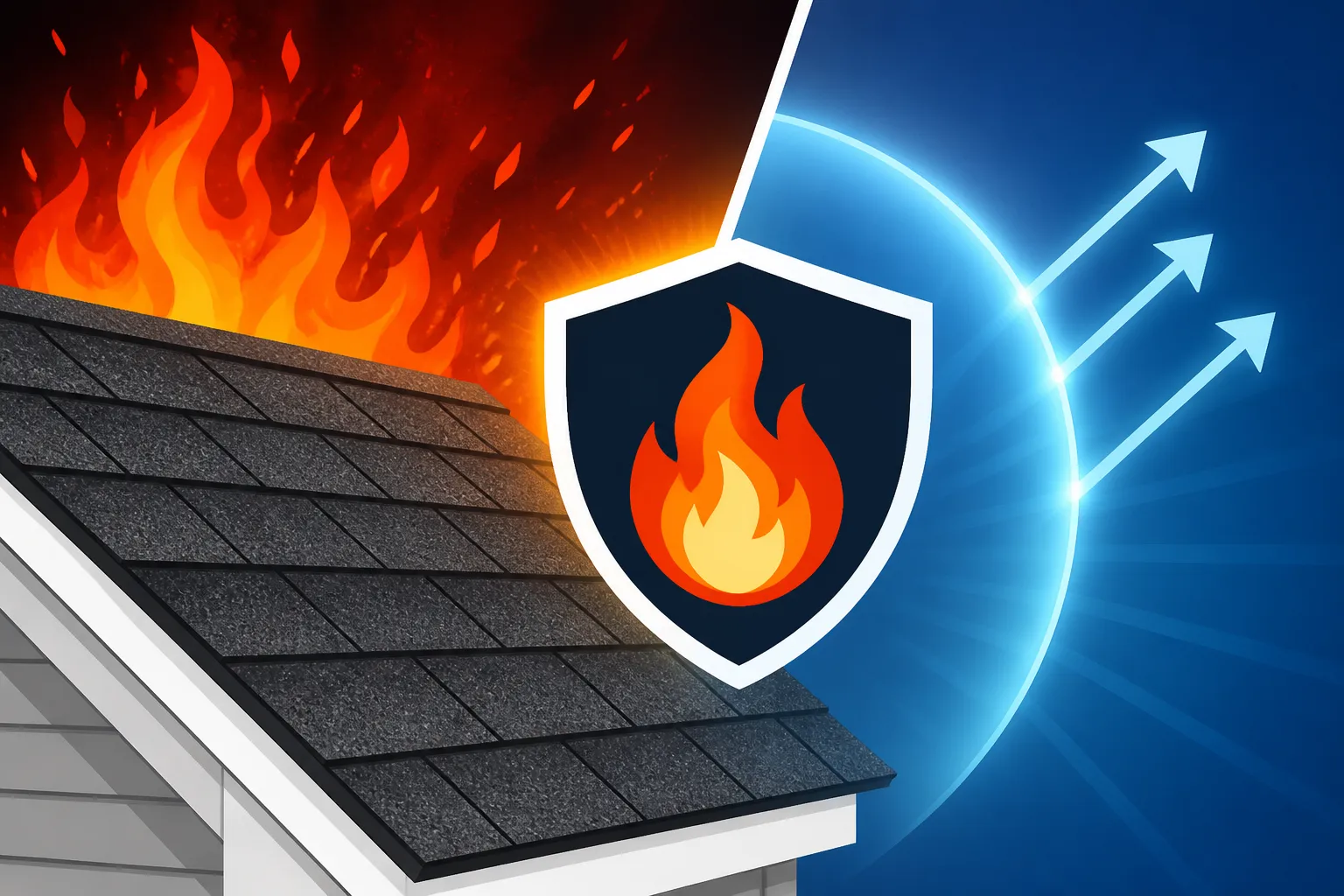
Class A signifies the highest level of fire resistance. Materials with this rating are effective against severe fire exposure. This means they are incredibly resistant to ignition, prevent flames from spreading across the roof surface, and are designed to stop burning embers from penetrating through to your attic or roof deck. For many homeowners, especially those in high-risk areas like wildfire zones, a Class A rating is not just preferred but often legally mandated. These shingles are engineered with advanced materials and construction to provide maximum peace of mind.
Class B indicates a moderate level of fire resistance. Roofing materials in this category are effective against moderate fire exposure. They will resist the spread of flames for a shorter duration or with less intensity compared to Class A materials. While they offer good protection and meet the requirements for many standard residential applications, they might not be the top choice for homes in areas with elevated fire risks. You'll often find many quality architectural shingles falling into this classification, offering a solid balance.
Class C represents the lowest classification for roofing materials, signifying effectiveness against light fire exposure. These shingles can resist flame spread for a limited time but are more susceptible to ignition and penetration from burning brands or sustained flames. Older 3-tab shingles sometimes fall into this category. While they meet basic safety standards, most modern installations aim for Class A or B, especially given the enhanced protection and long-term benefits of higher-rated materials.
External Fire vs. Internal Fire Protection
It's really important to distinguish between how a roof protects from fire originating outside your home versus inside it. When we talk about shingle fire ratings (A, B, C), we are almost exclusively referring to external fire protection. This addresses critical scenarios like:
- Wildfire Embers: Wind-borne embers landing on your roof, which are a primary ignition source during wildfires.
- Adjacent Structure Fires: Flames or heat radiating from a neighboring house fire.
- Flying Debris: Ignited debris from storms or other incidents landing on the roof.
The shingle's fire rating dictates how well it resists igniting, how quickly flames might spread across its surface, and its ability to prevent those flames or embers from burning through to the roof deck and into your attic. This external defense is what buys you precious time and protects the structural integrity of your home during an outside fire event.
Internal fire protection, on the other hand, deals with fires that start inside your house, perhaps in the attic or an upper floor. While a sturdy roof deck can offer a temporary barrier, and proper attic ventilation can help manage heat and smoke, the shingles themselves are not the primary line of defense in this scenario. Fire-rated ceilings and walls are more relevant for containing internal fires. So, while your entire home needs comprehensive fire safety, shingle ratings specifically target protection from threats originating from above or around your home.
The Underwriters Laboratories UL 790 Standard is Key
When you see a Class A, B, or C fire rating proudly displayed for a roofing material, it's not a self-proclaimed title. It means that the material has undergone stringent testing by an independent, third-party certification organization. The most widely recognized of these organizations in North America is Underwriters Laboratories (UL), and the specific standard they use for roofing materials is UL 790, which is often harmonized with ASTM E108.
This standard is the foundation of trustworthy roof fire ratings. It meticulously details the exact procedures for evaluating a roof assembly’s resistance to external fire. It’s not a simple one-and-done test; UL 790 involves a series of carefully controlled experiments designed to simulate various real-world fire conditions that a roof might encounter. Manufacturers commit significant resources to have their products tested and certified because a UL rating is a mark of reliability and compliance. It ensures that when you choose a shingle with a Class A rating, for instance, it has met the same rigorous performance benchmarks as any other Class A rated shingle on the market, regardless of the brand. This standardization provides crucial assurance for homeowners that the stated fire protection is scientifically validated.
The Rigorous Testing Behind Fire Ratings
It might sound straightforward to say a shingle is "fire-resistant," but the process to earn that designation is incredibly complex and demanding. Imagine a full-scale roof assembly being subjected to controlled flames, burning brands, and intermittent fire bursts, all under the watchful eye of engineers. This meticulous testing ensures that the fire ratings are based on objective performance, not just assumptions.
The Spread of Flame Test
One of the foundational evaluations under the UL 790 (or ASTM E108) standard is the Spread of Flame Test. This test is designed to measure how far and how quickly a flame will travel across the surface of a roofing material when exposed to an external ignition source. It directly simulates scenarios where fire might spread upwards from a lower section of the roof, from nearby burning debris, or from an adjacent structure.
For this test, a complete roof assembly—including the decking, underlayment, and shingles—is installed on a test deck, usually at a specific pitch to replicate a real roof slope. A precisely calibrated flame source is then applied to the lower edge of this assembly. Technicians observe and measure the maximum distance the flame travels up the roof surface within a defined period. For a Class A rating, the flame spread must be minimal, typically not exceeding a very short distance from the ignition point, and crucially, there should be no sustained flame on the underside of the roof deck. Class B and Class C materials allow for progressively greater flame spread distances, reflecting their lower resistance. This test provides a critical assessment of how rapidly a fire could consume a roof once it's exposed to external flames, giving homeowners insight into their roof's reaction time to a fire threat.
The Burning Brand Test
Perhaps the most dramatic and often anxiety-inducing scenario for homeowners, especially those living in or near wooded areas, is the threat of burning embers landing on their roof. The Burning Brand Test directly addresses this concern. This test simulates what happens when burning fragments, or "brands," from a nearby fire, such as a wildfire or a burning structure, are carried by wind and land on your roof surface.
In this rigorous test, actual burning wood brands of varying sizes are placed on the roof assembly. For a Class A rating, the roofing material must successfully resist penetration and significant flame spread when subjected to a large, severe burning brand (often a glowing block of wood several inches thick). The brand is allowed to burn itself out on the roof. For Class B, a medium-sized brand is used, and for Class C, a smaller brand. The key observations include whether the brand ignites the roofing material, if it burns through the roof deck, or if it causes any secondary fires. This test is incredibly important for evaluating a roof's ability to act as a barrier against wind-borne embers, which can be the primary cause of home ignition in wildfire events. The success of this test can quite literally determine if a home survives a wildfire.
The Intermittent Flame Test
Fires aren't always a steady, continuous burn. They can flare up, die down, and then reignite, especially with changing wind conditions. The Intermittent Flame Test is designed to simulate these fluctuating exposures, evaluating the roof's durability and integrity under repeated thermal stress. This test helps determine if a material can withstand multiple heat cycles without failing or allowing fire to penetrate.
During the Intermittent Flame Test, the roof assembly is subjected to several cycles of flame application, followed by periods of no flame. For example, a flame might be applied for two minutes, removed for two minutes, and this cycle repeated multiple times, sometimes as many as 15 times for Class A materials. Throughout these cycles, technicians closely monitor for any signs of flame penetration through the roof deck, excessive flame spread on the surface, or any structural degradation of the shingles. This test is particularly challenging as it assesses the material's resilience to repeated heating and cooling, which can lead to material fatigue, cracking, or loss of protective qualities over time. A shingle that passes the Intermittent Flame Test with a high rating demonstrates exceptional robustness, proving its ability to withstand prolonged and varied fire attacks without compromising its critical barrier function.
What Makes Asphalt Shingles Fire-Resistant?
It's not just a lucky accident that asphalt shingles offer significant fire resistance. It's the result of decades of material science and clever engineering. When you're choosing a new roof, or even looking into How long asphalt shingles last, understanding these key components can help you appreciate the robust protection they offer your home.
Fiberglass Mat Core: The Unsung Hero
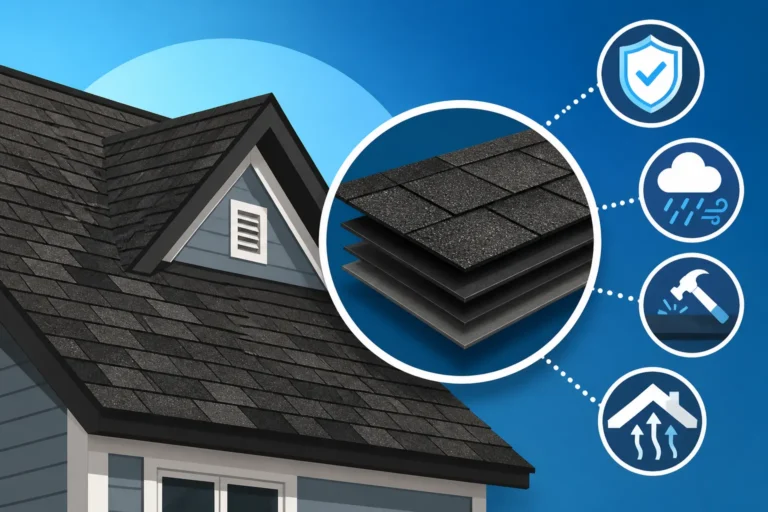
At the very heart of most modern asphalt shingles lies an incredibly important component: the fiberglass mat. This isn't just any old mat; it's a precisely engineered, non-combustible core that provides both structural integrity and, critically, inherent fire resistance. Historically, many shingles used organic felt mats, which were made from wood pulp or recycled paper. While these served their purpose, they were, as you might guess, combustible and could contribute to fire spread if exposed.
The widespread adoption of fiberglass mats revolutionized shingle fire performance. Fiberglass itself does not burn, rot, or significantly degrade under heat, making it an ideal foundational material. When a flame or intense heat strikes a shingle, the fiberglass mat acts as a formidable barrier, drastically slowing down or even preventing fire from penetrating the shingle or spreading across its surface. This inert core is one of the primary reasons why many contemporary architectural and designer shingles easily achieve those coveted Class A fire ratings. It’s the hidden strength that underpins the entire shingle's ability to withstand flames and protect your home from the inside out.
Mineral Granule Coatings and Fire-Retardant Additives
Beyond the structural fiberglass mat, the visible surface of an asphalt shingle also plays a critical role in its fire performance. Those ceramic-coated mineral granules that give your roof its color and protect it from harmful UV rays are actually major contributors to its fire resistance. These granules, typically made from crushed, inert rock, are inherently non-combustible. They form a dense, protective top layer that effectively deflects heat, shields the underlying asphalt from direct flame contact, and helps prevent the propagation of fire across the roof surface. Generally, the thicker and more densely packed this granule layer, the better the shingle performs against fire.
In addition to the granules, many leading manufacturers, including brands like Owens Corning and CertainTeed, incorporate specialized fire-retardant additives directly into the asphalt coating itself. These additives often consist of minerals such as magnesium hydroxide or aluminum trihydrate. When exposed to extreme heat, these chemicals can react by releasing water vapor, forming a protective char layer, or creating a non-combustible residue that further inhibits combustion and slows down the spread of flames. This strategic combination of a non-combustible fiberglass base, a fire-resistant mineral granule surface, and integrated chemical additives is what elevates modern asphalt shingles into effective fire defense systems, far surpassing the capabilities of older roofing materials.
How Different Shingle Types Perform
It’s important to understand that not all asphalt shingles are created equal when it comes to fire resistance. Just like there's a difference in durability, there's a difference in fire performance. Generally, you'll find that heavier, multi-layered, and more robust architectural or designer shingles tend to offer superior fire ratings compared to lighter, more basic 3-tab shingles. This enhanced performance is largely due to the increased material thickness, more sophisticated fiberglass matting, and often, a more generous and advanced application of granules and fire-retardant asphalt.
A standard 3-tab shingle, while still meeting minimum fire safety standards (often Class C or B), usually has a thinner profile and less granule density. It provides basic fire protection but might not withstand the most severe external fire exposures as effectively as a premium architectural shingle. These higher-end shingles, such as those in the GAF Timberline series or some of the more advanced Atlas Pinnacle Pristine offerings, are specifically engineered with fire resistance as a primary performance metric, and almost always achieve a Class A rating. When you're comparing 3-Tab vs Architectural Shingle Cost Compared, remember that part of that price difference directly correlates to superior fire protection, alongside other benefits like wind resistance and aesthetics. It's a critical factor to weigh when investing in your home's safety.
The Holistic View: Beyond Just Shingles
While a shingle's fire rating is undoubtedly a critical piece of the puzzle, it's a mistake to think it’s the only piece. Your roof is a complex system, and its overall fire resilience is the sum of all its interconnected parts. Neglecting one component, no matter how small, can unfortunately compromise the entire system's ability to protect your home. It’s a bit like building a fortress but forgetting to reinforce the gates.
Roof Decking Material Matters More Than You Think
The very foundation of your roof – the decking – plays a surprisingly significant role in its fire performance, especially when considering how flames or embers might try to penetrate from the outside into your home's interior. Most residential roofs are constructed using either plywood or Oriented Strand Board (OSB) for their decking. Both are wood-based products, meaning they are inherently combustible. However, their thickness, material quality, and overall integrity are crucial factors in delaying or preventing fire penetration.
If the shingles somehow fail to prevent fire penetration, perhaps due to extreme heat or a particularly intense burning brand, the roof decking becomes the final barrier before flames enter your attic space. A thicker, more robust plywood (e.g., 5/8-inch) will offer more resistance and precious time compared to a thinner OSB (e.g., 7/16-inch). Critically, the decking must be solid and uncompromised. Any areas of rot, water damage, or sections that are improperly secured can create weak points where fire can more easily breach. During a roof replacement, if your contractor recommends Roof Decking Replacement Cost due to any damage, it's not just about structural stability but also about maintaining this critical fire barrier for your entire home. Always ensure your contractor inspects the decking thoroughly and replaces any compromised sections.
Underlayment and Specialized Fire Barriers
Beneath your asphalt shingles and directly on top of your roof decking lies another unsung hero in the fight against fire: the underlayment. Historically, this layer was often composed of asphalt-saturated felt paper. While felt offers some basic moisture resistance, its fire resistance is minimal. However, modern roofing has seen a significant shift towards high-performance synthetic underlayments, and these can be game-changers for fire protection. Many synthetic options are manufactured with fire-retardant treatments, making them far more resistant to ignition and flame spread than traditional felt. Some advanced synthetic underlayments are even engineered to perform under extreme heat, sometimes creating a temporary char barrier that further slows fire penetration.
In areas with exceptionally high wildfire risk, or for homeowners aiming for the absolute highest level of protection, specialized fire barriers can be incorporated into the roof system. These might include installing fire-rated gypsum board (similar to fire-rated drywall) directly over the roof deck before the underlayment and shingles are applied. Other cutting-edge options include intumescent coatings, which are materials that expand significantly when exposed to heat, forming a thick, protective char layer that insulates the underlying structure. While these additions contribute to the overall How Much Does an Asphalt Shingle Roof Cost, they can provide an exceptional increase in fire protection, offering a vital line of defense in regions prone to intense heat and ember attacks.
Overall Home Design and Defensible Space
Ultimately, no single roof component, no matter how fire-resistant, can provide absolute protection against a truly raging inferno, particularly in the face of widespread wildfires. This is where the concept of "defensible space" becomes paramount. Defensible space is a holistic strategy that views your entire property as an integrated fire defense system. It’s about creating zones around your home where combustible materials are minimized or eliminated, reducing the likelihood of ignition and slowing the fire's approach.
For example, maintaining a clear perimeter of at least 30 feet around your house, diligently removing dry leaves and debris from your gutters and roof surface, trimming any overhanging tree branches, and selecting fire-resistant landscaping can dramatically reduce the chances of a fire reaching your roof in the first place. Even the design elements of your home matter – features like enclosed eaves and soffits prevent wind-borne embers from directly entering your attic. Furthermore, the type of siding you have (e.g., fiber cement versus wood) and the materials used for decks and fences also influence your property's overall fire resistance. A Class A rated roof, when combined with excellent defensible space practices and fire-resistant exterior materials, creates a truly resilient home, offering the best possible protection against external fire threats. It’s an investment that demands attention to every detail of your property's exterior.
Practical Considerations for Homeowners
Choosing a new roof is a significant decision that goes far beyond just aesthetics. For homeowners, understanding fire ratings means making informed choices for your home's long-term safety, durability, and even your wallet. When it comes to fire resistance, there are several practical steps and considerations you should take to ensure you're making the best investment.
Assessing Your Home's Risk Factors
Before you even start looking at shingle colors or styles, take a moment to realistically assess your home's unique fire risk profile. Where is your home located? Are you in a densely populated suburban neighborhood where a fire could easily spread from a neighbor's property, or are you in a more rural, heavily wooded area known for high wildfire risk, such as parts of California, Texas, or Colorado? If you're in a high-wind zone, remember to consider High-Wind Nailing Cost Premium as well as fire ratings, because wind-lifted shingles can expose combustible roof decking to fire hazards.
Consider the vegetation surrounding your home. Are there tall, mature trees close to the structure that could drop embers or catch fire themselves? Do you have older, potentially combustible siding, or an attached wooden deck that could act as a fuel source? Understanding these specific environmental and structural factors is crucial. This initial risk assessment will help you determine what level of fire resistance is truly necessary for your peace of mind and home's safety, rather than simply defaulting to the minimum local code requirements.
Balancing Cost, Aesthetics, and Protection
It's no secret that a roof replacement is a substantial investment, and for most homeowners, the budget is a primary concern. You might be tempted to gravitate towards the lowest bid, but when it comes to fire resistance, that can sometimes be a false economy. Class A rated shingles, particularly those with architectural or designer profiles, generally come at a higher price point than basic Class C or B 3-tab shingles. When you delve into the Asphalt Roof Replacement Cost: Complete Breakdown, the shingle material itself is often one of the largest variables.
However, it's essential to consider the long-term value. A Class A roof offers superior protection, potentially reducing risks to your family and property. This enhanced safety might also qualify you for reduced homeowners insurance premiums, especially in areas identified as high-risk for fires. Furthermore, today's fire-resistant shingles come in an enormous array of colors, textures, and styles, meaning you absolutely do not have to sacrifice curb appeal for critical safety features. The goal is to find that optimal balance where your aesthetic preferences align with your budget and, most importantly, your home's safety and resilience needs. A reputable contractor should be able to help you navigate these choices, explaining the trade-offs and benefits clearly.
Consulting with Professionals for Guidance
Navigating the intricacies of roofing choices, fire ratings, local building codes, and manufacturer specifications can feel incredibly overwhelming for any homeowner. This is precisely where the expertise of a trusted, experienced roofing professional becomes invaluable. They possess the knowledge to accurately assess your existing roof, discuss your home's specific fire risks based on its location and construction, and recommend the most appropriate shingle options that not only meet or exceed local building codes but also address your personal safety concerns.
Platforms like Modernize can be a fantastic resource, connecting you with reputable, local roofing contractors who are well-versed in the nuances of fire ratings and regional requirements. These professionals can thoroughly explain the benefits and features of specific products, whether you're looking at GAF Timberline shingles, Owens Corning Duration, or CertainTeed Landmark. They can also walk you through the manufacturer warranties, which often have specific installation requirements to maintain their validity. Don't hesitate to ask a comprehensive list of Questions to Ask a Roofing Contractor Before Hiring. A top-tier contractor won't just sell you a roof; they'll educate you and empower you to make the most informed decision for your home's long-term safety and longevity, ensuring that all components, from underlayment to ventilation, contribute to its overall fire resilience.
Local Regulations and Insurance Implications
While universal standards like UL 790 provide a baseline, fire safety requirements for roofs can differ dramatically based on your specific geographical location. Failing to understand these local mandates or how fire ratings impact your insurance can lead to frustrating project delays, costly mistakes, or even missed opportunities for significant savings.
Understanding Building Code Requirements by Location
This is where understanding local specifics truly matters! Building codes are put in place by municipalities and states to ensure minimum safety standards for construction, and fire ratings for roofing are a paramount component. In regions that are prone to wildfires, such as large parts of California, Nevada, Florida, or certain districts in Texas and Colorado, local authorities have adopted very stringent Wildland-Urban Interface (WUI) codes. These codes often legally mandate Class A rated roofing materials for new construction and roof replacements, irrespective of whether you're building a brand new home or just replacing an older roof. For example, in many communities within the Sierra Nevada foothills, a Class A roof is not merely a suggestion; it's a legal requirement designed to protect homes from widespread ember ignition during wildfires.
Conversely, in areas with lower natural disaster risks, the minimum building code might permit the use of Class B or even Class C rated materials. However, even if your local code allows a lower rating, proactively choosing a higher-rated, Class A roof is almost always a wise decision for enhanced protection and long-term peace of mind. Always verify the specific requirements by checking with your local building department directly or, more practically, by having your chosen roofing contractor clarify the current Roofing Building Codes: What to Know for your specific municipality. A failure to comply with these codes, or even neglecting to pull the correct permit, could lead to frustrating fines, project stop-work orders, or even the expensive necessity of redoing work.
Potential Insurance Premium Benefits
Here’s a piece of positive news that many homeowners overlook: investing in a higher fire-rated roof could potentially save you money on your homeowners insurance premiums! Insurance companies are fundamentally in the business of assessing and mitigating risk. A roof that provides superior protection against fire, especially in identified high-risk zones, translates directly to a lower perceived risk for the insurer.
Many insurance carriers actively offer discounts for homes that have installed Class A rated roofing materials. These discounts can be quite substantial, particularly in states with a high incidence of wildfires or in regions where a significant number of older, less fire-resistant homes exist. It genuinely becomes a win-win situation: you enhance your home's safety and resilience, and you potentially reduce your annual insurance costs over the lifespan of your roof. It is highly recommended to contact your insurance provider before embarking on a roof replacement project. Ask them about any potential discounts or incentives for installing a Class A roof or other fire-resistant features. They can typically provide a clear breakdown of how such an upgrade could impact your annual premiums, helping you factor these potential savings into your overall planning for How to Budget for a New Roof.
Wildfire Zones and Specific Mandates
For those living in, or even near, a wildfire-prone area, the reality brings unique challenges and significant responsibilities as a homeowner. In these designated "Wildland-Urban Interface" (WUI) zones, simply having a Class A rated shingle might not be enough to satisfy all local requirements; there can be additional, very specific mandates designed to create a more resilient and fire-hardened home. For example, some jurisdictions might require not only Class A roofing but also mandate the use of non-combustible gutters, specialized attic ventilation screens designed to prevent ember entry, or even particular types of underlayment or eave construction.
Communities that have experienced devastating wildfires, such as parts of Santa Rosa, California, have subsequently implemented some of the strictest building codes in the nation. These codes often emphasize that virtually every component of a home's exterior must contribute to its overall wildfire resistance. These specific mandates are often aimed at preventing tiny, wind-borne embers from finding any pathway into the attic or igniting any adjacent, unprotected materials. If your home is located within a WUI zone, your roofing contractor must be intimately familiar with these highly nuanced local requirements. They should be able to guide you not only on selecting the correct shingle but also on ensuring that your entire roof system and the immediate surrounding property fully comply with all applicable local fire safety ordinances. It is a critical investment in the long-term survival of your home and contributes to the collective safety of your community.
Ensuring Quality Installation for Optimal Fire Protection
Even the most technologically advanced, Class A fire-rated shingles won't perform to their maximum potential if they aren't installed correctly. The quality of workmanship is undeniably just as crucial as the quality of the materials themselves when it comes to your roof's ability to resist fire. An improperly installed roof can create vulnerabilities that negate the very protection you've paid for.
The Role of Manufacturer-Certified Installers
Many of the leading shingle manufacturers in the industry, such as GAF, Owens Corning, and CertainTeed, have established rigorous certification programs for roofing contractors. These certifications aren't just for show; they signify that a contractor has undergone specialized training directly from the manufacturer on the precise, brand-specific installation techniques required for their products. For example, GAF boasts its "Master Elite Contractors," while Owens Corning recognizes its "Platinum Preferred Contractors," and CertainTeed certifies "SELECT ShingleMasters."
Why is this level of certification so important for fire protection? A manufacturer-certified installer has been taught the exact nailing patterns, shingle alignment requirements, proper flashing details, and correct underlayment application necessary for the shingles to achieve their advertised performance characteristics—including, critically, their fire resistance. An improperly nailed shingle, for instance, could lift in strong winds, exposing the more combustible roof deck to flying embers. Furthermore, many of the best and most comprehensive manufacturer warranties, which offer robust protection for your investment, are often only valid if the roof is installed by a certified contractor. Choosing a certified installer ensures that the installation adheres to the highest industry standards, thereby maximizing the fire protection your new roof is designed to provide.
Adhering to Manufacturer Specifications and Building Codes
A truly responsible and professional roofing contractor doesn't just "wing it" or cut corners; they meticulously follow a detailed plan that integrates both the shingle manufacturer's specific installation instructions and all applicable local building codes. These instructions are incredibly precise, covering everything from the exact type and number of fasteners to use, to the proper overlap of underlayment, to the critical sealing of vulnerable areas like valleys and eaves. Ignoring these detailed specifications can have severe consequences, not only potentially voiding your How Shingle Warranties Work but, more importantly, severely compromising the roof's intended performance against fire.
For example, if the manufacturer specifies a particular type of starter shingle or mandates the installation of ice and water shield in specific areas, these components are integral to the overall system's integrity and fire resistance. Similarly, local building codes might dictate specific ventilation requirements that help prevent dangerous heat buildup in the attic, which can be a significant factor in fire spread. A top-tier contractor will possess a deep and current understanding of both manufacturer guidelines and local regulations. They will ensure that every single layer and every individual shingle is installed correctly, allowing your roof to deliver its full, intended fire protection benefits for years to come.
The Importance of Regular Maintenance and Inspections
Even after you've invested in a top-tier, Class A rated roof and had it expertly installed by a certified contractor, ongoing maintenance remains absolutely crucial to preserving its fire resistance over time. A seemingly minor issue like accumulated debris can significantly compromise your roof's protective qualities. For instance, piles of dry leaves, pine needles, or small branches in gutters or on the roof surface can become highly combustible fuel. If wind-borne embers land on such debris, it provides a perfect ignition point, regardless of how fire-resistant your underlying shingles are.
Regular roof inspections, ideally performed once a year or immediately after any significant storm, are vital for identifying and proactively addressing potential vulnerabilities. A professional inspector can spot damaged or missing shingles, detect deteriorated flashing around chimneys or vents, or identify issues with ventilation that could compromise your roof's ability to resist fire. They can also advise on necessary repairs or routine cleaning. Being proactive about maintenance not only extends the How Long Does an Asphalt Roof Last but also ensures that its critical fire protection capabilities remain fully intact throughout its entire lifespan. Think of regular maintenance and inspections as routine check-ups for your home's most important first line of defense against external fire threats.
| Fire Rating Class | Severity of External Fire Exposure | Performance Against Flame Spread on Surface | Performance Against Burning Brands | Common Shingle Types Often Included | Key Benefit for Homeowners |
|---|---|---|---|---|---|
| Class A | Severe | Highly resistant; Minimal spread | Withstands large brands; No penetration | Architectural, Designer, Impact-Resistant | Highest level of fire protection; Often mandated in wildfire-prone areas for superior safety |
| Class B | Moderate | Moderately resistant; Limited spread | Withstands medium brands; Limited penetration | Standard Architectural | Good balance of protection and cost; Meets many basic building codes for general protection |
| Class C | Light | Limited resistance; Some spread | Withstands small brands; Some penetration | 3-Tab, Older Standard | Basic fire protection; May be acceptable in very low-risk areas, but higher is always safer |
Disclaimer
The information provided in this article is intended for general informational purposes only and does not constitute professional advice. While we strive to offer accurate and up-to-date content, roofing practices, building codes, and insurance policies can vary significantly by location and change over time. Always consult with a qualified, licensed, and insured roofing professional and your local building department for advice specific to your situation before making any decisions related to your roof. Do not attempt complex roof inspections or repairs yourself without proper training and safety equipment.