How Much Does It Cost to Fix Wind Damage
There's nothing quite like walking outside after a particularly nasty storm and seeing shingles scattered across your yard, or worse, noticing a bare spot on your roof where shingles used to be. The gut-wrenching feeling of knowing your home's first line of defense has been compromised, coupled with the immediate worry about how much it's going to cost to fix, is something no homeowner wants to experience. This guide is here to walk you through the various factors that influence the cost of repairing wind damage to your asphalt roof, helping you understand what to expect and how to navigate the process with confidence.
Understanding Wind Damage and Why It Matters
Wind damage isn't always as obvious as a missing shingle lying in your flowerbed. Sometimes, the most insidious damage is hidden, slowly allowing water intrusion and compromising your roof's integrity over time. Understanding the different ways wind can harm your roof is the first step in assessing potential repair costs and preventing further problems.
Different Types of Wind Damage You Might See
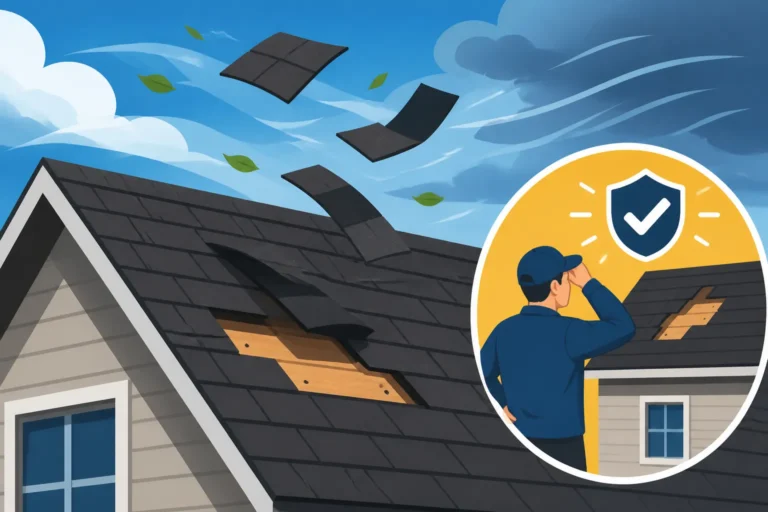
When strong winds whip across your roof, they don't just pick up loose items; they create uplift forces that can wreak havoc on your shingles. The most common type of damage is, of course, missing shingles. These are shingles that have been completely torn off the roof and blown away. You might find them in your yard, your neighbor's yard, or not at all. The concern here isn't just the missing material, but the exposed underlayment and decking beneath, which are now vulnerable to rain and sunlight.
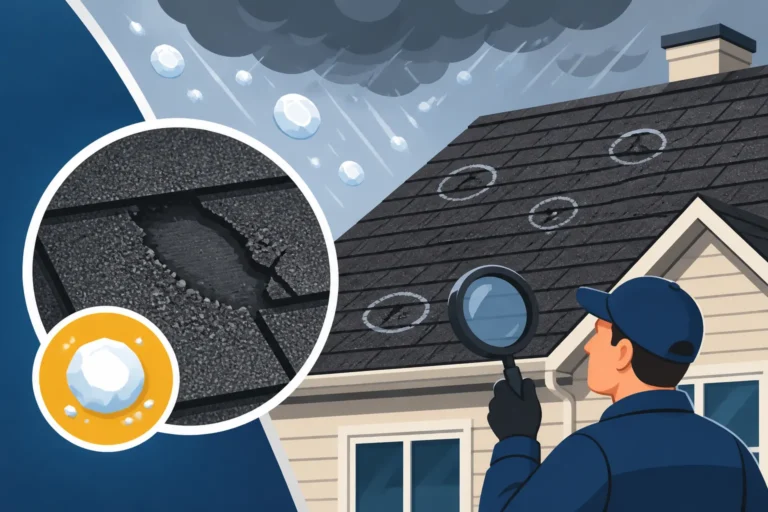
Beyond outright missing shingles, wind can also cause what's known as "lifted" or "creased" shingles. This happens when strong gusts lift the shingle, breaking its sealant bond with the shingle below. Even if the shingle settles back down, that bond might be permanently compromised, making it susceptible to future wind events or even allowing water to seep underneath. A creased shingle is one that has been bent or folded by the wind, often along the nail line, creating a weak point that can eventually crack or break off entirely. Sometimes, you'll see "bruising" or "cracks" in the shingle itself, a sign that the underlying mat has been stressed. These subtle damages are often harder to spot from the ground, which is why a professional inspection is so crucial after a severe weather event. You can learn more about how to identify specific issues by checking out our guide on Signs of Roof Wind Damage.
Immediate Versus Hidden Damage Considerations
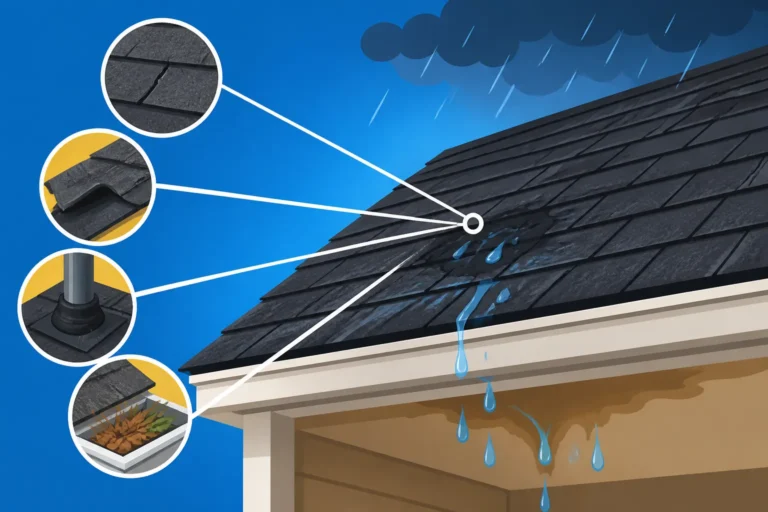
The missing shingle is your immediate, glaring problem. It demands attention because it’s a direct pathway for water to enter your home. But the hidden damage, the lifted seals and subtle creases, can be a silent killer for your roof. Imagine a shingle that has been lifted and resealed by the sun's heat. From the ground, it looks fine. However, that broken seal means it's no longer performing its job of shedding water effectively, and it's less resistant to the next gust of wind. Over time, repeated lifting can lead to granular loss, exposing the asphalt layer to UV rays and accelerating deterioration.
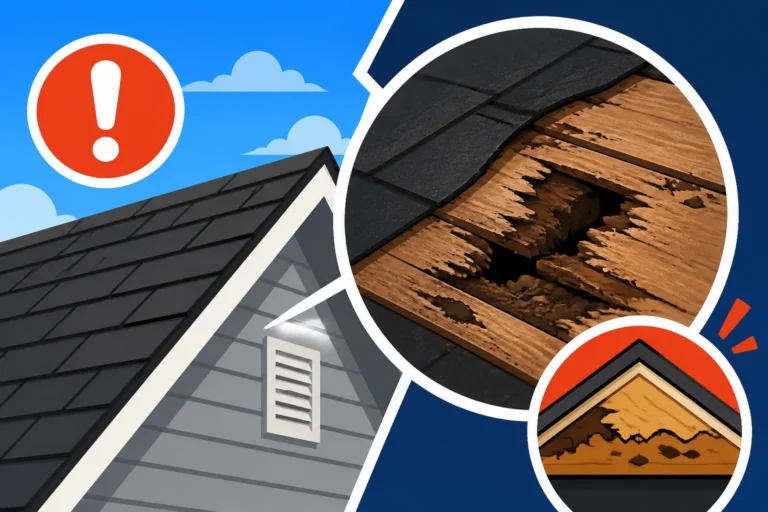
Hidden damage can also extend beyond the shingles themselves. Strong winds can exert significant force on the roof decking and even compromise the fasteners holding the roof structure together. If water penetrates through a lifted shingle, it can silently rot the roof decking, or even worse, leak into your attic, causing insulation damage, mold growth, and structural issues. What starts as a small shingle repair can quickly escalate into a much larger and more expensive project if these hidden issues aren't addressed promptly. This is why when assessing costs, it’s not just about the visible damage, but the potential secondary damage that may have occurred.
Factors Influencing Wind Damage Repair Costs
When you’re staring at wind-damaged shingles, your mind instantly jumps to the repair bill. Unfortunately, there isn't one flat fee for fixing wind damage. The cost is a dynamic sum influenced by several critical factors, from the extent of the damage to where you live.
Severity and Extent of Damage
This is probably the most obvious factor. A single missing shingle is a relatively quick and inexpensive fix. A roofer can typically replace it within an hour or two, assuming they have a matching shingle. However, if a substantial section of your roof has been stripped bare, or if multiple areas are affected, the scope of work increases dramatically. For instance, replacing five individual shingles scattered across different parts of the roof might take more time and specialized effort than replacing five shingles in one contiguous section.
If the wind damage is severe enough to have exposed the roof decking for an extended period, you might also be looking at replacing sections of the underlayment or even the plywood decking itself due to water damage. This significantly drives up the cost, as these are additional materials and labor steps. Sometimes, the damage is so widespread that a repair might not be the most cost-effective solution, leading to a discussion about whether to consider a full roof replacement. You can explore this further in our article on Missing Shingles: Repair or Replace.
Type of Shingles and Roof Complexity
The type of asphalt shingles you have plays a big role in repair costs. Standard 3-tab shingles are generally less expensive to purchase and easier to replace than architectural (also known as dimensional) or luxury shingles. Architectural shingles, with their thicker, multi-layered design, and designer shingles, with their unique shapes and colors, command a higher price per bundle. This means the replacement material will be more costly. Finding an exact match for older or less common designer shingles can also be challenging and may increase labor time if a roofer needs to source specific products.
Beyond the shingle type, the complexity of your roof's structure also impacts repair costs. A simple gable roof with an easy pitch is far less labor-intensive to work on than a multi-level roof with steep pitches, numerous valleys, dormers, and skylights. Each of these features adds complexity, requires more intricate cutting and flashing work, and increases the time roofers spend on ladders or safety equipment, all of which contribute to higher labor costs. For example, replacing shingles on a steep-pitch roof requires extra safety measures and slower work, often incurring a Steep Roof Cost Premium.
Labor Rates and Regional Differences
The cost of labor is a significant component of any roofing repair, and it varies considerably based on your geographic location. A roofer's hourly rate in a major metropolitan area like Los Angeles or New York will likely be higher than in a rural town in the Midwest. This is due to factors such as the local cost of living, demand for skilled labor, and even local regulations or licensing fees that contractors must absorb.
For example, homeowners in Florida or Texas, which are frequently hit by hurricanes and severe thunderstorms, might see higher repair costs due to increased demand for roofers after a widespread storm. Conversely, in regions with less extreme weather, labor costs might be more stable. It’s always a good idea to check with local contractors and get multiple quotes to understand the prevailing labor rates in your specific area. Services like Modernize can help connect you with local professionals who understand regional pricing and code requirements.
Additional Repairs and Materials Beyond Shingles
Wind damage rarely stops at just the shingles. When a shingle is ripped off, it often takes some of the nails with it, leaving holes in the underlayment. If the underlayment is compromised, it needs to be repaired or replaced to maintain a watertight seal. This might involve patching with new synthetic or felt underlayment, or even applying ice and water shield in vulnerable areas. The cost of synthetic vs felt underlayment can vary, impacting the overall bill.
Beyond the underlayment, strong winds can also damage flashing around chimneys, vents, and skylights. Flashing, typically made of metal, is critical for preventing leaks in these tricky areas. If it's bent, torn, or dislodged, it needs immediate attention. Similarly, drip edge, which protects the roof's edges, can be ripped off or bent, requiring replacement. Each of these elements adds to the total material and labor cost of the repair. A comprehensive Roof Inspection: What They Check will uncover these additional issues.
Average Costs to Repair Wind Damage
Now that we've covered the factors, let's talk numbers. While exact costs can vary, we can provide some average ranges for common wind damage repairs. Remember, these are estimates, and getting a detailed quote from a qualified contractor is always the best approach.
Cost by Damage Type: From Minor to Extensive
The cost to fix wind damage can swing wildly depending on the severity. Here's a general breakdown:
-
A Few Missing or Damaged Shingles (1-10 shingles): This is typically the least expensive repair. If only a handful of shingles are affected in a localized area, a roofer might charge a minimum service fee, which usually covers their travel and the first hour or two of labor, plus the cost of the replacement shingles. You might expect to pay anywhere from $200 to $600 for this type of repair. This often includes minor shingle replacement and resealing any lifted but still viable shingles. For specific figures, you might be interested in How Much Does It Cost to Fix Missing Shingles.
-
Small Section of Damaged Shingles (10-50 sq ft): If a larger but still localized section of your roof has sustained damage, involving several bundles of shingles and potentially some underlayment repair, the cost will increase. This could involve replacing a section around a chimney, vent, or along a ridge. Costs for this range from $500 to $1,500. This accounts for more materials, more labor, and potentially disposal of the damaged shingles.
-
Widespread or Extensive Damage (50+ sq ft or multiple areas): When wind damage is extensive, affecting large portions of the roof or multiple separate areas, the repair costs can climb significantly. This might involve replacing entire slopes or large sections, including underlayment and potentially some decking. At this point, you're looking at costs that could range from $1,500 to $5,000 or more. In some cases, if more than 25-30% of the roof is damaged, or if the roof is already old, a full roof replacement might be a more sensible and cost-effective long-term solution.
Here's a simplified table illustrating potential repair costs:
| Type of Wind Damage | Estimated Repair Cost Range | Key Factors |
|---|---|---|
| 1-10 Missing/Damaged Shingles | $200 – $600 | Labor minimum, few shingles, quick fix |
| Small Section (10-50 sq ft) | $500 – $1,500 | More shingles, minor underlayment, localized labor |
| Extensive (50+ sq ft / Widespread) | $1,500 – $5,000+ | Significant material & labor, potential decking issues |
| Roof Replacement (Full) | $8,000 – $20,000+ | Severe, widespread damage, comprehensive overhaul |
Insurance Considerations
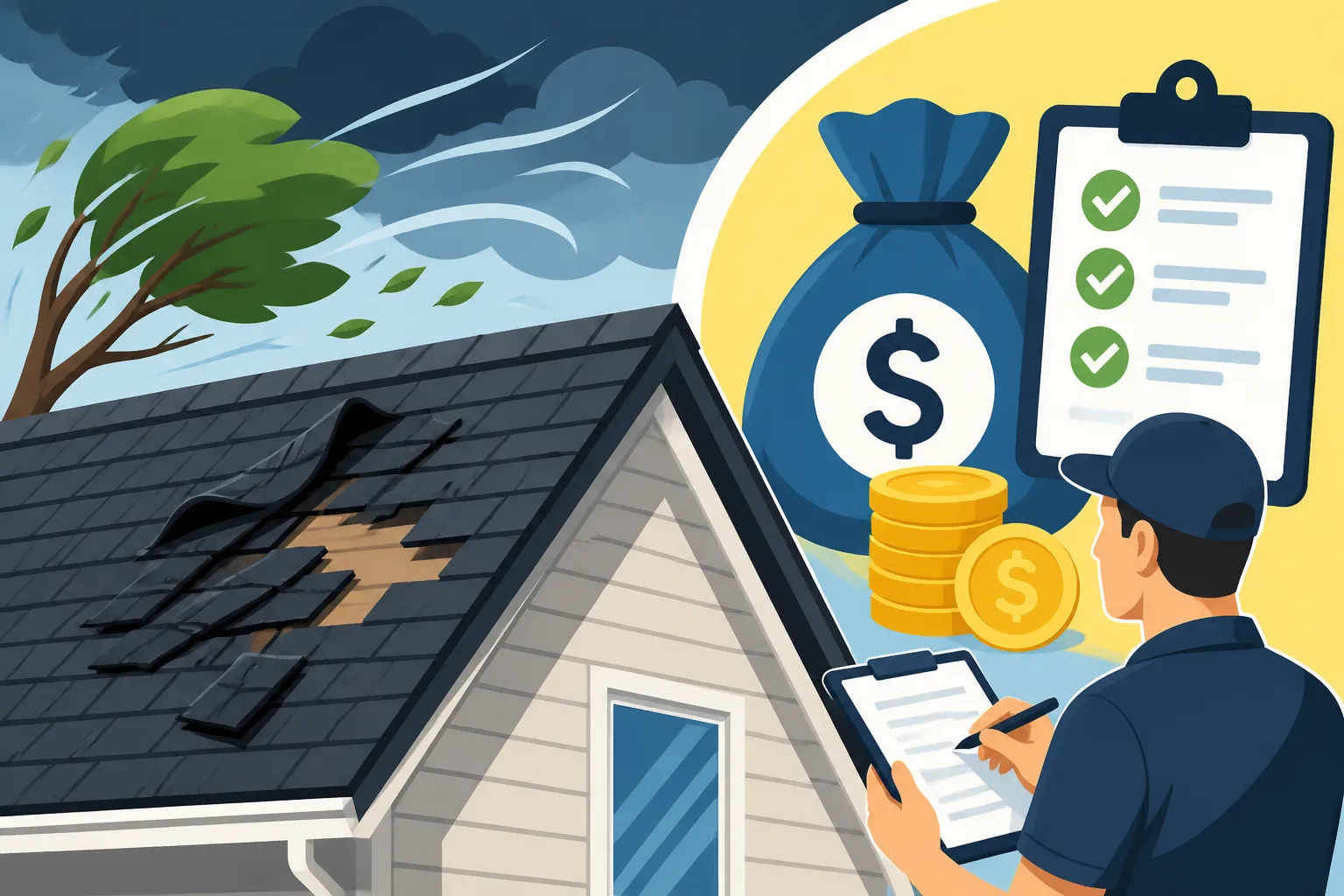
Wind damage is one of the most common reasons homeowners file insurance claims. Most standard homeowners insurance policies include coverage for sudden and accidental damage caused by windstorms. However, understanding your policy is crucial.
First, you'll need to consider your deductible. This is the amount you're responsible for paying out-of-pocket before your insurance coverage kicks in. For wind damage, some policies have a separate wind/hail deductible, which might be a percentage of your home's insured value (e.g., 1% or 2%) rather than a flat dollar amount. For example, a 1% deductible on a $300,000 home means you'd pay the first $3,000. If your repair cost is less than your deductible, it often doesn't make sense to file a claim.
Second, understand whether your policy offers "Actual Cash Value" (ACV) or "Replacement Cost Value" (RCV) coverage. ACV policies will pay for the depreciated value of your damaged roof, meaning they subtract for wear and tear based on the roof's age. RCV policies, on the other hand, cover the cost of replacing the damaged property with new materials of similar quality, without deduction for depreciation. This is a huge difference in payout. Many policies pay ACV initially and then the depreciation amount once repairs are completed and invoices are submitted. If you're wondering, "Does Insurance Cover Roof Replacement?", it largely depends on these factors and the specific terms of your policy.
Always document the damage thoroughly with photos and videos before any repairs begin, and contact your insurance provider as soon as possible after a storm.
The Importance of Professional Assessment
After a storm, it's tempting to jump on a ladder yourself to inspect the roof, but this can be dangerous and you might miss critical issues. Even if you only see a few missing shingles, a professional roofing contractor has the training and experience to perform a thorough, safe inspection. They know what to look for—not just the obvious missing shingles, but also lifted seals, creased tabs, granule loss, damaged flashing, and potential underlying decking issues.
A reputable contractor will provide a detailed assessment, often with photos, explaining the full extent of the damage. This assessment is invaluable for getting accurate repair estimates and, if necessary, for filing an insurance claim. Many professional roofers will even help you navigate the insurance claims process. Getting a truly objective assessment helps ensure you’re not overpaying for minor repairs, nor are you overlooking severe damage that could lead to costly problems down the road.
Navigating the Repair Process and Finding a Reliable Contractor
Dealing with wind damage is stressful enough without the added headache of trying to find a good roofer or understand complex estimates. Taking a structured approach can save you time, money, and a lot of frustration.
Getting Accurate Estimates
The old adage "get three quotes" holds especially true for roofing repairs. After a storm, many "storm chasers" will descend on affected neighborhoods, offering quick fixes. While speed can be appealing, thoroughness and trustworthiness are paramount. When collecting estimates, ensure each contractor inspects the roof thoroughly and provides a detailed breakdown of costs.
An accurate estimate should itemize:
- Material Costs: The type and quantity of shingles, underlayment, flashing, nails, and any other components.
- Labor Costs: How many hours they anticipate the job will take, or a flat fee for the scope of work.
- Permit Fees: Some repairs, especially those involving decking or a large number of shingles, may require a permit from your local municipality.
- Disposal Fees: The cost to remove and dispose of damaged materials.
- Contingency for unforeseen issues: While this might not be explicitly broken out, a reputable contractor will often factor in a small buffer for unexpected discoveries, or clearly communicate how they handle change orders.
Don't just go for the cheapest bid. A significantly lower price can often signal cut corners, inferior materials, or a lack of proper insurance. Take your time to compare the estimates, asking questions about anything you don't understand. Our guide on How to Get Roofing Quotes and Compare Them can offer more in-depth advice on this crucial step.
What to Look For in a Roofing Contractor
Choosing the right roofing contractor is perhaps the most critical step in ensuring a successful repair. Here’s what you should prioritize:
- Licensing and Insurance: Always verify that the contractor is properly licensed in your state or locality and carries both general liability and worker's compensation insurance. This protects you from financial responsibility if a worker gets injured on your property or if property damage occurs during the repair. You can learn more about why Licensed and Insured Roofers: Why It Matters is so important.
- Experience and Reputation: Look for contractors with a proven track record of repairing wind damage specifically. Check online reviews on platforms like Google, Yelp, and the Better Business Bureau. Ask for references and actually call them.
- Manufacturer Certifications: Many top shingle manufacturers, like GAF, Owens Corning, and CertainTeed, offer certifications to contractors who meet their high standards for installation and business practices. These certifications often allow the contractor to offer enhanced manufacturer warranties, which can be a huge benefit. A GAF Master Elite Contractor, for example, has demonstrated a high level of expertise.
- Clear Communication and Contract: A good contractor will communicate clearly and promptly. They should provide a written contract that details the scope of work, materials, costs, payment schedule, and warranty information.
- Local Presence: While "storm chasers" can be enticing with their immediate availability, a local contractor who has an established business in your community is generally a safer bet. They have a reputation to uphold and are more likely to be around if warranty issues arise later. Services like Modernize can help you find local, vetted contractors who are ready to provide quotes.
Timelines and Expectations
Once you've chosen a contractor and signed a contract, understanding the timeline is key. For minor wind damage (a few shingles), the repair itself might only take a few hours to a day. However, getting on the schedule can take longer, especially if there has been a widespread storm and roofers are in high demand.
For more extensive repairs, the actual work might take several days, depending on the size of the damaged area, weather conditions, and the complexity of your roof. Your contractor should provide an estimated start and completion date. Be realistic about these timelines; unforeseen weather delays or material procurement issues can sometimes push schedules back. Good communication from your contractor is essential to keep you informed.
Before the work begins, ask your contractor about how they plan to protect your landscaping, property, and cleanup. A professional team will take measures to minimize disruption and leave your property clean and clear of debris once the job is done.
Disclaimer
Please remember that the information provided in this article is intended for general guidance and informational purposes only. Roofing costs and requirements can vary significantly based on your specific location, the extent of the damage, material choices, and local labor rates. Always consult with a qualified, licensed, and insured roofing professional for a thorough inspection and accurate estimate tailored to your individual situation. Do not attempt roof repairs yourself unless you have the appropriate training, experience, and safety equipment.