How a Ridge Vent Works
One of the most common headaches homeowners face, especially as seasons change, is trying to figure out why their attic feels like an oven in summer or a freezer in winter, leading to sky-high energy bills and even roof damage. This guide is here to shed light on a crucial but often misunderstood part of your roofing system: the ridge vent, explaining exactly how it works to create a healthier, more energy-efficient home.
Understanding the Basics of Ridge Vent Technology
It's easy to look at a roof and think it's just shingles, but there's so much more working together to protect your home. A ridge vent is one of those unsung heroes, a continuous vent system installed along the peak (or ridge) of your roof. Unlike those clunky box vents or turbine vents that sometimes stick out like a sore thumb, a good ridge vent is typically low-profile, often blending right in with your shingles, making it almost invisible from the ground. Its job is simple yet profound: to allow hot, stale air to escape from your attic.
What Makes a Ridge Vent Different?
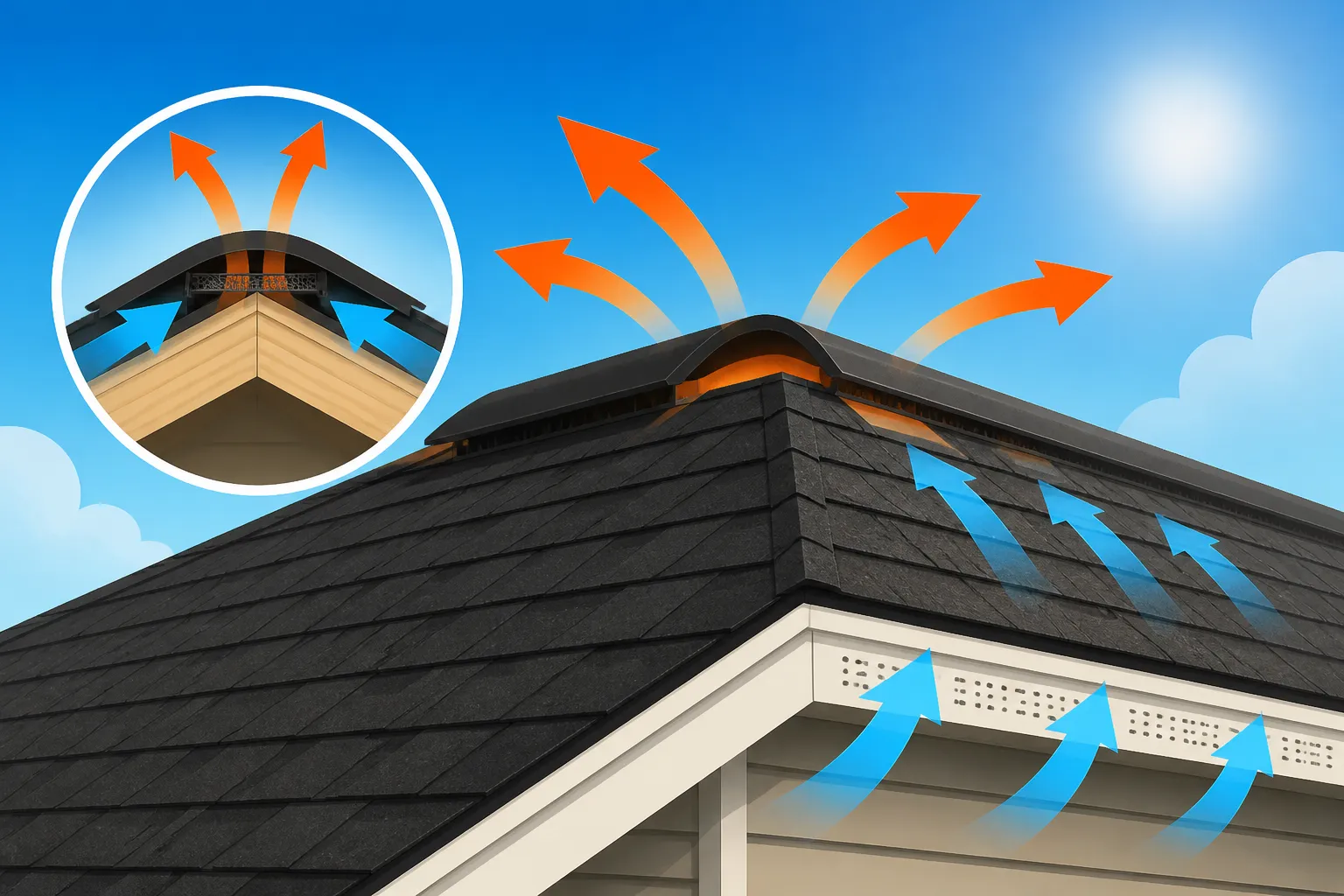
You might wonder, "Aren't all vents the same?" Not quite! Ridge vents operate on a principle called the "stack effect" or "convection." Think of it like this: hot air rises. In your attic, heat builds up, especially on a sunny day. This hot air naturally wants to escape. A ridge vent provides a continuous opening along the highest point of your roof, giving that rising hot air a clear path out. This isn't just about comfort; it's about prolonging the life of your roof and making your home more energy-efficient. Many people understand the basics of How Roof Ventilation Works, but the continuous nature of a ridge vent really sets it apart.
The Problem with Poor Attic Ventilation
Without proper attic ventilation, you're setting yourself up for a whole host of problems. In summer, superheated air gets trapped in your attic. This heat then radiates down into your living spaces, forcing your air conditioning to work overtime, driving up your energy bills. Imagine trying to cool a house where the ceiling is radiating 150-degree heat – it’s a losing battle. In winter, inadequate ventilation can lead to moisture buildup. Warm, humid air from your home rises into the attic and, when it hits the cold underside of the roof deck, it condenses. This condensation can cause wood rot, mold and mildew growth, and even compromise the integrity of your insulation. It also contributes to ice dams, where melting snow refreezes at the colder eaves, causing water to back up under your shingles. This is why knowing How Attic Ventilation Prevents Damage is so critical.
The Science Behind Ridge Vent Efficiency
The magic of a ridge vent lies in its ability to facilitate continuous, passive airflow. It doesn't use any electricity or moving parts, relying entirely on natural forces to do its job. This continuous exhaust at the highest point of the roof, paired with proper intake vents, creates a powerful and consistent ventilation system that keeps your attic healthy year-round.
The Stack Effect in Action
Let's dive a bit deeper into the stack effect. For a ridge vent to work optimally, it needs an equal amount of "intake" ventilation. This typically comes from soffit vents, which are located along the underside of your roof's eaves. Cooler, fresh air enters through these soffit vents, naturally rises as it gets warmer, and then exits through the ridge vent at the peak. This creates a continuous current of air moving through your attic space. Think of it as a giant chimney: the hotter the air inside, the faster it rises and escapes, pulling in cooler air from below. This balanced system is key to its effectiveness, ensuring that all parts of your attic are being ventilated. Without adequate soffit ventilation, a ridge vent can't pull in enough air to create this crucial flow. Understanding Soffit and Fascia Explained is really helpful here.
Airflow and Pressure Differential
Beyond the stack effect, wind also plays a significant role. When wind blows over the ridge of your roof, it creates a negative pressure zone. This low-pressure area effectively "sucks" air out of the ridge vent. Even on a relatively calm day, there’s usually enough air movement to contribute to this process. This combined effect of thermal convection (stack effect) and wind-driven aspiration makes ridge vents incredibly effective at evacuating hot, moist air. This isn't just about comfort; it helps prevent premature aging of your shingles, as extreme heat can degrade them faster than their lifespan.
Temperature and Moisture Control
A well-ventilated attic, thanks to a properly installed ridge vent system, maintains a temperature much closer to the outside air temperature. This reduces the heat load on your air conditioner in summer, potentially lowering cooling costs by a noticeable margin. In winter, by preventing moisture buildup, it safeguards your insulation from becoming damp and ineffective, which in turn keeps your heating bills in check. Preventing mold and mildew growth in your attic is another huge benefit, protecting both your home's structure and your family's health.
Key Components of a Ridge Vent System
While the ridge vent itself is the star, it's really part of a larger team working together. A truly effective attic ventilation system relies on several integrated components, with the ridge vent serving as the exhaust.
The Ridge Vent Unit Itself
Ridge vents are typically made from durable materials like plastic, aluminum, or galvanized steel, designed to withstand the elements. They often come with an external baffle or filter to prevent rain, snow, and insects from entering your attic while still allowing air to pass freely. Some designs are flexible rolls, while others are rigid sections that interlock. The most important thing is that it creates a continuous, unobstructed opening along the ridge. A proper installation also means the shingles are laid right over the vent, making it blend seamlessly.
The Importance of Intake Vents (Soffit Vents)
I mentioned them earlier, but I can't stress enough how critical intake vents are. Without them, your ridge vent can't do its job properly. Soffit vents, typically located in the soffit panels along the eaves of your roof, allow cool, fresh air to enter the attic. This creates the necessary air current. If you only have exhaust vents (like a ridge vent) but no intake, your attic can become "air-starved," leading to inefficient ventilation and potentially even drawing conditioned air from your living space into the attic, which is counterproductive. When considering a full roof replacement, it's essential to ensure your new roof system includes both effective intake and exhaust ventilation. This is a critical part of a How a Complete Roof System Qualifies for Warranty.
The Role of an Experienced Installer
Proper installation is paramount for a ridge vent to function correctly. This involves cutting a continuous slot along the ridge of the roof deck, ensuring baffles and filters are correctly positioned, and then seamlessly shingling over the vent. An experienced roofing contractor understands the nuances of proper ventilation ratios and local building codes. They’ll also know how to measure your roof accurately to determine the right amount of ventilation needed. If you're looking for professional help, services like Modernize can connect you with experienced roofers who understand these details. A poorly installed ridge vent can actually make ventilation worse or lead to leaks, so this isn't a DIY job for most homeowners. Many factors go into How a Roofing Estimate Is Calculated, and proper ventilation should always be a key component.
Benefits and Considerations of Ridge Vents
Choosing a ridge vent system offers numerous advantages over other ventilation methods, but it's also important to be aware of any potential considerations.
Advantages of a Ridge Vent System
- Energy Efficiency: By keeping your attic cooler in summer and drier in winter, a ridge vent helps stabilize attic temperatures, leading to reduced heating and cooling costs.
- Extended Roof Life: Extreme attic heat can cause asphalt shingles to degrade prematurely, curling, cracking, and losing granules. By mitigating this heat, a ridge vent helps your How Long Does an Asphalt Roof Last much longer.
- Moisture Control: Prevents condensation, mold, mildew, and wood rot, protecting your roof decking, framing, and insulation.
- Aesthetics: Most ridge vents are low-profile and blend seamlessly with your roofline, maintaining your home's curb appeal much better than bulky box vents or whirring turbine vents.
- Passive Operation: No moving parts, no electricity consumption, and virtually maintenance-free once installed correctly.
- Balanced Airflow: When combined with sufficient intake vents, it provides the most balanced and effective airflow for your entire attic space.
Ridge Vents vs. Other Ventilation Types
It's helpful to see how ridge vents stack up against other common attic ventilation options.
| Feature | Ridge Vent | Box Vent (Static Vent) | Turbine Vent (Whirlybird) | Powered Attic Fan |
|---|---|---|---|---|
| Airflow Mechanism | Natural convection (stack effect) & wind aspiration | Natural convection (passive) | Wind-driven rotation | Electric motor (active) |
| Aesthetics | Low-profile, blends with roofline | Visible box structures on roof | Rotating metal structures, quite visible | Visible dome, often larger than box vents |
| Energy Consumption | None | None | None | Requires electricity |
| Noise Level | Silent | Silent | Can be noisy in high winds | Can be noisy when operating |
| Effectiveness | Highly effective with balanced intake | Less effective, localized ventilation | Effective in windy conditions, less so when calm | Very effective, but only when running |
| Maintenance | Minimal (check for blockages) | Minimal | Bearings can wear out, may require lubrication/replacement | Motor can fail, may require repairs/replacement |
| Installation Cost | Moderate (part of overall roof system) | Low (individual units) | Moderate (individual units) | Higher (electrical wiring needed) |
As you can see, the ridge vent generally offers a great balance of effectiveness, aesthetics, and passive operation. For a deeper dive into this comparison, check out Ridge Vent vs Box Vent vs Turbine.
Potential Considerations and Misconceptions
While ridge vents are excellent, they aren't a standalone solution. The most common issue arises when homeowners forget about the intake component. Without adequate soffit vents, a ridge vent won't work effectively. Also, if your attic has other exhaust vents (like old box vents or gable vents) that aren't sealed off, the ridge vent might draw air from those openings rather than from the soffits, creating an unbalanced and inefficient airflow pattern. This is known as "short-circuiting" the ventilation system. It’s also crucial that the attic insulation isn’t blocking the airflow path from the soffit vents into the attic. If you’re ever unsure, a reputable roofing contractor can perform an attic inspection to assess your current ventilation setup and recommend the best solutions. Many homeowners rely on services like Modernize to find contractors who are well-versed in proper attic ventilation.
Ensuring Your Ridge Vent Works Optimally
Now that you understand how a ridge vent works, let's talk about how to make sure it's doing its absolute best for your home. It’s not just about having one; it’s about having a functional system.
Regular Inspections and Maintenance
Ridge vents are pretty low-maintenance, but they aren't entirely set-it-and-forget-it. It's a good idea to include them in your regular roof inspection routine. From the ground, you can look for any visible damage, blockages from leaves or debris, or signs of animal nests. In some cases, high winds or extreme weather could potentially damage a vent, though they are built to be durable. If you or a professional are on the roof for other reasons, it's a perfect time for a closer look. A professional can also check for any signs of water intrusion or inadequate airflow. This kind of proactive maintenance is key to How Proper Ventilation Extends Roof Life.
Addressing Common Issues
- Blocked Soffit Vents: This is perhaps the most frequent culprit behind a malfunctioning ridge vent system. Insulation, paint, or debris can block soffit vents. Make sure these are clear and unobstructed.
- Other Exhaust Vents: As mentioned, if you have old gable vents or box vents that aren't sealed, they can prevent your ridge vent from pulling air from the soffits. Ideally, for optimal ridge vent performance, other exhaust vents should be closed off.
- Improper Installation: If your ridge vent was installed incorrectly, it might not be providing the continuous opening needed, or it might not be properly sealed against weather. This is why choosing a reputable, experienced roofer is so important. They understand the nuances of How Asphalt Shingles Are Installed: Step by Step and proper ventilation.
- Attic Bypass: Sometimes, conditioned air from inside your home leaks into the attic through unsealed openings (e.g., around light fixtures, attic hatches, plumbing stacks). This makes your ventilation system work harder and reduces its effectiveness. Sealing these bypasses can significantly improve overall energy efficiency.
When to Consult a Professional
If you suspect your attic ventilation isn't working as it should, or if you're experiencing symptoms like unusually high energy bills, mold in the attic, or frequent ice damming, it's definitely time to call in a professional roofing contractor. They can perform a thorough attic and roof inspection to diagnose any issues. They'll assess your existing ventilation, look for signs of damage, and recommend the best course of action. Whether it's clearing blocked soffit vents, sealing off redundant exhaust vents, or even installing a new ridge vent system as part of a larger roofing project, their expertise is invaluable. For larger projects, they’ll also ensure everything complies with Roofing Building Codes: What to Know.
Disclaimer
Please remember, the information provided in this article is for general guidance and informational purposes only. While we strive to offer accurate and helpful advice, every home and roofing situation is unique. Always consult with a qualified and licensed roofing professional for specific advice tailored to your property's needs. Do not attempt complex roof repairs or installations without proper training and safety equipment.