How Roof Colors Affect Temperature
One of the most frustrating things about being a homeowner is battling rising energy costs, especially when your home feels like an oven in the summer or an icebox in the winter, despite cranking up the thermostat. We often blame the windows, the insulation, or even our ancient HVAC system, but what many of us overlook is right above our heads: the roof. The color of your roof, believe it or not, plays a surprisingly significant role in your home's internal temperature and, by extension, your energy bills. This guide is here to break down exactly how roof colors affect temperature, helping you make an informed decision for your next asphalt roofing project.
The Science Behind Roof Color and Heat Absorption
It might seem like a simple aesthetic choice – a light roof or a dark roof – but there's a fascinating scientific principle at play that dictates how much heat your roof absorbs or reflects. Understanding this science is key to appreciating why certain colors perform differently in various climates.
Albedo and Solar Reflectance Explained
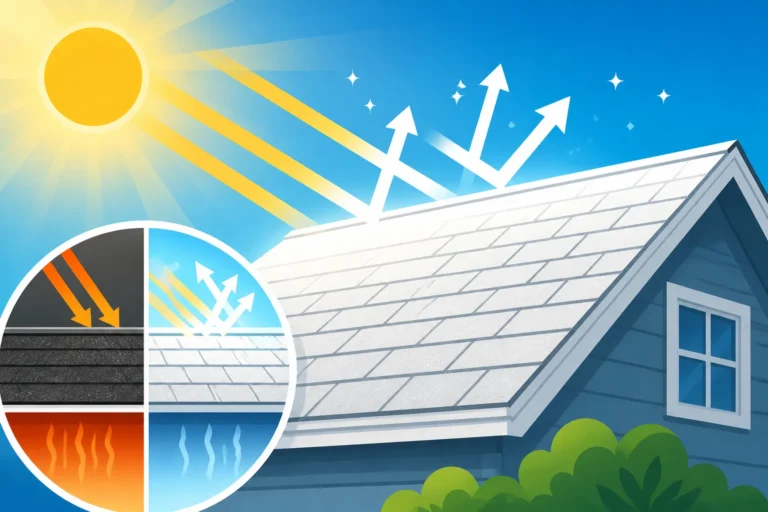
When we talk about how light or dark a surface is, especially in the context of a roof, we're really talking about its albedo. Albedo is a scientific term that measures the diffuse reflectivity of a surface. Simply put, it's the percentage of solar radiation that's reflected by a surface, rather than absorbed. A perfectly white surface would have an albedo of 1 (reflecting 100% of solar energy), while a perfectly black surface would have an albedo of 0 (absorbing 100%).
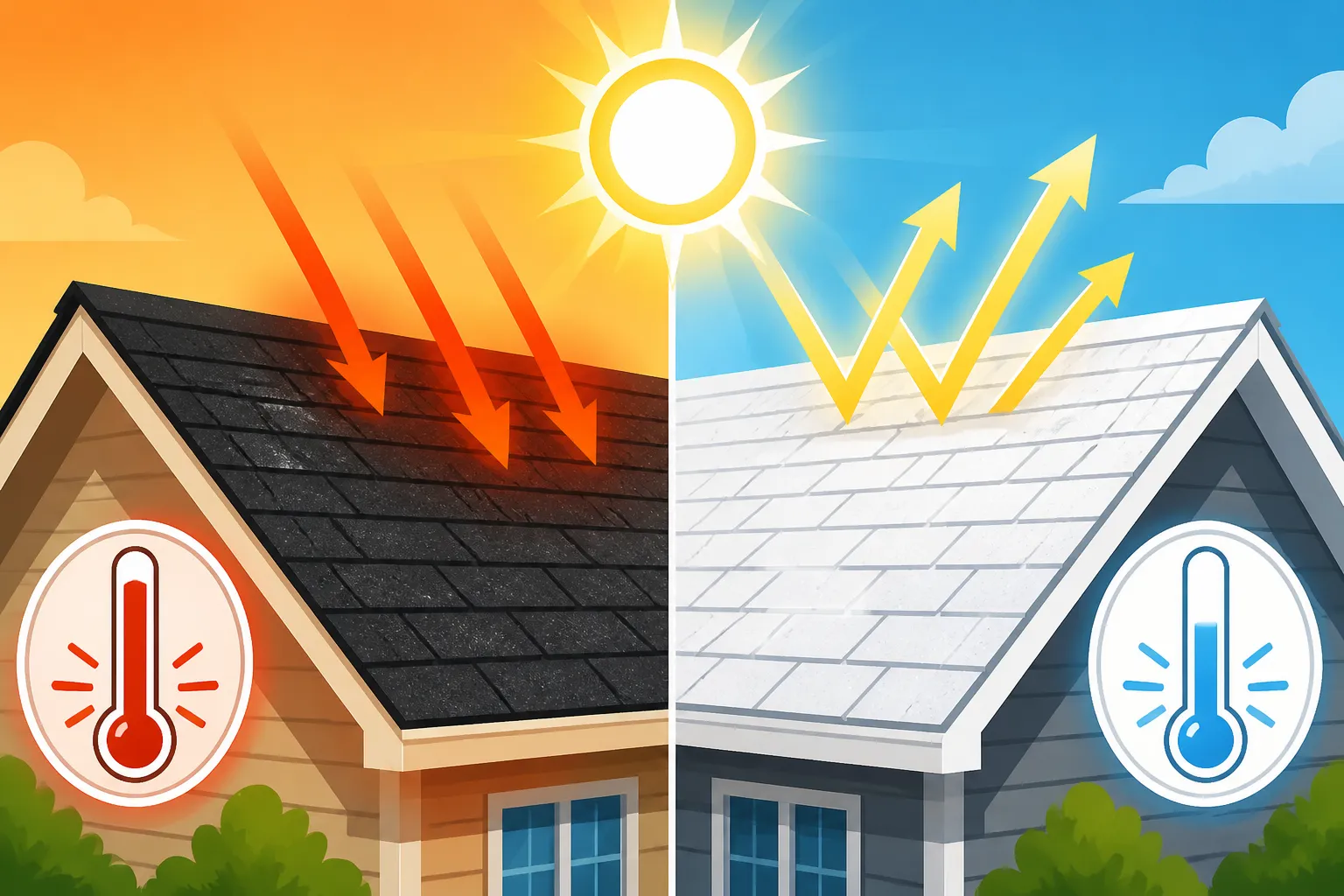
Think about stepping barefoot onto a black asphalt driveway on a sunny summer day versus a light concrete patio. The difference is immediate and sometimes painful! That's albedo in action. Dark-colored asphalt shingles, with their low albedo, absorb a significant amount of the sun's infrared and visible light energy. This absorbed energy then translates directly into heat. On the other hand, lighter-colored shingles, like those in shades of white, light gray, or tan, boast a higher albedo. They reflect a much larger portion of the sun's rays back into the atmosphere, meaning less heat is absorbed by the roof material itself. This isn't just a minor difference; a dark roof can reach temperatures of 150-180°F or even higher on a hot, sunny day, while a light-colored roof might only reach 100-120°F under the same conditions. That temperature difference isn't confined to the shingles; it radiates down into your attic and eventually into your living space.
Emissivity and Heat Release
Beyond just reflecting heat, how well a roof can release the heat it does absorb is another critical factor. This property is called thermal emissivity. A material with high emissivity will radiate absorbed heat back into the atmosphere efficiently, even if it has a low albedo. Conversely, a material with low emissivity will trap that absorbed heat, releasing it slowly and contributing to prolonged warmth within the roof system.
For roofing, materials with high emissivity are desirable because they help prevent heat buildup. For example, while a standard black asphalt shingle absorbs a lot of solar radiation (low albedo), it often also has a good emissivity, meaning it can radiate some of that heat away, especially once the sun sets. However, modern "cool roof" technologies often focus on boosting both high solar reflectance (albedo) and high thermal emissivity to achieve maximum heat reduction. It's a dual-pronged approach: reflect as much as possible, and then radiate away what little heat is absorbed. This combination is what truly defines a high-performance, energy-efficient roof.
How Material Type Interacts with Color
While color is paramount, the base material of your asphalt shingles also plays a role in how they interact with temperature. Asphalt shingles are inherently good at absorbing heat due to the asphalt and granules. However, manufacturers are continually innovating to improve their thermal performance.
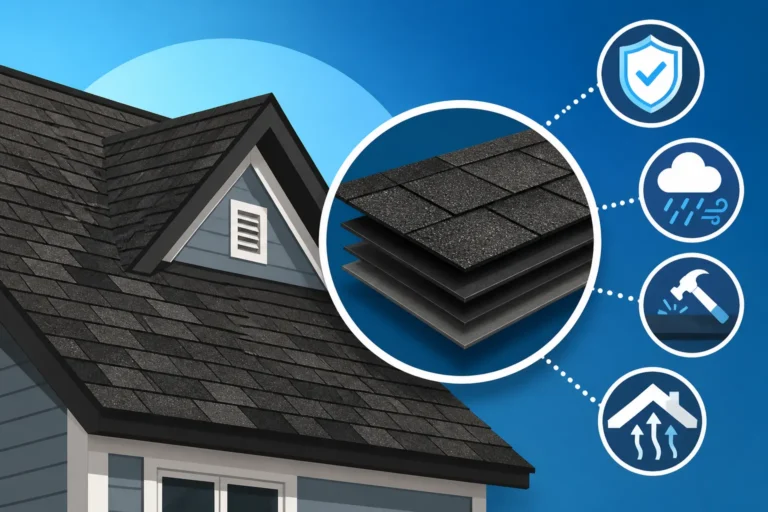
For instance, traditional 3-tab shingles, being thinner and less robust, might heat up and cool down a bit quicker than thicker architectural shingles. However, architectural shingles, with their multi-layered construction, can sometimes retain heat longer due to their mass, unless they incorporate specific cool roof technologies. The type of granules embedded in the asphalt is also critical. Standard granules are just for color and UV protection, but specialized "cool granules" are designed with pigments that are highly reflective in the infrared spectrum, even if the shingle appears dark to the human eye. This is how you can have a "dark" cool roof that performs like a "light" one. Understanding these nuances helps explain why not all dark roofs are created equal, and why not all light roofs are perfectly cool. The underlying material science, combined with the chosen color, forms a complex system that determines your roof's overall thermal behavior.
The Benefits of Lighter Roof Colors in Warm Climates
If you live in a region where summers are long and scorching, choosing a lighter-colored roof can feel like a breath of fresh air for both your home and your wallet. The advantages are substantial and measurable.
Reducing AC Costs and Energy Bills
The most immediate and tangible benefit of a light-colored roof in a hot climate is the significant reduction in air conditioning expenses. When a dark roof absorbs a lot of heat, that heat gets transferred into your attic space. Your attic can easily reach temperatures of 140°F or higher, even on a moderately warm day, creating a superheated environment that your air conditioner then has to fight against. It's like your AC unit is trying to cool a giant oven.
A lighter roof, by reflecting more sunlight, keeps the attic much cooler. Studies have shown that a cool roof can reduce attic temperatures by as much as 30-50°F. Imagine the difference that makes for your home's overall cooling load! Your HVAC system doesn't have to work nearly as hard or as long to maintain a comfortable indoor temperature. For a homeowner in, say, Phoenix, Arizona, where summer temperatures regularly hit triple digits, switching from a dark brown roof to a light tan or gray could translate into a 10-20% reduction in their monthly electricity bill during peak cooling season. This isn't just anecdotal; utility companies in warmer states often offer incentives or rebates for installing energy-efficient "cool roofs" precisely because of these proven energy savings. You might be surprised to see your Roof Replacement ROI Explained when considering these long-term savings.
Enhancing Indoor Comfort
Beyond just saving money, a cooler attic directly contributes to a more comfortable living environment inside your home, especially on upper floors. If you've ever had bedrooms upstairs that feel perpetually warmer than the downstairs, even with the AC blasting, a superheated attic is likely a major culprit. The radiant heat from the roof warms the ceiling of the upper rooms, making them feel stuffy and hard to cool.
With a light-colored roof, that radiant heat is drastically reduced. This means your upstairs rooms will feel more consistent with the rest of the house, reducing hot spots and making your home a more pleasant place to be during the summer. For families with children who have bedrooms on the second floor, this can mean more restful sleep and less complaining about the heat. It also means you might not feel the need to set your thermostat quite as low, further contributing to energy savings without sacrificing comfort. A good roof, coupled with proper How Roof Ventilation Works, creates a truly effective thermal envelope for your home.
Mitigating the Urban Heat Island Effect
The benefits of lighter roofs extend beyond individual homes to the wider community, particularly in densely populated urban areas. Cities tend to be significantly warmer than surrounding rural areas, a phenomenon known as the Urban Heat Island (UHI) effect. This is largely due to the prevalence of dark, heat-absorbing surfaces like asphalt roads and dark rooftops, along with a lack of green spaces.
When many homes and buildings in a city adopt lighter-colored or "cool" roofs, it collectively helps to reduce ambient air temperatures across the entire urban landscape. This isn't just theoretical; cities like Los Angeles and Sacramento have implemented initiatives to encourage cool roof installations to combat the UHI effect. By lowering city-wide temperatures, lighter roofs can reduce smog formation, decrease peak energy demand for cooling (which can prevent blackouts), and improve public health by lessening heat stress. So, while you're making a smart choice for your own home's energy efficiency, you're also contributing to a healthier, cooler community environment, which is a pretty great bonus.
The Case for Darker Roof Colors in Cooler Regions
While lighter roofs are champions in the heat, the story changes when you consider homes in cooler climates. Here, darker roof colors can actually offer some strategic advantages, particularly during the colder months.
Leveraging Solar Heat Gain for Winter Warmth
For homeowners living in states like Minnesota, Michigan, or the mountainous regions of Colorado, where winters are long, cold, and often snowy, a darker roof can be an asset. Just as dark colors absorb heat in the summer, they do the same in the winter. This absorbed solar energy isn't seen as a problem; it's a bonus. On a clear winter day, a dark asphalt roof will absorb sunlight and convert it into heat, which then radiates into the attic space and down into the home.
This passive solar heating can contribute to warming your home, potentially reducing your reliance on your heating system during daylight hours. While it won't replace your furnace, every little bit helps in keeping your energy bills manageable. For instance, if your attic warms up naturally by a few degrees due to a dark roof, your furnace might cycle on less frequently or for shorter durations. It also helps melt snow and ice faster on the roof surface, which can be beneficial in preventing ice dams—though proper insulation and ventilation are still paramount for this. If you're pondering a roof replacement and live in an area with harsh winters, considering a darker shade of asphalt shingle could be a smart move, especially when you're looking at Roofing Cost in Cold Climates.
Potential Trade-offs and Considerations
Even in cooler climates, a darker roof isn't without its considerations. While beneficial in winter, that same heat absorption can become a drawback during occasional warm spells or early autumn and late spring days when temperatures might still climb. If your region experiences warm shoulder seasons or unexpected heatwaves, your attic could still become uncomfortably warm, even if it's not the scorching heat of a southern summer.
This means you might find yourself running your AC system (if you have one) more often on those milder warm days. The balance depends heavily on your specific microclimate. A home in Seattle, with its generally mild summers, might find a dark roof perfectly acceptable year-round, while a home in the inland valleys of California, which can have hot spells even in winter, might face more trade-offs. It's a careful calculation of how many heating days vs. cooling days your home experiences throughout the year.
Aesthetic Preferences and Curb Appeal
Let's be honest, beyond the scientific benefits, curb appeal is a huge factor in choosing a roof color. For many homeowners, a dark gray, charcoal, or black roof simply looks more classic, sophisticated, or modern, especially on certain architectural styles like Craftsman, Victorian, or contemporary homes. These darker shades can provide a striking contrast to lighter house siding or trim, making the home's features pop.
In colder regions, where snow frequently covers the ground and the sky can be overcast, a darker roof can also provide a visual anchor, grounding the home and making it feel more substantial. It's a powerful design element that can significantly impact the perceived value and attractiveness of your property. While energy efficiency is important, the aesthetic impact on your home's overall look and feel should not be underestimated. After all, you'll be looking at your roof every day, and a color you love contributes to your enjoyment of your home. Sometimes, the perfect roof isn't just about utility; it's about the feeling it evokes.
Advanced Roofing Technologies for Temperature Management
The good news is that you don't always have to choose between a roof color you love and energy efficiency. Modern asphalt roofing has come a long way, with innovative technologies designed to manage temperature, regardless of the shingle's visible hue.
Cool Roof Shingles and Coatings
The term "cool roof" refers to roofing materials designed to reflect more sunlight and absorb less heat than traditional dark roofs. For a long time, this meant light-colored roofs were the only option. However, advances in granule technology mean that today you can find asphalt shingles that appear dark (like charcoal or black) but perform like much lighter-colored roofs in terms of solar reflectance. These "cool-color" shingles use specially formulated reflective granules that bounce infrared radiation away from the roof, even though the visible light spectrum makes the shingle appear dark to the eye.
Brands like GAF and Owens Corning have made significant strides in this area, offering lines of cool roof shingles that meet stringent energy efficiency standards, such as those set by ENERGY STAR. For instance, certain GAF Timberline HDZ Features Explained include Cool Color Series options, and Owens Corning's Duration line also offers cool roof technology. These specialized granules contain pigments that are highly reflective, ensuring the roof absorbs less heat even if it's a deep brown or gray. You might find that the Cool-Roof Shingle Cost is a bit higher initially, but the long-term energy savings can make it a worthwhile investment, especially in warmer climates. They effectively break the traditional link between roof color and heat absorption, giving homeowners more aesthetic freedom without sacrificing performance.
Ventilated Attic Systems
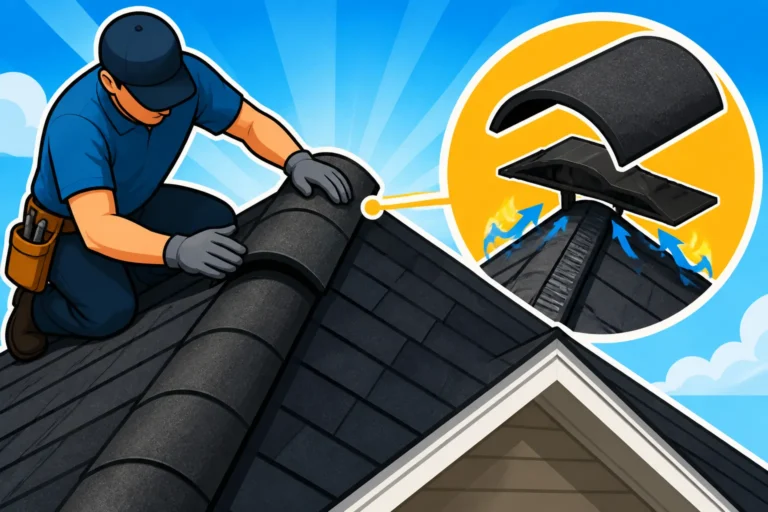
Beyond the shingles themselves, a properly ventilated attic is absolutely crucial for temperature management, regardless of your roof color. Even a cool roof will benefit immensely from good ventilation, and a dark roof needs it even more. Attic ventilation works by allowing hot, stagnant air to escape from the attic, while drawing in cooler, fresh air from outside. This continuous airflow prevents heat from building up and radiating into your living space.
A well-designed ventilation system typically includes intake vents (often located in the soffits under the eaves) and exhaust vents (commonly ridge vents along the roof peak, or box vents/turbine vents). A balanced system ensures that air flows smoothly, carrying away heat and moisture. Without adequate ventilation, even a light-colored roof can struggle to keep your attic cool, and you'll experience higher indoor temperatures and energy bills. In fact, many shingle manufacturers will void parts of their warranty if proper ventilation standards aren't met, underscoring its importance. If you're planning a new roof, make sure your contractor evaluates and upgrades your attic ventilation as needed. You can learn more about options like Cost of Ridge Vent Installation to ensure your system is optimized.
Energy Star Ratings and Certifications
When you're shopping for new asphalt shingles, especially with energy efficiency in mind, look for products that carry the ENERGY STAR label. This certification means that the product meets strict energy efficiency guidelines set by the U.S. Environmental Protection Agency (EPA) and the U.S. Department of Energy (DOE). For roofing materials, ENERGY STAR qualified products are specifically designed to reflect more of the sun's rays, thereby reducing the amount of heat transferred into your home.
This translates to lower cooling costs and a more comfortable home environment. To qualify, asphalt shingles must meet minimum solar reflectance and thermal emissivity requirements. The criteria vary slightly for low-slope and steep-slope roofs. By choosing an ENERGY STAR certified shingle, you're not just getting a product that looks good; you're investing in proven performance and potential energy savings. Your roofing contractor, perhaps found through a service like Modernize, should be able to guide you toward suitable options that fit both your aesthetic preferences and your energy goals.
Choosing the Right Roof Color for Your Home
Deciding on the perfect roof color involves balancing several factors: your climate, your home's architecture, local regulations, and of course, your personal taste. It’s a significant investment, so you want to get it right.
Assessing Your Climate Zone and Energy Needs
The first and most critical step in choosing a roof color is to honestly assess your local climate. Do you live in a hot, sunny region with long summers, like Florida or Arizona? Or are your winters long and cold, with short, mild summers, like in the upper Midwest or New England?
- Hot Climates (e.g., Florida, Southern California, Texas): If your primary concern is reducing cooling costs and keeping your home comfortable in the heat, a lighter-colored roof (white, light gray, tan, light blue) or a "cool-color" dark shingle is almost always the best choice. The energy savings on your AC bill will likely outweigh any minimal winter heating benefits a dark roof might provide. Consider options that are ENERGY STAR certified. You might even explore the Asphalt Roof Replacement Cost in Florida and see how specific cool roof options fit into your budget.
- Cold Climates (e.g., Minnesota, Maine, mountainous Colorado): If your biggest energy challenge is heating your home in winter, a darker roof color (charcoal, black, deep brown) can offer some passive solar gain benefits. The heat absorption can help melt snow faster and slightly reduce heating loads. However, also consider if you experience occasional hot spells, and ensure your attic ventilation is top-notch.
- Temperate or Mixed Climates (e.g., Mid-Atlantic, Pacific Northwest): In areas with distinct hot summers and cold winters, the decision becomes a bit more nuanced. You might prioritize a roof that balances both needs, or lean towards cool-color dark shingles that offer reflectance regardless of hue. A medium gray or brown could be a good compromise, or you might invest in a high-performance cool roof shingle in a darker shade to get the best of both worlds.
Your energy bills from previous years can give you a good indication of whether heating or cooling is your dominant expense, which can help guide your decision.
Understanding Local Regulations and HOA Rules
Before you fall in love with a specific roof color, it's vital to check if there are any local regulations or Homeowners Association (HOA) rules that might dictate your choices. Many municipalities, especially in warmer states like California, are increasingly implementing building codes that encourage or even mandate "cool roof" technologies for new construction or major roof replacements, aiming to reduce the urban heat island effect and energy consumption. For example, some jurisdictions might require a minimum solar reflectance index (SRI) for roofing materials.
If you live in a community with an HOA, you'll almost certainly have rules regarding exterior aesthetics, including roof color and style. HOAs often have approved color palettes or may require specific material types to maintain neighborhood uniformity and property values. Failing to check these rules before starting a project could lead to costly rework or fines. Always consult your HOA documents and local building department early in the planning process to avoid any unwelcome surprises. Knowing the Roofing Building Codes: What to Know for your area is an essential first step.
Consulting with Roofing Professionals
Choosing a new roof is a big decision, and it's always best to involve experienced roofing professionals. A reputable roofing contractor can provide invaluable guidance, not just on installation, but also on material selection, color options, and energy efficiency. They can assess your specific roof pitch, existing insulation, attic ventilation, and home's orientation to the sun, all of which influence how a particular roof color will perform.
They can also walk you through the various asphalt shingle options available from different manufacturers like CertainTeed, Malarkey, or Atlas, explaining the differences in warranty, durability, and energy performance. For instance, a contractor certified by a manufacturer, such as a GAF Master Elite Contractors Explained installer, will have in-depth knowledge of that brand's cool roof products and warranties. Don't hesitate to ask them about the expected energy savings for different roof colors in your specific home and climate. Getting multiple estimates and having detailed conversations with several contractors is always a smart strategy. They can help you factor in not just the aesthetic, but also the long-term performance and cost implications, ensuring you make a choice that truly benefits your home for years to come.
Conclusion: Making an Informed Choice for Your Asphalt Roof
The color of your asphalt roof is much more than a cosmetic decision; it's a critical factor that directly impacts your home's energy efficiency, comfort, and even the surrounding environment. By understanding the science of albedo and emissivity, considering your climate, and exploring advanced roofing technologies, you can make an informed choice that not only enhances your home's curb appeal but also contributes to significant long-term savings and a more comfortable living space. Whether you opt for a light-colored cool roof to battle the summer heat or a dark shingle to harness winter warmth, remember that the right decision is the one that best suits your home, your climate, and your lifestyle.
| Feature / Consideration | Lighter Roof Colors (White, Light Gray, Tan) | Darker Roof Colors (Black, Charcoal, Dark Brown) |
|---|---|---|
| Solar Reflectance (Albedo) | High (reflects more sunlight) | Low (absorbs more sunlight) |
| Heat Absorption | Low | High |
| Best For | Hot climates, reducing AC costs | Cold climates, passive winter heating |
| Attic Temperature | Significantly cooler | Significantly warmer |
| Cooling Bills | Lower | Higher |
| Heating Bills (Winter) | Potentially slightly higher | Potentially slightly lower (passive gain) |
| Urban Heat Island Effect | Mitigates | Contributes to |
| Aesthetic Impact | Modern, clean, can make homes appear larger | Classic, dramatic, sophisticated |
| Cool Roof Technology | Naturally reflective, some specialized options | Often relies on specialized reflective granules |
Disclaimer
The information provided in this article is intended for general informational purposes only and does not constitute professional advice. While we strive for accuracy, roofing conditions, costs, regulations, and product availability can vary significantly. Always consult with a qualified and licensed roofing contractor or other relevant professionals for advice tailored to your specific situation and local requirements.