Roofing License Requirements in California
Finding a reliable roofing contractor can feel like navigating a maze, especially when you're trying to figure out if they're properly licensed and legitimate. It's not just about getting a good price; it's about ensuring your home, and your wallet, are protected from potential nightmares. This guide will walk you through everything you need to know about roofing license requirements in California, helping you make informed decisions and safeguard your investment.
Why a Proper Roofing License is Non-Negotiable
When you're dealing with something as critical as your roof – the primary protector of your entire home – cutting corners on who you hire is simply not an option. It’s easy to be swayed by a lower bid from an unlicensed individual, but the risks involved far outweigh any perceived savings. A contractor's license isn't just a piece of paper; it's proof that they've met certain professional standards set by the state.
Protection for Homeowners and Your Investment
Think of a contractor's license as a fundamental layer of protection, not unlike the underlayment beneath your shingles. It signifies that the individual or company has demonstrated a minimum level of competence and adherence to state regulations. Without it, you're essentially hiring someone sight unseen, gambling on their skills and integrity. In California, the Contractors State License Board (CSLB) exists precisely to protect consumers from unscrupulous or unqualified contractors. When you hire a licensed professional, you gain an important layer of recourse should something go wrong, which is almost impossible with an unlicensed operator.
It also protects your investment. Your roof is a major component of your home's value. A poorly installed roof by an unlicensed contractor can lead to serious structural damage, mold growth, and eventually, a costly replacement much sooner than expected. Many homeowners find themselves in a bind when trying to sell their home, only to discover that unpermitted or unlicensed work done on their roof is now a major red flag for potential buyers and home inspectors. This can significantly devalue your property and complicate the sales process.
Ensuring Quality Workmanship and Expertise
A legitimate license often goes hand-in-hand with a certain level of verified skill and experience. To obtain a CSLB license in California, roofing contractors must prove they have substantial experience in the trade, typically at a journeyman level or higher. This means they've spent years learning the intricacies of roofing, from proper installation techniques to understanding complex building codes and safety protocols. They're not just handy with a hammer; they understand the entire roofing system.
Licensed roofers are also generally more invested in their reputation and business longevity. They adhere to industry standards, use appropriate materials, and are more likely to stand behind their work with robust warranties. An unlicensed individual, on the other hand, might use subpar materials, employ shoddy installation practices, and then disappear when issues arise, leaving you with a defective roof and no one to turn to. Choosing wisely means prioritizing expertise over a bargain that could become an expensive mistake. If you're wondering How to Choose a Roofing Contractor, verifying their license is always step one.
California's Specific Roofing Contractor License Requirements
California has some of the most stringent licensing requirements in the nation, and for good reason. The state experiences diverse weather conditions, from heavy rain and high winds to intense sun, all of which put a significant strain on roofing systems. The CSLB ensures that contractors working on these vital structures are properly qualified.
The C-39 Roofing Contractor License Classification
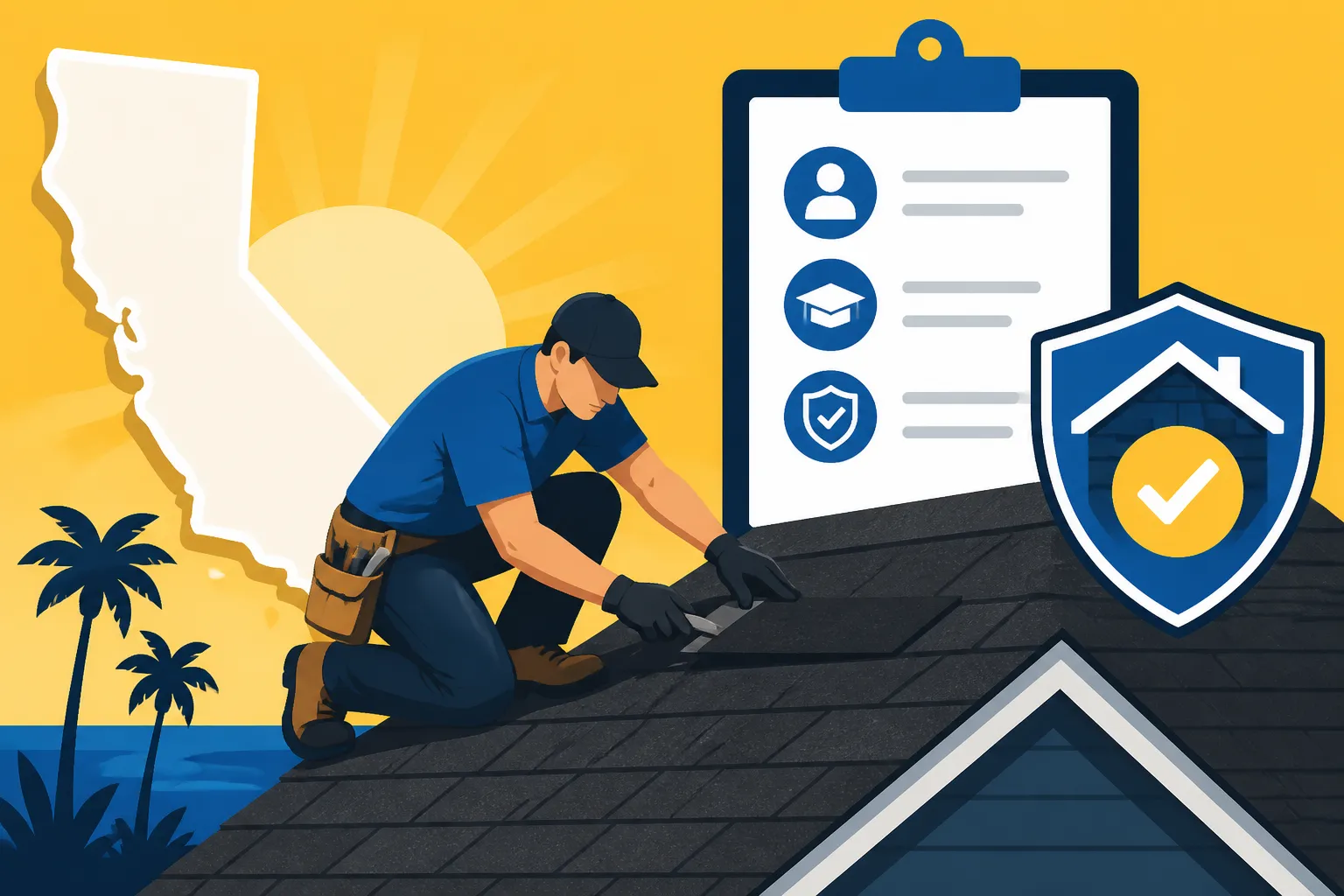
In California, roofing contractors are required to hold a specific license classification: the C-39 Roofing Contractor license. This isn't a general contractor's license that happens to cover roofing; it's a specialty license that specifically authorizes work related to the installation, repair, and replacement of roofing, roof coverings, and waterproofing. This means that a contractor with a C-39 license has demonstrated expertise directly relevant to your project. If a contractor tells you they can do your roof with a general B-2 license or a different specialty, proceed with extreme caution and verify their specific C-39 classification.
The CSLB defines the scope of work for a C-39 license as follows: "A roofing contractor installs products and repairs surfaces that seal, waterproof and weatherproof structures. This work involves the use of asphalt, pitch, tar, felt, glass fabric, or any other suitable material, or any combination thereof, that has been and are now used in the roofing industry to prevent the passage of water and its derivatives. This work includes, but is not limited to, installing, replacing, and repairing various types of roofing materials such as asphalt shingles, tiles, metal roofing, single-ply systems, and waterproofing." This detailed definition helps ensure that licensed professionals are well-versed in a wide array of roofing tasks.
Experience, Exams, and Financial Requirements
To even apply for a C-39 license, individuals must meet several crucial criteria. First and foremost, they need a significant amount of verifiable experience. The CSLB typically requires applicants to have at least four years of experience at a journeyman level or higher within the last ten years, in the specific trade they are applying for. This means they must have performed roofing tasks independently and competently, not just as a helper. This experience must be documented and verified, often requiring detailed references and job descriptions.
Once the experience requirement is met, applicants must pass two rigorous exams: a Law and Business examination and a trade-specific examination for the C-39 classification. The Law and Business exam covers crucial areas like business organization, contracts, estimating, financial management, labor laws, lien laws, and safety. The trade exam assesses their knowledge of roofing materials, installation techniques, safety practices, and building codes. In addition to these, all applicants undergo a thorough background check, including fingerprinting, to ensure they have a clean record.
Financially, applicants must also demonstrate solvency. As of my last check, a contractor's bond of $15,000 is required for all licensed contractors in California. Furthermore, if the applicant is a qualifying individual for a business (e.g., a responsible managing employee), they must also post a separate bond of $12,500. These bonds are crucial safeguards designed to protect consumers if a contractor fails to complete a project or adhere to contract terms. Should Your Roofer Be Bonded and Insured goes into more detail about these financial protections.
Surety Bonds and Insurance Requirements
Beyond the initial licensing bond, California contractors have other important financial obligations. All licensed contractors with employees are required to carry Workers' Compensation insurance. This is incredibly important because if an uninsured worker is injured on your property, you, the homeowner, could be held liable for their medical expenses and lost wages. It’s a frightening prospect and one of the biggest Roofing Contractor Red Flags to Avoid.
While general liability insurance isn't always strictly mandated by the CSLB for sole proprietors without employees, it is absolutely vital for any reputable roofing contractor. This insurance protects against damages that might occur to your property or an adjacent property during the roofing project. Imagine a scenario where a shingle falls and cracks your neighbor's window, or a piece of equipment damages your newly landscaped garden. Without liability insurance, you could be left with the bill. Any reputable contractor, like those you might find through platforms such as Modernize, will carry comprehensive general liability coverage. Always ask for proof of both Workers' Comp and General Liability insurance directly from their insurer – don't just take their word for it. This is a critical step covered in more detail in How to Verify a Roofer's Insurance.
How to Verify a Roofer's License in California
The beauty of California's stringent licensing system is that it's transparent and accessible. You don't have to guess whether a contractor is legitimate; you can easily verify their credentials. This due diligence is your first line of defense against potential problems.
Utilizing the CSLB Website for Verification
The California Contractors State License Board (CSLB) provides an invaluable online tool for consumers. Their "Check a License" feature allows you to search for contractors by license number, contractor name, or business name. This is the most reliable way to confirm a contractor's active license status.
Here's how to use it effectively:
- Get the License Number: Always ask a potential contractor for their CSLB license number. It should be clearly displayed on their estimates, contracts, and marketing materials.
- Visit the CSLB Website: Go to cslb.ca.gov and look for the "Check a License" link.
- Enter Information: Input the contractor's license number or name into the search fields.
- Review the Results: The search results will show you vital information, including:
- License Status: Is it active, inactive, suspended, or revoked? You only want an active license.
- Classification: Does it show "C-39 Roofing Contractor"? If not, they are not licensed for roofing work.
- Contractor Name and Business Name: Does this match the company you're dealing with?
- Bonding Information: Details about their contractor bond, including the surety company and bond amount.
- Workers' Compensation: Whether they carry Workers' Compensation insurance (important if they have employees).
- Disciplinary Actions: Has the contractor faced any disciplinary actions from the CSLB? This is a huge red flag.
By taking just a few minutes to check this information, you can avoid a world of trouble. Remember, if a contractor is hesitant to provide their license number or if the information doesn't match up, it's time to walk away.
Beyond the License: What Else to Check
While verifying the license is paramount, it's just one piece of the puzzle. A thorough vetting process involves looking at other indicators of a reputable business. You need to gather enough information to compare bids effectively, which includes asking Questions to Ask a Roofing Contractor Before Hiring.
- References and Reviews: Ask for recent references and check online review platforms (Google, Yelp, BBB). Look for patterns in feedback, both positive and negative. A few negative reviews aren't necessarily a deal-breaker, but a consistent stream of complaints about shoddy work, communication issues, or abandoned projects should make you wary.
- Proof of Insurance: Don't just ask if they're insured; ask for a certificate of insurance directly from their insurance provider. This certificate should show their general liability coverage limits and Workers' Compensation policy (if applicable). Never accept an expired certificate or one that looks doctored.
- Written Contract and Estimate: A professional contractor will always provide a detailed written estimate and a comprehensive contract. The contract should outline the scope of work, materials used, payment schedule, project timeline, and warranty information. Be sure to understand What a Roofing Estimate Should Include and Roofing Contract: What to Look For before signing anything.
- Permits: A licensed contractor knows that a roofing permit is required for most roofing jobs in California. They should be responsible for pulling the necessary permits from your local building department. If a contractor suggests skipping the permit, that's a massive red flag. Learn more about Roofing Permits Explained.
- Manufacturer Certifications: Many reputable roofing material manufacturers, like GAF, Owens Corning, and CertainTeed, offer certification programs for contractors who meet specific standards. These certifications often allow contractors to offer enhanced warranties on the materials. While not a substitute for a state license, they indicate a commitment to professional development and quality installation according to manufacturer specifications.
Consequences of Hiring Unlicensed Contractors
The allure of a cheaper price from an unlicensed individual can be strong, especially when you're facing a significant expense like a roof replacement. However, the potential pitfalls and long-term costs associated with hiring an unlicensed contractor can far exceed any initial savings, creating a homeowner's nightmare.
Legal and Financial Risks for Homeowners
Hiring an unlicensed contractor in California opens you up to a host of legal and financial liabilities. The CSLB explicitly warns consumers about these risks, and they are not to be taken lightly.
- No Recourse for Shoddy Work: If an unlicensed contractor performs poor work, abandons the job, or causes damage, you have very little legal recourse. The CSLB cannot mediate disputes or impose disciplinary actions on someone they don't license. Your only option might be small claims court, which can be a lengthy and frustrating process, often with no guarantee of recovering your money or damages. Licensed contractors, on the other hand, are accountable to the CSLB and their bonds provide a mechanism for consumer protection.
- Liability for Injuries: This is perhaps the most frightening risk. If an unlicensed contractor or one of their workers gets injured on your property, you, as the homeowner, could be held financially responsible. Without Workers' Compensation insurance, which unlicensed contractors almost certainly lack, their medical bills, rehabilitation costs, and lost wages could fall squarely on your shoulders. These costs can be astronomical and bankrupt a family.
- No Building Code Compliance: Unlicensed contractors often ignore local building codes and permitting requirements. This can lead to a roof that is unsafe, poorly constructed, and won't pass inspection. If you later try to sell your home, an inspector will likely flag the unpermitted work, requiring you to pay to bring it up to code or even entirely re-do the roof, sometimes at a much higher cost than the original job.
- Insurance Problems: Your homeowner's insurance policy might not cover damages resulting from work performed by an unlicensed contractor. If a fire starts due to faulty electrical work done by an unlicensed roofer (perhaps they hit a wire), or if a storm causes damage to a poorly installed roof, your claim could be denied. This leaves you personally responsible for all repair costs.
Substandard Work and Voided Warranties
Beyond the legal and financial liabilities, the quality of work is a major concern. Unlicensed contractors often lack the necessary training, experience, and knowledge of current building practices to install a roof correctly. This leads directly to substandard work.
- Premature Roof Failure: A poorly installed roof, even with good materials, will fail prematurely. Shingles might be improperly nailed, flashing might be incorrectly sealed, or ventilation systems might be neglected. These errors can lead to leaks, mold, rot, and structural damage within a few years, forcing you into another expensive roof repair or replacement much sooner than anticipated. The lifespan of your asphalt roof depends heavily on expert installation, as discussed in How Long Does an Asphalt Roof Last.
- Voided Manufacturer Warranties: Reputable roofing manufacturers, such as Owens Corning and GAF, often require their materials to be installed by certified or licensed professionals according to strict guidelines to validate their warranties. If an unlicensed contractor installs your roof, you could unknowingly void the manufacturer's warranty on the shingles and other components. This means if the materials fail prematurely due to a manufacturing defect, you have no coverage. Understanding your Roofing Warranty: Workmanship vs Manufacturer is key, and an unlicensed contractor jeopardizes both.
- Lack of Workmanship Warranty: Licensed contractors typically offer a workmanship warranty, guaranteeing their installation for a certain period. Unlicensed individuals rarely provide such protections, and even if they do, their lack of a permanent business address or phone number means it's likely worthless. You're left with no one to call if a problem arises post-installation.
The risks associated with hiring an unlicensed roofing contractor are simply too high. It's a gamble with your most valuable asset, and the potential consequences can be devastating. Always prioritize proper licensing, insurance, and reputation when making this critical decision.
Key California Roofing License Requirements at a Glance
To help you quickly grasp the core requirements for roofing contractors in California, here's a concise overview. Remember, this is a summary and thorough verification is always recommended.
| Requirement Area | Detail | Minimum Standard/Recommendation |
|---|---|---|
| Licensing Board | California Contractors State License Board (CSLB) | Must be licensed by CSLB |
| License Classification | C-39 Roofing Contractor License | Only C-39 licensed contractors can perform roofing work |
| Experience | At least 4 years at journeyman level or higher within the last 10 years | Verifiable experience is mandatory |
| Exams | Law & Business Exam, C-39 Trade Exam | Passing both exams is required |
| Contractor Bond | $15,000 bond | Required for all licensed contractors |
| Qualifying Individual Bond | $12,500 bond (if applicable) | Required for the individual who qualifies the license |
| Workers' Compensation | Required if the contractor has employees | Proof of active policy is essential to protect homeowners from liability |
| General Liability Insurance | Not always mandated for sole proprietors, but highly recommended and standard for reputable companies | Proof of adequate coverage is crucial to protect against property damage |
| Background Check | Fingerprinting and criminal history review | Ensures public safety and contractor integrity |
| Permits | Required for most roofing projects | Contractor should pull and manage all necessary local permits |
This table provides a quick reference, but always use the CSLB website to verify specific details for any contractor you're considering. Don't be shy about asking for license numbers and proof of insurance—any reputable company, including those partnered with Modernize, will be happy to provide them.
Final Thoughts on Protecting Your Home
Navigating a roofing project, whether it's a minor repair or a full replacement, can feel overwhelming. The financial investment is significant, and the stakes are high. That's why understanding and insisting on proper licensing for your roofing contractor in California is not just a recommendation; it's an absolute necessity.
By taking the time to verify their C-39 license with the CSLB, checking their insurance, and reviewing their references, you're doing more than just picking a roofer. You're investing in the longevity of your home, protecting yourself from potential legal and financial nightmares, and ensuring that the work performed meets the high standards required in a state like California. Don't fall for the trap of the cheapest bid if it means sacrificing these fundamental protections. Your peace of mind and the integrity of your roof are worth the effort of finding a truly qualified and licensed professional.
Disclaimer
The information provided in this article is intended for general informational purposes only and does not constitute professional advice. While we strive to provide accurate and up-to-date information, roofing license requirements, building codes, and insurance regulations can change and vary by jurisdiction. Always consult with a qualified, licensed roofing contractor and your local building department for specific advice tailored to your situation. We recommend verifying all contractor credentials independently through official state licensing boards.