Should Your Roofer Be Bonded and Insured
The thought of getting a new roof, or even just a major repair, can feel incredibly overwhelming, and one of the biggest headaches is trying to figure out if the person you're trusting with your home is actually legitimate. It's not just about getting a good price; it's about peace of mind. This guide will walk you through exactly what "bonded" and "insured" truly mean for a roofer and why these credentials are non-negotiable for your protection.
Understanding the Basics: What Do "Bonded" and "Insured" Even Mean?
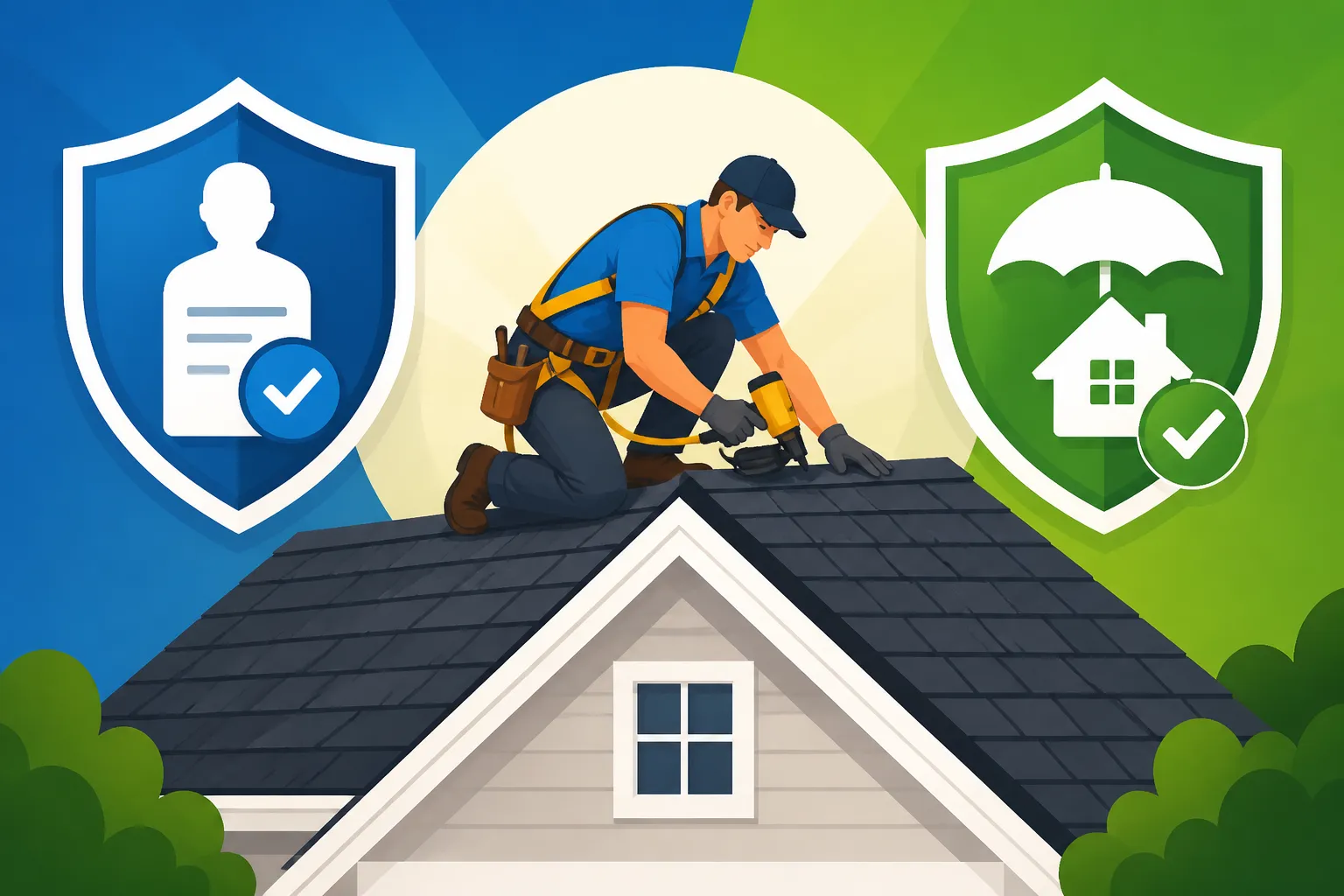
When you hear a roofer say they're "bonded and insured," it sounds great, right? But for many homeowners, those terms can feel like industry jargon that's hard to truly grasp. It's not just a marketing slogan; these are critical protections for you, your property, and the roofing crew itself. Understanding what each means is the first step to making an informed decision about who you let work on your most valuable asset.
What "Insured" Really Covers: Worker's Comp and General Liability
Think of insurance as a safety net designed to catch unforeseen accidents and mistakes. For a roofing contractor, being properly insured isn't just a suggestion; it's a fundamental requirement to operate professionally and ethically. There are a few key types of insurance you should always look for.
First and foremost is General Liability Insurance. This is the big one that protects your home and property from damage caused by the roofing company or its employees during the project. Imagine a scenario: the crew is tearing off old shingles, and a bundle of them slides off the roof, crashing through your prize-winning rose bush or, even worse, putting a dent in your car parked in the driveway. Without general liability insurance, you could be left footing the bill for these damages yourself, and trust me, those bills can add up fast. It covers accidental damage to your property, a neighbor's property, or even injury to a third party (like a delivery driver) that occurs due to the contractor's work. It’s essential for a roofing company to have adequate coverage, often at least $1 million per occurrence.
Equally critical, if not more so for your personal liability, is Worker's Compensation Insurance. This insurance protects the contractor's employees if they get injured on the job. Roofing is inherently dangerous work; falls, cuts, and other accidents are unfortunately common. If a roofer falls off your ladder or injures their hand with a nail gun on your property, and they are NOT covered by worker's comp, guess who might be on the hook for their medical bills, lost wages, and potentially even a lawsuit? That's right – you, the homeowner. This is a terrifying prospect that far too many homeowners overlook. This insurance ensures that the injured worker receives the care they need without coming after your personal assets. Many states have strict requirements for worker's compensation, especially for trades like roofing, recognizing the high risks involved. Don't just ask if they have it; ask for proof and verify it. For more details, you might want to look into What Happens If a Roofer Gets Injured on Your Property.
What "Bonded" Means for You: Protection Against Incomplete or Subpar Work
While insurance handles accidents, bonding steps in to protect you from financial losses if the contractor fails to fulfill their contractual obligations. It's a bit like a promise, backed by a third-party surety company. When a roofer is "bonded," it means they've secured a surety bond that provides a financial guarantee that they will complete the job as agreed upon in the contract and adhere to local regulations and codes.
Imagine this all-too-common nightmare: you hire a roofer, pay a deposit, they start the tear-off, and then vanish into thin air, leaving your roof exposed to the elements. Or perhaps they complete the job, but the quality is so shoddy that it starts leaking after the first rain. This is where a bond can be a lifesaver. It allows you to file a claim against the bond to recoup your losses, whether it's for incomplete work, substandard craftsmanship, or even failure to pay subcontractors and suppliers, which could lead to a lien on your home. It’s a powerful layer of consumer protection that many homeowners unfortunately don't even know to ask about.
Why Skipping These Credentials Is a Huge Risk
It's tempting, especially when facing a large expense like a roof replacement, to go with the lowest bid. Sometimes, those "too good to be true" prices come from contractors who cut corners by not carrying proper insurance or bonding. But let me tell you, that short-term saving can quickly turn into a monumental, expensive, and stressful nightmare. The risks associated with hiring an uninsured or unbonded roofer far outweigh any potential savings.
The Financial Nightmare of Injuries on Your Property
This is perhaps the scariest scenario for any homeowner. As we touched on earlier, roofing is dangerous work. Ladders, heights, power tools, heavy materials – the potential for accidents is ever-present. If you hire a roofer who doesn't have valid Worker's Compensation insurance, and one of their crew members gets injured on your property, you could be held personally liable.
Think about it: Your homeowner's insurance might cover some aspects, but it's not designed to be the primary insurer for a contractor's employees. A serious injury could lead to medical bills in the tens or even hundreds of thousands of dollars, lost wages, and legal fees if the injured worker decides to sue you to recover their losses. Even if your policy does offer some limited coverage, the deductibles and potential increases in your premiums could be substantial. It's a risk that no amount of savings on a roofing job is worth taking. Verifying their Worker's Compensation is a crucial step when you're going through the process of How to Choose a Roofing Contractor.
When a Project Goes Sideways or Stalls Out
We've all heard the horror stories: the contractor who takes a deposit and disappears, the job that drags on for months, or the work that's so poorly executed it needs to be redone entirely. Without proper bonding, you have significantly less recourse if your roofing project goes sideways.
Let's say a roofer leaves your roof half-finished because they underestimated the job or simply ran out of funds. Your house is exposed, your family is stressed, and you're out a significant chunk of money. Without a performance bond, you'd likely have to pursue legal action yourself, which is costly, time-consuming, and offers no guarantee of recovery. A bond, on the other hand, provides a financial cushion, ensuring that a surety company steps in to get the work completed or to compensate you for the loss. Similarly, if the contractor performs shoddy work that doesn't meet industry standards or local building codes, a bond can help you correct those issues without draining your own pockets further. For tips on avoiding these pitfalls, check out Roofing Contractor Red Flags to Avoid.
Liability for Damage to Your Home or Neighbor's Property
Beyond personal injuries, property damage is another major concern. Roofing contractors work with heavy materials, powerful tools, and often in tight spaces. Accidents happen. A shingle bundle could fall and damage your gutters, a piece of plywood might scratch your siding, or debris could fly and break a neighbor's window.
If your chosen roofer lacks sufficient General Liability insurance, any damage they cause during the project falls squarely on your shoulders. You'd be responsible for paying for the repairs out of pocket or filing a claim with your own homeowner's insurance, which could lead to higher premiums down the line. It's not just about your property, either. If a neighbor's property is damaged, they might come after you, the homeowner, if the contractor isn't adequately insured to cover the incident. This is why when you get your Roofing Contract: What to Look For, it should explicitly state the contractor's insurance coverage.
The Specifics of Roofer Insurance: What to Look For
It's not enough for a roofer to just say, "Oh yeah, we're insured!" You need to know what kind of insurance they carry and how much. Asking for proof of specific policies is one of the most important questions to ask a roofing contractor before hiring.
General Liability Insurance: Protecting Your Home and Property
This is the bedrock of homeowner protection. General Liability (GL) insurance covers property damage, bodily injury to third parties (not employees), and personal injury (like libel or slander) that occurs as a result of the contractor's operations. For roofing, the property damage aspect is key.
For example, a misstep on the roof could lead to a worker dropping a heavy tool, cracking your patio slab. Or perhaps during debris removal, a section of your fence is accidentally knocked over. General liability insurance would typically cover the costs to repair or replace these items. When a reputable company like GAF or Owens Corning certifies a contractor, they often have stringent requirements for GL coverage. You want to see limits that are robust enough to cover significant damage, usually $1 million or more per occurrence. Don't be shy about asking for an "Acord certificate" directly from their insurance provider – it's the standard proof of coverage. You can learn more about How to Verify a Roofer's Insurance.
Worker's Compensation: Protecting the Crew and Your Wallet
Worker's Compensation, or "Worker's Comp," is legally mandated in most states for companies with a certain number of employees. It's vital because it covers medical expenses and a portion of lost wages for workers who are injured on the job, regardless of fault.
Consider this: a roofer slips on a wet patch of roof sheathing, breaks an arm, and needs emergency surgery and weeks of recovery. Without Worker's Comp, that individual could file a claim directly against you and your homeowner's policy. This is not a hypothetical situation; it happens, especially with uninsured "cash-only" crews. Always ask for a current certificate of insurance for Worker's Comp directly from the insurer. If the contractor claims to be an "owner-operator" with no employees and thus exempt from Worker's Comp, get that in writing and verify it with your state's Department of Labor or equivalent agency. Even then, understand that if they bring any help, those individuals might not be covered, leaving you exposed.
Commercial Auto Insurance: On-Road and On-Site Accidents
While less frequently discussed, commercial auto insurance is also a critical component of a fully insured roofing contractor. It covers vehicles owned by the business, as well as property damage or injuries caused by those vehicles, whether they're on the road or on your property.
Picture this: the roofing company's truck, loaded with materials, backs into your mailbox or even your garage door while maneuvering on your driveway. Or, an accident occurs on the way to the job site involving one of their vehicles. Their commercial auto policy would step in to cover the damages and any related medical expenses, preventing you from having to deal with the aftermath directly or claim on your own auto insurance. It provides another layer of protection that demonstrates a contractor's commitment to responsible business practices.
Delving into Roofing Bonds: Different Types and Their Purpose
Just like insurance, not all bonds are created equal, and understanding the different types of bonds can further empower you when selecting a roofing contractor. Bonds offer a specific type of financial guarantee that an insurance policy doesn't, primarily protecting you from a contractor's failure to perform according to the contract or to meet legal obligations.
Contractor License Bonds: Ensuring Compliance
Many states and municipalities require contractors to be licensed, and a key part of that licensing process often involves securing a contractor license bond. This type of bond is a guarantee to the state or local licensing board that the contractor will adhere to all applicable laws, codes, and regulations while performing their work.
If a contractor fails to follow building codes, doesn't complete a project, or commits fraud, consumers can often file a complaint with the licensing board. The license bond provides a fund to compensate consumers for damages resulting from such violations, up to the bond's limit. For example, if a roofer in Florida fails to acquire the necessary permits, leaving you with code violations, you could potentially make a claim against their license bond. This is why looking up Roofing Contractor License Requirements by State is always a smart move. It's a foundational bond that speaks volumes about a contractor's legitimacy and commitment to legal operation.
Performance Bonds: Guaranteeing the Work Gets Done
This is the type of bond homeowners most often associate with "bonded." A performance bond guarantees that the contractor will complete the project according to the terms and conditions outlined in the contract, including quality and timeline. If the contractor fails to perform as promised – perhaps they abandon the job, go bankrupt, or perform such poor work that it violates the contract – the property owner can file a claim against the performance bond.
Let's say you've contracted for a full roof replacement, and halfway through, the contractor decides they can't finish or they run into financial trouble and stop showing up. With a performance bond, the surety company would then either find another contractor to complete the work or provide financial compensation to you so you can hire someone else. This bond is more common for larger, commercial projects, but some residential contractors, particularly those with a strong reputation, may offer them or be required to hold them in certain jurisdictions. It's a strong indicator of a contractor's financial stability and reliability.
Payment Bonds: Protecting Subcontractors and Suppliers
While performance bonds protect the homeowner directly, payment bonds offer an indirect but equally important protection. This bond guarantees that the contractor will pay their subcontractors, laborers, and material suppliers for services rendered and materials provided for the project.
Why should you, the homeowner, care about this? Because if the main contractor fails to pay their subs or suppliers, those parties can, in many states, file a mechanic's lien against your property. A mechanic's lien is a legal claim on your home that makes it difficult to sell or refinance until the debt is settled. Imagine paying your roofer in full, only to have a lumber supplier or the dumpster rental company send you a bill and threaten a lien because the roofer never paid them. A payment bond prevents this headache by ensuring those parties get paid, protecting your property from unexpected legal encumbrances. When reviewing What a Roofing Estimate Should Include, ask about lien waivers to ensure this protection is in place.
How to Verify a Roofer's Credentials (And What to Do If You Can't)
Okay, so now you know why bonded and insured are essential. The next logical step is figuring out how to actually confirm these claims. Unfortunately, some less-than-reputable contractors might just say they're covered without actually being so. It's your responsibility as a homeowner to do a little detective work, and it's easier than you might think.
Asking for Certificates of Insurance and Bond Numbers
The absolute first thing you should do is ask for proof. A legitimate contractor will be transparent and ready to provide you with current certificates of insurance and bond information. Don't accept photocopies or expired documents. You want to see an "Acord certificate" for insurance. This is a standardized form issued by the insurance company itself, detailing the types of coverage, policy limits, and validity dates. Crucially, it lists you as the certificate holder or additional insured for the duration of the project, which means you'll be notified if the policy is canceled.
For bonds, ask for the bond number and the name of the surety company. Again, this should be a document directly from the surety, not just a verbal assurance. If a contractor hesitates, gets defensive, or makes excuses about why they can't provide these documents, consider it a giant red flag. A reputable roofer understands this is part of due diligence. When comparing quotes, ensure each contractor provides this information; it’s a critical part of knowing How to Get Roofing Quotes and Compare Them.
Cross-Referencing with State Licensing Boards and Insurers
Once you have the documents, don't just take them at face value. A quick phone call or visit to an online database can confirm everything.
- For Insurance: Call the insurance company directly using the phone number listed on the Acord certificate (not a number the contractor gives you) and verify the policy's active status, coverage amounts, and that the specific contractor is indeed covered.
- For Bonds: Contact the surety company listed on the bond document to confirm its validity. For contractor license bonds, you can usually verify this through your state's contractor licensing board or consumer affairs department. Many states have online search tools where you can input a contractor's license number to see their current status, including bond information.
- For Licenses: Always verify their state or local license. Many states, like California or Florida, have robust online databases where you can look up a contractor by name or license number to see their history, any disciplinary actions, and if their license is active and properly bonded.
Taking these extra steps only takes a few minutes but provides invaluable peace of mind. Platforms like Modernize can often streamline this process by connecting you with pre-vetted contractors who have already gone through an initial screening for these essential credentials.
Red Flags to Watch Out For During the Hiring Process
Beyond the direct verification, there are other signs that might indicate a contractor isn't fully credentialed or reputable. Being aware of these red flags can save you a world of trouble.
- Cash-Only Deals or Deep Discounts for No Paperwork: This is a classic tactic used by uninsured contractors. They offer a significantly lower price if you pay in cash and avoid a formal contract, which essentially means they're operating off the books and likely without proper insurance or taxes. This makes it impossible to hold them accountable.
- No Physical Business Address or Only a P.O. Box: A legitimate business has a physical location, even if it's a home office. If they only give you a cell phone number and a P.O. Box, it makes them harder to track down if issues arise.
- Pressure to Sign Immediately: High-pressure sales tactics are a common sign of a contractor who wants to close the deal before you have a chance to do your due diligence. Take your time, get multiple quotes, and verify credentials.
- Reluctance to Provide References or Portfolio: Reputable roofers are proud of their work and happy to share references and examples. If they can't or won't, it's a sign to be cautious.
- Inability to Explain Coverage Clearly: If they stumble or give vague answers when you ask about their insurance and bonding, they might not understand their own coverage, or worse, they might not have any.
These are critical things to consider as part of How to Find a Reputable Roofer. Trust your gut; if something feels off, it probably is.
The Cost Factor: Do Bonded and Insured Roofers Charge More?
This is a question every homeowner asks, and it's a valid one. It's natural to want to save money, and sometimes an uninsured, unbonded roofer will offer a price that seems incredibly attractive compared to their legitimate counterparts. But let's be realistic about what that "saving" truly costs you in the long run.
Understanding the Value Beyond the Price Tag
Yes, contractors who are fully bonded and insured often have higher operating costs, and those costs are reflected in their estimates. They pay premiums for general liability, worker's compensation, and potentially commercial auto insurance, not to mention the fees associated with securing and maintaining bonds and licenses. These aren't optional expenses for a legitimate business; they're essential investments in legal compliance, risk management, and consumer protection.
What you're paying for isn't just the labor and materials; you're paying for peace of mind. You're paying for the assurance that if an accident happens, if a worker gets injured, or if the project isn't completed to standard, you are protected. You're paying for a contractor who takes their business seriously, operates legally, and stands behind their work. This intangible value is often far more significant than the direct savings you might get from a cheaper, uninsured alternative. It ensures a smoother process, from start to finish, and offers proper recourse if any problems arise.
The True Cost of a "Cheap" Roofer
That "cheap" quote from an unbonded, uninsured roofer might seem like a great deal upfront, but it can quickly turn into the most expensive mistake you've ever made. The potential financial risks are staggering.
- Injury Liability: As discussed, if a worker is injured on your property and lacks Worker's Comp, you could face immense medical bills and lawsuits. Your homeowner's insurance may or may not cover it, and even if it does, it could significantly impact your premiums and future insurability.
- Property Damage Liability: If your home or a neighbor's property is damaged and the contractor lacks General Liability insurance, you're on the hook for repairs out of your own pocket.
- Incomplete or Shoddy Work: If the job is abandoned or poorly done, and the contractor isn't bonded, you'll have to pay another contractor to fix or finish the work, essentially paying twice. Plus, you might incur additional costs for structural damage or leaks caused by the initial bad work.
- Liens on Your Property: If the contractor doesn't pay their suppliers or subcontractors, those parties can place a lien on your home, preventing you from selling or refinancing until the debt is cleared.
- Code Violations: Unlicensed contractors often ignore building codes, leaving you with a roof that may not pass inspection and could lead to issues when you try to sell your home. Correcting these violations later can be costly.
When you add up these potential costs, the initial "savings" evaporate, replaced by a financial burden that could be many times greater than the original cost of the roof. It's a gamble with incredibly high stakes. When you're budgeting for a new roof, factor in the cost of a reputable contractor. Consider different Roof Financing Options Explained if the upfront cost is a concern, but never compromise on credentials.
Long-Term Peace of Mind vs. Short-Term Savings
Ultimately, the decision to hire a bonded and insured roofer comes down to priorities. Do you prioritize a potentially lower upfront cost at the expense of significant financial risk and stress, or do you prioritize long-term peace of mind, proper protection, and a quality job?
Most homeowners, when faced with the full scope of potential consequences, will choose the latter. A properly vetted contractor who carries all the necessary credentials offers not just a new roof, but the assurance that your investment is protected, your property is safe, and any unforeseen issues will be handled professionally. This approach also typically leads to a higher quality installation and better warranty coverage, adding even more value over the lifespan of your roof. It's not just a smart financial decision; it's a responsible one.
Disclaimer
This article is intended for informational purposes only and does not constitute professional advice. Always consult with a qualified and licensed roofing contractor and your insurance provider for advice tailored to your specific situation. Laws and regulations regarding contractor licensing, bonding, and insurance can vary significantly by state and local municipality.