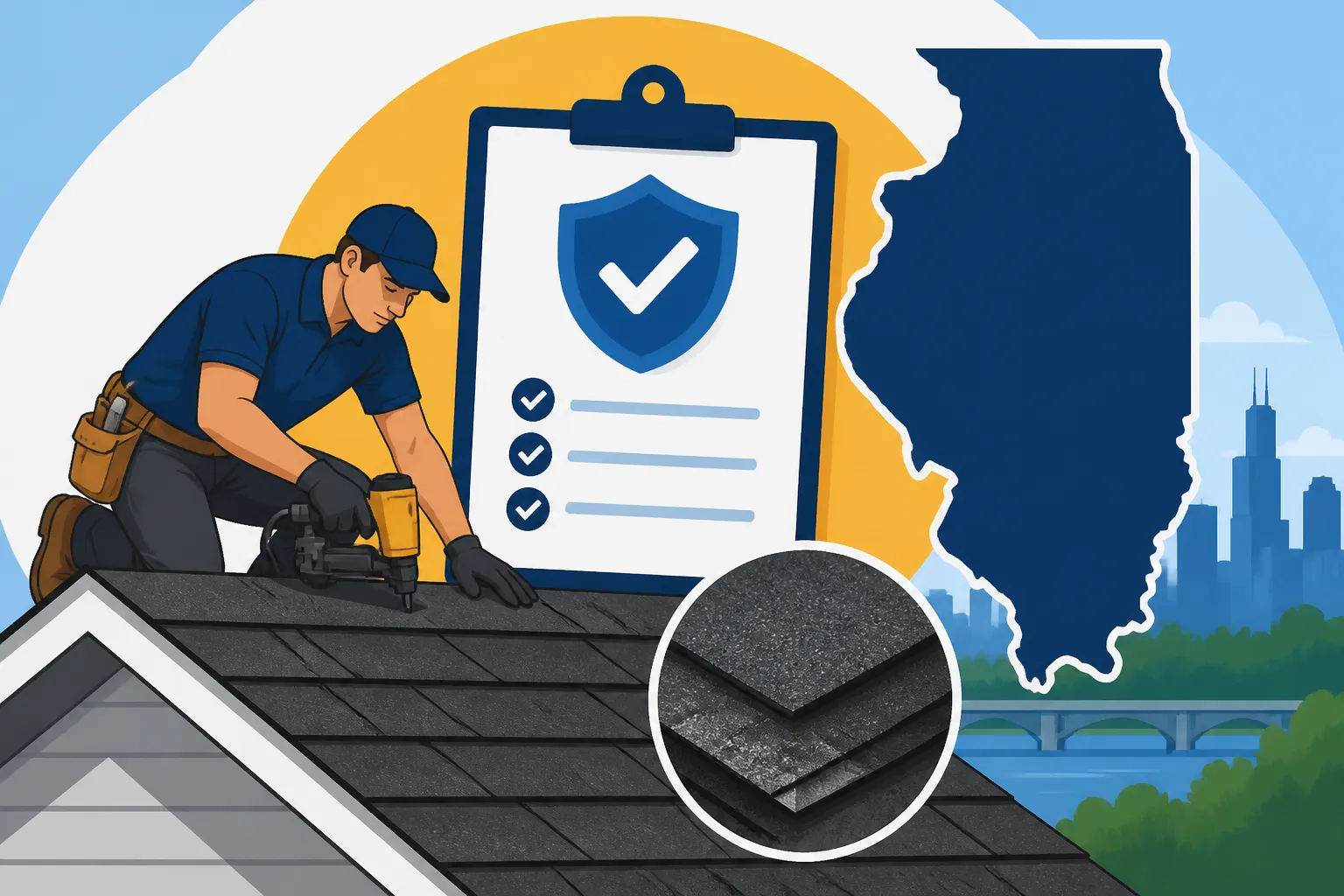
Roofing License Requirements in Illinois
Trying to figure out the exact licensing requirements for a roofing contractor can feel like navigating a maze, especially when you're dealing with something as vital as your home's protection. It's frustrating to just want a straight answer and instead find yourself sifting through conflicting information or local ordinances. This guide is here to cut through the confusion and give you a clear, realistic understanding of what roofing license requirements entail in Illinois, so you can make informed decisions.
The Illinois Landscape: No Statewide Roofing License
Let's get this major point out of the way right from the start, because it's a huge source of confusion for homeowners: Illinois does not have a statewide licensing program specifically for roofing contractors. That's right, unlike many other trades or even other states that might require a general contractor's license or a specialty roofing license issued by the state, Illinois leaves it up to individual cities, towns, and counties to set their own rules.
This lack of a unified state standard can be incredibly frustrating for homeowners. You might live in one suburb of Chicago where a contractor needs to jump through several hoops, only to find that a town just a few miles down the road has minimal requirements, or perhaps none at all beyond general business registration. This patchwork system means that what's acceptable in Springfield might not fly in Naperville, and vice-versa. It also means that a "licensed" contractor might only be licensed in their home city, not necessarily yours. This is why it’s absolutely critical for you, the homeowner, to understand the local regulations where your property is located, not just where the roofing company happens to be headquartered. When you're looking for someone to work on your roof, asking questions about their local credentials is key to avoiding issues down the line. It's a fundamental step in learning How to Choose a Roofing Contractor who is truly qualified and compliant in your area.
The absence of a statewide license doesn't mean you're entirely on your own, though. It simply shifts the burden of due diligence more squarely onto your shoulders to check local mandates. Many reputable contractors will still be licensed and registered in various municipalities, but it's always best to verify directly with your local building department.
Local Licensing: What to Expect in Major Illinois Cities
Since Illinois doesn't offer a blanket statewide roofing license, the requirements you'll encounter depend entirely on your specific municipality. It's a game of local rules, and these can vary dramatically, covering everything from simple business registration to comprehensive exams, bonding, and proof of insurance. To give you a clearer picture, let's look at what some of Illinois's larger cities typically require from roofing contractors. Keep in mind that these are general outlines, and you should always confirm the latest information with your local building department.
Chicago's Comprehensive Contractor Licensing
Chicago, being the largest city, naturally has one of the more rigorous licensing systems. If you're undertaking a roofing project within the city limits, your contractor will need a general contractor's license with a specific "Class A, B, or C" designation, which often includes a roofing endorsement or specialty. They usually require proof of substantial general liability insurance, workers' compensation insurance, and often a surety bond. There are typically application fees, annual renewal fees, and a thorough review process. The city takes its building codes seriously, and ensuring your contractor is properly licensed and permitted helps guarantee adherence to these standards.
Requirements in Suburban Areas: A Mixed Bag
Move outside of Chicago, and the landscape changes considerably.
- Naperville: This bustling suburb often requires contractors to register with the city, providing proof of insurance and sometimes a bond. While it might not be a specialized "roofing license" per se, it's a critical registration that ensures the city knows who is working on homes and that they meet basic financial and insurance standards.
- Aurora: As Illinois's second-largest city, Aurora typically mandates that general contractors, including roofers, be registered and licensed. They’ll look for proof of insurance and often require a bond. The focus here is on ensuring contractors are legitimate businesses operating within city parameters, rather than fly-by-night operations.
- Springfield: The state capital usually requires general contractors to register and obtain a permit for specific work, including roofing. They'll typically ask for proof of adequate insurance coverage and might require a bond to protect homeowners from incomplete work or damages.
- Peoria: In Peoria, you'll generally find requirements for contractors to be registered, bonded, and insured. They want to ensure that any company performing work on residential or commercial properties is legitimate and carries the necessary protections for both the property owner and their own employees.
The takeaway here is clear: don't assume. Just because a roofer has a fancy truck and a slick website doesn't mean they're properly credentialed for your specific project in your specific town. A good starting point for finding local professionals who understand these nuances is through platforms like Modernize, which can connect you with contractors who are often pre-vetted for local compliance. Remember, a contractor might have a general business license, but that doesn't always qualify as a roofing license or registration needed for your project according to your local municipality. This is a common pitfall that savvy homeowners need to avoid. It’s a stark contrast to places where Roofing Contractor License Requirements by State are uniform and easier to verify.
Here's a quick look at some common requirements in various Illinois cities:
| City/Municipality | General Contractor License/Registration | Roofing Specialty License (if applicable) | General Liability Insurance Req. | Workers' Comp Insurance Req. | Surety Bond Req. |
|---|---|---|---|---|---|
| Chicago | Yes (General Contractor Class A, B, C) | Often required as endorsement | Yes (high limits) | Yes | Yes |
| Aurora | Yes (Contractor Registration) | No specific roofing license | Yes | Yes (if employees) | Often required |
| Naperville | Yes (Contractor Registration) | No specific roofing license | Yes | Yes (if employees) | Often required |
| Springfield | Yes (Contractor Registration) | No specific roofing license | Yes | Yes (if employees) | Often required |
| Peoria | Yes (Contractor Registration) | No specific roofing license | Yes | Yes (if employees) | Often required |
| Rockford | Yes (Contractor Registration) | No specific roofing license | Yes | Yes (if employees) | Often required |
Note: This table provides a general overview. Specific requirements, including minimum insurance limits and bond amounts, can change and should always be verified with the respective city's building department.
Essential Requirements Beyond the License
Even if your town doesn't have a specific "roofing license" per se, there are absolutely non-negotiable requirements that any legitimate roofing contractor in Illinois must meet. These aren't just good practices; they're protections for you, your property, and the workers on your roof. Overlooking these can lead to massive headaches, financial liability, and even legal battles.
Comprehensive Insurance Coverage
This is arguably the most critical component. Any contractor you hire, especially for a high-risk job like roofing, must carry robust insurance.
- General Liability Insurance: This protects your property from damage caused by the contractor or their crew during the project. Imagine a scenario: the roofers are tearing off old shingles, and a bundle accidentally slides off, smashing your brand new outdoor grill or a window. Without general liability insurance, you could be left footing the bill for the repairs, or you'd have to pursue a costly legal claim against the contractor. Make sure the policy limits are sufficient for potential damages. We've talked extensively about Licensed and Insured Roofers: Why It Matters, and general liability is at the top of that list.
- Workers' Compensation Insurance: This protects the roofing crew in case of injury on your property. Roofing is a dangerous job, and accidents, unfortunately, do happen. If a worker falls and is injured on your property and the contractor doesn't have workers' comp, you, the homeowner, could potentially be held liable for their medical bills, lost wages, and even long-term disability. This is a nightmare scenario that proper workers' comp insurance completely prevents. Always ask for a certificate of insurance directly from the insurer, not just a photocopy from the contractor. This allows you to How to Verify a Roofer's Insurance is current and active.
Don't ever, under any circumstances, hire a contractor who cannot provide proof of both current general liability and workers' compensation insurance. It's a risk simply not worth taking, regardless of how much money it might save you upfront.
Contractor Bonding
While not always legally mandated in every municipality for roofing, a surety bond is another layer of protection that truly sets professional contractors apart. A surety bond is essentially a three-party agreement: the contractor (principal), the homeowner (obligee), and the surety company (who backs the bond).
- What it does: If the contractor fails to complete the work as per the contract, or if their work is substandard and they don't fix it, the bond provides a financial guarantee to the homeowner. This means you could file a claim against the bond to recover funds needed to hire another contractor to finish or fix the job.
- Why it matters: In towns without strict licensing, a bond demonstrates a contractor's commitment to quality and financial responsibility. It offers peace of mind that if things go sideways, you have recourse beyond just suing the contractor directly, which can be a long and expensive process. We delve deeper into this topic in our article, Should Your Roofer Be Bonded and Insured.
Proper Permitting for Your Project
Even if your contractor doesn't need a specific license in your small town, your roofing project almost certainly needs a permit. Most municipalities in Illinois, whether they have contractor licensing or not, require permits for significant home improvements like roof replacements.
- Why permits are necessary: Permits ensure that the work performed on your home meets local building codes and safety standards. An inspector will typically review the plans and inspect the work at various stages (e.g., after tear-off, before final shingle installation) to ensure everything is up to par. This protects the structural integrity of your home, ensures safety, and can be vital for insurance claims or future home sales.
- Who pulls the permit: Generally, the contractor is responsible for pulling the necessary permits. It's usually included in their service. However, some less scrupulous contractors might try to get the homeowner to pull it, or worse, skip it entirely. Never let a contractor talk you out of a permit. If they suggest skipping it, that's a massive red flag. Our guide on Roofing Permits Explained clarifies this process and who is responsible for what. Always confirm with your local building department that a permit has been pulled for your address before work begins.
These requirements, even in the absence of a statewide license, are the bedrock of a professional and protected roofing project. Don't compromise on any of them.
How to Verify a Roofer's Credentials in Illinois
Given the complex, localized nature of roofing contractor requirements in Illinois, it falls to you, the homeowner, to perform thorough due diligence. It might seem like a lot of work, but trust me, a few hours spent verifying credentials upfront can save you untold amounts of stress and money down the road. Here’s a step-by-step approach to ensuring you’re hiring a legitimate and qualified professional.
Request Specific Documentation
The first step is always to ask. Any reputable contractor will expect these requests and should readily provide the information.
- Local License/Registration: Ask for proof of their current license or registration with your specific municipality. If they're only registered in a different town, that's not enough. They should be able to show you a physical license or registration card, or at least a permit number that you can verify.
- Proof of Insurance: Request current Certificates of Insurance (COI) for both General Liability and Workers' Compensation. Make sure the dates are current, and that you are listed as a Certificate Holder, which ensures you are notified if the policy lapses. The COI should be issued directly from their insurance carrier. Don't accept expired certificates or simple declarations from the contractor themselves.
- Bonding Information: If your municipality requires it, or if the contractor offers it as an added protection, ask for proof of their surety bond.
Verify with Local Authorities
Once you have the documentation, don't just take it at face value.
- Your City/County Building Department: Call or visit your local building department. This is the single most important step. Provide them with the contractor's business name, license/registration number (if applicable), and ask if they are currently registered and in good standing to perform roofing work in your area. Also, confirm what permits are required for your specific project and who is responsible for pulling them. You can also inquire about the process for How to Check If a Roofer Pulled a Permit.
- Illinois Department of Insurance: While they don't license roofers, you can sometimes verify insurance coverage or report potential fraud if a contractor claims to be insured but isn't.
Check References and Reviews
Beyond the official paperwork, real-world experience matters.
- Customer References: Ask for a list of recent customers (within the last 6-12 months) who had similar work done. Contact them and ask about their experience, professionalism, adherence to timelines, and satisfaction with the work.
- Online Reviews: Check platforms like the Better Business Bureau (BBB), Google Reviews, Yelp, and specialized contractor directories like Modernize. Look for patterns in feedback – consistently positive reviews are good, but also pay attention to how a contractor responds to negative feedback. A few mixed reviews are normal, but a string of complaints about unfinished work, poor communication, or shoddy craftsmanship are major Roofing Contractor Red Flags to Avoid.
- Manufacturer Certifications: Many top asphalt shingle manufacturers like GAF, Owens Corning, and CertainTeed offer certification programs for contractors. While not a state license, these certifications indicate that a contractor has met certain training and installation standards set by the manufacturer. This often allows them to offer enhanced manufacturer warranties, which can be a huge benefit to you. Ask if they hold any of these certifications and verify them through the manufacturer's website.
By systematically going through these verification steps, you're not just ensuring compliance; you're also significantly increasing your chances of a successful, stress-free roofing project. When you're ready to start gathering quotes, remember that platforms like Modernize can streamline the process by connecting you with prescreened local roofing professionals who understand Illinois's specific requirements. This helps you narrow down your choices to reputable contractors and avoid many common pitfalls. A thorough approach will ultimately lead you to How to Find a Reputable Roofer who provides quality work and stands behind it.
Disclaimer
Please remember that the information provided in this guide is intended for general informational purposes only and not as legal advice. Licensing and permitting requirements for roofing contractors in Illinois are highly localized and subject to change. Always consult directly with your specific municipal or county building department to confirm the exact and most up-to-date regulations for your location before hiring any contractor or beginning a roofing project.