Roofing Deposit and Payment Schedule
The moment you realize your roof needs attention, whether it's a minor repair or a full replacement, your mind probably jumps straight to "how much is this going to cost?" and then quickly to "how do I pay for it?" Dealing with roofing contractors and understanding their payment terms can feel like navigating a maze, especially when you're trying to protect your home and your wallet. This guide is here to demystify roofing deposits and payment schedules, helping you understand what's normal, what's a red flag, and how to safeguard your investment.
Understanding the Roofing Deposit: Why It's There
It's common for roofing contractors to ask for an upfront deposit. For many homeowners, this can be a point of anxiety – handing over money before any work has even begun feels risky. But there's a legitimate reason behind this practice, and knowing what it is can help you evaluate if a contractor's request is reasonable.
The Purpose of a Deposit
Think of a deposit as a commitment from both sides. For the contractor, it’s a way to ensure the homeowner is serious about the project and isn't going to back out after they've already invested time and money. Primarily, a deposit helps cover the initial costs associated with starting your roofing project. This usually includes purchasing necessary materials, securing your spot on their work schedule, and sometimes even covering initial labor costs for project planning and coordination.
Without a deposit, a roofing company would be taking on significant financial risk, tying up capital in materials that might go unused if a homeowner changes their mind at the last minute. This is especially true for custom orders or large projects. It also serves as a good faith gesture, solidifying the agreement and allowing the contractor to move forward confidently. When you're looking at various companies, a service like Modernize can help you connect with reputable contractors who clearly outline their deposit requirements.
How Much Is Too Much for a Deposit?
This is where many homeowners get nervous, and rightfully so. There's a wide range of what's considered "normal" for a roofing deposit, and it can vary significantly by state, local regulations, and the overall scope of the project. Generally, a deposit should cover a portion of the materials and initial mobilization. A common range is anywhere from 10% to 30% of the total project cost. In some states, there are strict legal limits. For example, in California, contractors are generally limited to requesting a deposit of no more than 10% of the contract price or $1,000, whichever is less, for home improvement projects. Other states might not have such explicit caps but still expect reasonableness.
If a contractor asks for 50% or even 100% upfront, that should immediately raise a red flag. This amount is usually excessive and can leave you in a vulnerable position if the contractor doesn't perform the work as agreed or disappears. It’s always wise to ask about the specific reasons for the deposit amount and how it aligns with the Roofing Deposit: How Much Is Normal guidelines. Never feel pressured to pay more than you're comfortable with or more than is legally allowed in your area.
What Does the Deposit Cover?
Understanding what your deposit actually pays for can bring peace of mind. Most commonly, a deposit goes towards:
- Material Costs: This is often the biggest chunk. Roofing materials, especially specialized asphalt shingles, can be expensive, and contractors need to purchase them before installation can begin. This could include the shingles themselves, underlayment, flashing, and other essential components.
- Scheduling and Logistics: Your project needs to be planned. This involves scheduling crews, ordering materials, and lining up equipment. The deposit helps cover these administrative and logistical costs, ensuring that when the time comes, everything is ready to go.
- Permit Fees: In many areas, a building permit is required for a roof replacement. Your deposit might cover the initial cost of pulling this permit, which is a crucial step to ensure your project complies with local building codes. You can learn more about this by reading our guide on Do You Need a Permit to Replace a Roof.
A reputable contractor will be transparent about what your deposit covers. If they're vague or unwilling to provide a breakdown, consider that a warning sign. The deposit should be clearly itemized in your written contract.
Standard Payment Schedules: What to Expect
Once the initial deposit is handled, the remaining balance of your roofing project will be broken down into a series of payments. A well-structured payment schedule is designed to protect both the homeowner and the contractor, ensuring that payments align with work progression.
Typical Milestones for Payments
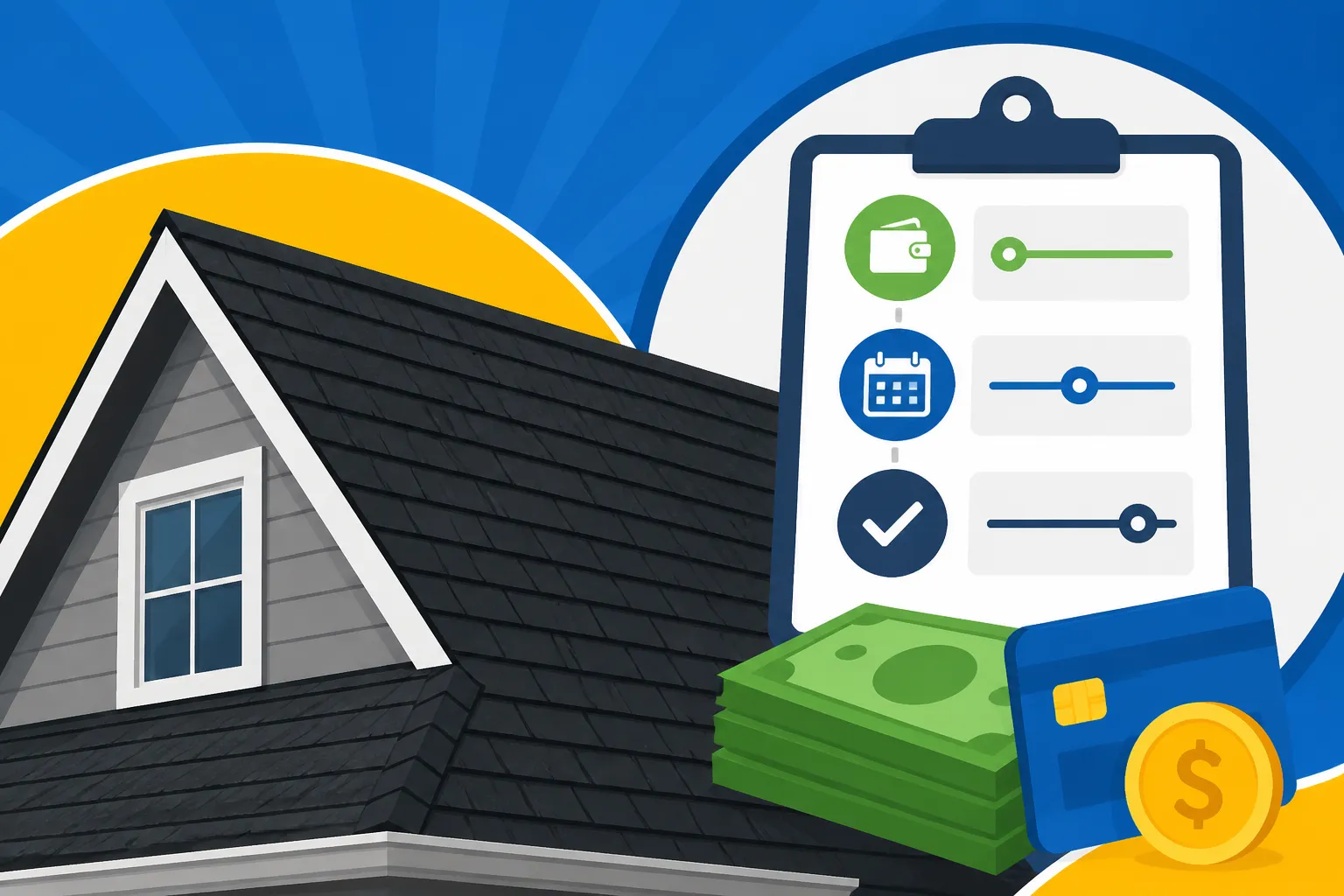
A common and fair payment schedule is tied to specific project milestones. This means you pay as the work is completed, rather than all at once. Here's a breakdown of what you might typically see:
- Materials Delivery: After the initial deposit, a common second payment milestone is when the roofing materials are delivered to your property. This makes sense because a significant portion of the project's cost is tied up in materials. At this point, the contractor has physically committed those resources to your job. This payment might be 30-50% of the total cost, combined with the initial deposit.
- Project Commencement/Partial Completion: Sometimes, a payment is due after the initial stages of work have begun, like the tear-off of old shingles and inspection of the roof decking, or once a certain percentage of the new roof is installed. This shows tangible progress and ensures the crew is on site and actively working.
- Substantial Completion: This is a critical milestone, often where the bulk of the remaining payment is made. "Substantial completion" typically means the roof is watertight, functional, and nearing the finish line, with only minor details or cleanup remaining. Most contractors will expect around 80-90% of the total payment to be made by this point.
The goal is to avoid situations where you've paid for everything, but the work is still unfinished, or conversely, where the contractor has completed significant work and hasn't been compensated. This balanced approach helps everyone involved.
Final Payment Considerations
The final payment is usually the smallest portion, often around 5-10% of the total cost. This payment should only be made after the project is 100% complete to your satisfaction and after a thorough final inspection has been conducted. This inspection should confirm that:
- All work outlined in the contract has been performed correctly.
- The site has been completely cleaned up, with all debris and old materials removed.
- Any necessary final permits or inspections have been passed by the local authorities.
- You have received all warranty information, both from the manufacturer (e.g., GAF, Owens Corning, CertainTeed) and for the contractor's workmanship.
It's absolutely critical to withhold this final payment until you are fully satisfied with the job and have received all relevant documentation. This gives you leverage to ensure any punch-list items or minor issues are addressed promptly. If a contractor pushes for final payment before the job is truly done, it's a major red flag. For a clear understanding of what a comprehensive estimate should cover, check out our article on How to Read and Compare Roofing Estimates.
Project Delays and Payment Adjustments
Unfortunately, roofing projects aren't always a smooth, predictable ride. Weather, unforeseen structural issues, or material delays can all throw a wrench into the schedule. A good contract will address how these delays impact the payment schedule.
Ideally, your contract should specify that payments are tied to completed work, not just dates. If a project is delayed due to factors beyond your control, your payment schedule should naturally adjust to reflect the new timeline for milestones. For instance, if materials delivery is delayed, the payment associated with that milestone should also be delayed. You shouldn't be asked to make a payment for a milestone that hasn't been reached due to contractor-related delays. If you used a service like Modernize to find your contractor, they often vet for companies that have clear communication policies regarding such delays.
It's also important to discuss potential "hidden costs in a roof replacement" (link to Hidden Costs in a Roof Replacement) that might arise from unforeseen issues, like discovering rotten roof decking during the tear-off. Your contract should ideally outline a process for how these extra costs will be approved and incorporated into the payment schedule, usually through a signed change order. Never agree to verbal changes in cost or scope.
Red Flags to Watch Out For in Payment Schedules
While legitimate contractors have valid reasons for deposits and structured payments, some less scrupulous individuals might try to exploit homeowners through unfair or risky payment demands. Knowing what to look for can save you a world of trouble.
Demands for Full Upfront Payment
This is arguably the biggest red flag you can encounter. No reputable roofing contractor will demand 100% of the project cost upfront. As discussed, a reasonable deposit is acceptable, but full payment eliminates your leverage entirely. If a contractor has all the money before starting, they have little incentive to complete the job on time, to quality standards, or even to complete it at all.
Imagine this scenario: a "contractor" asks for full payment, citing "material costs" or "securing your spot." You pay, and then they disappear, or they do a shoddy job, knowing you have no financial hold over them. This is a common tactic in roofing scams. Always remember, if you pay in full upfront, you might find yourself with an unfinished roof and no recourse. This is why the question of Should You Pay a Roofer Upfront is so crucial.
Unclear Payment Terms
A professional roofing contract should meticulously detail every aspect of the payment schedule: the total cost, the deposit amount and when it's due, the breakdown of subsequent payments, and the specific milestones that trigger each payment. If a contractor provides a vague contract with generalized payment terms, or if they try to change terms verbally, be extremely wary.
Ambiguity in payment terms can lead to disputes down the road. For instance, if a contract just says "50% due at start," what does "start" mean? When materials arrive? When the crew shows up? When the first shingle is nailed? Clear, measurable milestones protect both parties. If the terms aren't crystal clear, insist on clarification in writing or consider looking for another contractor. Services like Modernize can help you find contractors committed to transparent practices.
Cash-Only Requests and Lack of Paperwork
Another significant warning sign is a contractor who insists on cash payments only or is hesitant to provide proper invoices and receipts. While cash transactions aren't inherently illegal, an exclusive demand for cash, especially without corresponding paperwork, often signals an attempt to avoid taxes, bypass regulations, or operate without proper licensing and insurance.
Paying in cash without documentation leaves no paper trail, making it incredibly difficult to prove payments were made or to seek recourse if a problem arises. Always insist on written invoices, receipts for all payments, and a formal contract. Payments should ideally be made via check or credit card, which provides a verifiable record. If a contractor balks at this, they're likely not a business you want to be working with. Make sure you read up on Roofing Contractor Red Flags to Avoid to empower yourself.
Payment Options and Financing Your Roof
A new roof is a significant investment, and not everyone has the cash readily available to cover the full cost. Fortunately, there are several payment and financing options available to homeowners.
Traditional Payment Methods
Most reputable roofing contractors accept a variety of traditional payment methods, offering flexibility and security for homeowners.
- Checks: This is a common and relatively secure method for large payments. It provides a clear paper trail, making it easy to track when and how much you paid. Always make checks out to the company name, not an individual.
- Credit Cards: Many contractors accept credit cards, which can be a good option if you want to earn rewards, need to bridge a small gap in funds, or prefer the added consumer protection that credit card companies often offer for disputes. Be mindful of potential processing fees that some contractors might pass on.
- Bank Transfers/ACH: For some, direct bank transfers can be a convenient option. However, these usually offer less consumer protection than credit cards, so ensure you have a solid contract and trust your contractor implicitly before using this method.
Always get a written receipt for every payment, regardless of the method used. This documentation is your proof of payment and essential for your records and any potential warranty claims.
Roof Financing Options Explained
If paying for a new roof out-of-pocket isn't feasible, don't despair! Many homeowners leverage financing options to make their roofing projects more manageable.
- Contractor-Provided Financing: Many roofing companies, often in partnership with third-party lenders, offer their own financing plans. These can include deferred interest options (e.g., "no interest if paid in full within 12 months") or fixed-rate loans. These can be convenient, but always compare their rates and terms with other options.
- Home Equity Loan or HELOC: If you have equity in your home, a home equity loan (a lump sum loan) or a home equity line of credit (HELOC, a revolving line of credit) can offer competitive interest rates. The interest on these loans may even be tax-deductible (consult a tax professional). This is a popular way to finance home improvements.
- Personal Loans: Unsecured personal loans can be obtained from banks, credit unions, or online lenders. While they typically have higher interest rates than home equity-backed loans, they don't require your home as collateral.
- Government Programs: Depending on where you live, there might be local or state programs offering low-interest loans or grants for home improvements, especially those that increase energy efficiency. Check with your local housing authority or energy department.
Understanding all available options, including various Roof Financing Options Explained, is crucial for making the best financial decision for your household. A service like Modernize can often help you explore financing avenues as part of their contractor matching process.
Insurance Claims and Payments
If your roof damage is due to a covered event like a storm, your homeowners insurance will likely play a significant role in the payment process. This adds another layer of complexity.
- Claim Approval: Once you file a claim, your insurance company will send an adjuster to assess the damage. If the claim is approved, they'll issue an initial payment, typically for the actual cash value (ACV) of the damaged roof, minus your deductible.
- Replacement Cost Value (RCV): Most policies are RCV policies, meaning they will pay the full cost of replacement, not just the depreciated value. However, the difference between ACV and RCV is usually paid out after the work is completed and you've submitted proof of completion (e.g., invoices).
- Working with Your Contractor and Adjuster: A reputable contractor will be familiar with the insurance claim process and can help you navigate it. They can provide detailed estimates that align with insurance company requirements and advise you on how to get the full RCV payment. However, remember the contractor works for you, not the insurance company.
It’s vital to understand your policy thoroughly and communicate clearly with both your insurance provider and your roofing contractor. Be wary of contractors who claim they can "handle everything" with your insurance and ask you to sign over your claim checks directly to them without clear itemized statements and agreements. For more depth, consider reading our article on Does Insurance Cover Roof Replacement.
| Payment Milestone | Typical Percentage of Total Cost | What It Covers/Why It's Paid |
|---|---|---|
| Initial Deposit | 10-30% | Secures schedule, initial material purchase, project planning, permit fees |
| Materials Delivery | 30-50% (combined with deposit) | Confirms materials are on-site for your project |
| Partial Completion | 20-30% | Demonstrates tangible work progress (e.g., old roof tear-off, new underlayment, initial shingle installation) |
| Final Completion | 5-10% | After all work is complete, site cleanup, final inspection passed, warranties received |
Protecting Your Investment: Contracts and Documentation
A clear, comprehensive contract and meticulous documentation are your best defense against misunderstandings, disputes, and potential scams. Never underestimate their importance.
The Importance of a Detailed Contract
Your roofing contract is a legally binding agreement, and it should be as detailed as possible. It's not just a formality; it's your roadmap for the entire project and your protection if things go awry. A good contract should include, but not be limited to:
- Company Information: Full legal name, address, license number, and contact details of the contractor.
- Your Information: Your name and property address.
- Scope of Work: A thorough description of all work to be performed, including tear-off, decking replacement (if needed), underlayment type (e.g., synthetic vs. felt underlayment cost), specific shingle brand and type (e.g., GAF Timberline HDZ or Owens Corning Duration), flashing details, ventilation, and cleanup.
- Material Specifications: Exact brands, models, colors, and quantities of all materials to be used.
- Total Cost: The agreed-upon total price for the project.
- Payment Schedule: A clear, itemized breakdown of the deposit amount, subsequent payment amounts, and the specific, measurable milestones that trigger each payment.
- Start and Completion Dates: Estimated project timeline.
- Warranty Information: Details on both the manufacturer's warranty and the contractor's workmanship warranty.
- Insurance and Licensing: Proof of the contractor's liability insurance and workers' compensation, along with their license numbers.
- Permit Responsibility: Who is responsible for pulling necessary permits (it should be the contractor).
Never sign a contract that has blank spaces or vague language. Take your time to review it thoroughly, and don't hesitate to ask questions or request amendments. This falls under critical advice for What to Include in a Roofing Contract.
Lien Waivers and Final Release
These are two important documents that protect you from future financial claims by subcontractors or suppliers.
- Lien Waivers: In many states, if a contractor doesn't pay their subcontractors or material suppliers, those parties can place a mechanic's lien on your property. This means they could legally force the sale of your home to get paid, even if you've already paid the general contractor. A lien waiver is a document signed by the contractor, subcontractors, and suppliers, acknowledging that they have received payment and waive their right to place a lien on your property. It’s wise to request partial lien waivers as payments are made and a final, unconditional lien waiver upon final payment. This is a vital step in Roofing Lien Waivers Explained.
- Final Release: This is a document signed by the contractor upon final payment, stating that the work is complete according to the contract, all payments have been received, and there are no outstanding claims. It formally closes out the project.
Always ensure you receive these documents, especially the final lien waiver, before making your last payment.
Documenting Progress and Payments
Keeping your own meticulous records is just as important as a detailed contract. Create a dedicated folder for your roofing project and include:
- Copies of the Signed Contract: Every page, with all amendments.
- All Invoices and Receipts: For every payment made.
- Proof of Payment: Copies of checks, credit card statements, or bank transfer confirmations.
- Lien Waivers and Final Release: As you receive them.
- Communication Records: Emails, text messages, and notes from phone calls or in-person conversations with the contractor. Date everything.
- Photos and Videos: Document the "before," "during," and "after" stages of the project. This is invaluable if there's ever a dispute about the quality of work or unforeseen damage.
- Warranty Information: Manufacturer and workmanship warranties.
- Permit and Inspection Documents: Proof that the local building department signed off on the work.
Having a robust paper trail provides irrefutable evidence should any issues arise. It's a proactive measure that empowers you as the homeowner throughout the entire process, from finding a contractor with a platform like Modernize to the final handshake.
Disclaimer
The information provided in this article is intended for general informational purposes only and does not constitute professional advice. Roofing costs, permits, regulations, and contractor payment practices can vary significantly based on location, contractor, and specific project details. Always consult with a qualified, licensed, and insured roofing professional and, if necessary, a legal expert, before making any decisions related to your roofing project or signing any contracts.