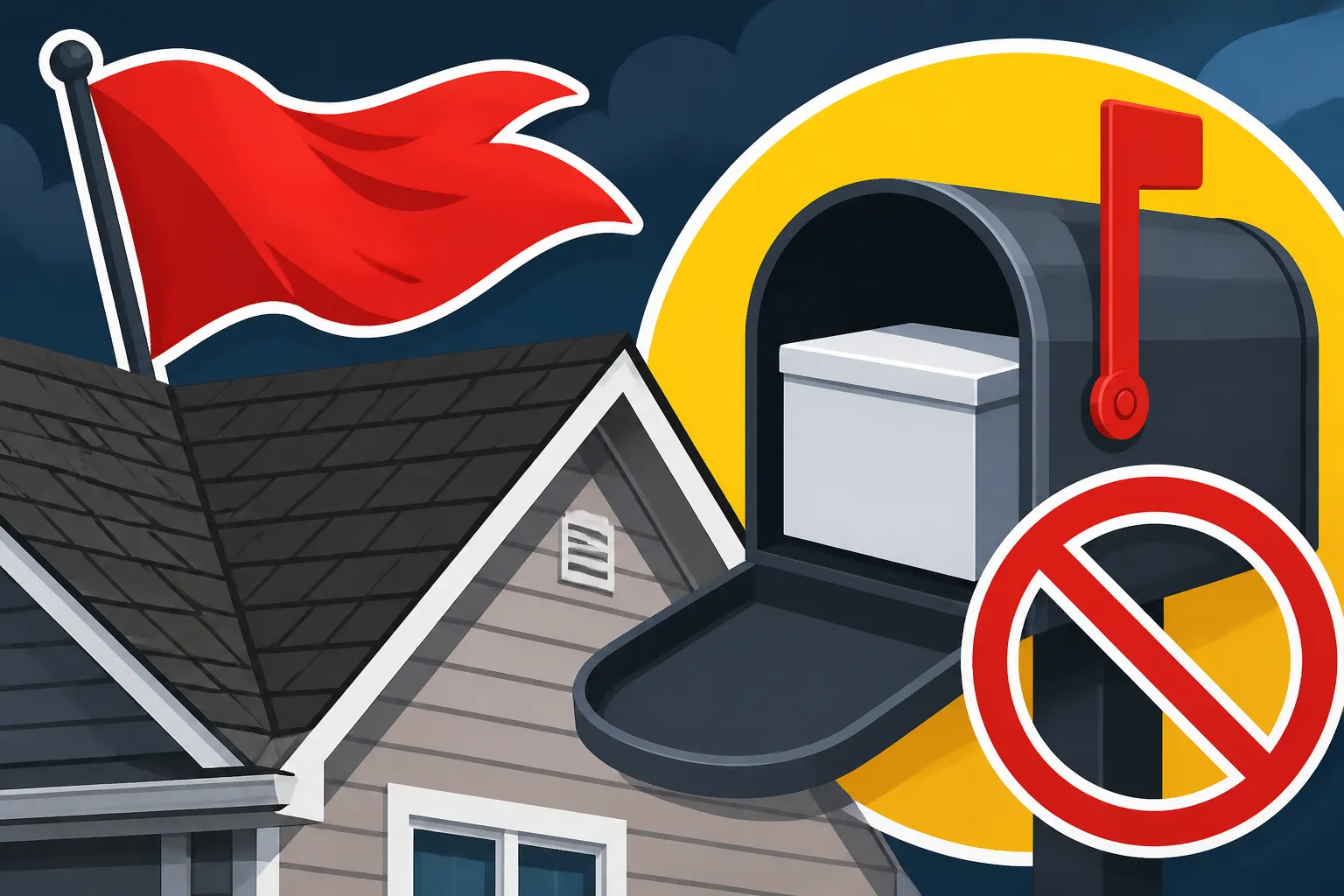
Roofing Red Flag: A P.O. Box Only
It’s a truly unsettling feeling when you’re looking for a reliable roofing contractor, pouring over estimates, and then you spot it: a business address that's just a P.O. Box. This seemingly small detail can actually be a huge red flag, leaving you wondering if you're dealing with a legitimate, accountable business or a fly-by-night operation. This guide will help you understand why a P.O. Box only address for a roofing company is a significant warning sign and what steps you can take to protect yourself.
The Immediate Concerns with a P.O. Box Only Address
When you’re entrusting someone with your home’s most critical defense against the elements, you want to know they’re a stable, verifiable entity. A P.O. Box address, without any accompanying physical street address, often raises more questions than it answers. It immediately creates a sense of detachment and can make accountability feel elusive, which is the last thing you want when dealing with a major home improvement project like a roof replacement.
Lack of a Verifiable Physical Presence
Think about it: a legitimate, established business usually has a physical location. This could be a commercial office, a warehouse, an industrial yard, or even a home office that’s clearly registered with local authorities. This isn't just about a place for mail; it's about a tangible presence that anchors a business to a community. When a roofing contractor only provides a P.O. Box, it means there's no fixed location where you can visit them, see their operations, or even know for sure if they truly exist beyond a mailing address.
This lack of a physical storefront or business location can be a major hurdle if you need to discuss something in person, inspect their facilities, or if there’s ever a dispute. Imagine trying to sort out a warranty issue or a problem with the installation years down the line when the only address you have is a box at the post office. It makes things incredibly difficult, and it creates a barrier to trust that’s hard to overcome.
Issues with Accountability and Recourse
A physical business address implies a certain level of permanence and accountability. If a roofing company has a brick-and-mortar location, they're more invested in their local reputation and are easier to find if problems arise. A P.O. Box, on the other hand, makes it far too easy for a contractor to disappear. If things go south, a P.O. Box offers little leverage for homeowners seeking recourse. You can't just show up at their door to resolve a conflict or follow up on an unfulfilled promise.
This isn't to say every business with a P.O. Box is dishonest, but in the high-stakes world of roofing, where projects can cost thousands and impact your home's integrity, this lack of transparency is a serious risk. You want a contractor who stands by their work, and a physical address is one fundamental way they demonstrate that commitment. Knowing that a contractor has a real, verifiable base of operations can give you peace of mind throughout the project and for years to come, especially if you ever need to invoke your warranty.
The Dangers of Hiring a P.O. Box-Only Roofer
Choosing a roofing contractor is one of the most important decisions you'll make for your home. Opting for a company that only lists a P.O. Box can expose you to several significant risks that could cost you time, money, and a lot of headaches in the long run.
Increased Risk of Scams and Fly-by-Night Operations
The roofing industry, unfortunately, attracts its share of unscrupulous individuals, often referred to as "storm chasers." These contractors typically appear after major weather events, offer unusually low bids, and then vanish once they've collected payment, leaving homeowners with shoddy work or unfinished projects. A P.O. Box is a common tactic for these types of operations because it allows them to remain anonymous and avoid being tracked. Without a verifiable physical address, it's incredibly difficult to confirm their legitimacy.
They might present themselves as legitimate, but if their only contact point is a P.O. Box and a cell phone number, how can you be sure they're not just moving on to the next town or state when the work is done? This is why it’s so important to scrutinize every detail about a contractor, including their address. You want a local roofer with ties to your community, not someone who can pack up and leave without a trace. This is a common warning sign covered in our guide on .
Challenges with Licensing, Insurance, and Warranties
Legitimate roofing contractors are properly licensed and insured. These documents are vital for your protection and often require a verifiable business address for registration. If a contractor only provides a P.O. Box, it can make it harder to confirm their current licensing and insurance status with state or local authorities. Some states require a physical address to issue certain licenses.
Even if they do have these documents, the P.O. Box still poses a risk for long-term issues, especially with warranties. Most reputable roofing manufacturers like GAF, Owens Corning, or CertainTeed offer extensive material warranties, and certified contractors often provide workmanship warranties. However, these warranties are only as good as the company backing them. If the contractor disappears, who will honor the workmanship warranty? And how do you even notify a P.O. Box of a warranty claim years down the road? Always ask to see proof of their current insurance and licensing, and remember that for a contractor, having a physical business presence often goes hand-in-hand with being properly vetted and certified. Make sure to understand what a includes to protect yourself.
Legal and Financial Recourse Limitations
Should something go wrong—a shoddy installation, damage to your property, or the contractor simply abandoning the job—your options for legal and financial recourse become significantly limited if the only address you have is a P.O. Box. It's much harder to serve legal papers or pursue a claim against a company that lacks a physical location. Without a real address, you might struggle to identify the principals of the company, which is essential for any legal action.
This isn't just about worst-case scenarios; it’s about having peace of mind. A legitimate business will have assets tied to their physical location and a public record that makes them accountable. A P.O. Box offers a shield of anonymity that can prevent homeowners from getting justice if they are wronged. When you're considering such a substantial investment, ensuring you have clear avenues for recourse is paramount. Our article on discusses many aspects that could cause disputes with contractors.
Identifying a Legitimate Roofing Contractor's Address
It might seem old-fashioned in this digital age, but a verifiable physical address is still a cornerstone of a trustworthy business, especially in a hands-on industry like roofing. Knowing what to look for can save you a lot of trouble.
What a Proper Business Address Entails
A legitimate roofing contractor will provide a physical street address. This could be:
- A Commercial Office: Many larger or more established roofing companies have dedicated office spaces where they conduct business, meet clients, and manage operations.
- An Industrial Facility/Warehouse: Some contractors operate out of industrial parks or have a yard where they store equipment and materials. This is common and perfectly acceptable.
- A Registered Home Office: For smaller, independent contractors, their home address might also be their registered business address. This is fine as long as it's a verifiable residential address and registered as such with the state and local municipality. What you're looking for is transparency and verifiability.
The key is that you should be able to look up this address, confirm it exists, and potentially even visit it if needed. It should be consistent across all their documentation: their website, business cards, contracts, and licensing information. This consistency and verifiability signal that they are rooted somewhere and are not trying to hide.
The Importance of a Local Presence
Hiring a local roofing contractor offers numerous advantages, and their physical address plays a big part in that. Local contractors are often more invested in their community's reputation. They rely on word-of-mouth referrals and repeat business from neighbors, so they have a strong incentive to do quality work and resolve any issues promptly. They're also typically more familiar with local building codes, permit requirements, and climate-specific roofing needs. For instance, a roofer in Florida will understand hurricane strapping codes, while one in Minnesota will be well-versed in ice and water shield requirements.
A local contractor with a verifiable address is also easier to reach for follow-up work or warranty claims. If you're wondering, "How to Find a Good Roofer in Texas" or in your specific state, starting with local businesses with physical addresses is a smart move. They're part of the fabric of your community, not just passing through. Services like Modernize can help homeowners connect with reputable, local roofing professionals who have been pre-screened, which significantly reduces the risk of encountering P.O. Box-only operators.
How to Verify a Business Address
Don't just take a contractor's word for it. It's perfectly reasonable and highly recommended to do your own due diligence:
- Google Maps: Type the address into Google Maps or another mapping service. Does it show a legitimate business location? Is it consistent with what you'd expect for a roofing company (e.g., an office building, an industrial complex, or even a clearly identifiable residence)? If it's just a blank field or a generic post office, that's a red flag.
- State Business Registries: In most states, you can search the Secretary of State's website for registered businesses. This will typically list their official business address. This is a public record and a great way to cross-reference the information provided by the contractor.
- Local Licensing Boards: Check with your local city or county licensing board. Many municipalities require contractors to register and will list their official business address as part of that record. This is a critical step, as detailed in our guide on .
- Online Reviews and Directories: Look at their profiles on platforms like Google Business, Yelp, or the Better Business Bureau. Do they list a physical address there, and is it consistent with what they've given you?
If a contractor is hesitant to provide a physical address or if the one they give you doesn't check out, it's a clear signal to proceed with extreme caution or, frankly, to walk away. Your home is too important to take such a gamble.
Comprehensive Vetting: More Than Just the Address
While a legitimate physical address is a crucial first step, it's just one piece of the puzzle when selecting a roofing contractor. A thorough vetting process will involve several other key checks to ensure you're hiring a truly reliable and professional company.
Confirming Licensing and Insurance Credentials
After verifying their address, your next immediate priority should be to confirm their licensing and insurance. A reputable roofer will gladly provide proof of:
- Contractor's License: This demonstrates that they've met the state or local requirements to perform roofing work. Always verify this with the issuing authority. Different states have different requirements, but a licensed contractor is a must.
- General Liability Insurance: This protects you from damages to your property or neighboring properties that might occur during the roofing project. Without it, you could be held liable.
- Worker's Compensation Insurance: This covers the contractor's employees if they get injured on your property. If they don't have this, you could be responsible for medical bills and lost wages if someone gets hurt.
Never, ever skip these checks. Ask for certificates of insurance directly from their insurance provider, not just a copy provided by the contractor, to ensure they are current and valid. We delve into this more in .
Scrutinizing Online Reviews and References
In today's interconnected world, a contractor's reputation is often found online. Take the time to:
- Read Online Reviews: Check platforms like Google, Yelp, Angie's List, and the Better Business Bureau (BBB). Look for patterns in feedback, both positive and negative. A few negative reviews aren't necessarily a deal-breaker, but consistent complaints about communication, quality, or professionalism are major red flags.
- Ask for Local References: Request a list of recent clients you can contact. A good contractor will have no problem providing these. When you call references, ask specific questions about the project, their satisfaction with the work, the contractor's communication, and whether they would hire them again. This is a critical part of how to vet a roofing company.
- Check for Manufacturer Certifications: Many top shingle manufacturers like GAF, Owens Corning, and CertainTeed offer certification programs for contractors who meet stringent standards. For example, a GAF Master Elite® Contractor or an Owens Corning Platinum Preferred Contractor has demonstrated commitment to quality installation and can offer enhanced warranties. These certifications are often tied to maintaining a physical business presence.
Demanding a Detailed Written Contract and Clear Payment Schedule
A comprehensive contract protects both you and the contractor. It should spell out every detail of the project, leaving no room for ambiguity. Look for:
- Scope of Work: Exactly what will be done, including tear-off, decking repair, underlayment type, shingle type and color, flashing, ventilation, and cleanup.
- Materials: Specific brands, types, and quantities of all materials to be used.
- Timeline: Start and estimated completion dates.
- Total Cost and Payment Schedule: Clearly itemized costs and a breakdown of payments, including a reasonable deposit (often 10-30%), progress payments, and a final payment upon satisfactory completion. Never pay the full amount upfront; that's another major .
- Warranty Information: Details on both the manufacturer's material warranty and the contractor's workmanship warranty.
- Permits: Confirmation that the contractor will obtain all necessary permits.
- Lien Waivers: To protect you from subcontractors or suppliers placing a lien on your home if the contractor fails to pay them.
When comparing quotes from different contractors, ensure you're comparing apples to apples. Our guide, , can help you understand all the elements that should be included in your estimates. Choosing a contractor is a big decision, and by being diligent and knowing what to look for, you can significantly reduce your risks and ensure a successful roofing project.
| Feature | P.O. Box Only Contractor | Legitimate Local Contractor |
|---|---|---|
| Physical Presence | No verifiable brick-and-mortar location; untraceable | Commercial office, warehouse, or registered home office |
| Accountability | Difficult to hold responsible; easy to disappear | Invested in local reputation; easier to contact/find |
| Licensing/Insurance | Harder to verify; potential for unverified credentials | Clear records with state/local authorities; readily verifiable |
| Warranty Support | May not be honored if contractor vanishes | Manufacturer and workmanship warranties typically reliable |
| Trust/Reliability | High risk of scams, fly-by-night operations | Higher level of trust, community engagement |
| Legal Recourse | Extremely limited if issues arise | Clear avenues for legal and financial recourse |
| Community Ties | None apparent | Often involved in the local community, relies on referrals |
Disclaimer
Please remember that the information provided in this article is intended for general guidance and informational purposes only. While we strive to offer accurate and up-to-date content, roofing regulations, contractor licensing requirements, and best practices can vary significantly by location and change over time. Always consult with local authorities, qualified roofing professionals, and your insurance provider for advice specific to your situation. Engaging a reputable, licensed, and insured contractor is crucial for any roofing project.