Cost to Reroof a Ranch Home
Having to reroof your beloved ranch home can feel like a daunting and expensive prospect, leaving many homeowners wondering how much they should truly expect to pay. You might be staring at curling shingles, worrying about those leaks you've noticed, or simply know your roof is past its prime, but the uncertainty of the cost can be paralyzing. This comprehensive guide is here to shed light on all the factors that influence the cost of replacing your ranch home's asphalt shingle roof, helping you budget confidently and make informed decisions.
Understanding the Unique Aspects of Ranch Home Roofing
Ranch homes, with their typically single-story, sprawling layouts, often present a distinct set of considerations when it comes to roofing. While many assume that a simpler roofline automatically means lower costs, there are other factors unique to these homes that can influence the final price tag.
Simpler Rooflines Can Mean Lower Labor Costs
One of the most appealing aspects of ranch homes, from a roofing perspective, is often their relatively simple roof design. You usually won't find the complex dormers, steep pitches, or multiple gables that characterize Victorians or multi-story traditional homes. This straightforward design can translate to fewer hours for labor, as roofers can work more efficiently without navigating intricate angles or needing extensive safety equipment for extreme slopes. Installation becomes more streamlined, cutting down on the specialized techniques required for complex roof structures. Contractors might even offer a slightly lower labor rate per square for a very simple ranch roof compared to a highly intricate one.
Larger Footprint, More Materials
However, that sprawling single-story footprint means a ranch home often has a significantly larger roof surface area compared to a two-story home of the same square footage. Imagine a 1,500 square foot ranch home versus a 1,500 square foot two-story home. The ranch home's roof covers the entire living space on one level, whereas the two-story home's roof only covers the top floor, making its total roof area smaller. This larger surface area directly translates to needing more roofing materials – more shingles, more underlayment, more flashing, and more decking if replacement is needed. So, while labor might be more efficient, the sheer volume of materials required can drive the overall project cost higher than anticipated for homes of similar habitable square footage. It’s a common misconception that smaller homes always have cheaper roofs; the roof's actual square footage is what matters most.
Key Factors Influencing Your Ranch Home's Reroofing Cost
When you get down to brass tacks, several significant elements will dictate the final price of reroofing your ranch home. It’s not just about the size of the house, but a whole host of interconnected variables.
Roofing Material Choices and Their Impact
The type of asphalt shingle you choose is arguably the biggest cost driver. You have a spectrum of options, each with its own price point and aesthetic appeal.
- 3-Tab Shingles: These are the most economical option, known for their flat, uniform appearance. They offer basic protection and typically come with a shorter warranty, usually 20-25 years. They're a budget-friendly choice but might not offer the same durability or aesthetic upgrade as other options. You can read more about 3-Tab Shingle Roof Cost if you're considering this option.
- Architectural (Laminate or Dimensional) Shingles: These are by far the most popular choice for modern ranch homes. They're thicker, more durable, and designed to mimic the look of natural wood shakes or slate. They offer better wind resistance and typically come with 30-year to lifetime limited warranties. Their layered construction provides a more aesthetically pleasing, textured look that adds curb appeal. You'll find these at a higher price point than 3-tab shingles, but they offer superior performance and longevity. For a detailed comparison, consider checking out 3-Tab vs Architectural Shingle Cost Compared.
- Designer (Luxury) Shingles: At the top end, these shingles offer premium aesthetics, often replicating the sophisticated look of slate or cedar shakes with enhanced thickness and unique designs. They are the most expensive asphalt shingle option but provide exceptional curb appeal, durability, and often the longest warranties, sometimes up to 50 years. Brands like CertainTeed and GAF offer beautiful luxury lines that can truly transform the look of a ranch home.
Beyond the shingle type, other material considerations like the quality of your underlayment (synthetic vs. felt) or the type of flashing used (aluminum vs. copper) will also add to the material costs.
Roof Size and Complexity
As we touched on earlier, the actual square footage of your roof deck is a primary determinant of cost, as it dictates the amount of materials and labor required. Roofers measure roofs in "squares," with one square equaling 100 square feet. A 1,500 square foot ranch home might have a roof that's closer to 18-20 squares, factoring in overhangs and waste. The larger the number of squares, the higher your material and labor costs will be.
Even for a ranch, complexity still plays a role. While generally simpler, some ranch homes might have a slightly steeper pitch in certain sections, multiple small gables, or a few skylights, all of which add complexity. Each valley, chimney, skylight, or vent requires precise cutting, flashing, and sealing, increasing both material waste and labor time. A perfectly rectangular, low-slope ranch roof will always be less expensive to reroof than one with several hips and valleys, even if the overall footprint is similar. Understanding Roof Cost Per Square: What You'll Pay is crucial for accurate budgeting.
Labor Costs and Regional Differences
Labor is a significant portion of any roof replacement project, often accounting for 40-60% of the total cost. The hourly rate for roofers varies considerably based on your geographic location, local cost of living, demand for roofing services, and the specific contractor's experience. Major metropolitan areas like Denver, Colorado or cities in coastal Florida often have higher labor costs compared to rural areas or states with a lower cost of living. For instance, reroofing a ranch home in Tallahassee, Florida, might incur different labor costs than in Omaha, Nebraska, due to these regional variances. The total Asphalt Roof Labor Cost Explained can be quite substantial, so it's wise to get local estimates.
The complexity of your ranch's roof also influences labor. A more straightforward roof means faster installation, while a roof with many penetrations or a slightly steeper pitch will take more time and specialized skill, increasing labor hours.
Existing Roof Condition and Tear-Off
Before new shingles can go on, the old ones typically need to come off. The condition of your existing roof and the number of layers of old shingles are major cost factors.
- Single Layer Tear-Off: If you have only one layer of old shingles, the tear-off process is relatively quick and less labor-intensive. The cost primarily covers labor, dumpster rental, and disposal fees.
- Multiple Layers: Many older ranch homes might have two, or even three, layers of shingles. Removing multiple layers is significantly more labor-intensive, takes longer, and generates much more waste, increasing both labor and disposal costs. Building codes often limit the number of shingle layers allowed, so a full tear-off is almost always necessary if you have two or more layers. You'll want to understand the Cost of Roof Tear-Off and Disposal fully.
- Roof Deck Damage: Once the old shingles and underlayment are removed, the roof decking (usually plywood or OSB sheathing) is exposed. If there's rot, water damage, or significant warping, these sections will need to be replaced before new materials can be installed. This unforeseen damage can add hundreds to thousands of dollars to your project. A typical 4×8 sheet of plywood or OSB can cost between $30-$50 for materials alone, not including the labor to cut and install it. This is one of those Hidden Costs in a Roof Replacement that often catches homeowners by surprise.
Typical Cost Range for Ranch Home Roof Replacement
While it's difficult to give an exact figure without knowing your specific home, we can provide a general range for reroofing an asphalt shingle ranch home. The overall Average Roof Replacement Cost This Year for an asphalt shingle roof can vary widely, but for a ranch home, you might see costs falling within these averages.
Let's consider a typical ranch home ranging from 1,000 to 2,000 square feet of living space, which often translates to a roof size of 12 to 25 squares (1,200 to 2,500 square feet of roof area).
For a standard ranch home with architectural shingles and a single layer tear-off, you can generally expect to pay:
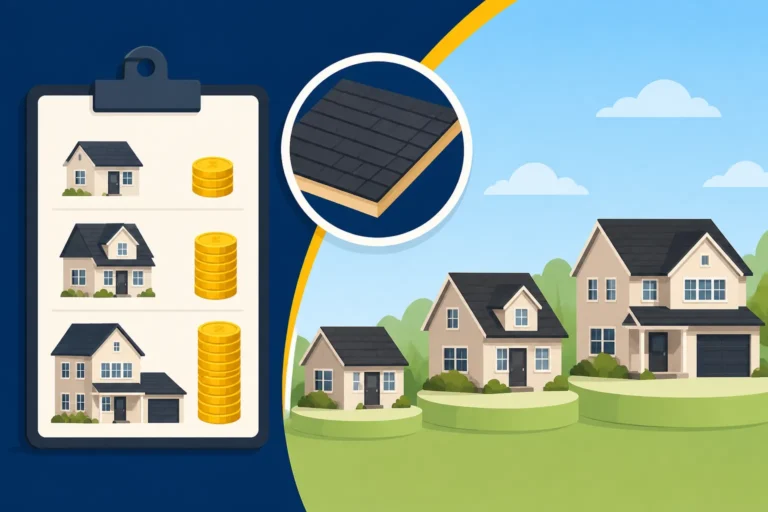
- Small Ranch (1,000-1,200 sq ft living, ~12-15 squares roof): $8,000 – $15,000
- Medium Ranch (1,500-1,800 sq ft living, ~18-22 squares roof): $12,000 – $22,000
- Large Ranch (2,000+ sq ft living, ~23-28+ squares roof): $18,000 – $30,000+
These figures are broad estimates and can be influenced heavily by the factors discussed above, such as shingle brand (GAF, Owens Corning, CertainTeed), shingle type (architectural vs. luxury), local labor rates, and the extent of any necessary decking replacement.
To give you a better idea, here's a table outlining potential cost variations based on roof size and shingle type for a single-layer tear-off in an average market:
| Ranch Home Roof Size (Squares) | Shingle Type | Estimated Material Cost/Square | Estimated Labor Cost/Square | Total Estimated Cost Range |
|---|---|---|---|---|
| 12-15 (Small Ranch) | 3-Tab | $75 – $120 | $100 – $200 | $2,100 – $4,800 per 12-15 sq. = $2,100 – $4,800 |
| Architectural | $100 – $180 | $120 – $250 | $2,640 – $6,450 per 12-15 sq. = $2,640 – $6,450 | |
| Designer/Luxury | $150 – $300 | $150 – $300 | $3,600 – $9,000 per 12-15 sq. = $3,600 – $9,000 | |
| 18-22 (Medium Ranch) | 3-Tab | $75 – $120 | $100 – $200 | $3,150 – $7,040 per 18-22 sq. = $3,150 – $7,040 |
| Architectural | $100 – $180 | $120 – $250 | $3,960 – $9,460 per 18-22 sq. = $3,960 – $9,460 | |
| Designer/Luxury | $150 – $300 | $150 – $300 | $5,400 – $13,200 per 18-22 sq. = $5,400 – $13,200 | |
| 23-28 (Large Ranch) | 3-Tab | $75 – $120 | $100 – $200 | $4,025 – $8,960 per 23-28 sq. = $4,025 – $8,960 |
| Architectural | $100 – $180 | $120 – $250 | $5,060 – $12,040 per 23-28 sq. = $5,060 – $12,040 | |
| Designer/Luxury | $150 – $300 | $150 – $300 | $6,900 – $16,800 per 23-28 sq. = $6,900 – $16,800 |
Note: These figures are for material and labor only, and do not include tear-off, disposal, permits, or potential decking replacement. They are broad estimates and local pricing will vary.
You might notice that the total estimated cost range in the table seems lower than the overall project estimates above. This is because the table only accounts for basic material and labor for new shingle installation. The overall project cost includes critical elements like tear-off, disposal, underlayment, flashing, permits, and unforeseen repairs, which can significantly add to the final bill. For a true "apples-to-apples" comparison, remember that the Asphalt Roof Replacement Cost: Complete Breakdown involves many layers of expenses.
Breaking Down the Components of Your Roofing Estimate
When you receive a roofing estimate for your ranch home, it shouldn't just be a single number. A reputable contractor will provide a detailed breakdown of all costs involved. Understanding these components is essential for comparing bids and ensuring you're getting a fair deal. You can learn more about How to Read and Compare Roofing Estimates.
Material Costs
This section covers all the physical components needed for your new roof.
- Shingles: The largest material expense. This will be itemized by type (e.g., GAF Timberline HDZ Architectural Shingles), color, and quantity (number of squares).
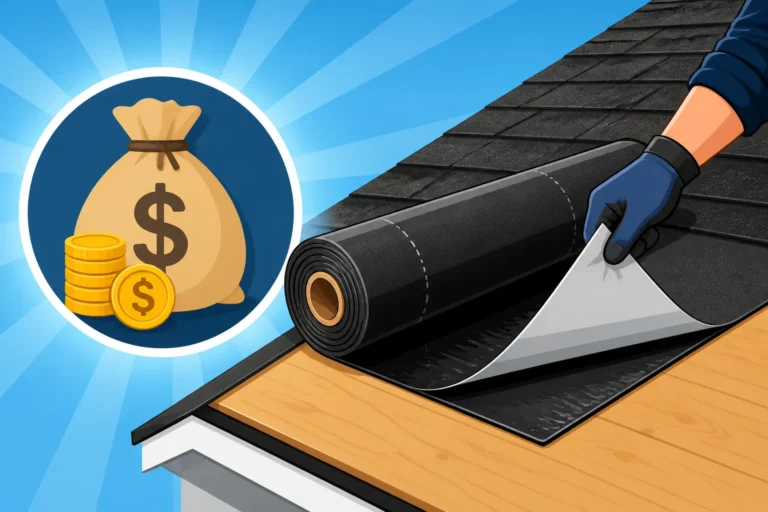
- Underlayment: The protective layer beneath your shingles. Options include traditional felt paper or more advanced synthetic underlayment, with synthetic typically costing more but offering superior protection and durability.
- Ice and Water Shield: A critical self-adhering membrane installed in vulnerable areas like eaves, valleys, and around penetrations, especially in colder climates. This adds an extra layer of protection against ice dams and water infiltration.
- Starter Shingles & Ridge Caps: Specific shingle types designed for the edges and peaks of your roof, respectively, for optimal performance and aesthetics.
- Flashing: Metal (usually aluminum or galvanized steel) used to seal around chimneys, vents, skylights, and where the roof meets a wall. Its purpose is to prevent water penetration at these critical junctures.
- Drip Edge: Metal strips installed along the edges of your roof to direct water off and away from the fascia and into the gutters.
- Vents: Ridge vents, box vents, or other ventilation systems that ensure proper attic airflow, crucial for preventing heat and moisture buildup, and extending the life of your roof.
Labor Costs
This covers the work involved in removing the old roof and installing the new one.
- Tear-Off and Disposal: The cost associated with removing all existing layers of shingles, underlayment, and other old roofing components. This includes the labor to strip the roof and load the debris, as well as the cost of a dumpster rental and disposal fees at a landfill or recycling facility. The more layers, the higher this cost will be.
- Installation of New Roofing System: The labor involved in installing each component of the new roof: underlayment, ice and water shield, flashing, shingles, ridge caps, and ventilation. This is typically calculated per square, but also accounts for roof complexity.
- Site Cleanup: Professional roofers include the cost of a thorough cleanup, which involves magnet-sweeping for nails, removing all debris from your yard, and often cleaning gutters.
Permit Fees
Almost every major roofing project, including a full reroof of a ranch home, requires a building permit from your local municipality. This ensures the work complies with current building codes and regulations. The permit fee itself is usually a few hundred dollars, but the contractor typically handles the permitting process, which is factored into the overall cost. Failing to secure a permit can lead to fines, difficulties with insurance claims, and issues when selling your home.
Contingency for Unforeseen Repairs
While not always explicitly listed as a line item, experienced contractors often factor in a small buffer for unexpected issues. As mentioned, discovering rotted roof decking once the old shingles are removed is a common scenario. This will require additional material and labor for Roof Decking Replacement Cost. Other surprises could include damaged fascia boards or soffits. While a good contractor will communicate these issues immediately and get your approval before proceeding, it’s wise to have an emergency fund for your roof project.
Tips for Saving Money and Choosing a Contractor
Reroofing your ranch home is a significant investment, but there are smart ways to approach it that can save you money and ensure a quality job.
Get Multiple Detailed Estimates
This is perhaps the most critical step. Don't settle for just one quote. Contact at least three different, reputable roofing contractors. Ask them to provide detailed estimates that break down material costs, labor costs, tear-off fees, and any other expenses. This allows for a true comparison of bids. Platforms like Modernize can be incredibly helpful for quickly connecting with pre-vetted local roofing professionals who can provide these estimates, streamlining your search for reliable contractors. When comparing, pay attention to the exact materials specified – are they quoting the same shingle type and warranty? Are they including all the same components like drip edge and ice and water shield?
Understand Your Warranty Options
Don't just look at the upfront cost; consider the long-term value. Ask about both the manufacturer's warranty on the shingles and the contractor's workmanship warranty. Many top manufacturers, like GAF and Owens Corning, offer enhanced warranties when their full roofing system (shingles, underlayment, ventilation, etc.) is installed by a certified contractor. These extended warranties can offer better protection and peace of mind for decades. A strong warranty can mean significant savings down the line if an issue arises.
Choose the Right Time of Year
While not always possible if you have an urgent leak, timing can sometimes impact pricing. Spring and fall are generally peak seasons for roofers, meaning they're busiest and might have less flexibility on pricing. Winter can sometimes offer a slight discount as demand slows down, but cold weather can affect shingle adhesion and worker efficiency. Summer can be a good time, but intense heat can also impact shingle quality during installation. If you can be flexible, consider getting quotes during the shoulder seasons or even in early winter for potential savings.
Don't Automatically Choose the Cheapest Bid
It's tempting to go with the lowest price, but this is one area where cutting corners can cost you far more in the long run. A bid that's significantly lower than others might indicate a contractor is cutting corners on materials, labor, or even insurance. Always prioritize quality, experience, and reputation. You'll want to read about How to Choose a Roofing Contractor carefully. Verify their licensing, insurance, and ask for references. Use platforms like Modernize to find contractors with good reviews and a proven track record. A properly installed roof will protect your ranch home for decades, while a shoddy job can lead to costly repairs and premature replacement. Ask thorough Questions to Ask a Roofing Contractor Before Hiring to ensure you're making a sound choice.
Disclaimer
Please remember that all cost estimates provided in this guide are general averages. Actual costs for your specific ranch home roof replacement will vary significantly based on your geographic location, the specific contractor you choose, the exact materials selected, the complexity of your roof, and the extent of any unforeseen repairs. Always obtain multiple detailed quotes from local, reputable roofing professionals to get an accurate estimate for your project.