What Causes Granule Loss on a Roof
Natural aging, severe weather, hail, and foot traffic cause asphalt shingle granule loss, reducing your roof protection.
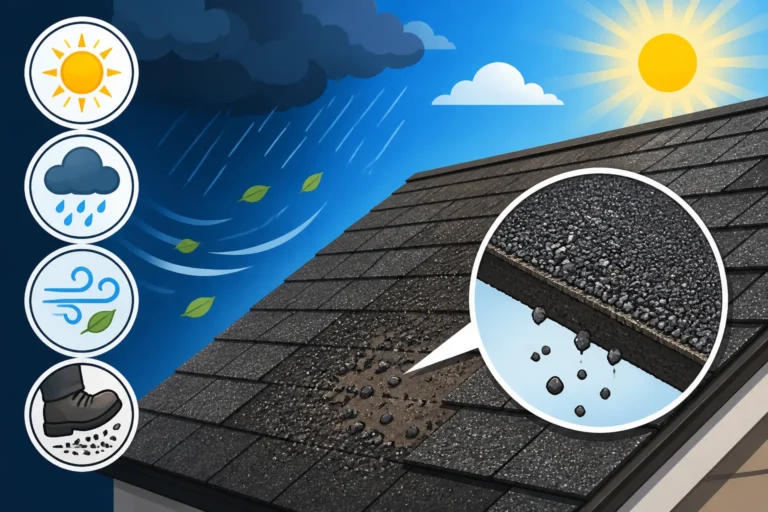
Natural aging, severe weather, hail, and foot traffic cause asphalt shingle granule loss, reducing your roof protection.
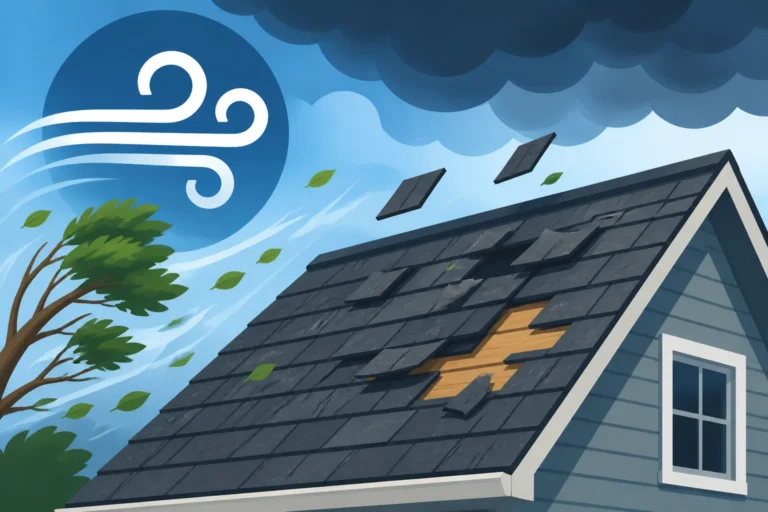
Roof wind damage, caused by uplift suction around edges, corners and ridge lines and by direct pressure and shear forces that bend, crease or break shingles.
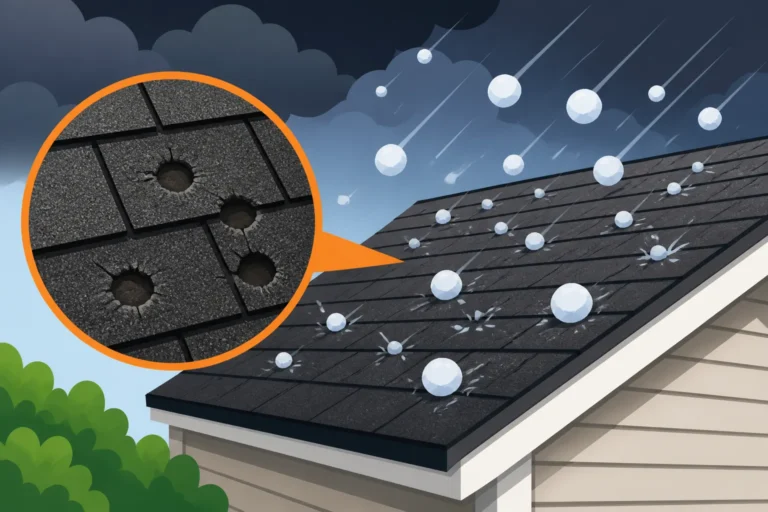
Atmospheric forces create hailstones that damage roof shingles, flashing, vents, and gutters during severe thunderstorms.
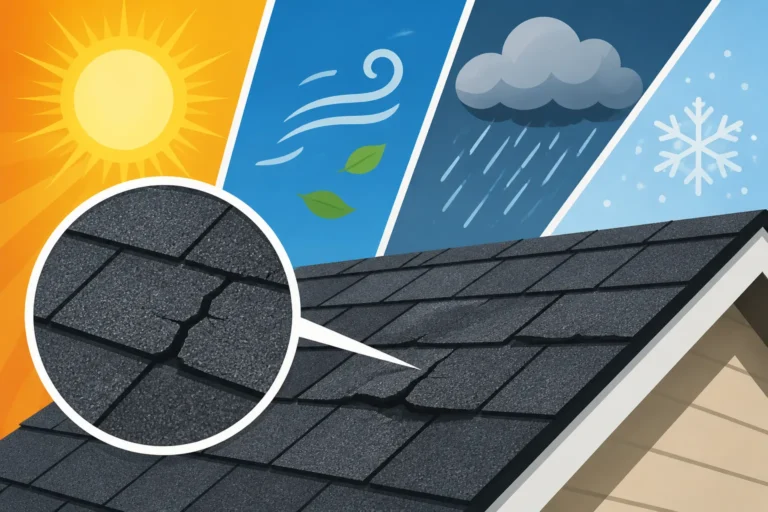
Weather exposure, thermal stress, aging, manufacturing defects, improper installation, and impact damage cause asphalt shingle cracks.
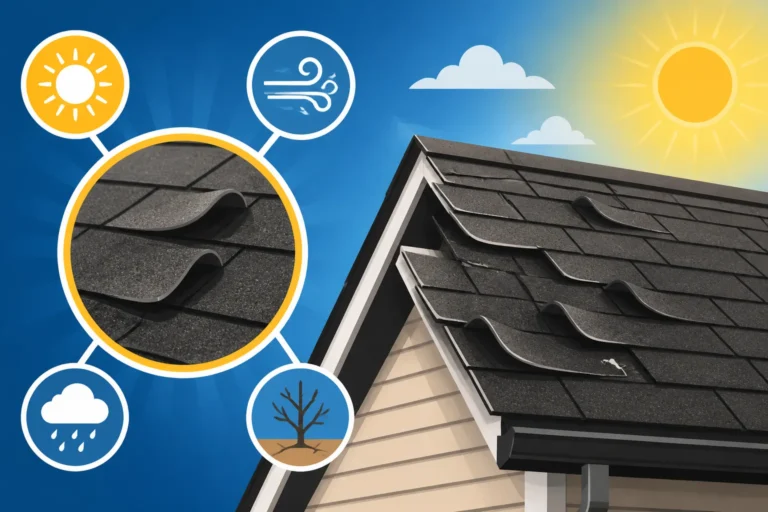
Curling asphalt shingles stem from intense heat, poor attic ventilation, manufacturing defects, improper installation, or natural aging.
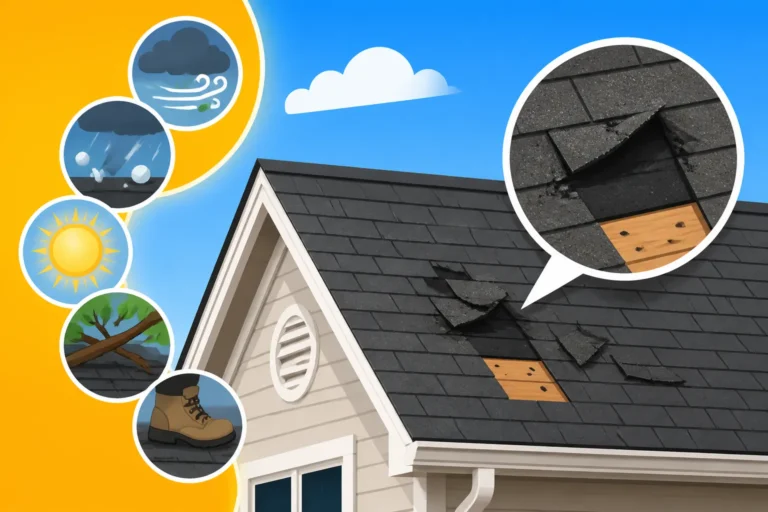
Environmental factors, hail impacts, improper nailing techniques, and natural aging cause missing shingles on a residential roof.
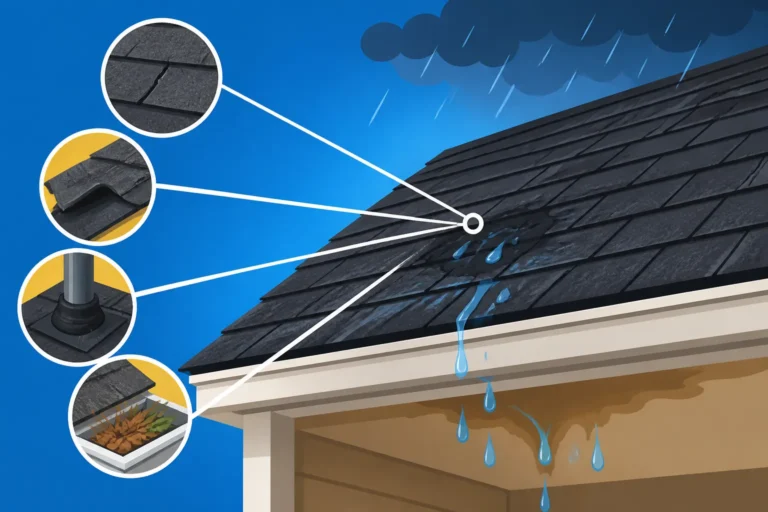
Roof leaks stem from damaged asphalt shingles, failed flashing, compromised sealants, rotted decking, and poor attic ventilation.
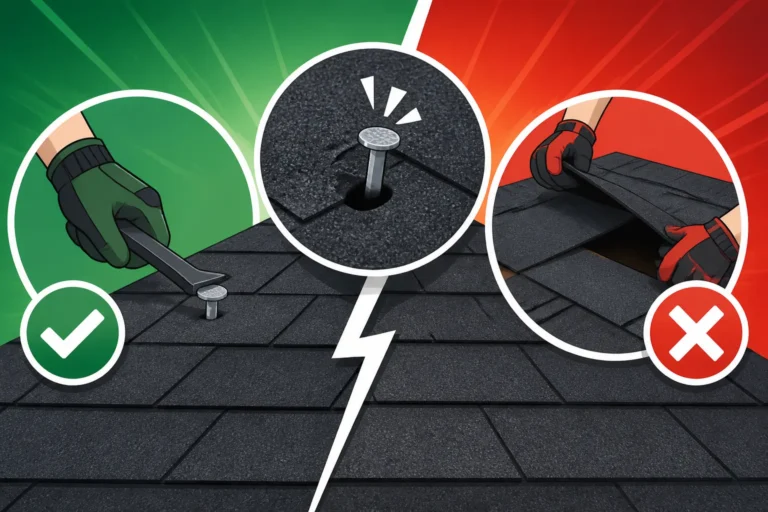
Roof nail pops on asphalt shingles indicate potential water damage, helping homeowners decide whether to repair or replace roofs.
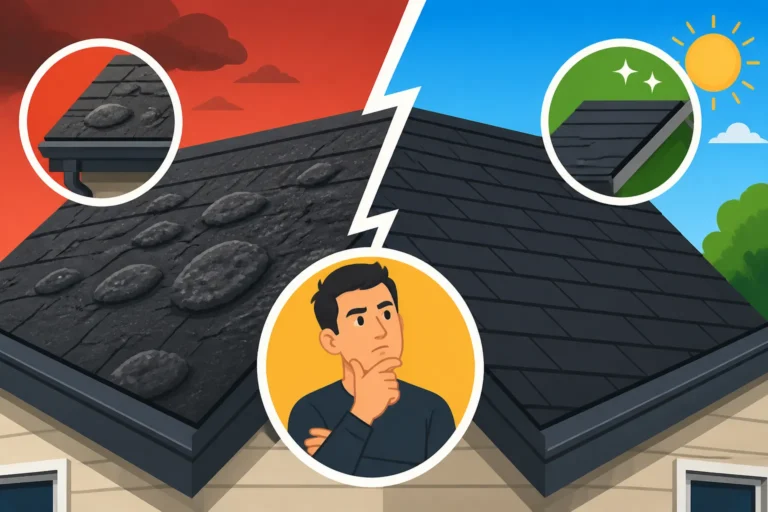
Roof blistering explains what causes bubbles on asphalt shingles and helps homeowners decide between targeted repairs or full replacement.
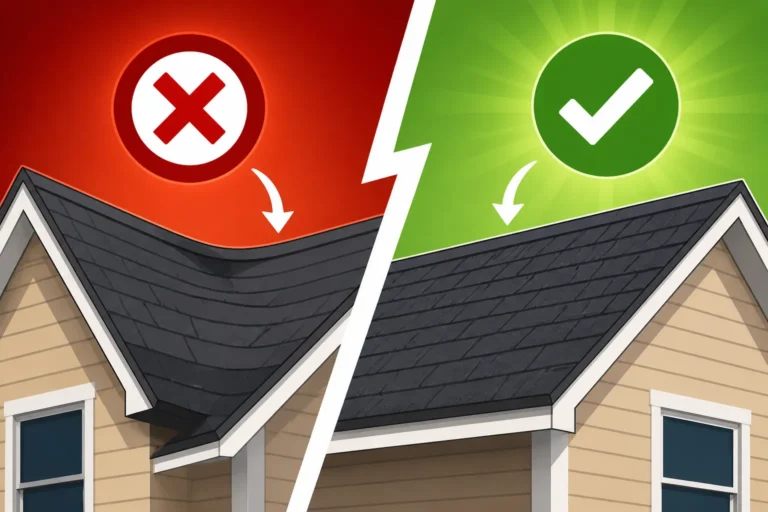
Structural issues, water damage, and excessive weight cause roof sagging, requiring assessments to determine whether repairs or full replacement are necessary.