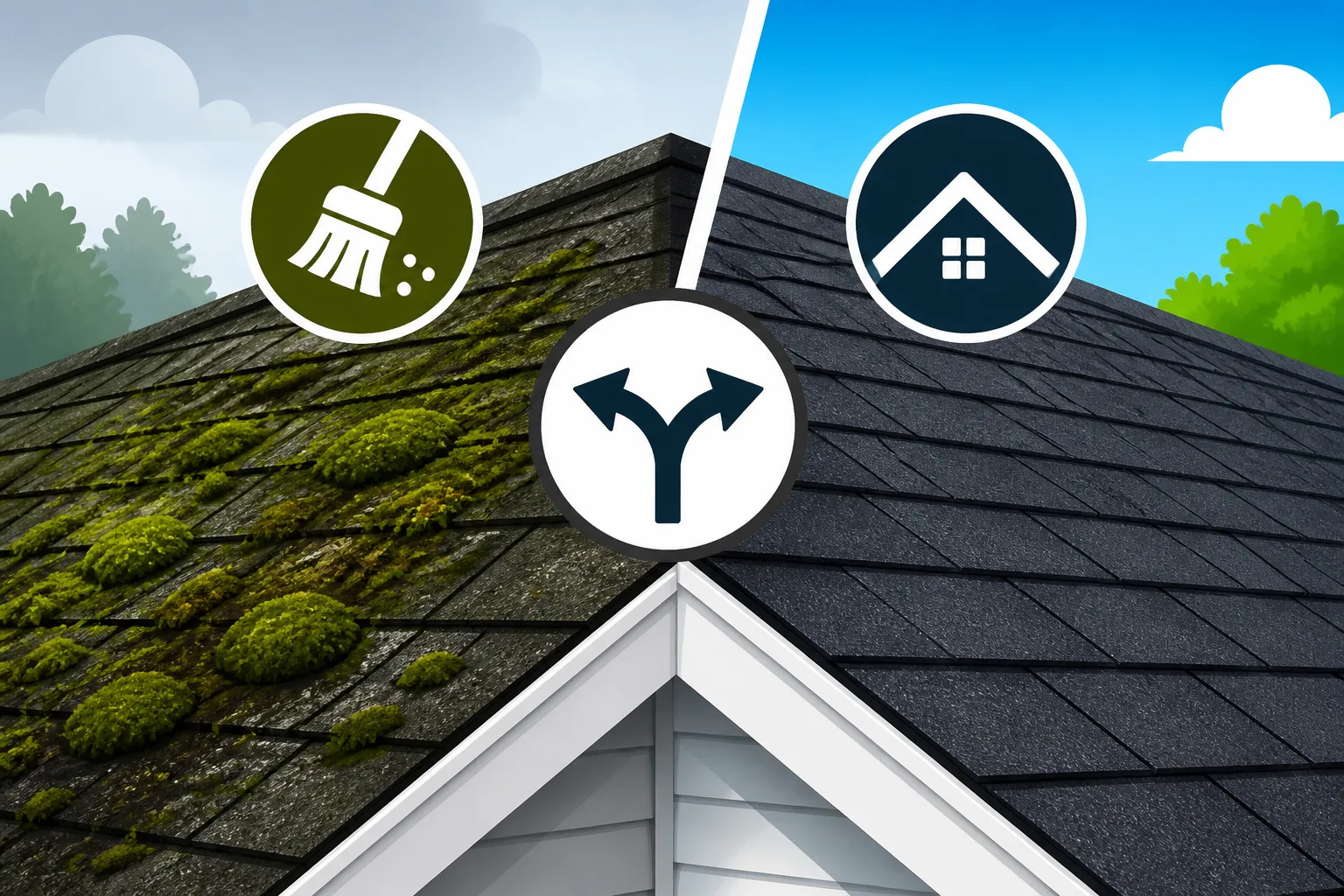
Moss and Algae: Clean or Replace
That dark streaking or green fuzzy growth creeping across your asphalt roof can be a real eyesore, not to mention a source of significant anxiety. You're probably wondering if a good scrub will do the trick, or if this unwelcome visitor is a tell-tale sign that your roof is nearing its end. This guide is here to walk you through the frustrating reality of moss and algae on your asphalt shingles, helping you understand when a simple cleaning is enough and when it's time to seriously consider a full roof replacement.
Understanding Moss and Algae Growth on Asphalt Roofs
It's a common sight in many neighborhoods, especially those with mature trees or damp climates: unsightly green patches or dark streaks marring an otherwise perfectly good roof. These aren't just cosmetic issues; they're living organisms that can, over time, cause real damage to your roof's integrity. Let's dig into what they are and why your roof might be their preferred hangout spot.
What Are Moss and Algae?
When you see those dark, often black or brownish, streaks on your roof, you're most likely looking at a type of algae known as Gloeocapsa magma. This isn't just dirt; it's a living microorganism that thrives in humid environments and feeds on the limestone filler often found in asphalt shingles. It starts as small spots, but given the right conditions, it quickly spreads, creating those distinct, discolored streaks that seem to grow longer with every passing season. It can sometimes be mistaken for soot or mold, but its distinctive streaking pattern is a dead giveaway.
Moss, on the other hand, is much more recognizable. It's that soft, spongy, green carpet that starts growing in thicker mats, often along the northern slopes of your roof, in valleys, or under overhanging tree branches. Unlike algae, moss has a root-like structure (rhizoids) that firmly attaches it to your shingles, allowing it to hold onto a significant amount of moisture. This makes it particularly damaging, as we'll explore shortly. You might also spot lichen, which is a combination of fungus and algae, appearing as crusty, flat, grayish-green patches that cling tenaciously to the surface of your shingles. All these growths have one thing in common: they love moisture and shade.
Why Do They Grow on Your Roof?
The truth is, your roof provides a surprisingly ideal habitat for these organisms. Several factors contribute to their unwelcome proliferation. Firstly, moisture is key. In regions with high humidity, frequent rainfall, or morning dew that lingers, shingles remain damp for extended periods. This constant moisture is a primary catalyst for growth. Secondly, shade plays a huge role. Areas of your roof that are shaded by trees, adjacent buildings, or even architectural features like dormers tend to stay cooler and retain moisture longer than sun-exposed areas. This creates the perfect microclimate for moss, algae, and lichen to flourish.
Beyond environmental factors, the composition of modern asphalt shingles can also contribute. Many shingles contain limestone as a filler, which algae, specifically Gloeocapsa magma, finds to be a tasty food source. As the algae consume the limestone, they excrete a dark pigment, resulting in those characteristic black streaks. Furthermore, airborne spores from nearby trees and other roofs are constantly circulating, and it only takes a few to land on a damp, nutrient-rich shingle to start a new colony. If your neighbors' roofs are covered, yours is more likely to follow suit.
The Dangers of Letting Them Linger
While they might start as a cosmetic nuisance, ignoring moss and algae can lead to serious and costly problems for your roof. The most immediate concern with algae is the degradation of your shingles. The dark streaks absorb more sunlight, causing the affected areas to heat up more than the rest of the roof. This accelerated heating and cooling cycle can prematurely age the asphalt, making the shingles more brittle and prone to cracking. More importantly, it can cause the protective granules, which shield your shingles from UV rays, to loosen and wash away. This granule loss exposes the asphalt to direct sunlight, significantly shortening the lifespan of your roof. For more on what happens when these granules disappear, read our guide on Granule Loss: Should You Worry?.
Moss, with its thicker, mat-like growth, presents an even more significant threat. Its rhizoids can penetrate deep into the shingle material, weakening it from within. Worse, moss acts like a sponge, holding vast amounts of moisture directly against your roof surface. This constant dampness can lead to several severe issues: it promotes wood rot in the underlying roof decking, especially during freeze-thaw cycles in colder climates where frozen moss expands and contracts, further lifting and damaging shingles. It can also cause shingles to curl, buckle, and lift, making them vulnerable to wind and rain penetration. Once shingles are lifted, water can easily seep underneath, leading to leaks, attic damage, and costly repairs that often require more than just a simple cleaning.
When Cleaning Is a Viable Solution
Facing a roof covered in green or black isn't fun, but it doesn't automatically mean you need a whole new roof. In many cases, especially if caught early, a thorough cleaning can restore your roof's appearance and extend its life. However, it's critical to approach cleaning with caution and understand the right (and wrong) ways to do it.
Assessing the Extent of Growth
Before you even think about cleaning, you need to realistically assess the situation. Is it just a few isolated black streaks on one slope, or has the moss formed thick, spongy mats across large sections of your roof? If the growth is primarily algae, appearing as dark, superficial streaks, and your shingles are otherwise in good condition – no curling, cracking, or significant granule loss – then cleaning is often a viable first step. This usually indicates that the algae haven't yet caused deep structural damage to the shingles themselves. You're mostly dealing with a cosmetic issue that can be effectively treated.
However, if moss has established deep roots, or if you see extensive lichen growth that's difficult to scrape off, the situation becomes more complex. If the shingles underneath the growth are visibly damaged, lifted, or showing advanced signs of wear, a surface cleaning might not be enough. Take a close look for areas where shingles are clearly compromised or where the moss has created mini-dams that trap water. If you're unsure, or if the roof is particularly old, it's always best to get a professional inspection. A roofing expert can provide an objective assessment of your roof's overall health and recommend the most appropriate course of action, which could range from a targeted repair to a full replacement. You can learn more about assessing your roof's condition in our guide on Roof Damage Assessment: A Homeowner's Guide.
DIY Cleaning Methods and Their Pitfalls
It's tempting to tackle roof cleaning yourself, especially with the promise of saving money. However, this is one area where DIY enthusiasm can quickly lead to costly mistakes or even personal injury. Many homeowners consider using a high-pressure washer, but this is almost universally a terrible idea for asphalt shingles. Pressure washing uses intense force that will strip away the protective granules from your shingles, drastically reducing their lifespan and voiding your warranty. It can also force water underneath the shingles, leading to leaks and potential rot in the roof decking or attic. We strongly advise against using a pressure washer on asphalt roofs.
Another common DIY approach involves applying a bleach solution (often a mix of household bleach and water). While bleach can kill algae, it's corrosive and can damage nearby plants, siding, and even the shingles themselves if not properly diluted and rinsed. Furthermore, climbing onto a slippery, moss-covered roof with chemicals is extremely dangerous. If you opt for a DIY approach, ensure you use a soft-bristle brush, a safe, diluted cleaning solution specifically formulated for roofs (non-bleach oxygen-based cleaners are often safer for the environment), and prioritize safety with proper fall protection. Never walk on wet, slimy patches. Remember, the goal is to gently clean, not aggressively scrub or blast.
Professional Cleaning Services: What to Expect
For most homeowners, hiring a professional roof cleaning service is the safest and most effective option. Reputable professionals specialize in "soft washing," which involves applying a cleaning solution (often containing algaecides and surfactants) at low pressure, allowing the solution to do the work of killing and dissolving the moss and algae. This method protects your shingles from damage and is far more effective at killing the spores, inhibiting regrowth. Before starting, professionals will take steps to protect your landscaping, cover vulnerable plants, and ensure proper runoff management.
After the solution is applied, it's typically left to dwell for a period, allowing it to penetrate and kill the organisms. The solution is then gently rinsed off, or in some cases, the dead organic matter is simply left to be washed away by subsequent rains. A good professional service will also inspect your roof for minor issues during the process, providing you with a more comprehensive understanding of your roof's condition. The cost of professional cleaning varies depending on the size and pitch of your roof, the extent of the growth, and your location. While it's an investment, it's often significantly less expensive than a full roof replacement and can add years of life to a healthy roof. Companies often guarantee their cleaning work for a period, assuring you that those streaks won't reappear immediately.
When Replacement Becomes Necessary
Sometimes, no matter how much you wish a good cleaning would solve the problem, the damage is simply too far gone. Moss and algae, when left unchecked, can accelerate the aging process of your roof to the point where replacement is the only logical and cost-effective solution.
Identifying Irreversible Damage
The key differentiator between a roof that needs cleaning and one that needs replacing lies in the type and extent of the damage. If moss and algae have been present for years, they can cause irreversible damage that goes beyond surface-level grime. Look for signs like extensive granule loss, where large patches of your shingles appear bare, exposing the black asphalt underneath. This means the primary protective layer of your shingles has been compromised, leaving them vulnerable to UV degradation and drastically reducing their lifespan. This kind of granule loss is not reversible with cleaning. For more insights into shingle failure, check out What Makes Shingles Fail Early.
Another critical sign is shingle degradation. This includes widespread curling, buckling, or cracking of the shingles, often exacerbated by the constant moisture retention from moss. If the moss has caused the shingles to lift significantly, allowing water to get underneath, you might also see signs of moisture damage in your attic or along your fascias and soffits. These are red flags indicating that the structural integrity of your shingles has been compromised. In some severe cases, if moss has rooted deeply and held moisture for too long, you might even find soft spots on your roof deck, indicating rot. At this point, simply removing the moss won't fix the underlying issues, and a replacement becomes necessary to protect your home.
Age of the Roof and Underlying Issues
The age of your roof plays a significant role in determining whether to clean or replace. If your asphalt shingle roof is relatively young – say, under 10-15 years old – and the moss and algae growth is moderate, a professional cleaning is likely a smart investment. The shingles still have plenty of life left, and addressing the superficial growth can help preserve them. However, if your roof is older, perhaps 20-25 years into its expected lifespan, extensive moss and algae growth can be the final straw. Even if cleaning removes the visible growth, the underlying shingles are likely already brittle, have lost significant granules, and are nearing the end of their functional life.
In these older roofs, the moisture retained by moss might not just be affecting the shingles; it could be accelerating the deterioration of the underlying components like the roof decking. If the structural integrity of your roof deck is compromised due to prolonged moisture, then a replacement is not just about aesthetics but about fundamental home protection. An older roof with widespread organic growth often signals that the materials are no longer performing as intended, and investing in a cleaning might be a short-term fix for a much larger, inevitable problem. Our article on Roof Age: When to Start Planning Replacement offers more guidance on this critical factor.
Long-Term Cost-Benefit Analysis
When faced with a decision between cleaning and replacement, it's crucial to perform a long-term cost-benefit analysis. A professional cleaning might cost a few hundred to a couple of thousand dollars, depending on your roof's size and condition. If your roof is relatively young and healthy, this is a very cost-effective way to extend its life by several years and maintain curb appeal. However, if your roof is old and significantly damaged by moss and algae, repeated cleaning might become necessary every few years, and each cleaning risks further minor damage to already fragile shingles.
Consider the potential for recurring problems. If the underlying issues (like excessive shade or persistent moisture) aren't addressed, moss and algae will likely return. At a certain point, the cumulative cost of repeated cleanings and minor repairs to fix issues caused by the growth can start approaching the cost of a new roof. A new asphalt roof, while a larger upfront investment, offers decades of protection, comes with new warranties, and often includes features like algae-resistant shingles that prevent future growth. It also boosts your home's value and greatly enhances its curb appeal. Sometimes, biting the bullet for a full replacement now saves you more money and headache in the long run.
Prevention Strategies After Cleaning or Replacement
Whether you've just had your roof cleaned or invested in a brand-new one, the battle against moss and algae doesn't end there. Proactive prevention is key to keeping your roof clear and healthy for years to come. Thinking ahead can save you future headaches and expenses.
Regular Maintenance and Inspections
One of the simplest yet most overlooked prevention strategies is consistent roof maintenance. Regularly cleaning your gutters is paramount. Clogged gutters allow water to back up and sit on the edge of your roof, creating an ideal damp environment for moss and algae to start growing. It's like an open invitation! Keeping them clear ensures proper drainage and reduces standing water. Additionally, trimming back any overhanging tree branches is incredibly effective. These branches not only drop debris onto your roof, providing organic matter for growth, but they also create shade that prevents the sun from drying out your shingles. More sunlight means less moisture, which means less moss and algae.
Beyond these basic tasks, consider scheduling a professional roof inspection at least once every 1-3 years. A qualified inspector can spot early signs of growth, assess the condition of your shingles, and identify potential problem areas before they escalate. They can also recommend minor repairs, such as sealing lifted shingles or improving attic ventilation, which can further deter moisture-loving organisms. Think of it as a preventative health check for your roof; catching issues early is always cheaper than dealing with a full-blown emergency.
Zinc and Copper Strips
If you live in a particularly damp or shaded area prone to moss and algae growth, installing zinc or copper strips can be an incredibly effective long-term solution. These strips, typically about 4-6 inches wide, are installed just below the ridge of your roof. When it rains, water flows over the metal strips, picking up microscopic particles of zinc or copper. As this metal-infused water washes down your roof, it creates an environment that is toxic to moss, algae, and lichen, effectively killing existing growth and preventing new spores from taking hold.
These strips work best when installed correctly by a professional, ensuring they are properly secured and that water flows over them consistently. They can be particularly beneficial on existing roofs that have just been cleaned, providing continuous protection against regrowth. While not a permanent "set it and forget it" solution – the strips themselves can oxidize over time – they offer many years of passive, chemical-free prevention. This method is a tried-and-true approach in regions where organic growth is a constant battle.
Algae-Resistant Shingles
For homeowners considering a roof replacement, one of the best preventative measures is to choose algae-resistant shingles. These shingles are specially manufactured with copper granules mixed into the standard ceramic-coated granules that protect your roof. The copper is slowly released over time, creating a hostile environment for algae and effectively preventing those unsightly black streaks from forming. Many leading shingle manufacturers, such as GAF, Owens Corning, and CertainTeed, offer lines of shingles specifically designed with this technology. For instance, the GAF Timberline HDZ and Owens Corning Duration series often incorporate copper for algae resistance.
Investing in algae-resistant shingles might come with a slightly higher upfront cost compared to standard shingles, but the long-term benefits often outweigh it. You'll save money on cleaning services, maintain your home's curb appeal, and extend the life of your roof by protecting it from the damaging effects of algae. Always ask your roofing contractor about available options and warranties when planning your new roof. Our detailed article, Algae-Resistant Shingles: How They Work, explains more about this innovative solution.
Getting Professional Advice and Quotes
Deciding between cleaning and replacing your roof is a significant decision, and one that shouldn't be made lightly or without expert input. The best way to ensure you're making the right choice for your home and budget is to consult with experienced roofing professionals.
The Importance of a Certified Roofing Inspection
Before committing to any course of action, a certified roofing inspection is non-negotiable. This isn't just a quick look from the ground; a thorough inspection involves a trained professional getting onto your roof (safely!) to examine every component. They'll look for signs of granule loss, lifted or cracked shingles, damaged flashing around chimneys and vents, and any indications of water penetration. They'll also inspect your attic for signs of leaks or inadequate ventilation, which can contribute to moisture issues and organic growth. A good inspector will also assess the overall pitch and complexity of your roof, as these factors can influence both cleaning and replacement costs.
A detailed inspection provides an unbiased assessment of your roof's actual condition, allowing you to move forward with confidence. They can accurately determine if the moss and algae have caused cosmetic-only issues or if they've led to more severe structural damage that necessitates a replacement. This professional opinion is invaluable, helping you avoid unnecessary expenses or overlooking critical problems.
Finding Reputable Contractors and Comparing Estimates
Once you have a clear understanding of your roof's condition, the next step is to find reputable roofing contractors. This is where many homeowners feel overwhelmed, but resources exist to simplify the process. Websites like Modernize can be incredibly helpful for connecting you with screened, local roofing professionals who can provide detailed estimates for both cleaning and replacement options. Aim to get at least three competitive bids. This allows you to compare not just prices, but also the scope of work, materials proposed, and warranty offerings.
When comparing estimates, don't just look at the bottom line. Pay close attention to what's included. Does the cleaning estimate specify soft washing and protection for your landscaping? Does the replacement estimate include a complete tear-off, new underlayment, and proper ventilation upgrades? Ask about their licensing, insurance, and manufacturer certifications, as these are crucial indicators of quality and reliability. You can delve deeper into how to vet a roofing company by reading our guide on How to Choose a Roofing Contractor and by reviewing How to Get Roofing Quotes and Compare Them. Remember, the cheapest bid isn't always the best; value lies in quality work, comprehensive coverage, and a reliable warranty.
Navigating Warranties and Insurance
Understanding your roof's warranty and potential insurance coverage is another vital aspect of this decision. If your roof is relatively new and the moss and algae growth is severe, check your shingle manufacturer's warranty. While most warranties don't cover cosmetic issues like algae stains, some premium algae-resistant shingles might have specific guarantees. However, if the organic growth has led to physical damage, like premature shingle failure or leaks, your home insurance policy might come into play, especially if the damage is sudden and accidental, such as from a severe storm that worsened existing conditions.
When discussing options with contractors, ask about the warranties they offer on their workmanship, in addition to the manufacturer's warranty on the shingles. A strong workmanship warranty protects you if issues arise due to improper installation. If you suspect insurance might cover some of the damage, contact your insurance provider directly before starting any work. They can guide you through the claims process and send an adjuster to assess the damage. Navigating these complexities can be daunting, but a good contractor can often help you understand your options.
| Factor | Cleaning | Replacement |
|---|---|---|
| Cost (Approx.) | $500 – $2,000 | $10,000 – $30,000+ |
| Timeframe | 1-2 days | 2-5 days (depending on complexity) |
| Longevity | Extends existing roof life by 2-5+ years | New roof lasts 20-30+ years |
| Damage Type | Superficial stains, moderate moss/algae growth | Extensive granule loss, lifted/cracked shingles, rot, leaks |
| Roof Age | Younger roofs (under 15-20 years) | Older roofs (over 20 years, significant wear) |
| Warranty | May void some manufacturer warranties if done incorrectly; pro cleaning may offer limited guarantee | New manufacturer & workmanship warranties |
| Home Value | Improves curb appeal, no significant ROI | Significant boost in curb appeal & ROI |
| Prevention | Needs ongoing maintenance/strips for regrowth | Algae-resistant shingles offer built-in prevention |
Disclaimer
Please note that the information provided in this article is intended for general guidance and informational purposes only. Every roofing situation is unique, and local building codes, climate conditions, and individual roof specifications can vary significantly. Always consult with a qualified, licensed, and insured roofing professional for a thorough inspection and personalized recommendations before making any decisions regarding your roof's repair or replacement. This content does not constitute professional roofing advice.