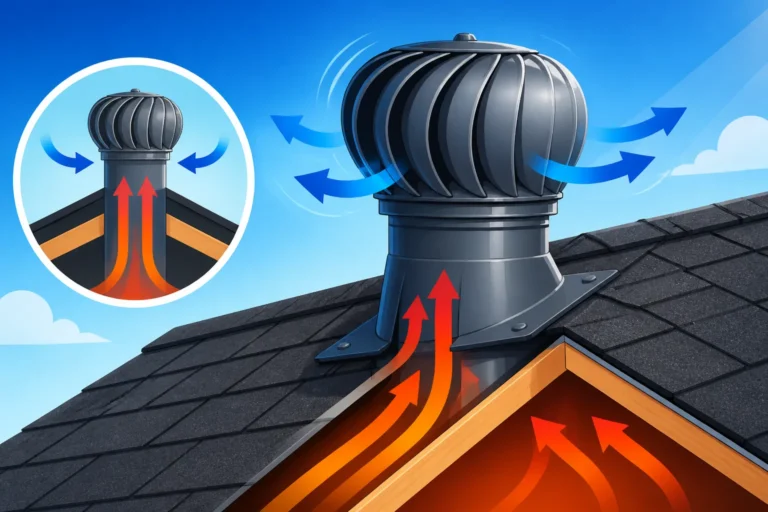
How a Powered Attic Fan Works
There's nothing quite like walking into a home that feels like an oven, especially in the middle of summer, and knowing your air conditioner is working overtime just to keep things bearable. Much of this uncomfortable heat and sky-high energy bill stems from one often-overlooked area: your attic. This guide will walk you through exactly how a powered attic fan works to tackle that heat head-on, improving your comfort and saving you money.
The Core Problem: Heat Buildup in Your Attic
Before we dive into the solution, it's crucial to understand the magnitude of the problem. Your attic isn't just a dusty storage space; it's a critical component of your home's thermal envelope, and when it overheats, it can have ripple effects throughout your entire house.
Why Attics Get So Hot
Think about your attic on a sunny summer day. The sun's intense rays beat down on your roof, and those shingles, especially darker ones, absorb an incredible amount of solar radiation. This absorbed heat then radiates into the attic space. It's like a giant solar collector right above your head. On an 85-degree Fahrenheit day, the temperature in an unventilated attic can easily soar to 130-150 degrees Fahrenheit, sometimes even higher.
This extreme heat isn't just sitting there; it's actively trying to escape. Through a process called convection, the superheated air in your attic transfers its warmth downward into your living spaces. Your ceiling, the insulation in your attic floor, and even your ductwork (if it runs through the attic) all absorb this heat. Imagine trying to cool your home when the very "lid" of your house is radiating heat like a giant space heater. Your air conditioning system has to work twice as hard to combat this thermal load, leading to higher electricity consumption and that nagging feeling that your AC is always running but never quite catching up. This intense heat can significantly impact your Cost to Replace a Roof by House Size and overall home efficiency.
The Dangers of Excessive Attic Heat
Beyond the discomfort and energy waste, persistent high temperatures in your attic pose several serious threats to your home's integrity and longevity.
First and foremost, your roof shingles take a beating. The intense heat causes the asphalt in shingles to dry out and become brittle prematurely. This can lead to issues like curling, cracking, and excessive granule loss, significantly shortening the lifespan of your roof. Instead of getting 20-25 years out of your architectural shingles, you might find yourself needing a new roof much sooner. This is a common indicator that your roof might need a full replacement rather than a simple repair, a topic we often discuss in articles like Roof Repair vs Replacement: How to Decide.
Next, your insulation suffers. While insulation is designed to resist heat transfer, extreme and prolonged attic temperatures can degrade its effectiveness over time. If your insulation gets compressed or damaged by moisture – which can also be exacerbated by poor ventilation – its R-value, or ability to resist heat flow, diminishes. This means it becomes less effective at keeping the heat out of your living space and the conditioned air in.
And speaking of moisture, those extreme temperature swings can lead to condensation in the attic, especially as warm, humid air from your home rises and meets cooler surfaces. Trapped moisture is a recipe for disaster, encouraging the growth of mold and mildew on wood framing, insulation, and even stored items. Not only is this unsightly and damaging, but mold can also pose health risks. Proper ventilation is key to avoiding these Hidden Costs in a Roof Replacement.
What Exactly is a Powered Attic Fan?
A powered attic fan is essentially a mechanical ventilation system designed to actively pull hot, stagnant air out of your attic and replace it with cooler, fresher air from outside. Unlike passive vents that rely solely on natural air currents, a powered fan uses electricity (or solar energy) to force air movement, making it much more effective at reducing attic temperatures.
Components of a Powered Attic Fan System
To understand how these fans work, it helps to know their main parts:
- Fan Unit: This is the heart of the system, comprising an electric motor and fan blades, typically enclosed in a housing that can be installed on the roof or in a gable wall. The motor can be a standard AC electric motor or, in the case of solar fans, a DC motor powered by a photovoltaic panel.
- Thermostat Control: This crucial component automatically turns the fan on and off based on the attic's temperature. You usually set a desired temperature, say 95-105 degrees Fahrenheit. When the attic air reaches that temperature, the thermostat activates the fan. When the attic cools down below the set point, the fan shuts off. This prevents the fan from running unnecessarily during cooler periods.
- Humidistat (Optional): Some advanced attic fans also come with a humidistat. This sensor monitors the humidity levels in your attic and will turn the fan on if the humidity exceeds a certain threshold, even if the temperature isn't excessively high. This is particularly useful in humid climates or in situations where moisture buildup is a concern, helping to prevent mold and mildew.
- Ventilation Openings: A powered attic fan doesn't work in isolation. It needs a way to exhaust hot air and, crucially, a way to draw in cooler replacement air. This is where your existing attic ventilation system comes into play.
- Exhaust Vents: The powered fan itself acts as an exhaust vent, pushing hot air out.
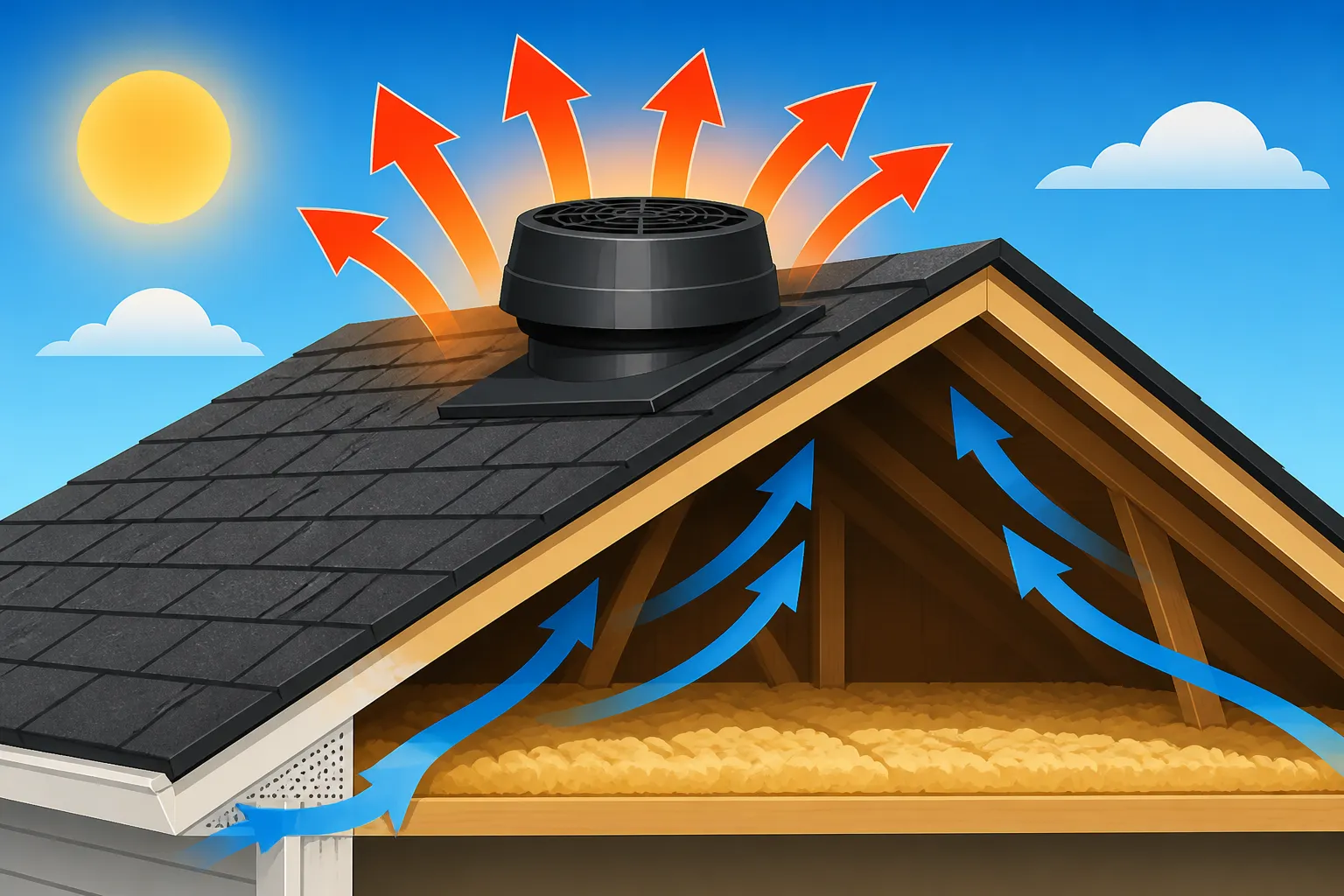
- Intake Vents: These are typically soffit vents (located under the eaves of your roof) or gable vents (located in the peak of the gable walls). These intake vents allow cooler, ambient air from outside to be drawn into the attic as the hot air is expelled. Without adequate intake ventilation, the fan will struggle to move air effectively and can even create a negative pressure that draws conditioned air from your home into the attic, defeating the purpose. Ensuring you have proper roof ventilation is key to maximizing the fan's efficiency.
- Power Source: Depending on the type, the fan will be either hardwired into your home's electrical system or powered by an integrated solar panel.
How a Powered Attic Fan Moves Air
The operation of a powered attic fan is quite straightforward once its components are in place and working together harmoniously.
When the attic temperature rises above the thermostat's set point (e.g., 100°F), the thermostat engages the fan's motor. The fan blades begin to spin, creating a vacuum effect that actively pulls the superheated air from the attic space and pushes it outside through its exhaust opening. This is the "powered" part – it doesn't wait for natural convection; it actively forces the hot air out.
As the hot air is expelled, it creates negative pressure within the attic. This pressure difference then draws in cooler, ambient air from outside through the strategically placed intake vents. Most commonly, these are the soffit vents located along the underside of your roof's eaves. If you have gable vents, they can also serve as intake, though soffit vents are generally preferred for creating a more uniform airflow across the entire attic space. This continuous cycle of expelling hot air and drawing in cooler air significantly lowers the overall temperature in the attic.
The key to an effective system is balanced ventilation. This means you need roughly equal amounts of intake and exhaust ventilation. If you have a powerful attic fan but insufficient intake vents, the fan will struggle to draw in enough outside air. In extreme cases, it might even pull conditioned air from inside your home through any cracks or openings in your ceiling, which is exactly what you want to avoid! A good roofing contractor will assess your existing ventilation to ensure your powered fan works optimally. Many homeowners find it helpful to compare different roofing estimates to ensure their ventilation needs are properly addressed, especially when considering a new roof or significant upgrade.
Types of Powered Attic Fans and Their Operation
When considering a powered attic fan, you'll generally encounter two main types: electric and solar-powered. Both serve the same fundamental purpose but differ significantly in their power source, installation, and operating costs.
Electric Attic Fans
Electric attic fans are the traditional choice and are wired directly into your home's electrical system. They come in various sizes and power ratings, typically measured in Cubic Feet per Minute (CFM), indicating how much air they can move.
The installation of an electric attic fan usually involves a licensed electrician to run the necessary wiring and ensure proper connection to your home's power supply. This can sometimes add to the complexity and cost of installation, especially if new wiring needs to be run. Once installed, these fans operate consistently as long as they have power.
Pros of Electric Attic Fans:
- Consistent Performance: Since they're tied to your home's electrical grid, electric fans offer reliable, consistent performance regardless of sunlight availability. They'll run just as effectively on a cloudy day or in the evening, as long as the attic temperature triggers the thermostat.
- Powerful: Many electric models can move a significant volume of air (high CFM ratings), making them suitable for larger attics or those with severe heat issues.
- Lower Upfront Cost (for some models): While installation costs can vary, some basic electric models might have a lower initial purchase price compared to their solar counterparts.
Cons of Electric Attic Fans:
- Energy Consumption: This is the most common concern. While they are designed to be energy-efficient and the energy savings on your AC can often offset their operational cost, they do add to your electricity bill when running.
- Installation Complexity: Running electrical lines, especially if your attic isn't easily accessible or already wired, can increase installation time and cost.
- Power Outages: They won't operate during a power outage, which might be when you need them most if it's a hot day.
Most electric fans come with adjustable thermostats, allowing you to fine-tune the activation temperature. Some even integrate a humidistat, like those offered by brands such as Broan-NuTone or Air Vent, which will trigger the fan when attic humidity reaches a certain level, providing year-round moisture control.
Solar-Powered Attic Fans
Solar-powered attic fans are a fantastic, eco-friendly alternative that utilizes the sun's energy to operate. These units typically have a photovoltaic solar panel integrated directly into the fan housing, which converts sunlight into electricity to power the fan's motor.
Installation is often simpler than electric models because there's no need to connect to your home's electrical grid. They are self-contained units that require proper placement for optimal sun exposure.
Pros of Solar-Powered Attic Fans:
- Zero Operating Cost: This is arguably their biggest selling point. Once installed, they don't add a single cent to your electricity bill, as they run entirely on free solar energy.
- Eco-Friendly: By harnessing renewable energy, they reduce your carbon footprint.
- Easier Installation: Without the need for complex electrical wiring, installation can be quicker and potentially less expensive, making them a great option if you're trying to How to Get a Lower Roofing Quote by simplifying aspects of the job.
- Potential Tax Credits: In some regions or at a federal level, solar-powered home improvements may qualify for tax credits or rebates, further reducing the overall cost.
- Operation During Power Outages: As they're not tied to the grid, they continue to operate during power outages, providing ventilation when you might need it most.
Cons of Solar-Powered Attic Fans:
- Performance Dependent on Sunlight: Their effectiveness is directly linked to sunlight intensity. They run strongest on bright, sunny days and may operate at reduced capacity on cloudy days or not at all at night. This means they won't ventilate the attic during cooler nighttime hours when heat might still be radiating.
- Potentially Higher Upfront Cost: The cost of the solar panel and associated technology can sometimes make the initial purchase price higher than a comparable electric model.
- Placement Sensitivity: They need to be installed in a location on your roof that receives ample, unobstructed sunlight throughout the day.
- Limited Power: While getting more powerful, some solar models might not match the raw CFM output of the most robust electric fans, depending on the attic size and heat load.
Some advanced solar attic fans, like certain models from Natural Light or Solar Blaster, include battery backup systems, allowing them to store excess solar energy to operate during cloudy periods or even after the sun goes down, addressing some of their primary limitations.
Here's a quick comparison of the two types:
| Feature | Electric Attic Fan | Solar-Powered Attic Fan |
|---|---|---|
| Power Source | Home's electrical grid (AC power) | Integrated photovoltaic solar panel (DC power) |
| Operating Cost | Adds to electricity bill | Zero operating cost |
| Performance | Consistent, day or night (if thermostat active) | Dependent on sunlight; may be less effective on cloudy days or at night |
| Installation | Requires electrical wiring, potentially more complex | No electrical wiring to home; typically simpler |
| Eco-Friendly | Indirectly, by reducing AC load | Directly, uses renewable energy |
| Upfront Cost | Generally lower (for basic models) | Often higher (due to solar technology) |
| Tax Credits | Rarely | Potentially eligible for federal/local incentives |
| Power Outages | Does not operate | Continues to operate |
The Benefits of Installing a Powered Attic Fan
Beyond simply moving air around, a well-chosen and properly installed powered attic fan brings a host of tangible benefits to your home and your wallet. It's an investment that pays dividends in comfort, cost savings, and the longevity of your home's structural components.
Reducing Energy Costs and Enhancing Comfort
This is often the primary driver for homeowners considering a powered attic fan, and for good reason. The impact on your energy bill can be substantial.
When your attic bakes in the summer sun, that intense heat doesn't just stay put; it radiates down into the living spaces below. Your air conditioner then has to work much harder and run longer cycles to counteract this radiant heat gain, constantly battling a thermal load coming from above. This constant battle translates directly into higher electricity consumption and frustratingly high utility bills.
By actively removing the superheated air from your attic, a powered attic fan can lower attic temperatures by 20-50 degrees Fahrenheit, depending on the fan's power and the existing ventilation. This significant reduction in attic temperature means less heat radiates into your home. Consequently, your air conditioner doesn't have to work as hard, run as frequently, or stay on for as long. This reduction in AC runtime can lead to considerable savings on your energy bills throughout the cooling season. Homeowners often report seeing a noticeable drop in their monthly electricity costs, sometimes 10-20% or even more, which really adds up over a hot summer.
But it's not just about money; it's also about comfort. Imagine coming home to a house that feels noticeably cooler and less stuffy, even on the hottest days. With a powered attic fan helping to manage the heat, your living areas will be more comfortable, and your AC will be able to maintain your desired temperature with less strain. This improved indoor climate extends beyond just the rooms directly below the attic; a cooler attic means the entire house benefits from a more stable internal temperature, making your home a more pleasant place to be. For more ways to manage your home's energy use, you might find our article on How Roof Colors Affect Temperature interesting.
Extending Roof and Insulation Lifespan
The long-term benefits of a powered attic fan extend well beyond immediate comfort and energy savings. It plays a critical role in preserving the integrity of your home's most important protective barrier: its roof.
As we discussed earlier, extreme attic temperatures are brutal on asphalt shingles. The constant baking and cooling cycles cause the asphalt to degrade, leading to drying, cracking, and premature granule loss. These granules are not just for aesthetics; they protect the asphalt core from UV rays. Once they're gone, the shingle deteriorates much faster. By actively cooling the attic, a powered fan significantly reduces the temperature stress on your shingles, helping them maintain their flexibility and protective properties for longer. This can extend the life of your roof by several years, postponing the significant expense of a full roof replacement. This preventative measure is a smart way to get the most out of your investment in a quality roof, such as a GAF Timberline HDZ Roof Cost Installed, for example.
Beyond the shingles, proper attic ventilation also protects your insulation. While insulation is designed to resist heat, it's particularly vulnerable to moisture. Inadequate ventilation can lead to condensation within the attic when warm, humid air from your home rises and meets cooler surfaces in the attic. This moisture can saturate fiberglass or cellulose insulation, causing it to mat down, lose its R-value, and even become a breeding ground for mold and mildew. A powered attic fan, especially one with a humidistat, actively removes this moist air, keeping your insulation dry and effective. This protection helps preserve the insulation's ability to maintain a comfortable indoor temperature and can prevent costly insulation replacement down the line.
Finally, by preventing excessive heat and moisture buildup, a powered attic fan also helps to protect the wooden structural components of your attic, such as rafters and joists, from warping, rotting, or succumbing to mold. This ensures the long-term structural integrity of your roof and attic space.
When considering a powered attic fan, it's always a good idea to consult with a reputable roofing contractor. Companies like Modernize can connect you with experienced professionals who can assess your attic's specific ventilation needs, recommend the right type and size of fan, and ensure it's installed correctly to maximize its benefits and keep your home protected. Understanding How Roof Ventilation Works is crucial for any homeowner.
Making the Right Choice for Your Home
Deciding on the best powered attic fan for your home involves considering a few key factors to ensure you get the most efficient and effective system for your specific situation.
Assessing Your Attic's Needs
The first step is to understand the volume of air that needs to be moved. The general rule of thumb is to calculate the cubic footage of your attic. Multiply your attic's length by its width by its height (from the attic floor to the peak). A common recommendation is that an attic fan should move approximately 700 to 750 cubic feet per minute (CFM) for every 1,000 square feet of attic space, plus 15% more CFM for dark-colored roofs or steeper roof pitches. For example, a 1,500 square foot attic with a dark roof might need a fan rated around 1,300 CFM.
Another critical assessment is your existing intake ventilation. As mentioned, a powered fan works best with balanced ventilation. If your soffit or gable vents are insufficient, simply installing a powerful exhaust fan won't be as effective and could even create problems. A qualified professional, perhaps found through services like Modernize, can perform a thorough attic inspection to determine if you have adequate intake ventilation or if upgrades, such as adding more soffit vents, are necessary. This ensures the system works as intended, drawing in fresh air rather than pulling conditioned air from your living space.
Consider your local climate as well. In extremely hot, sunny climates like Arizona or Florida, a solar-powered fan might thrive, offering continuous operation during peak heat. In areas with frequent cloudy days or where nighttime attic cooling is also a priority (due to heat radiating through from the day), an electric fan might offer more consistent performance. Also, for humid climates, a humidistat is a smart addition to any powered fan, helping to combat moisture buildup that can lead to mold and damage.
Installation Considerations and Best Practices
Whether you choose an electric or solar model, professional installation is almost always recommended to ensure safety, efficiency, and adherence to building codes.
For electric fans, proper wiring is paramount. An unlicensed or inexperienced installer could create fire hazards or electrical issues. A certified electrician will ensure the fan is correctly wired to a dedicated circuit, if necessary, and that all connections are secure. They will also properly seal the fan unit into the roof or gable to prevent leaks. You might want to ask your contractor about specifics regarding Roofing Building Codes: What to Know in your area.
For solar fans, while they don't require electrical wiring into your home, correct placement and sealing are still crucial. The solar panel needs to be positioned for maximum sun exposure throughout the day, avoiding shaded areas. The fan unit itself must be securely mounted and properly flashed into the roof to prevent any water intrusion. A skilled roofer understands how to integrate such a unit seamlessly and watertight into your existing roof structure.
Regardless of the type, ensuring your fan is properly sealed and insulated around its penetration point is vital. Air leaks around the fan can negate its effectiveness or allow unconditioned air (or even moisture) into your attic, defeating the purpose. Also, make sure the fan's exhaust isn't obstructed by nearby trees or other roof structures.
Finally, always check for manufacturer certifications and warranty information. A well-installed fan from a reputable brand will come with a warranty covering defects, and professional installation may be a prerequisite for maintaining that warranty. These details are important when evaluating the Is an Asphalt Shingle Roof Worth the Money question over its lifetime.
The Future of Attic Ventilation
As technology advances, so do the options available for keeping your home cool and efficient. Powered attic fans continue to evolve, offering smarter, more integrated solutions for modern homeowners.
Smart Home Integration and Advanced Features
The era of "set it and forget it" is rapidly giving way to "monitor and control from anywhere." Many new powered attic fans are now integrating with smart home ecosystems, allowing for more precise control and monitoring of your attic environment. Imagine being able to check your attic temperature and humidity from your phone, adjust fan settings remotely, or even receive alerts if conditions exceed desired parameters.
Advanced models might feature:
- Wi-Fi Connectivity: Allowing you to control and monitor the fan via a smartphone app.
- Predictive Analytics: Some systems could potentially learn your home's thermal patterns and local weather forecasts to optimize fan operation, preemptively removing heat before it becomes extreme.
- Integrated Sensors: Beyond temperature and humidity, future fans might incorporate air quality sensors, detecting VOCs or other pollutants that can accumulate in attics, ensuring not just thermal comfort but also a healthier home environment.
- Variable Speed Motors: Instead of just on or off, fans could offer variable speed settings, allowing them to run at a lower, quieter speed when less ventilation is needed and ramp up during peak heat, further optimizing energy use.
These smart features enhance convenience and also allow for greater energy efficiency by fine-tuning operation to actual conditions, rather than relying on simple on/off thresholds.
Combining with Other Energy Efficiency Upgrades
A powered attic fan is an excellent standalone upgrade, but its benefits are amplified when combined with other energy-efficiency improvements for your home. Think of your home as a system; optimizing one part often improves the performance of others.
- Improved Attic Insulation: While an attic fan helps remove heat, robust insulation in your attic floor is crucial for preventing heat transfer into your living space. Combining a powered fan with high-quality insulation (like R-38 or higher, depending on your climate zone) creates a formidable barrier against heat. You might find resources like our guide on How Attic Insulation Affects Your Roof useful.
- Air Sealing: Before you add insulation or an attic fan, it’s vital to air seal any gaps, cracks, and penetrations in your attic floor. This prevents conditioned air from your home from escaping into the attic and unconditioned attic air from entering your living space. A fan can inadvertently pull more conditioned air out of your home if air leaks are present.
- Cool Roof Shingles: Certain asphalt shingles are designed with reflective granules to absorb less solar radiation, keeping the roof surface and, consequently, your attic cooler. Pairing these "cool roof" shingles with a powered attic fan offers a synergistic approach, reducing the initial heat load on the attic while the fan efficiently removes any remaining heat. This dual strategy can lead to even greater energy savings and a more comfortable home. For example, Owens Corning offers cool roof shingles that can complement a robust attic ventilation system.
- Ridge Vents and Soffit Vents: While a powered fan is active, it still relies on passive intake. Ensuring your home has adequate and unobstructed soffit and ridge vents creates a comprehensive, balanced ventilation system that works together seamlessly. The fan pulls air through the passive intake vents, making the entire system more effective. Understanding what a Full Roofing System Explained entails will highlight the importance of all these components working in concert.
By strategically combining a powered attic fan with these and other energy-efficient upgrades, homeowners can create a truly comfortable, resilient, and energy-saving living environment. It’s about building a holistic approach to your home’s performance, ensuring every component contributes to your comfort and helps trim those ever-increasing utility bills.
Disclaimer
Please note that this article provides general information and recommendations regarding asphalt roofing and attic ventilation. Local building codes, climate conditions, and individual home specifications can vary significantly. Always consult with a qualified and licensed roofing contractor or HVAC professional for specific advice tailored to your home's needs and to ensure all work complies with local regulations and safety standards. The information herein is not a substitute for professional advice.