Roofing Red Flag: Asking For Full Payment Upfront
The anxiety of needing a new roof is a common homeowner experience, often heightened by the fear of choosing the wrong contractor. It's especially unsettling when a roofing company asks for the entire project cost upfront, leaving you wondering if this is normal practice or a sign of trouble. This guide will clarify why demanding full upfront payment is a significant red flag in the roofing industry and how to protect yourself and your investment.
Why Asking for Full Upfront Payment is a Major Red Flag
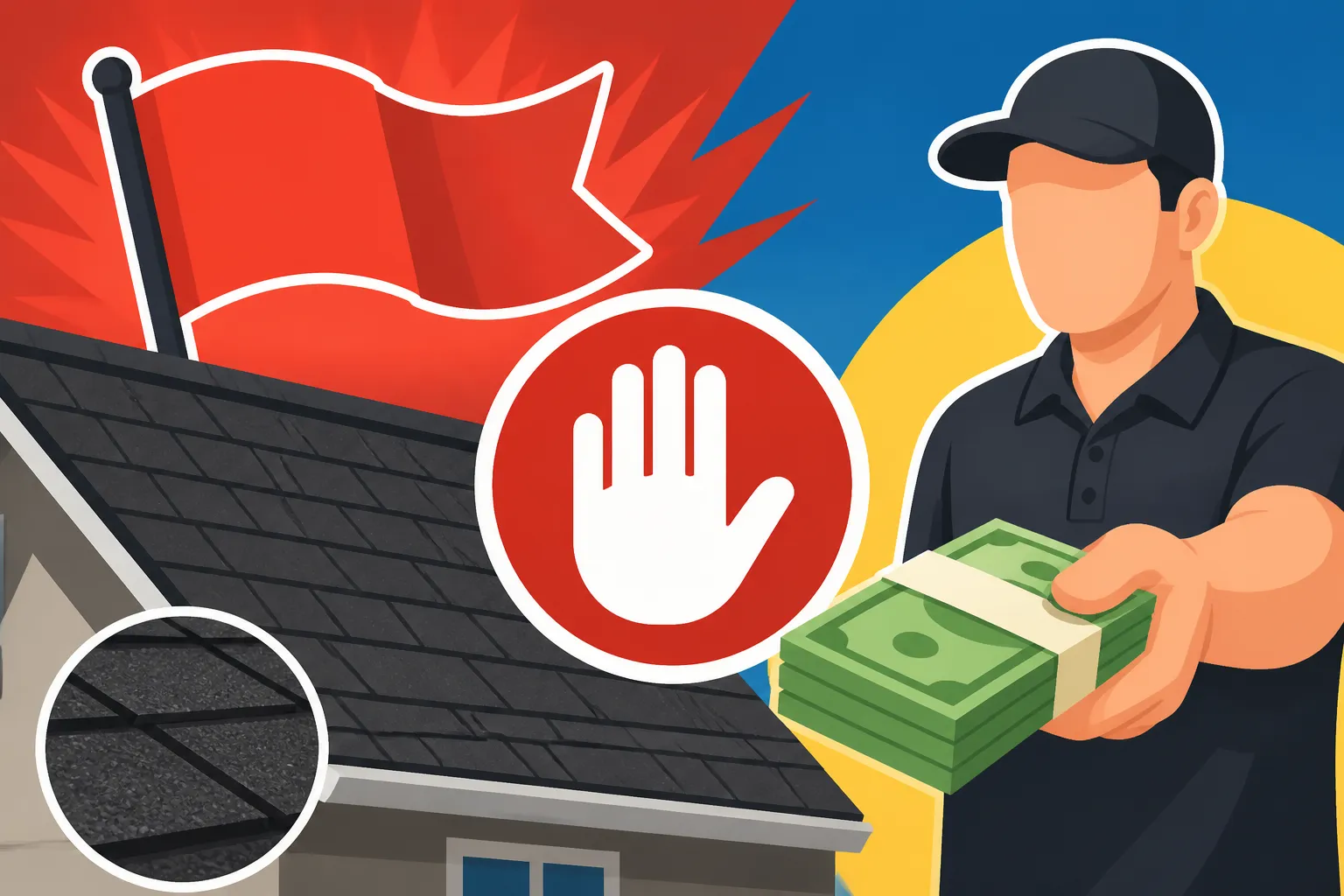
When a contractor insists on receiving the full payment before any work has even begun, it should immediately raise a red flag. This isn't standard industry practice for a reason, and it puts you, the homeowner, in a very vulnerable position. Understanding the risks involved can help you make a more informed decision and avoid potential pitfalls.
The Risk of Disappearing Acts
Perhaps the most alarming concern with upfront full payment is the very real possibility of the contractor taking your money and never returning. Without any financial obligation tied to the completion of the work, what incentive do they truly have to perform? Unfortunately, this scenario isn't uncommon, with homeowners sharing countless stories of contractors who simply vanished after receiving a substantial upfront sum.
Imagine Sarah in Phoenix, Arizona. Her roof was nearing the end of its life, and she hired a contractor who offered a great price but insisted on 100% payment upfront to "secure discounted materials." Eager to save money, she paid the $12,000. Days turned into weeks, and weeks into months. The contractor stopped answering calls, and no materials ever arrived. Sarah was left with a failing roof and a significant financial loss, with little recourse. Reputable contractors understand that building trust involves a staged payment process, not immediate, full remuneration.
Lack of Incentive to Finish the Job Promptly or Properly
Even if the contractor doesn't disappear entirely, receiving full payment beforehand can drastically reduce their motivation to complete the job to your satisfaction. The leverage you typically hold through remaining payments is completely gone. They might drag their feet, prioritize other projects where they still need to collect payment, or, worse, cut corners on materials or workmanship, knowing they've already been paid in full.
Think about it from a common business perspective. Most service industries structure payments to align the provider's financial interest with the client's satisfaction. If all the money is in their pocket, the urgency to perform quality work, adhere to a timeline, or even address any unforeseen issues can dissipate. You could end up with a poorly installed roof, and getting the contractor to return for repairs or warranty work becomes an uphill battle because they have no financial reason to prioritize your follow-up needs. This is why understanding a proper payment schedule, often discussed when learning about how to get a lower roofing quote, is so vital.
Legal and Financial Vulnerability
Beyond the practical risks, demanding full payment upfront can also put you in a legally and financially precarious position. In many states, consumer protection laws regulate how much a contractor can request as an initial deposit for home improvement projects. For instance, in California, a down payment for a home improvement contract cannot exceed $1,000 or 10% of the contract price, whichever is less. Other states have similar limits, often capping deposits at 33% or a specific dollar amount.
Ignoring these regulations, whether knowingly or unknowingly, can invalidate parts of your contract and make it incredibly difficult to recover your money if the contractor defaults. If you've paid everything upfront and the work is never completed or done poorly, your only viable recourse might be to pursue costly and time-consuming legal action. This path offers no guarantees of retrieving your funds, leaving you to shoulder the burden of hiring another contractor and potentially paying for the same job twice. This is a critical point that makes a clear contract and payment schedule essential for any homeowner.
Understanding Standard Roofing Payment Schedules
Instead of a full upfront payment, legitimate roofing projects follow a structured payment schedule designed to protect both the homeowner and the contractor. This phased approach ensures that payments are tied to tangible progress, fostering trust and accountability throughout the project.
The Initial Deposit
It's entirely normal and expected for a reputable roofing contractor to request an initial deposit. This deposit serves several crucial purposes: it helps cover the upfront cost of ordering materials (like those beautiful GAF Timberline HDZ or Owens Corning Duration shingles), secures your spot on their schedule, and acts as a good faith commitment from both parties. However, as mentioned earlier, this amount should be reasonable and comply with local regulations, typically ranging from 10% to 33% of the total project cost.
This initial sum allows the contractor to get the ball rolling, purchasing the specific asphalt shingles, underlayment, drip edge, and other essential components required for your roof. It confirms your seriousness as a client and demonstrates the contractor's commitment to starting the work. If a contractor asks for a deposit that seems disproportionately high, particularly if no materials have been delivered or work has commenced, it's a good time to ask for clarification and perhaps reconsider. When exploring options, resources like Modernize can help you find contractors who follow these standard practices. Understanding what a typical Roofing Deposit: How Much Is Normal can really put your mind at ease.
Milestone Payments During the Project
For larger projects, such as a complete roof replacement, a standard payment schedule will include milestone payments. These payments are strategically linked to specific phases of the work, meaning you only release more funds once clearly defined stages of the project have been completed. This arrangement is mutually beneficial, providing the contractor with necessary cash flow to keep the project moving while giving you visual proof of progress.
A typical milestone might be the completion of the old roof tear-off and a subsequent roof decking inspection, or the successful installation of the new underlayment and starter shingles. For example, a contractor might request a payment after the old roof has been entirely removed, the deck has been checked for integrity, and the new underlayment is securely in place. This allows you to observe the tangible work being done and ensures your payments align with verifiable progress. This kind of arrangement keeps the contractor motivated to continue working efficiently and to a high standard, as they know further payments depend on satisfactory completion of each stage. For clarity on what to expect, refer to a guide on What a Roofing Estimate Should Include.
Final Payment Upon Project Completion
The most crucial stage of the payment schedule is the final payment. The remaining balance of your contract should always be withheld until the entire roofing project is 100% complete, you have conducted a thorough final inspection, and you are completely satisfied with the work. This final payment is your ultimate leverage to ensure any outstanding items are addressed, all debris is cleaned up, and the contractor has delivered on every promise made in the contract.
Before you hand over that last check, take the time to perform a detailed walk-around of your home. Inspect the new roof (from the ground or with the contractor, if they have the equipment), verify the cleanup of your yard, and confirm that all specified work, from new flashing around your chimney to the proper installation of your ridge vent, meets your expectations. A reputable contractor will not only expect this final inspection but will also be happy to walk you through the completed work and address any lingering questions. At this stage, you should also receive all necessary lien waivers and information regarding your roofing warranties. Remember, you should never feel pressured into making the final payment until you are fully content with the job. For more guidance, consider reading Should You Pay a Roofer Upfront.
Here's a breakdown of a typical payment structure for a roofing project:
| Payment Stage | Typical Percentage Range | What It Typically Covers | Homeowner Protection Provided |
|---|---|---|---|
| Initial Deposit | 10-33% (up to $1,000 or 10% in some states) | Securing materials, scheduling, initial mobilization | Demonstrates commitment from both parties; low upfront risk for homeowner |
| First Milestone | 30-40% | Delivery of materials, tear-off completion, roof deck inspection | Verifies materials are on-site and initial demolition is done |
| Second Milestone | 30-40% | Underlayment and shingle installation substantially complete | Ensures significant progress on the actual roofing work |
| Final Payment | 10-25% | Project completion, final inspection, site cleanup, warranty docs | Ultimate leverage for quality control and punch-list items |
Protecting Your Investment: What to Do If a Contractor Asks for Full Upfront Payment
Encountering a contractor who demands full upfront payment can be alarming, but it doesn't mean you're out of options. Knowing how to respond and what steps to take can protect you from potential scams and ensure you hire a reputable professional.
Politely Decline and Inquire About Their Standard Practice
Your very first step should be to directly address the contractor's request for full upfront payment. Explain calmly that you are not comfortable paying 100% upfront and would like them to outline their standard payment schedule, including any initial deposit, milestone payments, and final payment. A professional and legitimate contractor will understand your hesitation and be prepared to offer a more conventional, staged payment plan.
If they become defensive, insist that it's their only way of doing business, or try to pressure you, consider this a significant warning sign. Sometimes, a smaller or less experienced contractor might genuinely struggle with cash flow, but that financial burden should not be transferred entirely to you. Your role is to secure a quality roof, not to finance their business operations. By asking for clarification, you give them an opportunity to demonstrate professionalism. If they continue to insist on full payment, it’s a clear indication that it’s time to politely decline their services and move on.
Verify Credentials, References, and Insurance
Before you consider working with any roofing contractor, especially one making unusual payment demands, you must conduct thorough due diligence. This means more than just a quick online search. You need to verify their licensing with your state's contractor board, confirm they carry adequate liability insurance and workers' compensation, and contact several past clients for references. Don't rely solely on glowing online reviews, as these can sometimes be fabricated or misleading.
A truly legitimate business will have no problem providing their contractor license number, certificates of insurance directly from their providers, and a list of recent references. Call the insurance carriers directly to verify the policies are active and cover the work proposed. When speaking with references, ask detailed questions about the contractor's communication, adherence to the project timeline, quality of work, and how they handled any issues that arose during the job. This crucial step is part of How to Choose a Roofing Contractor and will help you identify reliable professionals. Always remember that Licensed and Insured Roofers: Why It Matters isn't just a formality; it’s your protection. Platforms like Modernize can also help connect you with vetted professionals in your area who typically meet these standards.
Insist on a Detailed Written Contract
Never, under any circumstances, allow work to begin on your roof without a comprehensive, written contract that clearly outlines every single detail of the project. This contract is your primary legal protection and should leave no room for ambiguity. It needs to specify the exact scope of work, including tear-off, any decking repairs, and installation procedures. It must list all materials by brand, type, and color (e.g., CertainTeed Landmark shingles in Colonial Slate), the total project cost, and, critically, a transparent payment schedule tied to specific, verifiable milestones.
The contract should also include a clear timeline for completion, cleanup procedures, details about manufacturer and workmanship warranties, and a clause for dispute resolution. Ensure it states who is responsible for pulling all necessary permits (it should almost always be the contractor). Take the contract home, read every line, and don't hesitate to ask for clarifications or additions. If a contractor tries to rush you into signing or uses vague language, slow down. A strong contract is your best defense against How to Avoid Roofing Scams and provides a roadmap for what to expect, from start to finish.
Other Roofing Contractor Red Flags to Watch Out For
While demanding full upfront payment is a major warning sign, it's not the only one. Being aware of other common red flags can help you navigate the process of hiring a roofing contractor with greater confidence and prevent you from falling victim to less-than-reputable companies. A guide on Roofing Contractor Red Flags to Avoid can offer even more comprehensive advice.
No Physical Address or Local Presence
Be highly suspicious of contractors who operate solely out of a P.O. Box, don't have a verifiable local office, or use only temporary phone numbers or email addresses. While many small, legitimate businesses may operate from a home office, a complete lack of any established physical presence can make them incredibly difficult to track down if problems arise after the project is complete. This tactic is particularly common with "storm chasers" who appear in an area after a major weather event, perform quick jobs, and then disappear, leaving homeowners with no way to contact them for warranty issues or repairs.
A reputable, local business invests in its community and aims to build a lasting reputation. They will have a consistent, verifiable business address, even if it's not a large showroom, and a local phone number that has been in operation for an extended period. You should be able to find them on local business listings and see signs of an established presence. If the contractor only shows up in a vehicle with out-of-state plates and no clear local ties, it's a strong indication that they might not be around for the long haul to back up their work.
Pushy Sales Tactics and Pressure to Sign Immediately
High-pressure sales tactics are a classic red flag in almost any industry, and roofing is certainly no exception. If a contractor attempts to rush you into signing a contract immediately, perhaps by offering a "today-only" discount, or by making you feel uncomfortable about taking time to consider your options, it's a clear signal to step back and re-evaluate.
A trustworthy and professional roofing contractor understands that a new roof is a significant investment and a major decision for any homeowner. They will provide you with a detailed estimate, answer all your questions, and give you ample time to review their proposal, check references, and compare it with other bids you've received. They won't resort to scare tactics, vague threats about rising prices, or create artificial urgency to force a decision. Your decision should be made calmly and confidently, based on all the facts, rather than under duress. This is often a sign that the contractor knows their offer might not hold up to scrutiny if you had more time to research or compare bids. Asking the right Questions to Ask a Roofing Contractor Before Hiring can help you spot these tactics early.
Unusually Low Bids That Seem Too Good to Be True
Everyone appreciates a good deal, but if a roofing estimate comes in significantly lower than all the other quotes you've gathered, it should be met with extreme skepticism. An unusually low bid often indicates that corners will be cut, sub-standard materials will be used, the labor might be unlicensed or uninsured, or that significant hidden costs will mysteriously appear later in the project. When comparing bids, be sure to delve into How to Get Roofing Quotes and Compare Them to truly understand what each contractor is offering.
Replacing a roof involves substantial costs for quality materials, skilled and insured labor, necessary permits, and legitimate business overhead. If one bid is 30% or 50% lower than comparable offers, it's highly probable that something is amiss. They might be planning to use cheaper, less durable asphalt shingles, skip crucial protective underlayment, or simply not carry proper insurance, which could leave you financially liable if an accident occurs on your property. Remember, in the roofing industry, you generally get what you pay for. Always compare bids thoroughly, asking about every line item to ensure you're comparing "apples to apples" and not just the bottom line. This due diligence can prevent the costly mistake of having to pay for the same roof replacement twice. Platforms like Modernize can assist you in gathering competitive and reliable quotes from contractors who adhere to industry standards, helping you avoid Why the Lowest Roofing Bid Is Risky.
Disclaimer
This guide provides general information about roofing practices and potential red flags. Local regulations, contractor licensing, and industry standards can vary significantly by location. Always consult with a qualified, licensed, and insured roofing professional and your local authorities before making any decisions related to your roofing project.