Cost to Replace vs Repair an Old Roof
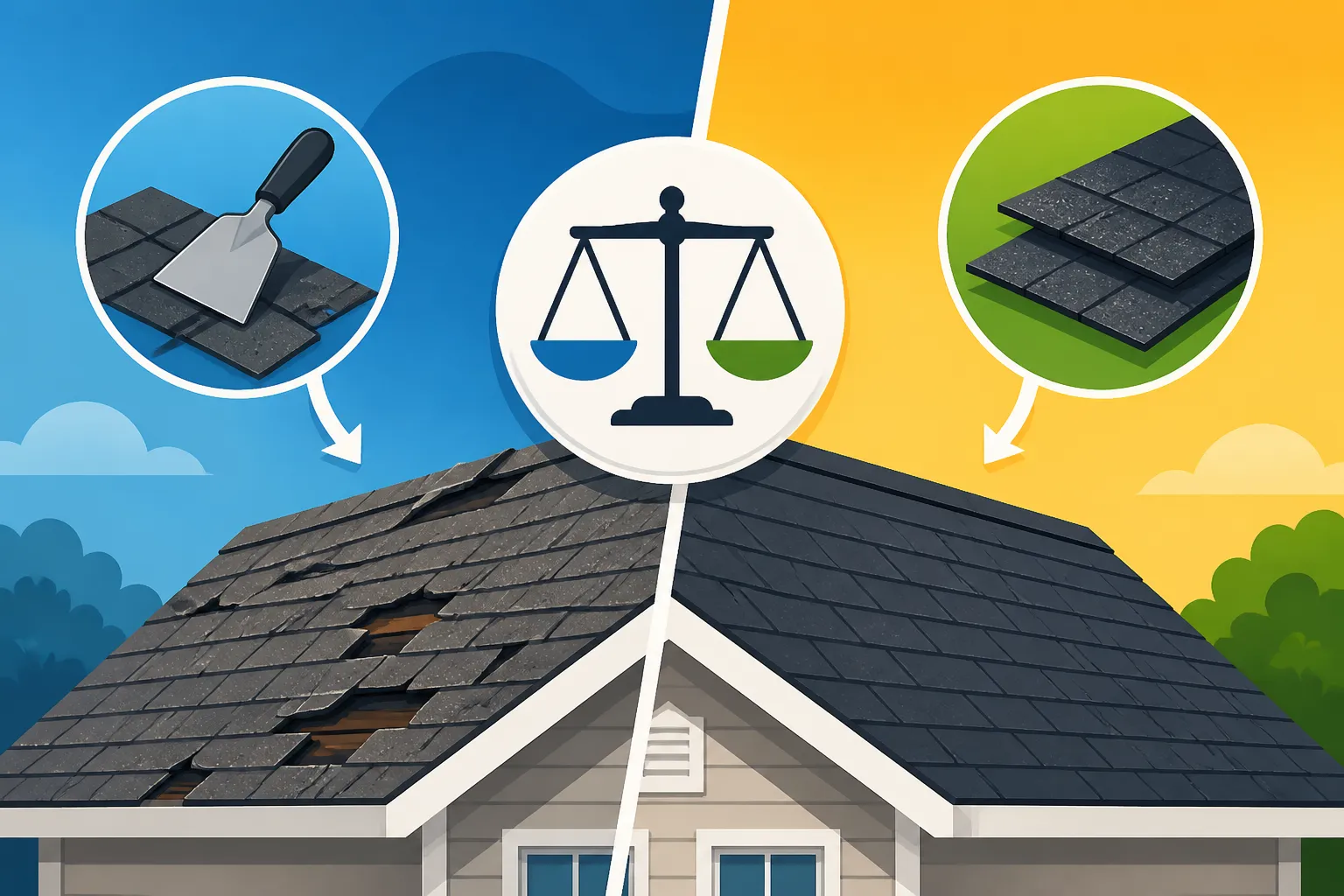
That moment you first spot a damaged shingle or a tell-tale water stain on your ceiling, it's enough to send a shiver down any homeowner's spine. The immediate question isn't just what happened, but how much it’s going to cost and whether a quick fix will do, or if you're looking at a complete roof overhaul. This guide is all about helping you unpack that complex decision, weighing the costs and benefits of repairing versus completely replacing an old asphalt roof.
Repairing an Old Roof: When It Makes Sense and When It Doesn't
Let's be honest, everyone wants the cheapest fix possible, especially when it comes to home repairs. For your roof, sometimes a repair is absolutely the right call. It's often the first thing we think of, hoping it's just a minor issue rather than a major expense.
The Case for Targeted Repairs
A repair makes sense when the damage is isolated, recent, and your roof still has a good chunk of its expected lifespan remaining. Think about a scenario where a strong gust of wind rips off just a few shingles in one section of your roof after a storm. Or perhaps you notice a small leak around a chimney or vent pipe that's clearly due to a piece of flashing that came loose. These are prime candidates for a repair.
For example, if your asphalt roof is only 10-15 years old and generally in good shape, a few missing shingles or a minor leak around an exposed pipe doesn't necessarily mean the whole roof is failing. A skilled roofer can typically address these specific issues by replacing the damaged components, sealing the problematic area, and ensuring everything is secure. Many homeowners find that using a platform like Modernize to connect with local roofing contractors for these smaller jobs can be incredibly efficient, getting them several quotes from reputable pros quickly.
Common Repair Costs and the "Band-Aid" Trap
The cost of a repair can vary widely depending on the nature and extent of the damage. Replacing a handful of missing shingles might cost a few hundred dollars, while repairing a larger section of damaged decking or intricate flashing around a skylight could easily run into the thousands. Factors like the type of shingle you have (basic 3-tab versus more expensive architectural or designer shingles), the pitch of your roof, and accessibility for the repair crew will all play a role in the final price.
Here's where the "band-aid" trap comes in. While a single repair might seem affordable, constantly patching an old roof can quickly become a money pit. Imagine your roof is 20-25 years old, showing signs of widespread granule loss, curling, and cracking shingles. You fix a leak here, then a few months later, another leak pops up there. Over time, these cumulative repair costs can begin to approach, or even exceed, the investment of a full replacement. Not only are you spending more in the long run, but you're also living with constant worry and an unreliable roof. At a certain point, a series of patchwork repairs just isn't a sustainable solution, and it might be time to start thinking about the full picture. Our article, Roof Repair vs Replacement: How to Decide, goes deeper into these considerations.
Replacing an Old Roof: When It Becomes the Only Real Option
Sometimes, you reach a point where repairs are no longer economically sound or structurally sufficient. An old roof isn't just about aesthetics; it's about protecting your entire home, and when it starts to fail comprehensively, a full replacement is not just advisable, it's critical.
Clear Signs a Replacement is Due
Several undeniable signs indicate that your roof has reached the end of its functional life and needs to be replaced. These aren't just cosmetic issues; they point to systemic failure. One of the most common red flags is widespread granule loss, which you might notice in your gutters or as bare spots on your shingles. These granules protect the asphalt from UV rays, and once they're gone, your shingles rapidly deteriorate. Curling or cracked shingles across large sections of the roof also signal advanced aging, as the shingles lose their flexibility and ability to shed water effectively.
Another critical indicator is sagging sections of the roof or visible signs of water damage in your attic, such as dark stains, mold, or a musty odor. This often means the roof decking itself is compromised, which is a structural issue that repairs alone simply can't fix. Even if you don't see outright leaks, a roof that is constantly wet underneath due to poor ventilation or failed underlayment can lead to rotting rafters and sheathing. Our guide on Signs You Need a New Roof can help you identify these issues. When you spot these widespread issues, a full replacement becomes a necessary investment in your home's long-term health and safety.
The Components and Costs of a Full Replacement
A full roof replacement is a comprehensive project, and its cost reflects the numerous components and labor involved. When you opt for a replacement, you're not just getting new shingles; you're essentially getting an entirely new protective system for your home. The process typically begins with a complete tear-off of the old roofing materials, which includes shingles, underlayment, and often even old flashing. This tear-off also involves disposal costs, which can add a significant amount to the overall project.
After the old roof is removed, the roof decking is inspected for any damage or rot. If compromised sections are found, they need to be replaced, adding to the Roof Decking Replacement Cost. Then, a new underlayment (either traditional felt or synthetic) is installed, followed by ice and water shield in vulnerable areas, new drip edge, flashing around chimneys and vents, and finally, the new asphalt shingles. Ridge vents and other ventilation components are also typically upgraded or replaced during this time. For a full breakdown, check out our article on Asphalt Roof Replacement Cost: Complete Breakdown. The total cost will be influenced by the size of your roof, its complexity (pitch, number of valleys, dormers), the type of shingles you choose, and regional labor rates. However, a new roof also brings the benefit of a fresh manufacturer's warranty, offering peace of mind for decades to come.
Long-Term Value and Benefits
While the upfront cost of a full roof replacement is substantial, it’s crucial to view it as a long-term investment rather than just an expense. A new asphalt roof can significantly increase your home’s curb appeal and overall value, which is particularly beneficial if you plan to sell within the next 10-15 years. It’s one of the top home improvements for return on investment.
Beyond aesthetics and resale value, a new roof offers practical benefits. Modern asphalt shingles and a properly installed roofing system provide superior protection against the elements, preventing costly water damage to your home’s interior and structure. Improved insulation and ventilation, often part of a new roof installation, can also lead to better energy efficiency and lower heating and cooling bills. You’ll also enjoy the peace of mind that comes with a new, comprehensive manufacturer’s warranty, which can cover materials and even workmanship for many years. This is a stark contrast to an old roof that constantly demands attention and leaves you wondering when the next problem will arise.
Key Factors Influencing Your Decision and the Price Tag
Deciding between a roof repair and a full replacement isn't always straightforward. It requires a careful assessment of several factors unique to your home and situation. Skipping this crucial evaluation could lead to either overspending on unnecessary repairs or neglecting a problem that will only grow more expensive.
The Age and Condition of Your Roof
The age of your existing asphalt roof is arguably the most critical factor. Most asphalt shingles are designed to last between 20 to 30 years, though this can vary depending on the shingle type, installation quality, and local climate. If your roof is only 10-15 years old and experiencing a localized issue, a repair is often the most sensible and cost-effective approach. The remaining lifespan makes the repair a good investment.
However, if your roof is pushing 20-25 years or older, even a seemingly small issue might be a symptom of widespread aging. At this point, the entire roofing system is likely nearing the end of its life, and small repairs become less effective, like trying to plug holes in a leaking boat. You might fix one spot only to have another develop shortly after. Considering the How Long Does an Asphalt Roof Last, a very old roof with multiple problems almost always warrants replacement over repeated repairs.
Extent of Damage and Underlying Issues
Another major consideration is the sheer scale of the damage. Is it just a few missing shingles on one slope, or are there significant patches of damage, widespread granule loss, or multiple leaks scattered across the entire roof? Localized damage, especially if the underlying roof decking is sound, leans towards a repair.
However, if the damage is widespread or has penetrated deeper than the shingles, a replacement is often necessary. Water damage that has reached the roof decking (the plywood or OSB sheathing beneath the underlayment and shingles) can cause rot, mold, and structural weakness. Similarly, if your attic shows signs of significant water intrusion, it suggests a failure of the entire roofing system, not just a surface-level problem. Addressing these underlying issues, particularly rotted decking, can be an involved process and is usually best done as part of a full replacement. Trying to repair individual sections of rotted decking while keeping an old roof intact can be complex and may not fully resolve the underlying structural integrity issues.
Local Climate, Building Codes, and Your Future Plans
Your geographic location and local weather patterns play a huge role in the longevity and performance of your roof. Homes in areas prone to severe storms, heavy hail, or strong winds, like parts of Texas or Florida, might experience accelerated wear and tear. In such climates, even a moderately aged roof could sustain damage severe enough to warrant a full replacement, particularly if it's not equipped with impact-resistant or high-wind rated shingles. Local building codes also dictate certain standards for roof materials and installation. For instance, some areas may require specific underlayment or nailing patterns for increased wind resistance. A replacement ensures your home is brought up to current code, which can be an important factor.
Finally, your personal plans for the home should factor into your decision. Are you planning to sell in the next year or two? A new roof can significantly boost curb appeal and resale value, often making it a worthwhile investment before listing. Buyers typically prefer homes with newer roofs, as it means one less major expense for them. If this is your "forever home," a replacement offers long-term peace of mind and protection, allowing you to enjoy decades without major roof worries. However, if you're holding onto a rental property short-term, a robust repair might suffice until you decide to sell. Remember, services like Modernize can help you find contractors who understand these unique regional and personal considerations.
Getting Estimates and Making the Right Choice
Once you understand the factors at play, the next crucial step is gathering information and getting professional opinions. This part can feel overwhelming, but it's essential for making an informed and confident decision. Don't rush into anything!
The Importance of Multiple Quotes
This might be the most critical piece of advice: always get at least three to four detailed estimates, both for a significant repair and for a full replacement. You need to see a clear breakdown of costs, materials, and labor for each scenario. A reputable contractor should be able to explain why they recommend one option over the other, based on the age and condition of your roof, the extent of the damage, and local building codes.
Don't just look at the bottom line. Compare what's included in each quote. For a replacement, does it include tear-off, disposal, new underlayment, flashing, and ventilation? Are they using quality shingles from brands like GAF, Owens Corning, or CertainTeed? For repairs, what exactly are they fixing and what kind of warranty do they offer on that specific repair? Getting multiple estimates allows you to compare pricing, assess different approaches, and get a better feel for the contractors themselves. Utilizing platforms such as Modernize can streamline this process by connecting you with several pre-vetted local roofing professionals, saving you the hassle of cold-calling. Our guide, How to Read and Compare Roofing Estimates, can walk you through the specifics.
What to Look for in a Roofing Contractor
Choosing the right roofing contractor is just as important as the decision to repair or replace. A poorly executed job, whether a repair or a full replacement, can lead to ongoing problems and more expense down the road. Always verify that any contractor you consider is licensed and insured. Licensing ensures they meet state or local requirements, while insurance protects you from liability if a worker gets injured on your property or if there's accidental damage.
Beyond basic credentials, look for contractors with strong local reputations, positive reviews on platforms like Google or the Better Business Bureau, and solid references. Ask about their experience with the specific type of roofing work you need done. If you're considering a full replacement, look for contractors who are certified by major shingle manufacturers, like a GAF Master Elite Contractor or an Owens Corning Platinum Preferred Contractor. These certifications often mean they can offer enhanced manufacturer warranties that cover both materials and workmanship, providing an extra layer of protection for your investment. For more in-depth advice, read our article on How to Choose a Roofing Contractor.
Understanding Warranties for Repairs vs. Replacements
One of the often-overlooked distinctions between a repair and a replacement is the warranty coverage. When you get a full roof replacement, you typically receive a comprehensive warranty package. This includes a manufacturer's warranty on the shingles and other components (often 25-50 years, sometimes even lifetime for certain architectural shingles), and a separate workmanship warranty from the installer (ranging from 5 to 25 years or more). These warranties offer significant peace of mind, protecting your investment for decades against manufacturing defects and installation errors.
For a roof repair, the warranty is usually much more limited. It typically only covers the specific work performed and the materials used for that particular repair, often for a much shorter period, perhaps 1-5 years. If a new leak develops elsewhere on your old roof, it won't be covered by the previous repair warranty. This difference in warranty coverage is a crucial financial and practical consideration. A full replacement provides broad, long-term protection, while repairs offer short-term, localized guarantees.
Repair vs. Replace Comparison Table
To help you visualize the key differences, here's a quick comparison of repairing versus replacing an old asphalt roof:
| Feature | Roof Repair (Localized) | Roof Replacement (Full System) |
|---|---|---|
| Typical Cost | Low to Moderate ($200 – $3,000+) | High ($8,000 – $25,000+, depending on size/complexity) |
| Lifespan Impact | Extends life of specific area, not entire roof | Resets roof life to 20-50+ years for the entire system |
| Warranty | Limited, often 1-5 years on specific repair/materials | Comprehensive, 25-50+ years on materials, 5-25+ years on workmanship |
| When Needed | Isolated damage, minor leaks, roof still relatively young (under 15-20 years old) | Widespread damage, systemic failure, multiple leaks, old roof (20+ years old), structural issues |
| Pros | Lower upfront cost, quicker turnaround | Long-term peace of mind, increased home value, improved energy efficiency, fresh warranty |
| Cons | Doesn't address underlying aging, can lead to repeated expenses, less protection overall | High upfront cost, longer project timeline |
| Best For | Minor, localized issues on a relatively young roof | Old, failing roofs with widespread damage or structural problems; enhancing home value |
Final Thoughts on Your Roofing Investment
Deciding whether to repair or replace your old asphalt roof is a significant financial and emotional decision. There's no universal right answer, as it truly depends on your specific circumstances, the condition of your roof, and your plans for your home. Remember, delaying a necessary replacement often leads to more extensive and costly damage in the long run. By carefully evaluating the factors discussed, getting multiple detailed estimates, and choosing a reputable contractor, you can make an informed choice that protects your home and your budget for years to come.
Disclaimer
Please remember that this article provides general information and should not be considered professional advice. Always consult with a qualified and licensed roofing contractor for a thorough inspection and personalized recommendations for your specific home and situation. Local building codes and regulations can vary significantly, so ensure your chosen contractor is knowledgeable about requirements in your area.