Roofing Permit Cost in Florida
Facing a roof replacement in Florida can feel like navigating a maze of paperwork, especially when it comes to understanding all the associated costs. One of the most perplexing charges often encountered is the roofing permit fee. It’s not just a flat number; it varies wildly depending on your exact location, the scope of your project, and even the nuances of local building departments. This guide is here to shed light on the ins and outs of roofing permit costs in Florida, helping you prepare your budget and avoid unwelcome surprises.
Why Florida Roofing Permits Aren't Just a "Fee"
It’s easy to look at a line item on an estimate for a “permit fee” and just see another expense. But in Florida, especially, roofing permits are much more than just a bureaucratic hurdle; they're a vital layer of protection for your home and your wallet, particularly given our unique weather challenges.
Protecting Your Investment and Safety
Florida's strict building codes are largely a direct response to the powerful hurricanes and tropical storms that frequently batter our coastlines. A roofing permit ensures that your new roof will be installed to meet these rigorous standards, which are designed to keep your home safe during severe weather events. Think of it this way: when you invest thousands in a new roof, you want to be sure it can withstand a strong Category 2 hurricane, not just a summer thunderstorm.
The permit process mandates inspections at various stages of your roof replacement. These aren't just quick glances; they're detailed checks by local building officials to confirm that the work being done adheres to current safety and structural requirements. This includes everything from the quality of the roof decking and underlayment to the precise nailing patterns of your shingles. For example, in high-wind zones, specific nailing patterns are critical to prevent shingles from lifting off during a storm. Without these inspections, you'd be relying solely on the contractor's word, and frankly, that's a gamble you shouldn't take with such a critical component of your home. It’s about more than just aesthetics; it's about structural integrity and ultimately, the safety of your family and your biggest asset. Understanding these codes is essential, which is why we've put together a detailed guide on [.
The Legal Ramifications of Skipping a Permit
While it might seem tempting to bypass the permit process to save a few hundred dollars, the potential consequences in Florida are severe and far outweigh any initial savings. Ignoring the permit requirement can lead to significant legal and financial headaches down the road, creating far more stress than the upfront cost.
First and foremost, if unpermitted work is discovered, your local municipality can issue a "stop work" order. This means all construction halts immediately, potentially leaving your roof exposed to the elements. You'd then face hefty fines, be required to pay double or triple the original permit fee, and still have to go through the proper permitting process, often involving costly revisions to bring the work up to code. Imagine being halfway through a roof replacement when a stop work order hits; the delays alone could be disastrous, let alone the extra costs.
Beyond immediate penalties, an unpermitted roof can become a massive problem when you try to sell your home. Home inspectors will flag unpermitted work, and potential buyers will either demand that you fix it, often at a significant discount, or walk away entirely. Mortgage lenders and insurance companies also have a keen interest in properly permitted work. If a major storm hits and your insurance company discovers your roof was replaced without a permit, they could deny your claim, leaving you to foot the bill for a damaged roof and potentially other water damage within your home. This is why understanding What Happens If You Skip a Roofing Permit is so crucial.
Breaking Down the Roofing Permit Cost in Florida
Pinpointing an exact dollar amount for a roofing permit in Florida is tricky because the state is a patchwork of counties and municipalities, each with its own specific fee schedule. However, we can certainly give you a realistic range and help you understand what factors influence these costs.
Understanding the Base Permit Fees
The base permit fee for a roof replacement in Florida can typically range anywhere from $75 to over $500, but sometimes even more for very large or complex projects. This wide range is due to several variables. Many jurisdictions, such as those within Hillsborough County (Tampa area) or Duval County (Jacksonville area), calculate the permit fee based on the total estimated value of the roofing project. For instance, if your new roof is projected to cost $15,000, the permit fee might be a small percentage of that, plus some flat administrative charges. Other counties, like parts of Broward or Palm Beach, might have a flat fee for residential re-roofs or a fee based on the square footage of the roof.
Smaller towns might have lower flat fees, while larger metropolitan areas often have more complex fee structures to account for additional review staff and resources. It's truly a localized cost, which is why your contractor needs to be familiar with the specific requirements of your city or county. This is also why getting a comprehensive understanding of your Asphalt Roof Replacement Cost: Complete Breakdown is so important, as the permit is just one piece of the puzzle.
Additional Fees and Surcharges to Expect
Beyond the base permit fee, several other charges can contribute to the overall cost of obtaining a roofing permit in Florida. These surcharges are common and can sometimes add a significant amount to the total.
- State Surcharge: The State of Florida typically imposes a small surcharge on building permits, often around 1.5% of the total permit fee, which goes towards state construction industry programs.
- Plan Review Fees: Even for a re-roof, some municipalities may charge a separate fee for reviewing the plans to ensure they comply with local building codes, especially if there are any structural changes or unique aspects to the job.
- Technology Surcharge: Many counties and cities have implemented technology fees to cover the costs of online permitting systems and digital record-keeping.
- Re-inspection Fees: This is an important one to avoid. If your contractor fails an inspection due to faulty work or code violations, you will likely be charged a re-inspection fee for the building department to send an inspector out a second time. This highlights the importance of choosing a quality contractor and ensuring the work is done right the first time.
- Impact Fees: While less common for simple roof replacements, impact fees are sometimes levied on new construction or significant renovations that increase the burden on local infrastructure. For a standard re-roof, you typically won't encounter this, but it's worth being aware of.
- Hurricane Mitigation Fees: In areas highly susceptible to hurricanes, there might be specific fees related to documenting and verifying hurricane mitigation measures, which are often tied to the stringent High-Wind Roofing Code Requirements.
The complexity of your roof (e.g., a steep roof cost premium or a multi-story home) might also implicitly affect permit costs, as these projects generally require more detailed review and inspection time, which is reflected in higher overall project values that base permit fees are sometimes calculated on.
The Impact of Location: City vs. County Costs
The geographic location within Florida plays a crucial role in determining your roofing permit costs. A permit in Jacksonville (Duval County) might be structured differently and cost a different amount than one in Naples (Collier County) or Pensacola (Escambia County).
For example, a re-roof permit for a standard residential home in Orlando (Orange County) might fall in the $200-$400 range, depending on the scope. Meanwhile, in Miami-Dade County, known for its very stringent building codes and higher cost of living, a similar permit could easily be $350-$600 or more, often with additional fees for various departmental reviews. In a smaller, more rural county like Levy or Gilchrist, you might find a flat fee closer to the lower end of the spectrum, perhaps $75-$150.
Even within the same county, there can be differences. A city like Fort Lauderdale (Broward County) might have slightly different fees or processes than an unincorporated area of Broward County, or a neighboring city like Pompano Beach. It's essential to consult the specific building department of your city or county for the most accurate and up-to-date fee schedule. Your roofing contractor, especially one with strong local ties, should be well-versed in these local nuances.
Real-World Examples of Florida Roofing Permit Costs
Let's get down to some practical numbers. While I can't give you an exact quote for your specific home (that's what contractor estimates are for!), I can offer some general ranges based on common scenarios across the Sunshine State.
Typical Costs for a Single-Family Home
For a typical single-family home with an asphalt shingle roof replacement, the permit cost will generally be a fraction of the total project. For a 1,500 to 2,000 square foot home, which is a common size, you can expect the permit portion of your How Much Does an Asphalt Shingle Roof Cost to typically range from $150 to $600.
Here’s a simplified breakdown by major Florida regions, illustrating the variability:
| Location (Florida) | Typical Permit Fee Range (Estimated) | Notes on Variability |
|---|---|---|
| Miami-Dade County | $350 – $600+ | Higher due to complex codes, coastal regulations, and higher administrative costs. |
| Broward County | $300 – $550+ | Similar to Miami-Dade, with variations by city (e.g., Fort Lauderdale vs. Hollywood). |
| Orange County (Orlando) | $200 – $450 | Often based on project value; can include plan review and technology fees. |
| Hillsborough County (Tampa) | $175 – $400 | Typically a percentage of project cost plus fixed fees. |
| Duval County (Jacksonville) | $150 – $350 | Generally competitive; may have flat fees for standard residential re-roofs. |
| Lee County (Fort Myers) | $250 – $500 | High hurricane exposure drives thorough reviews; includes specific storm resilience checks. |
| Smaller/Rural Counties | $75 – $200 | Generally lower flat fees; fewer complex surcharges. |
Remember, these are estimates. The final price will depend on the actual value of your roofing contract, any specific local surcharges, and the specific type of work being done. For instance, a Cost of Roof Tear-Off and Disposal would be factored into the total project cost, which then influences permit fees in jurisdictions that base fees on project value.
Factors That Can Drive Permit Costs Up
Several elements of your roofing project can influence the final permit cost, often because they either increase the overall project value (which permit fees are sometimes based on) or require more extensive review and inspection from the building department.
- Steep Roof Pitch: Homes with very steep roofs are inherently more complex and hazardous to work on. Some municipalities might apply a premium to the permit fee or calculate it differently for steeply pitched roofs, reflecting the increased labor and safety considerations.
- Multiple Roof Layers: If your existing roof has two or more layers of shingles, a full tear-off is typically required by code in Florida. This adds significantly to the complexity, duration, and cost of the job, which can translate to a higher permit fee if it's based on project value.
- Extensive Decking Repair or Replacement: Discovering rotted or damaged roof decking after the old shingles are removed is common. If a substantial amount of Roof Decking Replacement Cost is needed, it increases the total project value and requires additional inspections. This can push your permit fee higher.
- Hurricane Mitigation Upgrades: While some hurricane mitigation features might save you money on insurance in the long run, incorporating them often involves stricter adherence to codes and potentially more detailed inspections, which can slightly increase the permit cost for the initial review and approval process.
- Historical District Requirements: If your home is in a historical district, obtaining a permit might involve additional review by a historical preservation board, adding an extra layer of cost and time to the process. These reviews ensure that new materials and methods maintain the historical aesthetic and integrity of the neighborhood.
Essentially, the more complex, expensive, or regulated your specific roofing project is, the more likely you are to see a higher permit fee, reflecting the administrative and inspection resources required to ensure the job is done correctly and safely.
How to Navigate the Florida Roofing Permit Process
Dealing with permits can feel overwhelming, but a good roofing contractor will handle most of the heavy lifting. Understanding the general process, however, can empower you as a homeowner.
Who Pulls the Permit: You or Your Contractor?
This is a critical point that can't be overstated: your roofing contractor should always be the one to pull the permit. A reputable, licensed, and insured roofer knows the specific requirements, forms, and fees for your local jurisdiction. They have the experience and professional licenses required to submit the application correctly. If a contractor asks you to pull the permit, consider it a major red flag and potentially a sign of a less-than-scrupulous operation.
When the contractor pulls the permit, it places the responsibility for code compliance and safe installation squarely on their shoulders. It also confirms that they are properly licensed and insured to perform work in your area. You can even check with your local building department to verify the permit has been issued and is in your contractor's name. This is a crucial step in How to Choose a Roofing Contractor and ensuring you're working with a professional. Never settle for less, as your home's integrity and your financial security depend on it. For more details, explore our guide on Who Pulls the Roofing Permit: You or the Contractor.
What to Expect During the Inspection Phases
Once the permit is issued, your roofing project will typically undergo a series of inspections by your local building department. These inspections are not arbitrary; they are essential checkpoints to ensure every stage of the installation meets Florida's stringent building codes.
- Pre-Roofing Inspection (sometimes optional or combined): In some areas, an inspector might do a quick review before work begins, especially if there's significant decking damage expected or unusual structural elements. More often, the first formal inspection happens once the old roof is off.
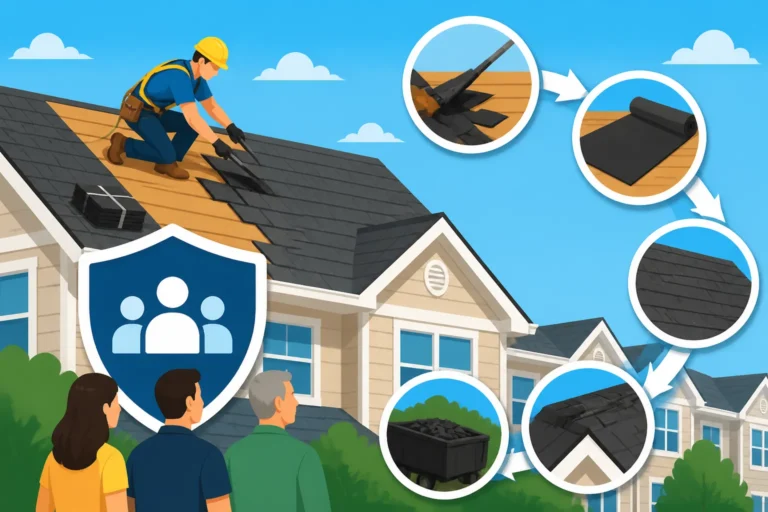
- Dried-In Inspection: This is one of the most important inspections. After the old shingles are removed and any necessary Roof Decking Replacement Cost is addressed, the inspector will check the condition of the roof deck and confirm the proper installation of the underlayment (the protective layer beneath the shingles). They'll look for correct fastening, appropriate overlap, and ensure all penetrations (like vents and pipes) are properly sealed with flashing. This is the stage where the roof is watertight but before the final shingle layer is applied.
- Final Inspection: Once all the new roofing materials are installed, including the shingles, hip and ridge caps, and all flashing, the final inspection takes place. The inspector will verify that the entire system meets code, checking for proper shingle alignment, nailing, seals, and overall workmanship. If everything passes, the permit will be closed out, meaning the work is officially approved and recorded.
These inspections protect you. They ensure that the roofer didn't cut corners and that your new roof is built to last, especially against Florida’s challenging weather. If an inspection fails, your contractor will need to correct the issue and schedule a re-inspection. This is a standard part of the process and emphasizes why choosing a Licensed and Insured Roofers: Why It Matters is paramount. For a deeper dive into what inspectors look for, read our article on Roofing Inspection: What Inspectors Check.
Disclaimer
Please remember that the information provided in this guide is for general informational purposes only and should not be considered professional advice. Roofing permit costs and requirements in Florida are subject to change and vary significantly by local jurisdiction. Always consult with a qualified, licensed roofing contractor and your local building department for the most accurate and up-to-date information regarding your specific project.