Roofing Permit Cost in Georgia
Alright, let's talk about something that can feel like just another frustrating hurdle when you're trying to get a new roof: the dreaded roofing permit. Dealing with local regulations, especially when you're just trying to protect your home, can be confusing and frankly, a bit overwhelming. If you're a homeowner in Georgia wondering about the cost and process of getting a roofing permit, this guide is designed to cut through the confusion and give you a clear, realistic picture of what to expect.
Understanding the Necessity of a Roofing Permit in Georgia
Before we even get into the numbers, it's crucial to grasp why permits exist in the first place. I know, I know, it often feels like just another fee and another layer of bureaucracy. But think of it this way: a roofing permit isn't just a piece of paper; it's a critical part of ensuring your roof replacement or significant repair is done safely and correctly, adhering to established building codes. It’s essentially a checkpoint for your safety and your home's long-term integrity.
Why Permits Are More Than Just Red Tape
Many homeowners, especially when facing unexpected repair costs, might wonder, "Do I really need a permit to replace a roof?" The answer, almost universally in Georgia for major roofing work, is a resounding yes. Permits are there to protect you, the homeowner, from shoddy workmanship, potential hazards, and contractors who might cut corners. When a permit is pulled, it triggers inspections at various stages of the project. This means a qualified building inspector, representing your local jurisdiction, will come out to ensure the work meets specific standards for structural integrity, materials, and safety. This third-party oversight is incredibly valuable, providing an extra layer of accountability that you simply don't get with unpermitted work. Without this oversight, you could end up with a roof that looks good on the surface but has underlying issues that could lead to leaks, structural damage, or even a fire hazard down the road.
Beyond safety, permits also protect your investment. If you ever decide to sell your home, prospective buyers and their inspectors will check for permits on major renovations. An unpermitted roof replacement can raise serious red flags, potentially complicating the sale, reducing your home's value, or requiring you to get retroactive permits and inspections – which can be far more expensive and troublesome than doing it right the first time. Think of it as a quality assurance seal for your biggest asset.
Local Building Codes and Compliance
Georgia, like every state, has overarching building codes, but the specifics often come down to individual counties and cities. These local codes dictate everything from the type of materials that can be used to how they must be installed. For instance, specific requirements for things like wind resistance in certain parts of coastal Georgia, or ice and water shield requirements in areas prone to freezing, will be enshrined in local building codes. Your permit process ensures that your contractor is aware of and adheres to these specific requirements.
Understanding roofing building codes is not just for contractors; it's important for homeowners too. Knowing that your roof will be built to the latest standards for your area offers immense peace of mind. These codes are regularly updated to incorporate new technologies, improve safety, and adapt to changing climate conditions. For example, many codes now emphasize better ventilation systems or specific nailing patterns to enhance a roof's longevity and performance. Without a permit, you have no guarantee that your new roof will meet these essential standards, potentially leaving your home vulnerable to future problems.
Unpacking the Actual Cost of a Roofing Permit in Georgia
So, now for the burning question: how much is this going to set you back? The truth is, there isn't one single answer for the entire state of Georgia. Permit costs can vary widely depending on your specific city and county, the scope of your roofing project, and even how the fees are calculated. It's not uncommon for a permit in one county to be a flat fee, while in a neighboring county, it's based on the estimated value of your project.
Varying Costs Across Georgia's Cities and Counties
Let's look at some real-world examples to give you a clearer picture. In Atlanta, within Fulton County, permit fees are often calculated based on the valuation of the construction project, which includes both materials and labor. For a typical asphalt shingle roof replacement on a standard residential home (say, a $15,000 to $25,000 project), you might expect the permit fee to be anywhere from $75 to $200, but it could go higher for larger, more complex jobs. They use a tiered fee schedule, so the exact amount depends on where your project's estimated cost falls.
Head east to Savannah, in Chatham County, and you might find a slightly different structure. Some jurisdictions there might have a base fee for a residential re-roofing project, perhaps around $50-$100, with additional charges for larger homes or specific inspection needs. Similarly, in Augusta-Richmond County, you could encounter a flat fee for residential roofing work, often in the range of $50-$150.
Smaller cities like Marietta (Cobb County) or Roswell (Fulton County) will have their own specific fee schedules. For instance, Cobb County often has a base permit fee plus an additional charge calculated based on the project's construction value. This means a smaller roof repair might cost you $75 for a permit, while a full roof replacement on a larger home could easily push that into the $150-$250 range.
It's a patchwork, really, which is why your best bet is always to check directly with your local building department or, even better, have your chosen roofing contractor handle it. They should be very familiar with the local fees and processes.
Understanding the Factors that Influence Permit Pricing
Several key factors will play into the final cost of your roofing permit in Georgia:
- Project Valuation: As mentioned, many jurisdictions tie the permit fee to the estimated cost of the roofing job. The higher the total cost of materials and labor for your new roof, the higher the permit fee generally will be. This makes sense from their perspective, as larger projects typically require more oversight.
- Scope of Work: A simple re-roof (replacing existing shingles with new ones) will usually have a lower permit cost than a complete roof replacement that involves replacing the roof decking, making structural changes, or adding dormers. The more extensive the work, the more inspections might be required, leading to a higher fee.
- Number of Layers: While many areas in Georgia now require a full tear-off, if your local code allows for roofing over existing shingles, the permit cost might reflect the complexity (or simplicity) of that process. However, the trend is definitely towards requiring a full tear-off to ensure proper inspection of the underlying roof deck and to comply with modern building practices. The Cost to Roof Over Existing Shingles can sometimes be lower upfront, but long-term issues might negate those savings.
- Type of Roofing Material: While less common for basic asphalt shingle roofs, if you're upgrading to a heavier material, or something that requires specialized installation (like certain types of tile or metal roofing), the permit fee might be adjusted to reflect the increased complexity or different inspection requirements.
- Expedited Permits: In some areas, if you need a permit faster than the standard processing time, there might be an option for an expedited permit at a higher cost. This is rare for routine roofing but can happen in emergency situations.
Here’s a simplified table illustrating potential permit cost ranges for a standard asphalt shingle roof replacement across a few Georgia localities. Please remember these are estimates and actual costs will vary based on project specifics and current fee schedules.
| Georgia Locality | Typical Residential Roofing Permit Cost Range | Primary Fee Calculation Method | Notes |
|---|---|---|---|
| Atlanta (Fulton Co.) | $75 – $250+ | Project Valuation | Fees often tiered based on construction value. Larger projects mean higher fees. |
| Marietta (Cobb Co.) | $70 – $200+ | Base Fee + Valuation Component | Expect a base fee plus a percentage or additional charge tied to the estimated project cost. |
| Savannah (Chatham Co.) | $50 – $175 | Flat Fee / Minor Valuation | Often a simpler flat fee for residential re-roofs, sometimes with minor adjustments for size or complexity. |
| Augusta (Richmond Co.) | $45 – $150 | Flat Fee | Tends to have more straightforward flat fees for typical residential roofing permits. |
| Gwinnett County | $60 – $200+ | Project Valuation / Tiered Fees | Similar to Atlanta, fees are often based on the declared value of the roofing work, with different tiers for different cost brackets. |
| Dekalb County | $65 – $220+ | Project Valuation | Fees are typically calculated as a percentage of the total project value, with minimums applied. |
This table highlights the importance of checking your specific local jurisdiction's building department website or calling them directly. Or, again, just let your contractor handle it – they should know these specifics like the back of their hand.
The Roofing Permit Process and What Happens If You Skip It
Navigating the permit process can seem daunting, but it's typically handled by your roofing contractor, which is a huge relief for most homeowners. Understanding the steps involved and, more importantly, the risks of trying to cut corners by skipping a permit, is essential for a smooth and worry-free roof replacement.
Steps to Obtaining a Roofing Permit
The process itself, especially in Georgia, usually follows a predictable path, though specifics can vary by municipality:
- Contractor Engagement: The first step, and arguably the most important, is to hire a reputable, licensed, and insured roofing contractor. They are the ones who will typically pull the permit on your behalf. In fact, one of the key questions to ask a roofing contractor before hiring them should be about their process for handling permits. A good contractor will insist on pulling one.
- Application Submission: Your contractor will fill out and submit the permit application to your local building department. This application will include details about your property, the scope of work, materials to be used, and the estimated project cost. They might also need to submit drawings or specifications, especially for more complex jobs.
- Plan Review (if required): For extensive projects, the building department might review the plans to ensure they comply with local building codes. For a standard residential asphalt shingle roof replacement, this review is often minimal or waived entirely, as the work is considered routine.
- Fee Payment: Once the application is approved or reviewed, the permit fee is paid. This is typically included in your overall roofing estimate.
- Permit Issuance: After payment, the permit is issued. This document usually needs to be posted visibly at the job site (e.g., in a window or on a stake in the yard) for the duration of the project.
- Inspections: This is the heart of the permit process. Depending on the scope of work, there might be one or more inspections. For a full roof replacement, inspectors will often check the roof decking after the old shingles are torn off but before new underlayment and shingles are installed. They'll ensure the decking is sound, properly fastened, and that any necessary repairs or replacements have been completed according to code. A final inspection typically happens after the new roof is fully installed to confirm everything meets code. Understanding what a roofing inspection entails can help ease any anxieties about this step.
- Permit Sign-Off: Once all inspections are passed, the permit is closed out, signifying that the work has met local code requirements.
Most reputable contractors, like those certified by manufacturers such as GAF or Owens Corning, understand the importance of this process and integrate it seamlessly into their project timeline. They should keep you informed every step of the way, making sure you know when inspections are scheduled and what to expect.
The Risks of Skipping a Roofing Permit
It might be tempting to save a few bucks and skip the permit, but trust me, it’s a gamble that rarely pays off. The potential consequences of unpermitted work are far more costly and stressful than the permit fee itself.
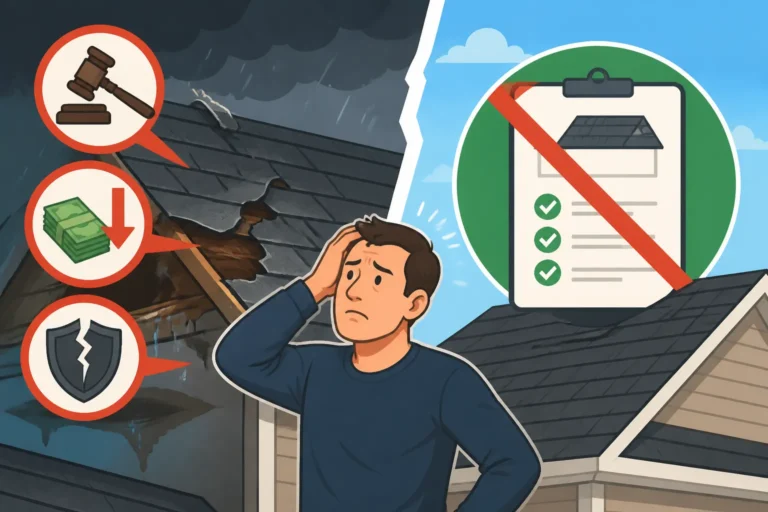
- Fines and Penalties: If your local building department discovers unpermitted work, they can issue stop-work orders, hefty fines, and require you to obtain permits retroactively. These fines can easily be several times the original permit cost. Imagine having your roofing project halted mid-way, leaving your home exposed to the elements, while you deal with bureaucracy and penalties.
- Mandatory Tear-Offs: In the worst-case scenario, the city could demand that the unpermitted work be torn off and redone correctly, with a permit. This means paying for the same job twice, plus the tear-off and disposal costs for the first, improperly done roof. The Cost of Roof Tear-Off and Disposal alone can be substantial, let alone paying for a whole new installation.
- Insurance Issues: This is a big one. If unpermitted work leads to a problem (say, a leak causes interior damage), your homeowner's insurance policy might deny your claim. Many policies have clauses that exclude damage resulting from non-compliant construction or unpermitted work. You could be on the hook for thousands of dollars in repairs that your insurance would otherwise cover.
- Reduced Home Value & Sale Complications: As mentioned earlier, selling a home with unpermitted work can be a nightmare. Buyers can demand proof of permits for major renovations. Without them, they might ask for a significant price reduction, or even walk away from the deal entirely. You might also be required to disclose unpermitted work, which further complicates sales.
- No Recourse for Poor Workmanship: Without a permit and subsequent inspections, you have very little leverage if your contractor does a poor job. The official record of compliance is missing, making it harder to prove that the work was substandard or didn't meet industry standards, especially if you ever need to pursue legal action or claim under a manufacturer's warranty. This is also why having Licensed and Insured Roofers: Why It Matters is so critical.
In short, while the permit fee might seem like an annoying upfront cost, it's a small price to pay for peace of mind, legal compliance, and the long-term protection of your home and investment. Don't let anyone convince you it's okay to skip this crucial step. Always confirm with your contractor who pulls the roofing permit: you or the contractor, and ensure it's handled properly before any work begins.
Key Considerations for Your Georgia Roofing Project
Beyond just the permit, there are other aspects of a roofing project in Georgia that homeowners should keep in mind. Thinking holistically about your roof replacement will save you headaches and money in the long run.
Integrating Permit Planning into Your Overall Budget and Timeline
When you're budgeting for a new roof, it's easy to focus solely on the big-ticket items: the shingles, the labor. However, neglecting the smaller, but equally important, costs like permits, waste disposal, and potential repairs to underlying structures can lead to unwelcome surprises. Your permit cost, though relatively minor in the grand scheme of a full roof replacement, should absolutely be factored into your total How Much Does an Asphalt Shingle Roof Cost calculation. Most reputable contractors will include the permit fee directly in their estimate, giving you a comprehensive breakdown. This is why learning how to read and compare roofing estimates is so vital.
Timing is another crucial aspect. While the permit process itself for a standard re-roof is usually quick (a few days to a week), delays can happen, especially if your application is incomplete or if the building department is particularly busy. A seasoned contractor will build this buffer into the overall Roofing Permit Timeline so you don't face unexpected delays in starting your project. It's frustrating when you're ready to get your roof done, only to hit a bureaucratic snag, so planning ahead is key. For example, if you live in a popular area like Alpharetta or Peachtree City, the building department might have a higher volume of applications, potentially extending the wait.
Choosing the Right Contractor and Ensuring Compliance
Ultimately, the best way to ensure a smooth permit process and a code-compliant roof in Georgia is to select the right roofing contractor from the start. This isn't just about finding the cheapest bid; it's about finding a professional who prioritizes quality, safety, and adherence to regulations.
When interviewing potential contractors, ask them directly about their experience with permits in your specific municipality. Do they pull permits for every job? Are they familiar with current local building codes? These are essential questions to ask a roofing contractor before hiring. A truly professional contractor will not only handle the permit process seamlessly but will also be able to explain the specific code requirements that apply to your home. They should also be able to provide proof of their licensing and insurance, which are non-negotiable for a permitted job. Remember, your roof is a huge investment in your home's protection and value, so cutting corners on who installs it or how it's permitted is simply not worth the risk.
Disclaimer
Please note that the information provided in this guide is for general informational purposes only and is not intended as professional advice. Building codes, permit requirements, and costs are subject to change and vary significantly by specific municipality and county in Georgia. Always consult with your local building department or a qualified, licensed roofing contractor for the most accurate and up-to-date information pertaining to your specific project and location.