High-Wind Roofing Codes in South Carolina
Living in South Carolina means enjoying beautiful beaches, charming towns, and a generally pleasant climate. However, it also means facing the very real threat of high winds, whether from sudden thunderstorms, tropical depressions, or even full-blown hurricanes that can wreak havoc on your home. One of the most critical defenses against this weather is a properly installed roof, adhering to stringent high-wind roofing codes. This comprehensive guide will walk you through the specifics of South Carolina's high-wind roofing regulations, helping you understand what's required to protect your asphalt roof and, ultimately, your entire home, giving you much-needed peace of mind when the winds pick up.
Understanding South Carolina's High-Wind Zones and Risks
South Carolina's geography places it directly in the path of Atlantic hurricane activity, making robust building codes, especially for roofing, absolutely essential. The state experiences varying degrees of wind risk, largely dependent on proximity to the coast, which directly influences the specific code requirements your roof must meet. It's not just hurricanes, either; severe thunderstorms, often accompanied by derechos or microbursts, can generate localized high winds strong enough to cause significant damage, even far inland.
Coastal vs. Inland Considerations
When it comes to high-wind roofing codes, location is paramount in South Carolina. The state is divided into different wind zones as defined by the International Residential Code (IRC) and adopted with amendments by the state. Generally, properties in coastal counties face the most stringent requirements due to their heightened exposure to hurricanes and tropical storms. For instance, homes in areas like Charleston, Myrtle Beach, Hilton Head, and other beachfront communities typically fall into higher wind speed design categories. This means the roof system, from the decking to the shingles themselves, must be rated to withstand much greater uplift pressures and direct wind forces. These areas might require enhanced fastening schedules, specialized impact-resistant shingles, and sometimes even a sealed roof deck.
Further inland, while the direct hurricane impact might be lessened, high-wind events are still a significant concern. Tornadoes, strong thunderstorms, and remnants of tropical systems can still produce destructive winds. While the baseline requirements for inland areas might not be as intense as those on the immediate coast, they still incorporate vital provisions to ensure a roof's integrity. It’s a common misconception that if you’re not directly on the coast, you’re safe from high-wind problems, but anyone who has lived through a powerful storm in places like Columbia or Florence knows better. Always check with your local municipality, as they may have specific local ordinances that go above and beyond state minimums, especially in areas prone to severe weather.
Common Wind-Related Damage in SC
South Carolina homeowners are unfortunately all too familiar with the sight of wind-damaged roofs. The most common forms of damage include missing or lifted shingles, which occur when wind gets underneath the shingle and breaks its adhesive seal or tears the fasteners. This can leave sections of the roof deck exposed, creating immediate vulnerabilities for water intrusion and further structural damage. Wind can also cause granules to strip from asphalt shingles, reducing their protective capabilities and accelerating their degradation, even if the shingle remains physically attached. You might see these granules collecting in your gutters after a storm.
Beyond shingles, high winds can compromise other critical components of your roof system. Ridge caps and hip caps, which are often installed with less overlap and can be more exposed, are particularly susceptible to being torn off. Flashing around chimneys, skylights, and vents can lift or detach, creating pathways for leaks. In extreme cases, strong winds can even lead to structural damage to the roof decking or truss system itself, especially if older or improperly secured. Understanding these vulnerabilities is the first step in appreciating why robust high-wind roofing codes are not just bureaucratic hurdles but essential safeguards for your home and family. For a more detailed breakdown, consider reading about the common Signs of Roof Wind Damage.
Key High-Wind Roofing Code Requirements in South Carolina
South Carolina has adopted the International Residential Code (IRC) and the International Building Code (IBC), with state-specific amendments that tailor these national standards to the unique climatic challenges of the region. These codes are designed to ensure that new roof installations and significant roof replacements can withstand the expected wind loads in different parts of the state. The specifics can vary based on your exact location, but the core principles remain consistent: secure fastening, resilient materials, and comprehensive protection against uplift and penetration. Adhering to these codes is not just about legality; it's about making sure your roof stands a fighting chance when nature unleashes its fury.
Nailing Patterns and Fasteners
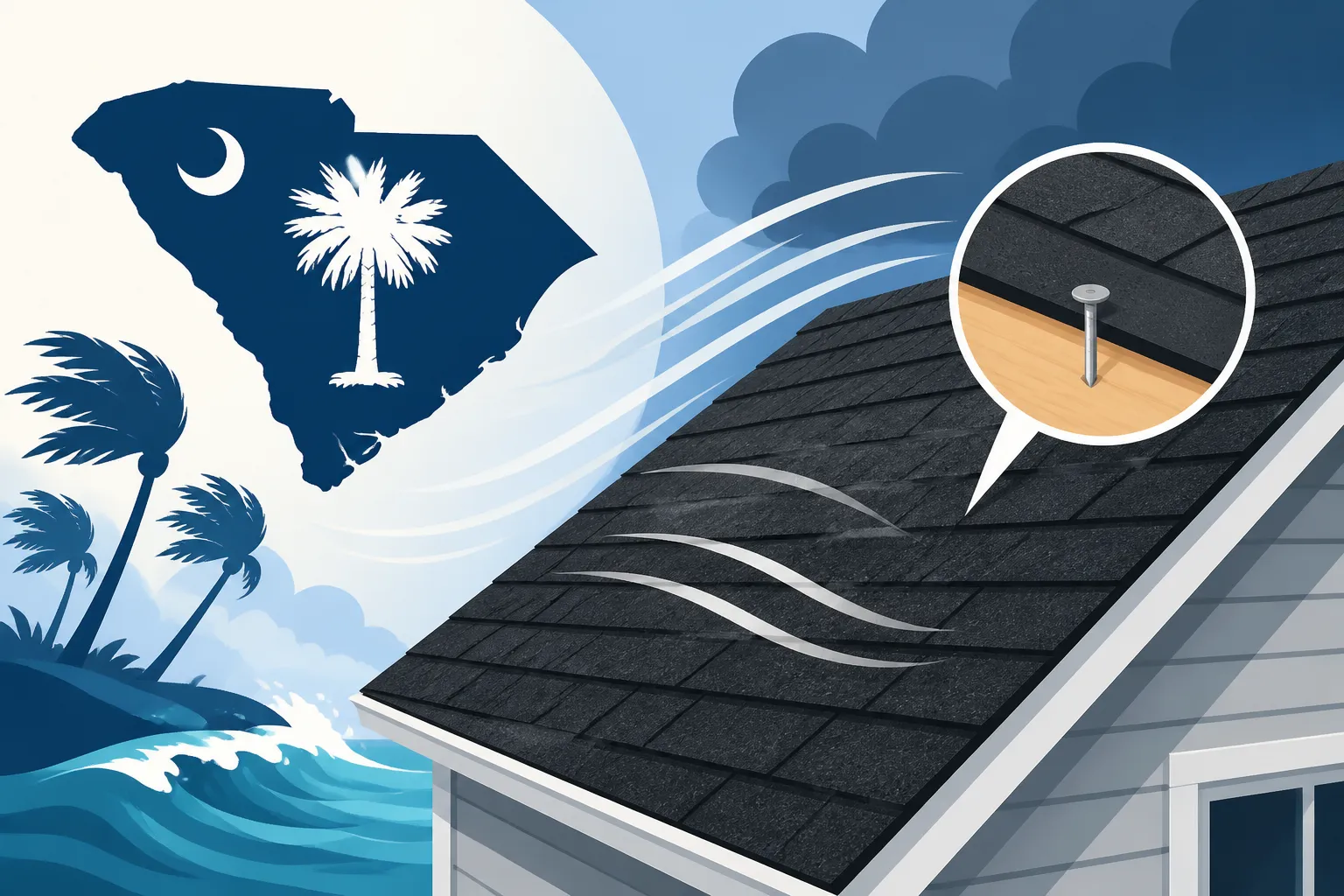
One of the most critical aspects of high-wind resistance for asphalt shingle roofs lies in the nailing patterns and the type of fasteners used. Standard shingle installation often calls for four nails per shingle, placed in a specific nailing strip. However, in South Carolina's high-wind zones, particularly along the coast, codes frequently mandate an enhanced six-nail fastening pattern per shingle. This increased number of nails provides significantly greater resistance to wind uplift, making it much harder for gusts to peel shingles off the roof deck. The nails themselves must be corrosion-resistant, typically galvanized steel, and of the appropriate length to penetrate through the shingle and the roof decking adequately, ensuring a strong hold.
The placement of these nails is equally important. They must be driven flush with the shingle surface – not overdriven (which can cut through the shingle) or underdriven (which leaves the shingle loose). Improper nailing is one of the quickest ways to void a shingle's wind warranty and leave your roof vulnerable. Many manufacturers, like GAF, Owens Corning, and CertainTeed, have specific nailing instructions for their high-wind rated shingles, and adhering to these is often a requirement for their enhanced warranties. If you're looking into an asphalt roof replacement, discussing the specific nailing pattern with your contractor and verifying they follow the local codes and manufacturer specifications is crucial. You can learn more about this by exploring the topic of High-Wind Nailing Cost Premium, as the extra labor and materials will factor into your overall Asphalt Roof Replacement Cost: Complete Breakdown.
Underlayment and Flashing Specifications
Beyond the shingles themselves, the underlying components of your roof system play an integral role in its high-wind performance and watertight integrity. High-wind codes in South Carolina place significant emphasis on the underlayment and flashing. For underlayment, synthetic products are often preferred over traditional felt for their superior tear resistance, water shedding capabilities, and ability to remain intact even if shingles are lost. In high-wind areas, a sealed roof deck, achieved by applying an ice and water shield or a similar self-adhering membrane across the entire roof deck, is becoming increasingly common or even mandated. This creates a secondary water barrier that protects your home even if all the shingles are blown off, providing invaluable defense against rain intrusion.
Flashing, the metal or composite material used to divert water away from roof penetrations and junctions (like chimneys, valleys, and walls), is another critical component under high-wind scrutiny. High-wind codes require robust and properly secured flashing. Step flashing and counter flashing must be installed meticulously, with sufficient overlap and sealed with appropriate sealants to prevent wind-driven rain from penetrating. Valleys, which are natural channels for water flow, often require specific flashing systems, sometimes including metal valley liners in addition to underlayment, to prevent leaks under extreme conditions. A roof can only How Shingles Protect Against Water as well as its underlayment and flashing protect its vulnerable points.
Shingle Wind Resistance Ratings
The shingles themselves must carry specific wind resistance ratings to be considered code-compliant in South Carolina's high-wind zones. Asphalt shingles are typically tested under ASTM D3161 (Standard Practice for Wind Resistance of Asphalt Shingles) and ASTM D7158 (Standard Practice for Wind Resistance of Asphalt Shingles by Fan-Induced Direct-Flow Test Method), receiving Class A, D, F, or H ratings. Class F signifies resistance to winds up to 110 mph, while Class H indicates resistance up to 150 mph. Many coastal areas in South Carolina will require shingles rated Class F or higher, and some even push for Class H or require impact-resistant shingles (Class 4 rated for hail, which often correlates with higher wind resistance).
Manufacturers like Owens Corning, GAF, and CertainTeed offer various lines of shingles specifically designed for high-wind performance. For instance, the Owens Corning Duration series with SureNail Technology is engineered for superior grip and high-wind resistance. GAF's Timberline HDZ and UHDZ shingles boast enhanced wind warranties due to their proprietary LayerLock technology. These technologies are designed to increase the shingles' adhesion and tear strength, keeping them securely fastened to the roof deck even during severe gusts. When selecting shingles, it's crucial to confirm that their wind resistance rating meets or exceeds your local building code requirements, and that they will be installed according to the manufacturer's high-wind installation guidelines to ensure both performance and warranty validity.
The Importance of Working with a Licensed Professional in SC
Navigating South Carolina's high-wind roofing codes, along with state and local permitting processes, can feel overwhelming for any homeowner. This is precisely why partnering with a reputable, licensed, and insured roofing contractor is not just a recommendation, but a crucial investment in the longevity and safety of your roof. A professional roofer brings not only the necessary skills but also the invaluable knowledge of current regulations, ensuring your project meets all legal and quality standards.
Ensuring Code Compliance and Warranty Validity
A licensed roofing contractor in South Carolina will be intimately familiar with the latest International Residential Code (IRC) adopted by the state, as well as any specific local amendments that apply to your municipality, especially those pertaining to high-wind zones. They know the required nailing patterns, the appropriate underlayment for your area, and the specific wind resistance ratings your shingles need to have. This expertise is critical because an improperly installed roof, even with high-quality materials, will not provide the intended protection and can lead to costly repairs down the line.
Furthermore, most shingle manufacturers offer extended warranties that are contingent upon the roof being installed by a certified contractor according to their precise specifications, including high-wind nailing instructions. If your roof isn't installed to code or manufacturer standards, you could inadvertently What Voids a Shingle Warranty, leaving you without coverage should issues arise. A professional will also ensure that all components of the "full roofing system" – from the starter strips and underlayment to the ridge caps and ventilation – are correctly integrated to maximize wind resistance and overall performance. Don't underestimate the value of a contractor who understands both the art and the science of building a durable roof in a high-wind environment. For tips on choosing the right professional, check out our guide on Licensed and Insured Roofers: Why It Matters.
Navigating Permits and Inspections
In South Carolina, virtually all roof replacements and significant repairs require a building permit, especially in areas with high-wind codes. This isn't just a formality; it's a vital step to ensure your roofing project adheres to current safety and construction standards. A professional roofing contractor will handle the entire permitting process for you, from submitting the necessary applications to arranging the required inspections by local building officials. They understand the nuances of local permitting offices, whether you're in Charleston County, Horry County, or elsewhere, which can often be complex and time-consuming for an individual homeowner. For more insight into what permits entail, refer to our article, Roofing Permits Explained.
During the installation process, inspectors will often check key aspects like the roof decking integrity, the type and application of underlayment, and crucial elements like flashing and the shingle nailing pattern. This third-party oversight provides an extra layer of assurance that the work is being done correctly and meets the rigorous demands of high-wind resistance. Attempting to forgo a permit, or having an unlicensed individual perform the work, can lead to serious legal complications, fines, and even necessitate the complete removal and reinstallation of your roof if it doesn't pass inspection or adhere to code.
Preparing Your Roof for South Carolina's High Winds
Living in South Carolina means that preparing for high winds is not a matter of "if," but "when." Proactive measures and knowing how to respond after a storm are crucial for minimizing damage and ensuring the longevity of your roof system. A robust roof is a combination of quality installation and diligent homeowner care.
Pre-Emptive Measures and Maintenance
Regular maintenance is your first line of defense against high-wind damage. It's not enough to simply install a code-compliant roof; you need to keep it in prime condition. Schedule a professional roof inspection at least once a year, and especially after any significant storm, to identify and address minor issues before they escalate. Look for loose or missing shingles, deteriorated flashing around chimneys and vents, and any signs of wear and tear. Even small lifted edges on shingles can provide an entry point for wind to get underneath and cause greater damage during a storm.
Before hurricane season or anticipated severe weather, take steps to secure your property. Trim any tree branches that overhang your roof, as falling limbs are a major cause of roof damage during high winds. Secure loose outdoor items that could become projectiles and impact your roof. Ensuring your gutters are clear and functioning correctly helps manage water flow, which can become critical during heavy, wind-driven rains. The goal is to reduce any opportunities for wind to compromise your roof or for debris to strike it. Learning about Roof Maintenance to Avoid Replacement can save you a lot of headaches and money in the long run.
Post-Storm Assessment and Repair Strategies
After a high-wind event, even if you don't immediately see obvious damage, it's vital to conduct a thorough assessment of your roof. From the ground, look for missing or visibly lifted shingles, especially along edges, hips, and ridges. Check your yard for shingle granules, which indicate surface erosion. If you suspect damage or see anything concerning, do not attempt to climb onto your roof, especially if it's wet or still windy. High-pitched roofs can be particularly dangerous. Instead, contact a qualified roofing professional immediately.
A reputable contractor will perform a detailed inspection, assess the extent of the damage, and provide you with an honest assessment. They can help you determine if a repair is sufficient or if a full replacement is necessary. For minor damage, such as a few missing shingles, a targeted repair can often suffice. However, if there's widespread shingle loss, significant granule erosion, or damage to the underlying components, a replacement might be the more prudent and cost-effective long-term solution. Be wary of "storm chasers" who appear after a major weather event; always vet any contractor thoroughly. Getting a professional damage assessment is a critical step in deciding between Roof Repair vs Replacement: How to Decide after a storm.
Understanding South Carolina Roofing Requirements
Here's a quick overview of some key considerations for roofing in South Carolina, particularly concerning high-wind events.
| Requirement Area | Standard Application (Inland SC) | High-Wind Zone Application (Coastal SC) | Key Considerations |
|---|---|---|---|
| Shingle Nailing | 4 nails per shingle | 6 nails per shingle | Nails must be corrosion-resistant and properly seated. Manufacturer specs for high-wind warranties are crucial. |
| Shingle Wind Rating | ASTM D3161 Class F (110 mph) | ASTM D7158 Class H (150 mph) or higher | Check local ordinances, especially for coastal or special hazard areas. |
| Underlayment | Felt or synthetic | Synthetic, sealed roof deck often required | Synthetic offers superior tear resistance. Sealed deck provides secondary water barrier. |
| Drip Edge | Required | Required, often specific dimensions | Helps shed water off the roof edge and protects fascia. |
| Ice and Water Shield | At eaves in colder climates | At eaves, valleys, penetrations, and sometimes entire deck | Critical for preventing wind-driven rain intrusion. |
| Flashing | Standard metal flashing | Heavier gauge metal, enhanced sealing | Crucial around chimneys, vents, skylights, and walls to prevent leaks. |
| Roof Decking Fasteners | Standard nailing | Enhanced nailing/screwing patterns | Prevents uplift of the entire roof deck, especially critical in extreme winds. |
| Permits & Inspections | Generally required | Always required, often multiple checks | Ensures all work meets current building codes and manufacturer specifications. |
This table provides a general guide. It's imperative to consult with a local, licensed contractor and your specific municipal building department to understand the exact codes applicable to your property's address. Building codes are dynamic and can be updated, so always ensure you're working with the most current information available.
Final Thoughts on High-Wind Roofing in South Carolina
Navigating the complexities of high-wind roofing codes in South Carolina can feel like a daunting task, but it’s an absolutely essential one for protecting your home. From the specific nailing patterns on your asphalt shingles to the robust underlayment protecting your roof deck, every component plays a critical role in how your roof will fare against the severe weather that’s unfortunately a regular part of life here.
Remember, the goal isn’t just to meet the bare minimum code requirements; it’s about investing in a durable, resilient roof system that provides true peace of mind. By understanding the risks, knowing the key code requirements, and most importantly, partnering with a knowledgeable, licensed, and reputable roofing contractor, you can ensure your home is as prepared as possible for whatever South Carolina's skies might throw its way. Your roof is your home's first line of defense, so make sure it's built to stand strong.
Disclaimer
This article is intended for informational purposes only and does not constitute professional advice. Roofing codes and regulations in South Carolina can vary by county and municipality and are subject to change. Always consult with a licensed and insured roofing contractor and your local building department to ensure compliance with current local codes and for specific recommendations regarding your property.