How Old Shingles Are Disposed Of
The thought of a roof replacement can be daunting enough without even considering what happens to all those old shingles. You're probably picturing a massive pile of debris, wondering where it all goes, how much it costs, and if there's an environmentally friendly way to handle it. You're not alone in these concerns! This comprehensive guide will walk you through everything you need to know about how old asphalt shingles are disposed of, from traditional methods to the growing trend of recycling.
The Mountain of Debris: Understanding Shingle Waste
When your old roof is torn off, it's not just a few shingles heading to the curb. It's a surprisingly heavy and voluminous amount of material that needs to be properly managed. This isn't just an unsightly inconvenience; it's a significant logistical and financial consideration for any roofing project.
The Sheer Volume and Weight of Old Shingles
Imagine your entire roof's surface peeled away, shingle by shingle. It adds up fast. A typical residential roof of around 1,500 to 2,000 square feet can easily generate 4 to 6 tons of asphalt shingle waste. To put that in perspective, that's the weight of two average cars! This immense weight means specialized hauling is required, often using large dumpsters and trucks, which contributes significantly to the overall Cost of Roof Tear-Off and Disposal.
The number of layers also plays a huge role. If your roof has two layers of shingles, a common scenario where a new roof was simply installed over an older one, the waste volume and weight nearly double. Many building codes now restrict the number of layers you can have, which means a tear-off is often unavoidable even if you were hoping to just Cost to Roof Over Existing Shingles. This increased material means more labor for removal and, consequently, a higher disposal cost. It's a crucial detail to clarify when getting a roofing estimate.
Beyond Shingles: Other Roofing Debris
It’s important to remember that roof replacement isn't just about shingles. There's a whole host of other materials that come off your roof and need proper disposal. This can include anything from old flashing, drip edge, and vents to sections of damaged roof decking like plywood or OSB. Sometimes, the underlayment, which can be synthetic or felt, is also removed, though it's lighter than shingles.
Each of these materials has its own disposal requirements, and while most will go into the same dumpster as the shingles, some items might need to be sorted. For instance, any metal components, like old aluminum flashing, might be separated for scrap metal recycling. Wooden debris from the roof decking, especially if it's treated or painted, will usually go to the landfill unless your area has specific wood recycling programs. Your contractor should outline how all types of waste will be handled as part of their How a Roof Replacement Works: The Full Process.
Traditional Shingle Disposal: Landfills and Their Limitations
For decades, the most common fate for old asphalt shingles was a trip to the local landfill. It's a straightforward process, but it comes with a hefty environmental price tag and increasing costs for homeowners.
The Landfill Route: Pros and Cons
Sending old shingles to a landfill is typically the easiest option from a logistical standpoint for most roofing contractors. They load up a dumpster, haul it away, and it's out of sight, out of mind for the homeowner. This is often the default plan unless you specifically discuss recycling options with your chosen contractor. The cost for landfill disposal is usually factored into your overall roofing estimate and varies widely by region, largely depending on tipping fees set by the landfill operators.
However, the "pros" largely end there. The biggest "con" is the sheer volume of waste. Asphalt shingles are bulky and take up a tremendous amount of space in landfills. With municipal landfills already filling up across the country, adding tons of non-biodegradable roofing material contributes to a growing problem. Furthermore, traditional landfills are designed to bury waste, not break it down, meaning these shingles will sit there for centuries.
Environmental Concerns and Why They Matter
The environmental impact of landfilling asphalt shingles is substantial. Asphalt is a petroleum-based product, and while it's durable on your roof, it's not something that breaks down easily in a landfill. Studies have shown that a significant percentage of construction and demolition waste, often called C&D waste, is composed of roofing materials. This puts immense pressure on existing landfill capacity and leads to the need for new landfill sites, which often face community opposition.
Beyond just taking up space, there's a concern about potential leachate, which is the liquid that drains from a landfill and can potentially contaminate groundwater if not properly managed. While modern landfills have advanced liners and collection systems, minimizing waste at the source is always the best approach. Many homeowners are increasingly conscious of their environmental footprint, and responsible shingle disposal aligns with a broader commitment to sustainability.
The Rise of Shingle Recycling: A Greener Path
Thankfully, there's a much more sustainable option emerging for old asphalt shingles: recycling. This process not only diverts waste from landfills but also gives these materials a new life, often in unexpected ways. It's a win-win for both your wallet and the planet.
How Asphalt Shingle Recycling Works
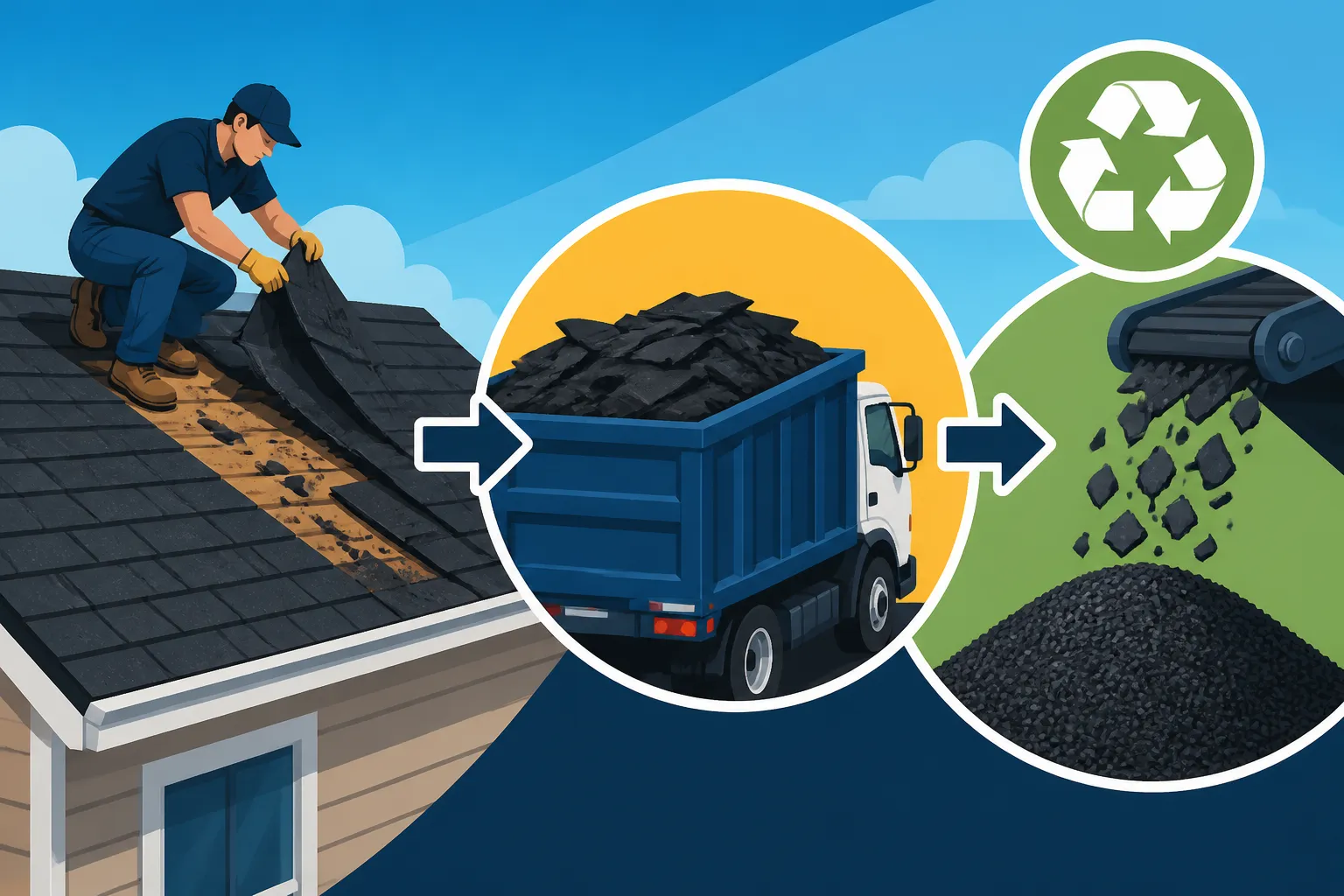
Asphalt shingle recycling involves collecting old shingles, processing them, and then repurposing the materials. The process typically starts with a dedicated collection bin on your job site, clearly marked for shingles only. Once collected, these shingles are transported to a specialized recycling facility. Here, they undergo a rigorous sorting and cleaning process to remove contaminants like wood, metal, felt, and plastic. This step is critical because any non-shingle material can compromise the quality of the recycled product.
After sorting, the shingles are fed into industrial grinders or shredders, which break them down into smaller, uniform pieces. These pieces are then screened to ensure consistent sizing. The main components of asphalt shingles — asphalt cement, aggregate (like stone or sand), and mineral fillers — are highly valuable. The resulting material, often called Recycled Asphalt Shingles (RAS), is then ready for reuse. The recycling process gives these materials a second life, dramatically reducing the demand for virgin resources.
Finding a Shingle Recycling Facility Near You
The availability of asphalt shingle recycling facilities varies significantly by region. Major metropolitan areas like Houston, Atlanta, or Phoenix are more likely to have dedicated facilities or construction and demolition (C&D) waste recyclers that accept shingles. However, in more rural areas, options might be limited, and the nearest facility could be a significant drive away, impacting the cost-effectiveness of recycling.
To find a facility, you can start by asking your roofing contractor. Reputable contractors who care about their environmental impact often have established relationships with recycling centers. If you're looking for one yourself, a quick search for "asphalt shingle recycling near me" or "C&D waste recycling [your city/state]" can yield results. Industry organizations, like the Construction & Demolition Recycling Association (CDRA), also maintain directories of recycling facilities. Platforms like Modernize can also connect you with contractors in your area who are familiar with local recycling options and can guide you through the best practices for shingle disposal.
Benefits Beyond the Environment: Cost Savings
While the environmental benefits are a huge draw, shingle recycling can also offer tangible financial advantages. Tipping fees at asphalt shingle recycling facilities are often lower than those at traditional landfills. This is because landfills are taxed for the space they consume and the environmental impact they incur, whereas recycling facilities are providing a valuable raw material back into the market. Over time, as more states mandate waste diversion and landfill space becomes scarcer, the cost difference is likely to become even more pronounced.
For a homeowner, this can translate into savings on the overall Cost to Replace a Roof by House Size. While the savings might not be astronomical, every little bit helps when undertaking a major home improvement project like a roof replacement. Plus, knowing your old roof is contributing to new infrastructure rather than just sitting in a dump often provides peace of mind that's priceless.
The recycled asphalt shingles (RAS) are primarily used as an aggregate in new asphalt pavement for roads. This is a fantastic example of a circular economy in action – your old roof literally helps build better roads. They can also be used in unpaved road surfaces, cold patch materials for potholes, or as fuel in certain industrial processes. This versatility makes RAS a valuable commodity and ensures a strong market for recycled shingles.
Navigating Disposal with Your Contractor
Dealing with shingle disposal isn't something you, as a homeowner, should have to manage directly. It’s a core responsibility of your roofing contractor. However, understanding their plan and asking the right questions is crucial to ensure transparent pricing and responsible waste management.
Understanding Your Contractor's Disposal Plan
When you're getting estimates for your roof replacement, disposal should be a clear line item or at least thoroughly explained. Don't just assume it's included. Ask pointed questions:
- "How will you be disposing of my old shingles?"
- "Do you use a landfill or a recycling facility?"
- "What are the estimated disposal costs included in this bid?"
- "Will you be providing a dedicated dumpster for all the debris?"
A good contractor, like those found through services such as Modernize, will be transparent about their disposal methods and costs. They should be able to explain whether they have a preference for recycling and if there are any additional fees associated with it. If a contractor's bid seems significantly lower than others, it might be worth asking specifically about disposal. Sometimes, a "too good to be true" price can hide corners being cut on waste management.
Permits, Fees, and Hidden Costs of Disposal
Disposal isn't just about loading a truck. There are often local regulations and fees that contractors must adhere to. Many municipalities require permits for construction and demolition work, and these permits often include provisions for waste disposal, sometimes even requiring a certain percentage of material to be recycled. A good contractor will handle all aspects of Roofing Permits Explained and ensure compliance.
Beyond the actual tipping fees at the landfill or recycling center, consider the cost of the dumpster rental and the hauling charges. These can vary based on the size of the dumpster, how long it's on your property, and the distance to the disposal site. Always look for a clear breakdown in your roofing estimate. Some estimates might lump all these costs together, so don't hesitate to ask for clarification. Be aware of potential Hidden Costs in a Roof Replacement, and ensure disposal isn't one of them that pops up unexpectedly.
Table: Landfill vs. Recycling for Asphalt Shingle Disposal
| Feature | Landfill Disposal | Shingle Recycling |
|---|---|---|
| Environmental Impact | High; consumes vast space, non-biodegradable | Low; diverts waste, conserves virgin resources |
| Cost Implications | Tipping fees can be higher, vary by location | Tipping fees often lower than landfills, saving potential |
| Logistics | Widely available, often simpler for contractors | Availability varies, requires specialized facilities |
| Repurposing | None; material is buried and forgotten | Used in new asphalt pavement, road base, industrial fuel |
| Homeowner Responsibility | Primarily cost; minimal engagement beyond payment | Asking questions, choosing eco-conscious contractor |
Ultimately, understanding how old shingles are disposed of empowers you to make informed decisions about your roof replacement project. It allows you to choose a contractor who aligns with your values, potentially save some money, and most importantly, contribute to a more sustainable future for our communities.
Disclaimer
Please remember that this article provides general information about asphalt shingle disposal. Specific regulations, costs, and recycling options can vary significantly based on your exact location, local ordinances, and the policies of individual roofing contractors and disposal facilities. Always consult with local authorities and multiple reputable roofing contractors for the most accurate and up-to-date information for your project.