How 3-Tab Shingles Are Made
It's easy to look up at your roof and just see "shingles," without ever stopping to think about the incredible process that goes into creating those protective layers over your home. But understanding how 3-tab asphalt shingles are made can actually shed a lot of light on why they perform the way they do, why they age, and what makes them such a popular choice for millions of homes. This guide will pull back the curtain on the manufacturing journey, explaining every step from raw materials to the finished product designed to shield your family.
Unpacking the Fundamentals of 3-Tab Shingles
Before we dive into the nitty-gritty of their creation, let's establish a clear understanding of what 3-tab shingles actually are. They're a foundational type of asphalt shingle, named for their distinctive appearance: a single strip of material with three tabs cut along its lower edge, giving the illusion of individual shingles when installed. While their more robust architectural cousins have gained popularity, 3-tab shingles remain a cost-effective and reliable roofing solution, offering a classic look that has graced homes for decades.
A Brief History and Purpose
The invention of asphalt shingles in the early 20th century revolutionized residential roofing. Before them, materials like wood shakes, slate, or clay tiles were common, but often more expensive, harder to install, or less resistant to fire. Asphalt shingles brought an affordable, durable, and relatively easy-to-install option to the masses. The 3-tab design was among the earliest forms, providing a balance of weather protection and aesthetic appeal. Their primary purpose, then as now, is to create a waterproof barrier, protecting the underlying roof structure and your home's interior from rain, snow, wind, and UV radiation. They're designed to shed water efficiently, directing it down and off the roof into the gutters.
Distinguishing 3-Tab Shingles from Other Types
The roofing world offers a spectrum of choices today, and it's helpful to know where 3-tab shingles fit in. When you look at an asphalt roof, you'll generally encounter three main types: 3-tab, architectural (or dimensional), and designer (or luxury) shingles. The core difference often comes down to construction and appearance.
3-tab shingles are characterized by their flat, uniform appearance and the aforementioned three-tab design. They are generally thinner and lighter than other types. This uniform nature makes them straightforward to manufacture and install, contributing to their lower 3-Tab Shingle Roof Cost. In contrast, architectural shingles are multi-layered, giving them a much thicker, more textured, and aesthetically varied look that often mimics wood shakes or natural slate. They don't have cut-out tabs but rather feature random, overlapping shingle sections. Designer shingles take this a step further, offering even more complex designs and premium materials for a truly distinctive appearance. While architectural shingles often boast better wind resistance and a longer lifespan, 3-tab shingles still provide excellent basic protection. For a deeper dive into the cost differences, you might want to read our article comparing 3-Tab vs Architectural Shingle Cost Compared.
The Essential Components of an Asphalt Shingle
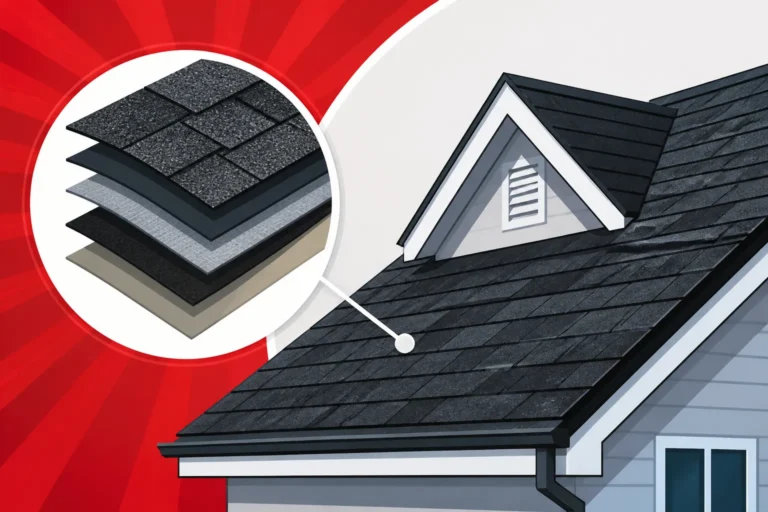
It might seem like a simple piece of roofing material, but an asphalt shingle is actually a carefully engineered composite designed to withstand the elements year after year. Each component plays a vital role in its overall strength, flexibility, waterproofing, and UV protection. Let's break down the key ingredients that come together to form a 3-tab shingle.
The Fiberglass Mat: The Shingle's Backbone
Every modern asphalt shingle, including the 3-tab variety, begins with a core or base material. For the vast majority of shingles produced today, this is a fiberglass mat. Gone are the days of organic felt mats, which were less stable and prone to moisture absorption. The fiberglass mat is a non-woven web of glass fibers, randomly arranged and bonded together with resin. Think of it as the skeletal structure of the shingle.
Its main function is to provide tensile strength, dimensional stability, and resistance to tearing. Without this mat, the shingle would be brittle and easily ripped apart by wind or temperature fluctuations. The fiberglass mat ensures that the shingle holds its shape through various weather conditions, preventing curling, buckling, and shrinking. It's relatively lightweight but incredibly strong, allowing the shingle to be handled during installation without deforming. This mat doesn't absorb moisture, which is crucial for preventing rot and ensuring the shingle remains waterproof over its lifespan.
Asphalt Coating: The Waterproofing Powerhouse
Once the fiberglass mat is formed, it moves on to receive its crucial asphalt coating. This is where the magic of waterproofing truly happens. The asphalt used in shingles isn't just any old road asphalt; it's a specially formulated, oxidized asphalt that has been processed to achieve specific properties. Oxidation makes the asphalt harder, more stable at higher temperatures, and less prone to flowing or becoming brittle in extreme cold.
The fiberglass mat is completely saturated and coated with this hot asphalt. The asphalt serves several critical functions:
- Waterproofing: This is its primary role. The asphalt creates an impermeable barrier that prevents water from penetrating to the roof deck below.
- Adhesion: It acts as the glue that holds the protective granules onto the shingle surface. Without a strong bond, the granules would simply wash away.
- Flexibility and Durability: While fiberglass provides strength, the asphalt provides the necessary flexibility to allow the shingle to expand and contract with temperature changes without cracking. It also contributes significantly to the shingle's overall lifespan and resistance to weathering.
The quality and thickness of this asphalt coating are significant factors in determining the shingle's performance and How Long an Asphalt Roof Lasts.
Granules: UV Protection and Aesthetic Appeal
After the asphalt coating, the shingle receives its most visible layer: the ceramic-coated granules. These tiny, mineral particles are embedded into the hot asphalt surface. They're often made from crushed rock, such as basalt, slate, or slag, which are then ceramically coated with pigments at high temperatures. This ceramic coating is what gives shingles their color and also makes them incredibly durable.
Granules perform several vital tasks:
- UV Protection: This is arguably their most important function. The sun's ultraviolet (UV) rays are incredibly damaging to asphalt, causing it to dry out, become brittle, and degrade over time. The granules act like a miniature sunscreen, reflecting UV radiation and shielding the asphalt layer. Without them, shingles would deteriorate rapidly. This is why Granule Loss: Should You Worry is a serious sign of an aging roof.
- Fire Resistance: Many granules contain fire-retardant properties, contributing to the shingle's fire rating.
- Aesthetics: The wide variety of granule colors allows manufacturers to create shingles in virtually any shade, matching different home styles and preferences.
- Algae Resistance: Some granules are specially treated with copper or zinc, which helps inhibit the growth of unsightly black algae streaks that are common in humid climates. This is a feature often highlighted by manufacturers like GAF or Owens Corning in their product lines.
- Traction: The rough surface of the granules also provides some traction during installation, making it safer for roofers to walk on the roof.
Release Film: Preventing Sticking in the Package
Finally, on the underside of the shingle, you'll find a narrow strip of thin, often clear or light-colored plastic film. This is the release film. Its purpose is simple but essential: to prevent the shingles from sticking together in the package due to the sealant strip on the shingle above it.
As shingles are stacked and packaged, the heat from storage or transport could cause the adhesive sealant strip (which will be discussed next) to fuse with the shingle below it. The release film prevents this premature adhesion. It's important to know that this film does not need to be removed during installation; it's designed to be left on. Once installed on the roof, the heat of the sun will activate the sealant strip on the upper shingle, bonding it to the shingle below, and the small area covered by the release film won't impede the overall waterproofing.
The Manufacturing Journey: From Coil to Crate
With an understanding of the components, let's embark on the fascinating journey of how these raw materials are transformed into the finished 3-tab asphalt shingle. This process takes place in highly automated factories, ensuring consistency and efficiency.
Preparing the Fiberglass Mat
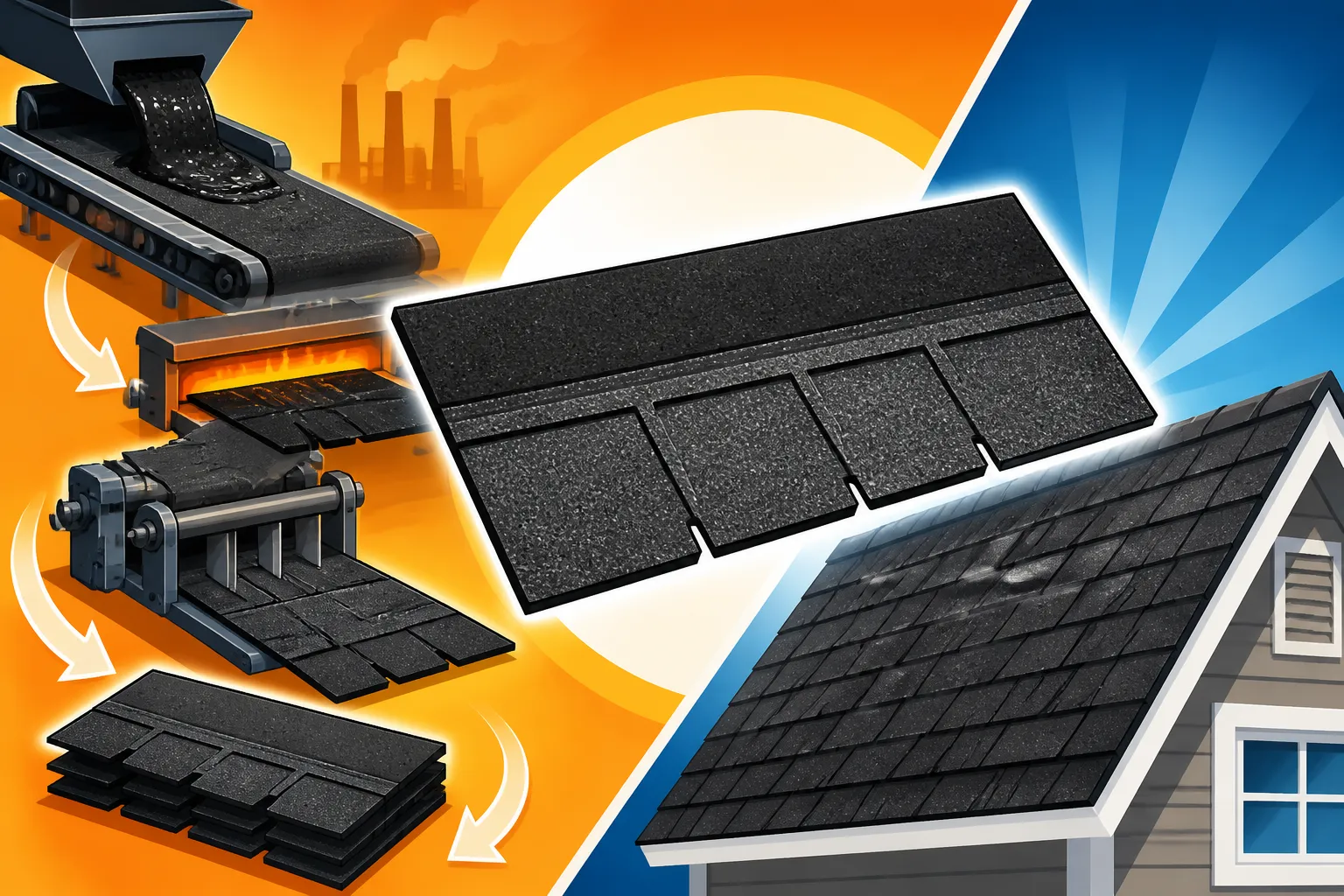
The manufacturing process kicks off with the fiberglass mat. Large rolls of the mat, often several feet wide, are fed into the production line. Imagine giant spools of a sturdy, fibrous fabric slowly unwinding. As the mat travels along the conveyor system, it's prepped for the next stage. This preparation might involve tensioning the mat to ensure it lays flat and smooth, ready to receive its asphalt bath. The continuous feeding of this mat is what allows for the high-volume production of shingles.
Saturating with Hot Asphalt
Next, the fiberglass mat enters a "saturator" or "coater" section. Here, it passes through a vat of molten, hot asphalt, typically maintained at temperatures well over 400 degrees Fahrenheit (200 degrees Celsius). The goal is to completely impregnate the fiberglass mat with asphalt, ensuring every fiber is coated and the material becomes thoroughly waterproof. Excess asphalt is then scraped off to achieve a uniform thickness. This step is critical, as it's the primary waterproofing layer that will protect your home. The specific type and blend of asphalt used here can influence a shingle's flexibility, durability, and resistance to thermal shock.
Granule Application
Immediately after the asphalt coating, while the asphalt is still hot and sticky, the shingle material moves to the granule application station. Here, a precise amount of ceramic granules is dropped onto the surface. The granules adhere firmly to the molten asphalt. Different colors of granules can be strategically applied to create specific blends and patterns that give 3-tab shingles their characteristic look. On the back of the shingle, a very fine layer of sand or talc is sometimes applied. This backer material prevents the shingle from sticking to the manufacturing equipment and also keeps them from sticking together during packaging and storage before installation.
The uniformity of granule application is crucial for consistent UV protection and color. Manufacturers use sophisticated systems to ensure an even spread. Some manufacturers, like CertainTeed, focus on granule adhesion as a key selling point for longevity, emphasizing how well their granules stay on the shingle. If you're comparing bids for a new roof, understanding details like this from a contractor you found through a service like Modernize can help you make an informed decision.
Cooling, Cutting, and Packaging
Once the granules are applied, the now-coated and granular-laden material needs to cool down. It passes through a series of cooling towers or rollers, where air or water rapidly brings its temperature down, solidifying the asphalt and permanently embedding the granules. This ensures that the shingles are stable and ready for the next step.
After cooling, the continuous sheet of shingle material is precisely cut into individual 3-tab shingles. High-speed rotary blades cut the shingle to the correct length and create the distinctive three tabs along the bottom edge. These cuts are made with extreme precision to ensure consistent dimensions, which is vital for proper installation. The shingle's dimensions are carefully standardized, often around 36 inches long and 12 inches wide, with a 5-inch exposure. This consistency ensures that when a roofer is installing them, they lay flat and align correctly.
Finally, the finished shingles are stacked, counted, and packaged into bundles, typically containing enough shingles to cover one-third of a roofing square (a "square" being 100 square feet of roof area). These bundles are then wrapped, often in plastic, and prepared for shipping to distributors and roofing contractors across the country. Getting a clear understanding of the number of How Many Squares of Shingles for a 1,000 sq ft Roof can make a big difference when calculating your material needs.
Quality Control and Performance Standards
The manufacturing process isn't just about assembly; it's also about ensuring that every shingle meets stringent quality and performance standards. This involves rigorous testing and adherence to industry regulations.
Rigorous Testing and Certifications
Throughout the production line and after, shingles undergo a battery of tests. Manufacturers conduct in-house quality control checks to measure things like:
- Granule Adhesion: How well the granules are embedded in the asphalt.
- Tensile Strength: The shingle's resistance to pulling and tearing.
- Flexibility: Its ability to bend without cracking, especially in cold weather.
- Fire Resistance: Testing how the shingle reacts to open flames.
- Wind Resistance: Assessing how well the shingle holds up against high winds, often rated with specific MPH tolerances.
- Weathering: Accelerated aging tests simulate years of exposure to UV rays, heat, and moisture to predict long-term performance.
Beyond internal checks, shingles are also subjected to independent third-party certifications, such as those from ASTM International (American Society for Testing and Materials) or Underwriters Laboratories (UL). These certifications confirm that the shingles meet specific industry standards for performance, safety, and durability. For example, a UL 2218 Class 4 rating indicates high impact resistance, a feature often associated with Impact-Resistant Shingles: How They Work. Always check for these certifications when choosing your roofing materials.
The Role of Specifications and Standards
The consistency in shingle production isn't accidental; it's driven by strict specifications and standards. These guidelines dictate everything from the thickness of the fiberglass mat to the type of asphalt used and the minimum weight of granules per square foot. These standards ensure that regardless of the manufacturer, a 3-tab shingle will perform to a certain baseline level.
For instance, ASTM D3462 is a common standard for asphalt shingles made from a fiberglass mat, ensuring they meet minimum requirements for tear strength, granule adhesion, and asphalt content. Adherence to these standards is what gives homeowners confidence in their roofing materials. When you get a roofing estimate, a reputable contractor will often list the specific shingle product and its certifications. It's an important part of understanding What a Roofing Estimate Should Include and ensuring you're getting a quality product.
Table: Key Components and Their Functions in 3-Tab Shingles
To summarize the intricate design of a 3-tab shingle, here's a quick overview of each component and its crucial role:
| Component | Material | Primary Function(s) |
|---|---|---|
| Fiberglass Mat | Non-woven glass fibers | Provides strength, tear resistance, and dimensional stability. |
| Asphalt Coating | Oxidized asphalt | Waterproofing, granule adhesion, flexibility, durability. |
| Ceramic Granules | Crushed stone with ceramic coating | UV protection, color, fire resistance, algae resistance. |
| Sealant Strip | Thermoplastic adhesive | Bonds shingles together on the roof to resist wind uplift. |
| Release Film | Thin plastic film | Prevents shingles from sticking together in the package. |
The Lasting Impact of Manufacturing Quality
The journey of a 3-tab asphalt shingle from raw materials to a finished product on your roof is a testament to modern manufacturing and materials science. Each step, from the careful selection of a robust fiberglass mat to the precise application of asphalt and protective granules, is crucial for creating a product that can withstand decades of abuse from the elements.
Understanding this process helps you appreciate that not all shingles are created equal. Variations in the quality of asphalt, the density of granule coverage, or the adherence to manufacturing standards can significantly impact a shingle's longevity and performance. That's why choosing shingles from reputable brands like GAF, Owens Corning, or CertainTeed, and ensuring they are installed by certified professionals, is so important. A properly manufactured and installed 3-tab asphalt shingle system provides reliable protection, proving that sometimes, the simplest design, when executed with precision, can be incredibly effective.
Disclaimer
Please remember that this article is intended for informational purposes only and does not constitute professional advice. Always consult with a qualified roofing contractor or building professional for specific guidance regarding your roof and home.