Roofing License Requirements in North Carolina
When your roof starts showing its age, or a storm leaves its mark, the thought of needing a new roof can feel overwhelming. Beyond the immediate concerns of cost and aesthetics, there’s a vital, often confusing, hurdle to clear: finding a qualified professional who is properly licensed. For homeowners in North Carolina, understanding the specific licensing requirements for roofers isn't just a recommendation; it's a critical step to ensure your home is protected and your investment is sound. This guide will walk you through what you need to know about roofing licenses in the Tar Heel State, helping you navigate the process with confidence.
North Carolina's Roofing License Requirements Explained
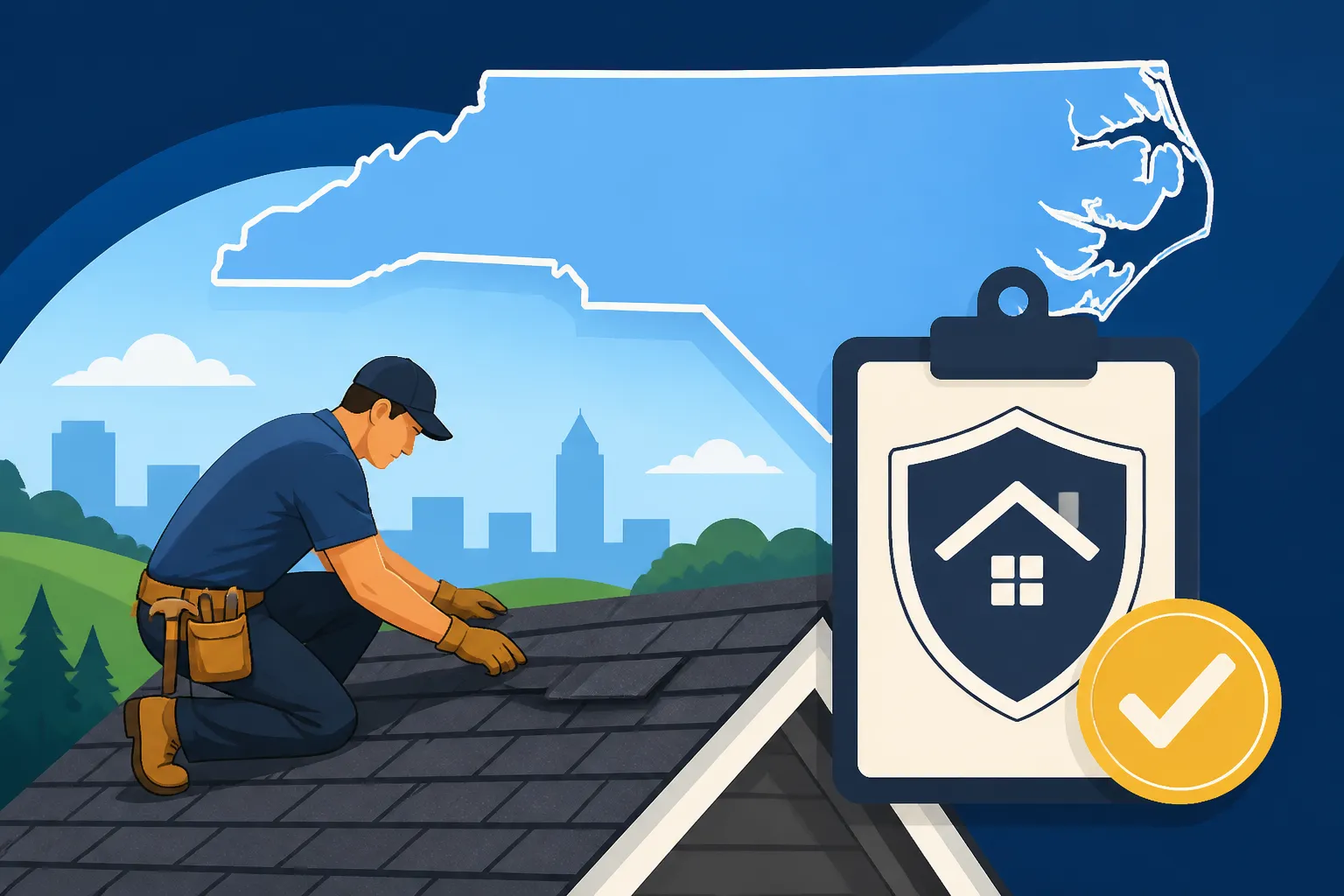
North Carolina has a distinct approach to contractor licensing, and it's essential for homeowners to grasp how it applies to roofing projects. Unlike some states that issue specific "roofing contractor licenses," North Carolina operates under a general contractor licensing framework. This means that if your roofing project reaches a certain financial threshold, your roofer must hold a valid general contractor's license issued by the North Carolina Licensing Board for General Contractors (NCLBGC).
The $30,000 Project Cost Threshold
Here's the key takeaway for North Carolina homeowners: for any roofing project with a total value of $30,000 or more (including labor and materials), the contractor must possess a general contractor's license. This isn't just a suggestion; it's state law. Many homeowners are surprised by this, thinking a "simple" roof replacement wouldn't fall under such a strict rule. However, when you consider the average asphalt roof replacement cost, especially for a larger home or if there's extensive damage requiring roof decking replacement cost, hitting that $30,000 mark is far more common than you might think. Ignoring this threshold can lead to significant headaches down the line, including issues with insurance, resale, and most importantly, the quality and legality of the work itself.
For projects under $30,000, a state general contractor's license is not required by the NCLBGC. However, this doesn't mean you're in the clear to hire just anyone. Local municipalities often have their own regulations, and almost all require building permits for roofing projects, regardless of cost. Even if the state doesn't mandate a license for smaller jobs, a truly professional roofer will carry appropriate local registrations, liability insurance, and worker's compensation insurance. Don't let the lack of a state license requirement for smaller jobs lull you into a false sense of security; due diligence is always paramount.
Understanding General Contractor Classifications
The NCLBGC issues different classifications of general contractor licenses, largely based on the monetary value of projects a contractor is permitted to undertake. These classifications ensure that contractors have demonstrated the necessary financial capacity, experience, and knowledge for jobs of varying scales.
The primary classifications relevant to roofing contractors in North Carolina are:
- Limited License: This allows a contractor to take on projects up to $500,000. While a Limited license covers the $30,000 threshold for most residential roofing jobs, it’s good to know the scope.
- Intermediate License: With this license, a contractor can handle projects up to $1,000,000. This might be relevant for very large or complex residential properties, or light commercial roofing.
- Unlimited License: As the name suggests, this license allows a contractor to bid on and perform projects of any value. These contractors have met the highest standards of financial stability and experience.
When you're getting estimates for your new roof, especially if the project is hovering around or above the $30,000 mark, always inquire about their specific license classification. A contractor with an Unlimited license can handle any size of asphalt roof replacement cost, offering you peace of mind that they are legally qualified for the job, no matter how extensive.
Why a Licensed Roofing Contractor Matters So Much
Hiring a properly licensed roofing contractor isn't just about following the rules; it's about protecting your biggest asset – your home – and your financial well-being. The consequences of cutting corners here can be far-reaching and costly. It's truly a scenario where what you don't know can hurt you.
Ensuring Quality and Code Compliance
A licensed contractor has demonstrated a certain level of competence and knowledge to the state. To earn their license, they've typically passed rigorous exams covering building codes, business practices, and construction principles. This means they're much more likely to understand and adhere to the specific roofing building codes and standards enforced in North Carolina, ensuring your new roof is installed correctly and safely. An unlicensed individual might not be up-to-date on the latest regulations, leading to shoddy work that could fail inspections, void warranties, or even pose safety hazards.
Imagine getting a beautiful new roof, only to find out later that the flashing wasn't installed correctly around your chimney, leading to a persistent leak. Or worse, the roof structure wasn't properly nailed to withstand high winds, making it vulnerable in the next major storm. These aren't just minor inconveniences; they are structural failures that can result in significant repair costs down the line, often far exceeding any perceived savings from hiring an unlicensed crew. A licensed professional understands the importance of things like proper underlayment explained and how vital adequate roof ventilation works, components critical to a long-lasting and efficient roofing system.
Protecting Your Financial and Legal Interests
This is where the rubber meets the road. When you hire a licensed contractor, you're dealing with a legitimate business entity that has a legal obligation to perform according to your contract and state regulations. If something goes wrong – say, the contractor disappears with your deposit, or the work is grossly substandard – you have legal recourse through the state licensing board or the court system. With an unlicensed individual, your options are severely limited, if they exist at all. You might find yourself with no way to recover your money or compel them to fix their mistakes.
Furthermore, licensed contractors are typically required to carry adequate insurance, including general liability insurance and worker's compensation. If an accident occurs on your property during the roofing project – a worker is injured, or your neighbor's fence is damaged – these insurance policies protect you from being held financially responsible. Hiring an unlicensed roofer often means they lack proper insurance. In such a scenario, you could be liable for medical bills, property damage, and even lawsuits, turning your roofing project into a financial nightmare. This is why understanding if your roofer should be bonded and insured is absolutely critical.
Steps to Verify a Roofer's License in North Carolina
Okay, so you understand why it's important to hire a licensed roofer. Now, let's talk about how to actually verify that the contractor you're considering is legitimate and holds the appropriate licensure in North Carolina. It's easier than you might think, and it's a step you should never skip.
Using the NC Licensing Board for General Contractors
The most direct and reliable way to check a contractor's license in North Carolina is through the North Carolina Licensing Board for General Contractors (NCLBGC) website. They have an online licensee search tool that allows you to look up contractors by name, license number, or even company name.
Here’s how you can do it:
- Ask for their License Number: Any reputable contractor will readily provide their general contractor license number. If they hesitate or can't produce one, consider it a significant red flag.
- Visit the NCLBGC Website: Navigate to the "Licensee Search" section of the NCLBGC website.
- Enter the Information: Input the contractor's name or license number into the search fields.
- Review the Results: The search results will show you if the license is active, its classification (Limited, Intermediate, or Unlimited), and any disciplinary actions taken against the contractor. This is also where you can confirm that their license covers projects up to the estimated value of your roofing job.
It’s a quick process that provides immediate peace of mind. Remember, a contractor might have an active business license, but that's different from a general contractor's license from the NCLBGC, which is what's required for projects over $30,000. When you're ready to start your project, reputable platforms like Modernize can also help you connect with pre-vetted, licensed roofing professionals in your area, streamlining the search process and adding an extra layer of confidence.
Beyond the License: Additional Verification Steps
While verifying the general contractor's license is paramount, it's not the only thing you should check. Think of it as part of a comprehensive vetting process to find a reputable roofer.
Here are a few more steps to consider:
- Check for Local Registrations and Permits: Even if a state GC license isn't required for your project (under $30,000), always confirm that the contractor is registered to work in your specific city or county and that they will pull the necessary roofing permits explained. A professional contractor handles all permits. You should also verify that they have pulled the proper permits for any previous jobs they reference.
- Verify Insurance: Ask for current Certificates of Insurance for both general liability and worker's compensation. Don't just take their word for it; call the insurance carrier directly to confirm the policies are active and cover the work they'll be doing. This is a critical step in understanding why licensed and insured roofers are so important.
- Review Online Presence and References: Check online reviews on platforms like Google, Yelp, and the Better Business Bureau. Look for consistent positive feedback and how the company responds to any negative comments. Ask the contractor for a list of recent references (at least three) and actually call them. Ask about their experience, the quality of work, adherence to schedule, and how the contractor handled any issues that arose. This is a vital part of how to choose a roofing contractor.
- Examine the Contract: Before signing anything, thoroughly review the roofing contract: what to look for. It should be detailed, outlining the scope of work, materials, timeline, payment schedule, and warranty information. A well-written contract is a sign of professionalism.
By combining all these verification methods, you significantly reduce your risk and increase your chances of having a smooth and successful roofing project.
| NC General Contractor License Classification | Project Monetary Limit | Typical Roofing Project Applicability | Key Requirement |
|---|---|---|---|
| Limited | Up to $500,000 | Most residential and smaller commercial roofing projects exceeding $30,000 | Experience, Financial Capacity ($17,000) |
| Intermediate | Up to $1,000,000 | Larger residential or more complex commercial roofing projects | Experience, Financial Capacity ($75,000) |
| Unlimited | No Limit | Any size roofing project, residential or commercial | Experience, Financial Capacity ($150,000) |
Note: For projects under $30,000, a state general contractor's license is not required by the NCLBGC, but local permits and contractor insurance are still essential.
What Happens If You Hire an Unlicensed Roofer?
It might be tempting to go with a significantly cheaper bid from an unlicensed individual, especially if your roofing cost per square feels high. However, this is a classic example of "you get what you pay for," and the risks almost always outweigh any initial savings. The fallout from hiring an unlicensed roofer in North Carolina can be severe, impacting your finances, your home's integrity, and your peace of mind.
Lack of Consumer Protection and Legal Recourse
One of the biggest pitfalls of hiring an unlicensed contractor is the near-total lack of consumer protection. When you work with a licensed professional, the North Carolina Licensing Board for General Contractors provides a channel for complaints and disciplinary action if the contractor fails to uphold their end of the bargain. If your unlicensed roofer does a terrible job, abandons the project, or demands more money than agreed upon, you have very little official recourse. You might have to pursue civil action, which can be a long, expensive, and uncertain process, especially if the individual has no assets or disappears. You might also find yourself unable to hold them accountable for a roofing warranty: workmanship vs manufacturer.
Furthermore, an unlicensed contractor may not be privy to, or care about, local building codes. If the work doesn't meet code standards, you could face fines from your municipality and be forced to tear off and re-do the work at your own expense. This directly relates to the importance of understanding why building permits are needed and who pulls them. Without a permit or proper inspection, your home could be red-flagged for future resale or even affect your homeowners insurance coverage.
Financial and Safety Risks to Your Property and Family
Beyond legal issues, the practical dangers are significant. Unlicensed roofers often skip vital steps or use substandard materials to keep their costs low. This can lead to a roof that fails prematurely, leaks, or isn't capable of standing up to North Carolina's weather challenges. What seems like a small leak initially could lead to extensive water damage, mold growth, and compromised structural integrity in your attic and ceiling. The cost to repair vs replace an old roof might seem high initially, but fixing major issues caused by poor installation can easily double or triple that expense.
Then there's the critical issue of insurance. As mentioned earlier, if an unlicensed roofer or their crew gets injured on your property, you could be held responsible for their medical bills and lost wages. This could be a devastating financial blow, potentially bankrupting a family. Your homeowner's insurance policy might deny coverage for damages or injuries if you knowingly hired an unlicensed contractor, leaving you completely exposed. It's a stark reminder that the lowest bid isn't always the cheapest in the long run. By using platforms like Modernize, you can avoid this nightmare scenario by ensuring you only connect with contractors who have gone through a thorough vetting process, including license and insurance verification. Don't fall victim to the many roofing contractor red flags to avoid; always prioritize safety and professionalism over a bargain.
Disclaimer
Please note that this article provides general information and should not be considered legal advice. Licensing requirements and building codes can change, and local regulations may vary. Always consult with the North Carolina Licensing Board for General Contractors and your local municipal building department for the most current and specific requirements pertaining to your project. It is always recommended to verify a contractor's credentials independently.