High-Wind Roofing Codes in Texas
Living in Texas means enjoying wide-open spaces, diverse landscapes, and, let's be honest, some seriously unpredictable and powerful weather. From the Gulf Coast's hurricanes to the Panhandle's tornadoes and the fierce thunderstorms that sweep across the entire state, your roof takes a beating. Understanding the specific high-wind roofing codes in Texas isn't just about complying with regulations; it's about protecting your home, your family, and your investment when Mother Nature decides to show her might. This guide is here to help you navigate those crucial rules.
The Harsh Reality of Texas Weather and Your Roof
If you've lived in Texas for any length of time, you know the sound of a severe thunderstorm rolling in or the uneasy quiet before a hurricane makes landfall. These aren't just minor inconveniences; they're direct threats to your home's integrity, with your roof often bearing the brunt of the assault. The state's unique geography and climate make high-wind events an all-too-common occurrence, making robust roofing codes absolutely essential.
Why High-Wind Codes Matter in the Lone Star State
Imagine waking up after a particularly rough storm, only to find shingles scattered across your yard, or worse, water dripping through your ceiling. This isn't just an unfortunate event; it's a costly one. High-wind codes are designed precisely to prevent this kind of devastation, setting minimum standards for how your roof should be built or replaced to withstand these forces. Without adherence to these codes, you're not just risking damage; you're risking your family's safety and potentially voiding insurance claims.
Consider the sheer variety of wind events Texas experiences. Along the coast, from Galveston down to Corpus Christi, the threat of hurricanes brings sustained high winds and sudden gusts that can literally peel a roof off a house. Inland, areas like Dallas, Fort Worth, and even the vast stretches of West Texas are no strangers to powerful derechos, severe thunderstorms, and even tornadoes, which, while localized, produce incredible wind speeds. These events can create immense uplift pressure, suction, and shear forces on your roof, testing every component from the decking to the outermost shingle. The codes, therefore, become your first line of defense.
The Role of the International Residential Code (IRC) in Texas
Texas, like many states, doesn't invent its building codes from scratch. Instead, it typically adopts nationally recognized model codes, most notably the International Residential Code (IRC). The IRC provides a comprehensive set of standards for residential construction, including specific provisions for roofing. However, here's where it gets interesting: the state often adopts these codes with various amendments, and more importantly, individual cities and counties within Texas can further amend or enhance these requirements to suit their local conditions.
This means that while the IRC sets a baseline for wind resistance, a home in Houston might have slightly different, often stricter, requirements than one in El Paso, especially when it comes to wind load design. The IRC generally specifies minimum wind load resistance based on geographic zones, and it references other standards, like ASCE 7 (Minimum Design Loads for Buildings and Other Structures), for detailed wind load calculations. These calculations consider factors like building height, roof shape, exposure category (e.g., open terrain vs. urban areas), and, crucially, the basic wind speed for that location. So, while you're operating under the umbrella of the IRC, always be prepared for local nuances that can significantly impact your roofing project. Understanding the general framework, however, is a great start to understanding what exactly your roof needs to withstand.
Understanding High-Wind Roofing Code Requirements in Texas
When it comes to your roof standing firm against Texas's fierce winds, it's not just about the shingles; it's about a complete system. From the underlying structure to the way each component is fastened, every detail plays a critical role in determining its resilience. High-wind roofing codes in Texas focus on reinforcing this system to resist the intense forces that wind can exert.
Wind Speed Zones and Design Criteria
Texas is a massive state, and its wind profiles vary significantly from one region to another. This is why building codes don't apply a one-size-fits-all approach. Instead, the state, through its adoption of the IRC and reference to standards like ASCE 7, defines different wind speed zones.
- Coastal Zones: These areas, encompassing cities like Galveston, Corpus Christi, and much of the Gulf Coast, are designated with the highest basic wind speeds. Due to the constant threat of hurricanes and tropical storms, roofs in these zones must be engineered to withstand much greater forces, often requiring higher wind-rated shingles and more stringent fastening methods. For instance, basic wind speeds in some coastal areas can exceed 140 mph (3-second gust).
- Inland Zones: Moving further from the coast, into regions like Central and North Texas (e.g., Dallas, Fort Worth, Austin, San Antonio), the basic wind speeds are generally lower than coastal zones but still significant, typically ranging from 110 mph to 130 mph. These areas still experience severe thunderstorms and occasional tornadoes, so robust construction is critical.
- Western Zones: The more arid western parts of the state might have slightly lower base wind speeds but can still face powerful winds, especially during seasonal dust storms or localized severe weather.
These wind speed zones dictate the minimum wind resistance required for all roofing components. This isn't just a suggestion; it's a legal requirement. When a contractor designs or replaces a roof in a specific zone, they must ensure the entire system meets or exceeds the wind load requirements for that area. This includes everything from the strength of the roof decking to the type of fasteners used and the specific wind resistance rating of the shingles themselves. This meticulous approach ensures that your roof is built to endure the specific challenges of its location.
Key Components for Wind-Resistant Roofing
A truly wind-resistant roof isn't reliant on a single component but rather a synergy of high-quality materials and precise installation techniques. Ignoring any part of this system can create weak points that devastating Texas winds will exploit.
Shingles and Their Wind Ratings
The shingles themselves are a crucial element. In high-wind areas, you'll often see a preference for architectural shingles over traditional 3-tab shingles. Architectural shingles are generally heavier, thicker, and designed with a stronger adhesive strip, offering superior resistance to wind uplift. Shingles are typically rated for wind resistance, often indicating the maximum sustained wind speed they can withstand (e.g., 110 mph, 130 mph, or even higher). Many manufacturers, like Owens Corning and CertainTeed, offer shingles specifically designed and tested for enhanced wind performance. It's vital to choose shingles that meet or exceed the wind speed requirements for your specific Texas location.
Nailing Patterns and Fasteners
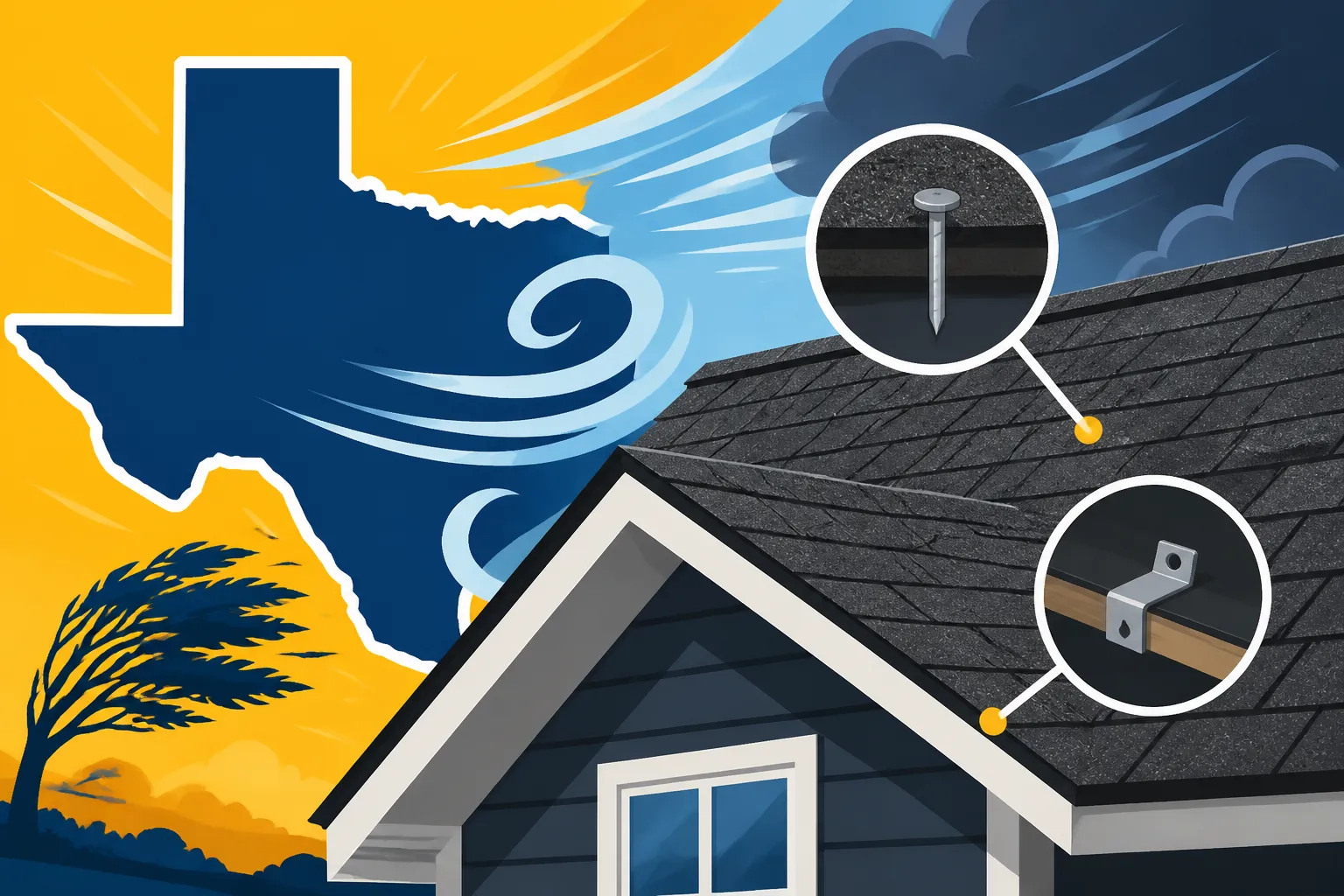
The way shingles are attached to the roof deck is arguably as important as the shingle itself. Standard installation might call for four nails per shingle, but for high-wind areas in Texas, building codes and manufacturer warranties often mandate a six-nail pattern. This extra fastening significantly increases the shingle's resistance to uplift. Furthermore, the type and length of the nails are important; they need to penetrate through the shingle and into the roof decking adequately. If you're wondering about the specifics, you can delve deeper into what makes for a strong installation by looking at information on topics like High-Wind Nailing Explained. This seemingly small detail is critical, as improper nailing is a common cause of shingle blow-off during strong winds.
Underlayment and Adhesives
Beneath your shingles lies the underlayment, which serves as a secondary protective layer. While traditional felt paper is still used, synthetic underlayment is increasingly preferred, especially in high-wind regions. Synthetic underlayment is more tear-resistant, more durable, and often more resistant to moisture. Beyond the main underlayment, specific areas of the roof, like eaves and valleys, often require ice and water shield. While the "ice" part might not be as critical in most of Texas, the "water" and "wind" aspects are paramount. This self-adhering membrane seals tightly to the roof deck, providing an extra barrier against wind-driven rain and preventing leaks even if shingles are compromised. The proper application of starter shingles with an adhesive strip along the eaves and rake edges also creates a strong seal that helps lock down the first course of shingles, preventing wind from getting underneath and initiating a chain reaction of blow-offs.
Flashing and Drip Edges
The perimeter and penetrations of your roof are often its most vulnerable points. Proper flashing around chimneys, skylights, and vent pipes, and the installation of drip edge along the roof's edges, are non-negotiable for wind resistance. Drip edge, installed at the edge of the roof, helps direct water away from the fascia and prevents wind from lifting shingles at the eaves. All flashing components must be correctly installed and sealed to prevent wind-driven rain from infiltrating the roof system. If you want to understand more about these essential components, you can learn about Drip Edge What It Does and explore further information on critical components such as What Is Flashing and Why It Matters.
Local Amendments and Specific City Requirements
While the state of Texas sets baseline standards, it's crucial to understand that local jurisdictions can, and often do, implement their own stricter amendments to the building codes. This is particularly true in areas frequently impacted by severe weather. What's acceptable in one county might not be up to code just a few miles down the road in another city.
For example, coastal cities like Corpus Christi or Galveston often have significantly enhanced requirements for wind-resistant construction due to hurricane exposure. They might mandate specific higher wind speed ratings for shingles, more robust fastening schedules for roof decking, or even specific types of secondary water barriers that go beyond the state's minimum. In a city like Houston, which has experienced numerous major storms, local codes might emphasize enhanced attachment methods for roof sheathing or mandate impact-resistant shingles in certain areas. Even in inland cities like Dallas or San Antonio, which regularly face severe thunderstorms and occasional tornado threats, local amendments can stipulate more stringent nailing patterns or require specific underlayment types.
Before starting any roofing project in Texas, it is absolutely essential to check with your specific city or county building department. They will have the most current and accurate information on local high-wind code requirements. Failing to do so could lead to failed inspections, costly rework, fines, and even issues with insurance coverage down the line. A reputable roofing contractor will be well-versed in these local nuances, but it’s always wise for a homeowner to be informed too.
Practical Steps for Texas Homeowners
Navigating the world of high-wind roofing codes might seem daunting, but as a Texas homeowner, you have several practical steps you can take to ensure your roof is not only compliant but also genuinely resilient. These steps revolve around smart hiring, proper paperwork, and understanding your warranty.
Vetting Your Contractor for Code Compliance
This is perhaps the single most critical step you can take. Your roofing contractor is your partner in ensuring your roof meets all necessary high-wind codes. Unfortunately, not all roofers are created equal, and some might cut corners or simply not be up-to-date on local regulations.
First and foremost, always hire a Licensed and Insured Roofers Why It Matters. A legitimate contractor will carry general liability insurance and workers' compensation, protecting you from financial responsibility if an accident occurs on your property. They should also hold any required state or local licenses. You can check their license status with the Texas Department of Licensing and Regulation (TDLR) for certain trades, though roofing licenses can vary by locality.
When interviewing contractors, don't be shy about asking direct questions about their familiarity with Texas high-wind codes, especially those specific to your city or county. Ask them about:
- Specific wind speed ratings: "What wind speed rating will the shingles you're proposing have, and does that meet the current code for my area?"
- Nailing patterns: "Will you be using a 6-nail pattern for the shingles, and what type of fasteners will be used for the decking and shingles?"
- Underlayment: "What type of underlayment do you recommend, and will you be installing ice and water shield in critical areas?"
- Local amendments: "Are you aware of any specific local amendments to the IRC in [Your City/County] that might affect this project?"
A truly professional contractor will be able to answer these questions confidently and provide documentation to back up their claims. They should also be transparent about the entire roofing process, including how they will address wind-related requirements. If a contractor seems evasive or tries to gloss over these details, consider it a red flag. For a deeper dive into what to ask, consider reviewing Questions to Ask a Roofing Contractor Before Hiring.
The Importance of Permits and Inspections
For most significant roofing projects in Texas, especially a full replacement, you will absolutely need a permit. This isn't just bureaucratic red tape; it's a critical mechanism to ensure your roof is built to code and safe. Many homeowners dread the permit process, but it's there to protect you.
Here's how it generally works:
- Permit Application: Your chosen contractor should be responsible for pulling the necessary permits from your local building department. They will submit plans and details of the proposed work. If a contractor tells you a permit isn't necessary for a full replacement, be very wary. You can find more comprehensive information on the topic in articles like Roofing Permits Explained.
- Rough-In Inspection: After the old roof is torn off and any decking repairs are made, but before the new shingles go on, an inspector will typically come out. They will check the condition of the roof deck, ensure proper fastening of the decking, and verify that the correct underlayment and flashing are in place. This is a crucial step for high-wind compliance, as they'll be looking at things like proper nailing of the underlayment and sheathing.
- Final Inspection: Once the entire roof is installed, another inspection will occur. The inspector will check the finished product for proper shingle installation, appropriate flashing, ventilation, and overall workmanship, ensuring everything meets code, including high-wind requirements.
Skipping the permit and inspection process can lead to serious headaches down the road. If the work isn't inspected and later found to be non-compliant, you could face fines, be required to tear off the new roof and redo it, or have difficulty selling your home. More importantly, without proper inspection, you have no official confirmation that your roof is truly built to withstand Texas's high winds, leaving your home vulnerable.
Understanding Manufacturer Warranties and Wind Ratings
Beyond the building codes, your shingle manufacturer's warranty is another layer of protection that often ties directly into wind performance. Most reputable shingle manufacturers, such as GAF, Owens Corning, and CertainTeed, offer extensive warranties that include specific wind resistance coverage.
These warranties often have different tiers:
- Standard Wind Warranty: This typically covers wind speeds up to a certain threshold (e.g., 60 mph or 80 mph).
- High-Wind Warranty: For a higher level of protection, manufacturers offer enhanced wind warranties, often covering speeds up to 110 mph, 130 mph, or even higher, sometimes with no maximum specified. However, these enhanced warranties often come with specific installation requirements. For instance, to qualify for a higher wind warranty, the manufacturer might mandate a 6-nail pattern per shingle, the use of their proprietary starter shingles, or other system components.
It's vital that you and your contractor understand these requirements. If the roof isn't installed exactly according to the manufacturer's specifications for their high-wind warranty, that warranty could be voided. This means that if your roof suffers wind damage within the warranty period, you might be out of luck for a claim. Always get the specifics of your chosen shingle's wind rating and the conditions for the high-wind warranty in writing from your contractor. For further details on how warranties protect you, especially the distinctions between different types, you can look into topics like Roofing Warranty Workmanship vs Manufacturer.
By staying informed about your local codes, selecting a qualified contractor, ensuring permits and inspections are handled correctly, and understanding your warranty, you're taking proactive steps to safeguard your home against the relentless high winds that are simply a part of life in Texas.
Here's a quick reference table for general wind considerations:
| Component / Factor | Standard Wind Zone Consideration | High-Wind Zone (Texas Coast/Tornado Prone) Consideration |
|---|---|---|
| Basic Wind Speed | Typically 110-120 mph (3-sec gust) | Typically 130-150+ mph (3-sec gust) |
| Shingle Type | Architectural (dimensional) generally good | Architectural (dimensional) with Class H or higher rating |
| Shingle Nailing | 4-nail pattern (minimum) | 6-nail pattern (often mandated) |
| Underlayment | Felt or synthetic | Synthetic, often requiring self-adhering (ice & water shield) in vulnerable areas |
| Roof Decking | Securely fastened, good condition | Enhanced fastening schedule (more nails, specific fasteners) |
| Drip Edge & Flashing | Standard installation | Enhanced fastening and sealing for all edges and penetrations |
| Manufacturer Warranty | Standard wind coverage (60-80 mph) | High-wind warranty (110-130+ mph) with specific installation requirements |
| Local Permits/Inspections | Required | Often stricter review processes and multiple inspections |
Disclaimer
The information provided in this article is intended for general informational purposes only and does not constitute professional advice. Building codes, regulations, and best practices for roofing can vary significantly by location and may change over time. Always consult with a qualified, licensed, and insured roofing professional and your local building department to ensure compliance with all current local, state, and national codes and for advice tailored to your specific situation.