Is Blistering Covered by Insurance
Finding blistering on your asphalt roof can be a truly alarming discovery, immediately bringing up worries about costly repairs and whether your homeowner's insurance will step in to help. It's frustrating to see your roof deteriorate, especially when you're unsure if it's a cosmetic issue, a sign of a deeper problem, or something that your policy might cover. This guide aims to clear up the confusion surrounding roof blistering and its insurance implications, helping you understand what's happening on your roof and what steps you can take.
Understanding Blistering on Your Asphalt Roof
When you notice small, raised bumps on your asphalt shingles, that's blistering. It's not just an aesthetic flaw; it points to internal issues within the shingle itself. Dealing with it requires understanding its nature and causes, distinguishing it from other types of roof damage.
What Blistering Actually Looks Like
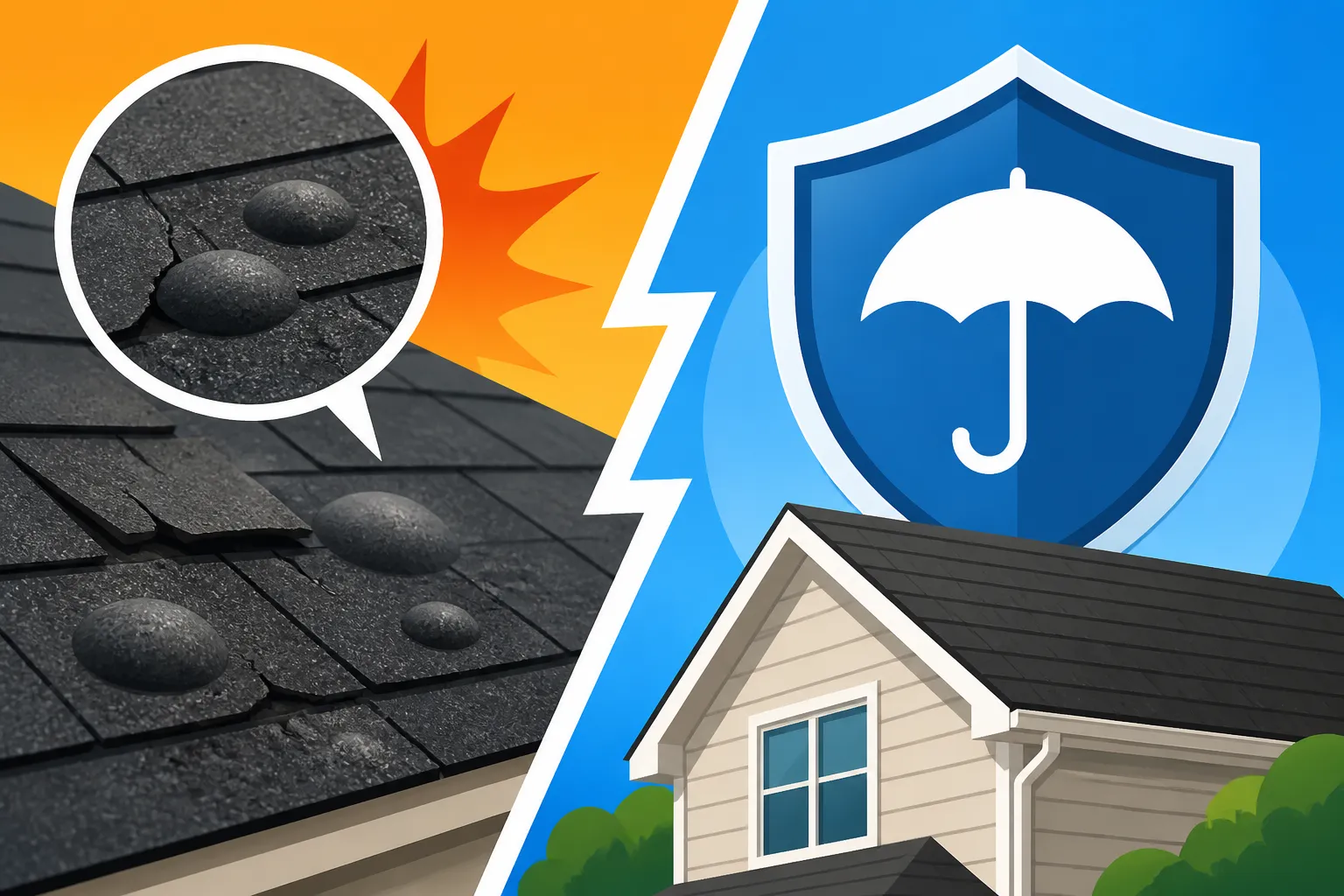
Imagine your asphalt shingles developing tiny, pimple-like bumps across their surface. That's blistering in a nutshell. These aren't just bits of debris or granule loss; they are actual bubbles that form from beneath the shingle's surface, pushing upwards. They can range in size from a pinhead to a quarter, and they often appear in clusters, sometimes across large sections of your roof.
Initially, these blisters might be small and subtle, making them hard to spot from the ground. However, over time, especially with prolonged sun exposure, they can grow larger. The biggest concern arises when these blisters break open, exposing the asphalt mat underneath. Once exposed, these areas are vulnerable to UV degradation, moisture infiltration, and further deterioration, significantly compromising the shingle's protective capabilities. It's a clear sign that your roof's integrity might be at risk.
Common Causes of Blistering
Blistering primarily occurs due to trapped moisture or volatile materials within the asphalt mixture during the manufacturing process. When shingles are exposed to the sun's heat, this trapped moisture or gas expands, creating pressure that forms a blister. It's a bit like a tiny air pocket in a piece of dough expanding when baked.
Another significant contributor is inadequate attic ventilation. If your attic gets excessively hot because it can't "breathe" properly, that heat radiates down into the shingles, exacerbating the expansion of any trapped elements. This constant thermal cycling—heating up during the day, cooling down at night—puts immense stress on the shingles, accelerating the blistering process. Think about what happens when your attic acts like an oven; it cooks your roof from the inside out. Over-application of asphalt during manufacturing or uneven distribution of granules can also create weak spots prone to blistering. While not always apparent, these manufacturing quirks become problematic under the intense sun and heat experienced in places like Phoenix, Arizona, or Orlando, Florida.
The Difference Between Blistering and Other Damage
It's crucial not to confuse blistering with other types of roof damage, as insurance coverage can differ wildly based on the cause. For instance, hail damage often looks like random pockmarks or indentations on shingles, sometimes with visible loss of granules or impact fractures. Unlike blisters, hail damage doesn't typically involve a raised bubble, and it's usually more erratic in its pattern, reflecting the random nature of hailstones. You can often see the distinct circular or irregularly shaped impact marks, which look quite different from the smooth, raised domes of blisters. Understanding the difference is vital for homeowners trying to assess roof damage, particularly when determining if they need to consider a full roof replacement or just repairs.
Similarly, granule loss, while often accompanying blistering once a blister ruptures, isn't the same. Granule loss typically appears as bald spots where the protective mineral granules have eroded or fallen off due to age, weathering, or impact. While granule loss is a common sign your roof is failing, it's a surface issue, whereas blistering originates from within the shingle. If you see signs of roof hail damage or signs of roof wind damage, those are usually sudden events covered by insurance, unlike the more gradual, internal development of blistering.
Navigating Your Homeowner's Insurance Policy
Understanding your homeowner's insurance policy can feel like reading a foreign language. When it comes to roof damage, knowing what's typically covered and what isn't is paramount.
Perils Covered vs. Exclusions
Homeowner's insurance policies are designed to protect you from "perils" – specific events that cause damage. These usually include things like fire, windstorms, hail, falling objects (like trees), and vandalism. If your roof blistering was directly caused by one of these sudden and accidental events, there might be a chance for coverage. For example, if a severe fire caused extreme heat that directly led to immediate blistering, that could potentially be covered under the fire peril.
However, the reality is that most blistering isn't caused by sudden, accidental events. It's more often a symptom of manufacturing defects, improper installation, or gradual wear and tear, compounded by environmental factors like intense sun and heat. Standard homeowner's policies almost universally exclude damage caused by manufacturing defects, poor workmanship, or gradual deterioration. This means that if the blistering is determined to be a result of the shingle's inherent flaws or simply the roof aging, your insurance company will likely deny the claim. This is a common frustration for many homeowners, as the line between "damage" and "defect" can feel blurry.
The Role of Age and Maintenance
The age of your roof plays a massive role in how insurance companies view claims, including those involving blistering. Most asphalt roofs are expected to last between 20 and 30 years, depending on the shingle type (e.g., 3-tab vs architectural shingles). If your roof is nearing or past its expected lifespan, insurance companies will often attribute any damage, including blistering, to old age and normal wear and tear, which are typically not covered.
Furthermore, proper maintenance is crucial. Insurance policies often include clauses requiring homeowners to maintain their property reasonably. If a lack of proper attic ventilation contributed to the blistering, an adjuster might argue that inadequate maintenance exacerbated the issue, leading to a denial. Regular roof maintenance to avoid replacement and knowing how long an asphalt roof lasts are key to extending its life and potentially strengthening any future insurance claims. If your roof is already showing significant signs of granular loss, curling shingles, or cracked shingles alongside blistering, it's likely seen as an old, failing roof, making an insurance claim for blistering much harder to justify.
Actual Cash Value vs. Replacement Cost
This is perhaps one of the most critical distinctions in any roof damage claim. Your policy will either cover your roof at its Actual Cash Value (ACV) or its Replacement Cost Value (RCV).
- Actual Cash Value (ACV): This means the insurance company will pay you the cost of replacing your damaged roof minus depreciation. Depreciation accounts for the age and wear and tear of your existing roof. So, if you have a 15-year-old roof with a 20-year lifespan, you'd only get a fraction of the replacement cost, even if the damage was covered. This can leave you with a substantial out-of-pocket expense.
- Replacement Cost Value (RCV): This is the gold standard for homeowners. With RCV coverage, the insurance company pays for the full cost of replacing your roof with new materials of similar quality, without deducting for depreciation. You typically receive an initial payment (ACV), and then, once the work is completed and you submit proof of payment, you get the depreciated amount back. This significantly reduces your out-of-pocket costs.
For blistering, even if it were covered (which, as we'll discuss, is rare), an ACV policy would provide very little for an older roof. It's always wise to review your policy to understand whether you have Actual Cash Value vs Replacement Cost Roof Claims coverage.
| Damage Type | Typical Cause | Standard Insurance Coverage |
|---|---|---|
| Blistering | Manufacturing defect, poor ventilation, age | Rarely Covered |
| Hail Damage | Sudden impact from hailstones | Often Covered |
| Wind Damage | High winds lifting/tearing shingles | Often Covered |
| Granule Loss | Age, weathering, hail, foot traffic | Rarely Covered (unless from covered peril) |
| Curling Shingles | Age, heat, improper installation | Rarely Covered |
| Fire Damage | Accidental fire | Often Covered |
| Falling Objects | Tree limbs, debris | Often Covered |
When Blistering Might Be Covered by Insurance
While typical blistering is almost always an exclusion, there are very specific, unusual circumstances where it could fall under your policy. This is where the details of your policy and the cause of the damage truly matter.
Damage Directly Caused by Covered Perils
The key here is "directly caused." If the blistering itself is a direct result of a covered peril, it stands a chance. For example, a house fire that generates extreme, localized heat and causes the shingles to blister almost immediately might be covered under the fire peril. Or, in a freak accident, if corrosive chemicals fell on your roof, causing a chemical reaction that resulted in blistering, that might be covered as a sudden and accidental event, depending on your policy's specifics regarding chemical damage.
However, it's important to differentiate this from blistering that simply appears on a roof that has also experienced a covered peril. For instance, if your roof has blistering and then a hail storm hits, the blistering itself isn't suddenly covered. Only the new damage from the hail would be. The insurance company will scrutinize the cause, and if the root cause of the blistering is determined to be a manufacturing defect or gradual wear, the claim will likely be denied, even if a storm happened concurrently.
Proving Sudden and Accidental Damage
This is the uphill battle for homeowners dealing with blistering. Insurance policies are built around the concept of "sudden and accidental" damage. Blistering, by its very nature, tends to develop gradually over time due to internal factors and sun exposure, not a single, unforeseen event. This makes it incredibly difficult to argue that it meets the "sudden and accidental" criterion.
You would need clear, undeniable evidence that a specific, sudden, and accidental event listed in your policy directly and solely caused the blisters to form. This is why a certified roofing contractor's detailed assessment is so critical. They might be able to help document the specific conditions. Without this direct link to a covered peril, insurance adjusters will almost certainly classify blistering as a maintenance issue, a manufacturing defect, or general wear and tear, all of which are standard exclusions.
The Importance of a Professional Inspection
When you suspect any damage to your roof, the first professional you should call is an experienced, reputable roofing contractor. They have the expertise to distinguish between blistering, hail damage, wind damage, and other issues. A thorough roof damage assessment: a homeowner's guide should always involve an expert eye.
A contractor can assess the extent of the blistering, determine its likely cause, and document it with photos and detailed notes. This professional assessment is crucial because it provides an expert opinion to counter the insurance company's initial assessment, which might be biased towards denial. They can provide a written report detailing their findings, which you can then submit to your insurer. Sometimes, blistering might indicate that your roof is already well past its prime, signaling signs you need a new roof rather than just a repair.
Steps to Take When You Discover Blistering
Discovering blistering on your roof requires a systematic approach, especially if you hope to involve your insurance. Acting quickly and documenting everything meticulously is key.
Documenting the Damage Thoroughly
The moment you notice blistering, start documenting everything. This means taking clear, high-resolution photographs and videos from multiple angles. Capture both close-ups of individual blisters and wider shots showing the affected areas of the roof. Make sure to capture the surrounding context as well, such as any general condition of the roof that looks good, to show the isolated nature of the blistering if possible. Date and time-stamp all your media.
Beyond photos, make detailed notes. When did you first notice it? Has it spread? Are there any other correlating issues, like recent extreme weather events or problems with your attic ventilation? Keep a log of all communications with contractors and your insurance company. This comprehensive documentation creates a strong paper trail that can be invaluable if you need to argue your case later or appeal a denied claim. Remember, the more evidence you have, the better positioned you are.
Contacting Your Insurance Company
Once you have documented the damage, it's time to contact your insurance company. Be prepared to provide them with your policy number, the date you discovered the damage, and a description of what you've observed. When you call, focus on reporting the damage you see, such as "raised bumps that have started to expose the shingle mat" rather than immediately diagnosing it as "blistering." Let the adjusters and contractors make the official diagnosis.
Your insurer will likely assign a claims adjuster to inspect your roof. It's a good idea to be present during this inspection so you can point out specific areas of concern and ask questions. Remember, the adjuster works for the insurance company, so while they are professional, their priority is to assess the claim based on the policy's terms. Understanding how to file a roof insurance claim can help you prepare for this process.
Getting a Roofing Contractor's Assessment
Before or after the insurance adjuster's visit, definitely get an independent assessment from a qualified roofing contractor. This step cannot be stressed enough. A contractor's perspective will be invaluable, especially as they are independent of the insurance company's interests. They can provide a detailed report on the cause and extent of the blistering, whether it's a manufacturing defect, age-related, or potentially linked to another issue.
When searching for a contractor, look for ones who are licensed and insured and have a strong local reputation. Platforms like Modernize can help you connect with local, vetted roofing professionals who can provide accurate estimates and assessments. Ask them for a written estimate for repairs or a full roof replacement cost: complete breakdown, including a detailed scope of work. Comparing multiple estimates is always a smart move. A good contractor can also advise you on local building codes and if a permit is needed for replacement, which is part of knowing if you need a permit to replace a roof.
Dealing with Denied Claims and Other Challenges
It's common for claims related to blistering to be denied, but that doesn't necessarily mean the end of the road. Understanding your options is empowering.
Understanding Why a Claim Might Be Denied
Most often, an insurance claim for blistering is denied because the damage is attributed to factors explicitly excluded by your policy. The most common reasons include:
- Manufacturing Defects: If the blistering is determined to be a result of faulty materials or poor production quality, it falls outside the realm of sudden, accidental damage. The issue then typically lies with the shingle manufacturer, not your homeowner's insurance.
- Wear and Tear/Gradual Deterioration: Blistering often develops over time. If your roof is older, say approaching the 20-year mark, the insurance company will likely classify it as normal wear and tear, which is a standard exclusion. They might even try to estimate how many years left on your roof to justify this.
- Lack of Maintenance: If poor attic ventilation contributed significantly to the blistering, the insurer might argue that inadequate maintenance of your property allowed the issue to worsen.
- Improper Installation: While less common for blistering than other issues, if installation errors led to conditions that exacerbated blistering (e.g., inadequate underlayment trapping moisture), this would be a workmanship issue and not covered.
It's essential to get a clear, written explanation from your insurance company for their denial. This will be the basis for any appeal you might consider.
Appealing a Denied Claim
If your claim is denied and you believe it was unjust, you have the right to appeal. Here's how you might approach it:
- Review Your Policy: Read your policy carefully to understand the exact language regarding covered perils and exclusions. Look for any ambiguity or clauses that might support your case.
- Gather More Evidence: If your initial evidence wasn't enough, get a second opinion from another reputable roofing contractor. This time, ask them to specifically address the reasons for the denial. For instance, if the insurer cited "wear and tear," can the contractor argue it's a defect?
- Submit a Formal Appeal Letter: Write a detailed letter to your insurance company, clearly stating why you disagree with their decision. Include all your documentation, contractor reports, photos, and any relevant sections of your policy. Reference specific dates, times, and claim numbers.
- Consider a Public Adjuster: A public adjuster is an independent professional who works solely for you, the policyholder, to negotiate with your insurance company. They understand insurance policies inside and out and can be very effective in appealing denied claims, especially for complex cases. However, they charge a percentage of the settlement, so weigh the potential benefit against the cost.
- State Department of Insurance: If all else fails, you can file a complaint with your state's Department of Insurance. They don't resolve individual disputes but can investigate whether your insurer handled your claim fairly and in accordance with state laws.
Navigating a denied claim can be frustrating and overwhelming, but persistent communication and solid evidence are your best tools.
When to Consider Out-of-Pocket Repairs or Replacement
Sometimes, despite your best efforts, the insurance company simply won't cover blistering damage. At this point, you'll need to weigh your options for financing the necessary repairs or replacement yourself.
First, get detailed estimates from several contractors. Use resources like Modernize to get competing bids and compare roofing estimates thoroughly. You might find that while a full roof replacement cost: complete breakdown seems high, smaller repairs to specific blustered areas might be manageable if the blistering isn't widespread. Consider if the blistering is localized enough to allow you to repair just part of a roof, or if the roof's overall condition warrants a full replacement. A contractor can help you decide if a repair vs replacement strategy is best for your situation.
If a full replacement is needed, explore financing options. Many roofing companies offer payment plans, or you might look into home equity loans, lines of credit, or even a personal loan. While paying out-of-pocket is never ideal, remember that a failing roof can lead to much more expensive interior damage if left unaddressed. Prioritizing this investment can save you significant headaches and costs down the line. Plus, a new roof can add significant value to your home.
Disclaimer
Please remember that this article provides general information and guidance regarding asphalt roof blistering and insurance coverage. Every insurance policy is unique, and coverage can vary significantly based on your specific policy terms, endorsements, deductibles, the age of your roof, the cause of damage, and local regulations. It is always crucial to consult your individual insurance policy and speak directly with your insurance provider and a licensed, reputable roofing professional for advice tailored to your specific situation.