What Causes Moss Growth on a Roof
Seeing green fuzzy patches or dark, slimy streaks creeping across your beautiful asphalt roof can be incredibly disheartening, not to mention a little alarming. It's a common problem for many homeowners, and it often leaves us scratching our heads, wondering why it's happening and what it really means for our home's most important protector. This comprehensive guide will pull back the curtain on exactly what causes moss to grow on your asphalt roof, detailing the underlying conditions that foster its growth, how it can silently damage your shingles, and what you can do to prevent and safely address it.
The Primary Culprits Behind Roof Moss Growth
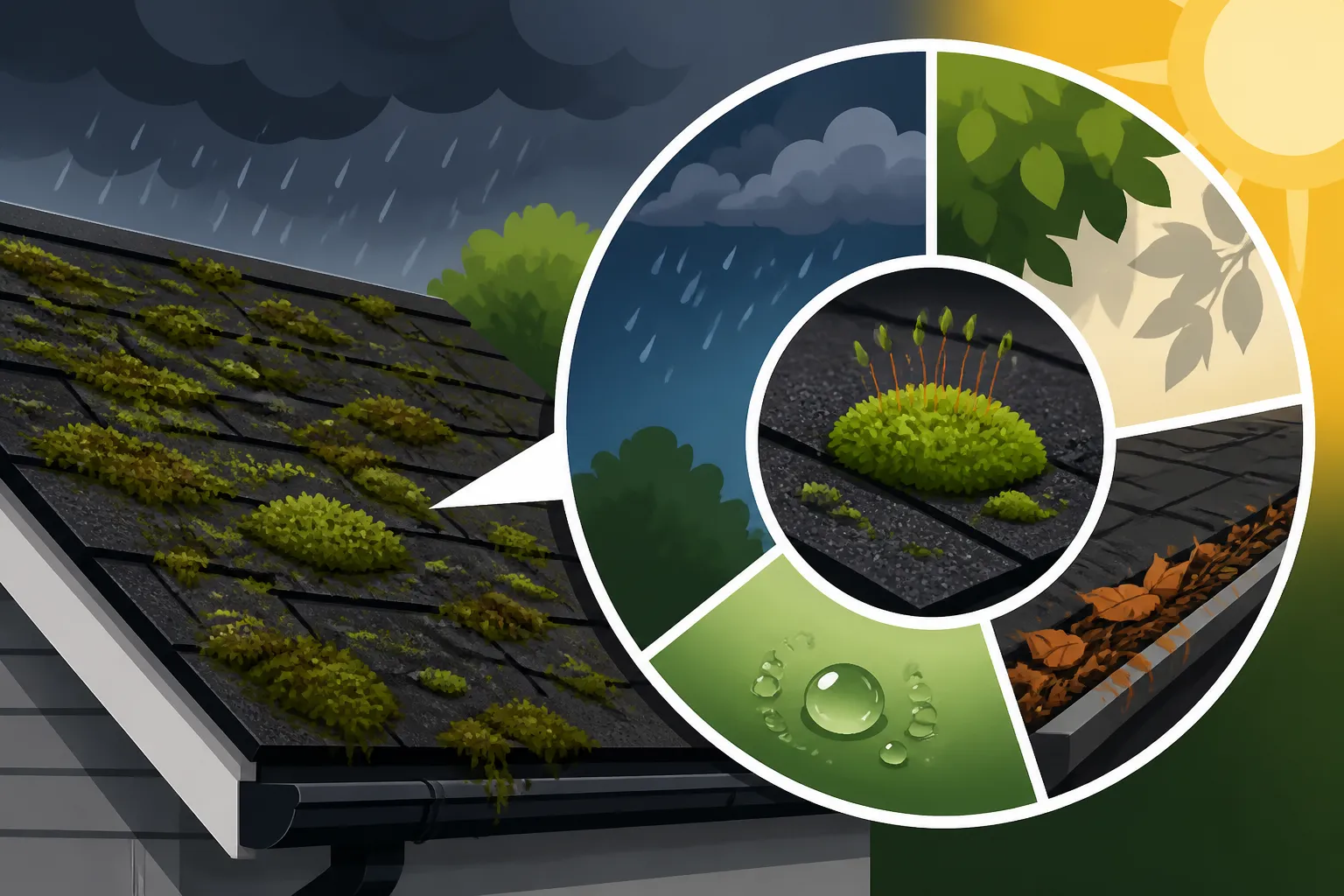
Moss doesn't just appear out of nowhere; it requires specific environmental conditions to thrive. Think of your roof as a unique ecosystem, and when certain factors align, it becomes the perfect nursery for these green invaders. Understanding these primary culprits is the first step in tackling the problem head-on.
Shade and Moisture Retention
One of the biggest factors in moss growth is prolonged shade. If your home is nestled among mature trees, or if certain slopes of your roof consistently face north, they're likely to stay damp for much longer after rain or morning dew. Without direct sunlight to dry things out, moisture has nowhere to go. This constant dampness creates an ideal habitat for moss spores, which are practically everywhere in the air, just waiting for the right conditions to germinate and flourish. It’s like leaving a sponge wet on the counter – eventually, things start to grow. The tree canopy not only blocks sunlight but can also reduce airflow, further inhibiting drying. In areas like the Pacific Northwest or parts of the Northeast, where humidity levels are naturally higher, this problem can be exacerbated, even on roofs that get some sun exposure.
Accumulation of Organic Debris
Moss isn't particular about what it eats, but it certainly appreciates a good meal. Your roof, unfortunately, can provide a buffet. Over time, leaves, pine needles, twigs, and even airborne dirt and pollen can settle on your roof's surface. This organic debris doesn't just look untidy; it acts like a compost pile, breaking down and creating a rich, nutrient-dense layer that moss absolutely loves. It also traps moisture, holding it against your shingles even longer than simple shade alone would. Think of a thick mat of pine needles in a roof valley – that's a perfect storm for moss. If your gutters are frequently clogged, they can overflow, sending cascades of water and debris directly onto your roof edges, creating another prime spot for moss and algae. Keeping your gutters clear is crucial for proper drainage and preventing this buildup.
Climate and Humidity
While localized factors like shade and debris are huge, the overall climate where you live plays a significant role in how prevalent roof moss is. Regions with consistently high humidity, frequent rainfall, or mild winters that don't allow for long periods of dry, freezing weather are prime territories for moss. For example, homeowners in the Southeast, with its humid subtropical climate, or the Pacific Northwest, known for its rainy season, often battle moss and algae more frequently than those in arid regions. The general atmospheric moisture in these areas contributes to longer drying times for roof surfaces, even those exposed to sun. When winter temperatures hover just above freezing, it means fewer freeze-thaw cycles that might otherwise inhibit moss growth by physically disrupting its structure.
How Moss Damages Your Asphalt Roof
It’s easy to dismiss a little bit of moss as a cosmetic issue, a charming, rustic touch to your home. But let me tell you, moss is far more than just surface deep; it's a persistent little pest that can cause real, long-term damage to your asphalt shingle roof. Ignoring it can shorten your roof's lifespan significantly and lead to costly repairs down the road. You might be surprised to learn that moss isn't just sitting on your shingles – it's actively working against them.
Moisture Trapping and Wood Rot
This is perhaps the most insidious way moss causes damage. Its dense, sponge-like structure is incredibly efficient at retaining moisture. When moss takes root and grows, it essentially creates a persistent wet blanket on your shingles. After a rain, while the rest of your roof might dry out, the areas beneath the moss will remain saturated for days, even weeks. This constant moisture is detrimental to asphalt shingles because it can penetrate the shingle layers, breaking down their waterproof integrity over time. Even worse, if this moisture works its way through the shingles, it can reach the underlying roof decking – typically plywood or OSB. Once that wood gets wet and stays wet, you're inviting the silent destroyer: wood rot. Rotted decking loses its structural integrity, becoming soft and weak, which can eventually lead to a sagging roof or even a collapse if left unaddressed. This level of damage often means you're looking at a full roof decking replacement cost in addition to new shingles.
Granule Loss and Shingle Degradation
Asphalt shingles are covered with tiny ceramic granules that act as the roof's primary defense against UV rays from the sun, which can otherwise cause the asphalt to degrade and become brittle. These granules also provide color and help shed water. Moss, as it grows and spreads, uses tiny root-like structures called rhizoids to anchor itself to the shingle surface. In doing so, it physically dislodges and lifts these protective granules. If you’ve ever looked closely at a moss-covered shingle and seen bald spots or piles of gritty material in your gutters, you’re witnessing granule loss in action. Without these granules, the asphalt below is left exposed to the sun's harsh UV radiation, accelerating the aging process of the shingle. It makes the shingles brittle, more prone to cracking, and drastically reduces their effective lifespan. You can learn more about what causes granule loss on a roof by checking out our other resources.
Lifted Shingles and Water Infiltration
Beyond granule loss, the sheer physical presence and growth of moss can lift and separate the individual shingles. Asphalt shingles are designed to lie flat and seal to each other, forming a continuous, waterproof barrier. When moss grows underneath the edges of shingles, or in the spaces between them, its expanding mass can break these critical seals. Once the seals are compromised, your roof's defense against water is severely weakened. Strong winds can then more easily get underneath the lifted shingles, tearing them off entirely. More commonly, rain and melting snow can seep under the unsealed or lifted shingles, rather than flowing off the roof. This allows water directly onto your underlayment and potentially into your attic or home, leading to leaks, water stains on ceilings, and further structural damage. This kind of persistent water infiltration is a major sign you need a new roof, especially if it's widespread.
Identifying and Addressing Moss Growth
Catching moss early and knowing how to handle it safely can save you a lot of headache and expense down the line. It's not just about aesthetics; it's about preserving the integrity of your roof.
Visual Inspection and Early Detection
The best defense is often a good offense, and that means keeping a watchful eye on your roof. You don't necessarily need to climb up there yourself, which can be dangerous. From the ground, you can often spot early signs of moss growth, especially on the shaded or north-facing sides of your roof. Look for small patches of green, velvety growth, often starting in crevices, around vents, or in valleys where moisture tends to accumulate. Sometimes, you might first notice dark streaks, which are often algae (moss's close cousin), but moss typically follows. If you have binoculars, a closer look from a safe vantage point can be helpful. Pay attention after it rains; if certain areas of your roof stay dark and wet much longer than others, those are prime candidates for moss growth. Early detection means you can address the problem while it’s still small and manageable, before it has a chance to spread and cause significant damage, potentially avoiding a full roof replacement. Many professionals offer a comprehensive roof damage assessment: a homeowner's guide to help you understand what they look for.
Safe Removal Methods
When it comes to removing moss, gentleness is key. Your asphalt shingles are tough, but they aren't indestructible.
- Gentle Brushing: For small, superficial patches of moss, a soft-bristled brush or even a leaf blower can sometimes be enough to dislodge it. Always brush down the roof, in the direction of the shingle overlap, to avoid lifting shingle edges and damaging the sealant. Never use a wire brush or anything abrasive, as this will tear off those crucial granules.
- Approved Cleaning Solutions: There are many commercial moss and algae removers available. Look for products specifically designed for asphalt roofs that are biodegradable and eco-friendly. These often contain ingredients like potassium salts of fatty acids or oxygen bleach. Always follow the manufacturer's instructions carefully. Typically, you apply the solution, let it sit for a specified time (often a few minutes to an hour), and then rinse it gently with a garden hose. Avoid high-pressure washing at all costs, as this will blast off granules, compromise shingle seals, and force water underneath the shingles. Pressure washing is a surefire way to shorten your roof's life and void your warranty.
- DIY Don'ts: Resist the urge to use harsh chemicals like chlorine bleach or power washers. While they might seem like quick fixes, they can cause irreparable harm to your shingles, discolor them, and potentially harm your landscaping. Also, walking on a mossy, damp roof is incredibly slippery and dangerous. If you're not comfortable or able to safely access your roof, it's always best to call a professional.
Preventive Measures for Long-Term Control
Once you've cleaned the moss, the goal is to keep it from coming back. This is where long-term prevention really shines.
- Trim Overhanging Branches: This is often the most effective step. Prune any tree branches that hang over your roof to reduce shade and allow more sunlight to reach the surface. This also cuts down on the amount of organic debris falling onto your roof.
- Keep Gutters Clean: Clogged gutters cause water to back up and overflow, often directly onto your roof edges. Regularly clean your gutters, especially in the fall, to ensure proper drainage and prevent water and debris from lingering on your roof.
- Install Zinc or Copper Strips: This is a classic, tried-and-true method. When rain washes over zinc or copper strips installed along your roof ridge, tiny amounts of metal ions are released. These ions are toxic to moss and algae, preventing their growth on the roofing surface below the strip. While not a silver bullet for the entire roof, they can be remarkably effective at keeping the upper sections clear. You might need a roofer for proper installation, ensuring the strips are integrated correctly and safely.
- Consider Moss-Resistant Shingles: If you're due for a roof replacement, consider investing in algae-resistant or "AR" shingles, often infused with copper granules. Brands like GAF and Owens Corning offer excellent options that are specifically designed to inhibit algae and moss growth for decades. This might be a wise investment if you live in a perpetually damp climate. Remember, a new roof is a big investment, and understanding your roof replacement ROI explained can help you make smart choices.
Table: Common Moss Causes & Corresponding Solutions
| Moss Cause | Description | Long-Term Solution | Immediate Action (if present) |
|---|---|---|---|
| Excessive Shade | Trees or house orientation keeps roof constantly damp. | Trim overhanging branches; consider moss-resistant shingles. | Gentle brushing; approved moss remover. |
| Organic Debris | Leaves, pine needles, dirt provide nutrients and trap moisture. | Regular roof and gutter cleaning; install leaf guards on gutters. | Manual debris removal; approved moss remover. |
| High Humidity/Rain | Regional climate promotes consistent dampness and moss growth. | Install zinc/copper strips; choose moss-resistant shingles for next replacement. | Gentle brushing; approved moss remover. |
| Poor Air Circulation | Dense landscaping or close buildings prevent roof from drying. | Strategic landscaping changes; ensure proper attic ventilation. | Increase airflow if possible; approved moss remover. |
| Aging Shingles | Granule loss and weakened integrity make old shingles more susceptible. | Plan for a roof replacement with modern, resistant shingles. | Regular maintenance, but replacement is the ultimate solution. |
When to Consider Professional Intervention for Moss
While it’s tempting to handle roof issues yourself to save a buck, some problems, especially widespread moss growth, are best left to the pros. Your safety and the integrity of your home are too important to risk. Knowing when to call in the experts can prevent further damage and ensure a lasting solution.
Assessing the Extent of the Problem
A small patch of moss on an easily accessible part of your roof might be a DIY job for a homeowner comfortable and safe on a ladder. However, if you're looking at moss covering large sections of your roof, if it's thick and matted, or if it appears to be lifting shingles or causing visible damage, it's time to bring in a professional. Professionals have the experience to assess the underlying condition of your roof, checking not just for the moss itself but for any associated damage like granule loss, deteriorated flashing, or even early signs of wood rot in the decking. They can also tell you if the moss growth is indicative of a deeper problem, like poor roof ventilation or an aging roof that is nearing the end of its lifespan. For instance, if you're seeing significant moss on an older roof, a professional might recommend an inspection to determine if it's time to start thinking about a full How a Roof Replacement Works: The Full Process instead of just cleaning.
The Dangers of DIY Roof Cleaning
Trying to tackle extensive moss removal yourself can be incredibly dangerous and potentially more damaging to your roof than the moss itself. First and foremost, safety on a roof cannot be overstated. Falls from ladders or roofs are a leading cause of home accident injuries and fatalities. Mossy surfaces are notoriously slippery, especially when wet, making even walking on them hazardous.
Beyond personal safety, there's the risk of damaging your roof. Using the wrong cleaning methods, like a pressure washer, can strip away protective granules, drive water under shingles, and even loosen fasteners, leading to leaks and voiding your shingle warranty. Walking improperly on the roof can also crack shingles or damage fragile components like vents. A professional, on the other hand, has the right safety equipment, training, and specialized tools to clean your roof effectively and safely without causing collateral damage. They understand the nuances of various roofing materials and the best practices for cleaning without harm. This is where resources like Modernize can help connect you with vetted professionals.
Choosing a Qualified Roofing Contractor
If you decide to hire a professional, it's crucial to choose the right one. Don't just go with the first name you find. Start by looking for local roofing contractors with good reputations. Check online reviews on platforms like Google, Yelp, or the Better Business Bureau. Ask for recommendations from friends, family, or neighbors who have had similar work done. A reputable contractor should be licensed and insured – always ask for proof of both. This protects you in case of accidents or property damage during the job.
When discussing the moss removal, ask about their methods. A good contractor will explain their process, including what cleaning solutions they use, how they protect your landscaping, and what steps they take to prevent future growth (like installing zinc strips). Be wary of anyone who suggests pressure washing as a primary method for asphalt shingles. Also, get multiple estimates, so you can compare pricing and proposed solutions. Don't be afraid to ask questions about their experience with moss removal specifically. The goal is to find someone reliable who will do the job safely and effectively, giving your roof a fresh start and extending its life. Finding a reputable roofer is key to ensuring a quality outcome. You want to make sure you know what to ask a roofing contractor before hiring to make an informed decision.
Disclaimer
Please remember that this article is intended for informational purposes only. While we strive to provide accurate and helpful advice, roofing work can be dangerous and complex. Always consult with a qualified, licensed, and insured roofing professional before undertaking any significant repairs or replacements to ensure safety and compliance with local building codes.