How Shingles Protect Against Water
Asphalt shingles and roofing layers protect homes from water damage through specialized design, overlapping patterns, and thermal seals.
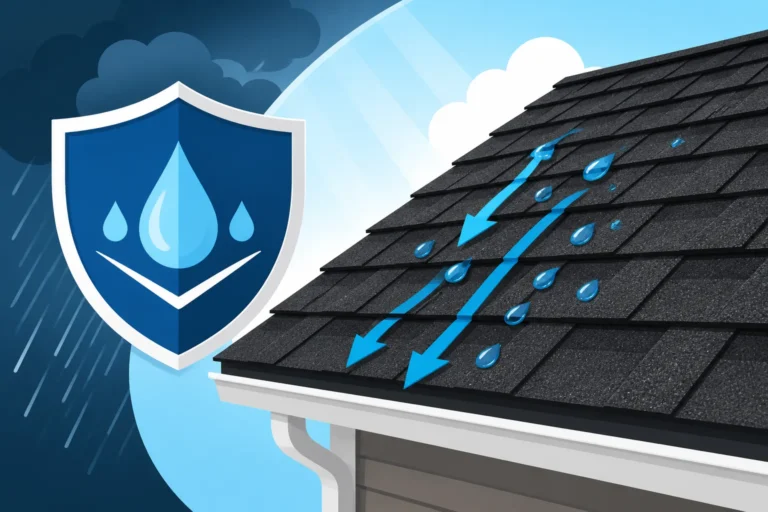
Asphalt shingles and roofing layers protect homes from water damage through specialized design, overlapping patterns, and thermal seals.
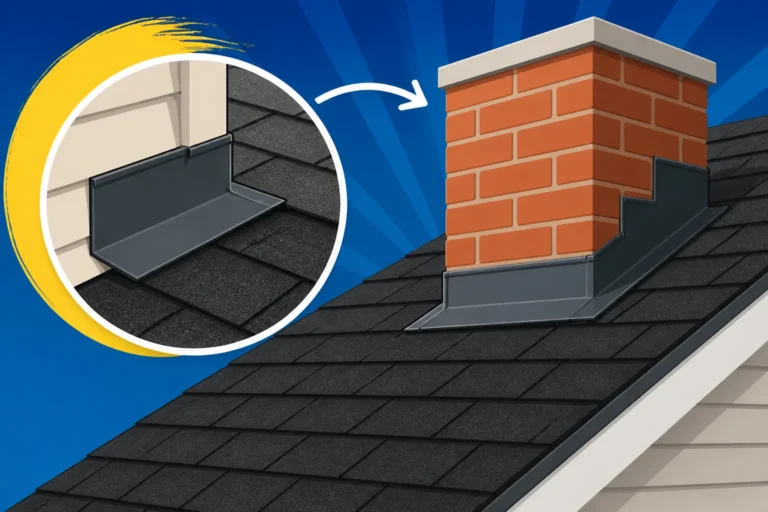
Roof flashing materials and shapes like step flashing, valley flashing, and drip edge direct water away from vulnerable areas.
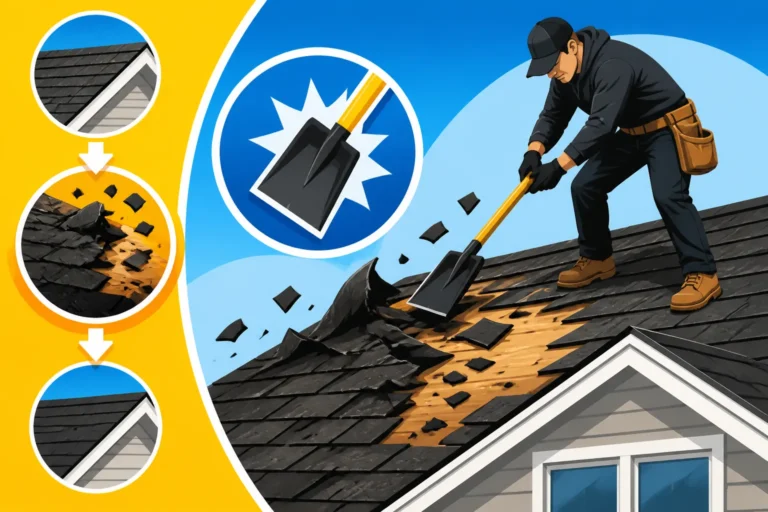
Roof tear-off steps, decking inspections, property preparations, and debris management explained for asphalt shingle replacement.

Roof replacement duration depends on home size, shingle type, weather delays, and whether rotted wood decking requires repair work.
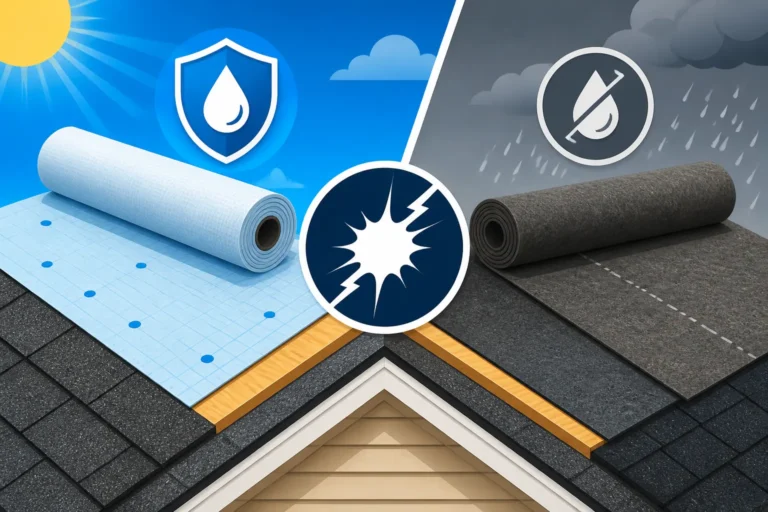
Roofing underlayment protects homes from water damage, comparing traditional asphalt-saturated felt against modern synthetic alternatives for roofs.
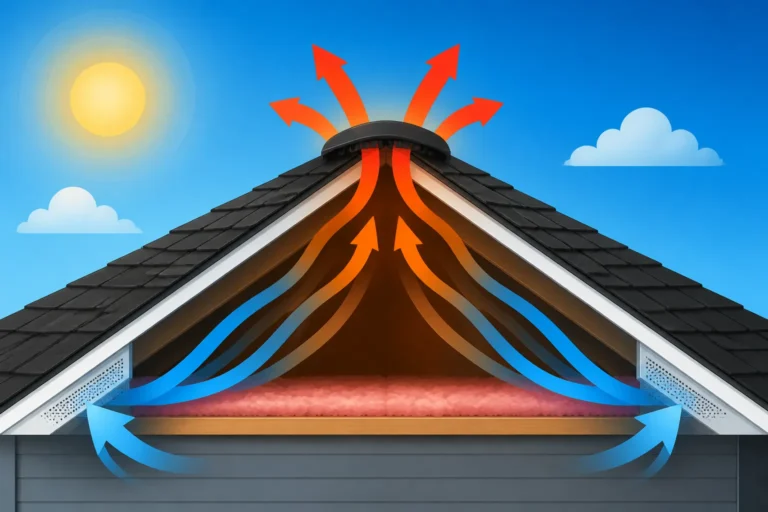
Roof ventilation uses balanced intake and exhaust systems to prevent attic heat buildup, moisture damage, and premature shingle decay.
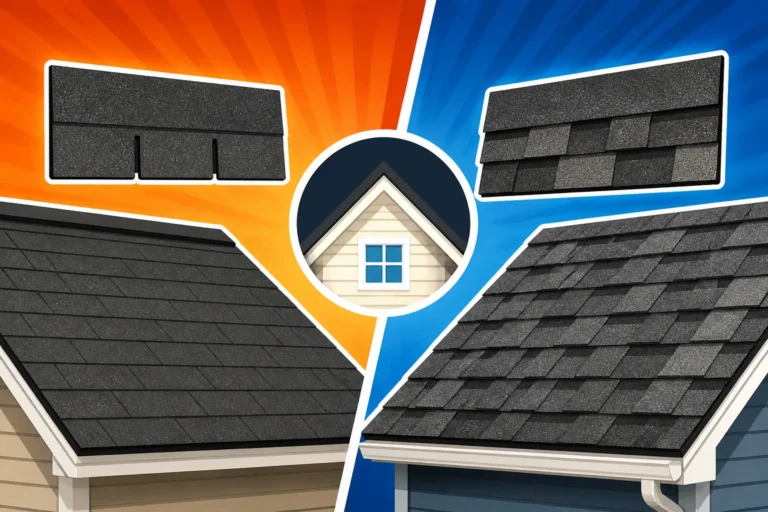
Asphalt shingles provide a detailed comparison of 3-tab and architectural designs, explaining their costs, durability, and appearance.
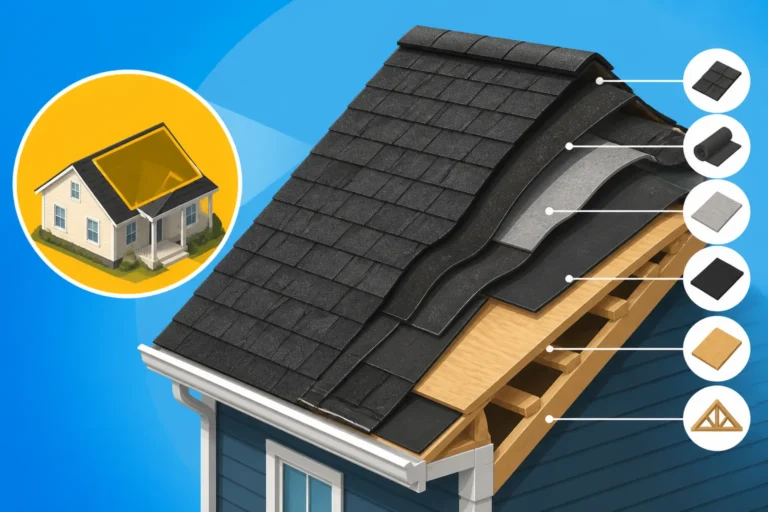
Asphalt shingle roof anatomy includes plywood decking, wooden rafters, and protective ice and water shields beneath the shingles.
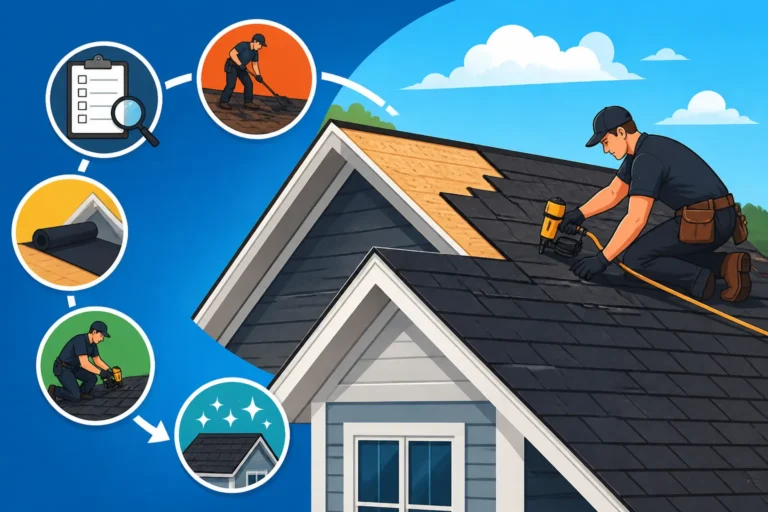
Roof replacement steps, storm damage signs, asphalt shingle lifespans, and contractor vetting tips are explained clearly for homeowners.
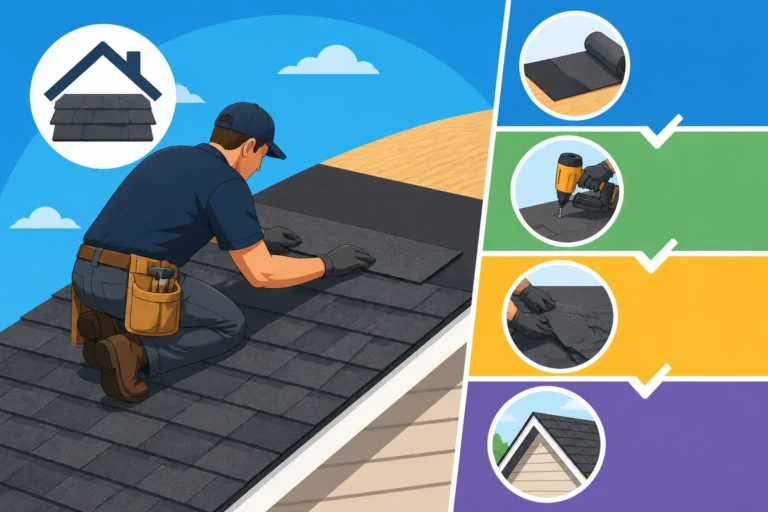
Asphalt shingle installation involves property protection, old roof tear-off, decking repairs, underlayment placement, flashing, and shingle application steps.