How Roofers Protect Your Yard During a Job
One of the biggest worries homeowners have when they need a new roof isn't just the cost or the duration of the project, but the thought of their beautifully maintained yard becoming a construction zone casualty. Nobody wants their prized rose bushes crushed, their pristine lawn littered with nails, or their driveway stained with tar. This guide aims to ease those fears by detailing the meticulous steps professional roofers take to protect your home and landscaping throughout the entire roofing process.
The Initial Consultation and Pre-Job Assessment
Before a single shingle is removed, a truly professional roofing company will invest time in understanding your property and planning for its protection. This isn't just a courtesy; it's a critical part of a successful and stress-free roof replacement.
Identifying Vulnerable Areas
During the initial site visit, a good contractor will do more than just measure your roof's pitch and square footage. They'll walk around your entire property with you, acting almost like a detective looking for potential hazards. This includes noting down sensitive landscaping like mature shrubs, flowerbeds, delicate trees, and vegetable gardens. They'll also pay close attention to exterior elements such as air conditioning units, outdoor lighting fixtures, valuable patio furniture, grills, children's play equipment, and even decorative items that might be easily damaged by falling debris.
It's also a time to discuss the path the crew will take to access the roof and where materials and equipment, like a dumpster, will be placed. For instance, if you have a narrow side yard with prize-winning hydrangeas, they'll need a specific plan to navigate that space without causing harm. They'll pinpoint areas where falling debris is most likely to land and anticipate any potential collateral damage. This proactive identification is the first line of defense in keeping your property safe.
Discussing Homeowner Concerns and Expectations
This initial walkthrough is your chance to voice any specific concerns you have. Don't be shy! If you've just planted a new sapling or have a sentimental garden gnome, let them know. A reputable roofing company, like those found through services such as Modernize, understands that your home is your sanctuary and will listen intently to your priorities. They should also clearly communicate their protection plan, explaining how they intend to safeguard these vulnerable areas. This discussion ensures that both parties are on the same page regarding expectations for property protection and the final clean-up.
This is also a great time to ask about their general process. For example, understanding what happens during a roof tear-off can help you anticipate the volume of debris and why certain protective measures are necessary. A detailed estimate should ideally include line items or descriptions related to property protection and cleanup, giving you peace of mind that it's part of the plan, not an afterthought.
Comprehensive Protection Strategies for Your Property
Once the vulnerable areas are identified and discussed, the real work of setting up protection begins. This involves a multi-faceted approach to shield every part of your property that could be affected by the roofing project.
Ground Protection
The ground immediately surrounding your home takes the brunt of the impact during a roof replacement. Old shingles, nails, underlayment, and other debris will inevitably come tumbling down. This is where robust ground protection becomes paramount.
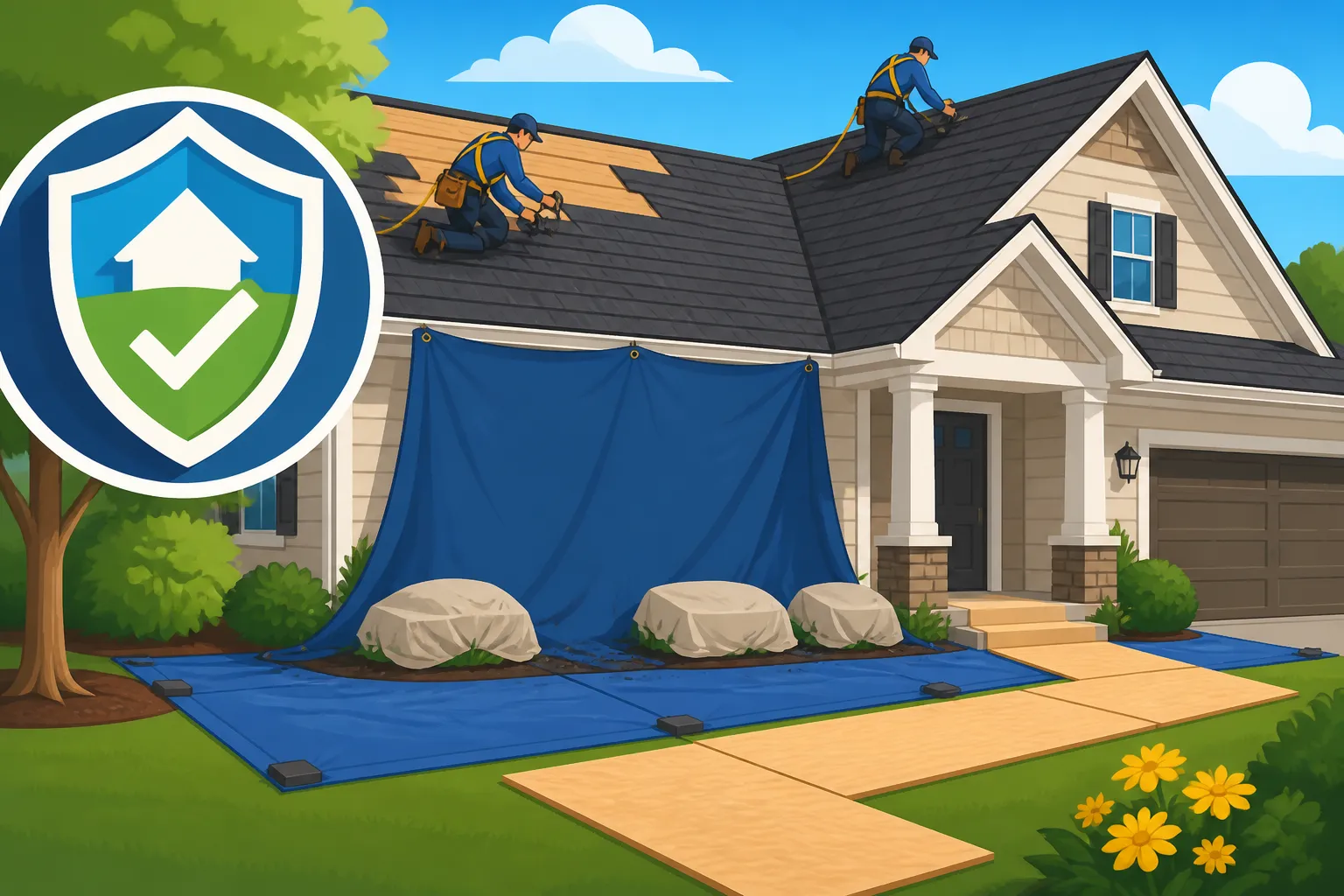
Professional roofers will lay down heavy-duty tarps, often reinforced and waterproof, directly beneath the eaves and around the entire perimeter of the house. These aren't your flimsy hardware store tarps; they're industrial-grade covers designed to catch large volumes of sharp, heavy material without tearing. In high-traffic or particularly sensitive areas, like walkways or patio spaces, they might even place plywood sheets over the tarps. This provides an extra layer of defense against punctures and helps distribute the weight, preventing damage to the underlying ground or paving. The goal is to create a soft landing zone for falling debris and to facilitate easy collection, ensuring that your lawn and garden remain untouched by the construction mess.
Garden and Landscaping Safeguards
Protecting your precious plants requires a more delicate touch than simply covering the ground. For smaller plants and flowerbeds, the same heavy-duty tarps are used, carefully draped over them and secured to minimize stress on the foliage. For larger shrubs or young trees, roofers might use additional tarps or even lightweight netting to create a protective canopy, shielding branches from direct impact. Sometimes, temporary fencing is erected around particularly delicate or valuable garden areas to create a buffer zone, preventing accidental trampling by workers or the mishandling of materials.
If you have delicate lawn ornaments, garden lights, or even a bird bath, these should be discussed during the initial walk-through. Often, the roofing crew will carefully move these items to a safe location out of the work zone, store them temporarily, and then replace them once the job is complete. This attention to detail shows a commitment to respecting your property beyond just the structural elements of your home.
Driveway and Pathway Care
Your driveway and pathways are essential for crew access and material delivery, making them highly susceptible to damage. From the weight of a dumpster to falling debris, these surfaces need special consideration.
Roofers will often place large plywood sheets directly on your driveway, especially where a heavy roll-off dumpster will be situated. This distributes the weight and prevents tire marks, scratches, or cracks from the heavy bin. Furthermore, the path that workers frequently use to transport materials or where debris is funneled into a chute will also be protected with plywood or extra thick tarps. This safeguards against scrapes, stains from asphalt residue, or chips from falling tools or materials. When discussing your roofing estimate, ensure that proper driveway protection is part of the plan, especially if you have an asphalt driveway that is more prone to marking.
Protecting Walls, Windows, and Siding
It's not just your yard that needs protection; the vertical surfaces of your home are also at risk. Debris can bounce, roll, or be flung sideways, potentially marring siding, breaking windows, or damaging exterior light fixtures.
To combat this, roofers often hang vertical tarps or robust netting from the eaves down to the ground, especially on sides of the house where debris is expected to fall heavily or where delicate features like large windows or fragile siding (such as stucco or vinyl) are present. This creates a flexible barrier that deflects falling materials away from the walls. Windows, particularly those close to the roofline or directly below tear-off zones, might get extra individual coverings, sometimes even plywood sheets cut to fit, especially if the roof has a steep pitch where debris might pick up more speed. Protecting these elements prevents costly repairs and keeps your home's exterior looking its best.
During the Roofing Process: Minimizing Ongoing Impact
The initial setup is crucial, but continuous vigilance and proactive measures throughout the actual roofing work are just as important. A good contractor ensures that property protection isn't a one-time setup but an ongoing commitment.
Organized Debris Management
Keeping the work area tidy and managing debris effectively is key to minimizing impact on your yard. Instead of just letting old shingles pile up haphazardly, professional crews use various methods to control the flow of waste. You'll often see debris chutes set up, extending from the roofline directly into a dumpster or a designated collection area. This directs the material efficiently, reducing scatter and the chances of stray nails or shingle pieces ending up in your flowerbeds.
Regular checks are performed throughout the day to ensure tarps are still in place and properly secured, especially if wind picks up. Crews will often sweep or rake debris into central piles on the tarps periodically, making it easier to load into the dumpster. This systematic approach, rather than waiting until the very end, helps prevent an overwhelming mess and keeps your property safer and cleaner. This also ties into managing the overall Cost of Roof Tear-Off and Disposal.
Controlling Dust and Runoff
Roofing work, especially a tear-off, can generate a significant amount of dust from old shingle granules and underlying debris. While it's impossible to eliminate all dust, responsible roofers take steps to mitigate its spread. On dry, windy days, they might lightly mist areas with water if appropriate, or focus on containing debris quickly. Runoff, particularly if there's unexpected rain during the project, is also a consideration. Crews will typically cover exposed roof decking or partially installed areas with tarps overnight or during breaks to prevent water damage to the exposed structure and to minimize dirty water runoff that could stain siding or sidewalks.
This ongoing management ensures that your home isn't just protected from large debris, but also from the finer elements of construction. When considering different companies, asking about their approach to managing dust and unexpected weather events during the installation process can be one of the Questions to Ask a Roofing Contractor Before Hiring.
Daily Clean-Up Routines
A hallmark of a truly professional roofing company is their commitment to daily cleanup. It's not just about tidiness; it's about safety and respect for your property. At the end of each workday, the crew should dedicate time to thoroughly clean the immediate work area. This involves sweeping up loose debris from tarps, gathering any tools, and conducting a preliminary magnetic sweep for nails around the perimeter of the house.
All collected debris is then loaded into the dumpster or removed from the site. This daily routine significantly reduces the risk of someone stepping on a nail or tripping over stray materials. It also helps manage dust and ensures that your property is left in a reasonably clean and safe condition, even if the job isn't fully completed. This level of diligence can tell you a lot about the contractor's overall professionalism and how they manage the entire How a Roof Replacement Works: The Full Process.
The Post-Job Clean-Up: Leaving Your Home Pristine
The installation might be complete, but a truly professional roofing job isn't finished until the cleanup is impeccable. This final phase is where all the previous protection efforts culminate, ensuring your property is left in the same, if not better, condition than before the project began.
The Magnetic Sweep for Nails and Staples
This is perhaps the most critical step in protecting your yard and ensuring safety after a roof replacement. Nails and staples are notorious for finding their way into grass, flowerbeds, and driveways, posing a significant hazard to people, pets, and vehicle tires.
Professional roofers use powerful magnetic rollers, often referred to as "nail magnets," to meticulously sweep every square inch of your lawn, driveway, shrub beds, and surrounding areas. This process isn't done quickly; it's a slow, deliberate sweep, often performed multiple times, moving in different directions, to pick up as many errant fasteners as possible. They'll check under bushes, along fence lines, and any other spot where a nail might have rolled or bounced. Some even use handheld magnets for tighter spaces. While it's nearly impossible to guarantee 100% nail removal, a diligent magnetic sweep significantly reduces the risk. This thoroughness is a key indicator of a quality contractor who cares about your long-term safety.
Final Inspection and Debris Removal
After the magnetic sweep, the crew will conduct a comprehensive visual inspection of your entire property. All temporary ground coverings, such as tarps and plywood, are carefully rolled up, shaken out to remove any trapped debris, and then removed from your property. Any remaining small pieces of shingle, underlayment fragments, or other construction waste are picked up by hand. The dumpster is then loaded up and hauled away, leaving no trace of the construction work behind.
This final visual check includes examining gutters for any debris, wiping down exterior surfaces that might have accumulated dust, and ensuring all areas that were protected are now clear and clean. It’s an extensive process, much more than just a quick glance. Many homeowners appreciate knowing What to Expect on Roof Installation Day, and this clean-up phase is an essential part of it.
Addressing Any Accidental Damage
Even with the most careful planning and execution, accidents can sometimes happen. A small branch might break, a decorative item might get scratched, or a plant might sustain minor damage. A reputable roofing company, particularly those that prioritize customer satisfaction and are listed on platforms like Modernize, will have a clear protocol for addressing these situations.
They should encourage you to do a final walk-around with the crew foreman or project manager once the cleanup is complete. This is your opportunity to point out anything you believe was damaged during the process. Honest contractors will acknowledge and take responsibility for any verifiable damage, offering to repair, replace, or compensate for it. This commitment to accountability is a crucial element when deciding How to Choose a Roofing Contractor and contributes to a positive homeowner experience, even if minor issues arise. It’s part of the comprehensive service that should be detailed in What a Roofing Estimate Should Include.
Ultimately, a professional roofing job extends far beyond just installing new shingles. It encompasses a holistic approach to property management and protection, ensuring that your biggest investment – your home – is treated with the utmost care from start to finish. When you’re preparing for a new roof, remember to discuss these protective measures with your chosen contractor and understand their commitment to safeguarding your yard and property. A little upfront communication goes a long way in preventing headaches down the line, ensuring that when the last shingle is laid, your yard is as beautiful as your new roof.
Disclaimer
Please note that this article provides general information and recommendations. Roofing projects can vary significantly based on location, specific property conditions, and local building codes. Always consult with a qualified, licensed, and insured roofing professional for advice tailored to your specific situation and to ensure compliance with all applicable regulations.