Roofing Permit Cost in Illinois
When you're facing a roof replacement, the sheer number of things to worry about can feel overwhelming. Beyond the material costs, labor, and the actual upheaval of the job itself, there's always that nagging question: "What about permits?" Understanding the ins and outs of roofing permit costs in Illinois, from Chicago to the smaller towns, can be a real headache, especially since the numbers vary wildly. This guide is here to walk you through the complexities, help you anticipate expenses, and make sure you're fully prepared for the permit process so you can avoid costly surprises and ensure your project is up to code.
Why Roofing Permits are Non-Negotiable in Illinois
It’s easy to look at a roofing permit as just another bureaucratic hurdle, another line item on your budget, and frankly, another annoyance. Many homeowners think, "It's just shingles; what could go wrong?" But the truth is, a roofing permit in Illinois isn't just a piece of paper; it's a critical component that ensures your roofing project is safe, compliant with local building codes, and protects your long-term investment.
Ensuring Safety and Structural Integrity
The primary reason for requiring a roofing permit is safety. Believe it or not, there's a lot more to a roof than just slapping on some shingles. Improper installation can lead to catastrophic failures, especially with Illinois weather throwing everything from heavy snow loads in winter to severe wind storms and hail in the spring and summer. When you get a permit, you're essentially getting an assurance that licensed professionals, usually a city or county building inspector, will check the work at various stages. They're looking to make sure the structural integrity of your roof deck is sound, that the underlayment is installed correctly, and that the shingles are fastened according to manufacturer specifications and local wind uplift requirements. This isn't just about protecting your house; it's about protecting you and your family. For instance, if your roof deck has rotted decking that goes unnoticed and isn't replaced, it could compromise the entire system, leading to dangerous collapses or widespread leaks down the line. A permit-driven inspection helps catch these hidden issues before they become major problems.
Code Compliance and Future Home Value
Beyond immediate safety, permits are about code compliance. Every city, village, and county in Illinois has specific building codes designed to ensure construction meets certain standards. These codes cover everything from the type of materials used to how they're installed, ventilation requirements, and even how many layers of shingles are legal. If you skip the permit, you're essentially bypassing these vital checks. This might seem like a shortcut now, but it can create huge headaches in the future. Imagine trying to sell your home a few years down the road. A prospective buyer's inspector will likely ask for proof of permits for any major work, especially a roof replacement. If you can't provide it, it can raise red flags, delay the sale, or even force you to pay for a costly re-inspection and potential rework just to get it up to code. Furthermore, insurance companies might balk at covering damages to an unpermitted roof, leaving you on the hook for repairs after a storm. Understanding your local roofing building codes is paramount.
Avoiding Penalties and Insurance Headaches
The consequences of skipping a permit can be severe. Municipalities in Illinois, like most places, have fines for unpermitted work. These fines can range from a few hundred dollars to thousands, often increasing with the severity or duration of the non-compliance. In some cases, you might even be ordered to tear off the new roof and re-do it with a permit, doubling your expenses and time. More subtly, an unpermitted roof could void your homeowner's insurance policy for roof-related damages. While most policies cover storm damage, if your roof wasn't installed according to code or without proper permits, the insurer might argue that the damage was due to faulty workmanship rather than an insurable event. This is why knowing whether insurance covers roof replacement is so important, and permits are a key part of that puzzle. It's a risk that's simply not worth taking when you consider the relatively minor cost of the permit itself compared to these potential liabilities.
Decoding the Factors Influencing Illinois Roofing Permit Costs
The cost of a roofing permit in Illinois isn't a one-size-fits-all number. It's a mosaic of variables, each contributing to the final fee you'll see. Understanding these factors is key to getting an accurate estimate and budgeting effectively for your project.
Geographical Location Within Illinois
This is perhaps the biggest factor in determining your permit cost. Illinois is a diverse state, from the sprawling metropolis of Chicago to the quiet, rural communities downstate. Each municipality, be it a city, village, or even a county in unincorporated areas, sets its own permit fee schedule.
For example, a roofing permit in the City of Chicago, with its denser population, complex infrastructure, and higher administrative overhead, will almost certainly be significantly more expensive than a permit for a similar project in a smaller town like Normal or Carbondale. Chicago's Department of Buildings has a specific fee structure, often based on the valuation of the construction project, which can push costs into the hundreds, if not over a thousand, dollars for a substantial residential roof replacement. They also have additional fees for things like electrical work if vent fans are installed, or if the project requires special reviews.
Conversely, a homeowner in a place like Peoria might find their permit fee is a more modest flat rate or a lower percentage of the project cost. Counties also have their own rules. For instance, residents in unincorporated Cook County would deal with the Cook County Department of Building and Zoning, which has a different fee schedule than individual municipalities within the county. Always check the specific building department website for your exact address.
Project Scope and Valuation
The sheer scale and nature of your roofing project play a significant role. A minor roof repair, like replacing a few missing shingles, typically doesn't require a permit at all, or might fall under a very low-cost "minor repair" permit. However, a full roof replacement – which involves tearing off the old roof and installing a new one – will always require a permit.
The valuation of your project is often the core of the permit fee calculation. Many Illinois municipalities base their permit fees on a sliding scale, where the fee is a percentage of the total estimated cost of the roofing job. So, a homeowner replacing a roof on a small 1,000 sq ft house with basic 3-tab shingles will pay a lower permit fee than someone installing a luxury architectural shingle roof on a large 3,000 sq ft house. The higher the total project cost, the higher the permit fee. This system ensures that more complex or expensive projects, which often require more administrative oversight and potentially more detailed inspections, contribute proportionally to the building department's resources.
Sometimes, cities also have a minimum permit fee, meaning even if your project's valuation is low, you'll still pay a baseline amount. They might also charge extra for things like multiple layers of shingles if a tear-off isn't done, though many Illinois codes now mandate tear-offs to prevent structural issues and ensure proper installation. This means the cost of roof tear-off and disposal also factors into the overall project valuation for permit purposes.
Additional Fees and Inspection Schedules
While the base permit fee is the main cost, it's not always the only one. Depending on your municipality and the specifics of your project, you might encounter additional charges:
- Plan Review Fees: If your roofing project is unusually complex or involves structural changes, it might require a more in-depth review by a plans examiner, incurring an extra fee.
- Technology Surcharges: Some municipalities add a small fee to cover the costs of their online permit submission systems.
- Expedited Review Fees: In rare cases, if you need a permit rushed for an emergency repair, some departments offer expedited services for an additional charge.
- Re-inspection Fees: This is an important one to avoid. If your initial inspection fails due to faulty workmanship or code violations, you'll likely incur a re-inspection fee for the inspector to come out again after corrections have been made. This highlights the importance of choosing a reputable roofing contractor who understands and adheres to local codes.
The permit fee often covers a set number of inspections – usually a rough-in or pre-roofing inspection (to check the roof deck condition before new materials go down) and a final inspection. Knowing what a roofing estimate should include will also give you an idea of the project's valuation, which directly impacts permit costs.
Here's a generalized look at how permit costs might vary across Illinois for a typical residential roof replacement project valued at around $15,000 – $25,000:
| Municipality/Area | Estimated Permit Cost Range | Typical Basis of Fee | Notes |
|---|---|---|---|
| City of Chicago | $350 – $1,000+ | Valuation-based | Higher administrative fees, complex system. |
| Suburban Cook County | $200 – $600 | Flat fee or valuation-based | Varies significantly by specific village/city (e.g., Naperville, Evanston). |
| Springfield (Sangamon Co.) | $150 – $400 | Valuation-based, tiered | More moderate, typical for a mid-sized Illinois city. |
| Peoria (Peoria Co.) | $100 – $350 | Valuation-based | Similar to Springfield, generally lower than Chicagoland. |
| Downstate Rural Areas | $50 – $250 | Flat fee or low valuation | Can be very inexpensive, sometimes handled by county. |
Note: These are estimates based on general trends. Actual costs can vary significantly, so always confirm with your specific local building department.
How to Estimate and Secure Your Roofing Permit in Illinois
Getting a handle on your roofing permit cost in Illinois and actually securing the permit doesn't have to be a mystery. While it might seem daunting, there's a clear path to follow, and usually, your chosen roofing contractor will be your best guide and partner in this process.
Researching Local Permit Fees
The first and most crucial step is to figure out what your specific municipality or county requires. Because fees vary so wildly, a general estimate for Illinois won't cut it. You need hyper-local information.
Start by visiting the official website of your city, village, or county building department. For example, if you live in Chicago, you'd navigate to the City of Chicago Department of Buildings. If you're in a suburb like Naperville, you'd look for the "City of Naperville Building Department" or "Community Development Department." On these sites, look for sections titled "Permits," "Building & Zoning," "Fee Schedules," or "Applications." Most jurisdictions provide downloadable forms, checklists, and, critically, their fee schedules. Some even have online permit portals where you can input project details to get an estimated fee.
If the information isn't readily available online, don't hesitate to call the building department directly. They have staff whose job it is to answer these questions for homeowners and contractors. Be prepared to provide your property address, a brief description of the work (e.g., "full asphalt shingle roof replacement on a single-family home"), and the estimated cost of the project. They can often give you a precise permit fee over the phone or direct you to the exact page on their website. This due diligence is critical for accurate budgeting.
The Role of Your Roofing Contractor
In almost all cases, your roofing contractor will be the one responsible for pulling the permit. This is for a few very important reasons. First, they are the licensed professionals doing the work, and the permit application often requires their license number, insurance information, and business details. Second, they are much more familiar with the local permit process, the required documentation, and the building codes. They pull permits frequently, so they know the drill – from filling out the forms correctly to knowing which specific department needs to review the plans.
When you're comparing roofing estimates, always make sure the contractor explicitly states whether the permit cost is included in their overall bid or if it will be a separate charge. Most reputable contractors will include it in their total price, making it one less thing for you to worry about. They'll factor in the estimated cost and handle all the paperwork, scheduling inspections, and ensuring compliance. It’s part of the professional service they provide. When you're asking questions to ask a roofing contractor before hiring, one of the first should be, "Who pulls the permit, and is its cost included in the estimate?" This ensures clarity and prevents hidden costs.
What Documentation and Information You'll Need
Even though your contractor typically handles the legwork, it's good to know what kind of information is usually required for a roofing permit application in Illinois. This helps ensure a smooth process.
- Property Information: Your full address, property identification number (PIN), and sometimes a plat of survey.
- Contractor Information: Name, license number, contact details, and proof of liability and workers' compensation insurance. This is why working with licensed and insured roofers is critical.
- Project Description: A detailed summary of the work, including type of shingles, approximate square footage, whether it's a tear-off or re-roof (if allowed), and the estimated cost of the project.
- Materials: Sometimes, they'll ask for specific material details, especially if you're installing specialized products like cool-roof shingles or impact-resistant shingles.
- Drawings/Plans: For a standard residential roof replacement, elaborate architectural drawings are usually not required. However, a simple sketch of the roof layout, indicating slopes or unusual features, might be helpful or requested.
- Homeowner Signature: Often, the homeowner will need to sign an authorization form allowing the contractor to apply for the permit on their behalf.
Providing all this information accurately and promptly helps avoid delays. A well-prepared contractor, armed with all necessary documentation, can often secure a permit much faster, helping to keep your roof replacement project on schedule. Knowing how long a roof replacement takes can often depend on how quickly a permit is issued and inspections are passed.
Navigating the Permit Process: What Happens After Application
Once the permit application is submitted and the fee is paid, the permit process isn't over. It moves into a crucial phase involving reviews and inspections, which are designed to ensure your new roof meets all safety and code requirements. This can sometimes feel like a waiting game, but understanding each step can help alleviate stress.
Permit Review and Issuance
After your contractor submits the application and all supporting documents, the local building department will begin its review. The timeline for this can vary significantly. In smaller Illinois towns or counties with fewer applications, a permit might be issued within a few days. In larger, busier cities like Chicago or its surrounding suburbs, it could take a week or two, sometimes even longer if their workload is particularly heavy or if the application has missing information.
During this review, staff will check that the proposed work aligns with local zoning ordinances, building codes, and that all required contractor credentials are in order. They might verify the contractor's license with the state and ensure their insurance is current. If anything is unclear or missing, the department will contact your contractor for clarification or additional documentation. This is where having an experienced contractor who knows the ropes can really make a difference, as they can quickly address any issues. Once everything checks out, the permit will be issued. Usually, a physical copy of the permit must be posted prominently at the job site, typically in a window or on a sign, throughout the duration of the roofing work.
The All-Important Roofing Inspections
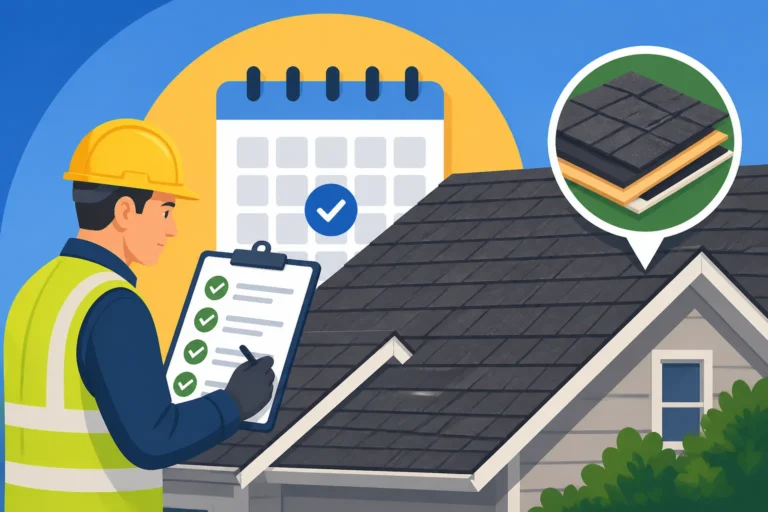
The issuance of the permit isn't the end; it's the green light for construction to begin under supervision. The permit usually mandates at least one, often two, inspections by a municipal building inspector.
-
Pre-Roofing or Mid-Roofing Inspection: This is typically the most critical inspection for a roof replacement. After the old shingles and underlayment have been torn off, but before the new underlayment and shingles are installed, an inspector will come out to examine the roof deck. They're looking for signs of damage, rot, or structural weakness in the plywood or OSB sheeting. They'll also verify that critical components like drip edge and ice and water shield (especially in colder regions of Illinois, which mandate it by code in certain areas) have been properly installed according to specifications. If the roof deck needs repairs, such as replacing rotted sections, this is when it gets addressed. If the deck is deemed unsound, the contractor will need to fix it, and the inspector will re-check it before allowing the new roof system to be installed. This is a crucial checkpoint to ensure the foundation of your new roof is solid. The inspector will confirm that the roof decking replacement cost, if needed, is accounted for and handled correctly.
-
Final Inspection: Once the entire roof replacement is complete, the inspector will return for a final check. They'll look at the overall workmanship, ensuring the shingles are laid correctly, flashing around chimneys, vents, and skylights is properly installed and sealed, and that the ventilation system (ridge vents, soffit vents, etc.) meets code. They'll also check for proper clean-up of debris. If everything meets the local building codes and standards, the inspector will sign off on the permit, officially closing out the project. This final sign-off is your proof that the work was done correctly and legally.
Common Pitfalls and How to Avoid Them
Even with the best contractor, issues can arise during the permit process. Being aware of these common pitfalls can help you navigate them smoothly.
- Delayed Permits: Sometimes, the building department gets overwhelmed, leading to longer-than-expected review times. This is largely out of your or your contractor's control, but it's why starting the permit application early is always a good idea. Don't schedule your roof work for next week if you haven't even applied for the permit yet!
- Failed Inspections: This can happen if the contractor's work doesn't meet code or if hidden issues (like extensive rot) are discovered and not immediately rectified. A failed inspection means delays and potential re-inspection fees. The best way to avoid this is to hire a highly reputable, experienced contractor who is intimately familiar with Illinois's roofing codes and your local municipality's specific requirements. Signs of a bad roofing job often become apparent during inspections.
- Unforeseen Issues: Sometimes, during the tear-off phase, contractors might discover extensive damage to the roof deck, rafters, or structural components that wasn't visible during the initial estimate. While not directly a permit issue, these discoveries often lead to change orders, increasing the overall cost of the project and potentially requiring additional permits if the scope of work significantly expands. Your contractor should communicate any such findings immediately and explain the necessary steps.
By understanding these steps and potential challenges, you can work effectively with your contractor to ensure your Illinois roofing project proceeds smoothly, stays compliant, and results in a safe, durable new roof over your head.
Disclaimer
Please remember that this article provides general information and estimates regarding roofing permit costs and processes in Illinois. Building codes, permit requirements, and fees are subject to change and vary significantly by specific municipality (city, village, or county). It is essential to consult with your local building department directly or work with a licensed, reputable roofing contractor who is familiar with your local regulations to get the most accurate and up-to-date information for your specific project.