Impact-Resistant Shingle Requirements by State
Dealing with the aftermath of a severe hailstorm can be absolutely devastating. One minute your roof looks fine, and the next you're staring at a patchwork of dents, missing granules, and potentially even leaks, wondering how on earth you're going to afford the repairs or a full replacement. It’s a frustrating cycle, especially when unpredictable weather seems to be the new norm. This guide is here to walk you through the world of impact-resistant shingles, specifically focusing on how different states approach their requirements and recommendations, helping you understand what you need to know to protect your home and wallet.
The Growing Need for Impact-Resistant Shingles
In many parts of the country, hail and high winds aren't just occasional nuisances; they're a recurring nightmare for homeowners. It’s no wonder more and more people are looking into options that offer superior protection for their most important asset. Impact-resistant shingles have emerged as a leading solution, designed specifically to stand up to the severe weather that can wreak havoc on a traditional asphalt roof.
Understanding Hail and Wind Damage
Imagine the sound of hail pummeling your roof – it's not just rain, it’s often ice projectiles, sometimes as large as golf balls or even softballs, hitting your home at incredible speeds. The financial and emotional toll this takes on families is immense. A single severe hailstorm can lead to widespread damage, requiring costly repairs or even a full roof replacement, not to mention the stress of dealing with insurance claims and contractors. Beyond the immediate visible damage like missing shingles or indentations, hail can bruise the asphalt shingle's mat, weakening its integrity and significantly shortening its lifespan.
Traditional asphalt shingles, while effective for basic weather protection, simply aren't engineered to withstand the force of large hail. They can crack, puncture, or lose their protective granules, leaving the underlying asphalt exposed to UV rays and accelerating deterioration. Wind, too, plays a cruel role, especially after hail has weakened the shingle's adhesion. Strong gusts can lift and tear off shingles, particularly around edges and vulnerable points, creating open pathways for water intrusion and leading to devastating leaks inside your home. It’s a cascading effect that leaves many homeowners feeling helpless.
Fortunately, modern roofing technology has stepped up to the challenge. Impact-resistant shingles are manufactured with a stronger, more flexible mat, often incorporating special polymers or modified asphalt that allows them to absorb impacts rather than cracking or breaking. This increased flexibility is what sets them apart, giving them a fighting chance against even the most brutal hailstorms.
The Benefits Beyond Durability
While superior durability is the headline feature of impact-resistant shingles, their advantages extend far beyond simply withstanding a storm. For many homeowners, the long-term financial and practical benefits are just as compelling.
One of the most appealing aspects, especially in hail-prone regions, is the potential for significant savings on your homeowners insurance premiums. Insurance companies recognize the reduced risk associated with these tougher roofs. Because you're less likely to file a claim for storm damage, they're often willing to offer substantial discounts, sometimes 10-20% or even more. It’s worth checking with your insurer to see if a Class 4 shingle upgrade can lower your monthly payments, as the savings can really add up over the years and offset some of the initial investment. This often makes the Impact-Resistant Shingle Cost a worthwhile expense in the long run.
Beyond the insurance benefits, installing impact-resistant shingles can genuinely extend the lifespan of your roof. Traditional asphalt shingles might last 20-30 years under ideal conditions, but in areas with frequent severe weather, that lifespan can be drastically cut short. A roof built with Class 4 impact-resistant shingles is simply better equipped to handle the daily wear and tear of harsh elements, meaning fewer repairs and a longer period before you need to consider a full Asphalt Roof Replacement Cost: Complete Breakdown again. This translates to less hassle, less maintenance, and more peace of mind knowing your home is well-protected. Furthermore, a resilient roof can even enhance your home's value, making it more attractive to potential buyers who are also looking for long-term protection and lower insurance costs.
How Impact Resistance is Measured and Classified
When we talk about "impact-resistant" shingles, it's not just a marketing term; there's a specific, industry-standard test that determines just how tough a shingle truly is. Understanding this classification system is key to making an informed decision about your roofing materials.
UL 2218 Testing and Class Ratings
The gold standard for measuring a shingle's impact resistance is the UL 2218 classification, developed by Underwriters Laboratories. This isn't just a casual tap test; it's a rigorous examination designed to simulate the force of hail. During the test, steel balls of varying sizes are dropped from specific heights onto different spots on the shingle, including vulnerable areas like seams and edges. The goal is to see if the shingle can withstand these impacts without cracking or rupturing.
The results of the UL 2218 test categorize shingles into four classes, with Class 4 being the highest and most robust rating.
- Class 1: Resists damage from a 1.25-inch steel ball.
- Class 2: Resists damage from a 1.5-inch steel ball.
- Class 3: Resists damage from a 1.75-inch steel ball.
- Class 4: Resists damage from a 2-inch steel ball.
To truly grasp the significance, consider the Class 4 rating. For a shingle to achieve Class 4 certification, it must withstand two successive impacts of a 2-inch diameter steel ball dropped from 20 feet high, on the same spot, without any visible damage to the shingle's underside. This is a formidable test, equivalent to taking a direct hit from a large hailstone. Most architectural shingles that meet this standard are noticeably thicker and often contain modified asphalt or rubberized polymers that give them increased flexibility and self-healing properties. This is why many homeowners specifically seek out the Class 4 Shingle Roof Cost for maximum protection.
Beyond UL 2218: Other Performance Metrics
While the UL 2218 rating is crucial for impact resistance, a truly resilient roof system considers more than just hail. Other performance metrics contribute to a shingle's overall ability to protect your home, especially when dealing with complex weather patterns.
Wind resistance is another critical factor. Shingles are tested according to standards like ASTM D3161 (Standard for Wind Resistance of Asphalt Shingles) and ASTM D7158 (Standard for Wind Resistance of Asphalt Shingles, Class H). These tests evaluate a shingle's ability to remain adhered and intact under high wind speeds, often simulating hurricane-force gusts. Many impact-resistant shingles also come with enhanced wind ratings, sometimes guaranteed up to 130 mph, thanks to improved adhesive technology and specific nailing patterns. This is a vital consideration, especially in regions prone to high winds, as you can see discussed further in How Wind Ratings Work for Shingles.
Beyond laboratory tests, the composition of the shingle itself plays a huge role. Things like granule adhesion – how well the protective mineral granules stick to the asphalt surface – contribute to longevity and UV protection. Some manufacturers also engineer their impact-resistant shingles for better flexibility in cold weather, preventing them from becoming brittle and more susceptible to cracking during winter storms. It’s about looking at the entire roofing system's performance, from the underlayment to the final cap shingles, to ensure comprehensive protection against all elements, not just direct impacts.
State-Specific Requirements and Recommendations for Impact-Resistant Shingles
Navigating the world of roofing requirements can feel like deciphering a secret code, especially when it comes to specialized materials like impact-resistant shingles. While there isn't a blanket national mandate, many states, particularly those frequently hit by severe weather, have either enacted specific requirements or created strong incentives that make impact-resistant shingles a highly attractive, if not practically necessary, choice.
States with Mandatory or Heavily Incentivized Requirements
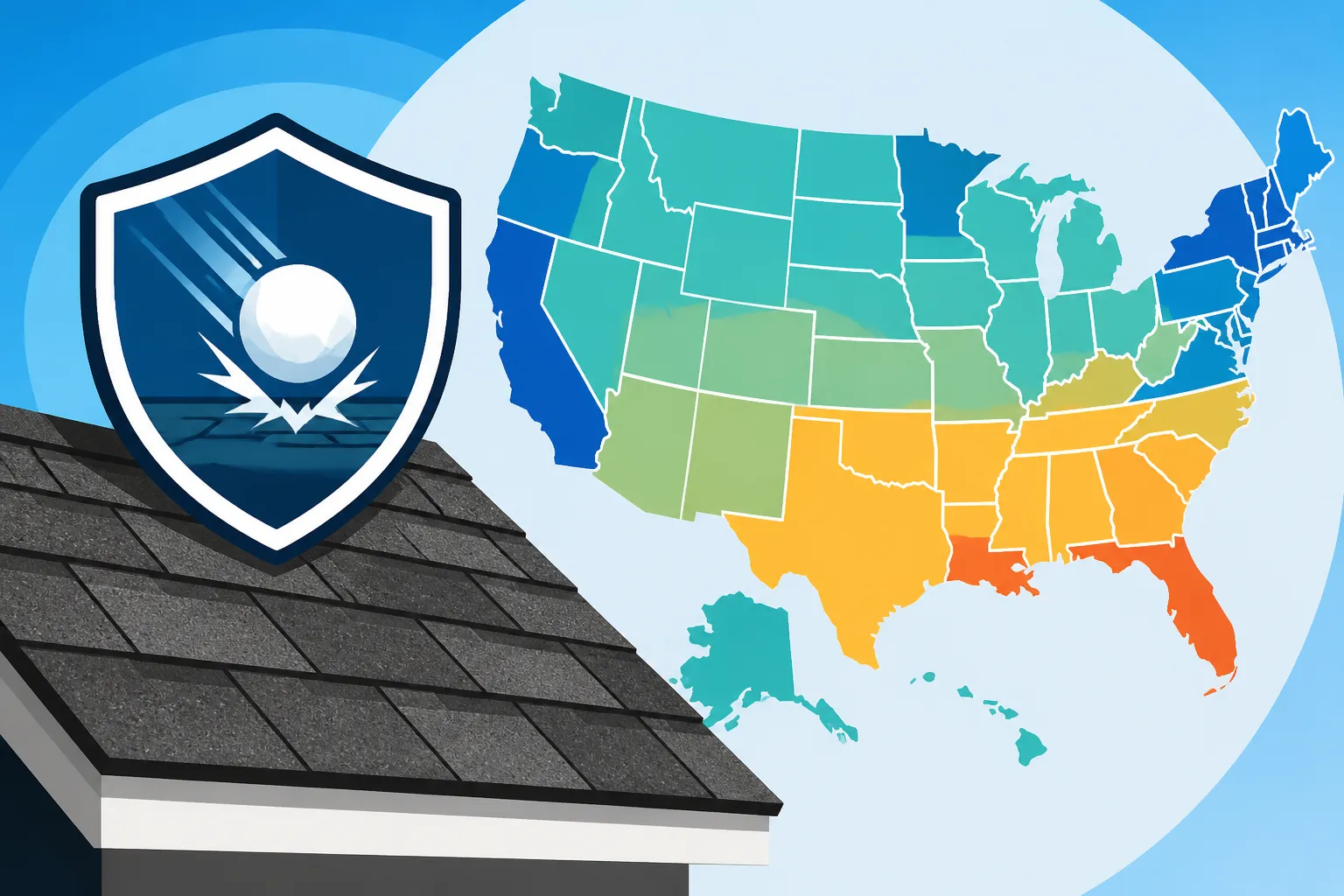
In the heart of what's often called "Hail Alley," states like Texas, Colorado, Oklahoma, and Minnesota have become front-runners in promoting impact-resistant roofing. It’s not uncommon to find local ordinances in major metropolitan areas within these states that mandate Class 4 impact-resistant shingles for new construction or full roof replacements. For instance, many cities in North Texas, such as Dallas, Fort Worth, Plano, and Frisco, have implemented such codes due to the sheer frequency and severity of hailstorms they experience. This means if you're replacing your roof in these areas, installing a Class 4 shingle isn't just a suggestion; it's a legal requirement to obtain a building permit. You can delve into the specifics of Roofing Codes and Regulations in Texas or your specific state.
Even where not strictly mandatory by municipal code, the financial incentives from state insurance departments can be incredibly compelling. The Texas Department of Insurance, for example, requires insurance companies to offer premium credits for impact-resistant roofs. These aren't minor discounts; they can significantly reduce your annual homeowners insurance costs, sometimes making the upgrade to a Class 4 roof practically pay for itself over time. The same holds true for parts of Colorado, where local governments and insurance providers strongly encourage the use of impact-resistant materials to mitigate the massive costs associated with repeated storm damage. For homeowners, this means not only a more durable roof but also tangible savings.
| State/Region | General Requirement/Recommendation | Primary Driver | Key Considerations |
|---|---|---|---|
| Texas | Often mandatory in hail-prone cities; strong state-mandated insurance incentives. | Frequent severe hail | Many cities (e.g., Dallas-Fort Worth metroplex) require Class 4. State law mandates insurance discounts. Check local ordinances carefully. |
| Colorado | Strongly recommended; local mandates in some areas; significant insurance incentives. | Frequent severe hail | Front Range cities (e.g., Denver, Colorado Springs) often see local mandates or strong recommendations. Insurance providers offer substantial discounts due to high hail risk. |
| Oklahoma | Heavily incentivized by insurance; local recommendations/codes may apply. | Frequent severe hail | Major insurance carriers offer discounts. Check specific city codes, especially in areas like Oklahoma City and Tulsa. |
| Minnesota | Heavily incentivized by insurance; growing local consideration in high-risk areas. | Frequent severe hail, especially Twin Cities | Insurance discounts are common. Some local building departments may recommend or consider implementing stronger codes in areas with high hail claims. |
| Florida | Not primarily for hail, but wind-resistant codes often lead to stronger materials. | High wind/hurricane risk | Florida Building Code focuses heavily on wind and projectile impact for hurricanes. While not directly for hail, the robust construction requirements can provide incidental hail resistance. Insurance discounts exist for overall fortified homes, including stronger roofs. |
| Kansas/Nebraska | Strongly incentivized by insurance due to "Hail Alley" location. | Frequent severe hail | Insurance companies actively promote Class 4 shingles with discounts. No widespread state-level mandates, but local considerations are increasing. |
States with Insurance-Driven Adoption
Beyond those states with explicit mandates, a much broader swath of the country sees impact-resistant shingles adopted due to powerful insurance incentives. Even in states without direct building code requirements for Class 4 shingles, like Illinois, Ohio, Arizona, or parts of the Southeast, insurance companies are actively encouraging their use. This is because they bear the brunt of repair and replacement costs after storms. If a homeowner invests in a more resilient roof, it significantly reduces the insurer's risk, and they pass those savings on.
For example, a homeowner in a suburban area of Chicago, Illinois, might not be required by code to install Class 4 shingles, but their insurance provider, say State Farm or Allstate, could offer a 15-20% discount on their annual premium for doing so. Over the course of a 20-30 year roof life, these savings can be substantial, often offsetting the higher initial cost of impact-resistant materials. It’s a win-win: the homeowner gets a more durable roof and saves money, and the insurance company faces fewer claims. If you're wondering, "Do Class 4 Shingles Lower Insurance Premiums?" the answer is almost always a resounding yes, making them an excellent investment.
Therefore, even if your state or local municipality doesn't explicitly require impact-resistant shingles, it is absolutely essential to speak with your insurance agent before beginning any roof replacement project. They can provide specific details on potential premium reductions, deductible savings, or other benefits associated with upgrading to a Class 4-rated roof. Sometimes, these insurance incentives can be the deciding factor for homeowners on the fence about the slightly higher upfront investment.
Local Variations and HOA Rules
It’s crucial to remember that roofing regulations are rarely one-size-fits-all. While state-level guidelines provide a framework, the most direct rules often come from your local building department – your city or county. What might be a recommendation at the state level could be a strict mandate at the municipal level, especially in areas with a history of severe weather events. Always check with your local building and permitting office to understand the specific Roofing Building Codes: What to Know that apply to your exact address before starting any roofing project. They can tell you if a permit is required and what types of materials are approved or mandated in your specific zone.
Beyond government regulations, many homeowners associations (HOAs) also have a say in roofing materials. If you live in a planned community, your HOA might have covenants that dictate everything from shingle color and style to material specifications, including impact resistance. Some HOAs, particularly in storm-prone regions, may even require Class 4 shingles as part of their community standards, aiming to protect property values and minimize repair costs for all residents. Others might simply have aesthetic guidelines that subtly push you towards certain types of architectural shingles, which often come with impact-resistant properties anyway. Always review your HOA’s architectural guidelines carefully before making any decisions about your roof. Ignoring them could lead to fines or a requirement to redo your roofing work, which is a headache nobody wants!
Navigating the Permit and Installation Process with Impact-Resistant Shingles
Once you've decided that impact-resistant shingles are the right choice for your home, the next steps involve understanding the practicalities of getting them installed. This includes navigating permits, ensuring proper installation, and leveraging the expertise of qualified contractors.
Permits and Inspections for Upgraded Roofs
A roof replacement, regardless of the shingle type, is almost always considered a major structural alteration to your home and typically requires a building permit. This isn't just bureaucratic red tape; it's a critical step that ensures your new roof meets local safety and structural codes. When you're installing specialized materials like Class 4 impact-resistant shingles, the permitting process becomes even more important. The city or county will want to ensure that the installation adheres to the specific requirements for such durable materials, especially in areas where they might be mandated. The cost of a permit can vary wildly, but it's a non-negotiable part of the process. For more details, you can explore Roofing Permits Explained.
After your permit is secured and the installation is underway, there will likely be one or more inspections. For an upgraded roof with impact-resistant shingles, inspectors will specifically look for evidence that the materials were installed according to both manufacturer specifications and local building codes. This might include checking the type of shingle used, the nailing pattern (which can be more rigorous for high-wind or impact-resistant systems), and the proper installation of underlayment, flashing, and other components that contribute to the roof's overall resilience. A good contractor will handle the permit application and coordinate all necessary inspections, making sure everything is up to snuff. If they try to convince you to skip the permit, consider that a major red flag, as it could lead to significant issues down the line, including problems with insurance claims or when selling your home.
Ensuring Proper Installation for Warranty and Performance
You can buy the toughest Class 4 impact-resistant shingles on the market, but if they're not installed correctly, you might as well have put on standard 3-tab shingles. Proper installation is paramount, not only for the roof to perform as advertised against hail and wind but also to ensure that your manufacturer warranty remains valid. Many manufacturers offer enhanced warranties for their complete roofing systems, but these are often contingent on the use of approved components and installation by a certified contractor. For instance, How GAF Shingle Warranties Work often outlines specific installation requirements to qualify for their highest levels of coverage.
Specific installation practices are critical for impact-resistant roofs. This includes using the correct number and placement of nails (often a 6-nail pattern instead of the standard 4-nail pattern in high-wind zones), appropriate underlayment (like synthetic underlayment or ice and water shield in vulnerable areas), and meticulous flashing around chimneys, vents, and valleys. An experienced and reputable contractor will understand these nuances. Many leading manufacturers, such as GAF, Owens Corning, and CertainTeed, offer certification programs for contractors who demonstrate expertise in installing their products. Hiring a contractor with these certifications means they've been specifically trained by the manufacturer on the best practices for installing their products, including their high-performance impact-resistant lines. This commitment to proper installation is what ensures your investment truly pays off. You can learn more about finding the right professional in How to Choose a Roofing Contractor.
Choosing the Right Impact-Resistant Shingles for Your Home
So, you’re ready to invest in the superior protection of impact-resistant shingles. Great! But with so many options out there, how do you choose the right ones for your specific home and needs? It’s not just about picking the highest class rating; it’s about balancing durability with aesthetics, budget, and long-term value.
Key Considerations When Selecting Shingles
Before diving into specific brands or styles, take a moment to consider what truly matters for your home. Your climate, of course, is a primary factor. If you live in a region known for frequent severe hailstorms, prioritizing a Class 4 rating is a no-brainer. However, if your area also experiences intense heat, you might look for shingles that combine impact resistance with "cool roof" technology, designed to reflect sunlight and reduce attic temperatures. Your budget will naturally play a role; while impact-resistant shingles typically have a higher upfront cost than standard architectural shingles, remember to factor in potential insurance savings and a longer lifespan.
Aesthetic preferences are also important. Impact-resistant shingles come in a wide array of styles, colors, and textures. Many are architectural or designer shingles, offering a beautiful, dimensional look that can significantly enhance your home's curb appeal. Do you prefer a traditional wood shake look, a slate appearance, or something more contemporary? Modern manufacturers offer solutions that don't force you to choose between toughness and beauty. Finally, don't overlook the warranty. Understand the different types of warranties available – manufacturer product warranties versus workmanship warranties – and how they protect your investment. A comprehensive warranty from a reputable manufacturer can provide immense peace of mind.
Ultimately, the best approach is to consult with a knowledgeable and experienced roofing contractor. They can assess your specific roof, understand your local climate and building codes, discuss your aesthetic preferences, and help you compare How Much Does an Asphalt Shingle Roof Cost with different options. A good contractor will guide you through the pros and cons of various impact-resistant products and help you make an informed decision that suits your needs and budget.
Top Brands Offering Class 4 Shingles
The good news is that many of the industry’s leading asphalt shingle manufacturers have recognized the demand for impact-resistant products and offer excellent Class 4 rated options. These brands have invested heavily in research and development to create shingles that not only meet the UL 2218 standard but also offer a host of other performance benefits and aesthetic appeal.
Brands like GAF, Owens Corning, CertainTeed, Malarkey, and Atlas are well-known for their robust impact-resistant lines. For example, GAF offers its Timberline AS II Shingles, which are Class 4 rated and boast the popular Timberline aesthetic. Owens Corning’s Duration FLEX shingles incorporate SBS polymer modified asphalt for enhanced flexibility and strength, earning them a Class 4 rating. CertainTeed’s NorthGate ClimateFlex shingles are another popular choice, also using rubberized asphalt for superior impact and cold-weather flexibility. Malarkey is particularly renowned for its advanced shingle technology, often incorporating upcycled rubber and polymers into its Class 4 lines like Vista and Legacy. Atlas offers its StormMaster Slate and StormMaster Shake lines, which are Class 4 rated and provide a distinctive aesthetic. Each brand has its unique blend of technologies, aesthetics, and warranty offerings.
When you're comparing bids, ask your contractor about specific models of impact-resistant shingles from these reputable manufacturers. Don't hesitate to ask for samples so you can see the color and texture firsthand. By choosing a product from a trusted brand, especially when installed by a manufacturer-certified professional, you’re not just getting a tough roof; you’re investing in a complete roofing system designed for long-term performance and peace of mind. Remember, a thorough comparison of Roofing Material Cost vs Labor Cost for these premium options will help you budget effectively.
Disclaimer
Please remember that the information provided in this article is for general guidance only and should not be considered legal, financial, or professional advice. Building codes, regulations, and insurance policies vary significantly by location and are subject to change. Always consult with a qualified, local roofing contractor, your insurance provider, and your local building department to confirm specific requirements and recommendations for your project.