Are Cracked Shingles Covered by Insurance
Waking up after a violent thunderstorm, heading outside with your morning coffee, and spotting physical damage on your roof is an unsettling experience. When you look up and notice split or fractured roofing, your mind immediately jumps to financial concerns and protection against leaks. Navigating home insurance policies can feel like reading a foreign language, especially when trying to determine whether cracked shingles are covered by insurance or if you are stuck paying out of pocket. This guide breaks down exactly how insurance carriers view shingle cracking, what perils qualify for coverage, and how to successfully file a claim.
Understanding When Insurance Covers Cracked Shingles
The short answer to whether your insurance carrier will cover cracked shingles comes down to one single factor: cause. Homeowners insurance policies are designed to protect your property against sudden, accidental, and unexpected events—often referred to in the industry as “covered perils.” They are explicitly not designed to act as a general maintenance contract for routine aging or neglected home maintenance.
If your shingles cracked because of a specific, identifiable event that occurred suddenly, your policy will very likely cover the repairs or a full roof replacement. However, if the cracking developed slowly over a decade due to summer heat cycles or normal aging, the carrier will categorize it as wear and tear, leaving you responsible for the bill.
Storm Damage: Hail, High Winds, and Falling Debris
When severe weather rolls through your neighborhood, it leaves behind distinct physical evidence. Insurance policies routinely cover Is Hail Damage Covered by Insurance and severe wind events because these forces exert immediate, destructive stress on asphalt shingles.
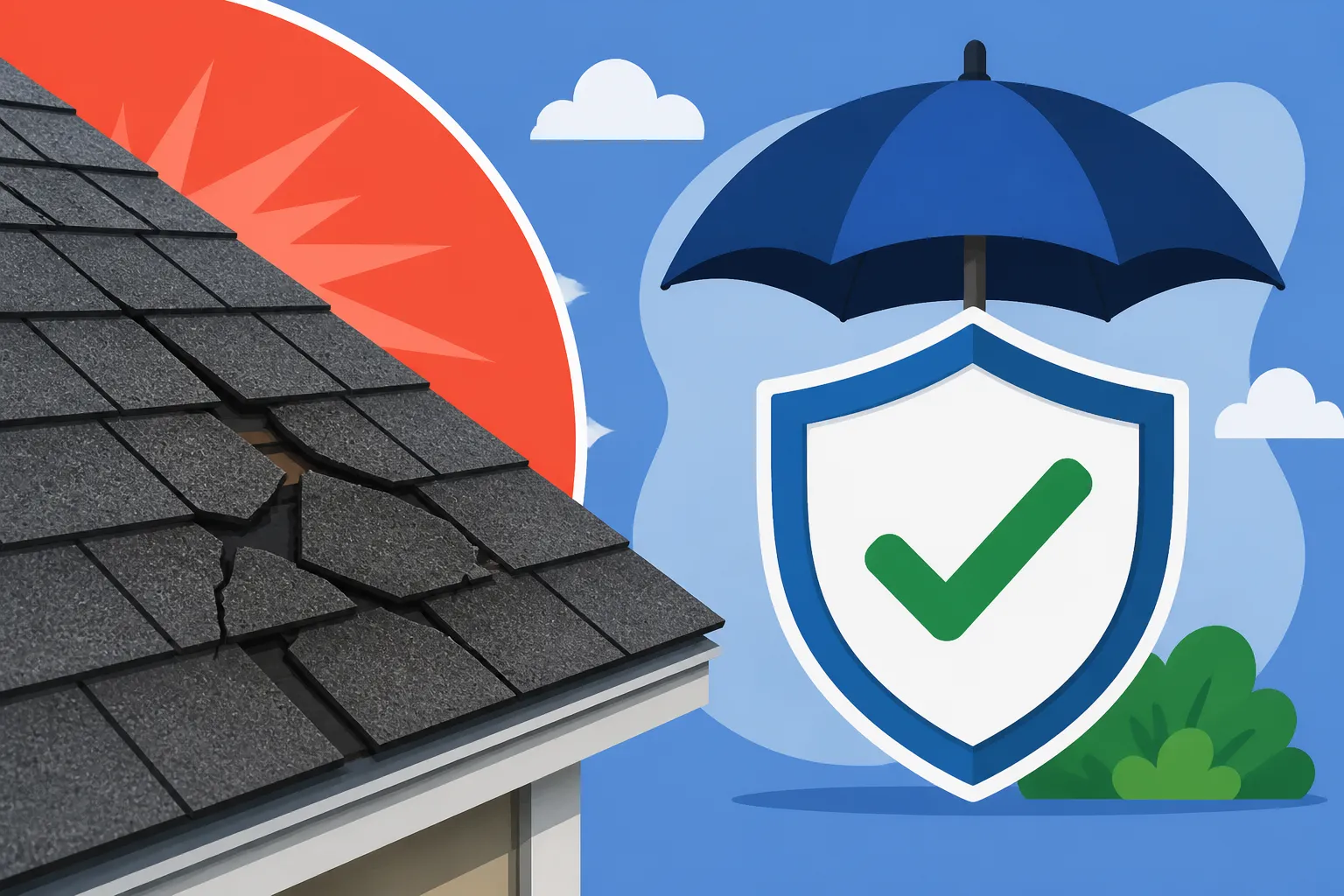
Hailstones striking a roof do not always punch holes straight through the material. Frequently, the heavy impact creates localized bruising that fractures the internal fiberglass matting beneath the asphalt layer. Over the next few weeks or months, as the roof expands and contracts with daily temperature fluctuations, these hidden micro-fractures develop into full-size cracks. If an insurance adjuster can trace the fractures back to documented hail strikes in your area, your claim has a very high chance of approval.
Similarly, gale-force winds can lift shingle tabs, bending them upward beyond their structural tolerance. This bending action creasing or snapping the shingle across its top line creates horizontal cracking. If flying debris or fallen tree branches slam into your roof during a gale, the sudden physical impact easily cracks shingles and fractures the underlying roof decking. In all these sudden storm scenarios, standard homeowners insurance policies step in to cover the restoration.
Sudden Accidental Impact Events
Beyond severe weather, homeowners insurance also protects against unforeseen physical impacts. If a heavy limb breaks off a tree during a mild rainstorm and crushes a section of your roof, the resulting broken and shattered shingles are almost universally covered.
The key element here is that the event was sudden and outside your direct control. If you can point to a specific calendar date when the damage occurred, insurance adjusters have a clear benchmark to validate your claim against local weather reports and property records.
Common Reasons Insurance Claims for Cracked Shingles Are Denied
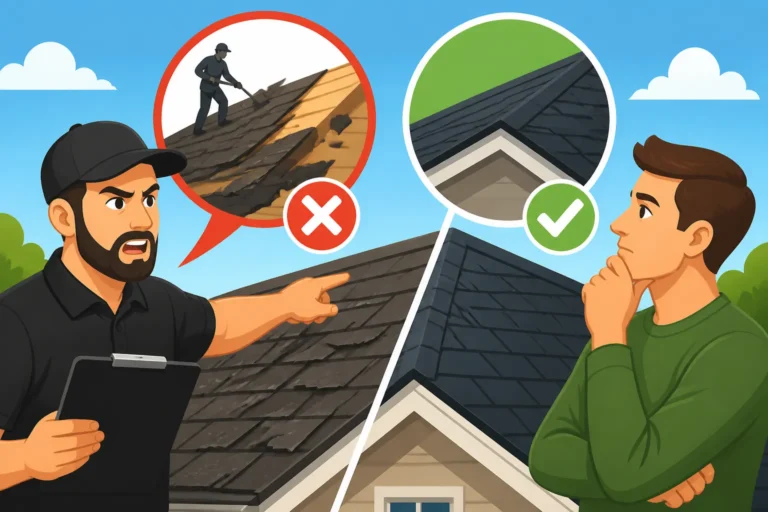
Understanding why claims get turned down is just as crucial as knowing what is covered. It is heartbreaking to file a claim expecting financial help, only to receive a formal denial letter from your adjuster. Insurance companies employ specialized claims adjusters and forensic engineers to evaluate roof damage, and they are trained to spot the subtle visual differences between storm damage and natural aging.
Before filing a claim, it pays to understand the specific mechanical causes of shingle failure that carriers consider uninsurable maintenance issues.
Age, Thermal Splitting, and Manufacturing Defects
As asphalt shingles age, solar radiation strips away their volatile oils, leaving them brittle and dry. As winter cold alternates with summer heat, the material expands and contracts continuously. This daily thermal expansion and contraction eventually causes horizontal or vertical splits known as thermal splitting or thermal tearing.
Because thermal splitting is a predictable, natural byproduct of exposing asphalt to the elements over 15 to 20 years, insurance companies view it as standard wear and tear. If your shingles are simply showing their age through widespread web-like cracking or surface crazing, your carrier will decline the claim.
Manufacturing defects can also lead to premature cracking. If an entire batch of shingles was mixed with insufficient asphalt binder during manufacturing, the shingles may crack prematurely within just a few years of installation. While this is frustrating, standard home insurance policies explicitly exclude manufacturing defects. In this scenario, your recourse lies with the shingle manufacturer’s warranty rather than your property insurance policy.
| Type of Shingle Crack | Primary Cause | Insurance Coverage | Recommended Next Step |
|---|---|---|---|
| Horizontal Creasing | High wind lifting shingle tabs | Highly Likely | File insurance claim immediately |
| Impact Fractures | Hail strikes or fallen branches | Highly Likely | Document date and call adjuster |
| Vertical Thermal Splitting | Thermal expansion / Aging | Unlikely (Excluded) | Plan for out-of-pocket repair |
| Surface Crazing/Spidering | UV degradation over time | Unlikely (Excluded) | Schedule routine maintenance |
| Widespread Premature Split | Manufacturing default | Denied by Insurance | Check manufacturer warranty status |
Neglect and Improper Installation
Insurance policies contain clear language requiring homeowners to maintain their property in good repair. If an adjuster discovers that your attic lacks adequate ventilation, heat trapped under the roof deck can literally cook the shingles from below, causing them to blister, curl, and crack long before their expected lifespan. Insurance adjusters regularly cite improper attic ventilation as a reason to deny coverage.
Furthermore, if a previous contractor installed the shingles incorrectly—using improper nailing patterns, failing to use starter strips, or placing new shingles over old, decayed layers—the structural integrity of the roof is compromised. Insurance policies do not cover damage caused by poor workmanship or code violations. If you suspect your damage might stem from aging or installation errors, reviewing a comprehensive guide on Cracked Shingles: Causes and Fixes can help you determine whether calling an insurance adjuster or a professional roofer is your best first step.
How to Document and File a Claim for Cracked Shingles
If you suspect your cracked shingles were caused by a recent windstorm, hail event, or sudden impact, taking structured, deliberate steps will significantly improve your chances of an approved claim. You must build a clear, evidence-based case before the insurance adjuster sets foot on your property.
Conducting a Safe Ground Inspection
Safety must always come first. You do not need to climb onto a high, steep roof to gather initial evidence—in fact, walking on brittle or damaged shingles can actually cause further destruction and give the insurance company a reason to claim you caused the damage yourself.
Start by conducting a thorough ground-level walkaround using a pair of binoculars and a smartphone camera with a good zoom lens.
- Take High-Resolution Photos: Capture wide shots of your house to show context, followed by close-up shots of the cracked shingles.
- Look for Associated Storm Damage: Check your downspouts, window screens, metal flashing, and outdoor patio furniture for hail dents or wind damage. Dented gutters are incredible collateral evidence that proves a severe hail storm hit your exact address.
- Document the Date and Time: Write down the exact date the storm occurred. Look up local weather reports or radar archives confirming hail size or wind gust speeds on that date to attach to your claim file.
- Inspect Your Attic: Go into your attic with a bright flashlight to search for signs of daylight peeking through the roof deck or active water staining on rafters. Knowing the full extent of the damage helps you understand the overall Roof Damage Assessment: A Homeowner’s Guide before starting formal proceedings.
Working with Adjusters and Contractor Networks
Once you have gathered your initial evidence, contact your insurance provider to open a claim file. The carrier will assign a field adjuster to schedule a physical inspection of your roof.
It is highly advantageous to have a licensed, independent roofing contractor present during the adjuster’s visit. A knowledgeable roofer can point out subtle impact marks or creased tabs that an overworked insurance adjuster might easily oversee.
If you are unsure where to find vetted, qualified local professionals who specialize in insurance restoration, online matching resources like Modernize can help connect you with licensed contractors in your zip code. Having a qualified contractor advocating for your property ensures that all necessary repairs are included in the adjuster’s initial scope of work.
During the inspection, walk the property with both the adjuster and your contractor. Make sure they examine every slope, as wind and hail damage often affect one side of a house much more severely than another.
Repair vs. Replace: Navigating Policy Payouts
Even when your claim for cracked shingles is approved, the financial reimbursement you receive depends heavily on your specific policy structure and the extent of the damage across your roof surface.
Actual Cash Value (ACV) vs. Replacement Cost Value (RCV)
Understanding the distinction between Actual Cash Value vs Replacement Cost Roof Claims is essential when managing your expectations for insurance payouts.
- Replacement Cost Value (RCV): An RCV policy covers the actual current cost to repair or replace your damaged roof with materials of similar kind and quality, without subtracting money for aging or wear. Under RCV, once the work is completed, the insurance company pays the full bill, minus your agreed deductible.
- Actual Cash Value (ACV): An ACV policy factors in depreciation. If your 20-year asphalt roof is 15 years old when severe hail cracks the shingles, the insurance company will calculate the cost of a new roof and deduct 75% of that value to account for the roof’s used lifespan. You receive a check for the remaining 25% (minus your deductible), leaving you to pay the vast majority of the replacement cost out of pocket.
Many insurance companies have shifted older roofs exclusively to ACV policies, so reviewing your policy schedule before filing a claim prevents unwelcome financial surprises.
What to Do When Only a Section Is Damaged
Rarely does a storm crack every single shingle on a home evenly. Often, strong winds will strip or crack shingles on the windward slope while leaving the leeward side virtually untouched. This creates a dilemma: will insurance pay for a complete roof replacement, or only a partial repair?
If your roof is relatively new and identical replacement shingles are readily available in the market, the insurance company will likely approve a partial repair, paying only to replace the damaged section.
However, if your shingles are older, discolored by sun exposure, or discontinued by the manufacturer, matching the original color and profile becomes impossible. In many states, building regulations or insurance matching laws require carriers to deliver a “reasonably uniform appearance.” If a contractor cannot source matching shingles to execute a seamless spot repair, the insurance company may be legally required to replace the entire roof structure to maintain your home’s aesthetic value.
Navigating these nuances requires patience and clear communication. If your initial claim for cracked shingles is rejected despite clear storm evidence, do not lose hope—learning How to Appeal a Denied Roof Claim gives you a structured pathway to present additional contractor reports, weather data, and photographic proof to secure the coverage your home deserves.
When managing roof repairs, platforms like Modernize offer a straightforward way to compare quotes from multiple contractors, ensuring you receive competitive pricing whether your project is covered by insurance or paid out of pocket. Taking fast action when you first notice split or cracked shingles protects your home’s interior, preserves your structural decking, and keeps your property safe from costly water leaks.
Disclaimer
This article is for general informational purposes only and does not constitute professional advice. Laws, prices and regulations vary by location and change over time. Consult a qualified professional for guidance on your specific situation.