Cracked Shingles: Causes and Fixes
There's nothing quite as disheartening as looking up at your roof, whether from the ground or during an attic inspection, and spotting those tell-tale lines: cracked shingles. It immediately sparks a worry – is my roof leaking? How much will this cost? What do I even do next? This isn't just a cosmetic issue; cracked shingles are a real sign that your roof's protective shield might be compromised, leaving your home vulnerable to water damage and further deterioration. This comprehensive guide is here to walk you through the common reasons why asphalt shingles crack, help you identify different types of damage, and, most importantly, provide clear, actionable solutions for fixing them and keeping your roof healthy for years to come.
Understanding Why Your Shingles Are Cracking
Cracked asphalt shingles aren't usually a sudden mystery. Most often, they're a symptom of underlying issues, ranging from the inevitable march of time to environmental stressors and even how they were installed. Pinpointing the cause is the first step toward finding the right fix.
Age and Exposure to the Elements
Let's be real: nothing lasts forever, and your roof is constantly battling the elements. Over time, even the toughest asphalt shingles will start to show their age, and cracking is a common manifestation of that wear and tear.
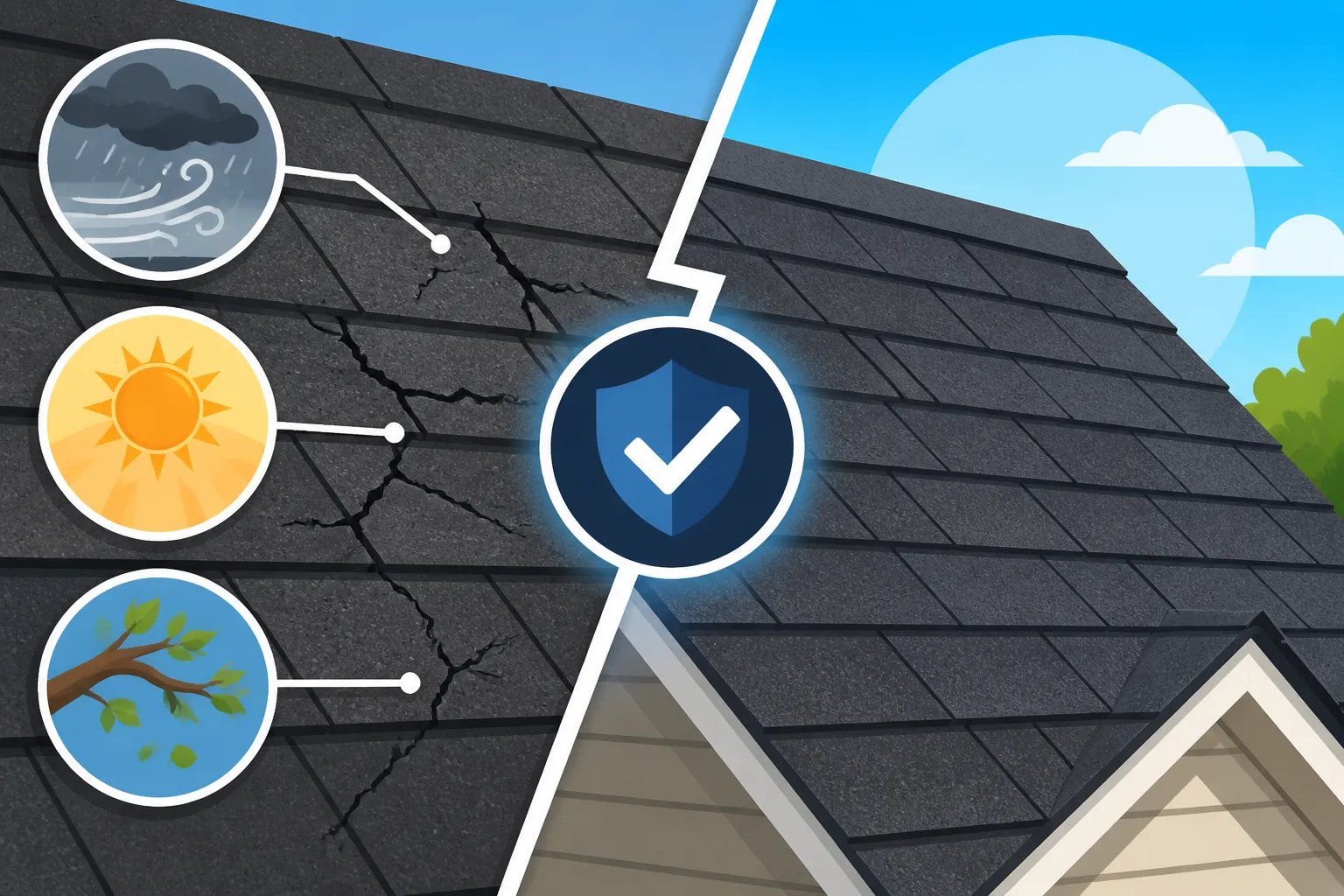
Asphalt shingles are designed with a granular surface to protect the underlying asphalt from the sun's ultraviolet (UV) rays. However, this protection isn't absolute. Continuous exposure to intense sunlight causes the asphalt to dry out and become brittle. Think of it like a piece of plastic left in the sun for too long – it eventually loses its flexibility and becomes prone to snapping. This UV degradation is a primary culprit for widespread cracking on older roofs. The granules that offer the protection also begin to loosen and wash away, leaving the asphalt exposed and accelerating its deterioration. This process often starts subtly, with hairline cracks that deepen and widen over time, making your roof more susceptible to leaks. You might also notice significant granule loss accompanying the cracking, which further indicates the shingles are past their prime. If you're wondering how long asphalt shingles last, keep in mind that age significantly impacts their integrity.
Another major factor linked to age and exposure is thermal expansion and contraction. Throughout the day and across seasons, your roof experiences dramatic temperature swings. On a sunny summer day, a dark asphalt shingle can reach incredibly high temperatures, causing it to expand. At night, or during a cold winter snap, it contracts. This constant push and pull puts immense stress on the shingle material. Over decades, this repeated movement weakens the asphalt and the fiberglass mat within the shingle, making them less pliable and more rigid. This rigidity, combined with brittleness from UV exposure, eventually leads to stress cracks. These cracks often appear perpendicular to the shingle's length, or randomly across its surface, as the material simply can no longer tolerate the constant movement without fracturing.
Extreme Weather and Temperature Fluctuations
While general exposure takes its toll, specific extreme weather events can accelerate cracking or cause sudden, significant damage. These events can deliver a one-two punch that leaves your shingles compromised.
Hail, for instance, is a notorious shingle killer. When hailstones, especially larger ones, strike your roof with force, they can bruise or crack the shingle's surface, often creating impact craters that are immediately noticeable. Even smaller hail can cause micro-fractures in the asphalt that might not be visible from the ground but compromise the shingle's integrity. These cracks might not leak immediately, but they break the surface seal and allow water to penetrate deeper into the shingle, softening the mat and leading to more significant cracks and granule loss over time. What makes hail damage particularly insidious is that it often isn't recognized until further problems arise, making regular post-storm inspections crucial. You can learn more about the specific signs of roof hail damage to look for.
High winds, another formidable foe, don't necessarily crack shingles directly in the same way hail does. Instead, strong winds can lift the edges of shingles, bending them upward. This bending motion can cause stress cracks, particularly if the shingles are older, brittle, or not properly adhered. Once a shingle is lifted and bent, it can crease, and these creases often turn into cracks as the shingle repeatedly flexes in the wind or settles back down. In severe cases, high winds can even tear off entire shingles, leaving the underlayment and decking exposed. The force of wind uplift can also cause the adhesive seal between shingles to break, leaving them vulnerable to subsequent wind events and further cracking.
Installation Errors and Manufacturer Defects
Sometimes, the problem isn't the environment or age, but rather how the roof was put together in the first place, or even an issue with the shingles themselves. While less common, these causes can lead to premature cracking.
Improper nailing is a prime example of an installation error that can lead to cracking. Shingles need to be fastened correctly, in the right location (the nailing strip) and with the right amount of pressure. If nails are driven too deep, they can cut through the shingle, leaving a small, often unseen, crack around the nail head that can expand over time. If they're driven too shallow, they might not hold the shingle securely, allowing it to move excessively in the wind, which can lead to stress cracks. Similarly, if too few nails are used, or if they're placed incorrectly, sections of the shingle can flap in the wind, causing fatigue and eventual cracking. A good roofer understands the importance of precise nailing patterns as part of how asphalt shingles are installed step by step.
Another installation-related issue occurs when shingles are bent or creased during the installation process, especially in cold weather when they are less flexible. If a shingle is folded or sharply bent to fit a corner or edge, a hairline crack might form instantly, or a weakened area might be created that quickly cracks under normal thermal cycling or wind stress. Using the wrong type of nails or staples can also compromise shingle integrity. For instance, using staples that are too narrow or not deeply embedded can fail to hold the shingle securely, or can even cut through it.
Finally, though relatively rare, manufacturer defects can sometimes be the root cause of cracking. This might involve issues with the shingle's composition, like an inconsistent asphalt blend, a faulty fiberglass mat, or an inadequate amount of UV-protective granules. While reputable brands like GAF, Owens Corning, and CertainTeed have rigorous quality control, no manufacturing process is entirely foolproof. If you see widespread cracking on a relatively new roof (within the first few years) that doesn't appear to be related to weather events or installation, it might be worth investigating a potential manufacturer defect. In such cases, your roofing warranty: workmanship vs manufacturer might come into play.
Types of Cracks You Might See on Your Roof
Cracks aren't all the same, and understanding the different types can give you a clue about what's causing them and how urgently they need to be addressed. A little detective work can go a long way in diagnosing your roof's health.
Hairline Cracks and Spiderwebbing
These are often the earliest, most subtle signs of shingle deterioration, and they can easily be missed if you're not looking closely.
Hairline cracks are exactly what they sound like: very thin, fine lines that appear on the surface of the shingle. They might look like faint scratches or tiny fractures that don't seem to go very deep. Often, these are the initial stages of UV degradation and thermal stress, particularly on older shingles. They signify that the asphalt is starting to lose its flexibility and has become more brittle. While a single hairline crack might not immediately lead to a leak, it's a warning sign. These cracks are pathways for water, even if only a tiny amount, to penetrate beneath the granule layer and begin to compromise the shingle's internal structure. Over time, these small cracks will widen and deepen, eventually exposing the fiberglass mat and making the shingle much more vulnerable to further damage from wind, rain, and hail. Think of them as the first wrinkles on an aging face – they're just the beginning.
Spiderwebbing, also known as crazing, is a more advanced form of surface cracking. Instead of a single line, you'll see a network of intersecting hairline cracks that resemble a spider's web or shattered glass. This pattern typically indicates severe and prolonged exposure to UV radiation and significant drying out of the asphalt. When a shingle exhibits spiderwebbing, it means the entire surface layer has become extremely brittle and has lost most of its elasticity. This condition almost always accompanies significant granule loss, as the cracked surface no longer holds the granules effectively. Shingles with extensive spiderwebbing are extremely fragile and offer minimal protection against the elements. They are highly susceptible to breaking apart during storms or even under light foot traffic, and water infiltration is a much higher risk than with isolated hairline cracks. When you see spiderwebbing, it's a strong indicator that the roof is nearing the end of its functional life and needs serious attention.
Transverse and Longitudinal Cracks
These types of cracks refer to the direction they run across the shingle, and they can offer insights into the forces at play.
Transverse cracks run across the width of the shingle, from one side to the other, or at least a significant portion of the way. These are often stress cracks caused by the continuous expansion and contraction cycles that the shingles endure. As the shingle material heats and cools, it tries to expand and contract, and if it has lost its flexibility, it will fracture at its weakest points. Transverse cracks can also be a sign of improper nailing, especially if they appear consistently at or near the nailing strip. A nail driven too tightly or in the wrong spot can create a stress point where a crack is more likely to develop perpendicular to the shingle's length. Another cause could be underlying deck issues, such as uneven decking or movement in the roof structure itself, which puts undue stress on the overlying shingles, causing them to crack across their width. These cracks are particularly concerning because they often expose the fiberglass mat or even the underlayment, making them direct conduits for water to enter your home.
Longitudinal cracks, on the other hand, run down the length of the shingle. These are less common than transverse cracks but can be indicative of specific problems. One frequent cause of longitudinal cracks is bending or creasing of the shingle during installation. If a shingle was folded or sharply bent, that stress line can manifest as a crack running lengthwise. They can also appear if the shingle was manufactured with a weakness in its fiberglass mat or asphalt composition running along its length. In some cases, severe impact from a falling branch or debris can cause a lengthwise crack. These cracks can be just as problematic as transverse cracks, as they also breach the protective surface of the shingle and can lead to leaks, especially if they extend through the entire shingle. It's important to differentiate them from splitting, which is often a more severe, full-thickness separation.
Thermal Cracks and Alligatoring
These specific patterns of cracking are very telling about the conditions your roof has endured, especially related to temperature.
Thermal cracks are a direct result of the intense heat and cold cycles we touched upon earlier. They typically appear as distinct, straight or slightly jagged lines that can run in various directions, but are clearly a break in the shingle material. Unlike hairline cracks which are superficial, thermal cracks usually penetrate deeper, often exposing the shingle's fiberglass mat. These cracks are a clear sign that the shingle has lost its elasticity and is no longer able to flex with temperature changes without fracturing. In areas with extreme temperature swings, like the deserts of Arizona or the frigid winters of Minnesota, thermal cracking can be a significant problem, even on roofs that aren't exceptionally old. The cumulative effect of hundreds or thousands of expansion and contraction cycles eventually weakens the material to the point of failure. These cracks are often found across multiple shingles in an affected area, indicating a systemic issue related to the roof's exposure.
Alligatoring is a unique and visually distinct form of cracking that signifies a very advanced state of shingle deterioration. The term comes from the pattern of cracks that resembles the leathery, cracked skin of an alligator. This network of cracks is typically much deeper and more pronounced than spiderwebbing, often indicating that the asphalt has completely dried out, hardened, and become extremely brittle. Alligatoring is almost exclusively found on very old roofs, or those that have experienced prolonged and intense UV exposure without proper ventilation. When a shingle starts to alligator, it means its protective capabilities are severely compromised. The entire shingle surface is a mosaic of weak points, making it incredibly vulnerable to water penetration, wind uplift, and further damage. At this stage, individual shingle repairs are largely ineffective, as the entire shingle is compromised. Finding widespread alligatoring on your roof is usually a definitive sign that a full roof replacement is imminent, as the material has simply reached the end of its useful life.
Assessing the Severity and Potential Damage
Once you've spotted cracked shingles, the next crucial step is to figure out just how serious the problem is. Not all cracks are created equal, and some demand more immediate attention than others. Understanding the severity can help you decide whether it's a quick DIY fix, a job for a professional, or a signal for a much larger project.
Differentiating Minor Surface Cracks from Structural Concerns
It's easy to panic when you see any crack on your roof, but a careful assessment can save you unnecessary worry (or spur you to action when needed).
Minor surface cracks, often those hairline cracks or very fine spiderwebbing, typically indicate that the shingle's top granular layer and superficial asphalt are beginning to degrade. While they are certainly a sign of aging, they may not immediately compromise the waterproof integrity of your roof, especially if the underlying fiberglass mat and asphalt are still intact and flexible. To check this, if you can safely access the roof (or use binoculars from the ground), try to gently lift the edge of an adjacent shingle and examine the cracked one. Does the crack appear to penetrate through the shingle? Can you see the fiberglass mat? If it seems superficial and confined to the very top layer, it might be manageable with a sealant, at least temporarily. However, even minor cracks will eventually worsen and become pathways for water, so they shouldn't be ignored entirely. Think of them as early warning signals.
In contrast, cracks that signify structural concerns are much more alarming. These are typically deeper, wider cracks that clearly penetrate through the shingle, often revealing the fiberglass mat beneath, or even worse, the underlayment. If you can see light through a crack from your attic, or if a crack feels soft and spongy around its edges, you're dealing with a serious breach. Cracks that appear consistently in a specific pattern, like along a roof valley or near a chimney, could indicate underlying flashing issues or even structural movement. Furthermore, if you see cracks accompanied by noticeable sagging in the roof deck, or if shingles feel unusually brittle and crumble easily when touched, these are definite red flags. Such issues suggest the shingle's integrity is completely compromised and may even point to problems with the roof decking itself. In these scenarios, the risk of leaks is high, and water damage could already be occurring beneath the surface. This is when you absolutely need expert eyes on your roof; a good professional can assess the true depth of the problem and recommend appropriate action.
The Risk of Leaks and Water Damage
The primary concern with cracked shingles isn't just their appearance, but their ability to protect your home from water. When that protection fails, the consequences can quickly escalate.
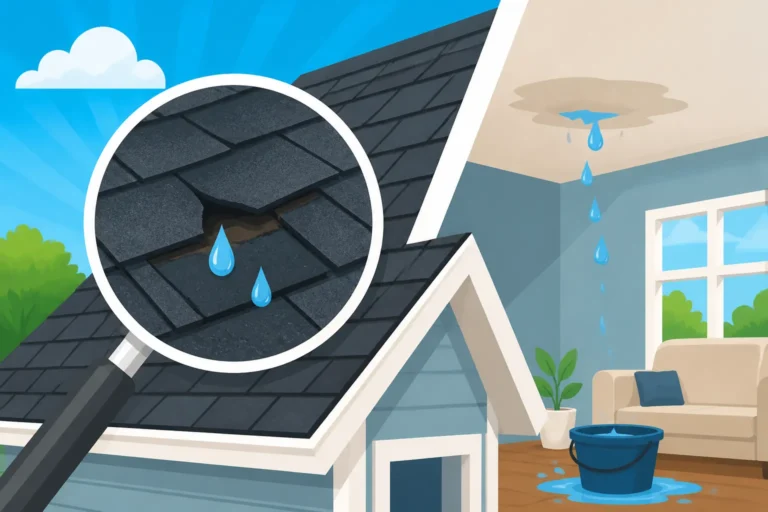
Cracked shingles directly compromise your roof's waterproof layer. Asphalt shingles are designed to shed water, with each shingle overlapping the one below it, creating a continuous barrier. When a shingle cracks, it breaks this barrier. Even a small crack can allow water to seep underneath the shingle, especially during heavy rains or strong winds that push water sideways. Once water gets under the shingle, it begins its destructive journey. It can saturate the underlying felt or synthetic underlayment, weakening its protective capabilities. Over time, persistent moisture will cause the underlayment to degrade and fail.
The next line of defense is your roof decking, typically made of plywood or OSB. If water reaches the decking, it can cause wood rot, mold growth, and structural weakening. Rotted decking can become soft and spongy, unable to hold nails effectively, leading to more shingle loss and further leaks. The cost of roof decking replacement can be significant, so preventing this is key. But the damage doesn't stop there. Water can then seep through the decking into your attic, potentially damaging insulation, ceiling drywall, and even electrical wiring. A small crack on your roof can lead to stained ceilings, musty odors, and even compromised air quality due to mold growth within your home. These hidden costs in a roof replacement can be far more expensive to fix than the initial shingle repair. That's why addressing cracked shingles promptly is not just about protecting your roof; it's about protecting your entire home and your family's health.
When to Call a Professional Roofer
While some minor cracks might tempt you into a DIY fix, there are definitive situations where professional expertise isn't just recommended, it's essential. Knowing when to step back and call in the pros can save you time, money, and a lot of headaches in the long run.
Firstly, if you're not comfortable or physically able to get onto your roof safely, always call a professional. Working on a roof can be dangerous, especially if it's steep, wet, or damaged. A reputable roofing contractor has the right safety equipment, training, and experience to perform inspections and repairs without risking injury. Secondly, if the cracking is widespread across a large section of your roof, or if you're seeing multiple types of cracks that suggest extensive damage, a professional assessment is crucial. An expert can determine if the problem is localized or if it indicates a systemic failure of your entire roof system. They can also identify underlying issues that might not be visible to an untrained eye, such as damage to the roof decking or compromised flashing around chimneys and vents. If you're observing signs you need a new roof, like significant granule loss, curling, or many missing shingles in addition to cracks, a full roof inspection is warranted.
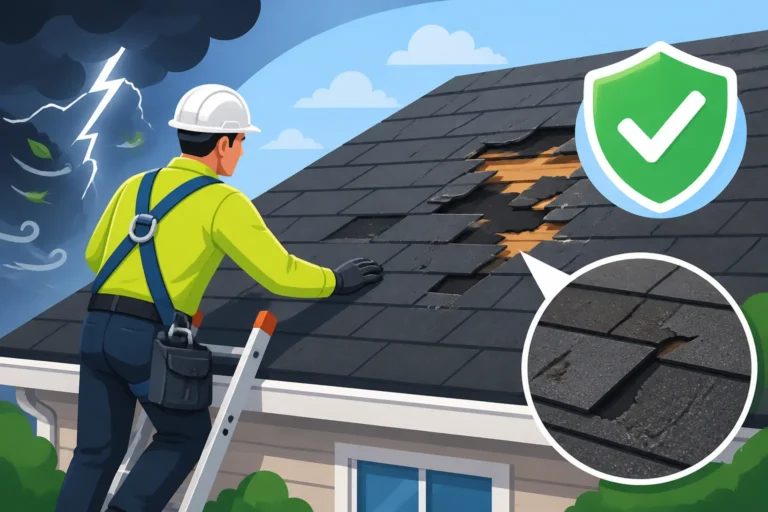
Another key indicator for calling a professional is if you suspect a leak. While a visible leak inside your home is an obvious sign, a professional can often trace the source of the leak, even if it's not directly above where the water is showing. Water can travel along rafters and beams before dripping, making it tricky for homeowners to pinpoint. They also have specialized tools and knowledge to assess the condition of your underlayment and decking, which are critical in preventing leaks. Finally, if you've recently experienced a severe storm with hail or high winds, even if you don't immediately see significant damage, it's wise to have a professional inspect your roof. Storm damage isn't always obvious from the ground, and subtle cracks or bruising can lead to bigger problems down the line. Many roofing companies offer free inspections after major weather events, and this could be your opportunity to address issues before they escalate. Companies like Modernize can help connect you with experienced, local roofing contractors who can accurately assess your roof's condition and provide reliable solutions.
Effective Fixes for Cracked Asphalt Shingles
Okay, so you've got cracked shingles, and you've assessed the situation. Now, what do you do about it? The good news is that for many types of cracks, there are effective fixes, ranging from simple patches to more involved shingle replacements. The key is to choose the right approach for the specific type and severity of cracking you're facing.
DIY Repair for Minor Cracks
For those small, isolated hairline cracks or superficial fractures that haven't fully penetrated the shingle, a DIY approach with roofing cement or sealant can be a temporary, and sometimes even long-lasting, solution.
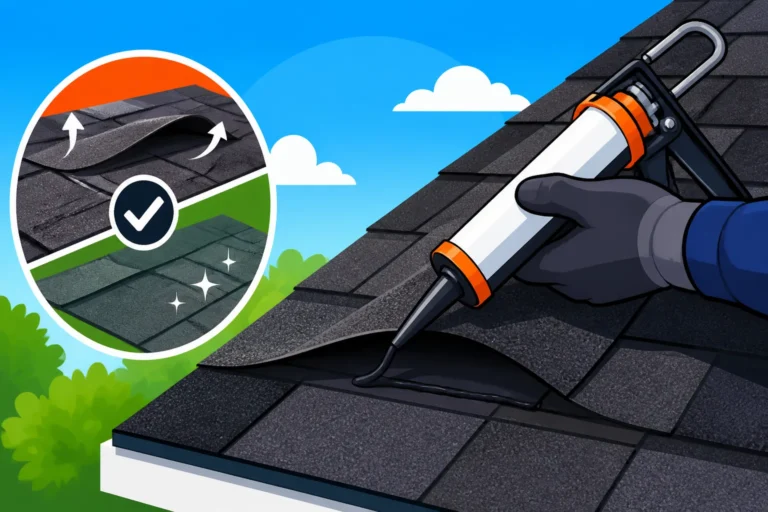
Before you even think about climbing a ladder, safety is paramount. Make sure you have a sturdy ladder, work gloves, and appropriate footwear for roofing (good grip is crucial). Never attempt roof work alone, especially if you're uncomfortable with heights or if the roof is wet or excessively steep. For this kind of repair, you'll need a tube of roofing cement (often called "flashing cement" or "plastic cement") and a caulk gun. A putty knife or trowel will also be useful for spreading. Choose a cool, dry day for the repair, as roofing cement needs time to cure and shouldn't be applied in extreme heat or cold.
Here's a step-by-step guide for patching minor cracks: First, thoroughly clean the area around the crack. Remove any loose granules, dirt, or debris with a stiff brush or a damp rag, and allow it to dry completely. This ensures the roofing cement adheres properly. Next, load your caulk gun with the roofing cement. Apply a small bead of cement directly over the hairline crack, ensuring it fills the crack entirely. Don't go overboard; a thin, even layer is usually sufficient. Then, using your putty knife or the back of a spoon, gently spread the cement into a thin, smooth layer that extends slightly beyond the crack, feathering the edges so it blends with the shingle. You can often press some loose granules (if you have any spare, or gently scrape some from an inconspicuous area of a healthy shingle) into the wet cement for better aesthetics and UV protection. Allow the cement to cure fully according to the manufacturer's instructions, which can take several hours to a day, depending on temperature and humidity. Remember, this method is best for very small, isolated cracks. For anything larger or deeper, you might need a more robust solution.
Replacing Individual Damaged Shingles
When a shingle has a deeper crack, is split completely, or is otherwise too damaged for a simple patch, replacing the entire shingle is often the best course of action. This is a more involved DIY project but is certainly manageable for handy homeowners who prioritize safety.
You'll need a few specific tools for this job: a flat pry bar (often called a "shingle ripper" or "cat's paw"), a hammer, roofing nails (galvanized and typically 1 ¼ inch long), and a utility knife. You'll also need replacement shingles that match your existing roof in color and style as closely as possible. Finding an exact match for an older roof can be tricky, but aim for the closest available. Consider getting a few extra for future repairs.
Here's how to replace a single cracked shingle:
- Prepare the area: Carefully lift the bottom edge of the shingle directly above the damaged one. Using the flat pry bar, gently separate the sealant strips that hold the surrounding shingles together. You want to loosen the shingle above and the two shingles on either side of the cracked one enough to access the nails.
- Remove the old shingle: Slide the pry bar under the damaged shingle and locate the nails holding it in place. There are usually four to six nails per shingle, located along the nailing strip. Carefully pry up each nail. Once all nails are removed, you should be able to slide the damaged shingle out from under the overlapping shingles. Be gentle to avoid damaging the surrounding shingles.
- Inspect and clean: Check the underlayment and roof decking for any damage. Clean any debris or old sealant from the area where the new shingle will sit.
- Install the new shingle: Slide the new shingle into place, ensuring it aligns perfectly with the adjacent shingles and extends underneath the overlapping shingle above. Make sure it's snug.
- Nail the new shingle: Lift the overlapping shingle above and carefully nail the new shingle into the roof deck. Place the nails in the correct nailing strip, typically just above the cutouts, ensuring they go through both the new shingle and the top of the shingle below it. Use four to six nails, spacing them evenly. Do not overdrive or underdrive the nails.
- Seal the shingles: Once nailed, apply a few dots of roofing cement under the tabs of the newly installed shingle and the tabs of any surrounding shingles you lifted, then press them down firmly. This helps reactivate the sealant and secure them against wind uplift. In warmer weather, the sun will help re-seal the shingle tabs.
This method works well for localized damage. For more widespread issues, you might need to consider a different approach. Remember, if you're replacing multiple shingles in close proximity, it might be more efficient to consider a larger repair.
Partial Roof Replacement Considerations
Sometimes, replacing a single shingle or patching a few cracks just isn't enough. If you have a cluster of severely cracked shingles in a concentrated area, or if damage extends across a significant portion of a single roof slope, a partial roof replacement might be the most economical and effective solution.
A partial roof replacement involves removing and replacing all the shingles and potentially the underlayment and decking within a specific, damaged section of your roof. This is a much larger undertaking than replacing a few individual shingles and is usually best handled by a professional roofing contractor. The decision to pursue a partial replacement often comes down to the extent of the damage. For example, if a large tree branch falls on one section of your roof, causing widespread cracking, punctures, and even structural damage to the decking, a partial replacement focused on that section is a logical choice. Similarly, if hail damage is concentrated on one side of your house due to prevailing winds during a storm, replacing that single slope could be a viable option.
One of the biggest challenges with a partial roof replacement is matching the new shingles to the old ones. Even if you use the exact same brand and color, new shingles will almost always look different due to weathering and sun exposure on the existing roof. This can result in a noticeable "patchwork" appearance, which might be a cosmetic concern for some homeowners. Reputable contractors will do their best to blend the new and old materials, sometimes by using slightly darker shades that will fade over time or by attempting to source discontinued colors. However, it's important to set realistic expectations about the visual outcome. Also, consider the age of your existing roof. If the undamaged sections are nearing the end of their lifespan (say, 15-20 years old), it might be more cost-effective in the long run to consider a full replacement rather than paying for a partial repair now and another full replacement in a few years. An experienced contractor can help you weigh these factors and provide an honest recommendation, helping you decide on a repair vs replace strategy.
Preventing Future Shingle Cracks
Addressing current cracks is important, but preventing new ones from forming is where you can really save money and extend the life of your roof. Proactive measures and smart choices can make a significant difference.
Regular Roof Inspections and Maintenance
Just like changing the oil in your car, regular check-ups are vital for the longevity of your roof. Being vigilant can catch small problems before they escalate into major headaches and prevent widespread cracking.
I highly recommend performing a visual inspection of your roof at least once a year, ideally in the spring and fall, and especially after any severe weather event. From the ground, use binoculars to look for anything out of the ordinary: lifted or missing shingles, signs of granule loss in your gutters, discolored areas, or, of course, any new cracks. Don't forget to check your attic, too! Look for water stains on the underside of the roof deck or insulation, which could indicate a leak. If you're comfortable and have the right safety gear, a walk-on inspection (if your roof pitch allows) can provide a closer look, but always prioritize safety. If you're not comfortable, or if you suspect issues, scheduling a professional roof inspection is a wise investment. Many roofing companies offer these services, often for a nominal fee or even free if they're providing an estimate. They have the expertise to spot subtle signs of damage and can give you an accurate assessment of your roof's health.
Beyond inspections, basic maintenance plays a huge role in preventing cracks. One of the simplest yet most effective tasks is keeping your roof and gutters free of debris. Leaves, pine needles, and branches can trap moisture against your shingles, accelerating their deterioration and leading to organic growth like moss and algae, which can also cause damage. Trim overhanging tree branches to prevent them from scraping against your roof in the wind or falling during storms. These small, consistent efforts help reduce the physical stress on your shingles and ensure they can do their job effectively for their expected lifespan.
Choosing Durable, High-Quality Shingles
When it's time for a new roof, the choices you make about materials can significantly impact how well your roof resists cracking in the future. Investing in more durable options can pay dividends in longevity and reduced maintenance.
Today's asphalt shingles come in a variety of grades and styles, with many designed to offer enhanced performance against the very issues that cause cracking. Architectural shingles (also known as dimensional shingles) are a fantastic upgrade from traditional 3-tab shingles. They are thicker, heavier, and constructed with multiple layers, giving them a more robust profile and greatly increased resistance to wind uplift and impact damage. Their improved construction means they can better withstand the stresses of thermal expansion and contraction, making them less prone to cracking over time. While the architectural shingle roof cost might be slightly higher upfront than 3-tab, their durability and aesthetic appeal often make them a worthwhile investment.
For homeowners in areas prone to hail and high winds, impact-resistant shingles are a game-changer. These shingles, often rated as Class 4 for impact resistance (the highest rating), are specifically engineered with a modified asphalt or a stronger fiberglass mat to absorb impact energy without cracking. This can significantly reduce the risk of damage from hailstones or falling debris. Many insurance companies even offer discounts for homes protected by Class 4 shingles dueaking down the overall cost of ownership. Brands like Malarkey (e.g., Vista, Legacy) and CertainTeed (e.g., Landmark Pro, Presidential Shake IR) are well-regarded for their impact-resistant offerings. There are also cool-roof shingles designed to reflect more sunlight, which can reduce the temperature of the roof surface, thereby mitigating some of the thermal stresses that lead to cracking. When planning a roof replacement, always discuss these options with your contractor and consider your local climate and potential weather threats.
Ensuring Proper Installation and Ventilation
Even the highest quality shingles won't perform optimally if they're not installed correctly or if your attic isn't properly ventilated. These two factors are critical in preventing premature cracking and extending your roof's life.
Proper installation is the bedrock of a durable roof. This means hiring a reputable, experienced, and manufacturer-certified contractor who understands the intricacies of installing asphalt shingles according to manufacturer specifications and local building codes. Crucial aspects include correct nailing patterns (nails driven to the right depth and in the correct location), proper shingle alignment, and securely sealing shingle tabs. An experienced installer will ensure the underlayment is properly laid, the flashing around penetrations like chimneys and vents is watertight, and that starter shingles and hip and ridge caps are installed correctly. All these elements work together to create a cohesive, durable system. Poor installation practices, such as over-driving or under-driving nails, can create stress points that lead to premature cracking. Similarly, if shingles aren't adequately sealed, they can lift in the wind, leading to flexing and eventual cracking. When looking for a contractor, always ask about their experience, certifications (like GAF Master Elite or Owens Corning Platinum Preferred), and how they ensure quality installation. These certifications often come with enhanced warranty options that protect against workmanship defects.
Adequate attic ventilation is another unsung hero in preventing shingle cracks. Your attic needs to "breathe" to regulate temperature and moisture. A poorly ventilated attic traps heat, especially in summer, which can cause the underside of your roof deck and shingles to reach extreme temperatures. This constant, intense heat from below, combined with solar radiation from above, drastically accelerates the drying and embrittlement of your shingles, making them much more susceptible to thermal cracking and alligatoring. In winter, poor ventilation can lead to moisture buildup and ice dams, which also cause stress and damage to shingles. Proper roof ventilation works by creating a continuous airflow from soffit vents (low on the roof) up to ridge vents (at the peak). This allows hot, moist air to escape and cooler, drier air to enter, keeping your attic and roof deck at a more moderate temperature. A balanced ventilation system helps to equalize the temperature across the shingle, reducing the thermal stress that causes cracking. When getting estimates for a new roof or even just a major repair, ensure your contractor discusses your current ventilation system and suggests any necessary upgrades.
What to Do If Your Roof is Beyond Repair
Sometimes, despite your best efforts, your roof reaches a point where repairs are no longer practical or cost-effective. Widespread cracking is a major indicator that your roof system is failing, and it's time to consider a full replacement. While this can feel daunting, approaching it systematically will make the process much smoother.
Signs Your Entire Roof Needs Replacement
It's one thing to fix a few cracked shingles; it's another entirely when the problem becomes ubiquitous. Knowing when to stop repairing and start planning for a new roof is crucial for your home's protection and your peace of mind.
Widespread cracking is, without a doubt, one of the most prominent signs that your entire roof system is failing. If you're seeing cracks not just in isolated spots, but across multiple slopes, or if the cracking is accompanied by extensive alligatoring, significant granule loss (where the exposed asphalt mat is clearly visible), or widespread curling and buckling of shingles, it's a strong indication that the asphalt has lost its protective qualities and the roof is nearing the end of its life. At this point, trying to patch individual cracks is like putting a band-aid on a dam – the underlying material is compromised, and new cracks will likely appear faster than you can fix the old ones.
Beyond cracking, look for other tell-tale signs. Frequent and recurring leaks, even after repairs, often point to a failing underlayment or widespread shingle deterioration. If you notice a sagging roof line, it suggests issues with the roof decking or even the underlying support structure, which goes far beyond just cracked shingles. Another critical factor is the age of your roof. Most asphalt shingle roofs are designed to last between 20-30 years. If your roof is approaching or has exceeded this age and is showing multiple signs of wear, including widespread cracking, then the cost to replace vs repair an old roof almost always favors replacement. Continually pouring money into repairs on an old, failing roof becomes a waste when that money could be put towards a durable, new system that will protect your home for decades. An experienced contractor will often recommend replacement when the cost of repairs approaches or exceeds a significant percentage of a full replacement, typically around 25-30%. You might even want to get an expert opinion on how many years left on your roof.
Working with a Reputable Roofing Contractor
Deciding to replace your roof is a big step, and choosing the right contractor is perhaps the most critical decision you'll make in the entire process. A quality installation from a trustworthy professional ensures your investment lasts.
The first step is to find licensed and insured roofers. This isn't just a suggestion; it's a non-negotiable requirement. A license proves they've met state or local professional standards, and insurance (general liability and workers' compensation) protects you from financial responsibility if there's an accident or damage to your property during the job. Always ask for proof of both and verify them. Next, look for contractors with a strong local reputation. Ask friends, family, and neighbors for recommendations, and check online reviews on platforms like Google, the Better Business Bureau, and industry-specific sites. Look for patterns in reviews – are customers consistently happy with communication, quality, and project timelines? Companies like Modernize are fantastic resources for connecting with vetted, local roofing contractors who have a proven track record.
When you're ready to get quotes, aim for at least three different estimates. This allows you to compare pricing, proposed materials, scope of work, and contractor professionalism. Don't just go for the cheapest bid; sometimes a significantly lower price can signal cutting corners on materials, labor, or insurance. A comprehensive estimate should detail everything: tear-off, disposal, underlayment, specific shingle brand and type, flashing, ventilation, and warranty information. During consultations, ask plenty of questions to gauge their expertise and communication style. Inquire about their process for handling permits, cleanup, and payment schedules. A reputable contractor will be transparent, answer all your questions patiently, and provide a clear, written contract that outlines all terms and conditions before any work begins. This due diligence in choosing a roofing contractor will ensure you get a quality roof replacement that stands the test of time.
Understanding Your Roofing Warranty and Insurance
Replacing a roof is a significant investment, and understanding the protections you have from both your roofing warranty and your homeowner's insurance policy can offer immense peace of mind. It’s crucial to know what's covered before and after the work is done.
When you invest in a new roof, you'll typically receive two types of warranties: the manufacturer's warranty and the contractor's workmanship warranty. The manufacturer's warranty, like those offered by GAF, Owens Corning, or CertainTeed, covers defects in the roofing materials themselves. This means if the shingles crack prematurely due to a manufacturing flaw (not weather damage or installation error), the manufacturer should cover the cost of replacement materials, and sometimes labor. These warranties can range from 20 years to lifetime coverage, though the terms often prorate over time. It's vital to register your warranty with the manufacturer after installation, as some require this for coverage to be valid.
The workmanship warranty, provided by your roofing contractor, covers the installation itself. If your shingles crack prematurely because they were improperly nailed, or if a leak occurs due to faulty flashing installation, your contractor should rectify the issue at no additional cost. The length of these warranties varies but typically ranges from 5 to 10 years, with some elite certified contractors offering longer periods, sometimes even matching the manufacturer's material warranty. Always ensure your contract clearly outlines the terms of the workmanship warranty. Understanding these details is a crucial part of how to read and compare roofing estimates.
For existing roofs with cracking caused by sudden events like hail or severe wind, your homeowner's insurance policy might provide coverage. Most standard policies cover damage caused by "perils" like storms, fire, and vandalism. However, they generally do not cover damage from age, wear and tear, or lack of maintenance – which would include gradual cracking due to UV exposure or thermal cycling. If you suspect storm damage, contact your insurance company immediately to file a claim. An adjuster will inspect your roof to determine if the damage is covered. It's helpful to have documentation, like photos of your roof before the storm, if possible. Remember that your deductible will apply, and your policy might pay out based on "actual cash value" (depreciated value) or "replacement cost value," which can significantly affect your payout. Always review your policy details or speak with your insurance agent to understand what does insurance cover roof replacement, especially for storm damage.
Disclaimer
Please remember that this article provides general information and guidance. Roofing work can be complex and dangerous. Always prioritize safety, and when in doubt, consult with a qualified, licensed, and insured roofing professional for specific advice tailored to your home's needs and local building codes.