Roofing Cost: Cash vs Financing
Suddenly facing the prospect of a new roof can feel like a punch to the gut for any homeowner. The sheer cost often leaves us scrambling, wondering if we should tap into savings or if there are smarter ways to spread out the expense. Deciding between paying for your asphalt roofing project with cash or exploring financing options isn't just about the immediate cost; it’s about understanding the long-term implications for your financial health and overall peace of mind. This comprehensive guide will walk you through the nuances of each payment method, helping you make an informed decision for your home.
The Appeal of Paying for Your Roof with Cash
There’s something inherently satisfying about paying for a major home improvement project like a new roof entirely with cash. It feels responsible, eliminates future worry, and can even offer some surprising benefits you might not have considered. It's often the dream scenario, but it's not always the most practical or even the best option for everyone.
Immediate Benefits and Peace of Mind
The most obvious perk of paying cash for your roof replacement is avoiding interest charges. When you finance, even with a low-interest loan, that interest adds to the overall cost, sometimes significantly. With cash, what you see is truly what you get. You're paying the agreed-upon price, and not a penny more in financing fees or interest accrual. This leads to complete transparency in your total project cost.
Beyond the numbers, there's a profound sense of relief that comes with being debt-free. Imagine the roof installation is complete, and you don't have a looming monthly payment hanging over your head for the next few years. This psychological benefit is often underestimated, but it contributes heavily to your overall financial well-being. It frees up your monthly budget for other priorities, whether that's saving for retirement, investing, or simply enjoying your hard-earned money. Paying cash also means you maintain full liquidity and don't tie up lines of credit that might be needed for other emergencies or investments down the line.
Furthermore, paying cash can occasionally give you a slight edge when negotiating with roofing contractors. While not always a guarantee, some contractors might offer a small discount for a cash payment, as it simplifies their bookkeeping and ensures immediate payment without dealing with lender processing times or fees. It's not a huge discount, usually just a few percentage points if at all, but every little bit helps when you're looking at a substantial investment like a new asphalt shingle roof. Be sure to ask about this possibility when you're gathering your roofing estimates.
When Cash is King: Ideal Scenarios
Paying cash truly shines when your emergency fund is robust and replenishing the amount spent on the roof won't leave you vulnerable. For example, if you have a significant sum set aside for unexpected repairs or job loss, and your roof replacement cost fits comfortably within that buffer, then using cash can be an excellent choice. You're not depleting funds that are critical for other life events, and you can rebuild your savings over time without the added pressure of debt payments.
Another ideal scenario is when the "opportunity cost" of your cash is low. What does that mean? It means the money you'd use for the roof isn't currently earning you significantly more than the interest rate you'd pay on a loan. If your savings are sitting in a low-yield account, for instance, paying cash for a roof with an effective interest rate of 6-8% (if you were to finance) could actually save you more money than keeping that cash in the bank. However, if you have investments earning a much higher return, then financing at a lower interest rate might be more financially advantageous. This is where a little financial planning comes into play to determine which option truly saves you more in the long run.
Ultimately, if your primary goal is to achieve the absolute lowest total cost for your roof and you have the liquid assets readily available without compromising your financial security, then cash is undeniably king. It simplifies the transaction, cuts out interest, and provides unparalleled peace of mind. Just be sure you've thoroughly compared all your options and are confident in your decision to commit that capital. Before making any final decisions, it's wise to get multiple quotes and understand the full breakdown of your roof replacement cost: complete breakdown, including potential hidden costs in a roof replacement.
Navigating the World of Roofing Financing Options
For many homeowners, a roof replacement is a significant investment that simply isn't feasible to pay for upfront with cash. That's where financing comes in. It allows you to break down a large expense into manageable monthly payments, making a critical home improvement accessible without draining your savings. However, the world of financing can be complex, with various options and terms to understand.
Understanding Different Loan Types
When you're looking at roof financing options explained, you'll encounter several common types. Each has its own set of pros and cons, and the best choice for you will depend on your financial situation, credit score, and risk tolerance.
- Home Equity Loans and HELOCs: These are popular choices because they typically offer lower interest rates compared to unsecured loans. A home equity loan provides a lump sum, while a Home Equity Line of Credit (HELOC) functions more like a credit card, allowing you to draw funds as needed up to a certain limit. Both use your home as collateral, which means if you default, your home could be at risk. However, the interest paid on these loans can often be tax-deductible (consult a tax professional), which is a nice bonus. They also often have longer repayment terms, which can mean lower monthly payments, but you'll pay more interest over time. Services like Modernize can help connect you with lenders offering these types of loans, making it easier to compare rates from different providers.
- Personal Loans: These are unsecured loans, meaning they don't require collateral. This makes them less risky for the borrower in terms of losing their home, but it usually comes with higher interest rates to offset the lender's increased risk. Approval is heavily based on your credit score and income. Personal loans offer a fixed interest rate and fixed monthly payments, which can be great for budgeting. The terms are typically shorter than home equity loans, usually 2-7 years.
- Contractor-Specific Financing: Many roofing companies partner with lenders to offer financing directly to their customers. This can be incredibly convenient, sometimes even offering promotional 0% APR roof financing options for a limited period (e.g., 6, 12, or 18 months). Be very cautious with these deals. Often, if you don't pay off the entire balance before the promotional period ends, deferred interest can kick in, and you'll be charged interest on the original loan amount from day one. Always read the fine print carefully, especially regarding deferred interest clauses. Some reputable brands like GAF and Owens Corning offer strong warranties that are tied to certified contractors, and those contractors may also offer attractive financing options.
- FHA Title I Loans: These are government-backed loans designed to help homeowners finance home improvements. They have specific requirements and limits but can be a good option for those who might not qualify for conventional loans or who have less equity in their home. The interest rates are typically fixed and competitive.
Factors Influencing Your Financing Terms
Regardless of the loan type you choose, several key factors will dictate the terms you receive:
- Credit Score: Your credit score is perhaps the most significant factor. A higher score signals to lenders that you are a reliable borrower, leading to lower interest rates and more favorable terms. If your credit isn't stellar, you might still qualify for a loan, but expect higher rates. Before applying for financing, it’s always a good idea to check your credit report for any inaccuracies and take steps to improve your score if needed.
- Loan Amount and Term: The amount you need to borrow and the length of the repayment period (loan term) directly impact your monthly payments and the total interest paid. A longer term will result in lower monthly payments but higher overall interest. A shorter term means higher monthly payments but less interest paid over the life of the loan. You need to find a balance that fits your budget without overextending your financial commitments.
- Interest Rates and Fees: Don't just look at the advertised interest rate. Ask about any origination fees, application fees, or prepayment penalties. These can add to the true cost of borrowing. A slightly higher interest rate with no fees might be cheaper than a lower interest rate with significant upfront costs. This is why comparing roofing estimates and financing proposals is so crucial.
- The Importance of Getting Multiple Quotes: Just as you wouldn't settle for the first roofing estimate you receive, you shouldn't accept the first financing offer either. Shop around! Get quotes from different banks, credit unions, and even your roofing contractor's preferred lenders. Platforms like Modernize can streamline this process by providing you with quotes from various financing partners, giving you a broad view of your options without multiple applications. This allows you to choose the most competitive rates and terms, which can significantly reduce your average roof replacement cost this year.
Cash vs. Financing: Making the Right Decision for Your Home
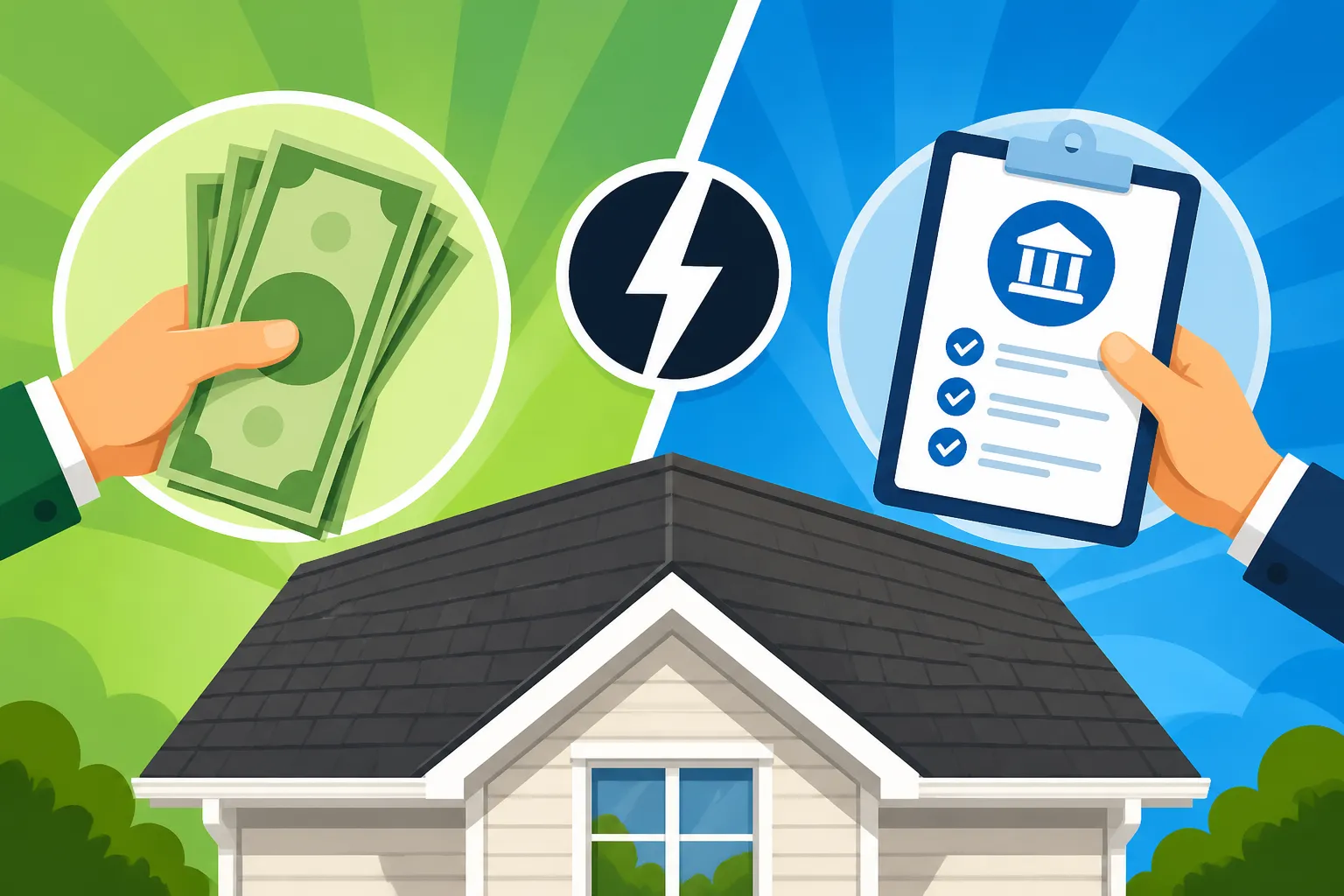
Deciding whether to pay for your roof with cash or finance it is a deeply personal financial choice. There's no universal "right" answer; it depends entirely on your specific circumstances, priorities, and risk tolerance. What might be an excellent strategy for one homeowner could be a poor choice for another.
Weighing the Pros and Cons
Let's break down the core advantages and disadvantages to help you gain clarity:
Cash Payment Pros:
- No Interest Paid: This is the big one. You avoid all financing charges, making the total cost of your roof project the absolute lowest it can be.
- Simplified Transaction: No loan applications, no monthly payments, no debt. It's a clean, straightforward process.
- Potential for Discounts: Some contractors might offer a small incentive for immediate cash payment.
- Financial Freedom: No new debt means your credit lines remain open, and your monthly budget isn't strained by an additional payment. This can be crucial if you have other financial goals like a child's college fund or retirement.
Cash Payment Cons:
- Depletes Savings: Using a large sum of cash can significantly reduce your liquid assets, potentially leaving you vulnerable if another unexpected expense arises. This is why having a robust emergency fund is paramount.
- Opportunity Cost: The money spent on the roof could potentially be invested elsewhere, earning a higher return than the interest you'd save by avoiding a loan. This is a nuanced point and requires careful consideration of current market conditions and your personal investment strategy.
- Reduced Financial Flexibility: Once that cash is gone, it's gone. If you suddenly need funds for something else, you might find yourself borrowing at a less favorable rate.
Financing Pros:
- Preserves Savings: You keep your emergency fund and other investments intact, maintaining financial security and liquidity. This can be especially important if you anticipate other large expenses soon.
- Manageable Payments: Breaking down a large cost into smaller, predictable monthly payments makes a new roof much more affordable for many budgets. This is the cornerstone of why most people choose financing.
- Access to Necessary Repairs Sooner: If your roof is failing and you don't have enough cash saved, financing allows you to address the problem promptly, preventing further damage to your home.
- Potential for Tax Deductions: Interest on home equity loans or HELOCs can sometimes be tax-deductible, offering a slight financial advantage. (Always consult a tax professional for personalized advice.)
Financing Cons:
- Interest Charges: You will almost always pay more in total for your roof due to interest over the life of the loan. This is the trade-off for convenience and preserving cash.
- Debt Burden: You're taking on new debt, which can impact your credit utilization and debt-to-income ratio, potentially affecting your ability to get other loans (like a car loan or mortgage refinance) in the future.
- Collateral Risk: If you use a home equity loan or HELOC, your home is collateral, meaning non-payment could lead to foreclosure.
- Complex Terms: Some financing options, especially promotional 0% APR offers, can have tricky deferred interest clauses or other hidden fees that require careful review. This is why understanding all the details of any financing proposal is essential.
A Strategic Approach to Budgeting and Payment
No matter which path you lean towards, a strategic approach to budgeting is your best friend. Start by getting several detailed roofing estimates. Don't just look at the bottom line; dive into what each estimate includes, such as the cost of roof tear-off and disposal, underlayment, flashing, and ventilation. This will give you a clear picture of the full cost involved and help you choose a roofing contractor who is transparent and thorough.
If you're considering financing, use a reputable platform like Modernize to compare loan offers. They can help you find suitable lenders who understand home improvement financing. Look closely at the interest rates, the length of the repayment term, and the total cost of the loan, not just the monthly payment. Sometimes, a slightly higher monthly payment over a shorter term can save you thousands in interest over time.
Think about your long-term financial goals. Do you plan to sell your home in the next few years? Are you saving for another major expense? How important is it for you to be debt-free? These personal considerations should weigh heavily in your decision. For some, the peace of mind of having no roof debt outweighs the opportunity cost of investing that cash. For others, maintaining a healthy cash reserve is paramount, even if it means paying some interest. The key is to run the numbers, consider your comfort level with debt, and choose the option that best supports your overall financial health.
Practical Considerations Beyond the Payment Method
While how you pay for your new roof is a huge decision, it’s not the only factor you need to consider. There are always practical aspects and potential surprises that can impact your overall budget and the smoothness of your roofing project. Being prepared for these can save you headaches and unexpected expenses down the road.
Uncovering Potential Hidden Costs
One of the biggest frustrations for homeowners undergoing a roof replacement is encountering unforeseen expenses. The initial estimate you receive might not cover every single contingency, and that's not always the contractor being deceptive, but simply the nature of uncovering hidden issues once the old roof is removed.
- Roof Decking Replacement: When the old shingles are torn off, it’s not uncommon to discover rotten or damaged roof decking underneath. This could be due to years of slow leaks, poor ventilation, or insect damage. Replacing a section of roof decking can add hundreds or even thousands of dollars to your project. It’s a necessary repair because the new shingles need a solid, even surface to be properly installed and warrantied. Always ask your contractor about their process for identifying and pricing out roof decking replacement cost if issues are found.
- Permit Fees: In most municipalities, a roofing permit is required for a full roof replacement. The cost varies widely by location, from less than $100 to several hundred dollars. While your contractor usually handles pulling the permit, ensure this fee is clearly itemized in your estimate. If you're wondering, "Do you need a permit to replace a roof?", the answer is almost always yes.
- Disposal Costs: The old shingles and debris from your tear-off need to be properly disposed of. This cost is usually included in your estimate, but it’s worth confirming. Factors like the number of existing shingle layers can increase disposal weight and thus the cost.
- Unexpected Repairs: Beyond decking, there might be other minor repairs needed for your roof's underlying structure, flashing around chimneys or skylights, or even damaged fascia and soffit. While a good contractor will inspect thoroughly during the estimation phase, some things only become apparent during the tear-off. Having a small buffer in your budget for these potential surprises is always a smart move.
The Long-Term Value of Your Investment
Thinking beyond the immediate cost, a new asphalt shingle roof is a significant investment that adds substantial long-term value to your home. It’s not just about protection from the elements; it’s about enhancing your property’s appeal, energy efficiency, and overall structural integrity.
A new roof immediately boosts your home's curb appeal, making it more attractive to potential buyers if you decide to sell in the future. The return on investment (ROI) for a roof replacement is consistently high, often ranking among the top home improvement projects in terms of value recouped at resale. Plus, a new roof can signal to buyers that the home has been well-maintained, potentially leading to a quicker sale at a better price.
Modern asphalt shingles also offer improved energy efficiency. Newer materials and installation techniques, combined with proper roof ventilation, can help regulate attic temperatures, reducing the strain on your HVAC system during hot summers and cold winters. This translates to lower energy bills, saving you money month after month. For example, some cool-roof shingle options are specifically designed to reflect more sunlight, further reducing heat absorption.
Finally, a new roof provides renewed protection and peace of mind for decades to come. With proper installation and maintenance, an asphalt shingle roof can last 20-30 years or more, shielding your home and its contents from severe weather. This longevity is often backed by comprehensive manufacturer warranties (like those from GAF, Owens Corning, or CertainTeed) and workmanship warranties from your chosen contractor, ensuring your investment is protected. Knowing you have a reliable roof over your head allows you to focus on other aspects of homeownership without the constant worry of leaks or damage.
| Feature | Paying with Cash | Financing a New Roof |
|---|---|---|
| Total Cost | Lowest (no interest or loan fees) | Higher (includes interest and potential fees) |
| Immediate Outlay | High (full amount upfront) | Lower (monthly payments spread out) |
| Impact on Savings | Significantly depletes liquid savings | Preserves savings and emergency funds |
| Debt Burden | None | Creates new debt with monthly obligations |
| Credit Score Impact | None | Can improve (if paid responsibly) or hurt (if missed payments) |
| Flexibility | Less flexible with immediate funds once spent | More financial flexibility by retaining cash |
| Approval Process | Instant (if funds are available) | Requires application, credit check, and approval process |
| Interest | No interest paid | Interest accrues over the loan term (unless 0% APR) |
| Collateral | None (for unsecured payment) | Required for home equity loans/HELOCs; none for personal loans |
| Peace of Mind | High (no future payments or debt) | Can be high (if payments are manageable), or stressful (if overextended) |
Disclaimer
The information provided in this article is for general informational purposes only and does not constitute financial, legal, or professional advice. Always consult with a qualified financial advisor, roofing contractor, and tax professional before making any significant financial decisions regarding your home. Roofing costs and financing options vary widely based on location, contractor, materials, and individual creditworthiness.