How to Replace a Few Damaged Shingles
Replacing damaged asphalt shingles involves using a flat pry bar and roofing nails to safely remove broken tabs and install new ones.
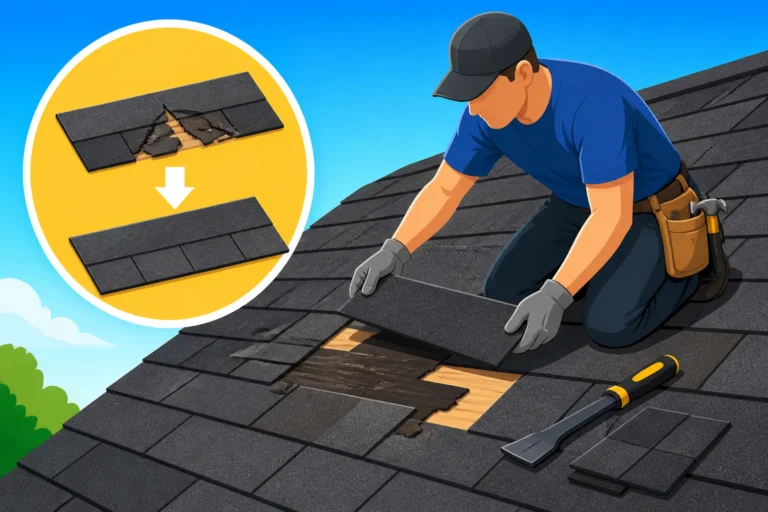
Replacing damaged asphalt shingles involves using a flat pry bar and roofing nails to safely remove broken tabs and install new ones.
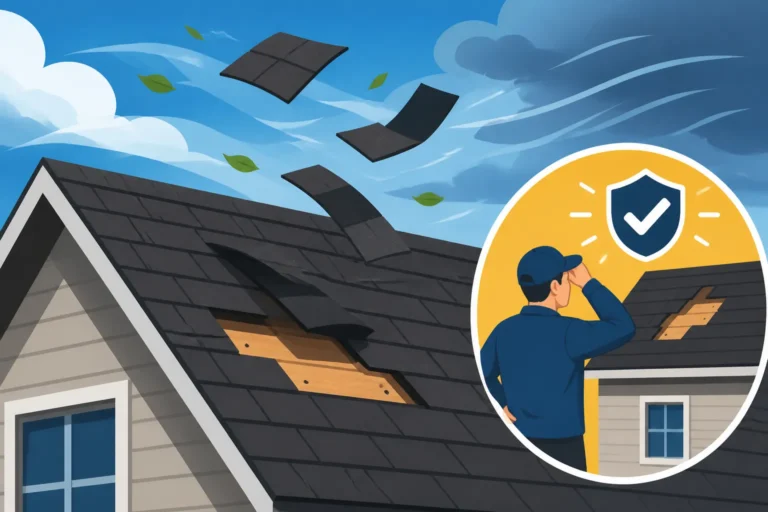
Wind-damaged asphalt shingles require safety checks, photo documentation, temporary roof tarping, professional assessments, and insurance claim navigation.
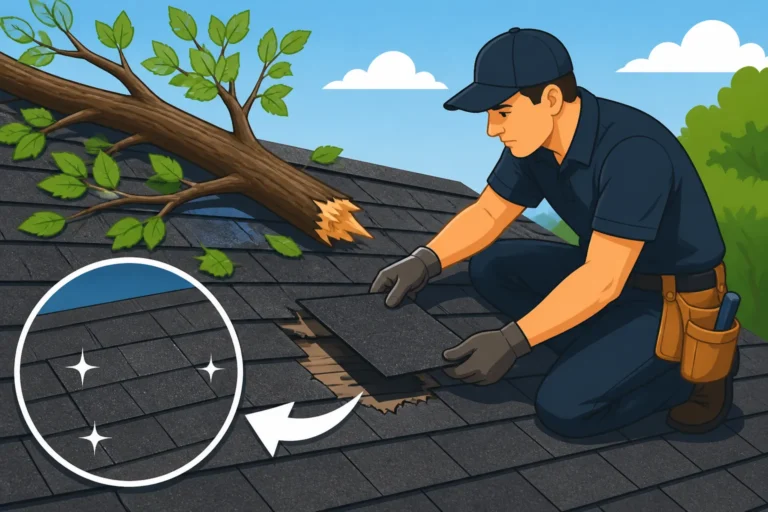
Roof shingle damage from fallen tree branches requires safety checks, interior leak inspections, and proper insurance photo documentation.
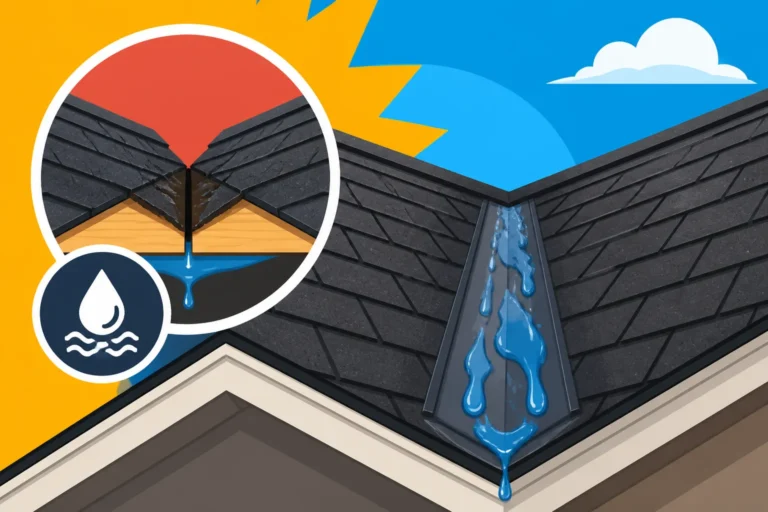
Roof valley leaks stem from poor installation, material degradation, and accumulated debris that blocks proper drainage.
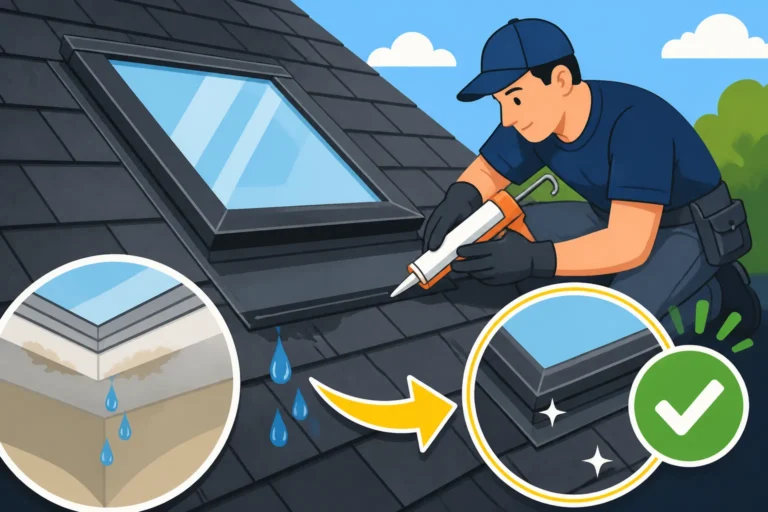
Skylight leaks stem from flashing failures, degraded seals, or glass damage, requiring specific inspection and repair methods.
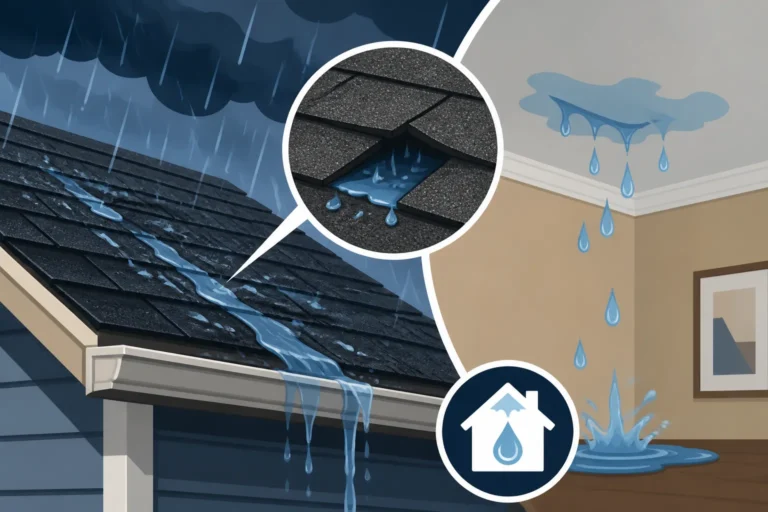
Heavy rain roof leaks stem from damaged flashing, saturated asphalt shingles, or overwhelmed gutters causing water intrusion.
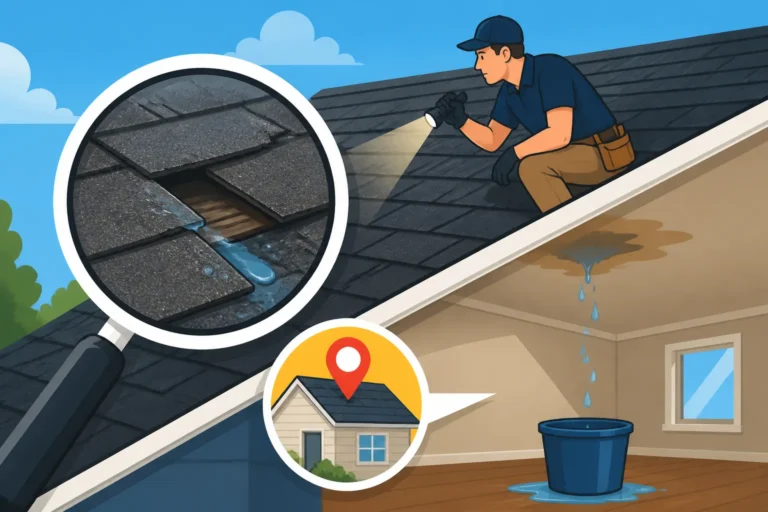
Homeowners can learn how to systematically track down roof leaks using attic inspections, water tests, and exterior checks.
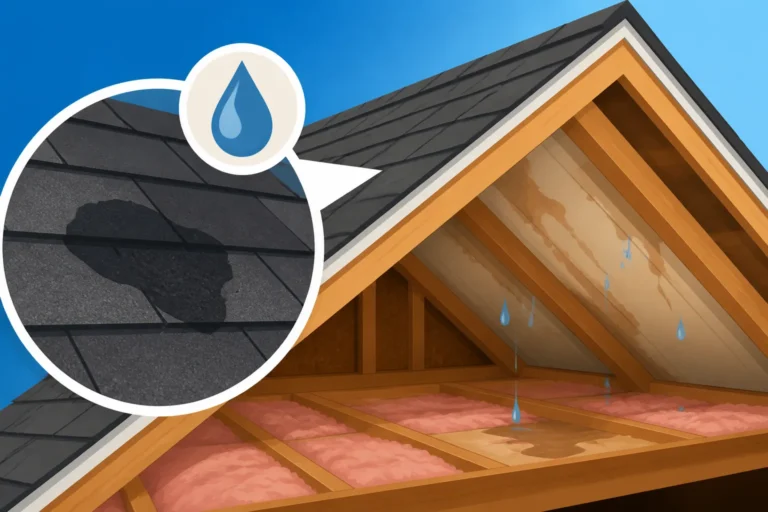
Attic water damage identification involves spotting dark ceiling stains, mold growth, warped decking, and compressed insulation.
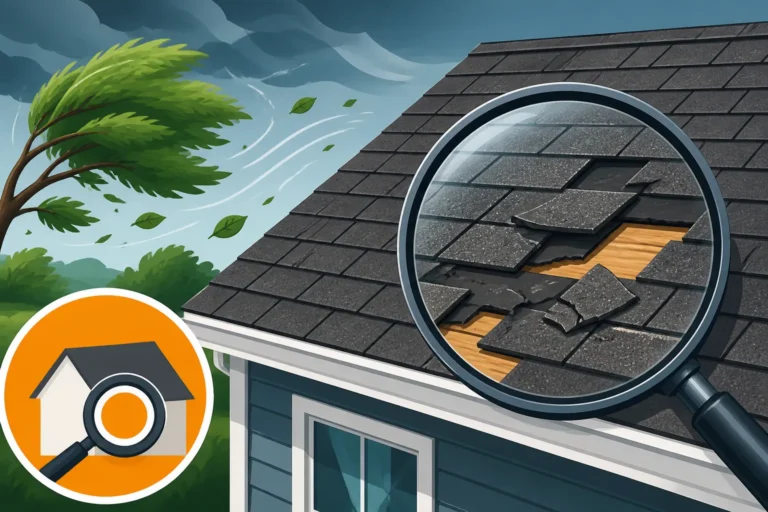
Roof damage inspection steps after windstorms explain how to safely spot missing shingles, granule loss, and broken flashing.
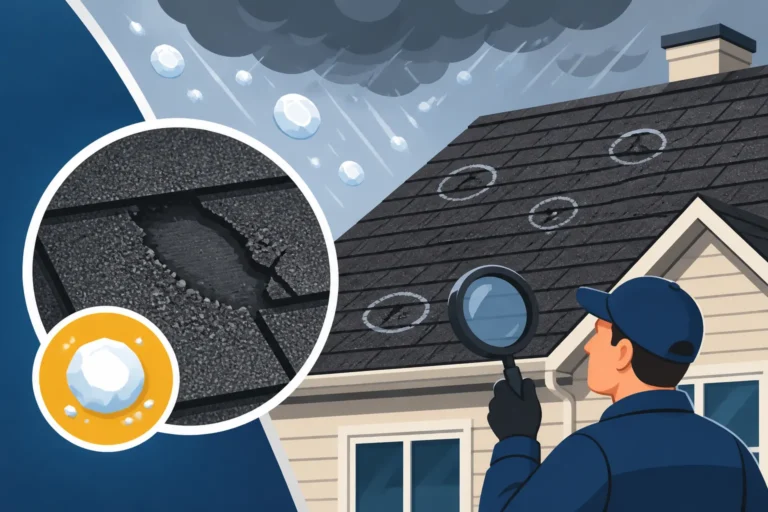
Roof damage inspection methods, granule loss signs, and property checks help homeowners safely spot severe impacts after hailstorms.