How to Get Roofing Quotes and Compare Them
Needing a new roof can feel like a daunting challenge, and one of the biggest headaches is figuring out how to get reliable estimates and then make sense of them all. It's not just about the bottom line price; it's about understanding what you're actually paying for, making sure you're comparing apples to apples, and avoiding common pitfalls. This guide is here to walk you through the entire process, from finding reputable contractors to deciphering bids, so you can make an informed decision with confidence.
Understanding Why Getting Multiple Quotes Matters
It’s tempting, when you're busy or feeling overwhelmed, to just go with the first roofing quote you receive. Maybe a friend recommended a roofer, or a contractor left a flyer on your door after a storm. But trust me, taking that shortcut can lead to serious regrets and often, a much bigger headache (and bill!) down the road.
The Pitfalls of a Single Bid
Relying on just one estimate is like trying to buy a car without test-driving any others. You might get a decent deal, or you might completely miss out on better options, features, or even a more reliable vehicle for your budget. With a roof, the stakes are even higher because it's protecting your entire home.
For instance, imagine your neighbor, bless their heart, raves about their roofer and you decide to call them for your home in Dallas. That contractor gives you a quote, and you think, "Great, one less thing to worry about!" But what if your roof has a steeper pitch, more complex valleys, or requires a full tear-off when your neighbor's only needed a simple overlay? Without other bids, you have no way of knowing if that first quote is fair, whether it includes everything necessary, or if it's inflated. You could be paying too much, or worse, getting a bare-bones job that will fail prematurely. A single bid offers no context for pricing, no insight into industry standards for your area, and no competitive pressure to ensure you're getting the best value.
Uncovering Hidden Costs and Scope Differences
Roofing quotes are rarely simple. They involve materials, labor, permits, disposal, flashing, underlayment, and often unforeseen issues like rotted decking. When you get multiple quotes, you start to see where contractors differ in their approach and, critically, what they choose to include or exclude. This is where many homeowners get tripped up.
Consider two quotes for a home in Phoenix. One might list "new asphalt shingles" and a total price, while another meticulously details "GAF Timberline HDZ architectural shingles," "synthetic underlayment," "ice and water shield in valleys," "new drip edge," "full tear-off and disposal," and the permit fee. The first quote might seem cheaper on the surface, but it's likely hiding costs that will become "change orders" later. For example, the tear-off and disposal cost of roof tear-off and disposal can be significant, ranging from $1,000 to $3,000 or more depending on the size of your roof and the number of layers being removed. If it's not explicitly in the quote, assume it's not included, and you'll be hit with an unexpected bill mid-project.
Furthermore, different contractors may propose different solutions for the same problem. One might suggest replacing a small section of roof decking, while another recommends a more extensive (and costly) repair. Comparing detailed line items allows you to ask targeted questions, understand the rationale behind each choice, and ultimately ensure the scope of work aligns with your needs and expectations, preventing costly surprises down the line.
How to Find Reputable Roofing Contractors
Finding a good roofing contractor is perhaps the most crucial step in getting reliable quotes and a quality roof. You don't want just anyone climbing on your house; you need someone experienced, trustworthy, and committed to doing the job right.
Leveraging Online Resources and Local Networks
In today's digital age, your search for a reputable roofer often begins online. Platforms like Angi, HomeAdvisor, and even specialized services like Modernize can connect you with contractors in your area. These sites often feature customer reviews, ratings, and details about the contractors' services and certifications. It's a great starting point to gather a list of potential candidates, but don't stop there. Think of it as a preliminary vetting process. When checking reviews, look for consistent themes – positive comments about professionalism, communication, and quality, and any recurring negative feedback, especially regarding hidden costs or unfinished work.
Beyond online platforms, local networks are incredibly powerful. Ask friends, family, neighbors, and even colleagues who they've used and if they were happy with the work. Word-of-mouth referrals from people you trust can often lead you to some of the best local talent. For instance, if your neighbor down the street in Atlanta just had their roof done and it looks fantastic, ask them about their experience. They can give you firsthand accounts of the contractor's punctuality, cleanup, and adherence to the budget. Don't be shy about asking if you can actually see the finished product! Look for consistency in reviews across different platforms, and prioritize contractors with a strong local presence and positive track record.
Verifying Credentials and Experience
Once you have a list of potential contractors, it's time to dig deeper and verify their credentials. This step is non-negotiable and essential for your peace of mind and protection.
First, always check if a contractor is licensed and insured. Licensing requirements vary by state and even by county, but a legitimate roofer should be able to provide proof of their current license. For example, in Florida, roofing contractors must be licensed by the Department of Business and Professional Regulation (DBPR). Don't just take their word for it – verify it on the state's licensing board website. Equally important is insurance: they should carry both general liability insurance (to cover any damage to your property) and worker's compensation insurance (to cover their crew if someone gets injured on your property). Without proper insurance, you could be held liable for accidents or damages. Asking to see proof of insurance is a fundamental question to ask a roofing contractor before hiring.
Beyond basic credentials, look for experience and manufacturer certifications. A contractor who has been in business for several years and specializes in asphalt roofing is generally a safer bet. They'll have seen a variety of roof types and encountered different challenges. Manufacturer certifications, such as GAF Master Elite, Owens Corning Platinum Preferred, or CertainTeed SELECT ShingleMaster, are also strong indicators of quality. These certifications mean the contractor has met stringent requirements set by the shingle manufacturer, including training, financial stability, and a commitment to quality installation. This often allows them to offer enhanced manufacturer warranties that you wouldn't get otherwise. When interviewing potential roofers, don't hesitate to ask about their specific experience with roofs similar to yours, especially concerning pitch or size.
Preparing Your Home and Information for Accurate Quotes
Getting accurate and comparable quotes is a two-way street. While contractors need to do their due diligence, you, as the homeowner, can significantly streamline the process and ensure you get the most precise estimates by being prepared.
Knowing Your Roof's Basics
Before any contractor even steps foot on your property, having some fundamental information about your roof ready can be incredibly helpful. This isn't just about showing you're organized; it helps the contractor understand the scope of work more quickly and often provides a clearer starting point for their assessment.
Start with the basics:
- Age of your current roof: Do you know roughly when it was installed? If you've lived there a while, you might have records. If not, even an educated guess is better than nothing.
- Current shingle type: Are they 3-tab, architectural, or something else? You can often tell by looking at them from the ground or checking old photos.
- Approximate square footage: While contractors will measure, having a general idea (e.g., "it's about a 2,000 sq ft house") helps them gauge the scale quickly. Remember, roof square footage is different from living space square footage.
- Known issues: Have you had any leaks? Do you know if your attic has proper ventilation? Have you seen any curling shingles or missing granules? Pointing out these concerns upfront can help them focus their inspection.
Knowing these details empowers you to have a more informed conversation. For instance, if your roof is 25 years old and shows signs of widespread granule loss, you already know you're likely looking at a full replacement rather than a simple repair. This also helps you evaluate their recommendations. A contractor suggesting a patch job on a very old, failing roof might not have your best long-term interests at heart, unless that's specifically what you requested for an interim solution.
Clearly Communicating Your Expectations and Concerns
This is where you become an active participant in the quoting process. Don't just sit back and let the contractors tell you what they think you need. Have a clear idea of what you want and what your priorities are.
Before each contractor arrives for their site visit, create a detailed "wish list" or a list of specific questions and concerns. For example:
- "I've noticed a persistent leak around my chimney; can you pay special attention to the flashing there?"
- "I want to upgrade to a more durable architectural shingle, perhaps impact-resistant due to hail storms we've had."
- "Our attic gets really hot in the summer; can you assess our current ventilation and recommend improvements?"
- "I'm concerned about yard cleanup; what steps do you take to protect landscaping and remove debris?"
Write these down and provide them to each contractor. This ensures everyone is bidding on the same scope of work, making the comparison much easier later on. Also, ask about their proposed timeline, how long a roof replacement takes, and what their communication process is like during the project. The clearer you are with your expectations, the more accurate and useful the quotes you receive will be. By providing consistent information to every contractor, you're setting yourself up for truly comparable bids, which is key to making the best decision. You want to avoid any surprises down the line, and clear communication from the start is the best way to do that.
The Quote Request Process: What to Expect
Once you've identified a few reputable contractors and prepared your information, it's time to engage with them directly. This phase involves everything from initial contact to receiving the actual estimates.
Scheduling Site Visits and Initial Consultations
Most reputable roofing contractors will insist on an in-person site visit, and you should too. While satellite measurements can provide a rough estimate, they simply can't replace the thorough assessment of a trained professional walking your roof and inspecting your attic. This is a crucial step in understanding how to read and compare roofing estimates effectively.
During a site visit, expect the contractor to:
- Measure your roof: They'll determine the precise square footage and pitch.
- Inspect the current roof: They'll look for damage, evaluate the condition of shingles, flashing, and other components. They'll also check for the number of existing shingle layers.
- Inspect the attic: This is critical to assess the condition of the roof decking, check for proper ventilation, and identify any signs of leaks from the underside.
- Discuss your needs: This is your opportunity to go over your wish list and ask any specific questions you have about materials, warranties, or the process.
It's generally recommended to get between three to five quotes. This gives you a good range of options without overwhelming you with too many choices. Schedule these visits fairly close together so the details are fresh in your mind for comparison. Be present during these consultations. It’s your chance to assess their professionalism, communication style, and expertise firsthand. Pay attention to how they answer your questions and if they seem knowledgeable and genuinely interested in addressing your concerns.
Understanding Different Estimate Formats and Details
After the site visit, you'll start receiving the actual quotes. These can vary significantly in their format and level of detail, which is why a careful review is essential.
Some contractors might provide a simple, one-page estimate with just a total price and a brief description of the work. Others will present a comprehensive, multi-page proposal that breaks down every single cost and specification. Ideally, you want the latter. A detailed quote should include:
- Materials: Specific brands and types of shingles (e.g., Owens Corning Duration, CertainTeed Landmark Pro), underlayment (synthetic vs. felt), ice and water shield, flashing, and ventilation products.
- Scope of Work: A clear description of what will be done, including tear-off, disposal, replacement of damaged decking (and how much is included), installation of new components, and cleanup.
- Permit Fees: Who is responsible for pulling the permit and the cost associated with it.
- Labor Costs: While often bundled into the total price, some contractors might break down material cost vs labor cost.
- Warranty Information: Details on both the manufacturer's warranty and the contractor's workmanship warranty.
- Payment Schedule: When deposits are due, progress payments, and final payment.
- Start and Completion Dates: A realistic timeline for the project.
Don't hesitate to ask for clarification on anything that's unclear. If a quote is vague, request more detail. For example, if it just says "new underlayment," ask if it's felt or synthetic, and what weight or type. If it mentions "decking repair," ask how many sheets are included before extra charges apply. The more precise the estimate, the fewer surprises you'll have once the work begins.
Key Components to Look for in a Roofing Quote
When you finally have a stack of quotes in front of you, it can feel like you're staring at a foreign language. But understanding the core components is critical to making an informed decision. Don't just look at the bottom line; delve into the details.
Material Specifications and Quantities
This is one of the most significant areas where quotes can differ and where hidden costs can lurk. A reputable contractor will explicitly list the materials they plan to use, leaving no room for guesswork.
You should expect to see:
- Shingle Brand and Type: Is it a 3-tab shingle or an architectural shingle? What's the specific product line (e.g., GAF Timberline HDZ, Owens Corning Duration)? The type of shingle dramatically affects both cost and longevity. For instance, the architectural shingle roof cost is generally higher than 3-tab but offers greater durability and aesthetic appeal.
- Underlayment: Is it traditional felt paper (like 15lb or 30lb) or a more advanced synthetic underlayment? Synthetic options, while sometimes costing a bit more, offer superior protection against moisture and tearing.
- Ice and Water Shield: Is this specified for vulnerable areas like eaves, valleys, and around penetrations? This self-adhering membrane is crucial for preventing leaks, especially in cold climates or areas prone to heavy rain.
- Flashing: Will new flashing be installed around chimneys, skylights, and vent pipes, or are they planning to reuse existing flashing? New flashing is almost always recommended for a full replacement.
- Ventilation: What type of roof ventilation is included? Ridge vents, box vents, or possibly turbine vents? Proper attic ventilation is vital for preventing heat and moisture buildup, which can prematurely age your roof and increase energy bills.
Also, pay attention to quantities. Roofs are measured in "squares," where one square equals 100 square feet. All contractors should be bidding on roughly the same number of squares for your roof, plus some waste factor. If one contractor's material quantity for shingles is significantly lower than others, it could indicate they've mismeasured or are planning to cut corners. Don't be afraid to ask for samples of the proposed shingles and underlayment so you can physically compare them. This level of detail ensures you're getting the quality and protection you expect and prevents contractors from switching to cheaper, inferior materials without your knowledge.
Labor, Subcontracting, and Project Management
Beyond the materials, the labor and how the project is managed are paramount to a successful roof replacement. This aspect of the quote speaks to the quality of the installation and the professionalism of the contractor.
- Labor Breakdown: While not always itemized separately from materials, understanding how labor is factored into the total cost is helpful. Is it a lump sum, or is it broken down per square? Ask about the experience level of the crew who will actually be doing the work. Are they permanent employees, or are they subcontractors? If subcontractors are used, inquire about the vetting process the main contractor uses and ensure they are also properly insured.
- Project Timeline: Does the quote provide a realistic start date and estimated completion time? A clear timeline helps you plan and understand the duration of disruption to your daily life.
- Cleanup and Debris Management: How will the contractor handle debris removal? Will they use tarps to protect your landscaping, driveways, and surrounding property? Will they perform a thorough magnetic sweep for nails? A detailed cleanup plan ensures your property isn't left a mess, and that stray nails don't become a hazard.
- Supervision: Who will be your point of contact during the project? Will there be a project manager on-site daily? Good communication and supervision are key to keeping the project on track and addressing any concerns quickly.
Remember, the roofing material cost vs labor cost can vary significantly, often with labor accounting for 60% or more of the total project. A reputable contractor should be transparent about their crew, their experience, and their project management practices. For instance, some companies, like those that partner with Modernize, often highlight their commitment to using trained, in-house crews, which can provide a higher level of consistency and quality control compared to those who rely heavily on transient subcontractors.
Warranties, Insurance, and Payment Schedules
These critical details often get overlooked but are fundamental to protecting your investment and ensuring you have recourse if something goes wrong.
- Warranties: A good roofing quote will clearly outline both the manufacturer's warranty for the materials and the contractor's workmanship warranty. Manufacturer warranties typically cover defects in the shingles themselves, often ranging from 20 years for 3-tab to 50 years or even lifetime for architectural shingles. The contractor's workmanship warranty covers the installation – how well the roof was put on. This is where the rubber meets the road, as even the best shingles will fail if installed improperly. Make sure you understand the terms, duration, and what specifically is covered by each. A strong workmanship warranty, often 5 to 10 years, is a sign of a confident contractor. Understanding the difference between a roofing warranty: workmanship vs manufacturer is crucial.
- Insurance: Revisit the contractor's insurance details. Ensure they provide you with an actual certificate of insurance for both general liability and worker's compensation. Verify that the coverage limits are adequate and that the policies are current. This protects you from financial liability if there's damage to your home or if a worker gets injured during the project.
- Payment Schedule: Reputable contractors typically require a deposit (often 10-30% of the total cost) to cover initial material orders and secure a spot on their schedule. The remaining payments should be tied to project milestones, such as material delivery, completion of tear-off, and final inspection. Be extremely wary of any contractor demanding full payment upfront, as this is a major roofing contractor red flag to avoid. A clear, phased payment schedule protects both you and the contractor. Also, ask about acceptable payment methods and if they offer any financing options.
Reviewing these points meticulously will give you confidence that you're hiring a professional who stands behind their work and operates with integrity.
Comparing and Analyzing Your Roofing Quotes
Now comes the moment of truth: you have several estimates in hand. This is where you put on your detective hat and really scrutinize each one. It's not just about picking the cheapest option; it's about finding the best value and the most reliable contractor.
Creating a Comparison Chart
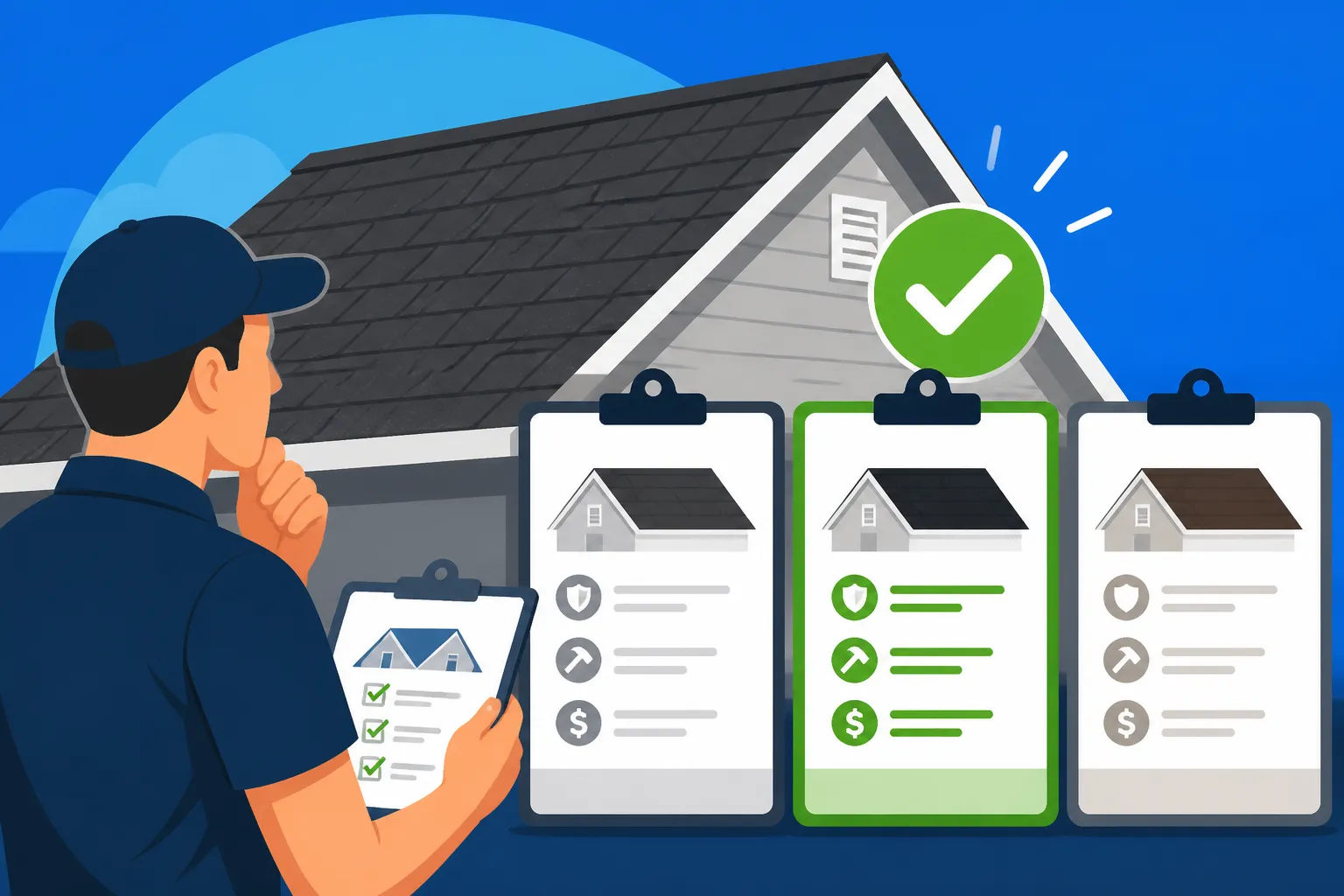
Trying to keep all the details straight in your head can be impossible, especially with multiple contractors proposing different solutions and materials. A simple comparison chart is your secret weapon to organize the information and highlight key differences. This allows for a clear, apples-to-apples evaluation.
Here’s an example of a table you might create, either on paper or in a spreadsheet:
| Feature/Component | Contractor A | Contractor B | Contractor C | Contractor D |
|---|---|---|---|---|
| Total Cost | $XX,XXX | $YY,YYY | $ZZ,ZZZ | $AA,AAA |
| Shingle Brand/Type | GAF Timberline HDZ | Owens Corning Duration | CertainTeed Landmark Pro | Atlas Pinnacle Pristine |
| Underlayment Type | Synthetic | Synthetic | 30lb Felt | Synthetic |
| Ice & Water Shield | Yes (valleys, eaves) | Yes (eaves only) | No mention | Yes (valleys, eaves, pipes) |
| Flashing (New/Reused) | All New | Reuses existing | All New | All New |
| Ventilation Upgrade | New Ridge Vent | Existing Box Vents | New Ridge Vent | New Ridge Vent |
| Decking Replacement | Up to 1 sheet incl. | Extra Cost | Up to 2 sheets incl. | Extra Cost |
| Tear-off & Disposal | Included | Included | Included | Included |
| Permit Cost | Included | Extra Cost | Included | Included |
| Manufacturer Warranty | 50-year Ltd. Lifetime | 50-year Ltd. Lifetime | 30-year Ltd. Warranty | 50-year Ltd. Lifetime |
| Workmanship Warranty | 10 Years | 5 Years | 2 Years | 15 Years |
| Payment Schedule | 20% down, 40% mid, 40% final | 50% down, 50% final | 100% upfront | 25% down, 75% final |
| Est. Start Date | 3-4 weeks | 2 weeks | 6-8 weeks | 4-5 weeks |
| Est. Completion | 2-3 days | 1-2 days | 3-4 days | 2-3 days |
| Cleanup Plan | Tarps, magnetic sweep | Magnetic sweep only | Tarps, magnetic sweep, daily | Tarps, magnetic sweep |
| References Provided | Yes | Yes | No | Yes |
| Insurance Verified | Yes | Yes | No (awaiting) | Yes |
This table immediately reveals discrepancies. Perhaps Contractor C offers a lower total cost but only includes 30lb felt underlayment, a shorter manufacturer warranty, and a minimal workmanship warranty, along with a risky "100% upfront" payment plan. Contractor B might be cheaper but plans to reuse flashing and only covers eaves with ice and water shield. This is how you spot apples-to-oranges comparisons and understand the true value of each bid.
Identifying Red Flags and Asking Follow-Up Questions
As you compare, certain things should jump out at you as potential red flags. Knowing these signs can save you from a lot of trouble down the road.
Common roofing contractor red flags to avoid include:
- Unusually Low Bids: If one quote is drastically lower than the others, there's often a reason. They might be cutting corners on materials, labor, insurance, or not including essential components. Always be suspicious of deals that seem "too good to be true."
- High-Pressure Sales Tactics: Contractors who pressure you to sign a contract on the spot, offer "today-only" discounts, or try to scare you with dire warnings about your roof. A reputable contractor will give you time to review the quote and make an informed decision.
- No Written Contract or Vague Language: A professional will always provide a detailed written contract that outlines everything from materials to warranties. If they offer a verbal agreement or a sparse contract, walk away.
- Demanding Full Payment Upfront or Cash Only: This is a huge red flag. A legitimate contractor will have a reasonable payment schedule, typically with a deposit and progress payments.
- Lack of Local References: If they can't provide local references you can call or homes you can drive by to see their work, it's a concern. This is especially true for "storm chasers" who appear after major weather events and disappear quickly.
- No Proof of Insurance or Licensing: As mentioned earlier, verify these independently. If they can't provide current certificates, it's a deal-breaker.
Once you've identified discrepancies or red flags, don't hesitate to ask follow-up questions. Call each contractor whose quote you're still considering. For example, "Contractor B, I noticed your quote doesn't include ice and water shield in the valleys. Can you explain why, and what would be the cost to add it?" Or, "Contractor A, your timeline seems a bit longer than others; can you elaborate on your project schedule?" Getting clear answers in writing can often resolve concerns or solidify your decision. It also shows you're a discerning homeowner, which encourages them to be even more transparent.
Making Your Final Decision
After all the research, site visits, and comparisons, it’s time to make your choice. This isn't just about picking the cheapest price; it's about weighing all the factors to find the best overall value for your specific needs.
Consider:
- Overall Value vs. Lowest Price: The cheapest quote might end up being the most expensive if the materials are inferior, the installation is shoddy, or crucial components are left out. Focus on the long-term value, durability, and warranty.
- Contractor Reputation and Communication: Did you feel comfortable with the contractor? Were they professional, responsive, and clear in their communication? Trust your gut feeling. A good working relationship is vital for a smooth project.
- Comprehensive Coverage: Does the quote include everything you need for a complete, high-quality, and compliant roof system? This means proper underlayment, flashing, ventilation, and a thorough cleanup.
- Warranty Strength: The combination of a solid manufacturer's warranty and a strong workmanship warranty provides the best protection for your investment.
Don't be afraid to negotiate, within reason. If you have a preferred contractor whose quote is slightly higher, you might try to see if they can match a component or price point from another bid, or offer a slight reduction. However, be respectful and realistic. If they're offering a superior product or service, a slightly higher price is often justified. The key is to feel confident and comfortable with your choice, knowing you've done your due diligence and selected a reliable partner for your roofing project.
The Contract: What to Look For Before Signing
You’ve done your homework, compared quotes, and chosen a contractor. Congratulations! But before any work begins, there’s one final, absolutely critical step: reviewing and signing the contract. This legally binding document will protect both you and the contractor, and every single detail matters.
Ensuring All Details are Documented
The contract should be a comprehensive reflection of everything you discussed, agreed upon, and expect from your new roof. If it's not in writing, it doesn't exist. This is why understanding what to include in a roofing contract is so important.
Here’s a checklist of what MUST be in your roofing contract:
- Detailed Scope of Work: This should precisely match the final agreed-upon quote. It must specify full tear-off, disposal, installation of all components (shingles, underlayment, ice & water shield, flashing, vents, drip edge), and any decking replacement. The number of squares being installed should also be clearly stated.
- Material Specifications: Exact brands, types, and colors for shingles, underlayment, and any other specific materials you've chosen. For example, "GAF Timberline HDZ shingles, Pewter Gray color" not just "gray architectural shingles."
- Total Project Cost: The final, agreed-upon price.
- Payment Schedule: Clearly defined payment milestones (e.g., 20% deposit, 40% upon material delivery, 40% upon completion and final inspection).
- Start and Completion Dates: A realistic timeline. While weather can cause delays, the contract should outline an expected timeframe.
- Warranty Information: Both the manufacturer's warranty (including registration details) and the contractor's workmanship warranty should be explicitly detailed, including their duration and what they cover. Make sure it aligns with what was promised.
- Permit Responsibility: A statement confirming the contractor will pull all necessary permits.
- Cleanup Procedures: How debris will be managed, yard protection, and final site cleanup.
- Insurance Verification: A clause stating the contractor is licensed and insured, with a reference to the provided certificates of insurance.
- Change Order Process: What happens if unforeseen issues arise (like extensive rotted decking). The contract should state that any changes to the scope of work or cost must be approved by you in writing before additional work is performed. This protects you from surprise expenses.
Read every line, and if you have any questions or find discrepancies, get them clarified and corrected before you sign. Don't be rushed. It’s perfectly acceptable to take the contract home to review it thoroughly, and even to have a legal professional look it over if you feel it's necessary for such a large investment.
Understanding Cancellation Policies and Liens
Two often-overlooked but crucial aspects of a roofing contract are the cancellation policy and lien waivers. These protect you from different, but equally significant, financial risks.
- Cancellation Policy: Understand your rights if you need to cancel the contract. Most contracts will have a cancellation clause, sometimes with a specified period (e.g., 3 business days, as per federal "right of rescission" laws for certain home improvement contracts). Beyond that, there might be penalties for canceling after materials have been ordered or work has commenced. Ensure these terms are reasonable and fair.
- Lien Waivers: This is an incredibly important protection for you, the homeowner. A lien waiver is a document from a contractor, subcontractor, or material supplier stating that they have received payment and waive their right to place a mechanic's lien on your property. If your primary contractor doesn't pay their subcontractors or material suppliers, those parties could legally place a lien on your home, meaning they could force its sale to recover their money – even if you've already paid the general contractor! To protect yourself, request lien waivers from the general contractor, and ideally, from all major subcontractors and material suppliers, as payments are made. For example, you might release a progress payment to your contractor, and in return, you receive a partial lien waiver from them and their key suppliers, indicating they've been paid up to that point. A final, unconditional lien waiver should be issued upon final payment. If you're ever in doubt, you can consult with an attorney to learn more about how to avoid roofing contractor liens.
By meticulously reviewing your contract and understanding these clauses, you're safeguarding your investment and ensuring that your new roof project proceeds smoothly and without unexpected legal or financial headaches.
Disclaimer
Please note: The information provided in this guide is intended for general informational purposes only and does not constitute professional advice. Roofing projects can be complex, and local regulations, building codes, and individual circumstances vary. Always consult with licensed and insured roofing professionals for specific advice, estimates, and services tailored to your needs. We are not liable for any decisions made based on this information.