How GAF Shingle Warranties Work
Navigating the world of roofing can feel like a labyrinth, especially when it comes to understanding warranties. It’s frustrating enough trying to figure out if your roof needs repair or replacement, let alone diving into dense legal-speak about what's actually covered. This guide is here to demystify GAF shingle warranties, breaking down the different levels of protection and what they mean for you, so you can feel confident about your investment.
Understanding the Basics of GAF Shingle Warranties
Let’s be honest, few of us actually sit down and read through the entire warranty document when we get a new roof. But when something goes wrong, suddenly that piece of paper becomes incredibly important. GAF, as one of the largest roofing manufacturers in North America, offers a range of warranties that can be a bit overwhelming at first glance. It's not just a single, blanket policy; there are distinct levels of coverage designed to give you options, and understanding them is key to protecting your home.
The GAF Warranty Landscape: Limited vs. Enhanced
At its core, every GAF shingle comes with a base Limited Lifetime Warranty. This is the starting point, and it’s important to understand what "lifetime" truly means here. For a homeowner, it generally refers to the period during which the original owner (or a second owner under specific conditions) owns the single-family home where the shingles are installed. This foundational warranty primarily covers manufacturing defects in the shingles themselves. If a shingle fails due to a flaw in how it was made, GAF will provide replacement materials. However, this basic warranty has limitations, particularly when it comes to the cost of labor to install those new materials, and for how long that labor is covered.
This is where GAF's enhanced warranties come into play: the System Plus, Silver Pledge, and Golden Pledge warranties. These aren't just minor upgrades; they significantly expand coverage, especially for workmanship errors. A common frustration homeowners face is discerning if a roof problem is due to a faulty shingle (material defect) or a mistake made during installation (workmanship error). The standard limited warranty typically doesn't cover workmanship errors beyond a very short initial period, which can leave you on the hook for expensive labor costs if your installer made a mistake. Enhanced warranties bridge this gap, offering longer, more comprehensive protection. This distinction is absolutely crucial because while material defects are rare, poor installation can lead to widespread issues down the line.
Key Terms You Need to Know in Your GAF Warranty
Before we dive deeper into the specific enhanced warranty options, let's unpack some critical terms you’ll encounter in any GAF warranty document. Understanding these will help you interpret your coverage more accurately and avoid any nasty surprises should you ever need to file a claim. It’s not just legal jargon; these terms directly impact what GAF will pay for.
First, proration. This is a big one. For certain parts of the warranty period, especially later in the roof’s life, the coverage might become "prorated." This means GAF won't cover 100% of the replacement cost; instead, the coverage amount decreases over time based on the age of your roof. For example, after a certain number of years, GAF might only cover a percentage of the material cost, with you responsible for the rest, plus all the labor. This is a significant point of frustration for many homeowners who assume "lifetime" means full coverage indefinitely. However, GAF's enhanced warranties often offer a non-prorated period, giving you full coverage for a longer initial timeframe.
Next, the full coverage period. This is the golden window during which GAF typically covers both materials and reasonable labor costs for defects at 100%, without proration. For the basic Limited Lifetime Warranty, this period is usually much shorter than you might expect, often only 10 years for material defects and no coverage for workmanship. Enhanced warranties, however, extend this full coverage period considerably, providing much more robust protection for your investment.
Transferability is another key term, especially if you plan to sell your home. Most GAF warranties, including the Limited Lifetime Warranty, are transferable to one subsequent homeowner. However, there are usually specific requirements, such as a transfer fee and a deadline to complete the transfer (often within 60 days of the property sale). Failing to properly transfer the warranty can mean the new homeowner loses out on that coverage, potentially impacting your home's resale value. You'll want to ensure that the process for this is clear, and the folks at Modernize can help you understand these details when you're considering a new roof, especially if you think you might be moving in the next few years.
Finally, understanding the difference between a material defect and a workmanship error is vital. A material defect means the shingle itself was faulty from the factory – maybe it didn't have enough asphalt or the granules weren't properly adhered. A workmanship error, on the other hand, is a problem caused by the installer – perhaps they didn't nail the shingles correctly, didn't use enough nails, or improperly flashed a chimney. The base GAF warranty covers material defects. Enhanced warranties add significant coverage for workmanship errors, which is often what homeowners are most worried about. It's a sad truth that even the best shingles can fail prematurely if not installed correctly.
GAF's Enhanced Warranty Programs and Their Benefits
Once you grasp the fundamental differences and terminology, the true value of GAF's enhanced warranty programs starts to shine. These aren't just fancy names; they represent different tiers of commitment from GAF and its certified contractors, offering increasing levels of protection and peace of mind. Choosing an enhanced warranty often boils down to how much protection you want for your investment and what type of contractor you choose. Remember, a new roof is a significant investment; understanding your options is like buying insurance for that investment.
System Plus Warranty: A Step Up
The GAF System Plus Warranty is a popular choice for many homeowners because it significantly expands on the basic Limited Lifetime Warranty without requiring the highest contractor certification. With the System Plus, your material defect coverage is still for the "lifetime" of the shingle (as defined by GAF), but the crucial upgrade comes in two areas: extended workmanship coverage and tear-off costs.
While the basic warranty offers no workmanship coverage, the System Plus provides a 2-year workmanship warranty. This means if your roof fails due to an installation error within two years, GAF will cover the labor costs to fix it, in addition to materials. This is a huge relief for many, as improper installation is a leading cause of early roof failure. Furthermore, the System Plus warranty covers the cost of tearing off the old roof if replacement is necessary due to a material defect, which can be a substantial expense. This warranty is only available when you use a GAF Certified Contractor, ensuring a certain level of expertise in the installation process. They've gone through GAF's training programs and demonstrated a commitment to proper installation techniques, which often leads to a better overall experience.
Golden Pledge Warranty: The Gold Standard
For homeowners seeking the absolute best protection GAF offers, the Golden Pledge Warranty is the pinnacle. This is GAF's strongest warranty, designed to provide unparalleled peace of mind. What truly sets the Golden Pledge apart is its extended non-prorated period and significantly longer workmanship coverage. With this warranty, you get a 50-year non-prorated material defect warranty (meaning GAF covers 100% of material costs for 50 years, regardless of how old your roof is) and a robust 25-year workmanship warranty. Yes, you read that right – 25 years of coverage against installer error.
To qualify for the Golden Pledge Warranty, your roof must be installed by a GAF Master Elite Contractor. These are the top 2-3% of all roofing contractors in the country, having met stringent requirements for experience, reputation, and ongoing training. They're held to the highest standards by GAF, and as part of the Golden Pledge program, your roof even undergoes a 40-point inspection by GAF themselves after installation to ensure it meets their exacting standards. This thoroughness provides an incredible layer of confidence. If you're looking for the longest possible coverage on your entire roofing system, including materials and labor, and want the reassurance of a GAF-certified inspection, the Golden Pledge is your best bet. It truly protects your home as a complete system, which is a major advantage over basic warranties.
Silver Pledge Warranty: A Newer Option
GAF also offers the Silver Pledge Warranty, a valuable option that positions itself between the System Plus and the Golden Pledge, offering a balance of enhanced coverage and accessibility. This warranty still provides the 50-year non-prorated material defect coverage, similar to the Golden Pledge, which is a significant upgrade over the basic Limited Lifetime Warranty's proration schedule.
Where the Silver Pledge differentiates itself is in its workmanship coverage. It typically offers a 10-year workmanship warranty, a substantial leap from the 2-year coverage of the System Plus. This means you get a full decade of protection against installation errors, providing a much longer period of worry-free ownership. Like the System Plus, the Silver Pledge also covers tear-off costs and disposal. This warranty is also available through GAF Certified Contractors, making it a strong choice for homeowners who want excellent coverage without necessarily needing the absolute top-tier Master Elite contractor for a Golden Pledge, especially if the 25-year workmanship coverage isn't a primary concern. It’s a great middle-ground option for robust protection.
Here's a quick comparison of GAF's main warranty programs:
| Feature | Limited Lifetime Warranty | System Plus Warranty | Silver Pledge Warranty | Golden Pledge Warranty |
|---|---|---|---|---|
| Material Coverage | Lifetime (Prorated) | Lifetime (50-Yr Non-Pror.) | Lifetime (50-Yr Non-Pror.) | Lifetime (50-Yr Non-Pror.) |
| Workmanship Coverage | None | 2 Years | 10 Years | 25 Years |
| GAF Inspection | No | No | No | Yes (40-Point) |
| Tear-Off Costs Covered | No | Yes | Yes | Yes |
| Disposal Costs Covered | No | Yes | Yes | Yes |
| Required Contractor | Any | GAF Certified | GAF Certified | GAF Master Elite |
| Transferable? | Yes (1x, fee applies) | Yes (1x, fee applies) | Yes (1x, fee applies) | Yes (1x, fee applies) |
As you can see, choosing an enhanced warranty not only extends your coverage but also dictates the type of contractor you'll be working with. For more insights on this, you might find our guide on how to choose a roofing contractor particularly helpful.
Navigating Common GAF Warranty Scenarios and Claims
Even with the best warranties in place, issues can arise, and knowing how to navigate them is crucial. The last thing you want is to discover a problem and then realize you’ve inadvertently done something that voids your protection. Understanding the common pitfalls and the correct claims process can save you a lot of headache and expense down the road. It’s all about protecting that significant investment you made in your home.
What Voids a GAF Warranty? Avoiding Pitfalls
One of the most frustrating scenarios for a homeowner is believing they have comprehensive warranty coverage, only to find out their claim is denied because the warranty was voided. GAF, like all manufacturers, has specific conditions that must be met to keep your warranty valid. Avoiding these pitfalls is critical to ensuring your investment is truly protected. When learning how to keep a roof warranty valid, it is imperative to note the following.
The most common way a GAF warranty gets voided is through improper installation by a non-certified contractor. If you opted for an enhanced warranty (System Plus, Silver Pledge, or Golden Pledge), you committed to having the roof installed by a GAF Certified or Master Elite Contractor. If you later discover that your contractor wasn't properly certified or that they cut corners during installation, GAF may deny claims related to workmanship, or even material defects if the poor installation contributed to their failure. This is why always hiring licensed and insured roofers is paramount, and why GAF emphasizes their certified contractor programs. Checking their credentials directly with GAF or through reputable platforms like Modernize can help prevent this issue.
Another significant concern is modifications to the roof without GAF approval or proper integration. Adding solar panels, satellite dishes, or even certain types of skylights after installation without following proper procedures or ensuring they are correctly flashed and sealed can compromise the roof system. If these modifications lead to leaks or damage, GAF might argue that they voided the warranty in that specific area or even across the entire roof if the integrity of the system was compromised. Always consult your roofing contractor or GAF before making any significant changes to your roof.
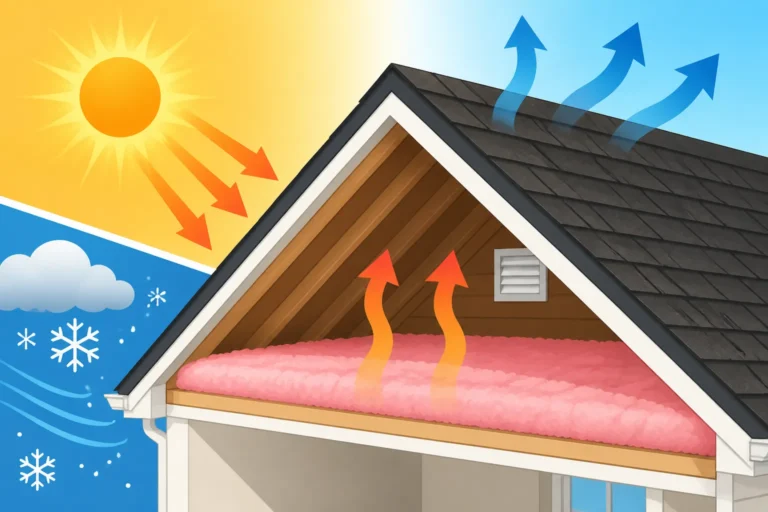
Lack of proper attic ventilation is often overlooked but can seriously impact your roof's longevity and warranty. GAF's shingles, like most asphalt shingles, are designed to perform optimally when the attic is properly ventilated. Inadequate ventilation can lead to excessive heat buildup, which can cook the shingles from below, causing premature aging, curling, and cracking. It can also lead to moisture problems, compromising the roof deck. Many GAF warranties explicitly state that proper ventilation is required. If GAF determines that poor ventilation contributed to shingle failure, your warranty claim could be denied. Our article on how roof ventilation works can shed more light on this vital component.
Finally, mixing non-GAF components can also void certain enhanced warranties. GAF's enhanced warranties, especially the Golden Pledge, are designed to cover a "complete roofing system" – meaning all components, from the underlayment to the shingles and ridge caps, are GAF products. If a contractor substitutes cheaper, non-GAF components, it can compromise the integrity of the system and potentially void your enhanced warranty. This is another reason why choosing a GAF Master Elite Contractor, who is committed to installing a full GAF system, is often the safest bet for maximum protection and how a complete roof system qualifies for warranty.
Making a GAF Warranty Claim: A Step-by-Step Guide
Even with the best intentions and certified installers, sometimes things go wrong. When you suspect a problem covered by your GAF warranty, knowing the correct steps to take can make the claims process much smoother and increase your chances of a successful resolution. It’s not always as simple as picking up the phone, but being prepared helps immensely.
Your initial discovery of an issue is the first step. Whether it’s a leak in your attic, visibly damaged shingles, or a significant amount of granule loss, document everything. Take clear photos and videos, note the date you discovered the problem, and any specific details you observe. This visual evidence will be crucial later.
Next, and this is very important, contact your original roofing contractor first. Even if you have a GAF warranty, your contractor often provides their own workmanship warranty. If the issue is due to improper installation, they should be your first point of contact to rectify the problem under their own guarantee. Plus, GAF often requires that you attempt to resolve the issue with the installer before they step in, especially for workmanship claims. If your contractor is no longer in business or unresponsive, then you would proceed directly with GAF.
When it's time to involve GAF, you'll need to start gathering documentation. This includes your original roofing contract, proof of purchase (if applicable), your warranty registration certificate, and all the photos and videos you took of the damage. Having your warranty registration certificate handy is key because it contains specific information about your warranty level and installation date.
To submit the claim to GAF, you’ll typically need to visit their website or call their warranty services department. They will have a specific claims form or process to follow. Be prepared to provide all the documentation you’ve gathered and clearly explain the issue. Honesty and detail are your best allies here.
Finally, what to expect during the inspection and resolution process. After submitting your claim, GAF may send out an independent inspector to assess the damage. This inspector will determine if the issue is a material defect, a workmanship error, or neither. They’ll also verify if your warranty is still valid and if the issue is covered. This process can take some time, so patience is key. Once their assessment is complete, GAF will inform you of their decision and the proposed resolution, which could involve providing replacement materials, financial compensation for materials and labor (if covered by your specific warranty), or denying the claim with an explanation. Being proactive and having all your information ready helps expedite this process.
Transferring Your GAF Warranty When Selling Your Home
For many homeowners, their roof is one of the biggest selling points of their property. A transferable warranty can add significant value and appeal to potential buyers, giving them confidence in the home’s long-term protection. Understanding this process ensures you leverage this benefit fully.
Most GAF warranties, including the standard Limited Lifetime Warranty and all enhanced warranties, are transferable to one subsequent homeowner. This means if you installed a new GAF roof and then sell your house, the new owners can take over your warranty. This is a huge advantage, as it reassures buyers that their major home component is protected, making your home more attractive in the market. Our article on roof replacement and home value highlights how a new roof, especially with a good warranty, can significantly boost your property's appeal.
However, there are usually specific conditions you must meet for the transfer to be valid. Typically, you'll need to notify GAF in writing within a certain timeframe after the property sale, often 30 or 60 days. There is usually a transfer fee involved, which can vary but is generally a reasonable amount compared to the value of the warranty. Missing this deadline or failing to pay the fee can result in the new homeowner losing the warranty coverage, which would be a shame for both parties.
To complete the transfer, you’ll typically need to provide GAF with proof of sale, the original warranty registration (if you have it), and the new homeowner's contact information. Providing a smooth transfer of warranty information is a great way to show good faith during a home sale and can be a significant differentiator in a competitive housing market. It's a simple step that adds considerable value and peace of mind.
Disclaimer
Please remember that this article provides general information and guidance. Roofing warranties are legal documents, and the specific terms and conditions can vary. Always refer to your exact GAF warranty document for the most accurate and up-to-date information regarding your coverage. Consulting with your GAF Certified or Master Elite Contractor is always recommended for specific questions about your roof and warranty.