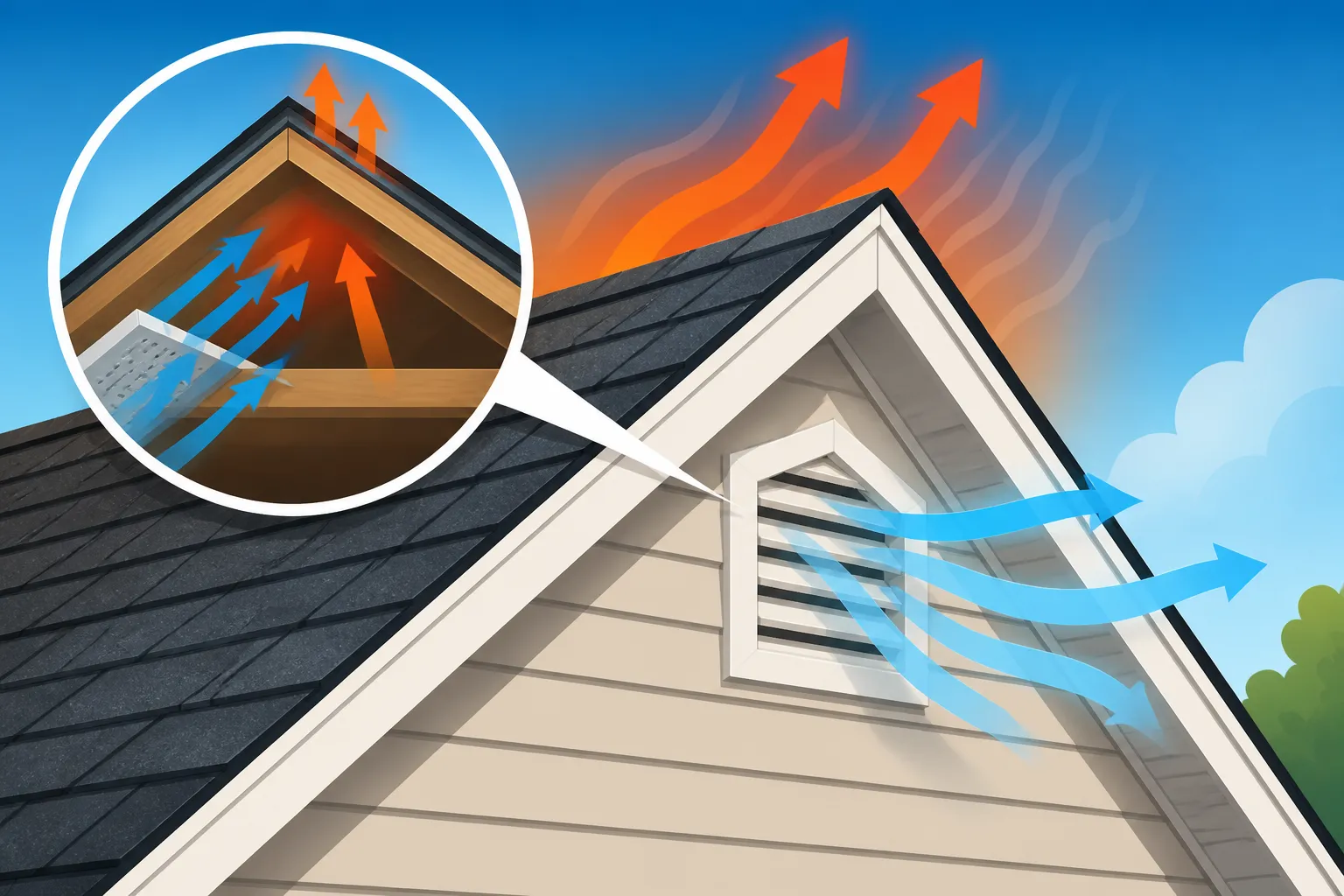
How a Gable Vent Works
A stuffy, overheated attic isn't just uncomfortable; it's a silent threat to your home, leading to everything from higher energy bills to premature roof deterioration and even moisture damage. If you've ever felt that blast of hot air when opening your attic access in summer, you know exactly what I'm talking about. This comprehensive guide will pull back the curtain on one common solution to this problem: the gable vent, explaining exactly how it works to help your home breathe and stay healthy.
Understanding the Basics of Gable Vents
When we talk about keeping a house cool and dry, a lot of the conversation often centers around insulation or air conditioning. But just as crucial, if not more so, is proper attic ventilation. Without it, your attic can become a sauna in the summer and a damp, mold-prone environment in the winter. Gable vents play a significant role in this essential process, often overlooked or misunderstood by homeowners.
What Exactly is a Gable Vent?
Let's start with the basics. A gable vent is essentially a louvered opening installed in the gable end wall of your house. The gable wall is that triangular section of wall at the end of a pitched roof, right below the ridge. These vents are usually rectangular, circular, or sometimes even octagonal, and they feature slats (louvers) that allow air to pass through while keeping rain, snow, and pests out. Think of them as the "lungs" on the side of your attic, designed to let your home exhale hot, stale air.
Historically, gable vents have been a very common and traditional way to ventilate attics. You'll see them on all sorts of homes, from older Victorians to more modern suburban houses. They're often made of wood, vinyl, or aluminum, and they can even be quite decorative, blending seamlessly into your home's exterior aesthetic. They sit prominently on that end wall, a clear indicator of how important good airflow is to the overall health of your roofing system. They're a fundamental component in the larger discussion of how a full roofing system works to protect your home.
Why Your Attic Needs Ventilation
You might wonder why your attic, which you rarely visit, needs special ventilation. The truth is, your attic is a critical buffer zone between your conditioned living space and the harsh outdoor elements. Proper ventilation is vital for two main reasons: temperature regulation and moisture control.
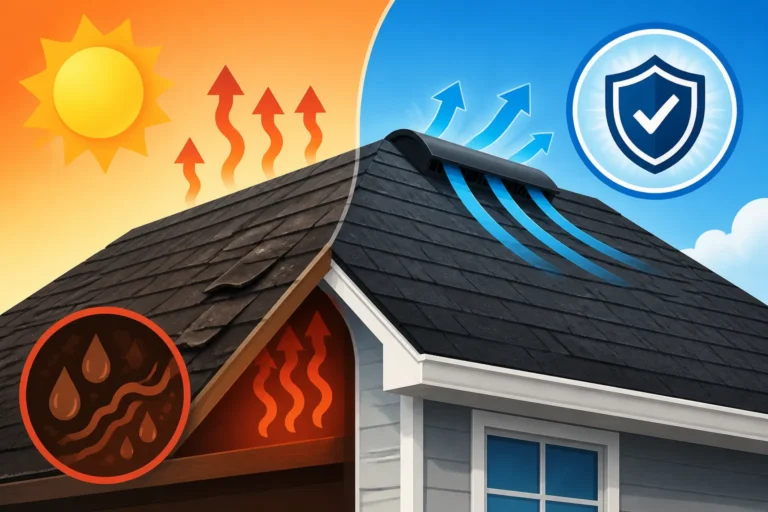
In the blistering summer months, the sun beats down relentlessly on your roof, heating the shingles to extreme temperatures. Without proper ventilation, that heat radiates directly into your attic, turning it into an oven. This superheated air then starts to seep down into your living spaces, making your air conditioner work overtime and sending your energy bills soaring. A well-ventilated attic allows this trapped hot air to escape, significantly reducing the heat load on your entire home and potentially extending the life of your air conditioning unit.
But ventilation isn't just for summer. In winter, inadequate ventilation can lead to an equally serious problem: moisture buildup and ice dams. Warm, moist air from your home naturally rises and can become trapped in a poorly ventilated attic. When this warm, moist air meets the cold underside of your roof deck, it condenses, creating an ideal environment for mold and mildew growth, which can damage your roof decking, insulation, and even structural timbers. Furthermore, trapped attic heat can melt snow on your roof, causing water to run down and refreeze at the colder eaves, forming destructive ice dams. These ice dams can then force water under your shingles and into your home, causing leaks and extensive damage. This is why understanding how roof ventilation works is so important, no matter the season.
The Mechanics of How Gable Vents Work
The idea behind a gable vent is pretty straightforward, but the actual science of how air moves through your attic is a bit more nuanced. It’s all about creating a natural flow that expels the bad air and draws in the good.
The Principle of Convection and Airflow
At its core, a gable vent operates on the principle of convection – the natural tendency of hot air to rise. Think about a hot air balloon: the hot air inside is lighter than the cooler air outside, causing it to ascend. Your attic works similarly. During the day, sunlight heats your roof, and that heat transfers into your attic space. This hot, buoyant air then naturally rises towards the highest points of your attic.
If you have gable vents installed on opposing gable walls, this rising hot air creates a positive pressure at one end, pushing the hot air out through one vent. Simultaneously, the escaping hot air creates a negative pressure at the other gable end, drawing in cooler, fresher air through the opposite vent. This "cross-ventilation" effect is the most efficient way gable vents can work. The wind can also play a crucial role here, literally pushing air in through one vent and out through the other, creating a dynamic exchange that helps cool your attic more effectively.
However, the efficiency of this cross-ventilation is heavily dependent on the presence of opposing vents and, critically, on wind direction and intensity. On a still day, the convection process still occurs, but the airflow might be less vigorous than with a strong breeze assisting. This highlights a limitation: while effective in many situations, gable vents aren't always a guaranteed solution for consistent, robust airflow across an entire attic, especially in large or complex roof structures.
Interaction with Other Ventilation Systems
Here's where things can get a little tricky. While gable vents are great for cross-ventilation, they don't always play well with all other types of attic ventilation. The key is balance and understanding how different systems interact.
Ideally, an attic ventilation system should have a balanced intake and exhaust. Intake vents typically reside at the lowest point of the roof, like soffit vents (located under the eaves), drawing in cooler outside air. Exhaust vents, like gable vents, ridge vents, or box vents, are placed at or near the highest point, allowing hot, stale air to escape. When gable vents work in tandem with soffit vents, you get a beautiful, continuous airflow: cool air enters through the soffits, rises as it warms, and then exits through the gable vents. This creates a natural thermal stack effect that effectively ventilates the entire attic space.
However, a common misconception and potential problem arise when homeowners try to combine gable vents with a ridge vent. A ridge vent, running along the peak of your roof, is designed to be the primary exhaust for the entire attic, pulling air uniformly from soffit intakes all along the eaves. If you have both gable vents and a ridge vent operating simultaneously, the ridge vent, being at the absolute highest point, will often pull air from the nearest gable vent instead of drawing it all the way from the soffit vents. This phenomenon, known as "short-circuiting," means large sections of your attic might not be ventilated at all, creating dead air pockets and negating the benefits of both systems.
Therefore, for optimal performance, most roofing experts recommend choosing either gable vents or a ridge vent as your primary exhaust, and ensuring adequate soffit intake ventilation to complement it. Trying to combine them without expert knowledge can actually worsen your attic ventilation.
The Benefits and Drawbacks of Gable Vents
Every home improvement choice comes with its own set of pros and cons, and gable vents are no exception. Understanding these can help you decide if they're the right fit for your home's unique needs.
Advantages of Choosing Gable Vents
One of the most appealing aspects of gable vents is their cost-effectiveness. Compared to installing a continuous ridge vent system, which involves precise cuts along the entire roof ridge and specialized materials, gable vents are generally less expensive to purchase and install. For homeowners on a tighter budget looking for an effective ventilation solution, this can be a significant advantage. This can directly impact your overall asphalt roof replacement cost, especially if you're trying to manage expenses.
Aesthetics are another strong point for gable vents. They come in a wide variety of shapes, sizes, and materials, making it easy to find an option that complements your home's architectural style. Many homeowners appreciate their traditional look, and you can even choose decorative options with ornate grilles or trim, enhancing your home's curb appeal rather than detracting from it. Unlike some other roof vents that sit visibly on the roof plane, gable vents integrate into the wall itself, often blending in more subtly.
Furthermore, for existing homes that already have gable walls, simpler installation can be a real benefit. Cutting openings into a vertical wall is often less intrusive and complex than making extensive modifications to the roof deck, especially if your roof has a high pitch or complex structure. This can reduce labor costs and the overall project timeline. Gable vents are particularly effective for smaller, simpler attics or those where installing soffit or ridge vents might be impractical or prohibitively expensive due to existing construction or architectural constraints. If you're looking for guidance on finding reputable professionals for these types of installations, resources like Modernize can help connect you with local contractors.
Potential Downsides and Limitations
Despite their advantages, gable vents aren't a perfect solution for every home, and they do come with certain limitations.
One major drawback is their reliance on wind direction and intensity for optimal cross-ventilation. On calm days, the airflow driven purely by convection might not be robust enough to thoroughly ventilate a large attic. If your home's layout doesn't allow for opposing gable ends, or if one gable end is consistently sheltered from prevailing winds, the cross-ventilation effect will be minimal, leaving large portions of your attic stagnant. This can lead to uneven temperature distribution and localized moisture buildup.
As discussed earlier, the risk of "short-circuiting" when combined with ridge vents is a significant concern. Many homeowners, thinking more ventilation is always better, install both systems, inadvertently creating inefficient airflow patterns. This often means that the critical areas near the eaves, where hot air and moisture accumulate, remain poorly ventilated because the ridge vent is pulling air from the closer gable vent instead of the soffits. This improper mixing of ventilation types can negate the benefits of both.
Another practical limitation is the potential for pest entry if the vents are not properly screened or if screens become damaged over time. Birds, bats, squirrels, and insects can find their way into your attic through inadequately protected louvered openings, creating nests, causing damage, and posing health risks. Similarly, while designed to keep out the elements, gable vents in areas prone to extreme weather conditions, such as high winds or heavy, driving rain or snow, can sometimes allow wind-driven rain or snow ingress if not properly designed, installed, or maintained. This risk increases if the louvers become damaged or clogged with debris, compromising their protective function.
Installation, Maintenance, and Considerations
Getting your gable vent system right isn't just about choosing a vent; it’s about proper planning, installation, and ongoing care. A well-installed and maintained system will serve your home for years, while a poorly executed one can create more problems than it solves.
Proper Sizing and Placement for Effectiveness
The effectiveness of your gable vents hinges critically on their proper sizing and placement. It’s not enough to just stick a vent on the wall; you need to ensure it's the right size for your attic space to facilitate adequate airflow. This brings us to the concept of Net Free Area (NFA). NFA refers to the actual open area of a vent through which air can pass, accounting for louvers, screens, and any obstructions. It's the critical measurement for any ventilation component.
The general rule of thumb for attic ventilation, as recommended by building codes and roofing manufacturers, is to have at least 1 square foot of NFA for every 300 square feet of attic floor space, provided there's a vapor barrier on the warm side of your attic ceiling. If there's no vapor barrier, or if you're unsure, it's safer to aim for 1 square foot of NFA per 150 square feet of attic floor space. This NFA should be balanced between intake and exhaust, ideally 50% intake and 50% exhaust. For gable vents, this means ensuring the combined NFA of all your gable vents meets the exhaust requirements, and that you also have adequate intake from other sources, like soffit vents.
Placement is equally important. For gable vents to work most effectively through cross-ventilation, you ideally want them on opposing gable ends. This allows air to enter through one and exit through the other, creating a continuous flow across the entire attic. If you only have one gable end, or if one end is obstructed (e.g., by a neighboring building or dense trees), the effectiveness will be significantly reduced. Always consult your local building codes, as specific requirements for ventilation and NFA can vary by region, especially in areas with extreme climates. Resources about roofing building codes can provide valuable insights into these requirements.
Common Installation Mistakes and How to Avoid Them
Even with the right vents and proper sizing, installation errors can render your gable vent system ineffective or even harmful. Being aware of these pitfalls can help you ensure your project is done right.
One of the most frequent mistakes is blocking the vents. This sounds obvious, but it happens. Insulation, whether blown-in or batt, can easily cover the interior side of a gable vent if not properly managed during installation. Similarly, layers of paint over time can clog the louvers, significantly reducing the NFA. Always ensure that insulation doesn't obstruct the airflow and that any painting is done carefully to keep the louvers clear.
Another crucial point is not using proper screens for pest control. While vents often come with basic screening, it’s vital to ensure it’s durable and fine enough to keep out insects while still allowing airflow. Inspect these screens periodically for damage, as even small holes can become entry points for unwanted critters.
Improper sealing around the vent is another issue. The vent opening cut into the wall must be thoroughly sealed and flashed to prevent water intrusion. Gaps can allow rain, snow, and even drafts to enter your attic directly, leading to leaks and energy loss.
As we discussed, mixing gable vents with ridge vents without understanding airflow dynamics is a big no-no. If your home has a ridge vent, gable vents might actually hinder its performance by short-circuiting the airflow path from your soffits. It's almost always best to choose one primary exhaust system and ensure it's balanced with adequate intake. If you're considering a new roof, understanding this dynamic is key to ensuring your investment in a full roofing system lasts.
Finally, ensuring adequate framing and weatherproofing during installation is paramount. The vent opening needs to be properly framed and supported to maintain structural integrity. The exterior trim around the vent should be sealed with high-quality caulk and painted to protect against moisture and weather damage.
When Gable Vents Alone Aren't Enough
While gable vents are a valuable tool in attic ventilation, there are certainly scenarios where they simply won't cut it on their own. Recognizing these situations can save you from ongoing problems and the need for costly future interventions.
For large attics or homes with complex rooflines, a simple gable vent system on opposing ends might not provide enough uniform airflow across the entire expanse. Areas far from the gable ends, especially those under long, unbroken roof slopes, can become "dead zones" where heat and moisture still get trapped. In such cases, a more comprehensive approach, often involving a continuous ridge vent combined with abundant soffit intake, might be necessary to ensure consistent ventilation everywhere. This is particularly true for multi-story homes or houses with numerous dormers and valleys, which can disrupt natural airflow paths.
Similarly, in climates with extreme temperatures or high humidity, standard gable ventilation might not provide the necessary air exchange rate to combat intense heat buildup or pervasive moisture. For example, in humid Southern states like Florida, where attic temperatures can easily exceed 150°F and humidity is rampant, a robust, balanced system with high NFA is crucial. Here, a combination of ridge vents and continuous soffit vents often outperforms gable-only systems. The goal is to keep your attic as close to ambient outdoor temperature as possible, and sometimes, gable vents alone just can't achieve that level of thermal equilibrium. This directly impacts how long an asphalt roof lasts, as extreme heat and moisture are major culprits in premature shingle degradation.
If you suspect your current ventilation system is inadequate, or if you're experiencing problems like excessive attic heat, persistent moisture, or higher-than-normal energy bills, it's always wise to get a professional assessment. A qualified roofing contractor can evaluate your attic, roof structure, and climate conditions to recommend the most effective and efficient ventilation strategy. They can identify if you need additional box vents, turbine vents, or a switch to a ridge vent system to truly optimize your attic's health. For professional guidance and finding reliable contractors to perform these assessments and upgrades, resources like Modernize can be a great starting point for homeowners. Investing in proper roof ventilation is an investment in the longevity and energy efficiency of your entire home.
| Ventilation Type | Key Benefit | Primary Drawback | Ideal Use Case | Interaction with Other Systems |
|---|---|---|---|---|
| Gable Vents | Cost-effective, often aesthetic, good for simple attics with opposing gables. | Relies on wind, can short-circuit with ridge vents, less effective for large/complex attics. | Simple, smaller attics with two gable ends. | Best paired with soffit vents; generally not with ridge vents. |
| Ridge Vents | Excellent, continuous exhaust along the roof peak, very effective at pulling air from soffits. | More complex installation (requires cutting roof ridge), higher material and labor costs. | Most homes with a continuous ridge line, especially larger ones. | Best paired with soffit vents; generally not with gable vents. |
| Soffit Vents | Crucial intake for any exhaust system, provides cool air at the lowest point. | No exhaust function on their own, can be blocked by insulation if not baffled correctly. | Essential for all balanced attic ventilation systems. | Must be paired with an exhaust vent (gable, ridge, box, turbine). |
| Box Vents | Relatively simple to install, provide localized exhaust. | Less efficient than continuous ridge vents, can be visible on the roof plane, limited NFA per unit. | Smaller attics, localized hot spots, or as supplementary exhaust. | Can be used with soffit vents, often combined with more box vents for larger attics. |
| Turbine Vents | Wind-driven, provides continuous exhaust with moving parts. | Visible on roof, can be noisy, requires wind to operate, moving parts can wear out. | Areas with consistent wind, good for supplementing other systems. | Can be used with soffit vents, but not ideal as a primary exhaust for large homes. |
Disclaimer
Please remember that this article provides general information and recommendations. Roofing and ventilation requirements can vary significantly based on your specific location, local building codes, climate, and the unique characteristics of your home. Always consult with a qualified, licensed roofing professional before making any decisions about your roof or attic ventilation system to ensure compliance and safety. They can provide personalized advice and estimates tailored to your situation.