What to Do If a Roofer Damages Your Home
Finding yourself in a situation where your home has been damaged during a roofing project is incredibly stressful. You hired professionals, trusted them with one of your most significant investments, and now you’re facing unexpected repairs and headaches. This guide is here to walk you through exactly what to do if a roofer damages your home, providing clear, actionable steps to protect your property and your rights.
Taking Immediate Action After Discovering Damage
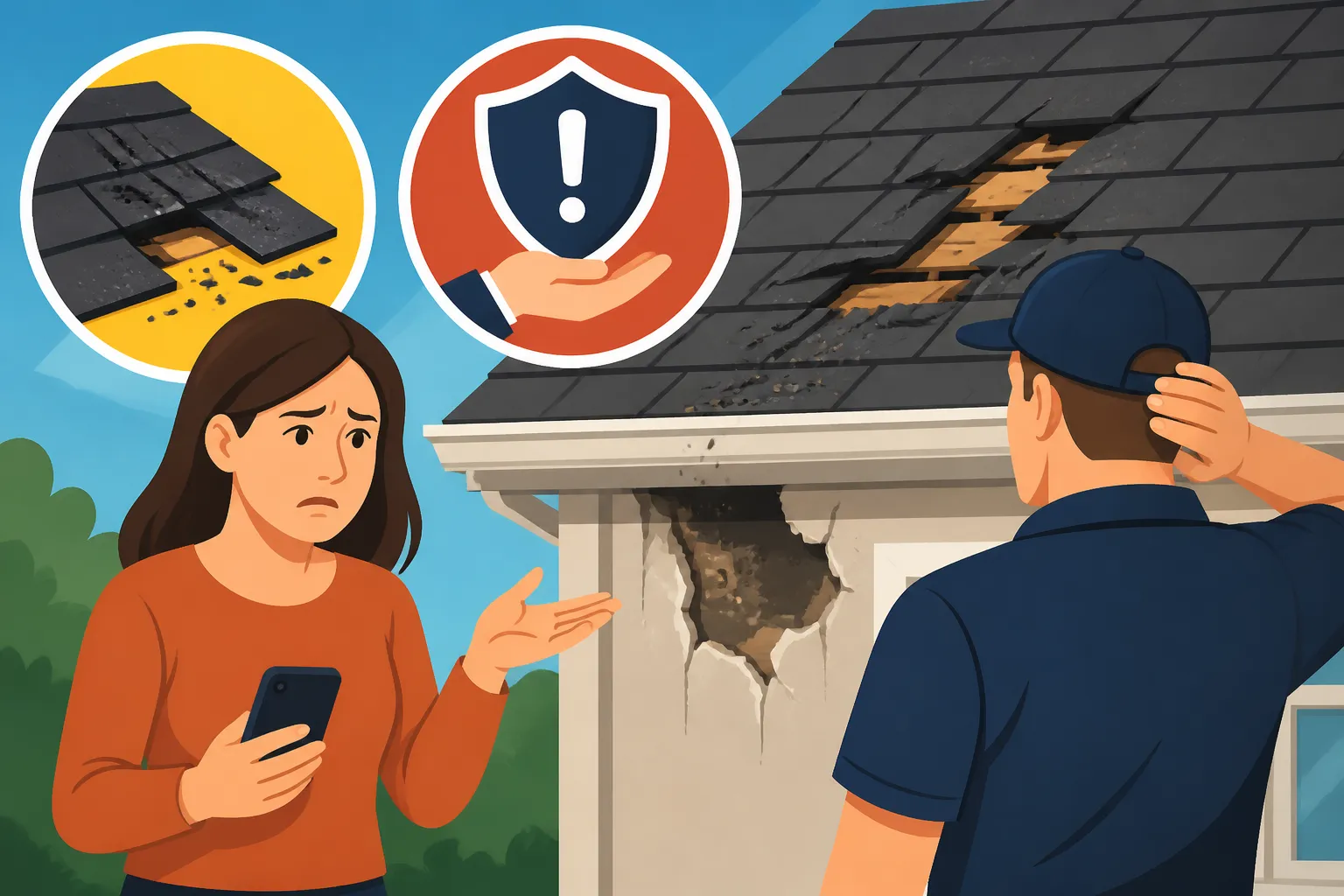
The moment you notice damage to your home that wasn't there before the roofing crew started, it can feel like a punch to the gut. Whether it's a dented gutter, a broken window, or worse, structural issues, your first reaction might be panic. But taking immediate, calm steps is crucial to addressing the problem effectively and ensuring a fair resolution.
Ensuring Safety and Stopping Further Harm
Your absolute first priority is safety, for yourself, your family, and your home. If the damage poses an immediate safety risk – like a dangling power line, a major water leak, or structural instability – you need to act fast. Don't try to fix major structural damage yourself; that's a job for professionals. Call emergency services if there's a serious hazard, like a gas leak. For less severe but still urgent issues, like a significant water leak into your living space, try to contain it as best you can with buckets or tarps to prevent further damage to ceilings, walls, and furnishings.
It’s also important to make sure the roofing crew is aware of the safety issue immediately. For example, if a heavy piece of equipment falls and punctures your ceiling, or if a ladder comes down through a window, these are immediate concerns that need to be addressed on the spot. Document the condition, even if it's just a quick phone photo, before anyone attempts to "fix" or clean up the scene, especially if the damage is substantial. This preliminary evidence can be invaluable later.
Beyond immediate safety, consider how to prevent the damage from worsening. If it's a hole in the roof or a damaged skylight, temporary tarping might be necessary, especially if bad weather is on its way. Discuss this with the contractor. Remember, even if they caused the damage, you have a responsibility to mitigate further harm to your property, which could become a factor if things escalate to an insurance claim.
Notifying the Contractor Promptly
Once you've ensured safety, your next step is to inform the roofing contractor. Do this as soon as humanly possible. Don't wait until the end of the day or until the project is finished. The sooner you report it, the harder it is for them to argue that the damage wasn't caused by their work. A phone call is good for initial notification, but always follow it up with a written communication, like an email or a certified letter. This creates a paper trail, which is incredibly important for any disputes.
In your written notification, be specific. State the date and time you discovered the damage, describe what you observed, and where it is located. Attach any initial photos you took. For example, "On October 26, 2023, at approximately 10:30 AM, I observed a significant dent and crack in the aluminum siding on the west side of my garage, directly below where your crew was stacking shingles."
This prompt and clear communication serves two main purposes. First, it gives the contractor an opportunity to address the issue quickly and professionally. Reputable contractors carry insurance for these types of incidents and often prefer to resolve them without external involvement. Second, if they are unresponsive or deny responsibility, your detailed record of communication proves you acted diligently and gave them a chance to rectify the situation.
Understanding Your Contract and Warranty
Before you have any serious discussions with your contractor about the damage, take a moment to review the contract you signed. This document is your roadmap and contains crucial information about responsibilities, liabilities, and warranties. Look for clauses related to property damage, liability, and dispute resolution. Many contracts will explicitly state what happens if contractor negligence leads to damage.
Pay close attention to sections on insurance. A reputable contractor should carry general liability insurance, which covers damage to your property caused by their work. They should also have workers' compensation insurance in case one of their team members gets injured on your property. If they don't, you might be in for a much bigger headache, as covered in our guide on Should Your Roofer Be Bonded and Insured.
Also, review any warranties, both for workmanship and materials. While a warranty typically covers defects in the roof itself, understanding its terms can sometimes inform discussions about contractor responsibility. Knowing your contract inside and out empowers you to speak confidently with the contractor and know your rights. It also helps you identify any "red flags" in a roofing contract if you're ever signing one again.
Documenting the Damage Thoroughly
When dealing with property damage, clear and comprehensive documentation is your strongest ally. It removes ambiguity, provides undeniable proof, and supports your claims, whether you're working directly with the contractor or escalating the issue to insurance or legal channels. Don't underestimate the power of a well-organized file.
Photo and Video Evidence Collection
This is non-negotiable. As soon as you discover the damage, grab your phone or camera and start documenting. Take multiple photos from various angles: close-ups to show detail and wider shots to show the context of the damage within its surroundings. For example, if a shingle fell and broke a landscaping light, take a close-up of the broken light and a wider shot showing the roofline above it. Don't forget to include timestamps if your camera has that feature.
Video can be even more powerful, especially for demonstrating the extent of the damage or how it impacts the functionality of something. Imagine a broken gutter: a video can show water pouring out of it during a rain shower. Pan slowly and clearly, narrating what you're seeing. "Here's the dent in the soffit near the west corner, roughly six inches long, which appeared after the roofers were working here yesterday." This visual evidence becomes incredibly difficult for a contractor or insurance company to dispute.
Make sure to capture before-and-after if you have any "before" photos of your property from around the time the work started. Sometimes, simply having a picture of your undamaged lawn from last summer can help prove the absence of a certain type of damage before the crew arrived. Store all your photos and videos in a safe, organized place, like a dedicated cloud folder or external hard drive, making sure you have backups.
Detailed Written Records and Timelines
Beyond photos and videos, a written log is your memory bank. Start a dedicated notebook or digital document where you record every detail related to the damage. This includes:
- Date and time of discovery: When you first noticed the damage.
- Description of damage: Be as specific as possible. "Large crack in the kitchen ceiling, approx. 12 inches long, directly below the area where the crew was working on the roof."
- Location: Clearly state where the damage is (e.g., "front porch railing," "second-story bathroom window").
- Cause (if known or suspected): "Appears to be from a dropped tool."
- Communication log: Every phone call, email, or in-person conversation.
- Date, time, and who you spoke with.
- Summary of the conversation, including any promises or agreements made.
- Reference any documents sent or received.
- Expenses: Keep track of any immediate out-of-pocket costs you incur to mitigate damage (e.g., tarps, emergency plumbing).
This timeline is crucial for demonstrating diligence and can be presented to insurance adjusters or legal counsel if necessary. It helps paint a clear picture of the sequence of events and your efforts to resolve the situation.
Gathering Witness Accounts and Professional Assessments
If anyone else witnessed the damage occurring or saw the condition of your property before and after the roofing work, their statements can be valuable. This could be a neighbor, another family member, or even a delivery person who was at your home. Ask them if they'd be willing to provide a written statement describing what they saw. A simple, signed statement with their contact information can add weight to your case.
For more complex or significant damage, especially if it affects structural components, you might need a professional assessment. This could be a licensed home inspector, a structural engineer, or another qualified contractor (not associated with the original roofer) who can provide an objective report on the extent of the damage, its likely cause, and an estimate for repairs. While this might incur an upfront cost, the professional opinion carries significant weight and can be essential for disputes or insurance claims. This independent assessment is vital, especially if the original contractor denies responsibility or offers a repair that you believe is inadequate.
Communicating with Your Roofing Contractor
Once you have your evidence in hand, it's time to engage in formal discussions with the roofing contractor. The goal here is to achieve a resolution without unnecessary stress or escalation. A good contractor will appreciate clear communication and work with you to make things right.
Initial Discussion and Problem-Solving
After you've promptly notified the contractor and gathered your initial documentation, schedule a meeting or a dedicated call to discuss the damage. Be firm but professional. Present your evidence (photos, videos, notes) and clearly state what you observed. Allow them to inspect the damage themselves. A reputable company, like those you might find through a service like Modernize, typically has a process for handling such incidents and will send a supervisor or project manager to assess the situation.
During this discussion, listen to their perspective, but don't be swayed by vague promises. Ask what their proposed solution is. Will they fix it themselves? Will they hire another contractor to do it? Will they pay for your chosen repair professional? Get a timeline for their proposed actions. For minor damage, a quick repair might be all that's needed. For more extensive damage, they should outline a clear plan for assessment, repair, and potential compensation for any related inconveniences.
Be prepared for different reactions. Some contractors will immediately acknowledge responsibility and offer solutions. Others might try to minimize the damage or even deny it. Stay calm and refer back to your documentation. If they offer to fix it, ensure they agree to use materials and workmanship that match your existing home or are of equal quality. For instance, if they damaged custom gutters, simply replacing them with standard aluminum might not be an acceptable fix.
Formal Written Communication
Even if you have a great initial conversation, always follow up with a written summary. This email or letter should reiterate what was discussed, the agreed-upon steps, and any timelines. For example, "Following our conversation on [Date] regarding the dented siding, we agreed that your team would repair it by [Date] using matching materials. Please confirm this plan via email." This written record prevents misunderstandings down the road and serves as official documentation of your agreement.
If the initial verbal discussion doesn't lead to a satisfactory resolution, or if the contractor becomes unresponsive, your written communications become even more critical. Send a formal letter outlining the damage, attaching all your evidence, and clearly stating your expectation for a resolution within a specific timeframe (e.g., 7-10 business days). Mention that you expect their insurance to cover the damages if they fail to rectify the situation themselves.
This formal written communication is crucial if you need to escalate. It demonstrates that you made a good faith effort to resolve the issue directly with the contractor and provides clear evidence of their response (or lack thereof). Always send these letters via certified mail with a return receipt requested, ensuring proof of delivery.
Mediation and Arbitration Considerations
If direct communication breaks down and the contractor refuses to acknowledge or fix the damage, you might consider mediation or arbitration, especially if your contract includes clauses about these dispute resolution methods. Mediation involves a neutral third party who helps facilitate a conversation and guide both parties toward a mutually agreeable solution. It's non-binding, meaning you don't have to accept the mediator's suggestions.
Arbitration, on the other hand, involves a neutral third party who hears both sides of the argument and then makes a binding decision. If your contract specifies binding arbitration, you may be legally obligated to accept the arbitrator's ruling. These methods can be less costly and time-consuming than going to court and are often a good middle ground when direct talks fail.
Before agreeing to mediation or arbitration, understand the process and whether the outcome will be binding. It’s wise to consult with a legal professional to ensure you're making the best decision for your specific situation. This step often happens before directly involving your homeowner's insurance or pursuing legal action.
Escalation and Legal Avenues
Sometimes, despite your best efforts, a contractor may refuse to take responsibility or simply disappear. When direct communication fails, you have further avenues to pursue, ranging from insurance claims to legal action. These steps are typically more involved but are there to protect your rights as a homeowner.
Filing Insurance Claims Your Own and Theirs
If the contractor is unresponsive or refuses to pay for the repairs, your homeowner's insurance policy is an important resource. Contact your insurance provider to understand your coverage for this type of damage. They might cover the damage, minus your deductible, and then potentially pursue subrogation against the contractor's insurance company. Remember, filing a claim on your policy might affect your premiums, so it’s usually preferable for the contractor’s insurance to handle it directly.
The ideal scenario is that the contractor provides you with their general liability insurance information, and you or your insurance company files a claim against their policy. This is why verifying a contractor's insurance upfront is so important, a topic thoroughly discussed in How to Verify a Roofer's Insurance. If they refuse to provide this information, it's a major red flag, and your own insurer can often help track it down if you provide them with the contractor's company name and details.
When you file an insurance claim, whether it's yours or theirs, be prepared to submit all your documentation: photos, videos, written timelines, communication logs, and any independent professional assessments you obtained. The more thoroughly documented your case is, the smoother the claims process will be.
Contacting Licensing Boards and Consumer Protection
For licensed contractors, state or local licensing boards are a powerful resource. If a contractor is licensed, they are usually held to certain standards of conduct and quality. Filing a complaint with their licensing board can trigger an investigation and, in some cases, lead to disciplinary action against the contractor, or even mandate that they rectify the damage. This process can be slow, but it's an important step for accountability and can sometimes prompt a reluctant contractor to address your concerns.
Additionally, consumer protection agencies, such as the Better Business Bureau (BBB), state Attorney General's office, or local consumer affairs departments, can provide assistance. While these agencies often don't have the authority to force a contractor to pay, they can mediate disputes, investigate patterns of misconduct, and provide guidance on your next steps. A complaint filed with the BBB, for instance, can also serve as a public record that helps future homeowners avoid similar issues with that specific company.
Before contacting these bodies, ensure you have exhausted direct communication with the contractor and have all your documentation in order. Each organization will have its own process for filing complaints, so check their websites for specific instructions.
Seeking Legal Counsel
If all other avenues fail, or if the damage is substantial and involves significant costs, seeking legal counsel might be necessary. A real estate attorney or a lawyer specializing in construction disputes can review your case, assess your options, and represent your interests. They can send demand letters, negotiate on your behalf, or, as a last resort, file a lawsuit.
Bringing legal action is often a last resort due to the time and expense involved, but it may be the only way to recover damages if the contractor is completely uncooperative or negligent. Your attorney will help you understand the potential costs, the likelihood of success, and guide you through the complexities of the legal system. It's a serious step, but it's there to ensure justice when all else fails. Before reaching this point, you might want to look at resources like How to File a Complaint Against a Roofer to ensure you haven't missed any intermediate steps.
Common Types of Roofer-Induced Damage and Resolution
It’s helpful to understand the kinds of damage that can occur and how they are typically addressed. While every situation is unique, common themes often emerge.
Property Damage Beyond the Roof Itself
Roofing projects are inherently messy and involve heavy materials and equipment. It's not uncommon for minor cosmetic damage to occur if proper precautions aren't taken.
Examples and Solutions:
- Landscaping and Yard Damage: This is probably the most frequent complaint. Shingles, nails, and debris falling into flowerbeds, broken decorative lights, flattened bushes, or tire tracks on the lawn. A good contractor will lay down tarps to protect landscaping and use a magnetic sweep to pick up nails. If damage occurs, the contractor should be responsible for repairing or replacing plants and items, and potentially reseeding or repairing damaged lawn areas.
- Gutters and Siding: Dented gutters, detached downspouts, or scraped siding can happen when ladders slip, debris falls, or workers aren't careful. These items are often directly adjacent to the roofline, making them vulnerable. The contractor should repair or replace these components with matching materials to maintain your home's aesthetics and functionality. For example, if a Modernize contractor damages your seamless gutters, they should replace them with equivalent seamless gutters, not cheaper sectional ones.
- Windows and Doors: Broken windows (from flying debris or dropped tools) or damaged door frames are less common but more severe. These require professional repair or replacement, ensuring proper sealing and insulation.
- Driveways and Walkways: Scratches, cracks, or oil stains from equipment can sometimes mar concrete or asphalt. This often requires cleaning, patching, or in severe cases, section replacement.
| Type of Damage | Common Cause | Recommended Resolution | Evidence Needed |
|---|---|---|---|
| Dented Gutters | Falling debris, shifting ladders | Repair or replacement with matching materials | Photos (close-up & context), repair estimate |
| Broken Windows | Dropped tools, flying debris, negligence | Professional replacement, ensuring proper seal | Photos, repair estimate, contractor's insurance claim |
| Damaged Landscaping | Falling debris, foot traffic, heavy equipment | Plant replacement, yard repair, magnetic sweep for nails | Photos (before & after if possible), replacement costs |
| Stains on Siding/Decking | Tar, roofing adhesive, grime runoff | Professional cleaning, or replacement if stain persists | Photos, cleaning/replacement estimate |
| Interior Ceiling/Wall damage | Leaks from uncovered roof, foot through attic | Water damage restoration, drywall repair, painting | Photos (interior & exterior), repair estimate |
Structural and Interior Damage
These types of damage are usually more serious and indicate a greater degree of negligence or unforeseen circumstances.
Examples and Solutions:
- Punctured Roof Decking or Ceiling: This happens when a worker steps in the wrong place in the attic, or a heavy item falls through the roof and into your living space. This is a severe issue requiring immediate attention to prevent water intrusion. Repairs will involve patching the roof deck, replacing insulation, and repairing/painting the interior ceiling.
- Water Damage: If a contractor fails to properly tarp or protect the roof during a rain shower, water can seep into your attic, ceiling, and walls. This can lead to drywall damage, mold growth, and compromised insulation. Water damage requires swift remediation, including drying out the affected areas, repairing structural components, and addressing any mold. This often involves specialized water damage restoration companies.
- Electrical or Plumbing Issues: Though less common, dropped tools or improper nailing can inadvertently hit electrical lines or plumbing pipes running through the attic or walls. These are serious safety hazards and require immediate inspection and repair by licensed electricians or plumbers, respectively.
For these more complex issues, it's almost always best to get an independent assessment from another licensed professional. Their report can confirm the extent of the damage and its probable cause, which is invaluable for insurance claims or legal proceedings. A reputable contractor will have processes in place to handle these issues, often involving their insurance carrier.
Preventing Future Roofing Damage
While you're currently dealing with existing damage, it's worth noting some steps to prevent similar issues in future projects. Prevention is always better than cure!
Choosing a Reputable Contractor
The best defense against home damage during a roofing project is to hire a truly reputable, experienced, and well-insured contractor from the start. Don't just go with the cheapest bid. Look for contractors with a strong track record, excellent reviews, and proper credentials.
- Check Licenses and Insurance: Always verify their general liability and workers' compensation insurance. Ask for copies of their certificates of insurance and call the insurance providers to confirm coverage. This is paramount!
- Review Contracts Carefully: Read every line of the contract. Ensure it includes details about property protection, liability for damage, and a clear dispute resolution process. If you're unsure about What to Include in a Roofing Contract, consult resources or legal advice.
- Ask for References: Speak to previous clients about their experience, specifically asking if there were any issues with property damage and how they were resolved.
- Check Certifications: Many manufacturers, like GAF, Owens Corning, or CertainTeed, offer certification programs for contractors. These certified contractors often provide better warranties and adhere to higher installation standards. A GAF Master Elite Contractor, for example, is likely to be more professional.
- Use Trusted Platforms: Services like Modernize can connect you with pre-vetted, local roofing contractors, helping you avoid some of the common pitfalls and ensuring you're working with reputable companies.
Preparing Your Home and Property
Even with a great contractor, you have a role in minimizing potential damage. A little preparation on your end can go a long way.
- Clear the Area: Move vehicles, outdoor furniture, grills, potted plants, and anything valuable away from your home's perimeter.
- Protect Delicate Items: Inside your home, consider moving fragile items, pictures, and wall hangings, especially if workers will be walking heavily on the roof above them.
- Cover Valuables in the Attic: If your attic isn't fully floored, cover any stored items with plastic sheeting to protect them from dust, debris, or accidental punctures.
- Inform Your Neighbors: Let your neighbors know about the upcoming work so they can take precautions, especially if their property is close to yours.
- Discuss Protection Plan with Contractor: Before work begins, ask the contractor about their specific plan for protecting your landscaping, exterior features, and interior from debris, dust, and potential damage. A good contractor will have this plan in place and be happy to discuss it.
Dealing with home damage from a roofing project is frustrating, but remember, you have rights and resources. By taking immediate action, thoroughly documenting everything, communicating clearly, and knowing when to escalate, you can navigate this challenge and ensure your home is restored properly.
Disclaimer
The information provided in this guide is intended for general informational purposes only and does not constitute legal or professional advice. Always consult with a qualified legal professional, insurance agent, or roofing expert for advice tailored to your specific situation. Roofing regulations and insurance policies can vary by location and provider.