How to Verify a Roofer’s Insurance
Hiring a roofing contractor can feel like navigating a minefield. You want to trust the professionals you bring onto your property, but the reality is, not all roofers operate with the same level of integrity or preparedness. One of the biggest fears homeowners face is what happens if someone gets hurt or something goes wrong on the job, only to discover their contractor isn't properly insured. This guide is here to cut through the confusion and show you exactly how to verify a roofer's insurance, protecting your finances and your peace of mind.
The Absolute Necessity of Insured Roofers
It's tempting to think that finding a roofer who offers a super low bid is a stroke of luck, a way to save big on what's already a significant investment. But often, those incredibly cheap quotes come with a hidden, and potentially catastrophic, cost: a lack of proper insurance. When a roofing company doesn't carry the right coverage, you, the homeowner, are left dangerously exposed to immense financial and legal liabilities. This isn't just about avoiding a few extra dollars; it's about safeguarding your entire livelihood against unforeseen disasters.
Imagine a scenario where a roofer, trying to save money, doesn't bother with workers' compensation or adequate general liability insurance. They might be skilled at laying shingles, but their business practices put you in a perilous position. When you're dealing with something as critical as your home's protection, the risks associated with an uninsured contractor are simply not worth taking. It's a fundamental principle of protecting your most valuable asset. The savvy homeowner understands that a legitimate roofing company views proper insurance not as an optional expense, but as an essential part of doing business responsibly. To understand why, read more about why it matters to hire a licensed and insured roofer.
Understanding Your Liability Without Proper Coverage
Let's get real about what could go wrong if your roofer isn't properly insured. It's a homeowner's worst nightmare, and sadly, it's a nightmare that plays out more often than you'd think. Think about it: roofing work involves heights, heavy materials, power tools, and often, precarious weather conditions. Accidents, though rare with experienced professionals, can and do happen.
If a worker falls off your roof and breaks an arm, and your contractor doesn't have worker's compensation insurance, guess who the medical bills and lost wages might fall to? That's right, you, the homeowner, could be on the hook. It's not just a moral obligation; in many states, it could become a direct legal responsibility. This scenario alone should be enough to send shivers down your spine and underscore the absolute critical need for verifying insurance. You might find yourself entangled in a costly lawsuit, facing medical expenses, and dealing with legal fees that far exceed the cost of your entire roof replacement. This is a burden no homeowner should ever have to bear, especially when it's preventable.
The Financial Pitfalls of Property Damage
Beyond personal injury, there's the very real risk of property damage. Let's say during the tear-off phase, a heavy bundle of shingles slips and crashes through your living room window, or worse, through a skylight, damaging flooring and furniture inside. If your contractor lacks sufficient general liability insurance, who's going to pay for those repairs? You are. Even seemingly minor mishaps, like a ladder scratching your siding or a nail popping a tire on your car in the driveway, can become significant expenses if the contractor isn't covered.
Many homeowners incorrectly assume their own homeowner's insurance will simply pick up the tab. While your policy might offer some secondary coverage, it’s not designed to cover the negligence of a third-party contractor. Your insurance company could deny the claim, or if they do pay, they might then seek to recover their costs from you through subrogation, or your premiums could skyrocket. This is why having a roofer with their own robust general liability policy is non-negotiable. This coverage specifically protects against damages to your property or a third party's property that occur during the course of their work.
The Different Kinds of Insurance You Need to See
When a contractor tells you they're "fully insured," that's great, but it's not enough. You need to know what kind of insurance they have and confirm that the coverage is adequate for the scope of work they'll be performing on your property. There are primarily two types of insurance that are absolutely non-negotiable for any reputable roofing contractor: General Liability and Worker's Compensation. Don't be shy about asking for proof of both. Any hesitation or excuse from a contractor should be a massive red flag.
It's not just about having a policy; it's about having the right policies with sufficient coverage limits. A minimal policy might look good on paper but offer little protection in the event of a serious incident. For instance, a roofer working on your modest ranch home might require less coverage than one tackling a multi-story home with complex architectural features, but both still need comprehensive protection.
General Liability Insurance: Protecting Your Property
General Liability (GL) insurance is what protects you and your property from damage caused by the roofing company's work or personnel. Imagine this: during the installation of your new asphalt roof, a sudden gust of wind blows a stack of shingles off the roof, damaging your prize-winning rose garden and scratching your neighbor's new car parked next door. Without general liability coverage, you, as the homeowner, could potentially be responsible for covering these damages out of your own pocket.
A robust GL policy covers property damage, bodily injury to a third party (like your neighbor, or a delivery person), and even advertising injury (though less relevant to roofing mishaps). When you ask for proof of GL insurance, you'll want to see a Certificate of Insurance (COI) that clearly lists the policy limits. For roofing work, you should generally look for a minimum of $1 million in coverage per occurrence and a $2 million aggregate. These limits provide a solid buffer against costly accidents. It's not just a piece of paper; it's a promise that if something goes awry, there's a safety net in place to make things right without draining your savings.
Worker's Compensation Insurance: Safeguarding the Crew
Worker's Compensation (WC) insurance is perhaps the most critical policy for protecting homeowners. This coverage is designed to provide medical benefits and wage replacement for employees who are injured on the job. If a roofer is working on your house and slips, falls, and breaks a leg, worker's comp will cover their medical expenses and a portion of their lost wages. Without it, that injured worker could sue you directly to recover those costs.
The importance of worker's compensation cannot be overstated, especially when the contractor's employees are on your private property. Many states mandate worker's comp for companies with one or more employees. However, some states offer exemptions for sole proprietors or companies with very few employees, or allow them to waive coverage. This is where it gets tricky. If a roofer claims to be "exempt" or says they don't need worker's comp because they're a small operation, you need to understand the implications. If they bring even one helper to your job site who isn't officially their employee (perhaps a subcontractor without their own WC), you could still be exposed. Always ask for a copy of their worker's comp policy and verify its validity. It’s also wise to inquire about how How Much Roofers Charge Per Hour and factor their overhead, including insurance, into the cost.
Other Important Considerations: Auto and Umbrella Policies
While General Liability and Worker's Compensation are the absolute must-haves, a truly professional roofing company might carry additional layers of protection that further reduce your risk. These include commercial auto insurance and umbrella liability policies.
Commercial auto insurance covers vehicles used for business purposes. Think about the truck delivering shingles to your driveway or the crew's work vans. If one of these vehicles is involved in an accident on your property or causes damage while navigating tight residential streets, this policy would cover the resulting damages. While less common to directly impact a homeowner's liability compared to GL or WC, it's a sign of a comprehensively insured business.
An umbrella liability policy provides an extra layer of coverage above and beyond the limits of their primary general liability and auto policies. If a catastrophic event occurs where the costs exceed the limits of their standard policies, the umbrella policy kicks in to cover the difference. For instance, if a major accident results in $3 million in damages and their general liability only covers $1 million, an umbrella policy could cover the remaining $2 million. Seeing a contractor with an umbrella policy demonstrates a commitment to robust risk management and provides even greater peace of mind. These additional coverages are not always standard, but they are a testament to a contractor's professionalism and their dedication to being fully prepared for any eventuality.
How to Effectively Request and Review Insurance Documents
Okay, so you know what insurance you need them to have. Now comes the crucial step: actually getting proof and understanding what you’re looking at. This isn't about being confrontational; it's about being a responsible homeowner doing due diligence. Any reputable contractor, like those you might find through platforms such as Modernize, will expect and welcome these questions. They understand that it's part of building trust and demonstrating their professionalism. Asking for proof of insurance should be a standard part of your interaction, right alongside discussing the scope of work and pricing.
Don't just take their word for it when they say, "Oh yeah, we're fully insured, no worries!" You need to see the actual documentation. This isn't being difficult; it's protecting your most valuable asset. The time to confirm this isn't when an accident has already happened; it's before a single shingle is laid. You'll also want to make sure your roofing contract includes what to look for regarding insurance.
Requesting a Certificate of Insurance (COI)
The gold standard for proof of insurance is a Certificate of Insurance, or COI. This is a standardized form issued by the insurance company directly, summarizing the contractor's coverage. It’s not just a contractor-generated printout; it comes from their insurer, which makes it far more reliable. When you request a COI, here’s how to do it correctly:
- Ask Early: Make this request upfront, ideally before you even receive a formal bid. A contractor who hesitates or makes excuses at this stage is a huge red flag.
- Request Direct from Insurer: While the contractor can provide you with a copy, the best practice is to ask the contractor to have their insurance agent email the COI directly to you. This ensures the document is current and hasn't been tampered with.
- Ask to Be Listed as "Certificate Holder": On the COI, your name and property address should be listed under the "Certificate Holder" section. This doesn't make you an "additional insured" (which is another, more complex matter, often for general contractors or developers), but it ensures you automatically receive notice if the policy is canceled, modified, or expires. This proactive notification is incredibly valuable.
- Confirm Dates: Ensure the "Effective Date" and "Expiration Date" clearly show the policy is active and will remain active through the entire duration of your roofing project. A policy expiring mid-job could leave you exposed.
Decoding the Certificate of Insurance
Once you have the COI in hand, don’t just glance at it. Take a moment to really read and understand what it says. It might look like a lot of jargon, but a few key sections are crucial for your peace of mind.
- Insured: Verify that the name of the insured company matches the name of the contractor you're hiring. If the COI is for "XYZ Roofing & Home Repair, Inc." but you're working with "John's Handyman Service," that’s a problem.
- Policy Numbers and Dates: Double-check the policy numbers and, most importantly, the effective and expiration dates. Make sure the coverage will be active for the entire duration of your project. A common trick is for contractors to show an expired policy or one that's about to lapse.
- Types of Coverage: Look for "Commercial General Liability" and "Worker's Compensation" clearly listed. Confirm that the limits for GL are at least $1 million per occurrence and $2 million aggregate. For Worker's Comp, ensure it states "Statutory Limits," which means it meets the minimum requirements set by your state.
- Description of Operations/Locations: This section is often where important details are added. Make sure there aren't any exclusions that would apply to your specific project (e.g., "Excludes roofing work over two stories" if you have a three-story home).
- Certificate Holder: Your name and address should be listed here, confirming you'll be notified of any changes.
Here's a simplified table to help you keep track of what to look for:
| Insurance Type | What it Covers | Minimum Coverage to Look For | Why it's Crucial for Homeowners |
|---|---|---|---|
| Commercial General Liability (CGL) | Property damage to your home/neighbor's property; third-party bodily injury. | $1M per occurrence / $2M aggregate | Protects you from financial responsibility if the contractor damages your home, a neighbor's property, or injures a non-employee (e.g., a passerby, your child, or a guest) during the project. Without it, you could be sued for damages. |
| Worker's Compensation (WC) | Medical expenses and lost wages for employees injured on the job. | Statutory Limits (per state law) | Critical protection if a worker is injured on your property. Without it, the injured worker can sue you directly to cover medical bills, lost wages, and pain and suffering. This is a massive personal liability risk. |
| Commercial Auto | Damage caused by the contractor's business vehicles. | Varies, usually $1M combined single limit | While less direct homeowner liability, it covers incidents like a work truck hitting your mailbox or damaging your driveway, ensuring the contractor is responsible for vehicle-related property damage. |
| Umbrella Policy | Additional liability coverage beyond primary policies. | $1M+ (as an additional layer) | Provides an extra layer of protection if a very severe accident or damage occurs that exceeds the limits of the General Liability or Auto policies. It’s a sign of a highly responsible and financially secure contractor, offering an added layer of peace of mind. |
Verifying the Insurance with the Provider
The final step, and one that is often overlooked, is to actually verify the insurance directly with the issuing insurance company. While a COI is strong evidence, unscrupulous individuals have been known to forge documents or present expired ones. A quick call can save you a world of trouble.
Locate the insurance provider's contact information on the COI (usually in the top right corner or at the bottom). Call them directly and provide them with the policy number and the name of the insured contractor. Ask them to confirm that the policy is indeed active, that the coverage limits are as stated on the COI, and that you are listed as a certificate holder. This simple, ten-minute phone call is your ultimate safeguard. If the insurance company cannot verify the policy or tells you it's inactive, do not proceed with that contractor. It's truly a non-negotiable step to protect your home and your family. This helps you avoid roofing contractor red flags to avoid.
Red Flags and What to Do If You Can't Verify
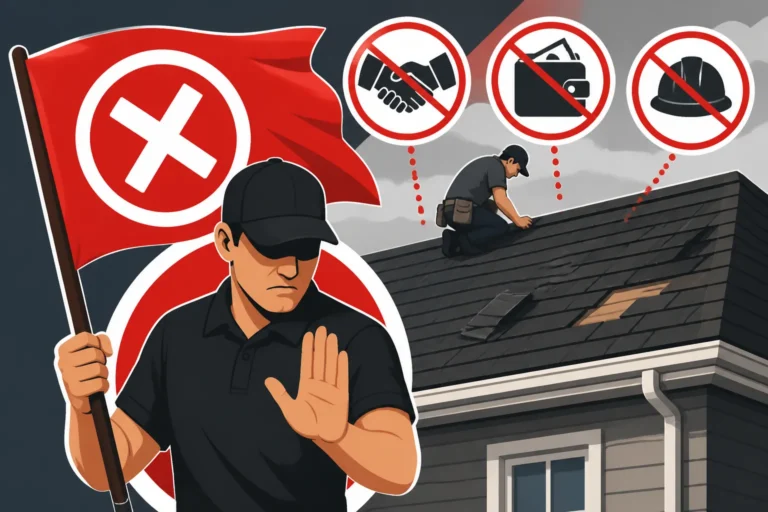
Even with all the best intentions, sometimes you run into a contractor who just isn't transparent or legitimate. It's frustrating, I know, because you're trying to do the right thing and protect your family, but they're making it impossible. Recognizing these red flags early can save you a world of headache and potential financial ruin. Don't ignore your gut feeling if something seems off. When it comes to something as important as your roof, a little healthy skepticism is a good thing.
Remember, trustworthy contractors are proud of their professionalism and their adherence to safety and legal requirements. They won't balk at providing detailed insurance information. When they do, it's often a clear indicator of trouble ahead. You should never feel pressured or uncomfortable asking these essential questions. If you find yourself in such a situation, it's time to reassess your choice of contractor. It's often better to walk away from a deal that feels too good to be true, especially if it's coupled with evasiveness about insurance.
Common Signs of Insurance Issues
There are several tell-tale signs that a contractor might be operating without proper insurance, or at least trying to hide something. Being aware of these can help you spot trouble before it escalates.
- Evasiveness or Delays: If a contractor is vague, says they'll "get it to you later," or repeatedly delays providing a COI, consider it a major warning sign. Legitimate contractors have their COI readily available.
- "We're Self-Insured" Claims: Some contractors might claim they are "self-insured." While large corporations can self-insure, it's extremely rare for a small to medium-sized roofing company to have the financial reserves to genuinely self-insure against major liabilities like worker injuries or property damage. This is almost always a tactic to avoid purchasing actual insurance.
- Very Low Bids: While you want a good deal, a bid that is significantly lower than all other quotes could indicate corners are being cut, and insurance is often one of the first expenses a dishonest contractor will forgo to lower their costs. If you're comparing roofing estimates and one is drastically cheaper, ask yourself why.
- No Physical Address or Business Name: A contractor who only operates out of a P.O. box, a cell phone, or doesn't have a clear, registered business name might be harder to track down if issues arise, and is less likely to carry formal insurance.
- Cash-Only Demands: While some small businesses might prefer cash, demanding only cash payments can be a way to avoid a paper trail, taxes, and other legitimate business expenses, including insurance premiums.
- Pressure Tactics: If a contractor tries to pressure you into signing a contract "today only" or makes you feel uncomfortable asking questions, that's not a healthy business relationship. Responsible contractors want you to feel confident in your choice.
- Vague Contract Language: A contract that doesn't explicitly mention insurance or liability protection, or uses confusing terms, should raise an eyebrow. A good contract protects both parties.
What to Do If Verification Fails
If you've asked for the COI, reviewed it carefully, and even called the insurance provider, only to find that the contractor's claims don't hold up, it's a frustrating but clear situation. Do not proceed. Here’s a step-by-step guide:
- Politely Decline Their Services: It's okay to say no. You can state that you've been unable to verify their insurance to your satisfaction and, therefore, cannot move forward with their services. You don't need to be accusatory; simply state the facts.
- Move On to Another Contractor: Don't waste more time or energy trying to convince an untrustworthy contractor to be legitimate. Go back to your list of potential roofers and reach out to the next one who can provide verifiable insurance. Platforms like Modernize can help you connect with vetted contractors who understand the importance of proper insurance and other key qualifications.
- Report if Necessary: If you suspect fraudulent activity (e.g., a forged COI), you can consider reporting the contractor to your state's licensing board or consumer protection agency. While it might seem like a hassle, it could prevent other homeowners from falling victim.
- Re-evaluate Your Selection Process: If you're repeatedly running into contractors with insurance issues, it might be worth reviewing your initial selection process. Are you getting multiple bids? Are you asking the right questions upfront? Sometimes we're tempted by the lowest bid, but it's important to understand why the lowest roofing bid is risky. Make sure you're asking about their insurance and licensing right from the first conversation.
Protecting Yourself Throughout the Project
Verifying a roofer's insurance isn't a one-and-done deal. While the initial verification is critical, maintaining vigilance throughout the project is also important. Things can change, and unforeseen circumstances can arise. Being proactive and informed will give you the best chance of a smooth project and peace of mind. Your involvement doesn't end with signing the contract; it extends through the entire duration of the roof replacement or repair.
Think of it as an ongoing conversation and observation. You've established the groundwork, but now you need to ensure that the practices on your property align with the promises made. A reputable roofing company will appreciate your engagement and transparency; they know that a well-informed homeowner is often their best client. This continued engagement is part of how to choose a roofing contractor who will truly deliver.
Ongoing Vigilance and Communication
Once the project starts, keep an open line of communication with your contractor. If you notice new faces on the crew that weren't there during the initial introduction, don't hesitate to ask if they are covered by the existing worker's compensation policy. A good contractor will happily confirm this. If the contractor brings in subcontractors for specialized work (like chimney repair or gutter installation), ask for proof of their insurance as well. This is particularly important for tasks that fall outside the main roofing work.
It's also a good idea to periodically check in on the progress and ask questions if anything seems amiss. For example, if you see workers engaging in clearly unsafe practices, you can gently bring it to the contractor's attention. While not directly an insurance issue, unsafe practices increase the likelihood of an accident, which then triggers the need for insurance. An attentive contractor will appreciate your concern for safety and act promptly to address any issues.
What to Do If an Accident Occurs
Despite all precautions, accidents can still happen. Knowing what steps to take if an incident occurs on your property is crucial for mitigating potential issues and ensuring that the appropriate insurance policies are engaged.
- Ensure Immediate Safety: The first priority is always safety. If an injury occurs, call 911 immediately if it's serious. Tend to any immediate needs.
- Document Everything: As soon as possible, take detailed notes and photos or videos. Document the date, time, nature of the accident, individuals involved, and any visible injuries or property damage. This documentation is invaluable for insurance claims.
- Notify the Contractor Immediately: Inform the contractor of the incident right away. They need to be aware so they can contact their insurance providers.
- Gather Insurance Information: Re-confirm the contractor's insurance details, including policy numbers and contact information for their insurance carriers. This is where your verified COI comes in handy.
- Do NOT Admit Fault: Do not admit fault or offer settlements directly to an injured worker or for property damage. Let the insurance companies handle the investigation and claims process. Admitting fault, even out of empathy, could complicate matters.
- Contact Your Own Insurance: While the contractor's insurance should be primary, it's wise to inform your homeowner's insurance company about the incident, even if it's just for their awareness. They can advise you on your policy and potential next steps.
- Review Your Contract: Refer back to your roofing contract to understand the terms regarding liability and incident reporting. This ensures you're following agreed-upon procedures. Knowing what to include in a roofing contract can prevent many headaches down the line.
By staying engaged and prepared, you can significantly reduce your risk exposure throughout your roofing project, ensuring that your home is not only protected by a new roof but also by comprehensive insurance coverage.
Disclaimer
Please note that the information provided in this article is intended for general guidance and informational purposes only, and does not constitute professional legal, financial, or insurance advice. Always consult with a qualified legal professional, insurance agent, or financial advisor for advice tailored to your specific situation. Insurance requirements and regulations can vary significantly by state and local jurisdiction. It is your responsibility to verify the licensing and insurance of any contractor you hire.