Roof Financing Options Explained
Facing a sudden roof replacement can feel like a punch to the gut. It's often an unexpected, significant expense that leaves many homeowners scrambling, wondering how on earth they'll pay for a brand-new asphalt roof without draining their savings. If you're in that boat, know that you're absolutely not alone. This comprehensive guide is here to walk you through all the practical roof financing options available, helping you make an informed decision for your home and your wallet.
Understanding the Burden of Roof Replacement Costs
Let's be real: a new roof is rarely a small investment. It’s a major home improvement, crucial for protecting your biggest asset, but the price tag can be daunting. Many homeowners find themselves blindsided by the need for a roof replacement, whether it's due to age, unexpected storm damage, or just the natural wear and tear that comes with time. The thought of shelling out tens of thousands of dollars can be enough to make anyone feel a bit overwhelmed.
The Unexpected Financial Hit of a New Roof
Picture this: one minute you're enjoying a quiet evening, the next you notice a persistent drip from your ceiling, or perhaps a significant patch of shingles has gone missing after a particularly blustery storm. Suddenly, you're faced with what could be a multi-thousand-dollar decision. The average cost for an asphalt shingle roof replacement can range widely, often landing between $8,000 and $25,000, depending on factors like your home's size, roof pitch, shingle type, and even your geographic location. This isn't pocket change for most families, and it's certainly not an expense many of us have saved up for specifically.
Even if you’ve been diligent about maintenance, roofs simply don't last forever. Most asphalt roofs have a lifespan of 20 to 30 years, and as they approach the end of that period, issues become more frequent and severe. What starts as a small repair might quickly escalate into a full-blown replacement when a contractor reveals the underlying decking is compromised or the shingles are too brittle to patch effectively. This can feel like a financial emergency, especially if other home expenses have cropped up recently. Understanding your specific situation, including the potential for Hidden Costs in a Roof Replacement, is the first step toward finding a viable solution.
Why Financing Becomes Essential for Homeowners
Given the substantial cost, paying for a new roof out-of-pocket simply isn't feasible for everyone. In fact, for a significant portion of homeowners, financing isn't just a convenience; it's a necessity that allows them to get critical work done without depleting their emergency fund or taking on crippling debt. Delaying a roof replacement due to lack of funds can lead to even bigger problems down the line, such as water damage to your attic, ceilings, and even structural components, which only makes the eventual repair far more expensive.
Financing opens the door to immediate action, providing the funds needed to protect your home. It allows you to break down a large lump sum into manageable monthly payments, easing the immediate strain on your budget. Instead of waiting years to save up, while your existing roof continues to deteriorate, financing empowers you to address the problem now, ensuring your home remains safe and sound. It's about finding a practical pathway to afford a crucial home improvement, often one that can significantly increase your home's value and curb appeal.
Traditional Lending Options for Your Roof
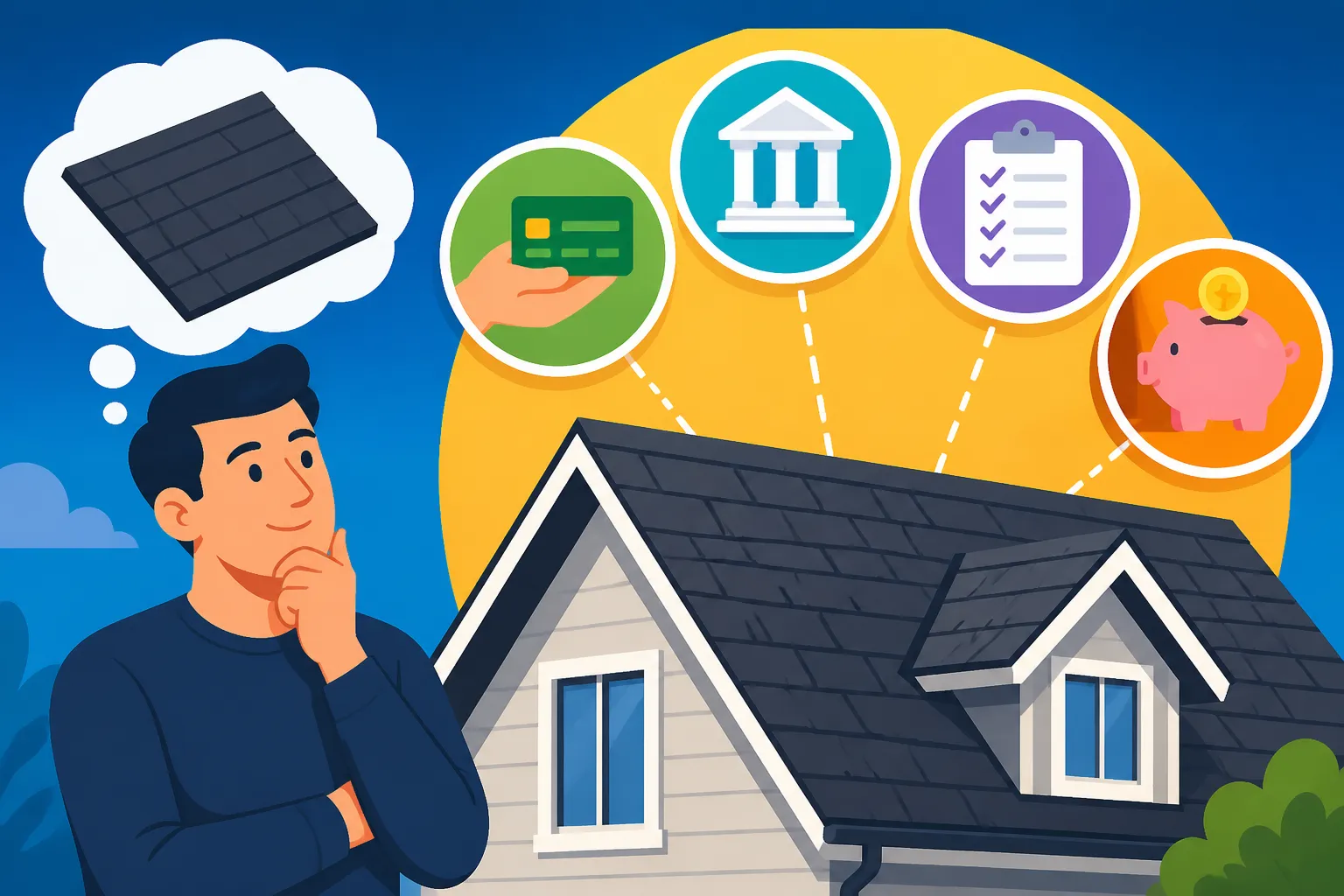
When considering how to pay for a new asphalt roof, many homeowners first look to traditional lending institutions. Banks and credit unions offer several established financing products that can be a good fit, especially if you have good credit and sufficient equity in your home. These options often come with competitive interest rates and structured repayment plans, providing a predictable path to paying off your new roof.
Home Equity Line of Credit (HELOC)
A Home Equity Line of Credit, or HELOC, is a popular option that essentially allows you to borrow against the equity you've built in your home. Think of it like a revolving credit line, much like a credit card, but secured by your house. Once approved, you have access to a certain amount of funds that you can draw from as needed over a specified period, typically 10 years. You only pay interest on the amount you actually borrow, not the entire approved line.
HELOCs offer flexibility, which can be a huge pro if your roof project has unforeseen costs or if you plan to tackle other home improvements alongside your roof. The interest rates on HELOCs are often variable, meaning they can go up or down over the life of the loan, tied to a benchmark like the prime rate. This flexibility can be a double-edged sword: while a falling rate is great, a rising rate could mean higher monthly payments. Because it uses your home as collateral, interest rates are typically lower than unsecured loans, but it does put your home at risk if you fail to make payments.
Home Equity Loan
Often confused with a HELOC, a home equity loan is different because it provides you with a lump sum of money upfront. Instead of a revolving line of credit, you receive the full loan amount at closing and begin repayment immediately. This is an excellent choice if you know the exact cost of your roof replacement – say, after receiving a detailed estimate following an inspection – and you prefer predictable payments.
The primary advantage of a home equity loan is its fixed interest rate, meaning your monthly payments remain consistent throughout the life of the loan. This predictability can be a huge comfort for budgeting. Like a HELOC, a home equity loan uses your home as collateral, which helps secure lower interest rates compared to personal loans. Repayment terms can vary, often ranging from 5 to 20 years, allowing you to spread out the cost over a period that fits your financial comfort zone.
Personal Loans
For those who may not have significant home equity, or who prefer not to use their home as collateral, a personal loan can be a viable alternative for financing a new roof. Personal loans are unsecured, meaning they don't require any collateral, making them a less risky option for your home's ownership. They are typically offered by banks, credit unions, and online lenders, often with fixed interest rates and repayment terms ranging from a few months to several years.
The biggest advantage of a personal loan is the speed and simplicity of the application and approval process. Funds can often be disbursed within days, which can be critical if your roof damage requires urgent attention. However, because they are unsecured, personal loans generally come with higher interest rates than home equity-backed loans. Your credit score plays a significant role in determining the interest rate you qualify for, with excellent credit yielding the best terms. While a personal loan might not have the lowest interest, it offers peace of mind by not putting your home directly on the line.
Contractor-Specific Financing Programs
Beyond traditional banks, many roofing companies understand the financial strain of a new roof and partner with specialized lenders to offer their own financing solutions. These programs are often designed with homeowners in mind, providing convenient application processes and, at times, attractive promotional offers that can make a roof replacement more accessible.
How Contractor Financing Works
When you get an estimate for a new roof, many reputable roofing contractors will present you with financing options right alongside their proposal. This isn't just about making a sale; it's about providing a complete solution. These contractors typically have established relationships with third-party lenders who specialize in home improvement financing. The application process is usually straightforward and can often be completed on-site or online within minutes, leading to quick approval decisions. This efficiency means you can move forward with your much-needed roof replacement without significant delays.
These financing programs are designed to be user-friendly, allowing you to focus on choosing the right asphalt shingles and ensuring a quality installation, rather than navigating complex loan applications. By streamlining the process, contractors aim to remove one of the biggest hurdles homeowners face: the upfront cost. It’s common for a contractor, perhaps one you found through a service like Modernize, to offer several tiers of financing to suit different budgets and credit profiles, making it easier to find something that fits your needs. Knowing your How to Budget for a New Roof helps in selecting the right plan.
Common Offerings and Perks
Contractor financing often comes with enticing perks designed to make the initial stages of repayment easier on your wallet. One of the most common offerings is a 0% APR promotional period, which could last anywhere from 6 to 24 months. During this time, you pay no interest on your loan, provided you make your payments on time. This can be a fantastic way to pay down a significant portion of the principal before interest charges kick in. Some programs also feature deferred interest, meaning if you pay off the entire balance before the promotional period ends, you pay no interest at all.
Other benefits can include fixed-rate installment loans with manageable monthly payments spread over several years, sometimes up to 10 or 15 years. These fixed rates offer predictability, just like a traditional home equity loan, but without requiring you to tap into your home's equity. Some lenders even offer options with no down payment, further reducing the initial financial burden. These programs can be particularly beneficial for homeowners looking for competitive rates and convenient repayment terms. It's worth asking any roofing company you consider if they offer flexible Roof Replacement Payment Plans.
Evaluating the Fine Print in Contractor Financing
While the promotional offers can be very attractive, it's absolutely crucial to dive into the fine print of any contractor financing agreement. That seemingly wonderful 0% APR offer? It often comes with a "deferred interest" clause. This means if you don't pay off the entire balance before the promotional period expires, you might be charged interest retroactively from the original date of purchase on the remaining balance. This can lead to a sudden and significant increase in what you owe.
Always ask about the interest rate that applies after the promotional period ends. Is it a fixed rate or variable? How does it compare to rates from other lenders? Also, inquire about any origination fees, closing costs, or prepayment penalties. A great contractor, perhaps one recommended by Modernize, will be transparent about all these details and help you understand the full cost of the loan. Don't be shy about asking questions and comparing offers to ensure you're getting a truly beneficial deal, not just one that looks good on the surface.
Government & Insurance Assistance Programs
Beyond conventional loans, there are specific programs and avenues designed to help homeowners with roof costs, particularly in certain circumstances or for specific types of improvements. These often involve government-backed initiatives or leveraging your existing homeowners' insurance policy.
FHA Title I Home Improvement Loans
The Federal Housing Administration (FHA) offers Title I loans, which are government-backed loans specifically designed to help homeowners finance property improvements, repairs, and alterations. These loans can be used for various projects, including roof replacement, and are often available to homeowners with less-than-perfect credit who might not qualify for conventional loans. The FHA doesn't directly lend money; instead, it insures loans made by private lenders, reducing the risk for those lenders and making them more willing to approve applicants.
A significant advantage of FHA Title I loans is their lower credit requirements and competitive interest rates, making them accessible to a broader range of homeowners. There are loan limits, however, typically up to $25,000 for single-family homes, which might cover many asphalt roof replacements but could fall short for larger or more complex projects. The property must also meet certain criteria, including being owner-occupied. This program can be an excellent resource for homeowners seeking an affordable, government-backed option to finance their roof, especially if they are concerned about qualifying for other types of loans.
Property Assessed Clean Energy (PACE) Programs
Property Assessed Clean Energy, or PACE, programs are a unique way to finance energy-efficient and renewable energy upgrades for your home, and new roofs often qualify, especially if you opt for "cool roof" shingles or improve insulation as part of the project. Unlike traditional loans, PACE financing is repaid through an assessment on your property tax bill, which means the loan is tied to the property itself, not your personal credit. This can be appealing for homeowners who want to avoid traditional credit checks or who plan to sell their home in the near future, as the remaining balance can often transfer to the new owner.
PACE programs boast several pros, including no upfront payment, fixed interest rates, and long repayment terms (often 10-20 years), which can lead to lower monthly payments. They are designed to incentivize improvements that lower energy consumption and enhance property value. However, PACE programs are not available in all states or counties, so availability depends on your specific location. It's also critical to understand that the assessment becomes a lien on your property, taking precedence over your mortgage in some cases, which has implications if you ever default on payments. Always research the specific rules and potential risks of PACE financing in your area, particularly in states like California or Florida where they are more common.
Insurance Claims for Roof Damage
If your roof damage is sudden and accidental, caused by events like hail, wind, fire, or falling trees, your homeowners' insurance policy might cover a significant portion, if not all, of the replacement cost. This isn't technically "financing" in the traditional sense, but it's a critical avenue for funding a new roof that many homeowners overlook or don't fully understand. The key is to act quickly after damage occurs and to properly document everything. You might be surprised to learn that Does Insurance Cover Roof Replacement in your specific scenario.
Homeowners' insurance typically offers two main types of coverage for roofs: Actual Cash Value (ACV) and Replacement Cost Value (RCV). With ACV, your insurer pays for the depreciated value of your old roof, meaning they subtract for wear and tear, leaving you to cover the remaining cost. RCV, on the other hand, covers the cost of replacing your roof with a new one of similar quality, regardless of its age, minus your deductible. Understanding your policy is vital. Filing a claim involves notifying your insurer, having an adjuster inspect the damage, and then working with your chosen roofing contractor to get the work done. Many contractors specialize in helping homeowners navigate this process.
Alternative Ways to Fund Your Roof
Sometimes, traditional loans or insurance claims aren't the right fit, or perhaps you're looking for other strategies to cover the cost of a new roof. There are a few other financial tools and approaches that homeowners can consider, each with its own set of advantages and potential drawbacks.
Credit Cards and When to Avoid Them
Using a credit card for a roof replacement can be tempting, especially if you have a high credit limit or a card with a 0% introductory APR offer. For smaller roof repairs, a credit card might be a convenient option, allowing you to pay for the work quickly and then pay off the balance over a few months. If you have an excellent credit score, you might qualify for a new credit card with an introductory 0% APR period that lasts 12 to 18 months. This can act like a short-term, interest-free loan, provided you're disciplined enough to pay off the entire balance before the promotional period expires.
However, for a full roof replacement, which can easily run into five figures, relying solely on a credit card is often a risky strategy. Once the introductory APR period ends, the interest rates on credit cards can skyrocket, often reaching 20% or even 30%. Carrying a large balance at such high rates can lead to enormous interest charges, making your roof replacement far more expensive than it needed to be and potentially trapping you in a cycle of debt. It's crucial to be realistic about your ability to pay off the substantial cost of a roof within the interest-free window; otherwise, exploring other financing options is usually a much wiser choice.
Refinancing Your Mortgage for Cash Out
Another significant option for financing a new roof, especially if you have substantial equity in your home, is a cash-out refinance. This involves taking out a new, larger mortgage to replace your existing one. The difference between your old mortgage balance and the new, larger one is paid to you in cash. You can then use this cash to pay for your roof replacement. This option effectively converts your home equity into liquid funds.
The main draw of a cash-out refinance is that mortgage interest rates are typically much lower than personal loan rates or credit card rates, and the repayment period can be very long (e.g., 15 or 30 years), resulting in much lower monthly payments. This can make a large roof replacement much more affordable on a month-to-month basis. However, refinancing comes with its own costs, including closing costs, which can range from 2% to 5% of the loan amount. You're also extending the term of your mortgage, potentially paying interest for many more years. It's important to weigh these costs against the benefits and consider how a new loan term impacts your long-term financial plan.
Choosing the Right Financing Option for You
Deciding on the best way to finance your new asphalt roof can feel like a complex puzzle, but by systematically evaluating your financial health and the specifics of each option, you can find a solution that fits your unique situation. This isn't a one-size-fits-all decision; what works perfectly for your neighbor might not be the right choice for you.
Assessing Your Financial Situation
Before diving into applications, take an honest look at your personal financial landscape. Your credit score is a major factor, as it will heavily influence the interest rates and terms you qualify for across all lending products. A higher credit score typically means access to lower interest rates, saving you money in the long run. You can check your credit score for free through various online services. Additionally, consider your current debt load and how adding another monthly payment will impact your overall budget.
Think about your income stability: Do you have a steady job? Are there any major life changes on the horizon that could affect your ability to make regular payments? If you have sufficient emergency savings, consider how much you're willing to deplete for a partial payment or to cover incidentals. Finally, evaluate the equity in your home. If you've paid down a significant portion of your mortgage, options like HELOCs or home equity loans become much more accessible and potentially more affordable. Understanding these factors will guide you toward the most viable financing pathways.
Comparing Rates and Terms Across Options
Once you have a clear picture of your financial standing, it’s time to shop around and compare. Don't settle for the first offer you receive, whether it's from your bank or a roofing contractor. Obtain quotes from multiple lenders for personal loans, explore home equity options from different institutions, and thoroughly review the financing packages presented by several roofing companies. Services like Modernize can help you connect with multiple contractors, giving you more options to compare not just roof estimates but also financing terms.
When comparing, look beyond just the advertised interest rate (APR). Consider:
- Loan Term: How long do you have to repay the loan? Longer terms mean lower monthly payments but more total interest paid over time.
- Fees: Are there any origination fees, closing costs, or prepayment penalties? These can add to the overall cost.
- Collateral: Is the loan secured by your home or unsecured? Understand the risks involved.
- Variable vs. Fixed Rates: Do you prefer the predictability of a fixed rate or are you comfortable with the potential fluctuations of a variable rate?
Creating a simple table, like the one below, can help you organize and compare these crucial details side-by-side.
| Financing Option | Typical APR Range* | Collateral Required? | Pros | Cons | Best For… |
|---|---|---|---|---|---|
| Home Equity Line of Credit (HELOC) | 7-12% | Yes (Home) | Flexible borrowing, interest only on amount used, lower rates than unsecured loans | Variable interest rate (can increase), home is collateral, temptation to overspend | Homeowners with significant equity needing flexible funds, or those unsure of exact project cost. |
| Home Equity Loan | 6-10% | Yes (Home) | Fixed interest rate, predictable payments, lump sum funding, lower rates than unsecured loans | Less flexible than HELOC, home is collateral, often has closing costs | Homeowners with significant equity, clear project cost, prefer predictable payments. |
| Personal Loan | 6-36% | No | No collateral required, quick approval/funding, fixed interest rates | Higher interest rates (especially with lower credit scores), shorter repayment terms mean higher monthly payments, strict loan limits | Homeowners with good credit, no home equity, or who prefer not to use their home as collateral, for smaller or urgent projects. |
| Contractor Financing | 0-29% | Often No | Convenient application, promotional 0% APR offers, quick decisions, often no equity required | Deferred interest pitfalls, potential for high post-promo rates, terms can vary widely by provider | Homeowners seeking convenience, promotional savings, or quick project starts; those with varying credit profiles. |
| FHA Title I Loan | 5-10% | Often No | Government-backed (lower risk), accessible with lower credit, competitive rates, fixed terms | Loan limits ($25k for single-family), specific property requirements, not direct FHA lending | Homeowners with moderate credit, needing smaller to medium project financing, or those not qualifying for other loans. |
| PACE Program | 4-9% | Yes (Property Tax Lien) | No credit score focus, long terms, tied to property (can transfer to buyer), fixed rates | Not available everywhere, senior lien on property (riskier for lenders), potential for foreclosure if not paid, can be complex | Homeowners in specific areas focusing on energy efficiency, with less-than-perfect credit, or planning to sell soon. |
| Cash-Out Refinance | 3-8% (mortgage rate) | Yes (Home) | Lowest interest rates (mortgage rates), longest repayment terms, significant lump sum cash | Closing costs, extends mortgage term, ties up home equity, takes time to process | Homeowners with substantial equity, needing large amounts for roof and possibly other improvements, willing to extend mortgage term. |
Note: APR ranges are estimates and can vary significantly based on creditworthiness, lender, and market conditions.
Seeking Expert Advice
Navigating the world of financing can be tricky, and it’s okay to ask for help. Don't hesitate to consult with a financial advisor who can assess your overall financial health and provide unbiased recommendations tailored to your situation. They can help you understand the long-term implications of different loan types and how they integrate into your broader financial goals.
Additionally, engage deeply with your chosen roofing contractor. A reputable roofer, especially one with a strong track record and certifications (like a GAF Master Elite Contractor or Owens Corning Platinum Preferred contractor), should be knowledgeable about the various financing options they offer and be able to clearly explain the terms. They often have experience guiding homeowners through this process and can help you understand how their specific programs compare to other options. Remember, choosing a new roof is a big decision, and understanding all the financing choices available empowers you to make the smartest one for your home and your peace of mind.
Disclaimer
Please note that the information provided in this guide is for general informational purposes only and does not constitute financial or legal advice. Financing options, interest rates, and program availability can vary widely based on individual circumstances, location, lender policies, and market conditions. Always consult with a qualified financial advisor and a reputable roofing contractor to discuss your specific needs and obtain personalized recommendations before making any financial decisions.