What Happens If a Roofer Gets Injured on Your Property
Having a roofing project underway can be exciting, but it also brings a flurry of worries, chief among them the terrifying thought of someone getting hurt on your property. The question of "What happens if a roofer gets injured on your property?" is a very real, very stressful concern for homeowners. This guide is here to walk you through the complexities, your responsibilities, and how to protect yourself when the unexpected happens.
Understanding the Risks and Responsibilities
Let's be real: roofing work is inherently dangerous. It involves working at heights, handling heavy materials, and often using power tools in sometimes unpredictable weather conditions. While professional roofers are trained and equipped to minimize these risks, accidents can and do happen. As a homeowner, understanding these risks and where your responsibilities begin and end is crucial.
Common Types of Roofing Injuries
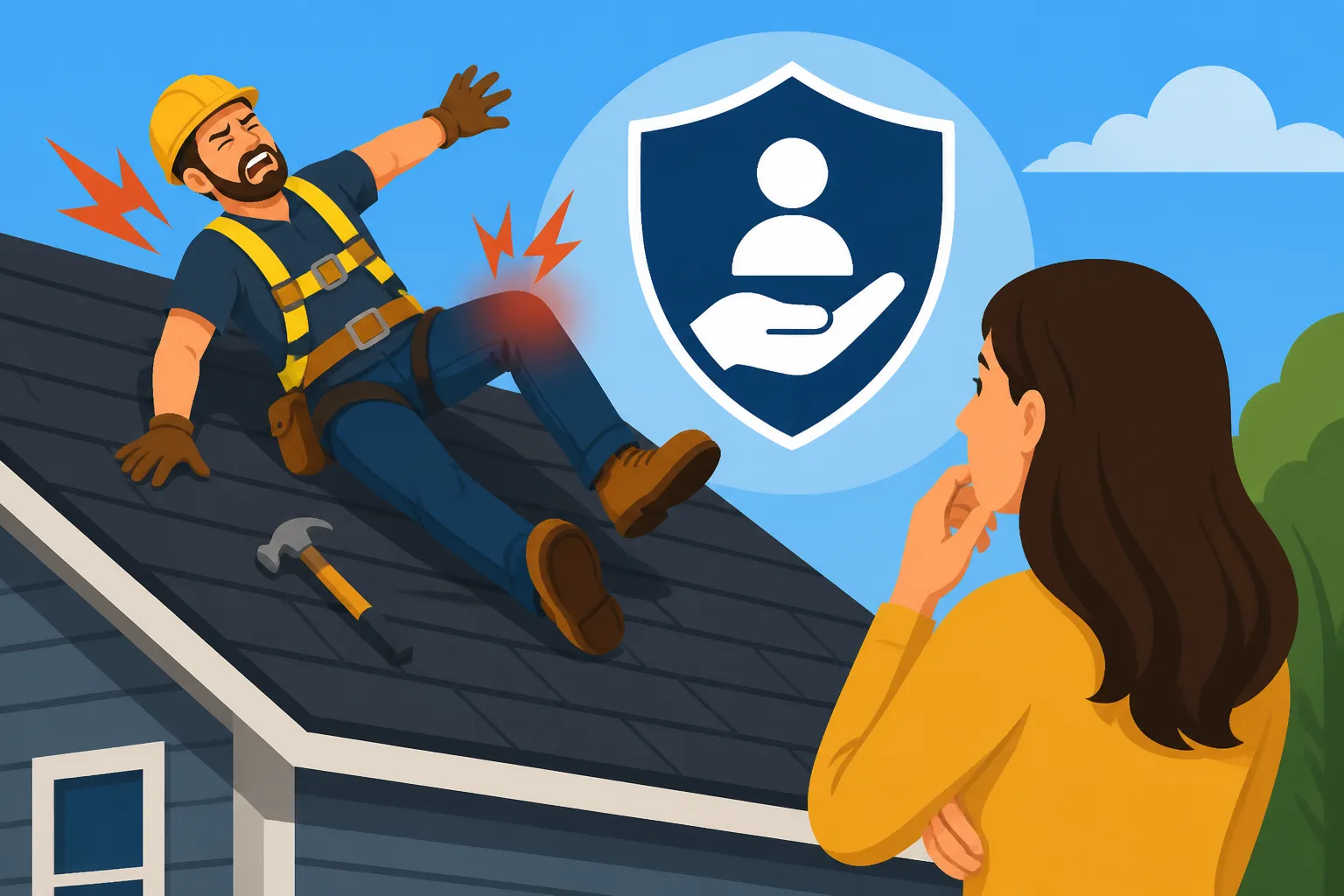
Roofing contractors and their crews face a variety of hazards daily, leading to common injuries that range from minor to life-altering. The most prevalent incidents often involve falls, which are unfortunately a leading cause of fatalities in the construction industry. A roofer could slip on loose shingles, lose their footing on a steep pitch, or simply misstep off a ladder. The impact of such a fall, even from a one-story roof, can be devastating, resulting in broken bones, head trauma, or spinal cord injuries.
Beyond falls, roofers also contend with dangers like cuts from sharp tools or metal flashing, burns from hot tar or equipment, and muscle strains or sprains from lifting heavy bundles of shingles. Electrocution is another serious, albeit less frequent, risk, especially when working near power lines. Then there are the environmental hazards – heat stroke on a scorching summer day or frostbite during a winter installation. Any of these scenarios, while hopefully rare, underscore why understanding the safety measures and insurance policies in place is so incredibly important for both the workers and you, the homeowner.
The Role of Workers' Compensation
This is where workers' compensation insurance steps in as a critical safeguard. For legitimate, reputable roofing companies, workers' compensation is a non-negotiable part of doing business. This insurance is designed to provide medical care and wage replacement for employees who get injured or become ill as a direct result of their job duties. If a roofer employed by a company with workers' compensation insurance falls off your roof and breaks an arm, their medical bills and a portion of their lost wages would typically be covered by the contractor's workers' comp policy, not your homeowner's insurance.
The beauty of workers' compensation, from a homeowner's perspective, is that it generally prevents injured employees from suing the employer for negligence. In many states, it also protects homeowners from being directly sued by an injured worker, as long as the homeowner isn't directly responsible for creating the hazardous condition that led to the injury (e.g., if you instructed them to use a faulty ladder you provided). This is why verifying that any contractor you hire carries comprehensive workers' compensation is paramount. It’s not just a good idea; it’s your first line of defense against potential financial and legal headaches.
The Importance of Proper Contractor Vetting
Before a single shingle is laid or even removed, the most critical step you can take to protect yourself from liability is to thoroughly vet your roofing contractor. This isn't just about finding someone who can do a good job; it's about ensuring they operate legally and responsibly, protecting both their workers and you, the homeowner. Skipping this step can lead to a world of pain if an incident occurs. Finding a reputable company through platforms like Modernize can help ensure you're working with properly vetted professionals.
Verifying Licensing and Insurance
You wouldn't hire an unlicensed doctor, so why would you entrust your roof, one of the most critical components of your home, to an unlicensed contractor? Licensing ensures that the contractor meets specific standards of knowledge, experience, and often financial stability. While requirements vary by state and locality, a license is a basic indicator of legitimacy. Always check with your state's contractor licensing board or local building department to confirm a contractor's active license status. This can also reveal any past disciplinary actions.
Equally, if not more, important is verifying their insurance. There are two main types you need to be concerned with: general liability insurance and workers' compensation insurance. General liability protects against property damage and bodily injury to third parties (like you or your neighbors, or damage to your home), but it doesn't cover injuries to the contractor's own employees. That's where workers' compensation comes in. If a contractor tries to tell you they don't need workers' comp because they're a small crew, or use vague language about "being covered," walk away immediately. Ask for a Certificate of Insurance (COI) directly from their insurance carrier, not just a paper copy from the contractor, and call the carrier to verify its validity. This diligent checking process is a cornerstone of ensuring you have Licensed and Insured Roofers: Why It Matters.
Manufacturer Certifications and Safety Protocols
Beyond basic licensing and insurance, a contractor's commitment to quality and safety is often reflected in their manufacturer certifications. Companies like GAF, Owens Corning, and CertainTeed offer advanced certification programs (e.g., GAF Master Elite, Owens Corning Platinum Preferred, CertainTeed SELECT ShingleMaster). These certifications indicate that the contractor has met stringent criteria, including training in the proper installation of specific roofing systems and often a proven track record of customer satisfaction and financial stability. This typically goes hand-in-hand with an adherence to higher safety standards.
A certified contractor is more likely to implement rigorous safety protocols on the job site. This includes everything from proper ladder usage and fall protection systems (like harnesses and safety nets) to daily safety briefings and ensuring all crew members have personal protective equipment (PPE). When you're discussing your project with a potential contractor, don't hesitate to ask about their specific safety plan for your property. A transparent and detailed answer is a good sign that they take worker safety seriously, reducing the chance of an incident on your property. For more on this, you might explore Manufacturer-Certified Roofers Explained.
The Dangers of Uninsured Contractors
Opting for a contractor who doesn't carry proper insurance might seem like a way to save money upfront because their bid will likely be significantly lower. However, this is a classic "penny wise, pound foolish" scenario, fraught with immense financial and legal risks for you, the homeowner. If an uninsured roofer, or one of their uninsured employees, suffers an injury on your property, you could very easily become directly liable for their medical expenses, lost wages, and even long-term disability payments.
This isn't a hypothetical fear; it's a grim reality that has left many homeowners in devastating financial binds. Your homeowner's insurance policy typically has a personal liability clause, but it's designed for guests or random accidents, not for covering the business liabilities of an uninsured contractor working on your property. Many policies specifically exclude coverage for contractors or business-related incidents. A severe injury could lead to protracted lawsuits, liens on your home, and astronomical out-of-pocket costs that far exceed any initial savings. Always ensure your chosen contractor is properly insured, even if it means a slightly higher initial cost. It's an investment in your peace of mind and financial security. This is one of the biggest Roofing Contractor Red Flags to Avoid.
What to Do Immediately After an Incident
Even with the most rigorous vetting, accidents can still happen. Knowing what to do in the immediate aftermath of a roofer's injury on your property can help mitigate the fallout and ensure everyone's safety and proper care. It's a high-stress situation, but having a clear head and a plan is paramount.
First Aid and Emergency Services
Your absolute first priority is the well-being of the injured individual. If someone is seriously hurt, do not hesitate. Call 911 immediately. Provide clear and concise information about the nature of the injury and your location. While waiting for emergency responders, if you have any first-aid training, you can offer assistance, but only within your comfort and skill level, and without putting yourself in harm's way. Do not attempt to move someone who has suffered a fall or a suspected head or spinal injury, as this could worsen their condition.
It’s crucial to remain calm and focused on getting the injured person the help they need. This isn't the time to worry about liability or paperwork; it's about a human being in distress. After emergency services are on their way, notify the contractor or job site supervisor immediately. They will need to coordinate with the medical team and their company's internal protocols.
Documenting the Scene
Once the immediate emergency has been addressed and the injured worker is receiving care, your next step should be thorough documentation. This isn't about assigning blame but about having a factual record of the event, which will be crucial for insurance claims and any potential investigations. Start by taking photographs or videos of the accident scene from multiple angles. Capture the specific location where the injury occurred, any equipment involved (ladders, scaffolding, tools), and the general condition of the work area. Note the time of the incident, weather conditions, and any witnesses present.
Make a detailed written account of what you observed, focusing only on objective facts. Avoid speculation or assumptions. Include the names of the injured worker, the contractor's supervisor, and any other crew members present. If possible, get contact information for any independent witnesses. This comprehensive documentation will serve as an invaluable resource for all parties involved – the contractor, their insurance company, and potentially your own homeowner's insurance carrier.
Communicating with the Contractor
After an injury, communication with your roofing contractor needs to be clear, professional, and consistent. Your primary contact should be the company owner or project manager, not necessarily the injured worker's direct supervisor. Inform them of the incident, confirm that emergency services were called, and reiterate that documentation has been gathered. Ask them about their internal incident reporting procedures and what steps they will be taking next regarding their workers' compensation claim.
While it's natural to feel empathetic, be cautious about making statements that could be interpreted as admitting fault, even if you feel genuinely sorry about what happened. Stick to the facts. Share the documentation you gathered. Ask for confirmation that they will be filing a workers' compensation claim and that their insurance company will be handling all related medical and wage replacement costs for their employee. This proactive and factual communication helps establish that the incident is being managed through the proper channels, primarily the contractor's responsibility. It's a critical aspect of How to Get Roofing Quotes and Compare Them – you want a contractor who communicates well in all circumstances.
Navigating Insurance Claims and Legalities
When an injury occurs, the labyrinth of insurance claims and legalities can feel overwhelming. It's a complex area where your choices and the contractor's actions can significantly impact your financial and legal standing. This is why due diligence in hiring a properly insured contractor is so crucial.
Your Homeowner's Insurance vs. Contractor's Insurance
This is the central point of protection for you as a homeowner. When a properly insured roofing contractor has an employee injured on your property, their workers' compensation insurance is designed to be the primary payer for the injured worker's medical bills and lost wages. This is what you pay them for, in part—to ensure they carry the necessary coverage for their employees. Your homeowner's insurance should ideally not come into play in this scenario.
However, if the contractor is uninsured or underinsured, the situation changes drastically. In such a case, the injured worker might attempt to file a claim against your homeowner's insurance policy, alleging that you, as the property owner, are liable. This could be argued if, for instance, there was an undisclosed hazard on your property that contributed to the accident, or in states where property owners can be held responsible if they hire an uninsured contractor. This is why verifying the contractor's workers' compensation policy and general liability insurance before work begins is the single most important preventative measure you can take. You can learn more about this by reading How to Verify a Roofer's Insurance.
Potential Legal Ramifications for Homeowners
While workers' compensation typically protects homeowners from direct lawsuits by an injured worker, there are specific scenarios where a homeowner could still face legal challenges. As mentioned, if you hire an uninsured contractor and an injury occurs, the injured party might pursue you directly for damages. Another scenario involves homeowner negligence: if you created an unsafe condition that the contractor was unaware of (e.g., a rotten plank on a porch they were asked to use, or a hidden electrical hazard), you could be held liable.
Furthermore, if a non-employee (like a casual helper the contractor brought along who isn't covered by their workers' comp) gets injured, or if a third party (like a neighbor or a passerby) is injured due to the contractor's work, your general liability insurance might be activated, depending on the specifics. In any of these situations, you could face demands for medical expenses, lost wages, and pain and suffering. This could lead to a drawn-out legal battle and significant financial strain. It underscores why understanding the nuances of liability and your rights is so vital.
Understanding Liability and Negligence
Liability in an injury case essentially boils down to who is legally responsible for the damages. In the context of a roofing injury, if a legitimate, insured contractor's employee is hurt, the contractor's workers' compensation policy covers it, and generally, the homeowner isn't liable. The contractor's own negligence (e.g., failing to provide proper safety equipment) would be handled by their insurance.
However, negligence on your part as the homeowner can shift liability. For example, if you knowingly allowed a contractor to use a dangerously unstable structure on your property, or failed to disclose a clear hazard that directly led to the injury, you could be deemed negligent. Conversely, if the injury was solely due to the roofer's own recklessness, even with proper safety gear, their workers' comp would still apply, but it further solidifies that you are not at fault. This complex interplay of negligence and liability highlights why strong contracts, proper insurance verification, and a clear understanding of Roofing Contract: What to Look For are non-negotiable protections for you.
| Scenario | Who is Primarily Responsible for Costs? | Homeowner Liability Risk | Key Homeowner Action |
|---|---|---|---|
| Insured Contractor, Employee Injury | Contractor's Workers' Compensation Insurance | Low to None | Verify Workers' Comp & General Liability |
| Uninsured Contractor, Employee Injury | Homeowner's Personal Liability (if contractor is deemed your "employee") | High | Avoid at all costs! Verify all insurance. |
| Contractor's Employee Injured Due to Homeowner Negligence | Homeowner's Insurance (personal liability) | High | Disclose all hazards; don't create unsafe conditions. |
| Third Party Injured by Contractor's Work | Contractor's General Liability Insurance (potentially homeowner's if contractor uninsured) | Medium | Ensure contractor has General Liability. |
Proactive Steps to Protect Yourself
The best defense against the headache and heartache of a roofer's injury on your property is a strong offense – meaning, taking proactive measures before any work even begins. It's about setting clear expectations, thoroughly vetting your choices, and maintaining open communication.
Key Questions to Ask Before Hiring
Before you even consider signing a contract, you need to arm yourself with a list of pointed questions for every potential roofing contractor. This isn't about being confrontational; it's about being diligent. Start with the basics: "Are you licensed, bonded, and insured?" Don't just accept a "yes." Follow up with: "Can you provide a Certificate of Insurance (COI) directly from your general liability and workers' compensation carriers, showing me as an additional insured?" This is a crucial step for your protection. Many platforms, like Modernize, will assist in connecting you with contractors who meet these basic requirements, making your initial search easier.
Next, inquire about their specific safety protocols. "What fall protection measures do your crews use on steep roofs?" "Do you have daily safety briefings?" Ask about their experience with similar projects and how long they've been in business. Don't forget to ask about their warranties – both for materials and workmanship. A contractor who is transparent and willing to answer these questions thoroughly and professionally is generally a good sign. Any hesitation or deflection should be a red flag. These are vital Questions to Ask a Roofing Contractor Before Hiring.
Reviewing the Roofing Contract
Once you've narrowed down your choices, never, ever sign a contract without a thorough review. A comprehensive roofing contract should detail every aspect of the project, leaving no room for ambiguity. This includes the scope of work, materials to be used (specific brands, colors, styles), payment schedule, cleanup procedures, and, critically, explicit language about insurance. The contract should clearly state that the contractor is responsible for carrying all necessary workers' compensation and general liability insurance.
Look for clauses that detail how disputes will be handled and what constitutes completion of the job. Ensure there's a clear timeline for the project. If anything is unclear, ask for clarification in writing. If the contractor is hesitant to put details in writing or rushes you to sign, consider it a significant red flag. You can also consult with a legal professional to review the contract, especially if it's a large, complex job. A solid contract is your legal safeguard, outlining responsibilities and protections for both parties. This builds on the foundation of How to Choose a Roofing Contractor.
Maintaining a Safe Work Environment
While the primary responsibility for job site safety rests with the contractor, you, as the homeowner, also have a role to play in ensuring a safe environment for everyone. Before the work begins, walk around your property with the project manager to point out any potential hazards specific to your yard or home. This could include things like overhead power lines, fragile landscaping, a dog run, or even a tricky walkway. Clear the work area of any personal items, furniture, or vehicles that could be damaged or obstruct the crew's access.
Throughout the project, keep children and pets away from the active work zone. Follow any instructions given by the contractor regarding access to certain areas of your home or yard. If you notice a new hazard arise during the work, or if you see something that looks overtly unsafe, communicate it to the project manager immediately. While you shouldn't interfere with their work or give direct instructions to crew members, voicing concerns about safety is always appropriate. Your proactive communication and cooperation contribute to a smoother, safer project for everyone involved. Lastly, remember that even seemingly small things like ensuring your property has clearly marked access points and a designated area for material delivery, can make a difference. Don't forget to confirm Roofing Permits: Who Pulls Them as part of your pre-job checklist, as this often requires a safety inspection.
Disclaimer
Please remember that this article provides general information and is not a substitute for professional legal advice. Laws and regulations regarding contractor liability, workers' compensation, and homeowner responsibility vary significantly by state and local jurisdiction. Always consult with a qualified legal professional or your insurance provider to understand your specific rights and obligations.